How to choose an online lash course: curriculum, tutor, practice, kit and certificate

An independent checklist for comparing online lash courses by learning outcomes, tutor, demonstrations, assessed practice, feedback, kit, access, total cost and certificate.

Silvana DebiasiSilvana Debiasi1 September 2026 21 min read
Adult learner compares an unbranded lash demonstration, curriculum, checklist and compact course kit on a laptop before enrolment
On this page
  1. 1 Define the service, goal and starting level first
  2. 2 Judge a course by learning outcomes, not labels
  3. 3 Minimum curriculum: common foundations, extensions and lifts
  4. 4 Read the syllabus beyond the module names
  5. 5 Tutor expertise and the ability to teach
  6. 6 Video lessons must make millimetres visible
  7. 7 Online practice should progress in controlled stages
  8. 8 Remote feedback must close the learning loop
  9. 9 Course kit: included does not mean sufficient
  10. 10 Access, tutoring and updates are separate promises
  11. 11 Certificate: attendance, completion and assessment are different
  12. 12 Compare the total cost and the purchase terms
  13. 13 A weighted decision matrix for online lash courses
  14. 14 Red flags to investigate before enrolment
  15. 15 Final checklist before checkout
  16. 16 Frequently asked questions about online lash courses
  17. 16.1 Can an online lash course teach practical skills?
  18. 16.2 Should I choose extensions or lash lifting first?
  19. 16.3 How many hours should a good online lash course contain?
  20. 16.4 How do I check whether the tutor is credible?
  21. 16.5 Does an online lash course need to include a kit?
  22. 16.6 Can I substitute products from another system?
  23. 16.7 Is mannequin practice useful?
  24. 16.8 How many models should the course require?
  25. 16.9 What should personalised feedback include?
  26. 16.10 Will an online certificate let me work as a lash artist?
  27. 16.11 Are recorded lessons or live classes better?
  28. 16.12 How long should course access last?
  29. 16.13 What is the real cost of an online lash course?
  30. 16.14 Can I cancel after accessing an online course?
  31. 16.15 Are reviews enough to choose a lash course?
  32. 16.16 What should I ask before paying?
  33. 17 Official sources and editorial criteria

The best online lash course is not necessarily the longest, the most expensive or the one with the largest kit. It is the course whose service, entry level, teaching, practice and assessment match what you need to learn. A useful comparison therefore looks beyond the sales page: it checks observable outcomes, complete demonstrations, the person giving feedback, the number and format of practical submissions, product-system limits and the full cost of completing the training.

Choose in this order: define the lash service and your starting level; compare learning outcomes and curriculum; inspect a real lesson; verify who teaches and who assesses; understand the practice-and-feedback loop; audit the kit, access period and total cost; then read what the certificate actually records. If your aim is paid work, verify local qualification, licensing, premises and insurance separately.

This article owns the how-to-choose intent. It is not a ranking, comparison of training brands or second course catalogue. Current programmes remain in the BeautyLearn lash-course collection. Use this page to evaluate any offer consistently. For the wider route into professional work, read how to become a lash artist; technique and service comparisons stay in their dedicated guides.

Define the service, goal and starting level first

Define before you compare

Service, starting point, outcome, evidence

1

Choose one service

2

State your current level

3

Write an observable outcome

4

Define the evidence

Extensions and lash lifts require different paths. A useful comparison begins with the exact performance you need to demonstrate and the level from which you are starting.

Online lash course is not one curriculum. Classic extensions, volume, infill, removal, lash lifting and tinting use different products, controls and maintenance. A broad introduction can explain the landscape, but it cannot replace enough service-specific demonstration and assessed practice. Before comparing prices, write down exactly which service you want to understand or perform.

If you are deciding between added fibres and a treatment of natural lashes, begin with lash extensions vs lash lift. The services differ in result, appointment structure and continuing maintenance. Do not select by the most dramatic social-media image; consider manual demands, practice access, local permission, recurring products and the clients you hope to serve.

Now define your level honestly. A complete beginner needs visible anatomy, natural renewal, hygiene, ergonomics, consultation, product foundations and a gradual path to hands-on work. An experienced practitioner may need a narrow correction, a new extension method, a different lift system or stronger retention analysis. Suitable for all levels only means something when the course offers distinct prerequisites, tasks and assessment routes.

Turn the goal into evidence. Instead of I want to learn lashes, write: I want to complete a controlled classic application on a mannequin, show clean isolation and consistent direction in macro views, explain my design and receive two rounds of assessed feedback. That sentence makes it possible to compare a curriculum with your need.

Judge a course by learning outcomes, not labels

Academy, master, certified, accredited, professional and complete may be marketing terms unless the provider defines them. They do not by themselves demonstrate curriculum depth, public recognition or permission to practise. Look for outcomes written as observable actions: prepare a station; describe the visible lash cycle; recognise stop criteria; select a compatible design; isolate; place; document; explain maintenance; review a result and justify a refusal.

Every outcome needs matching evidence. A mapping outcome should require reasoned maps; application should require close views of attachment, direction and separation; consultation should require a completed case record, not only a multiple-choice quiz. Video hours measure the duration of content, not learning. The strong chain is explanation, complete demonstration, focused exercise, specific feedback and another attempt.

Claim

Evidence to request

Weak substitute

Learn at your own pace

Access, submission and tutor windows stated separately

Lifetime access with no assessment time left

Professional certificate

Issuer, assessed outcomes, completion rules and recognition stated precisely

A badge without an explanation of status

Personal feedback

Named assessor or criteria, submission format, turnaround and resubmission

A generic community group

Complete kit

Itemised inventory, quantities, shelf life, exercises covered and exclusions

A styled photograph of unlabelled items

Minimum curriculum: common foundations, extensions and lifts

The curriculum must cover the complete service

Foundation, design, procedure and control

Foundation

Anatomy, hygiene and boundaries

Design

Assessment and justified choices

Technique

Movement, product and sequence

Control

Errors, aftercare and stop decisions

A long index is not enough. Each area should connect an explanation, a visible demonstration, focused practice and assessment without confusing extensions with lifts.

A credible syllabus makes foundations, service steps, practice and boundaries visible. Shared foundations include the anatomy and growth cycle of natural eyelashes, consultation, hygiene, ergonomics, product traceability, photography, maintenance and stop decisions. The goal is not to diagnose. It is to describe visible facts, recognise when the service is outside cosmetic scope and respond conservatively.

Area

Foundation extension course

Foundation lash-lift course

Assessment

Natural base, goal, load, eye-area fit, expectations and declared contraindications

Length, direction, apparent condition, eyelid relationship, desired result and stop criteria

Design

Mapping, length, curl, diameter, direction, weight and symmetry

Shield selection and fit, placement, direction, tension and symmetry

Procedure

Preparation, isolation, adhesive control, attachment, checking, infill and removal

Preparation, arrangement, system sequence, system-specific timing, removal and tint if included

Quality control

Stickies, distance, direction, load, comfort, retention evidence and aftercare

Lift pattern, separation, tips, crossings, comfort, traceability and aftercare

Errors and limits

Poor separation, unsuitable weight, adhesive exposure, reported irritation and safe removal

Poor shield fit, crossed directions, suspected overprocessing and correction limits

This is an audit framework, not a universal lesson plan. Compare any lift curriculum with the professional lash-lift guide and check whether the course explains why a decision changes. Chemical timing must remain tied to the exact manufacturer system and current instructions rather than a memorised universal chart.

Read the syllabus beyond the module names

  1. Entry level, prerequisites and intended final performance are stated with examples.

  2. Each module connects knowledge, a complete demonstration, practice and assessment.

  3. Consultation, hygiene, ergonomics, consent and stop decisions are not footnotes.

  4. Classic, volume, lift, tint, infill and removal are distinguished rather than compressed.

  5. Product systems are identified and manufacturer compatibility and directions remain controlling.

  6. Common errors are shown with prevention, stop actions and correction limits.

  7. Practice separates training aids, mannequins and adult consenting models.

  8. Submission number, format, deadline, criteria, feedback and resubmission are written down.

  9. Included kit items and additional required materials are listed separately.

  10. Lesson access, assessment access, tutoring, updates, captions and device support are clear.

  11. The certificate and final assessment are described without universal licensing claims.

  12. Total price, payment schedule, delivery, cancellation and digital-content terms appear before checkout.

Tutor expertise and the ability to teach

A useful tutor profile gives a name, relevant education, current service experience, technique-specific work and an explanation of their teaching role. Follower count, edited photographs, awards without criteria and product distribution do not independently demonstrate teaching skill. Look for varied cases, decision-making, visible limits and calm correction of errors.

Technical ability and teaching ability overlap but are not identical. An experienced practitioner may perform automatised movements too quickly for a learner. A capable educator breaks down posture, grip, angle, distance, amount, sequence and checks. They name the visible evidence, propose one correction and explain how the next attempt will be assessed.

Ask who answers subject questions and who marks practical work. Lead tutor, technical assessor, community moderator and customer support are different roles. The provider should state assessor competence, contact routes, typical response times and boundaries. Unlimited support is not measurable unless access period, submission allowance and feedback format are clear.

Video lessons must make millimetres visible

In lash work, a small change in distance, angle or separation can change the service. A useful online demonstration alternates a wide view for posture and sequence, a side view for angles, a macro view for isolation or wrapping and a clear product view when quantity is discussed. Light should reveal the contact area without clipping detail, and hands or tweezers should not obscure the decisive step.

Inspect sound, chapter navigation, playback-speed control, captions or transcripts, mobile support and the period for which recordings remain available. Production quality cannot rescue incomplete reasoning, but excellent reasoning is unusable when the critical attachment cannot be seen. The lesson should show preparation, routine checks, an error and the final inspection—not only a fast montage of the most attractive moment.

Online practice should progress in controlled stages

Watching is not practising. Early exercises should reduce variables: grip and movement on a training aid, isolation or arrangement on a mannequin, then a complete simulated sequence. Work on an adult consenting model follows only when prerequisites, supervision, products, insurance and local rules permit. A real person is not a shortcut for making training feel professional.

Adult lash student practises with tweezers on a training aid while an experienced tutor gives live feedback through a computer
The useful learning loop is observe, attempt, receive one specific correction and repeat

Each submission should define its dominant objective, materials, required views, quality indicators and stop criteria. One session may assess separation; another direction; another symmetry or shield placement. When everything is marked at once, the learner cannot identify which change caused improvement. Record speed after quality, comfort and ergonomics are stable.

No universal model count creates competence. Ask which evidence unlocks the next stage: repeated control, useful variation, absence of critical errors, reasoned decisions and the ability to stop. The final assessment should observe the whole journey—consultation, station, design, execution, checking, aftercare, records and follow-up—not one hero photograph.

Remote feedback must close the learning loop

Feedback must lead to another observed attempt

Submit, identify, correct and repeat

1

Submit

Video, macro, record and self-review

2

Identify

Evidence and plausible cause

3

Correct

One concrete change

4

Repeat

A new attempt is assessed

A generic comment adds little. Feedback becomes learning when it identifies evidence, specifies one change and checks whether the next performance improved.

A result image alone cannot reveal every movement. A useful submission may include the station, a short posture video, macro views of the technical area, a case record and self-assessment. The course should explain how model identity and data are protected, who can access submissions and how long they are retained. Consent to practise is not automatic consent to publish.

Good feedback identifies evidence, gives a plausible technical cause, specifies an action and asks for a new attempt. Outer directions diverge; redraw three reference lines, reduce the working zone and submit a side macro is more actionable than practise more. Ask whether the second attempt is actually reviewed. Without resubmission, correction remains information rather than demonstrated learning.

Before enrolment, ask

A useful answer includes

Why it matters

How many submissions?

Tasks, required views and deadlines by module

One submission may not cover the promised outcomes

Who assesses?

Named role, relevant experience and assessment rubric

Customer support cannot replace technical assessment

Can I resubmit?

Number of attempts, timing, cost and what is reviewed again

Improvement needs another observed performance

How is data handled?

Purpose, access, retention, deletion and model-image instructions

Eye photographs can identify a person

Course kit: included does not mean sufficient

Count functions, not pieces

Included, required, replacement and compatibility

Included

Exact item and quantity

Excluded

Still required to complete

Replacement

Practice capacity and cost

System

Compatibility, storage and expiry

An itemised kit shows what each product does, how much practice it covers and what it costs to replace. System compatibility matters more than variety.

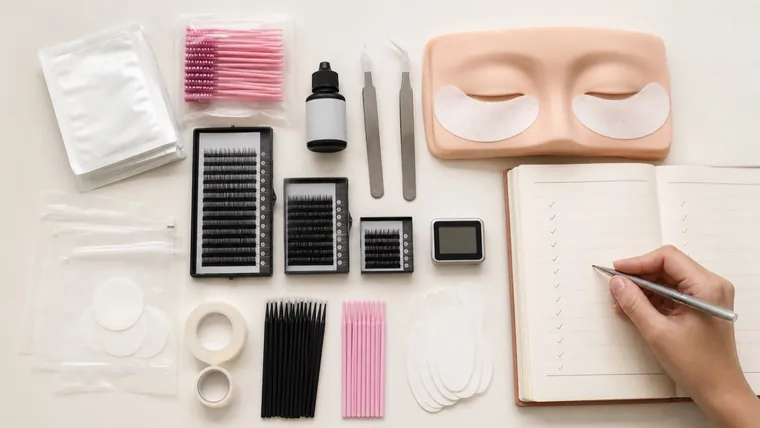
Request an inventory with generic product name, purpose, quantity or size and the exercises it supports. Separate included, required but excluded, optional and replacement items. For liquids and reactive systems, ask about transport, storage, opening date, expiry, batch traceability and whether the volume realistically covers practice as well as the final assessment.

Unbranded online lash-course kit arranged beside an itemised checklist for included, required and replacement materials
A useful kit audit measures compatibility and practice capacity, not the number of pieces

For lift systems, components, order and timing must follow the exact manufacturer's directions. For extension adhesives and removers, intended use, environment, storage and safe handling matter more than the number of bottles. Do not assume that mixing systems is an affordable substitution. Ask what can be changed, what cannot and which official instruction supports the answer.

A course without a kit can be strong when it supplies a precise purchasing list and explains compatibility. A course with a kit can be poor when labels, quantities or shelf life are hidden. Calculate replacements, shipping, duties where applicable, disposables, practice lashes, models and tools before comparing the headline price.

Access, tutoring and updates are separate promises

Video access, submission access and tutor access may end on different dates. A twelve-month library is less useful if practical work must be submitted in thirty days. Ask when the clock starts, whether shipping delays affect it, whether access can pause for illness, what happens after expiry and whether downloaded worksheets remain usable.

Updates also need definition. Does the provider correct broken files, add new product-system instructions or materially expand the course? Are previous learners notified? If access is described as lifetime, whose lifetime and under what platform conditions? Save the terms that influenced your purchase rather than relying on a temporary sales-page phrase.

Certificate: attendance, completion and assessment are different

Three records, one shared limit

A course certificate is not universal permission

Attendance

Presence or content access

Completion

Modules and submissions finished

Assessment

Private criteria passed

Permission

Separate jurisdictional check

Attendance, completion and private assessment describe different achievements. Public qualifications and permission to work must be verified separately in the relevant jurisdiction.

An attendance certificate may confirm presence or content access. A completion certificate can require modules or submissions. An assessed certificate should state the criteria and decision. Ask what appears on the document, who issues it, whether identity is verified, what must be passed and whether a failed task can be resubmitted.

A private course certificate does not automatically become a public qualification, occupational licence or permission to work in every jurisdiction. The phrase accredited is incomplete without the accrediting body, scheme, scope and current status. Verify independently with the regulator, employer and insurer relevant to your planned service. The career guide explains this separation in detail.

Compare the total cost and the purchase terms

Build a completion cost, not a checkout cost. Add tuition, kit, delivery, duties or taxes where relevant, replacement products, disposables, models, assessment fees, extra tutoring, resubmission, access renewal and any equipment needed for safe practice. Then compare the evidence you receive: demonstrations, assessed tasks, qualified feedback and time to repeat.

Before payment, identify the seller, currency, tax treatment, delivery territory, start date, access period, technical requirements, cancellation route, refund terms and complaints process. Digital-content cancellation rights vary by jurisdiction and can be affected when access begins immediately with the consumer's agreement. Read the current terms for your country; do not rely on an educator's answer to someone in another market.

Treat permanent countdowns, pressure messages and guaranteed income as risk signals. Reviews can add context but should not replace primary evidence. Look for comments about lesson clarity, assessment, turnaround and support rather than only excitement on enrolment day, and remember that incentives or commercial relationships may affect endorsements.

A weighted decision matrix for online lash courses

Score only what you can verify. Weight curriculum fit, practice and feedback more heavily than bonuses or kit size. A beginner might allocate 25 points to service-specific curriculum, 25 to assessed practice, 15 to tutor and teaching quality, 10 to demonstrations, 10 to safety and boundaries, 5 to access, 5 to kit transparency and 5 to price and terms. Change the weights before viewing offers, not after becoming attached to one.

Write the evidence beside every score. If the sales page says personal feedback but does not state submissions or assessor, mark unknown rather than excellent. Send the same questions to shortlisted providers and save their replies. An unanswered question is information about transparency; it is not permission to fill the gap with the most favourable assumption.

For example, a beginner seeking lash lifting may choose the programme with anatomy, assessment, shield fit, a named product system, mannequin work, two feedback rounds and a final assessment even if another has more videos. A trained classic-extension artist seeking volume should prefer explicit prerequisites, fan exercises, load control and macro corrections over a broad zero-to-master package. The best course is the best documented match, not one universal winner.

Red flags to investigate before enrolment

  • A private certificate is presented as permission to work everywhere.

  • One result is promised for every person and no contraindications or stop points are taught.

  • Chemical timing is universal rather than tied to the exact product system.

  • A real model is required immediately without prerequisites, supervision or consent.

  • The tutor portfolio is heavily altered or lacks technical context.

  • Feedback has no assessor, allowance, turnaround, rubric or resubmission.

  • The kit is shown but not itemised by function, quantity and compatibility.

  • Mandatory costs appear only after purchase or during training.

  • A permanent countdown or chat pressure prevents you reading the terms.

  • Clients or income are guaranteed without costs, context or verifiable evidence.

Final checklist before checkout

Pause before payment

Evidence should survive the sales deadline

1

Fit

Service, level and outcome align

2

Teaching

Tutor, lesson and feedback verified

3

Conditions

Kit, access and total cost clear

4

Decision

Still valid without pressure

Save the curriculum and terms, inspect a real lesson, verify assessment and resubmission, calculate completion cost and check local requirements before paid work.
  1. I have defined the exact service, starting level and observable outcome I need.

  2. I saved the curriculum, prerequisites, seller identity and purchase terms.

  3. I watched a real lesson with the critical technical detail visible.

  4. I know who teaches, who assesses and what supports their relevant competence.

  5. I know every practical task, view, deadline, criterion and resubmission rule.

  6. The kit inventory and realistic replacement costs match the exercises.

  7. Lesson, assessment and tutor access periods give me time to repeat safely.

  8. I understand exactly what the certificate records and does not authorise.

  9. I calculated total completion cost and checked cancellation and complaint routes.

  10. I checked local work requirements if my goal is professional practice.

  11. I would make the same decision without the discount, bonus or countdown.

Apply this checklist to the current BeautyLearn online lash courses and the online lash-lift course by reading the live tutor, curriculum, access, practice, kit and certificate information. For technical learning around unwanted outcomes, use the guide to a lash lift gone wrong. Browse all distinct learning topics in the English lash guide hub.

Frequently asked questions about online lash courses

Can an online lash course teach practical skills?

It can support practical learning when close demonstrations, staged exercises, individual assessment, specific feedback and resubmission form one loop. Watching alone is not enough. The learner still needs suitable tools, safe practice, adult consenting models at the appropriate stage and any supervision or in-person assessment required locally.

Should I choose extensions or lash lifting first?

Choose according to the service you want to provide, practice access and local requirements. Extensions focus on isolation, attachment, weight and mapping; lifts focus on natural-fibre assessment, shield fit, placement and system control. They are separate services, so a very short bundle is not automatically better value.

How many hours should a good online lash course contain?

There is no universal hour threshold. Recorded-video duration does not include practice, feedback or repetition. Compare the outcomes, depth of demonstrations, number of assessed tasks, feedback quality and realistic practice workload. A concise lesson followed by observed application may teach more than many unassessed hours.

How do I check whether the tutor is credible?

Verify identity, relevant training, recent service-specific experience, varied technical work and teaching role. Watch a real lesson and see whether decisions, errors and limits are explained. Social reach, product sales and perfect result photographs are not enough without evidence of instruction and assessment.

Does an online lash course need to include a kit?

No. Inclusion is convenient only when products are compatible, traceable and sufficient for the exercises. A course without a kit can be transparent through a precise purchasing list. Compare item function, quantity, storage, replacement cost and additional requirements rather than the number of pieces.

Can I substitute products from another system?

Only when the relevant manufacturers' directions and course guidance support the substitution. Lift-system compatibility, sequence and timing are product specific. Extension adhesive and remover use also depends on intended use, environment and handling. Never infer compatibility from appearance or use a mixed system simply to reduce cost.

Is mannequin practice useful?

Yes. It allows repetition of posture, sequence, direction, separation and image capture without exposing a person while basic control is developing. It cannot reproduce blinking, tears, reported sensation or natural variation. It is one stage of practice, not proof of independent client readiness.

How many models should the course require?

A number alone is not a quality measure. Ask whether models are adult and consenting, prerequisites are checked, cases add useful variation and the full service is assessed. Several repeated models without feedback may preserve one error. Progress should depend on evidence against a rubric.

What should personalised feedback include?

It should identify visible evidence, suggest a plausible technical cause, prescribe one clear change and review the next attempt. Before enrolment, check the assessor, required views, submission allowance, response time, rubric and resubmission rules. A generic encouragement is support, not technical assessment.

Will an online certificate let me work as a lash artist?

Not automatically. It may record attendance, completion or assessment against private course criteria. Public qualifications, occupational licences, business registration, premises permission and insurance are separate and jurisdiction dependent. Verify the exact service and location with official authorities and your proposed insurer before charging clients.

Are recorded lessons or live classes better?

Recordings allow pause, close review and repetition; live sessions allow immediate questions and observation. A blended structure can use both. More important is whether the programme completes the cycle of preparation, visible demonstration, focused practice, feedback and resubmission with an accessible tutor.

How long should course access last?

Long enough to study, practise, submit, receive feedback and repeat without unsafe pressure. Separate library access from assessment and tutoring windows. Check when each begins, extension costs, download rights and what happens after expiry. Lifetime access can still exclude current tutor support.

What is the real cost of an online lash course?

Add tuition, kit, shipping, duties or taxes where relevant, replacements, disposables, models, assessment, resubmission, extra tutoring, equipment and access renewal. Compare that completion cost with curriculum and feedback evidence. A higher or lower headline price does not prove educational quality.

Can I cancel after accessing an online course?

The answer depends on your jurisdiction, contract and whether digital supply began with the required agreement and information. Physical kits and live services may have different conditions. Read the seller identity, cancellation process, refund terms and start rules before checkout and save the version you accepted.

Are reviews enough to choose a lash course?

No. Detailed, recent reviews may add context about lessons, marking and support, but they do not replace a curriculum, sample lesson, tutor identity and terms. Consider whether an incentive or affiliation exists and distinguish enrolment excitement from evidence of completed, assessed learning.

What should I ask before paying?

Ask about entry level, outcomes, full curriculum, tutor, sample lesson, practical tasks, assessor, turnaround, resubmission, model requirements, kit inventory, replacements, access, captions, certificate, total price, cancellation and data handling. Request written confirmation for anything that materially affects your decision.

Official sources and editorial criteria

For EU distance purchases, use the official Your Europe guidance on contract information and returns and cooling-off periods. UK buyers can consult the Competition and Markets Authority's online and distance selling guidance. Rules and remedies differ across markets, so use the source for your jurisdiction and current contract.

The US Federal Trade Commission publishes current guidance on endorsements, reviews and material connections. For professional access in Europe, consult the European Commission's regulated-professions database. For eye-area cosmetic precautions, consult the US FDA's eye cosmetic safety guidance. Each is used for its stated context, not as universal law.

Editorial review: 5 September 2026. This independent decision guide is not sponsored, contains no competitor links and does not rank course providers. It requires periodic review for digital-consumer rules and professional requirements, plus technical review by an experienced extension and lash-lift educator. It is not individual legal, insurance or education-recognition advice.

Before providing a service, use the pre-treatment consultation for extensions and lash lifts: it separates questions, descriptive observation, product instructions, contraindications, postponement and stop decisions from diagnosis.

Use the lash workstation hygiene protocol to separate hand hygiene, clean stock, reusable tweezers, single-use supplies, product dosing, surface treatment and between-client turnover without shortcuts.

Record the service with the lash client record for extensions and lifts: it separates consultation outcomes, technical delivery, product batches, permissions, privacy, aftercare, incidents and follow-up into an auditable lifecycle.

For colour-specific service planning, use the professional eyelash-tinting guide: it separates legal product suitability, colour, system compatibility, ratio, timing, closed-eye control, removal and follow-up from lash-lift reshaping.

Plan tools and stock by function with the professional lash artist kit guide: it connects tested tweezers, lighting, consumables, traceable products, measured adhesive conditions, inventory and staged purchasing without brand rankings.

For the complete client-level overview, read the eyelash extensions guide: it connects classic, volume and hybrid principles with design, the appointment, realistic duration, infills, preparation, aftercare, removal and safety boundaries.

Study the classic technique in the one-to-one eyelash extensions guide: it makes natural-lash selection, isolation, off-skin distance, direction, contact, adhesive dose and sticky checks separately verifiable.

Compare every volume-family construction in the volume, hybrid and mega-volume guide: it keeps D labels, total load, fan anatomy, hybrid design, mega-volume prerequisites and troubleshooting inside one non-cannibalising technical intent.

For a complete specification and mapping framework, continue with the guide to extension curls, lengths, diameters and total load. It explains product-label limits, leverage, zone adaptations, grow-out and sustainable set design without splitting every curl or diameter into a competing page.

Connect eye references, visible balance and texture with the complete lash mapping guide. Cat eye, doll/open eye, squirrel and wispy stay together as one non-cannibalising design intent, with no universal map assigned to an eye-shape label.

For product identity, environmental control, storage, exposure and reaction boundaries, use the complete eyelash extension adhesive guide. It also owns irritation, sensitisation and patch-test limits, so no separate competing page is needed for glue allergy.

For duration, natural shedding, early-loss troubleshooting and the choice between maintenance and replacement, use the complete lash retention and infill guide. It also owns the search intent “why eyelash extensions fall out”, avoiding a second competing page.

For product choice, a no-pull sequence, residue inspection, incident response and stop criteria, use the professional eyelash extension removal guide. It also owns DIY removal and cream-versus-gel search intent, avoiding thin competing pages.

For cleanser choice, a complete wash-and-dry method, make-up, sleep, exercise, swimming and stop signs, use the complete eyelash extension aftercare guide. It also owns “when can lashes get wet” and sleeping-with-extensions intent, avoiding thin competing pages.

For natural-lash protection, load, stickies, tension, breakage and warning signs, use the complete eyelash extension safety guide. It owns “do extensions damage natural lashes?” intent without creating a competing fear-based page.

For customer-facing costs, inclusions, maintenance budgets and quote comparison, use the eyelash extension and lash lift cost guide. It avoids misleading international averages and remains separate from professional rate-card calculation.

Before taking paying clients, use the lash artist certificate and licensing guide to verify practitioner, premises, business and insurance requirements in the exact jurisdiction. It keeps legal-entry intent separate from technique and career development.

For a currency-neutral model of paid appointments, full service time, occupancy, costs and operating profit, use the lash artist earnings guide. It keeps professional earnings separate from client price comparison and future rate-card construction.

To build a traceable unit price from complete time, real product use, overhead, labour, fees and margin, use the professional lash service pricing guide. It keeps the rate card distinct from client quote comparison and monthly earnings analysis.

For a repeatable capture workflow covering permission, lighting, focus, honest before-and-after comparison, colour and editing limits, use the professional lash photography guide. It documents completed work without replacing live technical or safety checks.

To turn real work into a coherent path through evidence, authentic reviews, enquiry, booking, follow-up and appropriate return, use the lash portfolio and client acquisition guide. It measures qualified appointments without promising demand or income.

To adjust the complete lash workstation and plan static-load interruption, reach, light, tools and recovery without prescribing treatment, use the lash artist ergonomics guide. It complements technical and hygiene controls without replacing individual assessment.

For a cautious framework on apparent lash breakage or thinning, serum limits, treatment pauses and clinical referral, read the fragile or thinning eyelashes guide. It supports a stop-or-proceed decision without diagnosing the cause or promising regrowth.

Continue learning