We use necessary cookies and the Meta Pixel to measure campaigns and improve our offers. You can change your optional-cookie preferences at any time. Read our Terms and conditions.
Eyelash extensions: techniques, cost, duration, and prep
Silvana DebiasiSeptember 1, 2026Updated on October 21, 2026 13 min read
Eyelash extensions are fibers attached professionally to your natural lashes to add length, curl, and fullness. A set can look soft and understated or create a darker, more noticeable lash line. The right design starts with the lashes you have and the result you want to see in the mirror.
Before booking your first set, consider the appointment time and ongoing upkeep as well as the look. Extensions grow out and shed with your natural lashes, so maintaining an even result takes cleaning and fill appointments. Understanding classic, volume, and hybrid techniques helps you choose a service that fits your routine and budget.
At a glance: classic extensions use one fiber per isolated natural lash; volume uses a fan of fine fibers; hybrid combines both. The bond stays on the lash, away from the skin. One Austin salon schedules 2 hours 15 minutes for a full set and 1 hour 15 minutes for a standard fill at 2 to 3 weeks. Arrive with clean lashes, remove contact lenses, and discuss previous reactions or eye problems before treatment.
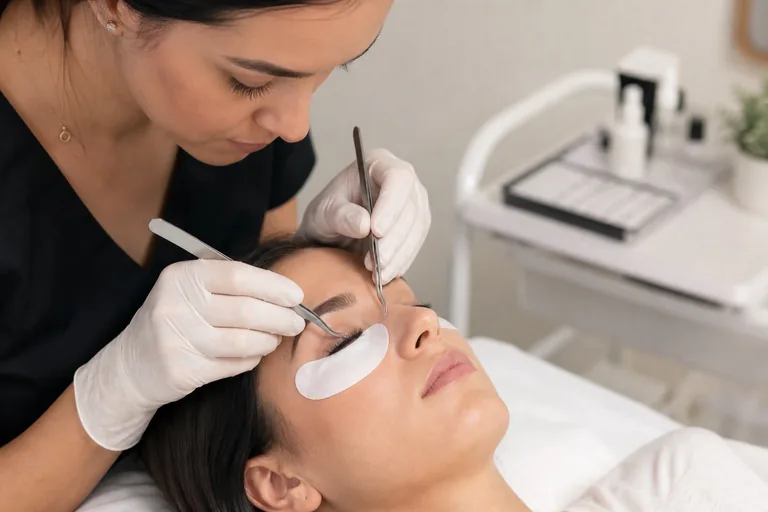
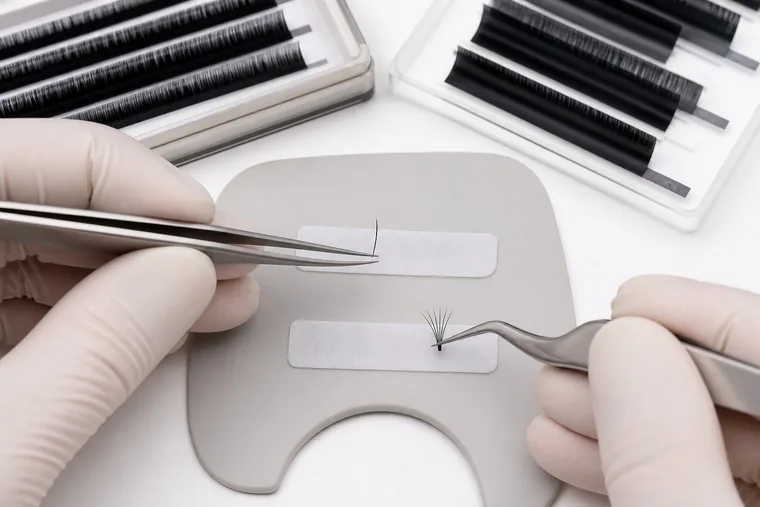
The lash artist separates one suitable natural lash from its neighbors, then attaches a fiber or fan to its shaft with professional lash adhesive. The attachment stays clear of the eyelid. When neighboring lashes are accidentally bonded together, they can pull against each other as they grow. These unwanted bonds, often called stickies, need to be found and separated by the professional.
Extensions do not create new lashes or provide an attachment point where no suitable natural lash exists. Strip lashes, temporary clusters, and at-home lash systems use different application methods and adhesives. The extensions described here are a professional service performed with your eyes closed; they are not suitable for self-application.
The artist controls adhesive amount, placement, and working conditions according to the product. More glue does not reliably make a set last longer. Correct isolation and a manageable load matter even when the finished lashes look neat from above.
Classic, volume, and hybrid: choosing the look
Technique
How it is built
What to expect
Classic or one-to-one
One extension fiber on one isolated natural lash.
Adds definition and length. Fullness depends partly on the number and distribution of your natural lashes.
Volume
A fan of finer fibers attached to one isolated natural lash.
Adds fullness. Light volume can look soft; a denser fan still needs to suit the lash supporting it.
Hybrid
Classic fibers and volume fans placed on different lashes within one set.
Combines definition with a more textured pattern. The mix is agreed with the artist and does not automatically last longer.
Classic or one-to-one
How it is built
One extension fiber on one isolated natural lash.
What to expect
Adds definition and length. Fullness depends partly on the number and distribution of your natural lashes.
Volume
How it is built
A fan of finer fibers attached to one isolated natural lash.
What to expect
Adds fullness. Light volume can look soft; a denser fan still needs to suit the lash supporting it.
Hybrid
How it is built
Classic fibers and volume fans placed on different lashes within one set.
What to expect
Combines definition with a more textured pattern. The mix is agreed with the artist and does not automatically last longer.
Labels such as 2D and 3D mean two or three fibers in a fan. They do not tell you its total weight: fiber diameter and length also matter. A fan has one attachment base and must not bridge several natural lashes.
A single fiber and a fan have different shapes, but each must be supported by one isolated natural lash.
Where the extension attaches
One base on one natural lash
Classic
One fiber on one isolated natural lash.
Volume
The fan base is attached to one natural lash.
A hybrid set combines these constructions on different lashes. Each attachment stays separate from its neighbors.
Amber marks the bond on the lash; teal shows the extension. There is space between the attachment and the skin, and the fan does not join neighboring lashes. Enlarged schematic, without application measurements.
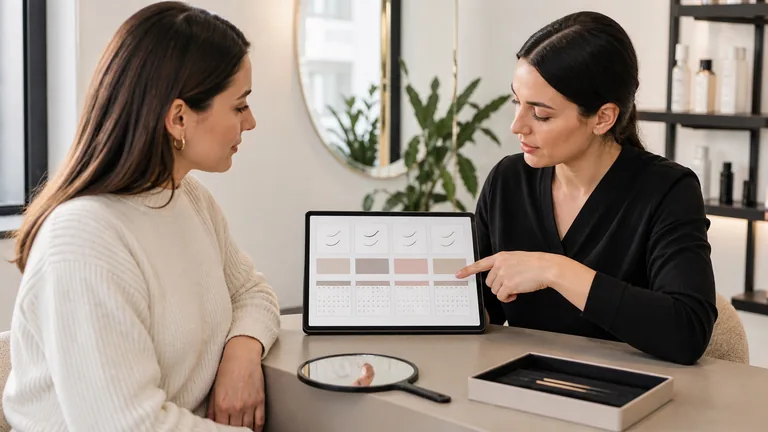
Ask to see work on eyes and natural lashes similar to yours. Describe what you like in a reference photo: a soft lash line, darker roots, more fullness, or uneven tips. Names such as wispy, wet look, and cat eye describe texture or styling as well as construction, so the name alone cannot predict the finished result.
Length, curl, and diameter
Length changes how far the lashes project. Long extensions at a downward-pointing outer corner can make that area look heavier; a shorter design may look more open. If you wear glasses, bring them to the consultation so the artist can consider clearance from the lenses.
Curl needs to work with the direction of your natural lashes and the available attachment area. Letter names are not identical across brands: two products labeled C or D can have different curves. Diameter contributes to weight and stiffness along with length and fiber count. The artist may therefore recommend a shorter or less dense set than the one in your photo.
Classic, light volume, and hybrid can all look subtle. Judge the proposed result by its darkness, fullness, and shape, including how it will look when you are not wearing other makeup.
How long the first appointment takes
Lash'd Out in Austin, Texas lists 2 hours 15 minutes for its classic, hybrid, and volume full sets. Its standard fills take 1 hour 15 minutes; extended or foreign fills, for work originally applied elsewhere, take 1 hour 30 minutes. These are that salon's appointment lengths, not a national average.
Tell the salon about any existing extensions when you book. Confirm whether consultation, removal of an old set, and breaks fit within the appointment, and ask what time you should expect to finish. An adhesive’s advertised setting speed refers to the attachment process, not the length of the appointment or the point when every aftercare restriction ends.
How long extensions last and when to book a fill
A review and possible fill at 2 to 3 weeks is a useful starting point to discuss with your artist. EyeWiki, from the American Academy of Ophthalmology, describes repeat applications at that interval as needed. Book according to the condition of your set and the salon’s fill policy; do not wait for the scheduled date if lashes pull or become uncomfortable.
An individual extension stays attached until the bond releases or its natural lash sheds. Your lashes are at different stages of growth, so they do not all fall out together. As a lash grows, its attachment moves farther from the eyelid. A few extensions remaining after several weeks do not mean the set will still look as full or orderly as it did on day one.
At a fill, the artist checks the remaining work, removes extensions that are too grown out or unstable, and adds fibers to suitable natural lashes. New, short lashes may need to remain bare. If too little usable work remains, you may need a new full set rather than a fill.
How a set changes
Growth, shedding, and a fill
After application
The extensions are separate and follow the agreed design.
As lashes grow and shed
Bonds move toward the tips. Some natural lashes shed with their extensions, leaving the set less full.
At a fill
The artist replaces grown-out extensions and adds fibers to suitable lashes. Lashes that cannot support an extension stay bare.
These stages show a small section of lashes without predicting how many will shed or on which day. The short new lash stays bare. A check at 2 to 3 weeks is an appointment plan to discuss, not a fixed growth cycle.
The following prices are from Lash'd Out’s Austin menu, checked October 21, 2026, at its Talent stylist level. Elite and Master rates are higher. Each full set is listed at 2 hours 15 minutes, and each standard fill at 1 hour 15 minutes within 2 to 3 weeks of the previous visit.
Service at Talent level
Full set
Standard fill
Classic
$150
$55
Hybrid
$200
$80
Volume
$225
$90
Classic
Full set
$150
Standard fill
$55
Hybrid
Full set
$200
Standard fill
$80
Volume
Full set
$225
Standard fill
$90
A classic full set and one qualifying fill at those rates total $205 ($150 + $55). Lash'd Out adds $35 to the fill price for an extended or foreign fill. Ask for a quote before transferring a set from another salon.
Clean Slate Waxing Lounge in Austin lists classic, hybrid, and volume full sets at $175, $215, and $245. Its corresponding standard fills cost $69, $79, and $89 and require both a 2-to-3-week interval and at least 50% of the extensions still attached. Time since the last visit alone does not establish eligibility.
Envious Lashes in New York City lists its fullest classic Envious Eyes set at $245 with a Stylist, $295 with a Senior Stylist, and $450 with Clementina. Professional removal is a separate $50 service; the menu also lists a complimentary consultation. These are individual salon examples checked October 21, 2026, not US averages.
For your quote, confirm the technique, artist level, fill deadline, minimum remaining coverage, and removal charge. The $205 example excludes removal, home-care products, and any tax, gratuity, or service fee that applies. For a longer maintenance budget, see the extension and lash lift cost guide.
Preparing for your appointment
Arrive without mascara, eyeliner, eyeshadow, or strip-lash glue. Remove waterproof residue gently beforehand and avoid coating the lashes with rich creams or oils. The artist will still carry out the required preparation.
Remove contact lenses before the service and bring your case, solution, and glasses. Ask when you can put lenses back in; the timing can depend on the system used.
Tell the artist about previous reactions to glue, tape, or cosmetics, current eye symptoms, recent eye treatments, and relevant medications. Do not stop prescribed medication to have extensions.
Mention an existing set, a recent lash lift, or difficulty lying back with your eyes closed. Do not pull off old extensions before the appointment.
Bring a reference photo and explain what you like about it. Allow time to agree on the design and aftercare; you cannot read or use your phone while the lashes are being applied.
If you have a history of reactions or an eye condition, discuss suitability before reserving a full set. The pre-treatment consultation guide helps you prepare the information the artist needs.
What happens during the service
The artist examines the lashes, discusses your goals and relevant history, and agrees on a design. Product and service details go in your client record.
After preparing the workspace and cleansing the area, the artist protects the lower lashes with pads or tape. These should not press into the eye, and the eyelids must stay comfortably closed.
The artist isolates one natural lash at a time and attaches the selected fiber or fan. The work is adapted to the lashes present, with checks for unwanted bonds between neighboring lashes.
Before you open your eyes, the artist completes the finishing steps required by the system and checks separation, direction, and comfort. After removing the protection, they show you the result and explain cleaning and maintenance.
Keep your eyes closed during normal application. If you need to move or take a break, tell the artist before opening them. Burning or a scratching sensation needs immediate attention.
When to postpone or stop
Adhesive, pads, and tools work close to the eye. Irritation, allergic reactions, injury, and traction on natural lashes are possible. The FDA’s eye cosmetic guidance advises avoiding eye cosmetics when there is an eye infection or inflamed skin around the eyes. Postpone the appointment in those circumstances.
During treatment, report burning, pain, pressure, scratching, or heavy watering immediately so the artist can stop. Afterward, seek medical advice for swelling, discharge, or persistent irritation. MedlinePlus advises immediate medical attention for severe or persistent eye pain, or pain that reduces vision. A cosmetic removal appointment must not delay that care.
If lash glue enters an eye, start rinsing immediately with water for 15 minutes. If the eyelids are glued shut, do not force them apart. Contact Poison Control at 1-800-222-1222 for instructions; persistent symptoms need medical assessment. Do not put solvent or lash remover into the eye. An aftercare instruction to keep lashes dry does not apply to an eye exposure.
A previous trouble-free set or a negative patch test cannot guarantee that you will not react. London Lash’s US guidance explains that reactions can still occur after a preliminary test or previous tolerated applications. Tell the artist about any past reaction and seek medical advice before trying again. Do not test professional lash glue on your own skin or assume a “sensitive” label makes it suitable for you.
Aftercare: water, steam, and cleaning
Ask the artist to identify the adhesive and any finishing product, then give you written instructions for washing, swimming, steam, and sauna. Initial restrictions differ between systems:
Xtreme Lashes HP-Ultra adhesive has a three-hour restriction on water, liquids, steam, excessive heat, cosmetics, and skincare after application. The same page gives different directions for FlexFusion with Rapid Cure Technology, including avoiding excessive steam and heat for three hours.
London Lash US Superbonder Sealant is a professional finishing product applied to completed adhesive bonds. Its current directions require 1 to 2 minutes of air drying before eyes open and allow wetting after the finished appointment. It is not the adhesive or a cleanser, and it is not a step to add yourself at home.
After any initial waiting period for your service, clean the lashes regularly to remove makeup, oil, and debris. One US example is London Lash Step 1 Foaming Cleanser / Lash Shampoo, a 50 mL foam intended for daily home care as well as professional preparation. For this cleanser:
Wash your hands, then dispense one pump onto the back of your hand.
With eyes closed, use a clean lash-cleansing brush to work the foam gently around the lash bases without pulling.
Rinse thoroughly with cool water until no foam remains.
Pat the area dry with a soft, clean tissue. Do not rub or tug at the extensions.
This foam contains tea tree; choose an alternative with your artist if you are sensitive to it. Do not substitute hair shampoo or baby shampoo. Keep your brush clean, let it dry, and do not share it. Follow your artist’s instructions for gently brushing the dry lashes, and stop if the brush catches or causes pulling.
Avoid rubbing your eyes, pressing lashes into a pillow, or using a mechanical lash curler. Do not twist, trim, or pull an extension that looks out of place; arrange a check.
Removal and choosing a lash professional
If you stop getting fills, you can let extensions shed gradually without pulling them or book professional removal. A remover intended for the adhesive is applied under controlled conditions with eye protection. Acetone, alcohol, oils used as solvents, steam, and professional remover applied at home are not safe shortcuts.
Before leaving, check the result in the mirror and confirm when to wash your lashes and return for a fill.
Choose someone who explains hygiene, keeps clean and used tools separate, records the products used, and can justify a shorter or lighter design. Ask how the salon handles discomfort, early loss, and fills on another artist’s work. Photos help you discuss the look, but cannot prove isolation or hygiene.
Check the professional’s license and permitted services with your state board. For example, Texas allows eyelash extensions under an Eyelash Extension Specialist, Esthetician, or Cosmetology Operator license. That is a Texas rule, not a nationwide license. A training certificate, including one from BeautyLearn, does not replace the license or authorization your state requires.
If your main goal is more curl in the lashes you already have, a lash lift changes their shape without adding fibers. It has a different maintenance schedule. Compare extensions and lash lifts before booking, and tell the artist if you have recently had a lift.
Frequently asked questions
Can I wear mascara on extensions?
Choose a set you like without mascara if possible. If you want to use it, ask for a formula and application method compatible with your service. NovaLash, for example, includes a water-soluble mascara formulated for its extensions in its Aftercare Kit. That does not establish compatibility with another system. Avoid using mascara to cover a fill that is overdue.
Do I have to stop using every product that contains oil?
Compatibility depends on the complete formula and adhesive system. NovaLash’s cleanLASH pads contain pomegranate seed oil and are formulated for NovaLash adhesives. That example does not make an arbitrary cleansing oil suitable for every set. Use the agreed eye-area cleanser and keep rich creams away from the attachment area. Do not massage oil into the bonds to try to remove them.
Can extensions damage my natural lashes?
They can, particularly if the load is unsuitable, several natural lashes are stuck together, or extensions are pulled off. Suitable sizing and separate attachments reduce those risks without eliminating them. Natural shedding alone is not proof of damage. If you feel pulling or see lashes joined together, have the work checked instead of separating it with tweezers at home.
What if many extensions fall out in the first few days?
Contact the salon with clear photos of both eyes, when the loss started, and the products you have used. Rapid or uneven loss deserves a check of the application and remaining set. Keep the aftercare instructions and ask whether the review is included in the service. Pain, swelling, or vision changes need medical attention as described above.
Can I get a set just for one occasion?
Yes. You can book a full set without committing to ongoing fills. Allow for the time and cost of removal or for the period when the set gradually becomes less full. If you want lashes you can put on and take off the same day, ask about temporary lashes before booking a professional extension service.