We use necessary cookies and the Meta Pixel to measure campaigns and improve our offers. You can change your optional-cookie preferences at any time. Read our Terms and conditions.
Lash lift gone wrong: what to do and when to get help
Silvana DebiasiSeptember 1, 2026Updated on October 21, 2026 13 min read
A lash lift can leave lashes too curled, crossed, bent at the tips, or barely lifted. What to do next depends on both the shape and the condition of the lashes, with eye comfort taking priority. An unwanted curl needs a salon assessment; burning or a change in vision needs a different response. You can ask for a review promptly even when another chemical treatment needs to wait.
At a glance: for a cosmetic problem, photograph your dry lashes and contact the salon. Avoid curlers and home lash-lift products. If lashes are breaking, pause chemical services. If solution gets in your eye, rinse immediately, then follow the Poison Control guidance below. Severe eye symptoms need emergency care after rinsing.
If solution enters your eye, begin rinsing immediately. Remove contact lenses and flush with plenty of room-temperature water for at least 15 to 20 minutes, blinking as you rinse. Let water flow gently from the bridge of your nose into the eye. Do not delay to take photos or wait for the salon to reply.
After rinsing, call US Poison Control at 1-800-222-1222 or use its online help. If symptoms are severe, go straight to an emergency room after irrigating; do not wait an hour. If irritation, pain, vision problems, redness, swelling, or tearing persist one hour after you started rinsing, get an urgent eye examination. Go to urgent care or an emergency room unless an eye doctor can see you immediately.
Emergency rinsing takes priority over instructions to keep a lash lift dry. For irritation from an eye cosmetic, the FDA advises stopping the product and seeing a doctor if irritation persists. Do not apply another cosmetic to soothe the eye or try to neutralize a lash-lift solution at home. Keep the product packaging available for the clinician or poison specialist.
How to recognize over-curl, kinks, crossings, and breakage
Side and front views
Follow the path of each lash
Continuous curve
The direction changes gradually. Use this as a shape reference; the appropriate angle varies with the eye.
Excessive curl
The tip turns back toward the eyelid. Look at how tight the arc is and whether the tip touches skin.
Kinked tip
The lash changes direction sharply at one point, creating a localized bend.
Little lift
The tip stays low. Compare before and after side views taken at the same angle.
Crossing
Two lashes cross. Trace each from its own base to see where their paths overlap.
Broken shaft
The shaft ends abruptly. A short lash may also be new growth; this drawing cannot establish the cause.
Enlarged, qualitative sketches, not to scale. The first four show one lash from the side; the last two show a row from the front. They illustrate visible shape and do not diagnose damage or an eye condition.
Look at dry lashes before adding mascara or serum for photos. Water and finishing products can hold lashes in small groups and hide their individual direction. Compare both eyes from the front and side in similar light. Before-treatment photos help distinguish a new problem from natural differences between the eyes.
Lashes that curl back toward the eyelid
From the side, an over-curled lash forms a tight arc with its tip turning back toward the lid. Note whether this affects the whole lash line, the center, or only a few lashes. Shield shape, size, placement, and the area covered by the solutions are possible causes for the professional to check. A tight curl alone does not prove overprocessing.
Send a side-view photo and say whether the tips touch your skin or bother you when you blink. Do not trim the tips or use a curler to push them the other way. If contact causes pain, redness, or tearing, seek an eye-care assessment instead of continuing to manipulate the lashes.
Kinked or hooked tips
A kink is an abrupt change in direction along a lash or near its tip. It differs from the continuous arc of a tight curl. Look for where the bend begins and whether lashes of a similar length share it. The artist should review how the tips sat on the silicone support, whether any folded over, and where the product was applied.
A clean spoolie may separate lashes that are lightly stuck together, but it cannot erase a bend set by the treatment. If the angle remains after gentle brushing, leave it alone. Repeated brushing adds friction without correcting the shape.
Crossed lashes or lashes pointing to one side
Follow each lash from its base to its tip. Overlap alone does not establish the cause.
From the front, you may see two lashes crossing or a group leaning toward the center of the eye. Trace the direction from the root: does the crossing start there or farther up? Incomplete separation, twisting during wrapping, and a support that moved are possibilities to compare with the service record.
If the lashes separate easily with a clean spoolie and stay apart, surface grouping may explain their appearance. If they cross again or you feel resistance, stop brushing. Natural direction and lashes at different growth stages can also affect the pattern, so compare with the original photos.
A weak lift or one eye more lifted than the other
Compare side-view photos before and after: how much does the base lift, where does the curve sit, and where does the tip end? A lash lift changes the direction of existing lashes. It does not add the length or density of extensions, so the result on short lashes may be subtle even when their direction has changed.
For a weak result, the artist should check support fit and distance from the roots, lash contact, residue, adhesive quantity, product condition, and processing. With uneven eyes, compare actual application and removal times for each side. Adding more time will not correct a support placed too far from the roots and adds exposure to the same lashes.
Frizzy, brittle lashes or lashes that break
People often call lashes “burned” when they look frizzy, dry, or irregular after a lift. Overprocessing is one possible cause: excessive exposure, product placed outside the intended area, or processing lashes that were already compromised can weaken them. These observations warrant an assessment; a photo cannot measure internal damage or diagnose an eye injury.
If you notice fragments or lashes snapping during ordinary cleansing, pause lifts, tinting, and chemical correction until they have been assessed. Do not pull on lashes to test their strength. A short lash can also be new growth, so record what changed from your starting photos. Sudden thinning, bare areas, or ongoing loss deserves medical advice.
What you can do at home while waiting for a review
Leave lashes free of curlers, tweezers, and pulling. Avoid steam or hot compresses intended to loosen the curl.
Use an eye-area cleanser you already tolerate, following the aftercare for your service. Clean gently with your eyes closed, rinse, and pat dry. Avoid scrubbing, hair shampoo, and homemade mixtures.
If your eyes are comfortable, gently brush dry lashes with a clean spoolie. Stop if it catches; brushing should separate a loose group without forcing a bend.
Avoid sleeping with your face pressed into the pillow. Do not cover fragile lashes or irritated eyes with extensions, strip-lash glue, or layers of mascara.
Elleebana’s aftercare guidance states that water in the first 24 to 48 hours does not undo its lift, while advising against heat, steam, and rich products during that period. Repeated washing, oil, and heat are not a correction method. Follow the instructions for the system actually used, and let wet lashes dry gently before judging their shape.
What a lash conditioner can and cannot do
A lash conditioner may improve surface feel and make lashes easier to manage. It cannot reconnect a broken shaft or restore missing length, and softer-feeling lashes are not proof that another lift is appropriate. Choose a product intended for lashes; do not experiment with essential oils or hair conditioner near your eyes.
For example, Elleeplex Advanced Aftercare is a cosmetic conditioning product. Elleebana USA describes daily use before mascara, allowing it to dry fully, or a nighttime coating. The manufacturer’s application leaflet specifies a coating on clean lashes. Use the applicator to leave a light coat rather than clumps, and confirm suitable use at your review if the lift has gone wrong. Stop cosmetics if irritation occurs. Advanced Aftercare is distinct from the professional ReGEN treatment and from a growth medication.
Photos and details to bring to the salon
Contact the salon when you notice the problem. Describe the change and when it appeared: “The right-eye tips turn back toward my eyelid” gives the artist more to work with than “My lashes are ruined.” Include any discomfort. Photos support a cosmetic review and should never delay care for eye symptoms.
Take a front photo with your eyes open and eyebrows relaxed, plus a side view of each eye.
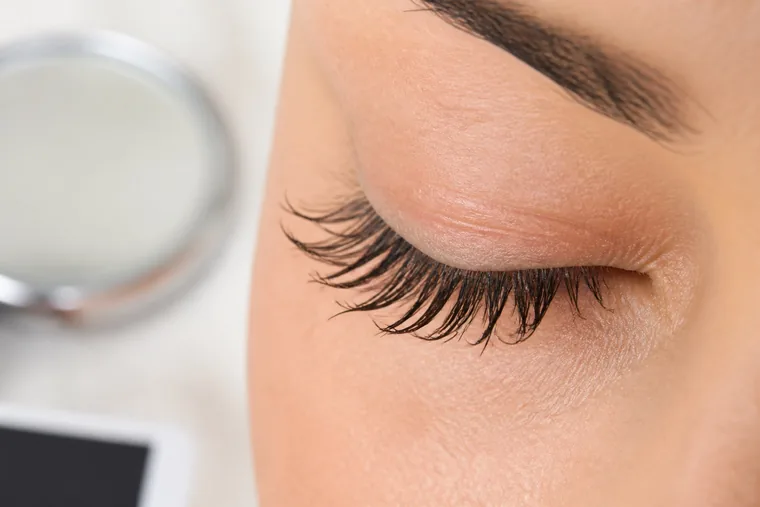
If comfortable, add a closed-eye photo to show crossings. Keep light and distance consistent, without filters or beauty mode.
Provide the treatment date, before photos if available, recent lifts or tints, products used at home, and when you first noticed the change.
The service record supplies details that a result photo cannot show, including products and processing times.
Ask the salon to supply the exact system and products for each step, batch numbers, opening and storage information, support model and size for each eye, product placement, and actual application and removal times. Include any tint or extra processing. You do not need to guess details that only the salon can provide.
The lash photography guide explains consistent lighting and angles for comparisons. Keep the photos for the review; permission to receive a treatment is separate from permission to publish your images.
Can a professional correct or repeat the lift right away?
A professional may be able to adjust the shape when the lashes are suitable and the exact system provides a corrective method. Ask what caused the problem, which products were used, and why the proposed procedure is appropriate after the exposure your lashes have already had. A review can end with a plan to wait.
Elleebana USA’s guidance on overprocessed lashes distinguishes an excessive curl from significantly compromised, brittle, or breaking lashes. It describes professional relaxation using Elleeplex Profusion for suitable over-curled lashes and advises avoiding further chemical processing when lashes are significantly compromised. The method requires a trained lash artist’s assessment.
Elleebana One Shot is a thioglycolate system; Elleeplex Profusion uses cysteamine. Their placement and processing instructions differ. A Profusion correction example is not a One Shot protocol, and step numbers do not establish compatibility with another brand. The artist should use current US instructions and technical support for the products involved, rather than copying a correction time from a video.
If the system, previous timings, or an applicable correction method cannot be established, postpone more chemical work and seek a documented assessment. Another salon can review the result, but it cannot reconstruct the original chemical exposure from a photo. Do not buy a kit to experiment at home, mix steps from different systems, or put brow-only products on lashes.
How long to wait: a review, another lift, and new growth
You can request a review now without agreeing to another lift. While waiting, a weekly photo in the same conditions is a useful way to track shape and new growth without handling the lashes every day. Taking photos weekly is optional and does not establish when another lift is appropriate.
When
Useful next step
Keep in mind
As soon as you notice a problem
Report the change and arrange a review. Follow the eye-care guidance above if symptoms occur.
A review does not require another chemical treatment.
Weekly, if useful for your records
Compare a dry-lash photo and note any new breakage or discomfort.
Seven days is not a recovery deadline or clearance for a lift.
6 to 8 weeks: Elleebana’s general routine interval
Have the artist assess new growth and lash condition before another ordinary lift.
A routine interval does not show that damaged lashes have recovered.
As soon as you notice a problem
Useful next step
Report the change and arrange a review. Follow the eye-care guidance above if symptoms occur.
Keep in mind
A review does not require another chemical treatment.
Weekly, if useful for your records
Useful next step
Compare a dry-lash photo and note any new breakage or discomfort.
Keep in mind
Seven days is not a recovery deadline or clearance for a lift.
6 to 8 weeks: Elleebana’s general routine interval
Useful next step
Have the artist assess new growth and lash condition before another ordinary lift.
Keep in mind
A routine interval does not show that damaged lashes have recovered.
Elleebana’s general lash-lift FAQ recommends at least 6 to 8 weeks between routine lifts and an assessment before rebooking. That is not a recovery promise after a poor result. Fragile, broken, or still sharply bent lashes may need a longer pause, with the next decision based on their condition and the exact system.
Lashes can look more even as treated lashes grow and are gradually replaced. A broken segment does not join back together. Remaining length may increase while that lash is actively growing; other lashes remain until they shed. This can take weeks to months, with no single date when every lash returns to its starting appearance. The natural eyelash growth-cycle guide explains why replacement happens at different times. Seek medical advice for new bare patches or continuing thinning instead of waiting out a cycle.
Agreeing on a plan and preventing the same problem
At the review, compare the intended result with the photos and the current lashes. Ask for a written plan: the finding, whether the next step is cosmetic care, observation, or a system-supported correction, and when to contact the salon again. Discuss any refund or other commercial response separately from consent to another procedure.
For the artist, prevention starts with the service record. Check the support shape and fit on both eyes, confirm that lashes lie separately without folded tips, and record each eye’s processing. If a support moves, the eye will not stay closed, or product reaches an unintended area, stop and follow that system’s incident instructions. Extra minutes cannot compensate for poor placement.
The professional lash-lift guide explains support fitting and direction checks before processing. If you are choosing training, review the lash lift course program for the skills it covers. Course completion does not by itself establish permission to perform the service in your state.
Checklist for your review
Frequently asked questions
Can I wear mascara on lashes that are too curled?
If your eyes are comfortable, lashes are not breaking, and your service aftercare allows it, use a mascara that removes easily. Avoid a waterproof formula that needs rubbing to remove. Photograph the bare lashes first: mascara may emphasize a hooked tip, and it should not be used to hold lashes forcibly in place.
Can only the less-lifted eye be corrected?
Have both eyes assessed and compare the supports and processing records. A difference in shape does not establish that one side simply needs more product. The artist needs to identify the likely cause and decide whether the system supports further processing after that eye’s previous exposure.
Did getting my lashes wet mean I need another lift?
No. Elleebana’s aftercare guidance says water in the first 24 to 48 hours does not undo its lift. Let lashes dry without rubbing and compare their shape. A shower alone is not a reason to repeat the treatment; ask about the instructions for the system your salon used.
Can another salon assess a lift done elsewhere?
Yes. Send photos first and ask whether the artist is familiar with the system used. Bring the date, product names, and timings the original salon can provide. If details are missing, say so. The second artist can assess the visible result and discuss care without promising a chemical correction.
Can I ask for a refund without accepting a correction?
You can decline another procedure and ask the salon for a refund or other resolution. Explain how the result differs from what you agreed, attach photos and your receipt, and request a written response. Keep the consultation and follow-up messages. A refund is not automatic; it depends on the agreement, circumstances, and applicable state law.