We use necessary cookies and the Meta Pixel to measure campaigns and improve our offers. You can change your optional-cookie preferences at any time. Read our Terms and conditions.
Professional eyelash tinting: color, timing, and US safety
Silvana DebiasiSeptember 1, 2026Updated on October 21, 2026 12 min read
Professional eyelash tinting adds color to natural lashes, making pale hairs and light tips easier to see without mascara. The change can be noticeable on blond lashes and subtle on lashes that are already dark. A tint does not add length, extra hairs, or curl. For a US appointment, choosing the shade is only part of the decision: the product must meet the rules for eyelash coloring, and the practitioner must be allowed to provide the service in that state.
At a glance: choose the shade on clean, dry lashes and agree how much definition you want. US rules permit silver nitrate in professional eyelash dyes only under specific conditions, including a maximum one-minute application of the product containing it and no use under age 16. Preparation and other instructed stages have their own timing. Keep eyes closed during normal application and removal; eye exposure requires immediate rinsing.
The FDA identifies silver nitrate as the only color additive approved for dyeing eyebrows or eyelashes, for professional use only. That is a restricted use of an ingredient, not blanket approval of every tint sold online or of an entire brand. Scalp-hair dye, beard dye, and a product labeled only for brows are not substitutes for an eyelash product. See the FDA color-additive guidance.
For the cosmetic containing silver nitrate, 21 CFR 73.2550 sets the following conditions. These are limits for a finished product and its use, not a formula to make or dilute in the salon.
Requirement
Federal condition
Formulation
No more than 4% silver nitrate by weight. The formulation must have a viscosity of 120 to 180 Pa·s at normal temperature and pressure.
Client age
Not for use on anyone under 16. A parent’s permission does not override this restriction.
Application time
No more than 1 minute for the cosmetic containing silver nitrate, followed by immediate removal.
Who applies it
A professional applies the product to eyebrows or eyelashes according to its directions.
Distribution
Not for distribution or direct sale to consumers.
Formulation
Federal condition
No more than 4% silver nitrate by weight. The formulation must have a viscosity of 120 to 180 Pa·s at normal temperature and pressure.
Client age
Federal condition
Not for use on anyone under 16. A parent’s permission does not override this restriction.
Application time
Federal condition
No more than 1 minute for the cosmetic containing silver nitrate, followed by immediate removal.
Who applies it
Federal condition
A professional applies the product to eyebrows or eyelashes according to its directions.
Distribution
Federal condition
Not for distribution or direct sale to consumers.
The required label warns that silver nitrate can permanently stain skin and irritate eyes. It must identify the ingredient and state the professional-use, age, timing, immediate-removal, and consumer-sale restrictions. It also directs immediate eye rinsing after contact and consultation with a physician if irritation persists. The regulation includes ingredient purity specifications and labeling requirements for the color additive and mixtures supplied for coloring.
Before purchasing stock, obtain the US label, ingredient list, and current instructions for the exact formulation from its manufacturer or authorized supplier. Confirm the intended lash use and ask for confirmation of the concentration and viscosity requirements; a thick appearance is not a viscosity measurement. An imported product, a familiar brand name, or an online listing does not establish compliance. California’s tinting bulletin makes the same distinction and states that its board does not approve products or manufacturers.
Choose a color from the lashes you actually have
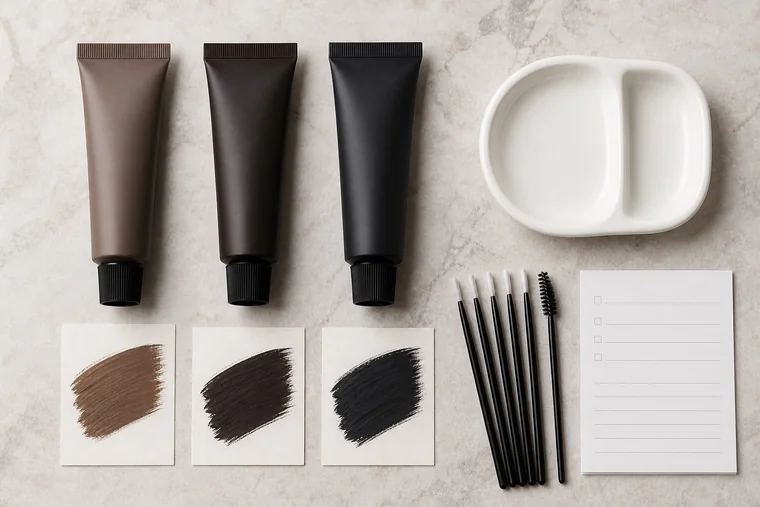
Look at clean, dry lashes in even light, including the tips. Ask whether the client wants a softer outline or the darker definition they get from black mascara. A swatch helps discuss that choice, but its color on white card cannot predict the result on hair that already contains pigment.
Starting point
Choice to discuss
Expectation to set
Very light lashes or pale tips
A brown shade for softer definition, or a deeper permitted shade for stronger contrast.
Even a brown can look much darker than the untreated lashes. Coloring pale tips reveals existing length.
Medium-brown lashes
Compare a similar brown with a darker shade from the same permitted range.
The useful change may be more even color from base to tip, rather than a dramatic before-and-after.
Naturally dark lashes
Decide whether the small likely color change is worth a tint.
Tinting cannot supply the thickness of a mascara coating or the curl of a lift.
Very light lashes or pale tips
Choice to discuss
A brown shade for softer definition, or a deeper permitted shade for stronger contrast.
Expectation to set
Even a brown can look much darker than the untreated lashes. Coloring pale tips reveals existing length.
Medium-brown lashes
Choice to discuss
Compare a similar brown with a darker shade from the same permitted range.
Expectation to set
The useful change may be more even color from base to tip, rather than a dramatic before-and-after.
Naturally dark lashes
Choice to discuss
Decide whether the small likely color change is worth a tint.
Expectation to set
Tinting cannot supply the thickness of a mascara coating or the curl of a lift.
Shade names vary between ranges. If a range offers a blue-black shade, that usually describes a cool black effect; it is not a promise of bright blue lashes. Choose only among shades that meet the US requirements for the intended use. Agree the result in plain terms, such as “darker tips with a soft brown outline,” and record the selected shade.
Swatches illustrate differences in depth. They do not identify an approved formulation or predict the exact color on natural lashes.
Professional scope, consultation, and patch tests
Federal cosmetic requirements and state licensing are separate checks. Confirm that your particular license covers lash tinting and that your establishment meets the state’s requirements. For example, Texas limits an Eyelash Extension Specialist license to the specified extension service; that license alone does not authorize tinting. A BeautyLearn course certificate does not grant a state license or expand its scope.
Before booking, ask about previous reactions to lash, brow, or hair color; current eye or eyelid symptoms; recent eye procedures; and relevant advice from an eye-care professional. Postpone if there is redness, discharge, irritated or broken skin, swelling, pain, or difficulty keeping the eyes comfortably closed. Pain, light sensitivity, or a change in vision needs medical assessment, not a trial application of tint. A history of a dye reaction calls for medical advice before considering another product.
Arrange any manufacturer-directed skin sensitivity check early enough to complete the stated observation period. Record the exact products, site, method, dates, and result. Do not copy the test method from an oxidative dye onto a different system, apply test material to the eyelid, or shorten the waiting period to fit an appointment. If the instructions are missing or ambiguous, obtain them before proceeding.
A negative preliminary check cannot guarantee that treatment will cause no reaction, and it does not test whether product entering the eye would be harmless. FDA specifically notes that a reaction to hair dye can occur after a negative skin test. That warning is not a lash-tint testing protocol: use the directions for the actual lash product. Diagnostic allergy testing belongs with a healthcare professional. No patch test makes a noncompliant product permissible.
Prepare lashes and protect the eyelids
Protection and placement
Keep the lashes above the pad
The pad supports the lashes without pressing against the eye. Check comfort and placement before application.
Green shows product on the hairs. Keep it off the inner lid margin; use the application area specified for the product.
Schematic views of protection and controlled coating, not a product-specific application map. Keep eyes closed during normal tinting and removal. If product enters an eye, open it for immediate rinsing.
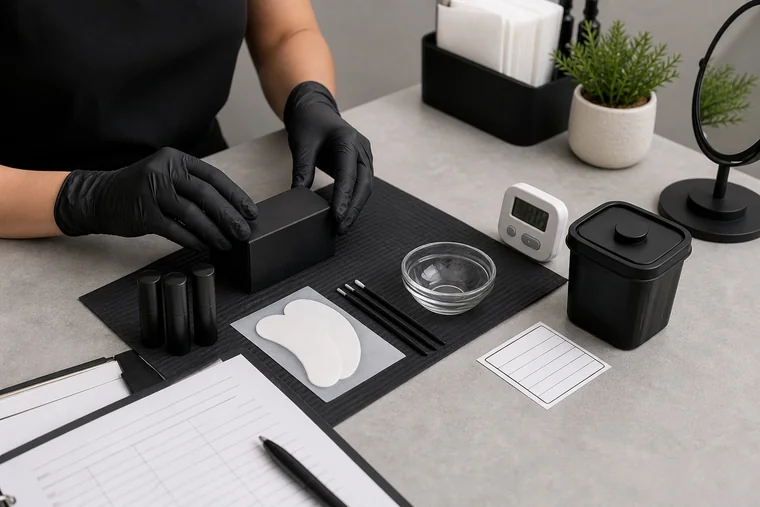
Set up the timer, clean applicators, protective pads, removal materials, and access to running water before opening the products. Keep original containers available so labels and batch numbers can be checked. Wear appropriate gloves, prepare only the quantity needed, and keep used applicators away from clean stock.
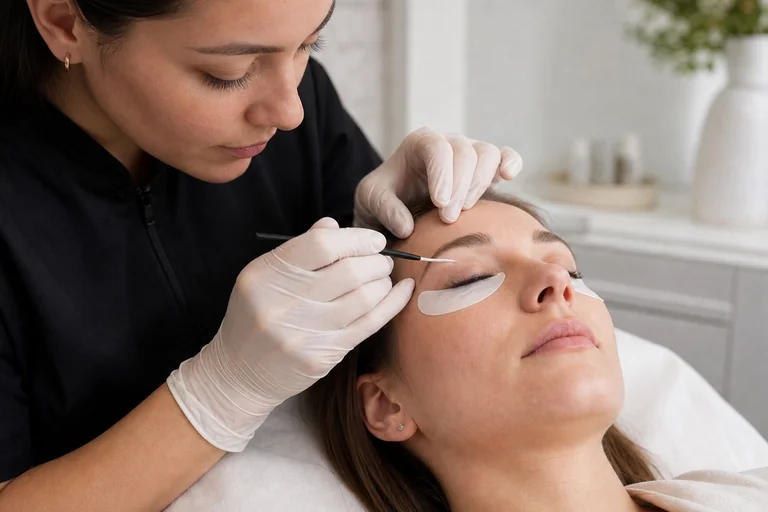
Have the client remove contact lenses. Clean away mascara and residue with the cleanser allowed by the system, then dry as directed. Comfortable, complete eye closure must be possible before application begins. Fit the specified under-eye protection so the lashes being tinted remain above it and the pad does not press against the eye. Check it again if the client moves.
Silicone pads, paper shields, and protective creams have different placement instructions. A cream used to hold a paper shield does not automatically belong under a reusable silicone pad. Keep the application on the intended hairs, away from the eye surface and inner lid margin. The client should report stinging immediately and keep the eyes closed until normal removal is complete.
Have protection, timing, removal supplies, and the treatment record ready before product application.
Plan each product stage and its timing separately
Read the full sequence before dispensing anything. A system may require separate base and activator stages, with removal or drying between them. Identify which component contains silver nitrate and when timing begins for each eye. The one-minute federal limit applies to the silver-nitrate cosmetic, not to the entire appointment or a preparation step that does not contain it. Do not transfer mixing ratios or exposure times from a peroxide-based product sold for another market.
Write the sequence on the treatment record: product applied, permitted exposure, removal method, and any required drying interval. Use the designated components in their stated order. If the directions call for sequential application, do not mix those components together. A peroxide developer cannot replace a silver-nitrate activator. Brow-only primers and skin-staining techniques must not be extended to the lashes.
Use enough product for the instructed coverage without flooding the pad or lid edge. Follow the hair direction within the application area defined by the product. Start the timer at the instructed point and keep separate start and removal times when the eyes are treated at different times. Stay with the client. Remove the product promptly at the specified limit; a darker target or pale patch does not justify extra time or an improvised second cycle.
Remove the tint and assess dry lashes
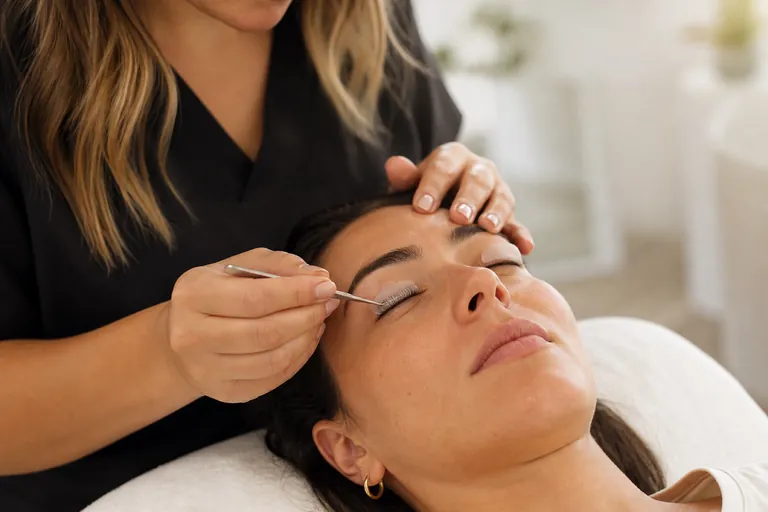
Use the removal material and order specified for that system, keeping the eyes closed during routine cleanup. Work with fresh material as needed so residue is collected instead of spread toward the eye. Complete any instructed cleansing, inspect between the lashes and around the lid edge, and check comfort before asking the client to open their eyes.
Assess the result once the lashes are dry and separated. Compare both eyes in the same light, including the tips and any pale areas. The result should be judged against the color agreed before treatment. A dark-looking wet gel is not the finished shade. Photograph only with the client’s permission and with comparable lighting, distance, and absence of mascara.
Burning or product in the eye: stop and rinse
Stop immediately for burning, pain, marked watering, swelling, or product moving toward the eye. If a chemical enters the eye, begin rinsing at once; do not delay to finish ordinary tint removal, take photos, or call the salon manager. Remove contact lenses and use plenty of room-temperature water for at least 15 to 20 minutes. Let water flow gently across the eye and encourage blinking. The closed-eye rule for normal tinting does not apply to this emergency rinse.
US Poison Control advises contacting Poison Control at 1-800-222-1222 or using webPOISONCONTROL after rinsing. Severe symptoms require an emergency-room visit immediately after irrigation. If irritation, pain, vision problems, redness, swelling, or tearing persists one hour after rinsing began, seek an urgent eye examination. Do not wait that hour when symptoms are severe. Follow any more urgent product-specific instruction, and keep the package available.
Do not put tint remover, another chemical, or a homemade neutralizer into the eye, and do not restart the cosmetic service. Once immediate care is arranged, document the products and batches, timing, reported symptoms, and actions taken. Report a suspected cosmetic reaction through the FDA reporting route.
Combining a lash lift and tint
A lift reshapes lashes that are already being exposed to a chemical system. Before adding tint, confirm the exact lift and tint combination, its US suitability, and the manufacturer-supported order, application area, removal, and timing. A shared brand name is not enough: an oxidative tint and a sequential silver-nitrate system can have different instructions.
A shortened tint time from a European lift protocol is not a US protocol. The same applies to instructions for eyebrow lamination. If the current instructions do not support the proposed combination, leave the tint out of that appointment and ask the manufacturer for a documented option. Do not improvise a waiting interval or tint over visibly damaged lashes. The professional lash lift guide explains shield fit, lash direction, and assessment separately.
Fading, aftercare, and the next appointment
Color can fade, and naturally shed lashes are replaced by untinted hairs. The result therefore changes gradually, especially against a pale natural base. A manufacturer’s maximum wear claim describes its own product; it is not a measured average for every client or a promise that the color stays unchanged. The natural lash cycle explains why new light hairs can appear alongside tinted ones.
Ask the salon for the aftercare instructions for the exact service, including any combined lift. Keep up gentle eye-area cleansing and avoid rubbing or pulling. Do not add a universal ban on water, oil, or mascara if the product instructions do not require it. Compare the fading result with a photo taken after the appointment, then agree whether another tint is useful and permitted. New symptoms or a previous reaction take priority over a standing repeat booking.
Uneven, too dark, or barely visible: what to check
What you notice
Check the record and application
Next step
Pale tips or patches
Look for makeup residue, hairs trapped under the pad, uneven coating, or missed product stages.
Assess clean, dry lashes and record the areas affected. Do not automatically add another exposure.
Darker than intended
Compare the chosen shade, untreated base, and actual exposure with the agreed result.
Discuss a softer shade for a future eligible appointment. Avoid bleaching, scrubbing, or using a hair-color remover near the eye.
Little visible difference
Check whether the lashes were already dark or the goal actually required curl or volume.
Compare tips and color continuity in the same light. More processing time cannot add hairs or change their direction.
Stained skin
Check product load and whether protection moved.
Use only the product’s permitted skin-cleanup method. A brow stain remover is not an eye rinse.
Pale tips or patches
Check the record and application
Look for makeup residue, hairs trapped under the pad, uneven coating, or missed product stages.
Next step
Assess clean, dry lashes and record the areas affected. Do not automatically add another exposure.
Darker than intended
Check the record and application
Compare the chosen shade, untreated base, and actual exposure with the agreed result.
Next step
Discuss a softer shade for a future eligible appointment. Avoid bleaching, scrubbing, or using a hair-color remover near the eye.
Little visible difference
Check the record and application
Check whether the lashes were already dark or the goal actually required curl or volume.
Next step
Compare tips and color continuity in the same light. More processing time cannot add hairs or change their direction.
Stained skin
Check the record and application
Check product load and whether protection moved.
Next step
Use only the product’s permitted skin-cleanup method. A brow stain remover is not an eye rinse.
Document the service and the follow-up
Record the product range and exact shade, every component and batch, opening or expiration information, preliminary checks, and the sequence performed. Include the actual application and removal times for each eye, product preparation, protection used, and any linked lift treatment. Note the client’s comments separately from your observations.
Before the client leaves, confirm that the product is fully removed, explain the result, and provide the applicable care instructions and a contact for questions. If a problem is reported later, record when it started and what changed; avoid diagnosing an allergy or blaming home care without evidence. The lash client record guide covers how to keep those details together.
Frequently asked questions
Can I tint my eyelashes at home?
FDA advises against home eyelash or eyebrow dyeing. The silver-nitrate exception is for professional application, and those products are not for distribution or direct sale to consumers. A kit being available online does not change those restrictions. Choose a professional who can identify the product and explain their state-authorized scope.
Will tint give the same result as mascara?
It colors the hairs that are present. It does not create the coating that some mascaras use to make lashes look thicker or longer. Tint can make pale lashes easier to see without makeup; someone seeking substantial added volume should not expect that result from color alone.
Can I use a different developer if mine runs out?
Do not substitute one. The required companion product depends on the exact tint system, even within a single brand. Pause the service until the correct component is available. Adding a familiar peroxide developer to a sequential gel system does not create an equivalent product.