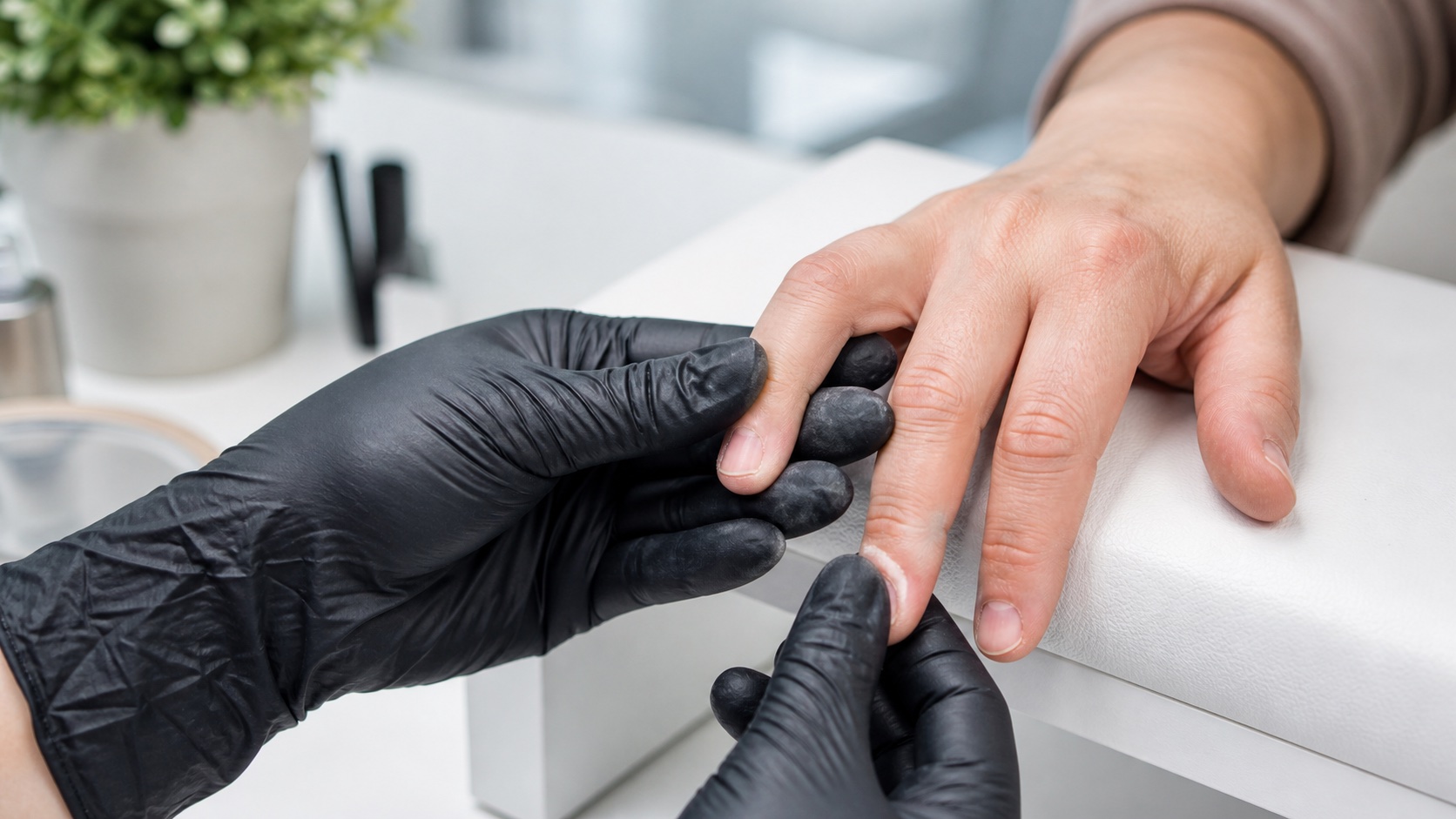
Nail biting, clinically called onychophagia, is repeated biting of the nail plate and sometimes the surrounding skin. It can happen automatically during concentration or boredom, or follow a noticeable urge during stress, frustration or sensory discomfort. It is not proof of poor hygiene or weak willpower. A useful plan starts by observing the pattern without shame, protecting injured tissue and matching the response to the trigger.
Quick answer: keep rough edges and intact surrounding skin cared for, identify the situations and sensations that precede biting, add barriers where useful and practise a response that makes biting physically difficult. Nail polish or an enhancement may act as a reminder for some people, but cannot treat the behavioural cycle. Pain, bleeding, heat, swelling, pus, spreading redness or an unexplained nail change require healthcare assessment before any cosmetic service.
This guide is educational for people who bite their nails, families and nail professionals. It does not diagnose a mental-health, skin, dental or nail condition and does not recommend medication. Explore the professional nail guide library for related anatomy and technique, or the separate English-market online nail courses for structured professional education. English courses and teachers are independent market records.
What onychophagia is—and what it does not prove
Onychophagia is commonly discussed among body-focused repetitive behaviours, or BFRBs. The behaviour may involve one nail, a set of fingers or all ten; intensity can change over time. Some people mainly bite the free edge, while others also pick, tear or bite periungual skin. Repetitive nail picking or pulling without biting is often described as onychotillomania. These patterns can overlap but may need different barriers and professional assessment.
A 2022 clinical review indexed by the US National Library of Medicine describes onychophagia and onychotillomania as complex conditions with physical and psychosocial consequences and highlights the limited number of large treatment trials. Nail biting does not automatically establish anxiety, obsessive-compulsive disorder or another diagnosis. When it causes distress, repeated injury, loss of control or interference with daily life, a qualified clinician can assess the complete picture.
The nail-biting loop: trigger, action and short-term payoff
Map the loop without shame
Different triggers need different interruption points
Situation, feeling or sensation
Hand moves toward the mouth
Biting changes the sensation
The response is reinforced
A trigger can be emotional, situational or sensory. Stress and impatience are familiar examples, but so are reading, driving, screens, meetings, studying, waiting and feeling one rough edge. The hand may reach the mouth before conscious awareness. Biting then removes the irregularity, creates stimulation or briefly changes tension, which can reinforce the same response the next time.
Map the sequence rather than searching for one universal cause. Record the setting, activity, finger, physical sensation, emotion, degree of awareness and what happened immediately after. A pattern such as “rough skin while answering email” suggests a different prevention plan from “automatic biting while watching television”. The record is a learning tool, not a score of personal failure.
Severity is more than nail length
Look beyond the free edge
Frequency, tissue and daily impact matter
Pattern
Frequency and awareness
Tissue
Nail, folds and open skin
Control
Ability to interrupt the movement
Impact
Pain, distress and daily life
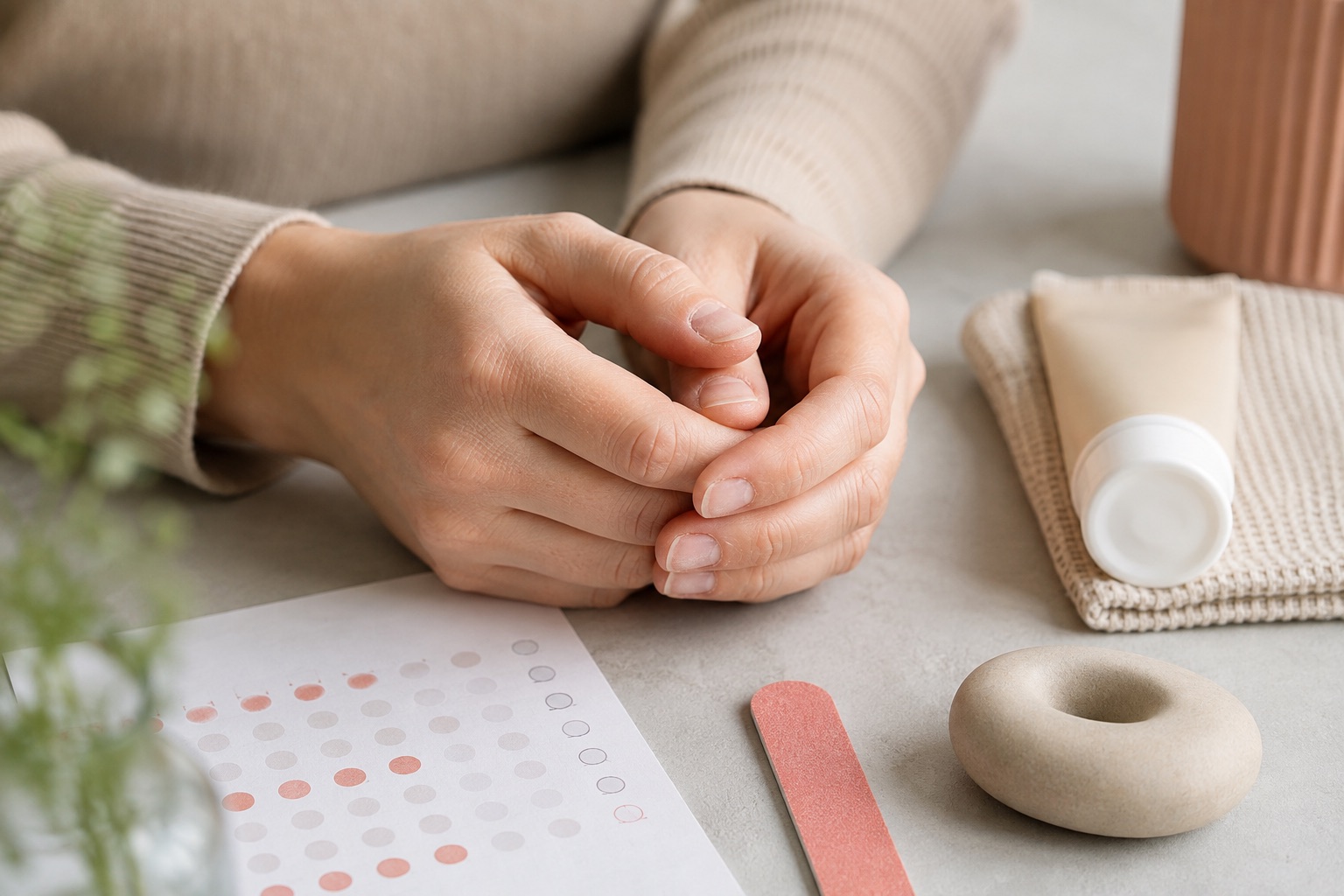
A very short nail is visible, but length alone cannot grade the problem. Consider frequency, duration, ability to interrupt the movement, pain, bleeding, skin involvement, repeated unsuccessful attempts to stop, embarrassment and impact on work, relationships or daily activities. Use occasional photographs in the same light only if they support calm review rather than compulsive checking.
Observation | Why it matters | Appropriate next step |
|---|---|---|
Short, rough free edges; intact skin | Sensory irregularity may trigger more biting | Gentle edge care and behaviour plan |
Pain, bleeding or open skin | Barrier is damaged and cosmetic products may worsen exposure | No cosmetic service; seek healthcare as appropriate |
Heat, pus, swelling or spreading redness | Possible infection requires clinical assessment | Prompt healthcare advice |
Distress, loss of control or daily interference | Self-help may not be sufficient | Discuss with an appropriate clinician or therapist |
Repeated trauma can affect the nail plate, folds, bed and growth area. The nail-matrix guide explains why injury near the base may influence future plate formation and why a nail professional should document and refer rather than diagnose.
Possible effects on nails, skin, mouth and teeth
Biting can leave an absent or irregular free edge, tender lateral folds, torn skin and repeated inflammation. Injury to the barrier may make local infection more likely. The American Academy of Dermatology notes that chronic biting can damage the tissue responsible for nail growth and increase exposure to harmful bacteria and viruses. Seek assessment for increasing pain, warmth, discharge, swelling or redness that spreads.
The behaviour can also chip or wear teeth, irritate oral tissues and load the jaw. The American Dental Association’s MouthHealthy guidance notes potential tooth chipping and jaw effects. Dental pain, new sensitivity, a fractured edge, jaw clicking with pain or functional difficulty belong with a dentist or other appropriate clinician, not a manicure appointment.
A four-part plan to change the behaviour
Change one part of the loop at a time
Awareness comes before the alternative response
Notice context and early movement
Smooth or protect the trigger
Use a competing response
Review and adjust one variable
1. Build awareness without surveillance
For several days, note the two or three strongest contexts. Add an unobtrusive reminder—a ring, smooth wrist band or visual cue—if it helps the movement become conscious. Avoid constant checking, public correction or family monitoring that increases shame. The goal is to notice early enough to choose another action.
2. Reduce sensory and situational triggers
Keep nails safely short and smooth rough edges with a gentle file instead of teeth. Moisturise intact skin and protect specific fingers with a breathable barrier during predictable high-risk tasks when appropriate. Put a file and alternative object where the trigger happens. A barrier should not compress, trap moisture over damaged skin or hide infection.
3. Practise a competing response
When the urge or movement appears, use an action that is incompatible with bringing the fingertips to the mouth: gently close the hands, place palms flat on the thighs or hold a smooth object while breathing normally. Practise in the real context, not only afterwards. Habit reversal training commonly combines awareness with a competing response and support; a trained clinician can tailor it when the behaviour is persistent.
4. Review progress and adjust one variable
Measure successful interruptions, reduced injury and faster recovery as well as nail length. A relapse reveals a trigger or context that needs a different support; it does not erase learning. Change one element—barrier, reminder, response or location—then observe again. Punishment, ridicule and threats do not teach an alternative action and can worsen distress.
Evidence and realistic expectations
The American Academy of Dermatology’s current tips include short nails, bitter-tasting polish, finger coverings, trigger identification, replacement behaviour and gradual change. These options do not all suit every age, skin condition or person. A bitter product is a reminder, not a treatment for an underlying condition, and must be used exactly as labelled.
The clinical review of onychophagia and onychotillomania reports evidence for stimulus control and habit-reversal approaches but also notes limited trials and the need for individual assessment. A separate PubMed-indexed practical review of habit reversal training describes it as a clinical intervention for BFRBs. This guide gives a safe overview, not a do-it-yourself psychotherapy protocol.
Can polish, gel or an extension help?
A smooth manicure, colour or temporary cover can make the movement easier to notice and may motivate some people to protect the result. It can also be bitten, peeled or picked. Cosmetic product is therefore an optional reminder, not proof that the behaviour has stopped and not a substitute for behavioural or healthcare support.
Do not apply gel, acrylic, acrygel, adhesive, primer or colour over open, bleeding, painful, swollen or apparently infected tissue. Artificial material can conceal deterioration, expose damaged skin to reactive ingredients and create a new picking edge. Even when skin is intact, use conservative length and a removal route that does not demand aggressive preparation. Compare systems in gel vs acrylic vs acrygel; do not choose simply because one feels “harder”.
Professional stop-or-proceed matrix
Intact tissue is the decision boundary
A cosmetic reminder cannot treat injury or behaviour
Proceed carefully
Intact skin, stable plate, no pain
Postpone
Open, bleeding or macerated tissue
Refer promptly
Heat, pus, swelling or spreading redness
Stay in scope
No diagnosis or behaviour treatment
Presentation | Professional boundary | Possible action |
|---|---|---|
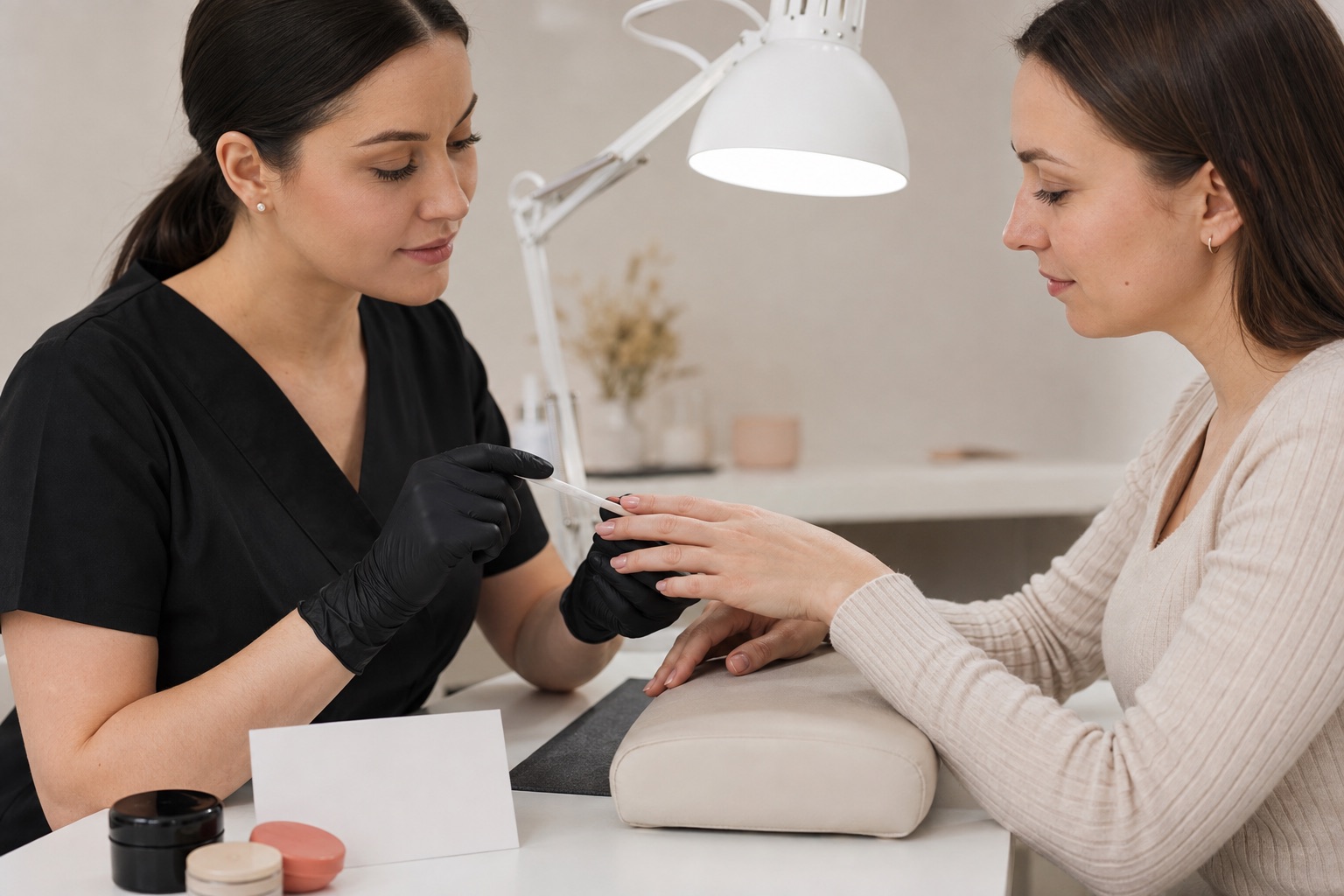
Intact skin, stable short plate, no pain | Cosmetic assessment only; no promise to stop biting | Gentle manicure or conservative reminder if appropriate |
Open, bleeding or macerated tissue | No reactive product or enhancement | Postpone; advise appropriate healthcare |
Pain, pus, heat, spreading redness or major separation | Possible clinical condition outside cosmetic scope | No service; prompt clinical assessment |
Persistent distress or inability to control biting | Do not label, shame or provide therapy | Encourage qualified behavioural or mental-health support |
Document only what is necessary: visible condition, client-reported history, advice, decision, products if used and follow-up. Use neutral language such as “skin open at right index lateral fold” rather than a diagnosis. Obtain consent for photographs and protect health-related information. Do not guarantee regrowth, a deadline or permanent behaviour change.
When to seek professional help
Seek healthcare promptly for suspected infection, significant pain, bleeding that does not stop, injury, marked nail separation or rapidly changing appearance. A dermatologist or primary-care professional can assess nail and skin changes; a dentist can review tooth or jaw effects. Urgent or emergency symptoms require the local urgent-care route.
Behavioural or mental-health support is appropriate when biting causes distress, tissue damage, repeated failed attempts to stop, shame, avoidance or interference with daily life. Parents and carers should avoid punishment and seek age-appropriate clinical advice. Medication, supplements and treatment of possible coexisting conditions must be discussed with qualified healthcare professionals.
For oral context, the American Dental Association’s nail-biting guidance describes possible tooth and jaw effects. For nail-fold infection information, use a current healthcare source rather than image matching. Nail professionals should never drain, medicate or cover a suspected paronychia.
Frequently asked questions about nail biting
Is nail biting just a bad habit?
It is a repeated behaviour that can be automatic or urge-driven and may have physical and emotional consequences. Shame is not a treatment strategy.
Does nail biting always mean anxiety?
No. Stress can be a trigger, but boredom, concentration, sensory irregularities and other contexts are common. Only a clinician can assess a possible diagnosis.
Can nails recover after biting stops?
Many superficial changes can grow out, but recovery depends on the tissues affected and repeated trauma. Persistent deformity or concern warrants dermatology assessment.
Can nail biting cause infection?
Broken periungual skin can increase infection risk. Increasing pain, heat, swelling, pus or spreading redness requires healthcare advice, not a cover service.
Can nail biting damage teeth?
Repeated biting may chip or wear teeth and strain the jaw. New pain, sensitivity, damage or jaw dysfunction should be assessed by a dentist.
Does bitter-tasting polish work?
It can act as a reminder for some people but is not a universal solution. Use an age-appropriate product exactly as labelled and combine it with trigger awareness.
What is habit reversal training?
It is a behavioural approach involving awareness and a competing response, often with other supports. A trained professional can tailor it to the person.
Should parents punish a child for biting nails?
No. Punishment and ridicule can increase distress without teaching another response. Use calm support and seek age-appropriate advice when biting is damaging or persistent.
Can gel nails stop nail biting?
A cover may be a reminder, but it does not treat the behavioural loop and can be bitten or picked. Never apply it over injured or inflamed tissue.
Can a nail technician treat onychophagia?
No. A nail technician may provide a suitable cosmetic service on intact tissue and reinforce a client’s plan, but cannot diagnose or provide behavioural or medical treatment.
How quickly can I stop biting my nails?
There is no reliable universal deadline. Track interruptions, reduced injury and better control, adjust the plan and seek help when self-guided steps are not enough.
When should I see a doctor or therapist?
Seek healthcare for injury or infection signs, and behavioural or mental-health support for distress, loss of control, repeated harm or interference with daily life.
Editorial review: 5 September 2026. This guide owns the broad informational intent for nail biting and onychophagia. Nail anatomy, enhancement systems, professional qualifications and clinical treatment remain separate topics. It provides education, not diagnosis, psychotherapy, dental care or medical advice.