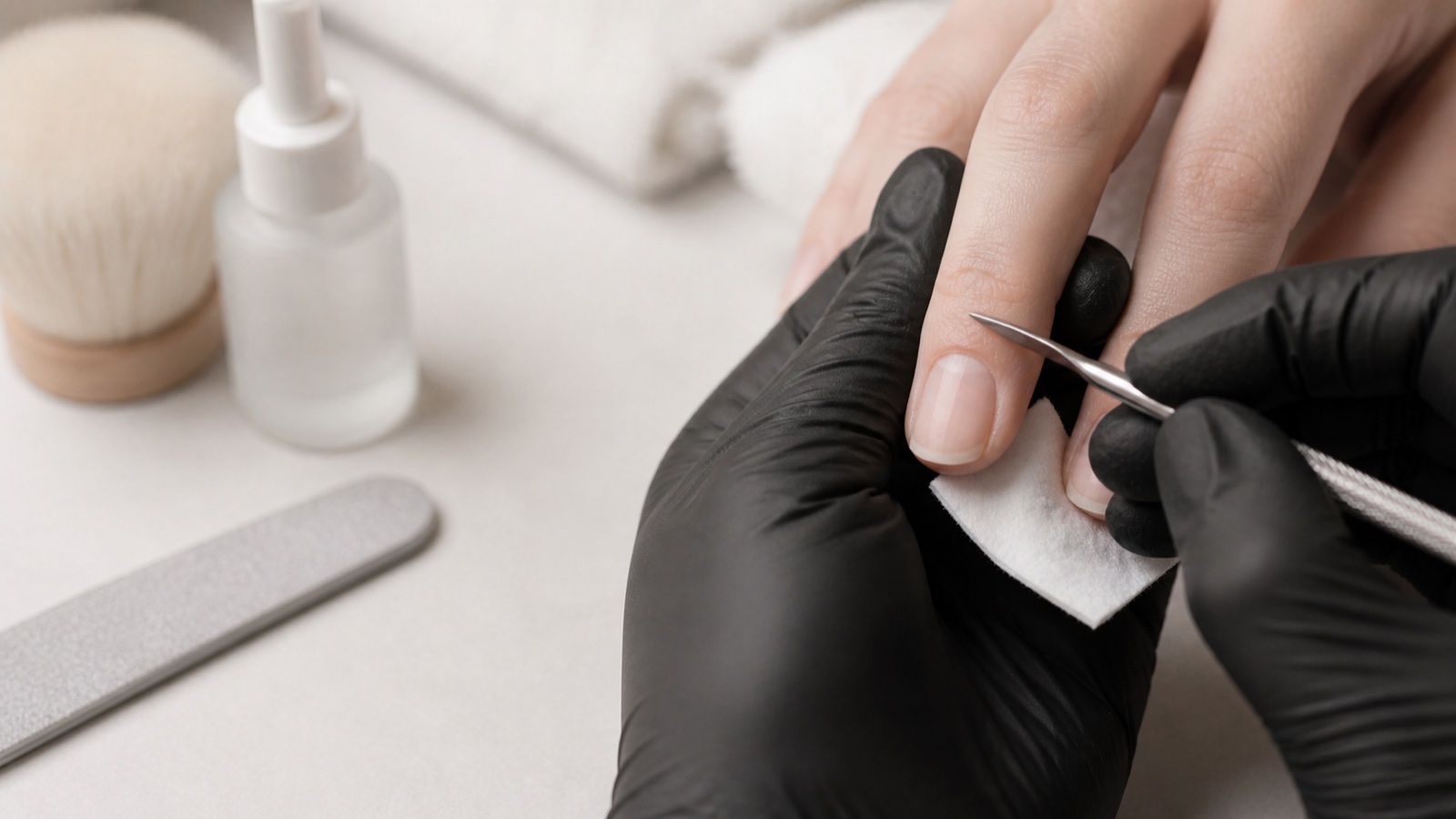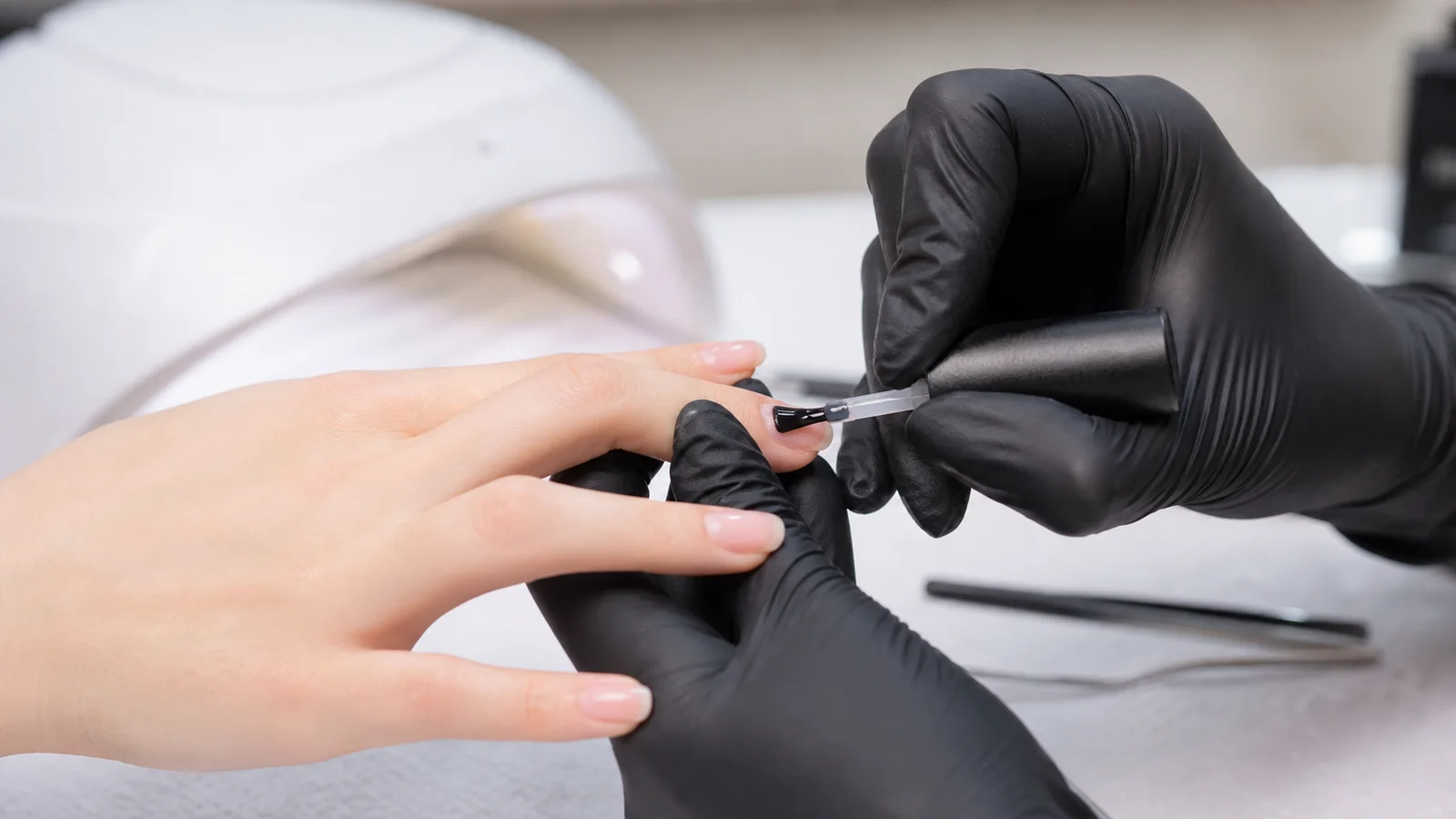
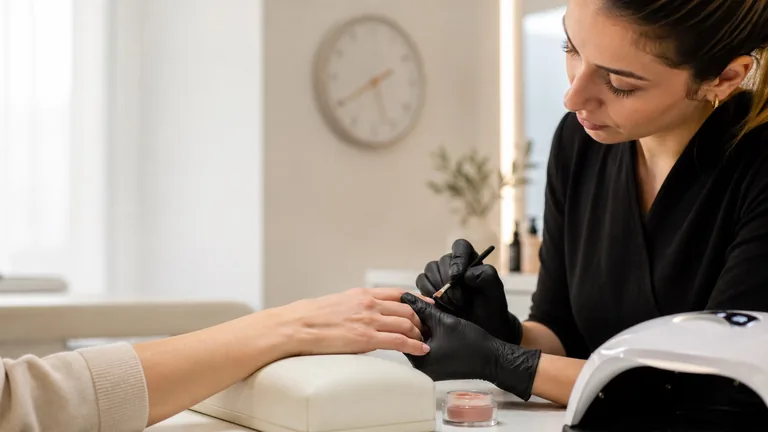
A nail appointment can take from under an hour for a straightforward gel-polish service to several hours for a new structured extension with removal, repairs or detailed design. The useful answer is not one number: it is a planning window based on what is already on the nails, their condition, the requested length and shape, the product system, the level of decoration and the technician’s safe working sequence.
Useful booking ranges: about 45–60 minutes for a straightforward gel-polish service, 75–120 minutes for a typical gel infill and 120–180 minutes for a new gel extension set. These are planning windows, not universal promises. Add time for removal, repairs, major shape change, advanced French or detailed nail art.
Appointment duration is different from how long the finished service lasts on the nails. A 90-minute infill may be reviewed two or three weeks later; a 50-minute gel-polish application may wear for a different period. Search intent often mixes these questions, so this guide owns time in the chair and schedule planning. Use the separate guide to how long gel polish, gel, acrylic and acrygel last for maintenance intervals.
The ranges below were substantively reviewed on 5 September 2026 from the complete workflow and current BeautyLearn training benchmarks. A salon should measure its own service data rather than copy a competitor’s menu. Product cure and removal times always come from the exact system; they must not be shortened to force an appointment into a marketing claim.
Average nail appointment times: quick booking table
Book a range, then confirm the starting condition
The service name alone cannot predict the chair time
Gel polish
About 45–60 minutes
Gel infill
About 75–120 minutes
New extensions
About 120–180 minutes
Removal
Add by identified material
Service | Planning window | Common reasons to add time |
|---|---|---|
Gel polish | 45–60 minutes | Removal, repairs, detailed cuticle work, French |
Natural-nail gel overlay | 75–120 minutes | Levelling, correction, old product, shape change |
New gel extension set | 120–180 minutes | Length, forms, architecture, filing, design |
Gel infill or refill | 75–120 minutes | Lifting, breaks, late return, new shape |
Removal only | 30–75 minutes | Unknown material, mixed layers, excessive bulk |
Basic French or Baby Boomer add-on | Add 15–35 minutes | Length, symmetry, correction and technique |
The lower end assumes a known system, healthy-looking nails, a correctly booked service, no significant lifting or repair and a straightforward finish. The upper end may still be normal when a complete first consultation, removal, structure or detailed design is included. Always ask what the quoted time covers.
Appointment time and wear time are not the same
Chair time measures the work from arrival to aftercare: confirmation, assessment, removal, preparation, application, cure, refinement, photography, payment and reset. Wear time measures the interval before maintenance or removal. A faster application does not automatically last less, and a longer service does not prove better retention. Both depend on system, technique, structure and the client’s nails and activity.
When booking, ask ‘How long should I allow today?’ and ‘When should I return?’ as separate questions. The salon should answer both and explain the triggers for an earlier review. Lifting, cracks, pain or unusual colour should never wait because the calendar says the set has another week.
What the booked time should include
Chair time includes the work around the technique
Assessment and reset are not invisible free minutes
Confirm and assess
Remove and prepare
Build, cure and finish
Aftercare and reset
Welcome and confirmation of the booked service, length, shape, colour and design.
Assessment of nails, skin, existing material, comfort and service history.
Removal or controlled reduction of previous product and every lifted area.
Conservative natural-nail and fold preparation within professional scope.
Application, architecture, complete product-specific curing and refinement.
Colour, French, Baby Boomer or agreed nail art and final quality check.
Aftercare, return booking, photographs when consented, payment and safe workstation reset.
A price or duration that counts only brush-on time is incomplete. Hidden work still occupies capacity and affects safety. For business planning, the Beauty service pricing calculator helps include preparation, clean-down and non-treatment time instead of pricing only the visible technique.
How long a gel-polish appointment takes
A straightforward gel-polish appointment often needs about 45–60 minutes when nails are suitable, the previous coating is absent or removal is already included, and the finish is a solid colour. Time covers assessment, conservative preparation, base, thin colour layers, top, complete curing and aftercare. Very short claims may omit removal, detailed cuticle work or documentation.
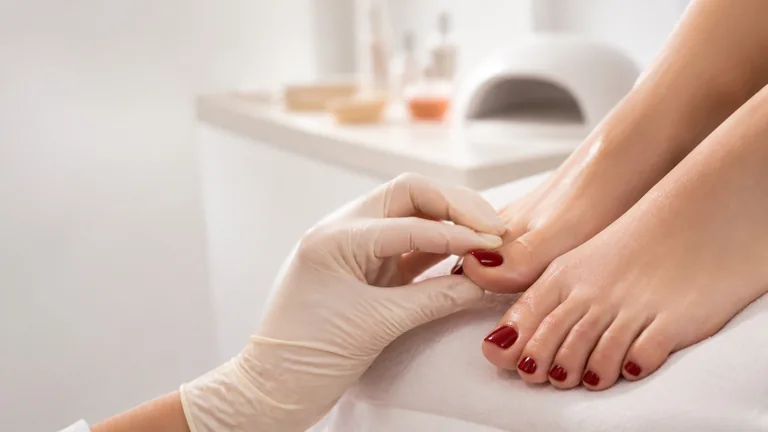
Add time for removal, damaged free edges, local repairs, several colour changes, French lines, chrome, cat-eye or art. Toenails have their own screening and pressure context; see the guide to gel polish on toenails rather than transferring the hand timetable automatically.
Gel overlay and new extensions: why the timings differ
A natural-nail overlay follows existing length and generally requires less form construction than a new extension. A new set adds fitting and tailoring forms or supports, creating length, controlling lower arches and sidewalls, building an apex, curing each stage and refining ten related structures. A 120–180-minute window can therefore be realistic without decoration.
The first set may take longer because the technician records the starting point, discusses realistic shape and learns how the client uses their hands. Very long extensions, complex corrections or changing from another salon’s unknown product can require a separate removal or consultation appointment. The gel nail extension guide explains why structure cannot be compressed into one quick coat.
How long a gel infill takes
The return condition determines infill time
A visible growth gap is only one part of maintenance
Stable
Reduce and rebalance predictably
Late
Stress area needs larger correction
Lifted
Remove every unreliable zone
Unknown
Allow identification and control time
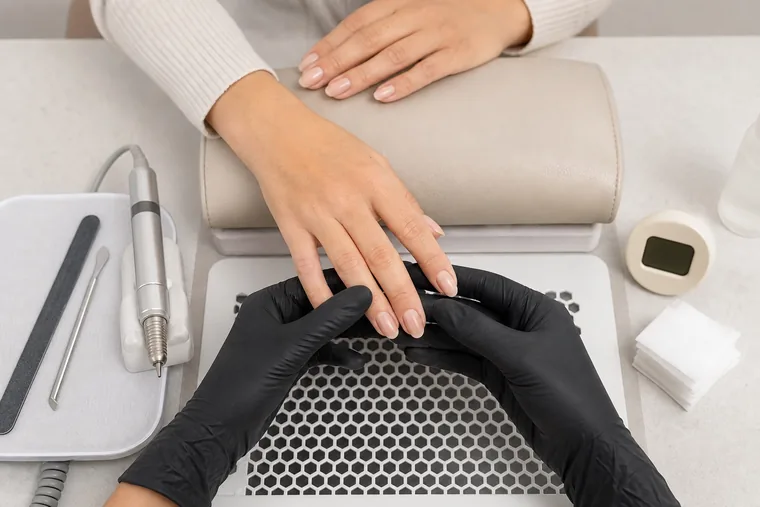
A typical infill may need 75–120 minutes. The technician must inspect every nail, reduce length or bulk, remove all lifting, prepare regrowth, restore sidewalls and rebalance the apex before colour. The work is not simply filling the visible gap. A late return moves the stress area and may turn a routine infill into major correction.
Breaks, missing corners, deep lifting, shape change and unknown product add time. When too much unreliable material must be removed, a controlled new set may be more coherent than patching each nail. The guide to nail infill and rebalancing separates maintenance from automatic coverage.
How long nail product removal takes
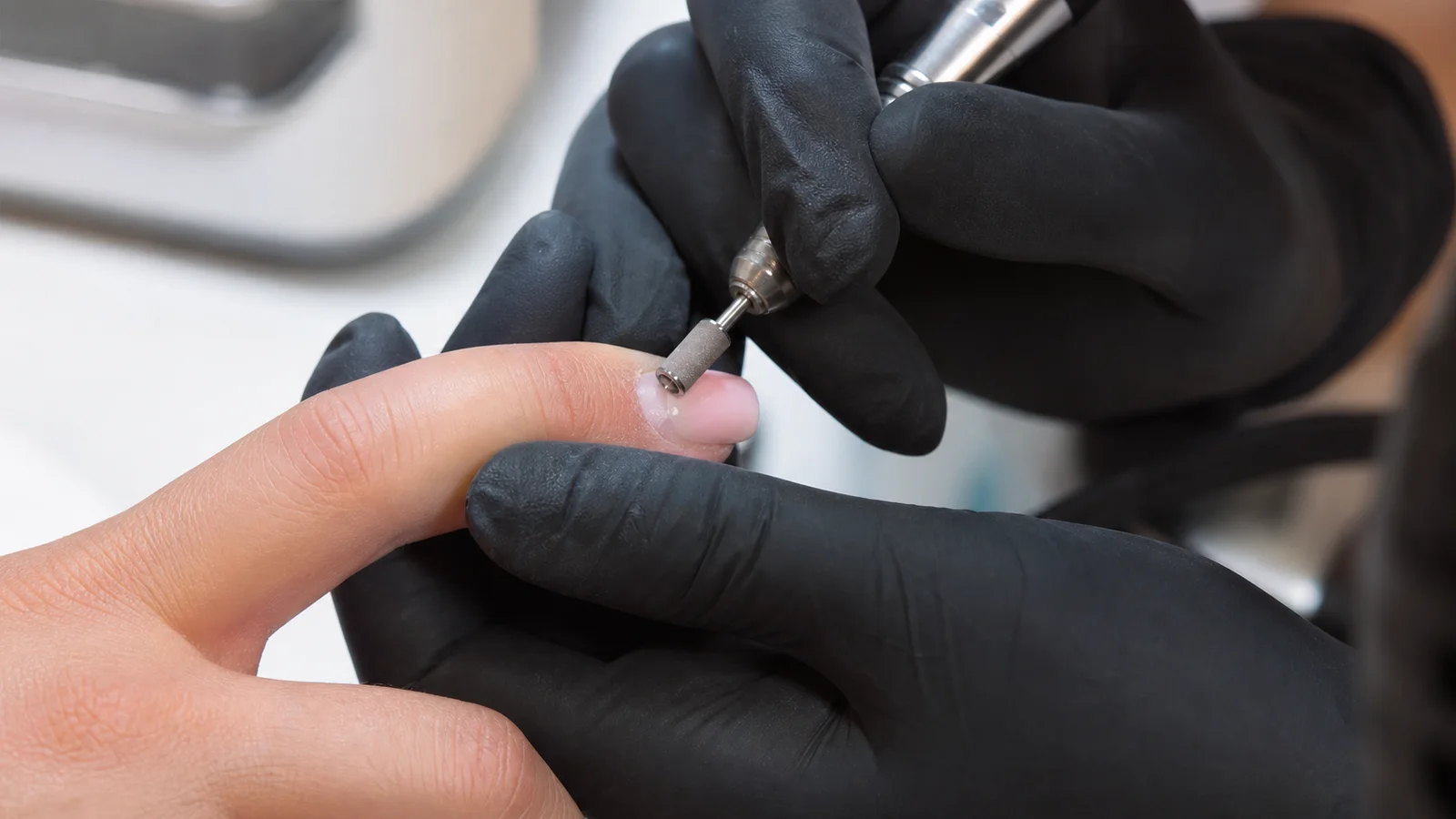
Removal alone may take roughly 30–75 minutes, depending on product family, thickness, length, decoration and whether the exact system is known. A thin documented soak-off coating is different from a file-off hard gel, acrylic or mixed stack. Unknown material and heavy bulk require cautious identification and staged reduction.
Do not shorten removal by peeling, prising or filing blindly into the natural plate. Product resistance is information. Read the complete guide to removing gel, acrylic, acrygel and gel polish safely. If removal and reapplication are both needed, tell the salon when booking so both stages receive time.
French, Baby Boomer and nail art: how much time they add
A simple salon French or Baby Boomer can add around 15–35 minutes when the base service is already stable. Length, smile-line depth, correction, symmetry, number of accent nails and technique change the addition. Detailed hand painting, sculpted decoration, chrome, stamping or mixed-media art should be quoted from a reference image rather than added at the chair.
The guides to professional French manicure and Baby Boomer nails show why proportion and repeatability take time. Nail art is a separate design task, not a free finish automatically included with colour.
Seven variables that genuinely change appointment time
Starting condition: bare nails, known product, unknown stack, lifting, breaks or symptoms.
Service scale: overlay, extension, refill, full removal or corrective change.
Length and shape: short square maintenance is not a long tapered sculpted set.
Product system: removal route, viscosity, complete lamp times and refinement needs.
Design: solid colour, French, ombré, chrome, cat-eye, stamping or detailed painting.
Technician workflow: trained movement, workstation organisation and documentation.
Client factors: late arrival, indecision, hand movement, phone use and unreported changes.
First client, first visit and later appointments
A student’s first complete services should be longer because assessment, setup, consultation, deliberate movement and supervisor feedback need space. Timing a drill can help track progress, but the clock must not reward skipped disinfection, thinner architecture, incomplete curing or rough removal. Repeat the same defined service before comparing speed.
A client’s first visit can also be longer than a later maintenance appointment. Product history may be incomplete, removal behaviour unknown and shape preferences still being established. Once the technician has reliable records and the client returns on time with a stable set, scheduling becomes more predictable.
How to book the right service without surprises
Better information creates a more reliable booking
Send the starting condition before the appointment
Describe
Current product and condition
Show
Neutral-light photos when requested
Agree
Length, shape, design and removal
Buffer
Do not schedule an immediate deadline
State what is currently on the nails, who applied it and roughly when.
Mention lifting, cracks, missing nails, pain, colour or any skin change before arrival.
Send clear photographs in neutral light when the salon requests them.
Share desired length, shape and a realistic design reference—not only a cropped close-up.
Ask whether removal, repairs, manicure and design are included in time and price.
Allow a personal buffer after the quoted appointment rather than booking an immovable event immediately.
Three realistic booking examples
Example one: bare, short, suitable nails with one gel-polish colour may fit a 45–60-minute slot. Example two: a three-week gel infill with stable product, minor length reduction and solid colour may fit 75–105 minutes. Example three: another salon’s long set with lifting, a shape change and French may require consultation, removal and a new 150–210-minute plan or two appointments.
These examples are not promises. They show how the starting condition changes the service definition. The salon should update the plan after assessment and obtain agreement before converting a routine booking into extensive corrective work.
Appointments before a wedding or important event
Do not test a new product family, extreme length or unfamiliar shape immediately before a major event. Schedule a trial or previous maintenance cycle when possible. For the final appointment, leave enough margin for a careful service and minor adjustment without relying on a same-hour finish before travel, photography or dressing.
Bring the agreed design, outfit details and practical constraints early. An event deadline does not justify product on skin, skipped cure, unbalanced length or ignoring a nail change. A simpler complete service is better than an unfinished complex one.
Why faster does not automatically mean better
Professional speed grows from a prepared workstation, trained movement, correct product amount, hand-to-hand sequence and fewer corrections. It does not come from cutting assessment, reusing unprocessed tools, leaving lifting, reducing cure time or filing without visibility. A technician who works deliberately may be safer than one selling a record time.
Time is also not a quality guarantee. Three hours can include indecision and rework rather than care. Evaluate the process: intact skin, correct structure, clean margins, complete cure, controlled removal, clear aftercare and consistent results. These indicators are more meaningful than speed alone.
How nail technicians can plan the diary
Measure at least 15–30 comparable services by category. Record client arrival, consultation, removal, preparation, product application, art, photography, payment and reset separately. Use the median as a starting slot and preserve a buffer for variation. Do not schedule every appointment from the single fastest result.
Create booking add-ons for external removal, repair, major shape change, long length, French and art. Require photographs for corrective work. Set a late-arrival policy that protects the next client: reduce design or reschedule rather than compressing safety-critical steps. Pricing should cover complete occupied time, materials, overhead and margin; use the pricing calculator for a transparent estimate.
Training: accuracy first, speed second
Train one defined service at a time. First score assessment, perimeter, product amount, structure, cure and removal; then reduce unnecessary movement. Video review and a stage timer help locate bottlenecks without making the client the experiment. Speed built on repeatability is sustainable; speed built on omissions creates rework.
For practice, compare the Beginner Gel Nails course, Fast Nail Refill course, Gel Polish course, Electric Nail File course and French Manicure course or browse all online nail courses. English records remain separate from the Italian catalogue.
Frequently asked questions about nail appointment times
How long does a gel nail appointment take on average?
Allow around 75–120 minutes for a straightforward overlay or infill and 120–180 minutes for a new extension set. Length, removal, lifting, repairs, shape and design can move the service outside those windows. Ask what the quotation includes.
How long does a first gel extension set take?
A new gel extension set commonly needs about 120–180 minutes before complex art. The appointment includes consultation, preparation, form or support fitting, ten balanced structures, full curing and refinement. Corrective shapes or external removal can require longer.
How long does a gel infill take?
A typical infill may take 75–120 minutes. The real condition at return matters: lifting, breaks, long regrowth, shape change and unknown material add work. An infill rebalances the complete structure; it is not only filling the growth gap.
How long does gel polish take?
A simple gel-polish service often takes 45–60 minutes when nails are suitable and a solid colour is requested. Removal, detailed cuticle work, repairs, French, chrome or art require additional time. Full product-specific cure cannot be shortened for speed.
How long does gel-polish removal take?
A known thin soak-off system may be removed within roughly 20–40 minutes as part of a planned service, but product, layers and response vary. The quoted slot should include setup, controlled release and natural-nail assessment, not only solvent contact.
How long does hard-gel removal take?
A file-off hard-gel removal may require around 45–75 minutes depending on length, bulk, decoration and the intended endpoint. Complete removal is not always necessary. The technician should reduce in controlled layers and preserve the natural nail rather than chasing speed.
Should removal and a new application be booked together?
Yes, tell the salon about existing product before booking. Removal and reapplication are separate stages and both need time. If the material is unknown, lifted or from another system, photographs and a consultation may be required before a reliable duration is quoted.
How much time does a French manicure add?
A straightforward salon French may add about 15–30 minutes, depending on length, smile-line depth, symmetry and technique. Corrective or highly detailed French can take longer. Share a reference image so the salon can quote the design rather than assume.
How much time does nail art add?
It can add a few minutes for simple accents or more than an hour for ten detailed designs. Number of nails, layers, drying or curing stages and complexity matter. Send the actual reference before the appointment and agree any simplified alternative.
Why can an infill take as long as a new set?
Late regrowth, lifting, breaks, excessive length, shape change or unknown previous product can turn maintenance into corrective work. Removing unreliable material and rebuilding each stress area may approach the time of a controlled new set.
Should I send a photo before the appointment?
Yes when another salon’s product, lifting, breaks, major shape change or detailed design is involved. Use neutral light and show all nails plus side views. A photo improves planning but cannot replace in-person assessment or guarantee the final duration.
Does lamp time determine the whole appointment length?
No. Assessment, removal, preparation, placement, architecture, refinement and design often occupy more time. Lamp exposure must follow the exact system and cannot be shortened. Workflow can overlap permitted stages, but one hand must still be positioned and cured correctly.
Is a faster nail technician automatically better?
No. Efficient movement and organisation are valuable only when assessment, hygiene, structure, complete curing and controlled removal remain intact. Judge consistent outcomes and process evidence. Very long appointments are not proof of quality either; repeatability matters more than a record time.
What happens if I arrive late?
The salon may simplify colour or design, shorten only non-essential choices, or reschedule. It should not compress disinfection, assessment, structural steps or cure. A clear late-arrival policy protects the current service and the next client.
Why do two salons quote different times for the same nail service?
The included work, product system, technique, team experience and booking buffers may differ. One quote may include removal and manicure while another starts from prepared bare nails. Compare the complete specification, not only the service name or lowest duration.
How much free time should I leave after a nail appointment?
Leave at least 20–30 minutes beyond the quoted window when travel or an important event follows, and more for a first visit, external removal or complex art. The buffer prevents a late finish from pressuring the technician to skip checks or rush the result.
Method and editorial limits
The booking ranges are BeautyLearn planning benchmarks built from the complete service stages described above. They are not manufacturer cure times, legal standards or guarantees. Every salon should measure its own comparable appointments and disclose inclusions. Product label and technical instructions remain authoritative for cure, removal and safety-critical timing.
Substantively reviewed on 5 September 2026. No competitor salon or academy is used as an external recommendation. Prices and times vary by market, product, scope and professional workflow; confirm the actual booking before travel or an event.