We use necessary cookies and the Meta Pixel to measure campaigns and improve our offers. You can change your optional-cookie preferences at any time. Read our Terms and conditions.
Professional color analysis kit: drapes, lighting and records
A professional color analysis kit lets you compare fabrics near the face and repeat those comparisons under consistent conditions. Drapes provide the color comparisons. Lighting, a neutral cape, a mirror and a useful client record help you keep the setup consistent and document what you see. Start with the method you are learning and the room where you will practice. That makes it easier to buy a set you can use, check what is missing and add equipment as your service develops.
At a glance
Choose drapes that support your method's comparisons, a washable cape and optional hair covering, a stable mirror and an observation sheet. Establish reliable lighting before adding more colors. Check which covers, storage and client materials come with the set, and budget separately for lights and replacements. A drape count, kelvin setting or CRI rating alone cannot establish the accuracy of a color analysis.
Write down the comparisons your training uses, then list the equipment you already own. A set organized for four seasons may need additional comparisons for a 12- or 16-season method. Ask your instructor which materials you need before ordering a large bundle. If you are considering the BeautyLearn color analysis course, check its current curriculum and purchase terms; do not assume equipment or individual feedback is included.
Component
What to check before buying
Drapes
Ask for the sample list and the purpose of each group: temperature, value, chroma, contrast and any seasonal comparisons your method requires. You need usable pairs from the first practice session.
Lighting and supports
Establish a repeatable setup from the start. A usable window may be enough for practice at certain times; appointments outside those conditions need a suitable alternative. Include stands and diffusion in a lighting quote.
Cape and hair covering
Choose opaque, comfortable fabrics with care instructions. The cape must cover the clothing visible below the face. Have a clean replacement available for each appointment when washing cannot be completed between clients.
Mirror and seating
Use a flat mirror that shows the face and drape together, with a stable support. Check the view from the client's seated position and leave room for mobility aids.
Records and client materials
Prepare an observation sheet before practicing. Before offering a paid service, decide which palette, notes and follow-up the client will receive, and include their cost.
Photography and meters
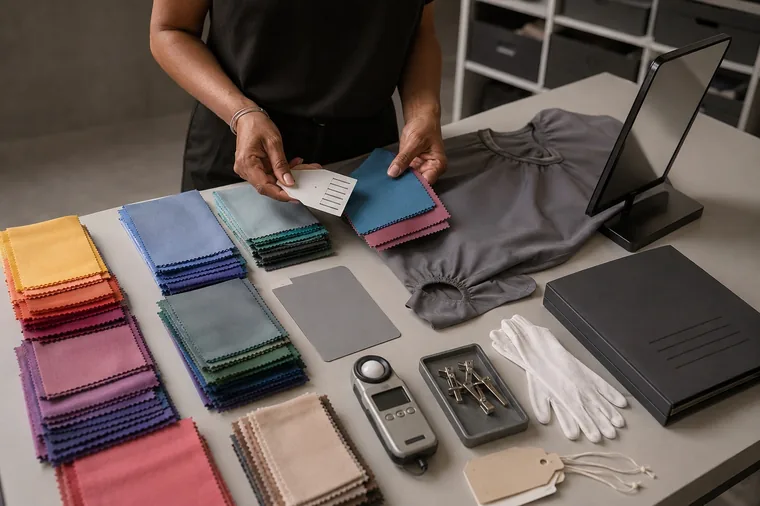
Add a phone support, gray card or light meter when you have a specific use for it. These document different things and do not replace fabric comparisons.
Component: Drapes
What to check before buying: Ask for the sample list and the purpose of each group: temperature, value, chroma, contrast and any seasonal comparisons your method requires. You need usable pairs from the first practice session.
Component: Lighting and supports
What to check before buying: Establish a repeatable setup from the start. A usable window may be enough for practice at certain times; appointments outside those conditions need a suitable alternative. Include stands and diffusion in a lighting quote.
Component: Cape and hair covering
What to check before buying: Choose opaque, comfortable fabrics with care instructions. The cape must cover the clothing visible below the face. Have a clean replacement available for each appointment when washing cannot be completed between clients.
Component: Mirror and seating
What to check before buying: Use a flat mirror that shows the face and drape together, with a stable support. Check the view from the client's seated position and leave room for mobility aids.
Component: Records and client materials
What to check before buying: Prepare an observation sheet before practicing. Before offering a paid service, decide which palette, notes and follow-up the client will receive, and include their cost.
Component: Photography and meters
What to check before buying: Add a phone support, gray card or light meter when you have a specific use for it. These document different things and do not replace fabric comparisons.
Choose drapes that make useful comparisons
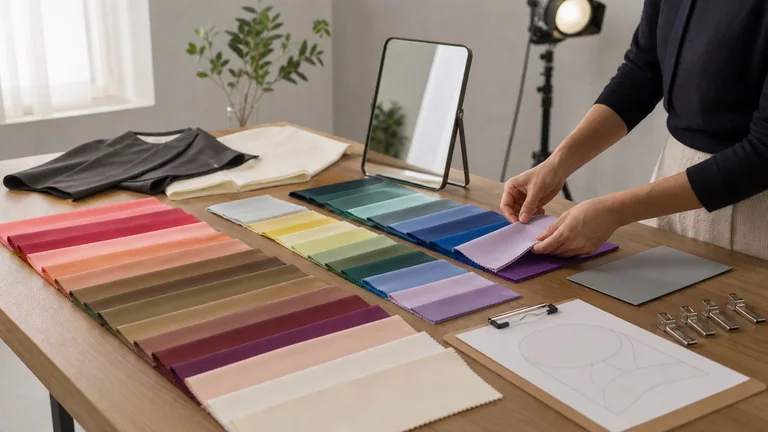
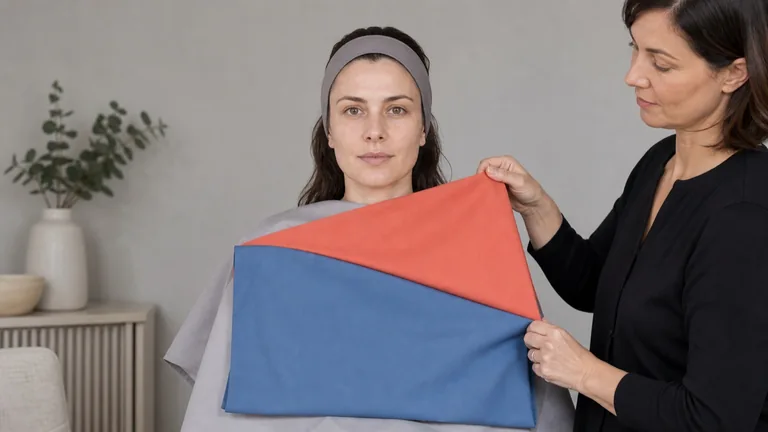
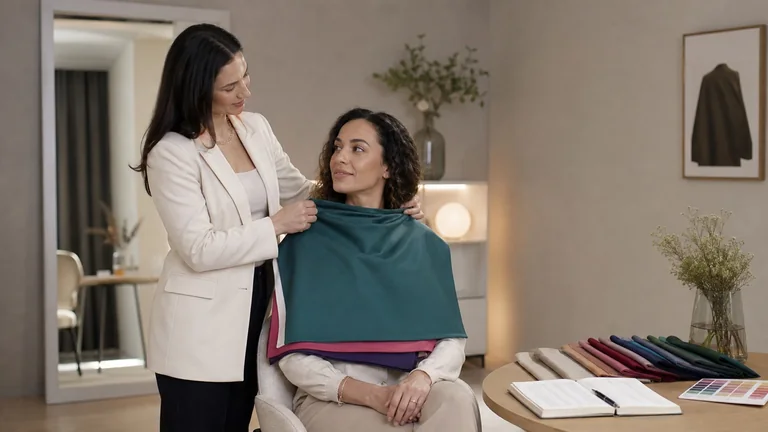
A drape is a comparison sample. Its color, finish, opacity and exposed area influence what you see beside the face. To compare warm and cool colors, look for fabrics with similar lightness and saturation. To compare light and dark, keep the other properties as similar as the set allows. For contrast, vary the combination of lighter and darker areas. If several properties change together, record that limitation instead of attributing the whole effect to temperature.
Satin, velvet and matte woven fabric reflect light differently. For the main comparisons, use consistent finishes and smooth out deep folds. Hold each drape at the same height below the chin, covering the clothing without blocking the mouth or nose. Check that you can change fabrics without pulling on the neck, catching hair or asking the client to hold a heavy stack.
There is no universal professional drape count. Ask which pairs test each dimension and which additional colors let you check a tentative result. A large collection of similar samples can still leave a gap. A label such as "12 seasons" does not establish compatibility with the sequence taught in your course, and store photographs cannot establish the color of the physical fabric.
The Drops de Cor Color Identity Set lists drapes measuring 19¼ × 16½ inches: 82 colors and 14 neutrals. Those 96 drapes belong to that supplier's seasonal system. The company lists its Dimensions and Temperature tests separately, so this set's count does not mean it includes every preliminary comparison. The accompanying Oracle cards ask about color preferences. Keep those preferences separate from the observations used to identify a season.
Arrange your drapes in the order you will use them and put identifying codes where you can read them without revealing the expected result to the client. Before the return window closes, check coverage, opacity, edges, handling and the available replacement options. Practice with people of different complexions and ask your instructor to review your comparisons. The draping test guide explains how to repeat a comparison and record uncertainty.
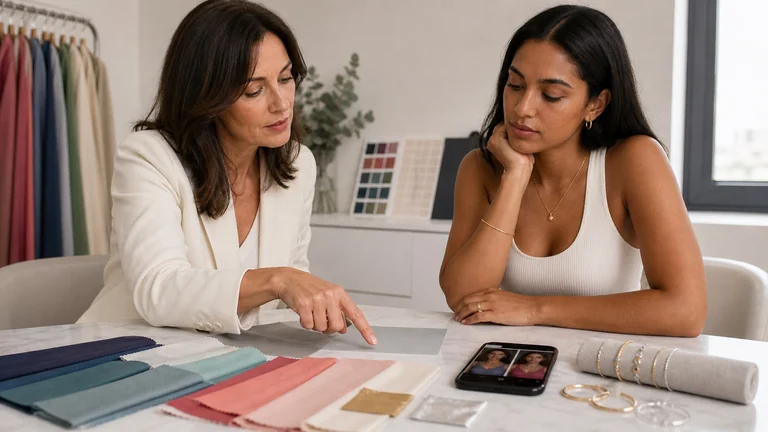
Keep comparison fabrics in order and store small tools separately. The pictured swatches illustrate organization; their appearance in a photograph does not verify their colors or suitability for a method.
Set up lighting for the face and drape
Color temperature, measured in kelvin, describes the appearance of a white light. It does not tell you how every fabric or skin tone will look under it. The US Department of Energy's LED guidance distinguishes the appearance of the source from its color fidelity and explains the limits of CRI. Two lamps with the same kelvin setting can render colors differently.
CRI, often shown as Ra, summarizes color fidelity across a set of test samples. A declared CRI of 95 is useful specification data, but it does not certify a color analysis station. The CIE's 2025 position statement recommends reporting Ra and the newer fidelity index Rf together during the transition to Rf. Ask for the available color-rendering data, dimming information and diffusion options, then check your actual fabrics under the proposed light.
With daylight, keep direct sun off the face and fabric. Look for colored reflections from curtains, walls or objects, and watch for changes during the session. A window that works at one time of day may not work for an evening appointment. Pause and repeat the comparison if the light changes appreciably.
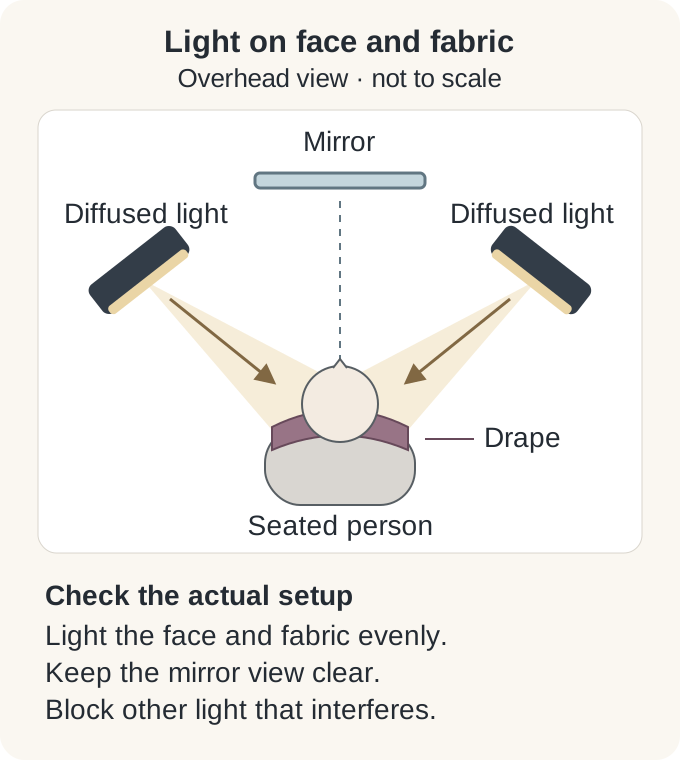
For artificial lighting, start by illuminating both sides of the face and the fabric evenly. Two diffused sources beside the mirror are one possible arrangement. Adjust their height, angle and distance while someone sits in the client's position. Check shadows under the chin, reflections in glasses and glare in the mirror. Keep the view of the face unobstructed and leave space for the analyst to change drapes without blocking a light.
An example arrangement, viewed from above and not to scale. Aim both sources toward the face and fabric, keep the mirror visible and check the actual setup for uneven shadows and glare.
Turn off decorative lights and control window light if it interferes with the lamp setup. Mark the chair and stand positions, and keep the settings fixed during the sequence. A single distance or lux target cannot account for every room, diffuser and lamp. Standards for viewing photographs or printed graphics also do not certify a personal color analysis kit.
Use the cape, hair covering and mirror comfortably
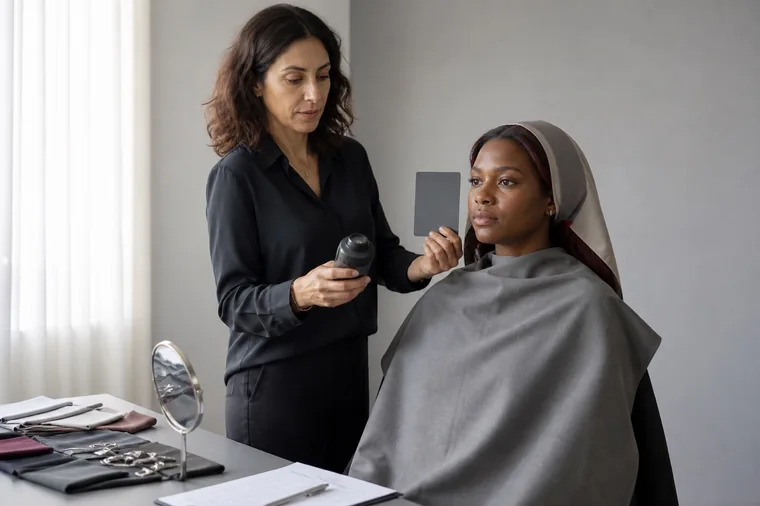
The cape covers clothing that would otherwise add color close to the face. Choose an opaque, washable fabric that fastens without tightening around the neck. A low-chroma gray can be practical; some methods specify white. Use the color your protocol calls for consistently, and check for strong reflections under the chin. White and black are not interchangeable surrounds because they change lightness and contrast around the face.
A headband or soft cloth can help when bright dyed hair interferes with a comparison. Explain why you want to use it and ask permission. Keep the face clear, avoid pulling the hair and respect the client's hairstyle, personal coverings and comfort. Look again with the hair normally visible when applying the result to everyday clothing. If makeup stays on or a covering cannot be used, note the condition before interpreting the comparison.
The cape and cloth reduce surrounding color. The gray card has a separate photographic purpose; it does not measure the lamp's color rendering or determine a season.
Use a flat mirror large enough to show the face and drape together without distortion. A magnifying mirror is not a suitable main reference. Set the mirror and seat so the client can look forward without turning or leaning at each fabric change. Adapt the arrangement for someone who remains in a wheelchair or needs a different seated position. Secure cables and stands, and keep walking routes clear.
Record observations on a client sheet
A useful record lets you reconstruct the comparison. Note the date, a client code, the person's goal, lighting and position, drape set, coverings and any makeup or self-tanner that affects the session. For each pair, record the fabric codes and a visible difference, then return to the first fabric to see whether the difference repeats.
An illustrative note might read, "The shadow below the chin looks darker with B than with A; the difference repeats on returning to A." This records more than "B washes the client out." If the difference does not repeat, record it as uncertain. In your conclusion, keep observations separate from the interpretation: identify the color dimensions, system and possible season, along with any comparisons still needed.
Download the color analysis observation sheet. It is a one-page US Letter PDF for printing and handwriting, with four comparison rows and space for a summary. Use another copy if you need more rows. It records the session; it is not a privacy notice or photo-release form. The consultation guide explains how to connect these notes to the client's palette and practical recommendations.
Keep contact details separate from technical notes when a client code is enough to connect them. The FTC's guidance for businesses advises collecting only information you need, limiting retention and restricting access. A color analysis sheet usually has no reason to include a Social Security number, identity-document copy or medical history. Lock paper files away; protect digital accounts with strong authentication and limit who can open them.
Explain why you want photographs and how you will store them. Ask separately before using a client's image in advertising or social media, and let the client decline public use while receiving the service. Review the privacy and image-use requirements that apply to your business and state.
Know what a gray card and light meter can tell you
A photographic gray card provides a reference for exposure or white balance when it is clean and in the same light as the subject. A home-printed gray rectangle does not guarantee the same neutrality. The card cannot correct mixed lighting across the face or measure the lamp's spectrum.
If photographs are part of the agreed record, use a fixed support and consistent framing, exposure and white balance. Turn off beauty filters and check that automatic processing does not change between images. Photographs and screens can alter color, so keep the live comparison as your reference for an in-person session.
A lux meter measures illuminance, the amount of light reaching a surface. It can help compare light levels at the face and drape when you keep the sensor position consistent. It does not independently measure color fidelity, spectrum or glare. Buy one when you need those light-level comparisons; do not treat a phone app as a calibrated meter without evidence of its accuracy.
US cost examples and buying in stages
Separate the fabric set from the equipment needed to use it. These are manufacturer-listed US online prices in USD, checked October 20, 2026. They show the cost of selected components, not a national average or a complete setup. Sales tax and any shipping charges are outside the subtotal below.
$899, listed in stock for US shipping. Includes 96 fabric drapes, 96 Oracle cards and a digital instruction booklet. The listed contents do not include the separate Dimensions or Temperature tests, a cape, lighting or a mirror.
$169 each, listed as available to order; two would cost $338. Each includes the light, AC-to-DC adapter, power cable and tilting mounting adapter. Light stands and softboxes are separate purchases. These are photographic lights whose suitability needs to be checked in the full setup.
Example: Drops de Cor Color Identity Set
Price, contents and limits: $899, listed in stock for US shipping. Includes 96 fabric drapes, 96 Oracle cards and a digital instruction booklet. The listed contents do not include the separate Dimensions or Temperature tests, a cape, lighting or a mirror.
Example: Two amaran Halo 100x lights
Price, contents and limits: $169 each, listed as available to order; two would cost $338. Each includes the light, AC-to-DC adapter, power cable and tilting mounting adapter. Light stands and softboxes are separate purchases. These are photographic lights whose suitability needs to be checked in the full setup.
The component subtotal is $899 + (2 × $169) = $1,237 before tax and any shipping. It still excludes stands, diffusion, the additional comparison tests your method may require, cape and hair covering, mirror, seating and take-home client materials. Price those missing items before treating the subtotal as your startup budget. The Halo 100x specifications list a 2,700 to 6,500 K range and CRI 96+; those are manufacturer specifications, not a measurement of your room or an endorsement of a particular setting.
For initial practice, buy the comparisons required by your course and use an existing mirror or seat if it meets the checks above. If indirect daylight is reliable only in the morning, schedule practice then or budget for suitable artificial lighting before accepting evening appointments. For a paid service, add clean spare covers, a way to replace worn or missing items, and the materials you promise to hand over. Buy extra seasonal modules when training and practice identify a specific gap.
Allow for recurring costs as well. Drapes stay in your kit; palettes given to clients need replenishment. Printing, laundry, storage and travel also affect the cost of each appointment. Ask whether individual drapes and covers can be replaced, what a replacement costs and whether a new batch will match the set you own.
Clean, store and check the kit
Keep the supplier's care instructions for each fabric. Before adopting a cleaning method, test a spare piece for changes in color, finish, opacity or size. Avoid spraying products onto drapes without checking compatibility. Separate clean and used textiles, dry them fully and inspect for stains before returning them to the set. Keep enough clean capes and hair coverings for the appointments scheduled between laundry cycles.
Give each drape a code and record purchases, replacements and unusual cleaning treatments. Compare a replacement with the existing material under your working light, checking finish and coverage as well as color. If a pair has changed, practice with it again before using it in a client session. Remove pieces that remain stained, faded, stretched or damaged. Store dry fabrics away from direct sun, dust and prolonged compression.
For home visits, separate fabrics, lamps, records and used materials into identifiable compartments. Confirm available space and power before the appointment. On arrival, rebuild the setup and check the lighting with the client seated before starting comparisons. If the room cannot support the planned setup, use the alternative you agreed on or reschedule.
Before each session, check that the drape sequence is complete, covers are clean, the mirror is stable and the lights work. Between clients, put used textiles aside and prepare a fresh record. After travel, unpack, dry anything damp and note missing items before closing the case.
Frequently asked questions
Can I make my own drapes?
You can assemble fabrics for practice, keeping size, finish and placement consistent. Have your instructor review the actual colors and comparison pairs before using them in a paid service. A collection chosen from online fabric photographs does not establish coverage of a seasonal system.
Is a ring light enough?
The ring shape does not determine color fidelity. Check the specifications and test whether the face and fabric receive even light at your working distance. If the drape stays much darker than the face, or glare in glasses and the mirror interferes with observation, change the position or lighting arrangement before continuing.
Do I need a new kit when I change seasonal systems?
Compare the new method's required tests with your current inventory first. Some fabrics may remain useful while specific pairs or seasonal checks are missing. Ask the training provider which components are compatible. Relabeling the old set does not create the missing comparisons.
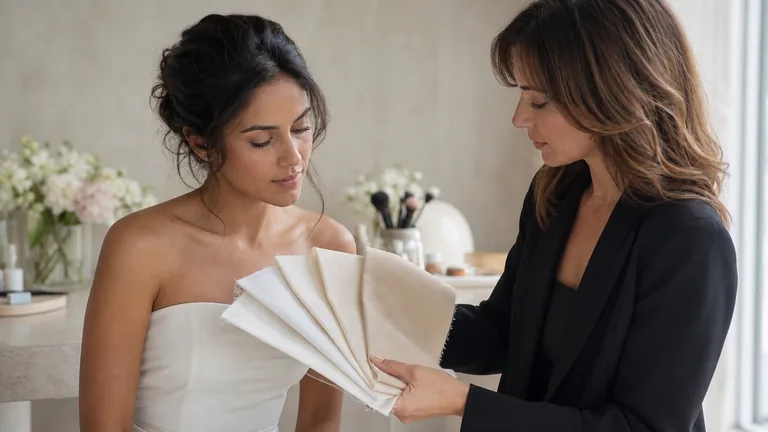
Compare wedding dress fabrics, then try makeup, hair, jewelry and flowers together. Use real swatches, clear notes and the lighting you expect on the day.
Compare fabrics on olive and deep skin tones with steady light, matched pairs and repeatable observations. Keep useful results when a season remains uncertain.