We use necessary cookies and the Meta Pixel to measure campaigns and improve our offers. You can change your optional-cookie preferences at any time. Read our Terms and conditions.
A personal color analysis consultation compares colored fabrics near your face to help you choose clothing, accessories and makeup. The appointment also includes a conversation about your goals, a record of the comparisons and an explanation of how to use the palette. If you are learning to conduct consultations, this guide takes you through that process, from preparation to the client record and results.
At a glance: agree on the service and prepare the lighting, compare drapes under consistent conditions, and record what changes before interpreting it. Repeat the comparisons that determine your recommendation. Explain the result with a garment or accessory the client actually uses, then provide the agreed palette, written guidance and follow-up details. When a comparison remains unclear, record the uncertainty and the next step.
Use this sequence as a working outline alongside the method you have learned. Different systems arrange their color tests differently. The record should still show how you prepared, what you compared and how the observations led to the advice.
Stage
What to establish or record
Before booking
The client’s goal, method, appointment length, total price, preparation and included materials.
Set up
Stable lighting, identifiable drapes, a mirror, a neutral cape and a blank record.
Initial conversation
The client’s practical question, starting conditions and any adjustments needed for comfort or access.
Draping
The pairs tested, visible effects, repeated comparisons and observations that challenge the initial interpretation.
Explain the results
The supported color directions, any seasonal label used, unresolved questions and a practical example.
Close the session
The palette and notes delivered, agreed follow-up, and any comparison that needs another appointment.
Stage: Before booking
What to establish or record: The client’s goal, method, appointment length, total price, preparation and included materials.
Stage: Set up
What to establish or record: Stable lighting, identifiable drapes, a mirror, a neutral cape and a blank record.
Stage: Initial conversation
What to establish or record: The client’s practical question, starting conditions and any adjustments needed for comfort or access.
Stage: Draping
What to establish or record: The pairs tested, visible effects, repeated comparisons and observations that challenge the initial interpretation.
Stage: Explain the results
What to establish or record: The supported color directions, any seasonal label used, unresolved questions and a practical example.
Stage: Close the session
What to establish or record: The palette and notes delivered, agreed follow-up, and any comparison that needs another appointment.
Before booking: timing, price and what is included
Ask what the client wants help with: choosing work clothes, using a difficult color or finding an everyday lip color. Describe your training and method accurately, and say what you will deliver. A makeup application, wardrobe review or shopping trip adds work and is only included when the offer says so.
Appointment length and price vary with the service. On October 20, 2026, Cate Schilloff’s House of Colour studio in Athens, Alabama lists Color Essentials at $175 for about one hour, including a color fan and online lookbook access. Its Color Analysis service costs $325 for 2.5 hours, including more detailed color ratings, a makeup routine, fan and booklet. These advertised US dollar prices describe two services at one studio. Confirm the current total when booking.
Before confirming the booking, give the total price, optional extras, cancellation terms and what happens if the session cannot be completed. Allow time for questions, breaks and repeated comparisons. If you work at the client’s home, check the space and lighting beforehand. A longer appointment alone does not demonstrate a better analysis.
How to prepare the client and the room
Send a short preparation message. Ask the client to arrive without tinted complexion products or lipstick when possible, mention self-tanner or recent hair color, and bring glasses plus one or two garments they find difficult to wear. For example, House of Colour’s preparation guidance asks clients to arrive without makeup and avoid spray tans before the appointment. Explain your own requirements and discuss alternatives before someone arrives.
If a client needs to keep makeup, hair coverings or other items in place, agree on a comfortable approach. Record any effect on the comparison and whether a narrower assessment or another appointment would help. Do not ask for permanent changes to hair or brows as preparation. Collect the goal and relevant practical needs; a color consultation does not require a broad medical history.
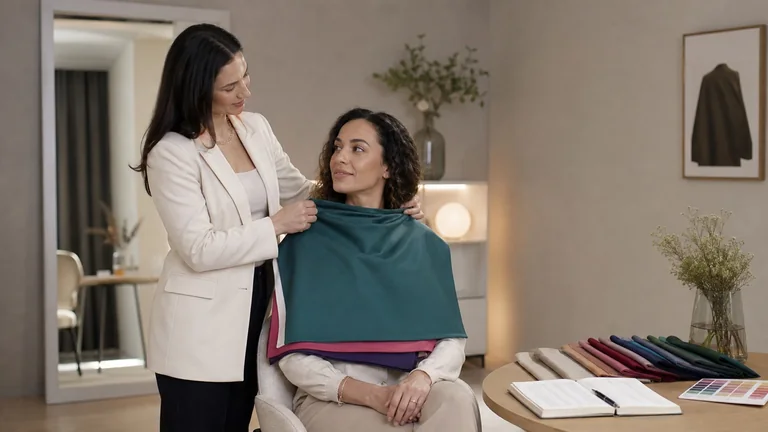
Have the drapes, matte neutral cape, optional hair cover, stable mirror and record ready. Keep clean and used textiles apart and leave room to move safely. Check the light with the client seated: the face and fabric should receive even illumination. Avoid a warm lamp on one side and daylight on the other. Keep the chair, background and light sources in place throughout the comparisons. The professional color analysis kit guide covers equipment choices in more detail.
If daylight changes or a lamp fails, restore the setup before continuing. Mark the interrupted comparison in the record so you do not combine observations made under different conditions.
Start with the client’s question
Ask, “What would you like to find easier after this appointment?” Someone may want to distinguish the whites in dress shirts; another person may want to wear stronger colors without feeling overwhelmed by them. Use the answer when explaining the result, while keeping personal preferences separate from the draping observations.
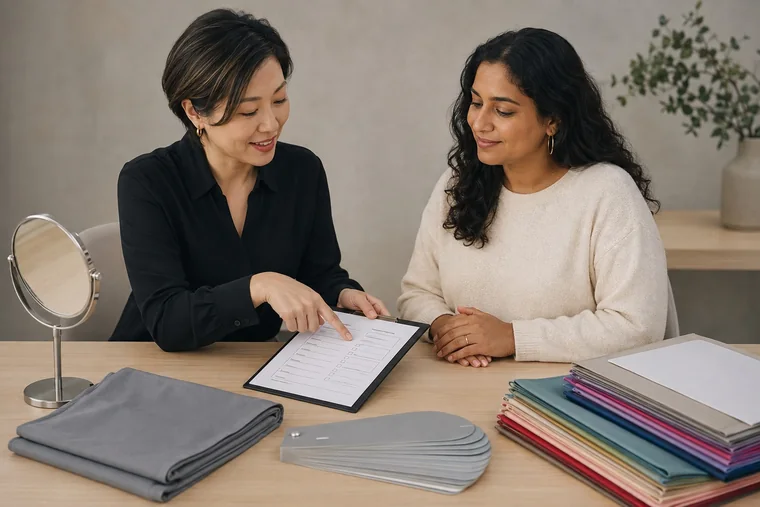
Before draping, explain the session and agree on the client’s goal, comfort and use of photographs.
Explain how you will move the fabrics, where the client should look and how to request a break. Agree on the cape, any hair covering and brief removal of accessories. Keep fabric clear of the neck and respect religious coverings, hairstyles and assistive devices. Later, try the recommendations with the glasses and hair the person normally wears.
Record the date, client code, lighting, position, drape set and any makeup, self-tanner or covers present. Look at the starting distribution of shadows, facial outlines and apparent skin color. Eye color, veins and ethnicity cannot establish a season on their own. Describe visible effects without judging someone’s age, health or attractiveness.
Compare drapes and repeat the decisive pairs
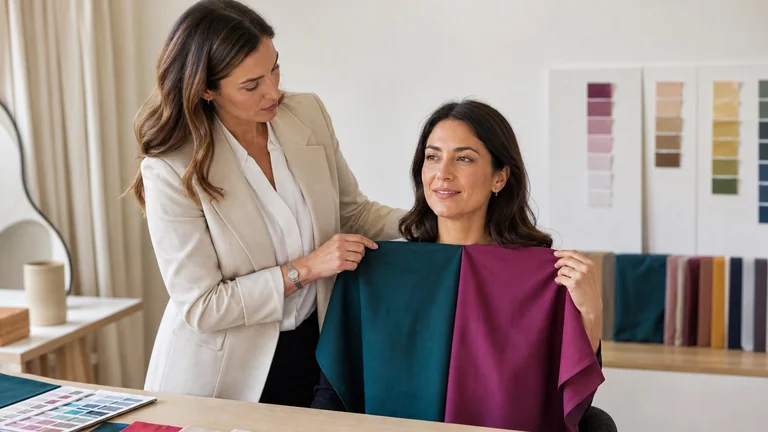
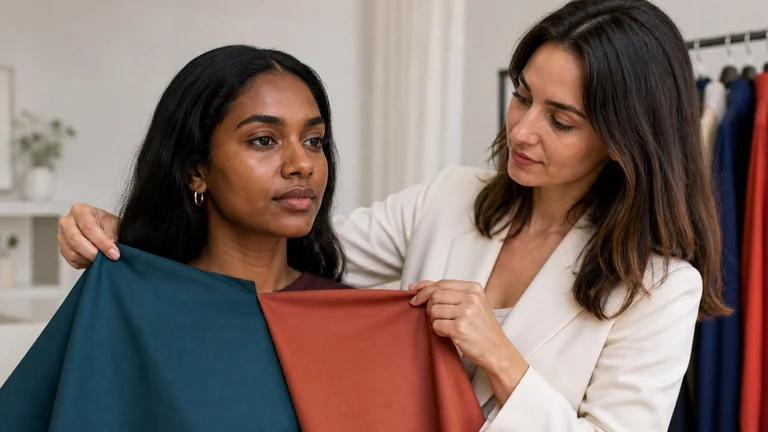
Choose a pair that tests a useful question: warm versus cool, lighter versus deeper, or clearer versus more muted. Keep texture, exposed area and the other color dimensions as similar as the set allows. If two fabrics differ in lightness, saturation and shine at once, you cannot attribute the whole effect to temperature. Contrast also involves combinations and the relative areas of light and dark.
Show drape A, switch to B, then return to A without moving the client or changing the light. Look for a specific difference, such as a stronger shadow below the chin or reflected color along the lower face. The return to A helps you check whether that difference appears again. Give the client time to look before offering your interpretation.
Write down small, neutral and contradictory effects too. Repeat a decisive pair after a pause and use another relevant pair to check the same direction. If the result changes, investigate the setup or leave that point open. The draping test guide develops the comparison sequence.
The CIE’s definition of perceived color explains that appearance depends on the stimulus, its surroundings and the observer’s adaptation. Those factors support the need for comparable viewing conditions. They do not establish a particular seasonal system as an objective measurement of which colors someone should wear.
Write a client record you can use again
Identify fabrics by their set codes or a description precise enough to find them later. Separate the visible observation from your interpretation and the advice you give. A seasonal label alone cannot explain why you reached a conclusion.
The following is a made-up example of a completed record. A12 and B08 are demonstration codes, not universal colors. The example does not assign a season.
Record field
Example entry
Conditions
Same light and seated position; matte cape; sequence A12, B08, A12.
Observation
With B08, the shadow below the chin looks stronger. It looks less noticeable when A12 returns.
Interpretation
A12 gives a more even appearance in that area within this pair. Check whether other comparable pairs support the same direction.
Check and uncertainty
Repeat after a break and test another pair for the same dimension. Note it if the effect does not recur.
Practical recommendation
After completing the checks, compare two shirt neutrals and record the chosen option and the visible reason.
Record field: Conditions
Example entry: Same light and seated position; matte cape; sequence A12, B08, A12.
Record field: Observation
Example entry: With B08, the shadow below the chin looks stronger. It looks less noticeable when A12 returns.
Record field: Interpretation
Example entry: A12 gives a more even appearance in that area within this pair. Check whether other comparable pairs support the same direction.
Record field: Check and uncertainty
Example entry: Repeat after a break and test another pair for the same dimension. Note it if the effect does not recur.
Record field: Practical recommendation
Example entry: After completing the checks, compare two shirt neutrals and record the chosen option and the visible reason.
Download the color analysis observation worksheet. It is one US Letter page to print and complete by hand, with no interactive fields. Use it for the goal, setup, drape comparisons and summary. If you need more rows, add another sheet with the same client code and date.
Keep the technical record separate from the client’s plain-language summary. Preserve the reason when a later comparison changes your interpretation; date any corrected report and tell the client what changed. The worksheet does not replace your privacy notice or photo permissions.
Explain the result and any uncertainty
Summarize the color directions first: temperature, a useful light-to-dark range, chroma and contrast combinations. Show the comparisons that most influenced the recommendation, including one that challenged it. Then explain how your system groups those observations.
Four-, twelve- and sixteen-season systems organize palettes differently. A more detailed name needs comparisons that support it; the extra label alone does not make the assessment more precise. When reviewing a previous result, compare the actual ranges and methods before deciding whether the recommendations conflict.
A supported result has a consistent direction across several comparisons, including repeated checks. Explain that direction and show how to use it.
A provisional result has useful directions but an unresolved boundary. State what you can recommend now and what you would test next.
An inconclusive session lacks adequate conditions or consistent observations. Explain what prevented a conclusion and agree on a repeat, including any charge or remedy under the booking terms.
Turn the palette into an everyday choice
Return to the client’s original question and use a garment or accessory they brought. Compare two shirt whites, or build a work outfit with a neutral and an accent. Explain the relationship between the samples, then let the client try a second combination and describe their choice.
Use the palette to discuss a real choice, then let the client try another combination.
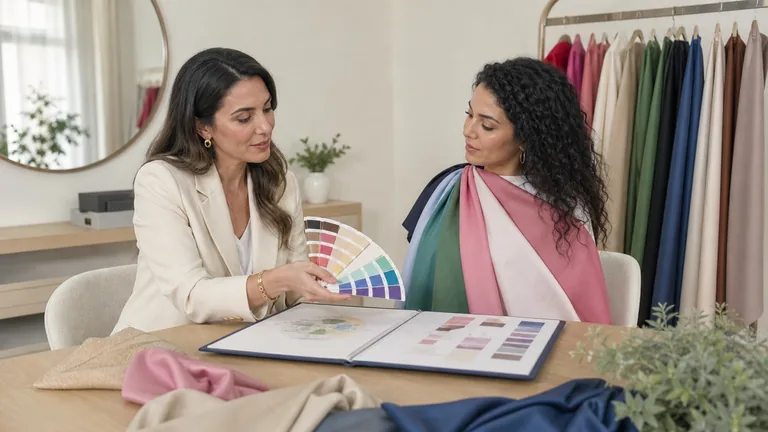
Show how to recognize a related color when a store item is not an exact match to a swatch. Choose a few neutrals and accents that fit the person’s work, style and budget. The guide to using a personal color palette explains proportions, fabrics and shopping.
Keep favorite colors in the conversation. A shade that draws attention away from the face can still work in pants, shoes or a small detail, or alongside another color near the face. A season name does not determine an exact foundation shade or hair dye formula; those choices need their own assessment and relevant skills.
Provide the agreed palette and written summary, naming the system, supported directions, practical combinations and unresolved questions. Say whether the palette is physical or digital. Screens, printing, fabric and lighting can change how colors look, so use the samples to guide comparisons with real objects. Give a date or version to digital reports and explain care for a physical fan.
Client data and photographs in a US practice
Explain what contact details, notes and photographs you collect, why you need them, who can access them and how long you keep them. The Federal Trade Commission’s business guidance recommends collecting only what the business needs, protecting it and disposing of it when the need ends. Use a client code when a name is unnecessary, restrict file access and store paper records securely.
State privacy laws have their own scope and requirements. For example, California’s CCPA guidance explains which businesses it covers and the rights it provides. Check the rules that apply to your business and clients when preparing your forms. An EU consent template does not establish US compliance.
Treat private documentation and public promotion as separate choices. As a service practice, ask before taking photographs and obtain a separate, specific written permission before using an identifiable image in a portfolio, training material or advertising. Explain the intended channels and how the client can contact you about future use. A refusal to appear in marketing should not reduce the booked service.
When photographing comparisons, keep light, framing, expression and camera settings consistent. Avoid beauty filters and skin-color edits. A camera processes the scene and a screen displays it under different conditions, so photographs cannot automatically reproduce what you saw in person. If you offer remote work, explain what the files can support and when another comparison is needed; see online color analysis and the limits of photos and screens.
Follow-up and the final session check
Agree on a channel, response time and period for follow-up before closing. One possible arrangement is for the client to send questions about two outfits within two weeks, with a stated reply deadline. That is an example of service planning, not an industry rule. A wardrobe review or a fresh analysis needs its own agreement.
Check that the notes and palette agree, the client has one clear task to try at home, and each unresolved point has a next step. Deliver any promised correction, archive the record according to your policy and set aside textiles for cleaning. Note lighting problems, rushed stages or repeated difficulty with a particular comparison so you can address them before the next session.
Frequently asked questions
Can I keep my glasses on?
Yes, especially if you need them to see the comparisons. Agree on any brief checks without frames only if you can participate comfortably, and repeat the practical choices with the glasses you wear every day. Frame color can be part of the styling discussion without deciding your palette in advance.
When is another consultation useful?
A repeat can help when the first session left a specific question unanswered, the lighting was unsuitable or you want to compare recommendations from different methods. Ask what the next appointment will test. If you understand your palette but struggle to use it, an application session may be enough.
Do I have to buy makeup or new clothes afterward?
You can start with what you already own. Ask before booking which palette and materials are included, and keep optional products or services separate from the consultation fee. Makeup advice or application is included only when the offer states it and the provider can deliver it within their competence and applicable local requirements.
Professional practice and further study
The AICI Code of Ethics addresses honest descriptions of competence, client dignity, privacy and agreed services. It is professional guidance; it does not grant a US state license. If your service adds makeup application or hair services, verify the requirements for those activities where you work.
For structured study, review the curriculum and current terms of BeautyLearn’s complete color analysis course. A course or completion certificate does not itself establish permission to perform regulated services.
Compare fabrics on olive and deep skin tones with steady light, matched pairs and repeatable observations. Keep useful results when a season remains uncertain.
Compare swatches with real fabrics, combine neutrals and accents, and use your personal color palette to plan outfits and shop for clothes you will wear.