How much does a personal colour analysis cost? Time, service and materials explained

A practical guide to personal colour analysis consultation prices: total working time, draping scope, palette and report deliverables, extras, online and group formats, quote comparison and transparent professional costing.

BeautyLearn Editorial Team29 August 2026 23 min read
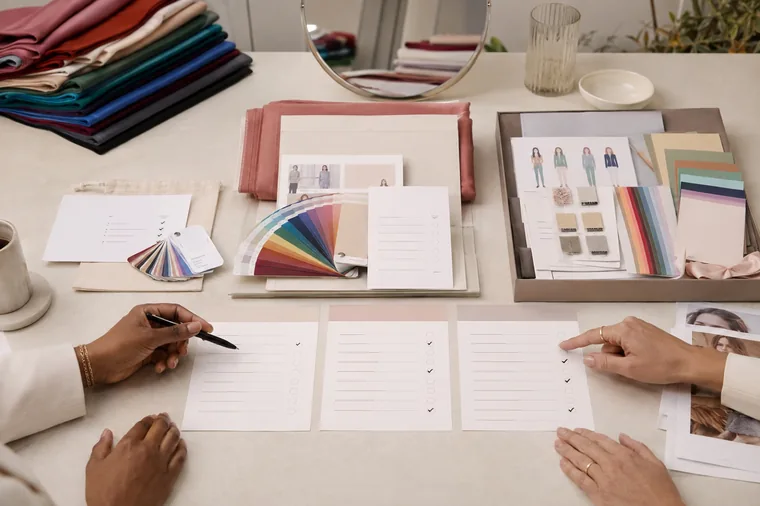
Personal colour consultation with controlled drapes, palette options, service notes and a transparent itemised quotation
On this page
  1. 1 Why there is no single worldwide price for personal colour analysis
  2. 2 The price is a service architecture, not a global tariff
  3. 3 Appointment duration and total working time are different
  4. 4 What should a personal colour analysis service description include?
  5. 5 Materials included: studio tools versus take-home deliverables
  6. 6 Common extras that should not appear at checkout
  7. 7 Individual, duo and group consultations: compare time per person
  8. 8 In-person and online prices are not automatically higher or lower
  9. 9 How to compare two personal colour analysis quotes
  10. 10 Deposits, cancellation, vouchers and consumer information
  11. 11 How consultants can calculate a sustainable price
  12. 12 Three hypothetical package structures, without invented market prices
  13. 13 What the price cannot prove about the analysis
  14. 14 When a consultant should review the price and package
  15. 15 Signals of a transparent offer and reasons to pause
  16. 16 Client checklist before booking
  17. 17 Frequently asked questions
  18. 17.1 How much does a personal colour analysis consultation cost?
  19. 17.2 Why do two consultations with the same name cost different amounts?
  20. 17.3 Does a more expensive consultation guarantee a better result?
  21. 17.4 Does a cheaper consultation mean it is incomplete?
  22. 17.5 How long does personal colour analysis take?
  23. 17.6 Are the drapes included in the price?
  24. 17.7 Is a colour palette normally included?
  25. 17.8 Is a report worth paying extra for?
  26. 17.9 Should online personal colour analysis cost less?
  27. 17.10 Are duo or group sessions better value?
  28. 17.11 What extra charges should I check?
  29. 17.12 What should happen if the result is uncertain?
  30. 17.13 Is a deposit refundable?
  31. 17.14 What should I check on a gift voucher?
  32. 17.15 Do more seasons justify a higher price?
  33. 17.16 Can a consultant charge separately for follow-up?
  34. 17.17 How can a consultant set a sustainable price?
  35. 17.18 Can I compare prices in different currencies?
  36. 17.19 Which package should a beginner choose?
  37. 18 Sources and editorial scope
  38. 19 Continue the personal colour analysis pathway

How much does a personal colour analysis cost? There is no honest global average that can answer the question on its own. An advertised consultation may mean a short introductory comparison, a controlled one-to-one draping session, an extended image-consulting package, a remote educational review or a group workshop. Currency, taxes, premises, professional experience, local demand, preparation, take-home materials and follow-up also vary between countries and providers. The useful question is therefore not only ‘What is the price?’ but ‘What complete service does that price buy, and what remains extra?’

Quick answer: compare the final payable price together with appointment length, individual attention, draping scope, preparation, palette or report, follow-up, travel, shipping, taxes and cancellation terms. Reusable studio drapes are usually tools used during the appointment, not take-home items. A lower fee is not automatically incomplete, and a higher fee does not guarantee a more accurate classification. Price becomes meaningful only when scope, evidence, professional time and deliverables are clear.

This guide owns price, duration and inclusion intent. For the technical client journey, read how a personal colour analysis consultation works. The physical comparison method belongs to the professional draping-test guide, while the limitations of a screen-based service belong to the guide to online personal colour analysis. Here the aim is to read a quotation as a client and build a transparent service as a consultant.

Why there is no single worldwide price for personal colour analysis

A price copied from another country can be actively misleading. It may include or exclude sales tax, value-added tax, a tip culture, travel, shipping or studio overhead. A figure shown by a solo consultant working from home cannot be compared directly with a city-centre studio, a mobile service or a multi-specialist package. Even within one city, one provider may sell a focused colour appointment while another combines colour, wardrobe, cosmetics, hair and shopping support.

The classification system also affects the workload only when it changes the real method. Advertising twelve, sixteen or more labels does not prove that more comparisons, better controls or a stronger handover are included. The guide to four-, twelve- and sixteen-season systems explains why granularity and quality are not synonyms. Ask how the provider reaches and communicates the result rather than paying for a larger number in the system name.

Public price snapshots age quickly. Exchange rates move, providers change packages, and a local tax rule may alter the final amount. BeautyLearn therefore does not publish a fabricated universal band or convert one national market into several currencies. A current local comparison should use like-for-like written offers collected on the same date and should record what each includes. The framework below remains useful when the numbers change.

Price driver

What can change

Question to ask

Market and tax

Currency, tax treatment, premises, wages and local demand

Is the displayed amount the final payable total?

Format

Studio, mobile, online, individual, duo or group

How much protected comparison time does each person receive?

Scope

Dimensions tested, drape sequence, application and handover

What is actually observed and delivered?

Professional work

Preparation, record, appointment, reset, report and follow-up

Does the quoted duration mean appointment time or total work?

Deliverables

Digital or physical palette, report, samples and review

What may the client keep, in which format and for how long?

The price is a service architecture, not a global tariff

A headline figure is not a comparable service unit

Normalise scope, evidence, time, deliverables and final charges

Scope

Format, method and personal attention

Evidence

Controls and uncertain-result route

Work

Appointment plus invisible time

Total

Deliverables, tax and mandatory extras

Two consultations can share a name while selling different work. Compare what the provider does, what the client keeps and what may still be added.

Two appointments with the same title can have different architectures. One may begin with intake, use controlled neutralisation and a broad drape sequence, compare temperature, value, chroma and contrast, document decisive pairs, explain uncertainty, produce a physical palette and include a short application follow-up. Another may provide a rapid set of comparisons and a digital season card. Both can be legitimate if they are named and priced honestly; they are not the same unit of service.

For a client, architecture prevents false savings. A low headline price may become higher after a palette, report, shipping, travel or tax is added. Conversely, a concise service may be the appropriate choice for someone who already understands their wardrobe and wants one bounded question answered. Buying every optional module is not automatically better. The correct package is the smallest one that can support the declared objective without hiding a necessary component.

For a consultant, architecture prevents arbitrary pricing. Start with the defined client outcome and evidence required. Map every work stage, assign real time, direct consumables and a defensible share of overhead, then add the operating margin needed for replacement, training and business continuity. The free BeautyLearn beauty pricing calculator can structure that estimate. It is a management aid, not tax, legal or accounting advice.

Appointment duration and total working time are different

The appointment is only the visible centre of the service

Cost every stage without turning the client quote into an invoice maze

1

Intake and preparation

2

Consultation and draping

3

Reset and deliverable

4

Follow-up and administration

Preparation, consultation, reset, production and follow-up all consume professional capacity. The package can remain simple while the internal model stays complete.

The client sees the appointment. The provider also performs work before and after it. Before the session there may be booking, objective review, accessibility adjustments, room preparation, light checks, drape organisation and record creation. After the client leaves there may be cleaning, drape care, palette assembly, image selection, report writing, secure file handling, follow-up and administrative work. A ninety-minute appointment can therefore require substantially more than ninety minutes of professional capacity.

Not every minute must be billed as a visible line item. It must still exist in the costing model. If invisible work is ignored, the service can appear profitable while consuming unpaid evenings and leaving no allowance for equipment, continuing education or error correction. If every internal action is charged separately, the client may face an unreadable quote. The better solution is a complete package description supported by a detailed internal cost sheet.

Duration is not a quality score. A long session can contain repetition, and a focused session can be well designed. What matters is whether the time is sufficient for the promised comparison, breaks, communication, client participation and a non-conclusive route. Rushing drapes to preserve an advertised duration is not efficient. Extending an appointment without explaining a scope change is not transparent either.

Work stage

Visible to client

Costing reminder

Intake and preparation

Sometimes

Review, room, light, drapes, accessibility and record

Consultation and draping

Yes

Protected comparison, dialogue, breaks and handover

Reset and material care

Usually no

Cleaning, inspection, refolding, replacement tracking

Deliverable production

Result is visible

Writing, design, printing, assembly, quality check

Follow-up and administration

Partly

Boundaries, payment, file handling, questions and closure

What should a personal colour analysis service description include?

The sales page or written quote should state who the service is for, the consultation format, expected appointment duration, location, preparation, number of participants, method scope, deliverables, timing, total price or calculation method, mandatory charges, optional extras, payment schedule, rescheduling and cancellation terms. If results can be provisional or non-conclusive, say what the remedy is before booking. If a result depends on files or client-supplied materials, publish acceptance criteria.

Avoid vague bundles such as ‘complete package with everything included’ unless everything is listed. Complete may mean a palette to one provider and a wardrobe review to another. Avoid promising a guaranteed season, perfect shopping or permanent certainty. The professional service can promise a declared process, care, documentation and an explained conclusion; it cannot promise that every framework or observer will use the same label.

Accessibility can affect delivery without reducing professional value. Ask about sensory needs, mobility, communication format, breaks, seating, allergies relevant to materials and whether a support person is required. State whether an adjustment changes time or price. Do not make the client disclose medical detail that is unnecessary for the service. The consultation record should capture the agreed adaptation, not a diagnosis.

Materials included: studio tools versus take-home deliverables

Used in the service is not the same as included to keep

Name reusable tools, take-home items and optional production separately

Studio

Drapes, light, cape and references

Take home

Declared palette and application plan

Optional

Print, shipping and extended modules

Record

Working notes and privacy boundaries

Drapes, lighting and neutralisers usually remain professional equipment. Palettes, reports, samples and files become client deliverables only when the offer says so.

Professional drapes, neutral capes, mirror, controlled lighting, colour references and sanitised accessories are normally equipment used to perform the service. Their purchase, maintenance, cleaning and replacement contribute to overhead, but the client does not ordinarily take them home. The professional colour-analysis kit guide distinguishes decision tools, environmental controls, hygiene supplies and records.

Take-home deliverables may include a printed or fabric palette, digital palette, report, outfit formulas, contrast guide, shopping checklist, annotated photographs or a recording where lawful and agreed. Their value depends on accuracy, usability and support, not page count. A long generic report can be less useful than a concise personalised record that explains colour roles and the uncertainty boundary.

Ask whether a physical palette is custom assembled, selected from a standard family, printed or made from fabric; whether colour references are intended for precise matching or broad coordination; whether the digital version is tied to a declared colour workflow; and whether replacement is available. A screen palette cannot appear identical on every device. A printed piece can also change with substrate, ink, light and wear.

Personal colour analysis consultation materials arranged with professional drapes, a neutral cape, client record and separate take-home palette
Separate reusable professional tools from the items the client may keep

Item

Usually used in studio

Possible take-home deliverable

Drapes and neutralisers

Reusable comparison tools

Not unless explicitly sold as samples

Lighting and references

Environmental control and quality check

No; record may describe the setup

Palette

Reference sets may stay in studio

Printed, fabric or digital version if listed

Report and application plan

Working notes remain professional record

Client-facing document if included

Photographs or recording

Only when necessary and authorised

Only if scope, privacy and transfer are agreed

Common extras that should not appear at checkout

Travel, mileage, parking, home-call minimums, venue hire, shipping, printing, a physical palette, rush delivery, additional participants, extra reports, wardrobe review, cosmetics, hair-colour support and extended follow-up may legitimately cost more. They should not be unavoidable surprises. The client should be able to distinguish mandatory costs, optional additions and later scope changes before committing.

Taxes and payment fees require territorial care. Do not copy a competitor’s display convention. Determine whether the market expects or legally requires consumer prices to include tax and mandatory charges, whether card surcharges are restricted and how foreign-currency conversion is presented. An international English page must not imply that one jurisdiction’s rule applies everywhere.

If the exact final amount depends on information not yet known, state the calculation method, assumptions and approval point. A mobile quote might identify an included radius and a rate beyond it. A printed palette might show the item and shipping separately where lawful. A custom wardrobe module might define an hourly or fixed extension with a maximum. The client should be able to make a prudent decision without guessing the likely total.

Individual, duo and group consultations: compare time per person

A duo or group appointment may reduce the fee per person because venue, introduction and some preparation are shared. It does not create more individual attention. Divide the schedule into common teaching and protected personal comparison. Ask whether every participant receives a full drape sequence, a shortened directional comparison or only observation of demonstrations. The format should not be described as individual analysis if most of the session is shared.

Per-person duration is not simply total event length divided by attendees, because introductions, breaks, transitions and teaching may be collective. A transparent quote shows total event time, maximum group size, approximate individual comparison allocation, deliverables for each participant and what happens if one result remains unclear. A lower per-person price may be excellent value for education, while a complex boundary decision may require a separate one-to-one appointment.

For the provider, groups add coordination, room, seating, hygiene, duplicate materials, labelling and confidentiality considerations. Do not price a workshop by multiplying an individual fee and calling the difference a discount. Cost the actual event architecture, then communicate which parts are collective and personal. Obtain permission before discussing one person’s observations with the group.

In-person and online prices are not automatically higher or lower

A remote service may avoid studio or travel costs, yet add capture support, file acceptance, secure transfer, colour-management review, report production and technical follow-up. An in-person service may use more physical equipment but allow direct controlled comparison without the camera-to-screen chain. Format does not determine value by itself. Compare evidence, professional time, deliverable and remedy.

A remote provider should state what can be concluded from the files and whether the result may be directional, provisional or non-conclusive. If accepted images conflict, the terms should describe repeat, alternative delivery, referral or refund according to local law. It is misleading to price a remote package as equivalent to live draping while hiding a weaker evidence boundary.

Hybrid services can be valuable when remote intake and wardrobe application preserve studio time for draping. Price the two phases clearly. Do not describe the preliminary call as a completed analysis or the later appointment as a confirmation that cannot change. The physical comparison must remain capable of revising the hypothesis.

How to compare two personal colour analysis quotes

Compare complete offers side by side

The cheapest or longest session does not win automatically

Price

Final payable total

Method

Equivalent evidence and scope

Output

Usable client deliverable

Terms

Support, changes and remedy

Use one matrix for final total, personal time, draping scope, deliverables, support, uncertainty and terms. Decide from fit and transparency.

Place both offers into one comparison sheet. Normalize the final amount, tax status, travel and delivery. Then compare consultation format, participants, appointment duration, total process, environmental controls, draping scope, classification framework, palette, report, application teaching, follow-up, privacy, cancellation and non-conclusive policy. A quote that cannot answer these questions is not necessarily poor, but it is not yet comparable.

Interviewing more than one consultant can clarify fit. AICI’s public information about image consulting notes that services and fees vary with scope, experience, track record and demand, and suggests choosing the consultant suited to the client’s needs. Treat professional membership or certification as one verifiable signal, not an automatic guarantee of a particular method or result. Ask for the provider’s actual training, boundaries and service documentation.

Read reviews for evidence about communication, preparation, practical handover and aftercare rather than only the assigned season. Portfolio images can show presentation but rarely prove consistent decision-making. Ask whether photographs are real client work and authorised. A polished palette does not compensate for a sales page that leaves mandatory charges or service limits unclear.

Three personal colour analysis service proposals compared by scope, working time, professional drapes and clearly separated take-home deliverables
Compare complete service architecture rather than one headline number

Compare

Quote A

Quote B

Decision question

Final payable total

Tax and mandatory fees stated?

Tax and mandatory fees stated?

What could still be added?

Personal comparison

Time, drapes and dimensions

Time, drapes and dimensions

Is scope equivalent?

Deliverable

Format, customisation, delivery

Format, customisation, delivery

What can be used after the session?

Support and remedy

Follow-up and uncertain outcome

Follow-up and uncertain outcome

What happens when evidence is insufficient?

Terms

Deposit, change and cancellation

Deposit, change and cancellation

Are conditions clear before payment?

Deposits, cancellation, vouchers and consumer information

A deposit or booking payment should have a defined purpose and written conditions. State whether it forms part of the final total, when the balance is due, what happens if the client or provider changes the appointment, whether a substitute is allowed and which costs are non-refundable under applicable law. Avoid using ‘deposit’ as a label for any payment without explaining its treatment.

Gift vouchers need validity, booking, transfer, expiry, top-up, cancellation and provider-closure terms appropriate to the jurisdiction. The recipient should be able to identify the service or value, included components and any later price difference. A voucher for a named package should not silently become insufficient because mandatory materials are sold separately at redemption.

Consumer rights differ. As one current regional example, the EU Your Europe portal says pre-contract information for goods and services should include the main characteristics, total price including taxes and charges, delivery and other additional costs, performance arrangements and trader identity. UK CMA price-transparency guidance and enforcement materials address mandatory charges and misleading headline prices. US FTC guidance requires truthful price advertising and clear disclosure of actual costs and conditions. These examples are not a universal legal checklist; obtain current advice for every market served.

How consultants can calculate a sustainable price

Build the internal calculation from total professional time, direct materials, overhead allocation, payment and platform costs, taxes handled by the business, replacement reserve and operating margin. Keep the owner’s labour compensation separate from profit: compensation pays for work; margin funds risk, investment and continuity. Use realistic sellable hours rather than dividing fixed costs by every hour in the month.

A practical model is: service labour plus direct consumables plus allocated overhead plus transaction or platform costs plus a reserve and margin, then apply the correct tax treatment and display convention. This is not a recommended price. Each input must be based on the consultant’s market, capacity, business structure and qualified accounting advice. Recalculate when material, rent, energy, insurance, training, tax or delivery changes.

Measure actual time across several appointments without collecting unnecessary client data. Separate preparation, client session, reset, report and support. Track the frequency of repeats, no-shows and replacement palettes. If actual time regularly exceeds the model, improve scope, workflow or price; do not remove technical checks or rush the handover simply to protect margin.

Create a bounded service ladder only when each level has a real audience. An essential consultation can focus on a declared comparison and practical palette. A complete version can add application teaching and a tailored report. An extended service can add wardrobe, cosmetics, hair or follow-up modules. Do not make safety, adequate evidence, privacy or a usable result premium-only features.

Three hypothetical package structures, without invented market prices

The following examples demonstrate structure only. They are not price recommendations, market averages or promises of availability. Replace them with a local cost model and lawful consumer display. The names are descriptive rather than quality rankings.

Essential individual: pre-appointment instructions, one controlled individual session, a declared draping scope, explained outcome, a concise palette and short written care or application notes. Reusable studio tools remain with the provider. One bounded clarification window is included; wardrobe, hair, cosmetics, travel and shipping are excluded or separately stated.

Complete individual: everything required for the consultation method, plus more application practice, a tailored report, physical or digital palette as specified, outfit and contrast examples and one scheduled follow-up. The quote identifies production and delivery time, privacy choices, uncertain-result remedy and every mandatory charge. More pages are not the value proposition; more usable client-specific application is.

Extended image pathway: the colour consultation remains a distinct first decision, followed by separately scoped wardrobe, cosmetics, hair, shopping or occasion modules. The contract explains which specialist is responsible for each component and prevents health, salon or retail claims from being inferred from colour analysis. The client can buy the relevant extension without believing the larger package is required for a valid basic result.

What the price cannot prove about the analysis

Price cannot prove that the consultant controlled the viewing conditions, compared evidence systematically or selected the most useful framework for the client. It cannot prove that a digital palette reproduces correctly on every screen, that a physical palette is custom made or that a season label will be shared by every school. Those questions require method, records, sample deliverables and transparent boundaries. Cost may reflect these elements, but the number does not verify them.

Price also cannot diagnose professional competence from appearance. A home studio can be carefully controlled, and an expensive commercial space can have mixed light and coloured reflections. A new consultant may use strong supervision and conservative scope, while long experience may sit inside a different classification tradition. Verify relevant education, continuing practice, professional insurance where applicable, the actual service protocol and the ability to explain an uncertain outcome. Do not assume a luxury environment, large social following or dramatic before-and-after photograph replaces those checks.

The client’s satisfaction is important but is not identical to technical evidence. Reviews may reward warmth, confidence, hospitality, styling taste or a flattering photograph. Look for repeated descriptions of clear preparation, careful comparison, useful explanation, realistic application and responsive aftercare. A responsible provider should be able to describe the process without disclosing another client’s private records or presenting one testimonial as proof that every future result will be conclusive.

Likewise, an included product does not automatically increase value. A large palette can overwhelm the client; a generic report can repeat public descriptions; a cosmetic sample may be unsuitable or raise hygiene and allergy questions; a shopping discount may create a commercial incentive. Judge each inclusion by whether it helps the declared outcome, is safe and usable, and is supplied with appropriate limitations. Removing a decorative extra can make a package clearer without making the consultation incomplete.

When a consultant should review the price and package

Review the internal cost model on a planned schedule and when a material input changes. Triggers include new premises, travel radius, insurance, energy, drape replacement, printing, shipping, payment platform, tax treatment, report software, assistant time or a revised appointment protocol. Record the effective date and preserve the terms already agreed with booked clients. A silent change between booking and payment damages trust even when the new calculation is reasonable.

Use operational evidence rather than anxiety. Compare estimated and actual time, material use, cancellation rate, follow-up load, reprints and capacity. If one module causes repeated overruns, decide whether its scope is unclear, the workflow needs improvement, the scheduled time is unrealistic or the price does not support delivery. Avoid solving the mismatch by skipping preparation, shortening drape comparisons, using unreviewed templates or making follow-up inaccessible.

Update public wording together with the price. If the physical palette is now optional, the headline, package table, checkout and confirmation must agree. If a new report replaces an older deliverable, archive or date sample documents. If travel or shipping varies, make the calculation visible before payment. Train anyone who answers enquiries so the client receives the same explanation across the website, booking system and direct message.

A promotional reduction needs the same discipline as the standard offer. Define the period, availability, eligible service, included materials and final total. Do not create permanent urgency, inflate a reference price that is not genuinely used or remove a necessary deliverable only to advertise a lower figure. A scholarship, student clinic or supervised practice price should identify supervision, scope and data use without implying that the recipient receives inferior dignity, privacy or safety.

Signals of a transparent offer and reasons to pause

  • Clear service format, scope, participant number and appointment duration.

  • Final total or understandable calculation method with mandatory charges visible.

  • Reusable professional tools separated from take-home palette and report.

  • Method, evidence boundary and provisional or non-conclusive route explained.

  • Training, professional identity, privacy and business contact details verifiable.

  • Deposit, cancellation, rescheduling, voucher and follow-up terms available before payment.

  • Pause when a very low headline price depends on unavoidable later additions.

  • Pause when a high price is presented as proof of scientific certainty or a guaranteed season.

  • Pause when a group workshop is sold as full individual analysis without personal time.

  • Pause when online files cannot be rejected or the provider hides what happens after an uncertain result.

Client checklist before booking

  1. Write the decision you want help with and choose the smallest suitable scope.

  2. Confirm whether the appointment is individual, shared, in person, mobile, online or hybrid.

  3. Ask what the advertised duration includes and how much time is personal.

  4. Request the method scope without assuming more seasonal labels mean better analysis.

  5. List the physical and digital items you may keep after the service.

  6. Confirm the final payable amount, taxes, travel, delivery and optional extras.

  7. Read preparation, privacy, cancellation, rescheduling and voucher conditions.

  8. Ask what happens when evidence is conflicting or the conclusion remains provisional.

  9. Compare written quotes on scope and total cost, not marketing adjectives.

  10. Keep the confirmation and use the palette as a tool rather than a shopping rule.

Frequently asked questions

How much does a personal colour analysis consultation cost?

There is no reliable worldwide average. Price depends on country, tax, format, scope, total working time, professional experience, premises, deliverables and follow-up. Compare current local offers only after normalising the complete service and final payable amount.

Why do two consultations with the same name cost different amounts?

The name may conceal different individual time, drape sequence, environmental controls, framework, palette, report, application teaching, travel and support. Ask for the architecture in writing. A price difference becomes understandable only after the units are comparable.

Does a more expensive consultation guarantee a better result?

No. Higher cost may reflect time, expertise, location, materials or broader scope, but it does not guarantee one correct label. Assess the method, controls, explanation, uncertainty policy, deliverable and fit for your objective.

Does a cheaper consultation mean it is incomplete?

Not necessarily. A concise, clearly bounded service may be appropriate and well designed. Check that necessary evidence, hygiene, privacy and a usable handover are not omitted, and that mandatory additions do not appear later.

How long does personal colour analysis take?

Duration varies with the format, participant number, comparison scope, breaks and handover. Ask whether the quoted time is the client appointment only. Preparation, reset, report production and follow-up add professional work outside the visible session.

Are the drapes included in the price?

Drapes are normally reusable professional tools used during the appointment, not items the client keeps. Their care contributes to the service cost. A take-home fabric palette or sample set must be listed separately as a deliverable.

Is a colour palette normally included?

It depends on the package. Confirm whether the palette is physical or digital, standard or customised, printed or fabric, included or optional, delivered immediately or later, and whether shipping or replacement costs apply.

Is a report worth paying extra for?

A concise personalised report can preserve the reasoning, colour roles, contrast and application plan. Page count is not quality. Ask for the contents, format, production time and whether it repeats generic season descriptions already available elsewhere.

Should online personal colour analysis cost less?

Not automatically. It may save premises or travel while adding capture guidance, file review, technical checks, secure transfer and report time. Compare evidence and total work. The result should remain provisional or non-conclusive when files do not support the promised precision.

Are duo or group sessions better value?

They can be good value for shared education, but usually provide less individual comparison time. Ask for total event length, maximum participants, protected time per person, personal deliverables and the pathway for someone whose result remains unclear.

What extra charges should I check?

Check tax, travel, mileage, parking, venue, home call, shipping, printing, physical palette, rush delivery, extra participants, wardrobe or cosmetics modules, extended follow-up and payment charges. Mandatory costs should not be hidden behind a headline figure.

What should happen if the result is uncertain?

The terms should define whether the service repeats a comparison, provides a provisional application plan, refers to an in-person session, changes the deliverable or offers a remedy under local law. The provider should not force a season label merely because time has been spent.

Is a deposit refundable?

That depends on the written terms and applicable law. Confirm whether the payment forms part of the final total, deadlines, client and provider cancellations, rescheduling, substitute attendance and any non-refundable work before committing.

What should I check on a gift voucher?

Check the named service or value, included materials, validity, booking availability, expiry, transfer, cancellation, price changes and provider-closure terms. A recipient should not discover unavoidable additions only when redeeming it.

Do more seasons justify a higher price?

Not by themselves. More labels can require finer comparisons, but they can also be a naming convention. Ask whether the service adds evidence, controlled comparison and a useful handover. Granularity is not automatically quality.

Can a consultant charge separately for follow-up?

Yes when the included boundary is clear before booking. State whether follow-up means one message window, a scheduled call, review of outfits or ongoing support. Avoid promising unlimited access that neither party can interpret or sustain.

How can a consultant set a sustainable price?

Cost total labour, direct materials, overhead, transaction costs, replacement, risk and margin, then apply local tax and display rules with qualified advice. Use realistic sellable hours and measure actual time. Do not copy a competitor’s headline price.

Can I compare prices in different currencies?

A currency conversion alone is insufficient. Tax, mandatory fees, travel, wages, scope, local demand and consumer display conventions differ. Compare local final totals and equivalent service units on the same date.

Which package should a beginner choose?

Choose the smallest package that provides a credible process and a usable palette or application plan for your goal. Add wardrobe, cosmetics, hair or shopping modules only when you need them. A larger package is not required for a valid basic consultation.

Sources and editorial scope

The service-scope discussion uses the Association of Image Consultants International Core Competencies and its public overview of image consulting as industry references. These sources describe a broad profession and do not endorse a specific BeautyLearn course, provider, price or personal colour framework.

For regional consumer-information examples, consult the European Union’s current contract information and pricing and payments pages, the UK Competition and Markets Authority’s current price-transparency publication, and the US Federal Trade Commission’s advertising guidance for small businesses. Laws, tax and withdrawal rights vary by territory and transaction; this guide is educational and not legal, tax or accounting advice.

Continue the personal colour analysis pathway

Begin with what personal colour analysis examines and the four dimensions of undertone, value, chroma and contrast. Compare the consultation protocol with the online evidence limits. Consultants can use the guides to professional training and career development and the professional kit. Browse the personal colour analysis guide hub, the English course collection and the current complete colour analysis course within the English market.

To translate a personal palette into complexion, cheek, eye and lip decisions, use personal colour analysis and make-up by season. It separates foundation matching, colour correction, iris, placement and cosmetic safety from the broad seasonal colour direction.

Apply an established palette to shirts, tailoring, beard, eyewear and accessories with personal colour analysis for men. The guide prioritises face-zone colour, dress code, identity, useful combinations and responsible grooming without creating a separate colour system for men.

Continue learning