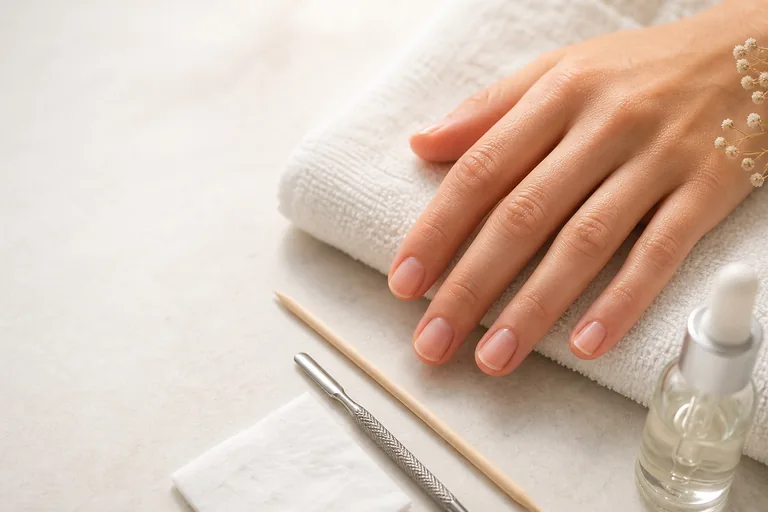
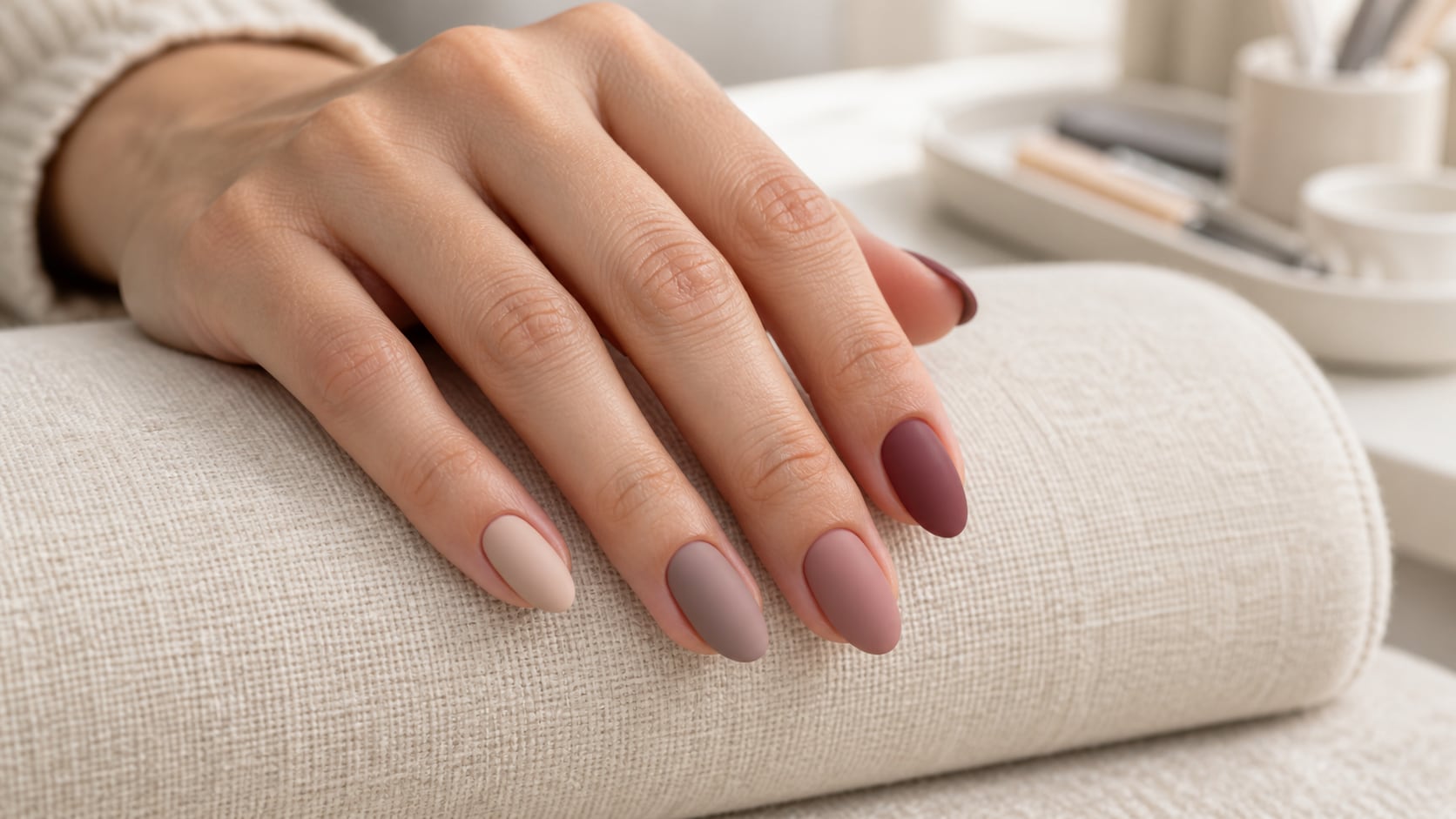
Matte nails change the character of a colour without requiring an elaborate design. Nude can look soft and understated, red takes on a velvety appearance, and navy or black becomes a strong block of colour. The best choice depends on the contrast you enjoy, the shape of your nails and how much upkeep fits your routine. Start with a colour you already like, then compare a matte sample beside a glossy one.
Quick choice: take a colour you already enjoy and compare the same shade in matte and gloss. Then decide whether the set needs one colour, a related pair or a contrasting accent. Choose the product system separately: a matte look is not a reason to mix regular varnish and gel without supported instructions.
Matte is a finish, not a colour
Colour describes the shade; finish describes how its surface reflects light. A matte finish reduces the sharp highlights associated with gloss. It can make the same polish appear softer, flatter or slightly different in depth. It does not automatically make the colour pale, muted or opaque: a sheer pink can remain sheer beneath a matte top coat.
Most colours can be given a matte finish with an appropriate top coat. Check the actual combination on a finished swatch, because satin, velvet and chalky matte products do not all look identical. Glitter and shimmer also change character when their reflections are softened. OPI's lacquer matte top coat instructions illustrate this distinction: the finish is applied over the colour layers.
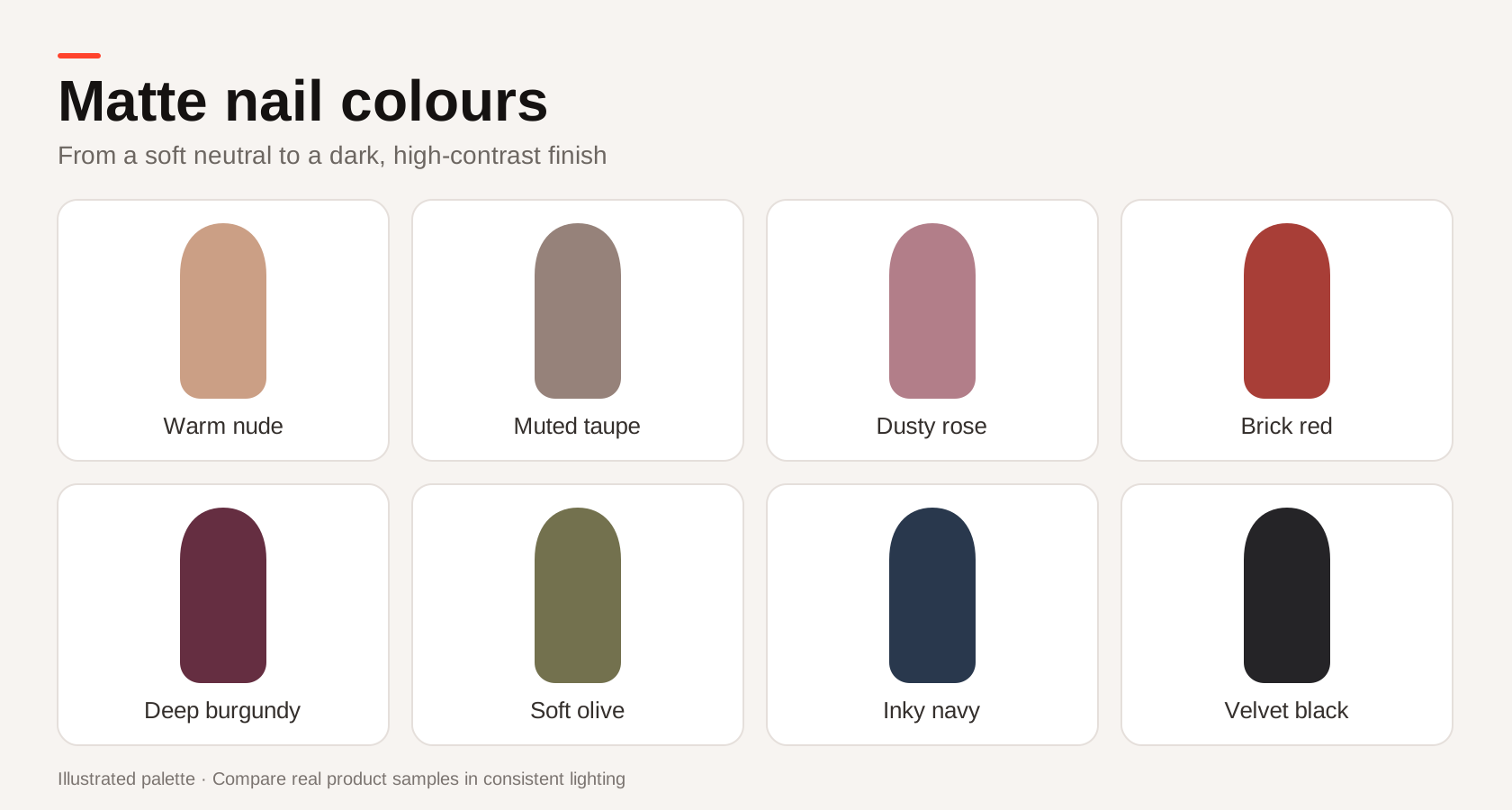
Matte colour ideas, from nude to black
Nude and beige: choose peach, rose, caramel, cocoa or another depth you enjoy. A nude close to your skin creates continuity; a lighter or darker one creates a visible outline. There is no single universal nude.
Taupe: grey-brown shades give a restrained, softly defined look. Try a warmer mushroom beside a cooler mauve-taupe; the difference is easier to see on your hand than in a bottle.
Pink: dusty rose feels quiet, milky pink looks airy, and a vivid pink remains expressive under matte. Pair two related pinks if you want variation without a sharp colour break.
Red and burgundy: tomato red gives clear warmth, cherry red feels crisp, and wine shades bring depth. A matte burgundy set with one rose accent is an easy two-colour composition.
Olive: khaki, moss and deeper olive pair comfortably with cream, taupe or warm brown. Keep the depths distinct when using several shades so the arrangement remains readable.
Navy: choose a blue that still reads blue in ordinary indoor light. A very deep navy can resemble black; a slightly clearer blue shows the colour more readily.
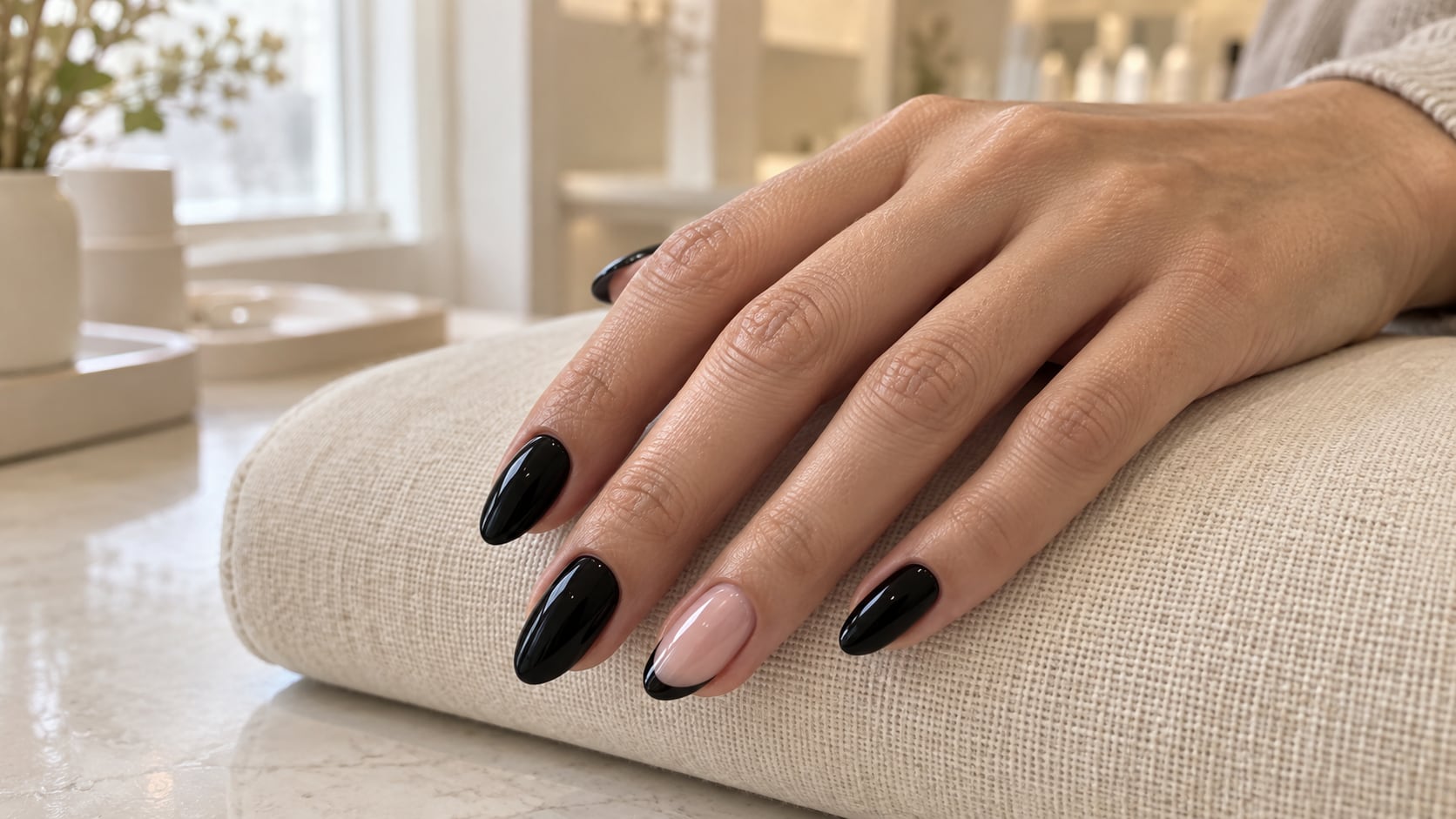
Black: an all-matte set emphasises the outline of each nail. Charcoal offers a softer alternative. For French tips, graphic accents and other compositions, explore these black gel nail design ideas.
Choose contrast and undertone by looking at your hand
Place two finished swatches beside your fingers in daylight, then in the light where you spend most of your time. Compare one difference at a time: pale versus deep, warm versus cool, or muted versus vivid. Notice whether you prefer the nails to blend into the hand or become the focal point. Jewellery and clothing can help you build a combination, but they need not match.
Undertone is a design choice, not permission to wear certain colours. Warm skin does not rule out navy, and cool skin does not rule out olive. A deliberately contrasting shade may be exactly the effect you want. If a pale nude looks too stark for your taste, try a deeper version before abandoning the whole colour family.
Three matte colour combinations to make your own
A useful palette has a main colour and a reason for any additional shade. Start with one of these arrangements, then replace a colour with a depth or undertone you prefer. You do not need to use every shade on the palette or make both hands mirror images.
Palette | Simple arrangement | What to compare |
|---|---|---|
Rose and burgundy | Burgundy on most nails, with a muted rose accent | Choose enough difference in depth for the rose to remain distinct in indoor light. |
Taupe, olive and cream | Taupe as the main colour, one olive nail and a small cream detail | Keep one colour dominant. Equal amounts of three shades give a busier result. |
Navy and the same navy in gloss | Matte navy across the set, with a glossy tip or one glossy accent | Turn the swatches towards and away from the light to see the finish contrast. |
For an appointment, save the palette and describe its arrangement in plain language: mostly matte taupe, one olive accent, no extra length. A colour chart shows options, while a five-nail sketch shows how you want to wear them. Confirm both with the technician before the colour stage.
Working with short and long nails
Short nails suit matte darks as well as light shades. Keep the perimeter tidy and choose a single colour, small accent or fine tip when space is limited. A shorter nail does not need a pale polish to look considered. On longer nails, the larger colour area makes differences between shades more noticeable; two or three related colours can create variety without crowding the set.
Choose length and shape for comfort and the underlying service. Matte top coat adds a finish; it does not create the structure needed for an extension. Test decorative proportions on a tip of comparable length before committing to all ten nails.
Combine matte and gloss with a simple plan
Try a glossy French edge on a matte taupe nail, glossy dots over matte burgundy, or one glossy olive accent among matte nails. Keeping the underlying colour the same lets the light reveal the design. Alternatively, use a thin glossy curve to connect two shades rather than adding a third colour.
Plan which areas should remain matte before applying the final layers. A glossy coat over the whole nail will change the intended effect. Layering and surface preparation must follow a compatible product system; do not assume any two finished top coats will adhere to one another. Practise mark size and spacing using the nail art fundamentals guide.
Compare finishes without changing every variable
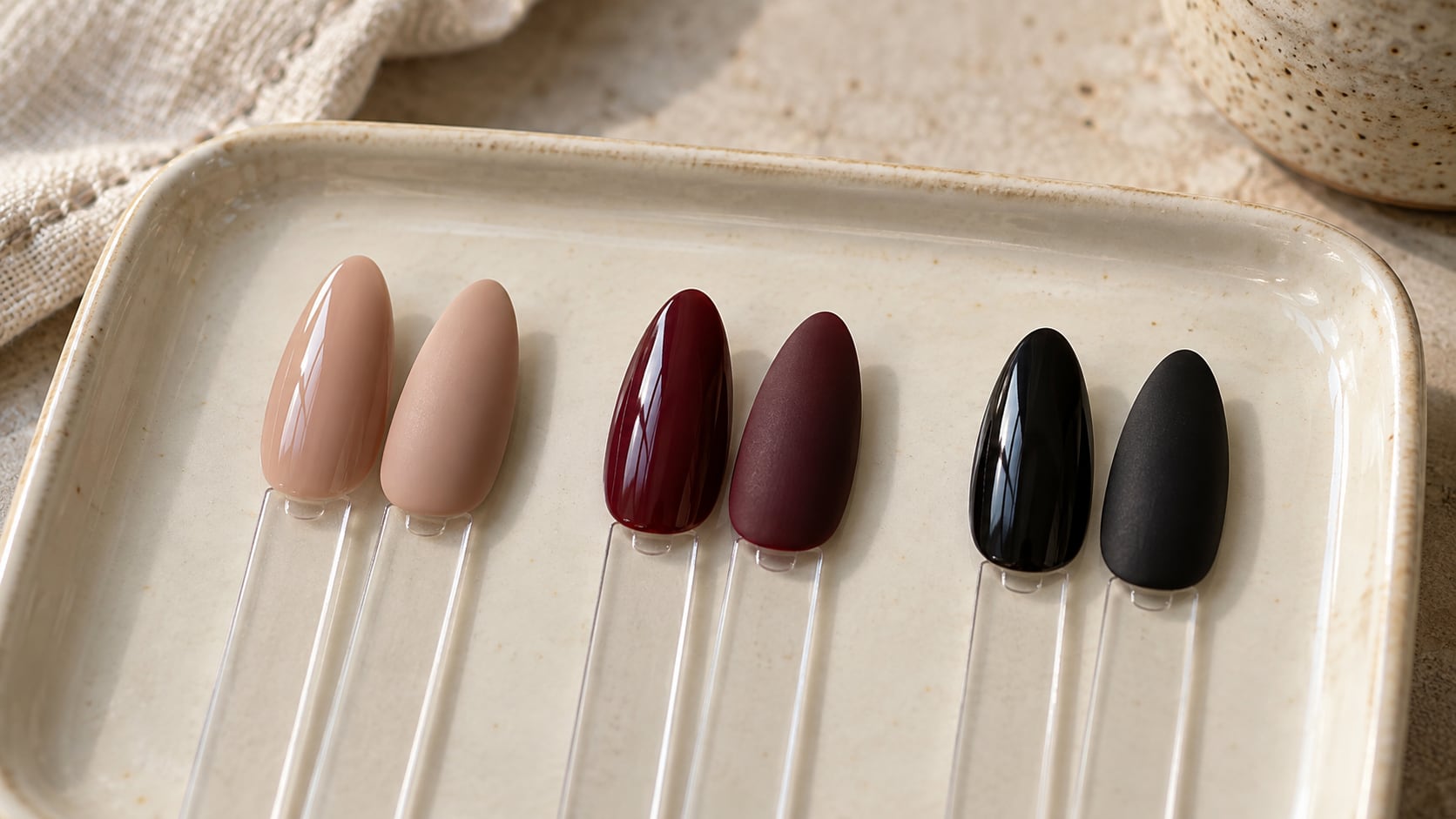
Choose two similar practice tips and one colour. Finish one in matte and one in gloss using the respective supported application instructions. Label the product combination on the sample holder.
Place the completed tips together in ordinary daylight, then in indoor light. Keep the background and viewing angle the same. Compare the reflection, apparent colour depth and visibility of any artwork.
Hold the pair near your hand and decide which effect you prefer. If you want a mixed-finish design, sketch which areas stay matte before planning the application sequence with the compatible system.
Save a photograph of the pair alongside the product names. It gives you a more useful reference for a future appointment or practice session than a screenshot of an unknown shade. Treat it as an appearance record, not proof that one finish lasts longer or that a gel has cured correctly.
Applying matte finish: regular varnish and gel
With regular varnish, use an air-drying matte top coat intended for that polish system. Follow its base-coat requirements, colour-layer instructions and waiting periods. Apply an even layer without repeatedly dragging the brush through areas that have begun to set. Allow the complete manicure to dry before judging patchiness or touching the surface.
With gel, use the manufacturer's compatible colour, matte top coat and specified lamp. Follow the exact layer thickness, curing schedule and finishing instructions. Some top coats require a final wipe; others do not. A surface that looks matte or feels hard does not prove correct curing. OPI's gel matte product information provides compatibility and finishing information; use the current instructions supplied for your exact product to confirm the application sequence. The gel curing guide explains the wider checks.
Keep uncured product off skin. Stop if itching, redness, swelling or pain develops and seek medical advice. The FDA's nail-product guidance explains why avoiding skin contact matters for sensitising ingredients. Do not add powder, food ingredients or improvised mixtures to make a product matte.
Cleaning and keeping the finish even
Hand cream and oil can leave a film that temporarily makes matte nails look shinier. Continue caring for the skin around your nails; assess the finish after ordinary gentle washing and drying. Use any further cleanser only as the manufacturer recommends. Essie's nail-care FAQ includes advice on matte finishes and shine from moisturiser and oil residue.
Avoid abrasive scrubbing, household stain-removal tricks and casual buffing to restore the effect. Wear suitable gloves for cleaning and avoid using nails to scrape or open packaging. Persistent shiny patches may be wear rather than residue, so cleaning may not restore them. Ask about a compatible refresh or removal instead of repeatedly adding layers. Never cover lifting or pick off gel; the American Academy of Dermatology's gel manicure advice recommends proper removal and assessment of persistent nail changes.
For guided practice with colour placement, brush control and mixed finishes, explore the Professional Nail Art Course and check its prerequisites against your current skills.
Check the finished look before adding more product
Separate a change of taste from a finish problem. If the colour is simply bolder than expected, try a smaller accent next time. If the surface looks uneven, compare it with your recorded sample and the product instructions. Repeatedly layering top coat is not a substitute for understanding the starting point.
For a salon appointment, describe when you noticed a change and which nails are affected. A photograph in similar light can help explain whether you mean less matte, visibly patchy or chipped at an edge. These are different observations; a clear description helps the technician decide whether the set needs cleaning advice, a compatible refresh or removal.
Frequently asked questions
Can any nail colour be matte?
Many colours can, using a compatible matte top coat. Check a swatch first: translucency, shimmer and colour depth still affect the result, and the finish may soften effects you wanted to preserve.
Ask to compare the same shade in both finishes, especially if its sparkle or pearl effect is the reason you chose it. The matte version may be attractive but feel like a different design, rather than a quieter version of the bottle colour.
Which matte colour is easiest to start with?
Start with a shade you already wear. Rose, taupe or a familiar nude makes the finish the main change. If you prefer strong contrast, a simple navy or burgundy set is equally reasonable.
You can also try one matte accent within a familiar glossy manicure, using a supported product combination. That lets you compare the two looks without changing your usual colour, length and design all at once.
Do matte nails last longer than glossy nails?
There is no universal ranking. Wear depends on the complete product system, application and daily activity. A manicure can remain attached while its matte surface becomes shinier, so finish retention and resistance to chipping are separate observations.
When discussing wear, say what you mean: keeping the original reflection, resisting visible marks or avoiding chips. Photographs of the finished set and later changes are more informative than a blanket promise that matte or gloss is always stronger.
Why are my matte nails shiny after hand cream?
Surface residue can change the reflection. Reassess after gentle washing and drying, then follow product-specific cleaning advice if needed. Shine that remains may reflect wear or an application issue rather than oil.
Can I put matte gel top coat over ordinary polish?
Only when the manufacturer explicitly supports that combination and provides its procedure. Do not assume air-drying varnish and lamp-cured gel are interchangeable. An appropriate air-drying matte top coat is usually the simpler option for regular polish.
Can I turn matte nails glossy again?
A compatible glossy finish may change the look, but preparation and recoating depend on the system. Check the instructions or ask your nail technician before adding another layer, particularly over a no-wipe gel top coat.