The cuticle is not all the visible skin at the base of a nail. It is a thin keratinised seal associated with the proximal nail fold and attached to the emerging nail plate. The proximal fold is living skin, not excess product-preparation material. Professional manicure decisions must distinguish a removable surface residue from living protective tissue—and choose not to cut when that boundary is uncertain.
Short answer: never treat the proximal nail fold as cuticle to be removed. Do not cut or forcefully push the protective seal. Observe first, work conservatively and stop for pain, redness, heat, swelling, bleeding, broken skin, discharge or an unexplained nail change. A deeper-looking product margin is not evidence of a better service.
This guide owns the anatomical boundary and the decision to proceed or stop. The dry and Russian manicure guide owns the technique comparison, the natural-nail preparation guide owns product-ready nail preparation, and the nail-matrix guide explains where the nail plate is produced. Substantively reviewed on 5 September 2026, this educational page is not a diagnosis, medical advice or an instruction to perform an invasive procedure.
Cuticle, proximal nail fold and eponychium are not interchangeable in practice
Name the structure before choosing an action
The nail plate, cuticle seal and proximal fold have different boundaries
Plate
Visible keratin surface
Cuticle
Keratin seal at the emerging plate
Proximal fold
Living protective skin
Matrix
Growth tissue beneath and behind
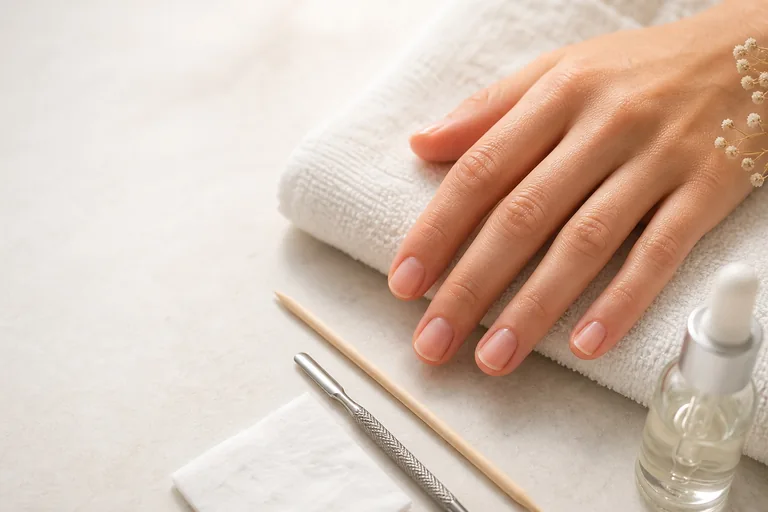
Everyday salon language often calls the complete rim of skin ‘the cuticle’. Precise language changes technique. The nail plate is the hard visible keratin structure. The proximal nail fold is the fold of living skin that lies over the newly emerging plate. The cuticle is the keratin sheet that connects the proximal fold area to the plate and helps protect the space beneath it. Lateral folds frame the sides, and the hyponychium contributes to the seal beneath the free edge.
Eponychium is used differently across professional, medical and teaching sources. Some use it almost synonymously with cuticle; some use it for the living ventral surface of the proximal fold; others use it loosely for the visible fold. Do not let a naming disagreement become permission to cut. The reliable operational rule is to protect living skin and the proximal seal, avoid force and stop before pain or tissue change.
Area | What it is | Professional boundary |
|---|---|---|
Nail plate | Visible keratin plate | Clean without thinning, grooves or heat |
Cuticle seal | Keratin sheet joining fold area and plate | Do not cut or forcefully push |
Proximal nail fold | Living skin over the emerging nail | Protect; never treat as dead residue |
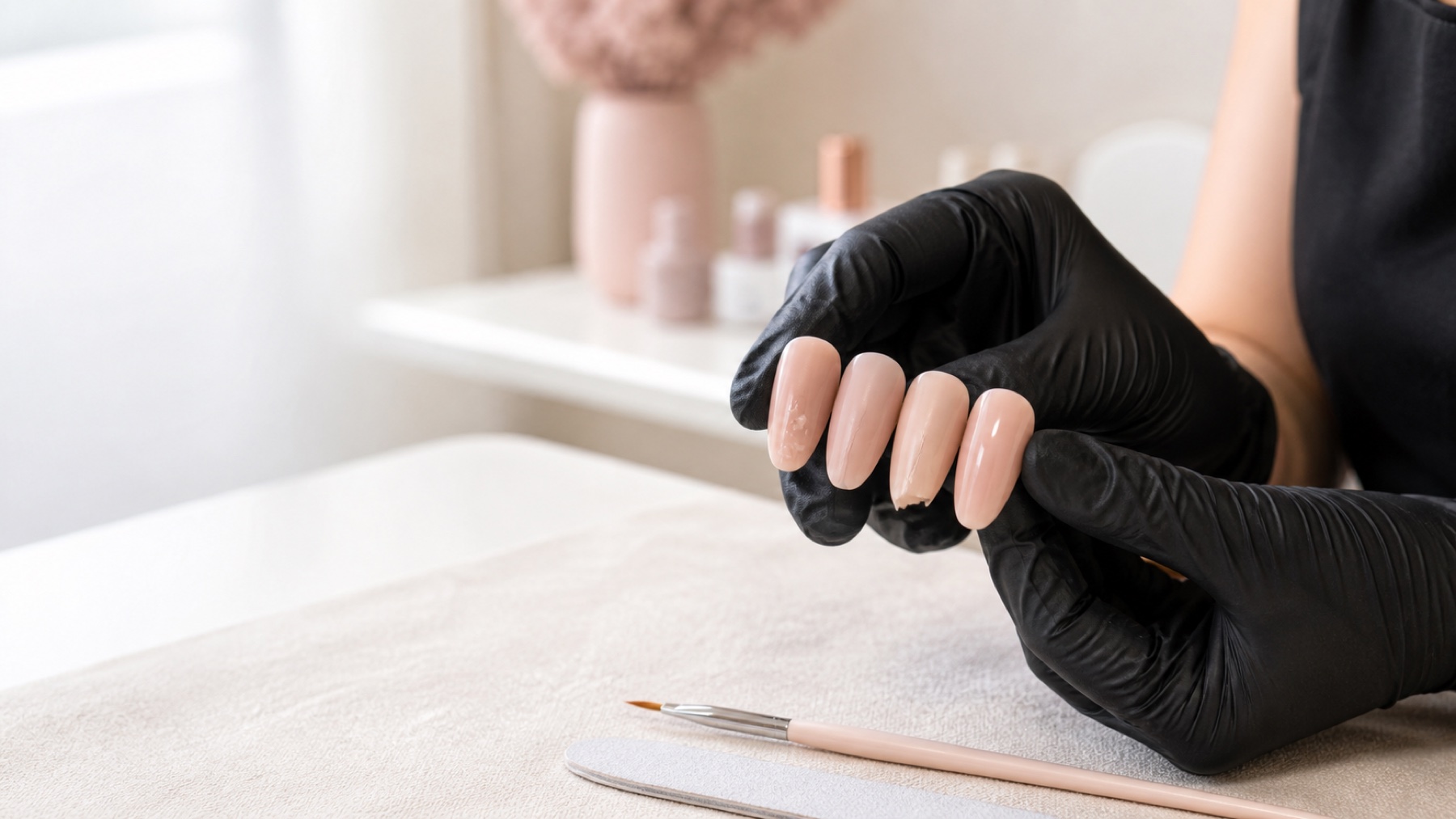
Hangnail | A torn or free fragment beside the fold | Never pull; assess the attached living edge |
Why the proximal seal matters
The cuticle creates continuity between the nail plate and surrounding fold. It is not an industrial watertight gasket, but it contributes to the protective barrier around the emerging nail. DermNet notes that loss of cuticle is associated with paronychia, an inflammatory condition of the nail fold. The American Academy of Dermatology advises people not to cut or forcefully push cuticles because doing so can make infection easier.
A manicure photograph cannot show the future condition of that barrier. Immediately after overworking, the line may appear exceptionally open and clean while the client later experiences tightness, burning, fissures or swelling. Judge quality by preserved tissue, controlled product margins and repeatable comfort—not by how far the colour seems to disappear under the skin.
Once the seal or fold is injured, adding primer, gel or adhesive compounds the exposure. Curing a product over a nick does not close the wound safely. If preparation produces bleeding or visible injury, the planned cosmetic coating is no longer the priority; stop and follow the workplace exposure and cleaning procedure.
Observe before touching the nail
Assessment comes before preparation
A stop decision protects more than a perfect proximal line
Look
Colour, folds, skin and plate
Ask
Pain, reaction and recent trauma
Record
Facts without diagnosis
Decide
Proceed, modify or stop
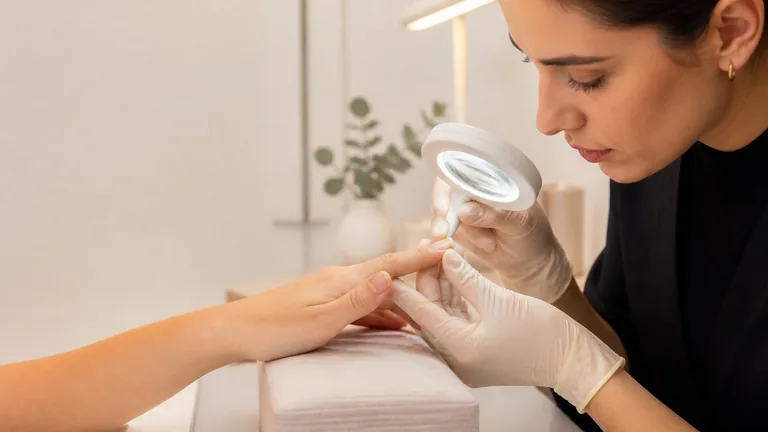
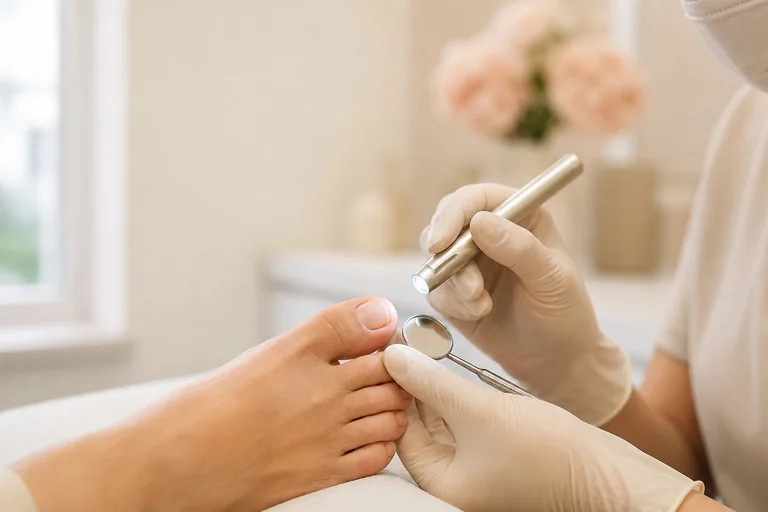
Compare all ten fingers in neutral light. Look for symmetry, colour, swelling, breaks, blisters, scaling, attached product, separation and evidence of recent trauma. Ask about discomfort, repeated reactions, picking or biting, recent removal and diagnosed conditions that may affect the service. An observation is not a diagnosis; record what is visible and what the client reports without naming a disease.
A normal variation may be uneven or dry, while a concerning finding may be subtle. The technician’s responsibility is not to decide exactly what the change is; it is to recognise when the original cosmetic plan is no longer appropriate. If a mark, pigment band, persistent inflammation or nail separation is unexplained, keep it visible and recommend assessment by an appropriate healthcare professional.
Use the nail client record and consent guide to document service history, relevant sensitivities, products and stop decisions. Consent does not turn a contraindicated or out-of-scope service into an acceptable one.
A conservative preparation sequence
Inspect all nails and folds before soaking, pushing, filing or applying a softener. Ask about pain and recent reactions.
Clean hands and prepare the workstation. Use single-use items once and reprocess reusable instruments for their intended use.
Choose dry or wet preparation according to the intended coating, local rules and a coherent product protocol; do not combine unrelated sequences.
Support the finger and use excellent light. Keep any blunt manual tool low and move on the nail plate rather than digging beneath the fold.
Remove only product-incompatible surface residue that can be addressed without cutting the protective seal, stretching skin or causing discomfort.
Dust and inspect from the front, side and proximal view. The plate should have no grooves, hot spots or visibly thinned patches, and skin colour should remain stable.
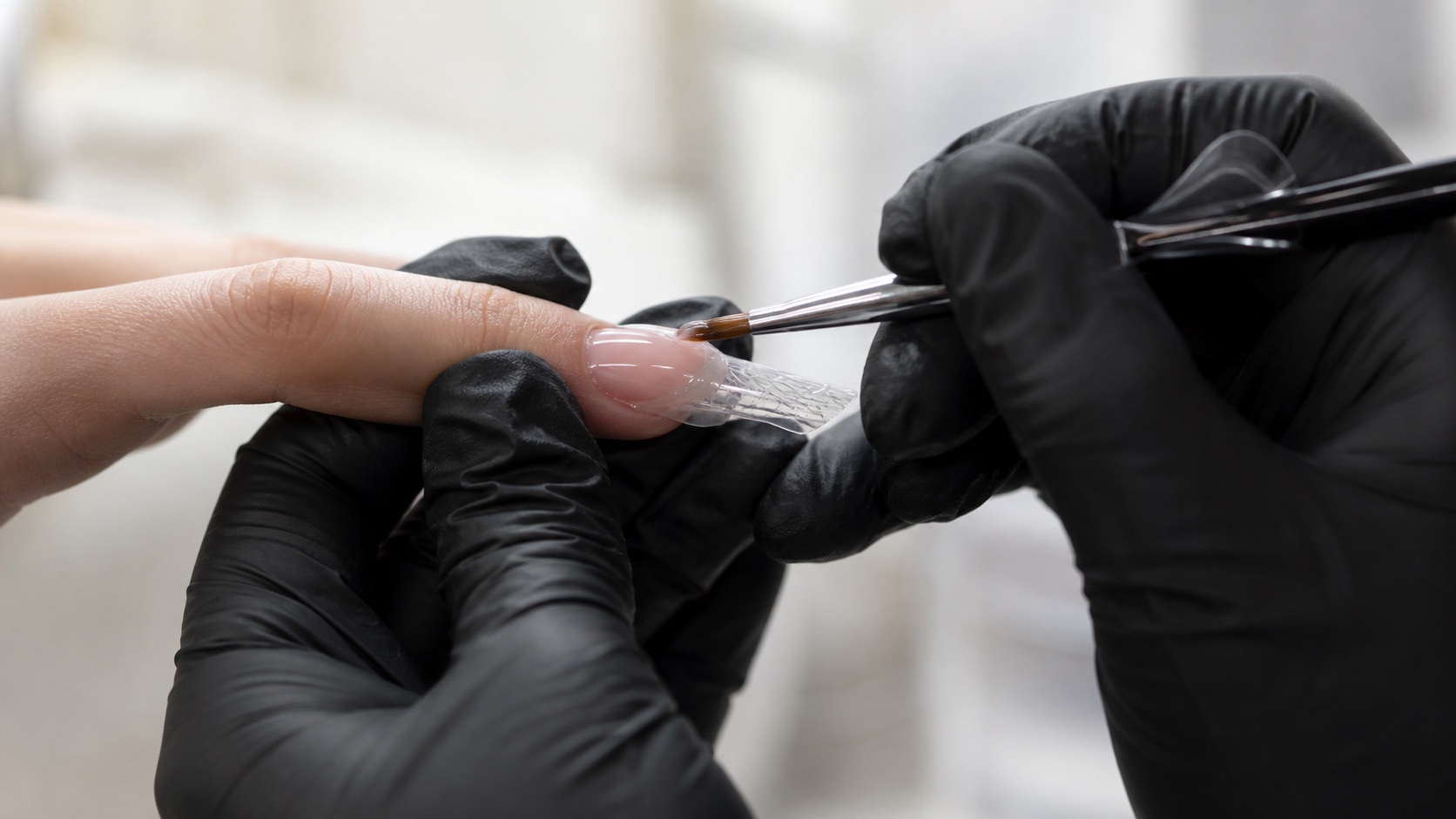
Apply nail product only to the plate with a visible controlled margin; remove flooding before curing rather than filing it from skin afterwards.
If the tissue resists, stretches, pales under pressure or hurts, stop. Resistance is information, not a request for a sharper tool. The objective is a clean product surface within a healthy boundary, not maximum tissue removal.
When not to cut and when to stop the service
Normal variation is not the same as a stop signal
Pain and tissue change move the decision outside cosmetic preparation
Dry but intact
Support conservatively
Attached tissue
Do not chase or pull
Pain or bleeding
Stop the service
Unexplained change
Refer, do not diagnose
Do not cut an area because it is visible, untidy or requested by the client. If you cannot confidently distinguish a fully free fragment from living attached skin, take the conservative option. Do not prepare further or cover the area when any of these signs are present:
redness, warmth, swelling, throbbing, pain or discharge around a nail;
broken, bleeding, fissured, blistered or newly traumatised skin;
itching, scaling or a repeated reaction after nail products;
a wart-like growth, persistent fold change or another finding outside cosmetic competence;
nail-plate separation, green colour, a new dark band or unexplained yellow-brown change;
a diagnosed inflammatory skin or nail condition that is active or lacks suitable healthcare guidance for the proposed service.
Do not tell the client that the finding is fungal, bacterial, allergic or harmless. State what you observed, explain why the cosmetic service has stopped and encourage appropriate clinical assessment. The guides to onycholysis and green nail changes and gel allergy and methacrylates provide specific stop boundaries without encouraging salon diagnosis.
A hangnail is not permission to chase living skin
A hangnail can catch and tear further, but pulling it extends trauma. If a tiny fragment is completely free, painless and clearly separate from living tissue, appropriately trained practice may trim only that free edge under the rules that apply locally. If it remains attached, sits beside a fissure, hurts, looks inflamed or bleeds, leave it alone and stop the planned coating where necessary.
The quantity removed is never a measure of expertise. An expert recognises the point at which no action is safer and explains it without embarrassment. A client who expects every irregularity to disappear needs a clear boundary, not a deeper cut.
Pushing must never mean forcing
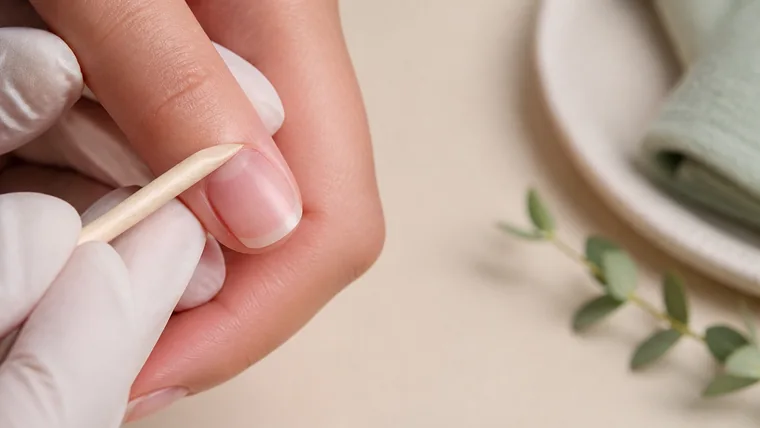
Force directed towards the root can create microtrauma even when no cut is visible. If an instrument is used within local scope, stabilise the finger, maintain visibility and keep the action superficial on the plate. Do not angle the tool beneath the fold to manufacture a pocket. A client should not have to tolerate sharpness, burning or repeated pressure for a neat outline.
Softener does not change living tissue into removable cuticle. Follow its contact time, compatibility and removal instructions, then reassess rather than increasing force. Dry technique does not mean unlimited abrasion, and wet technique does not mean the seal can be cut. Both approaches remain constrained by anatomy.
Scissors, nippers and e-files do not make an unsafe objective safe
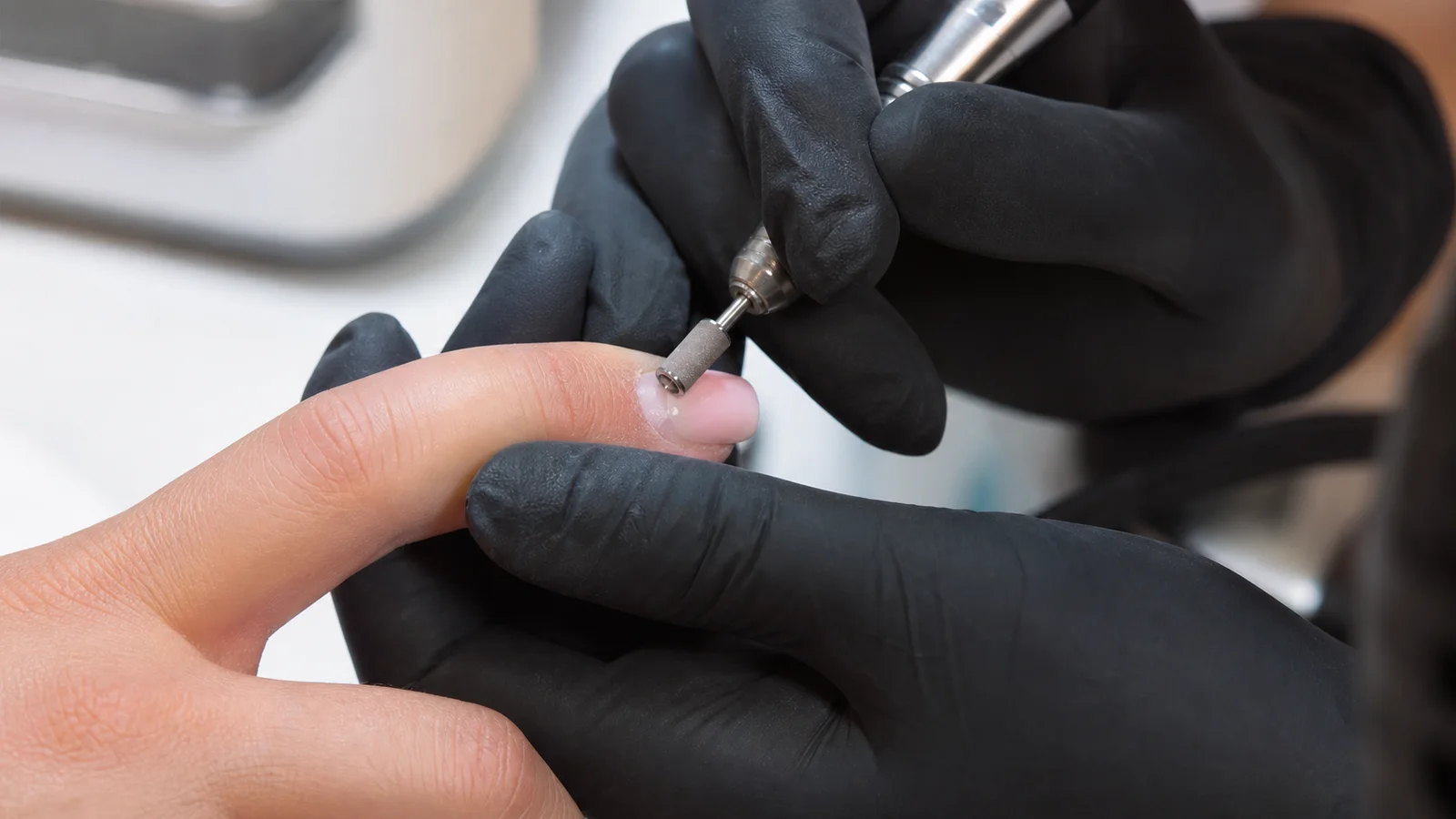
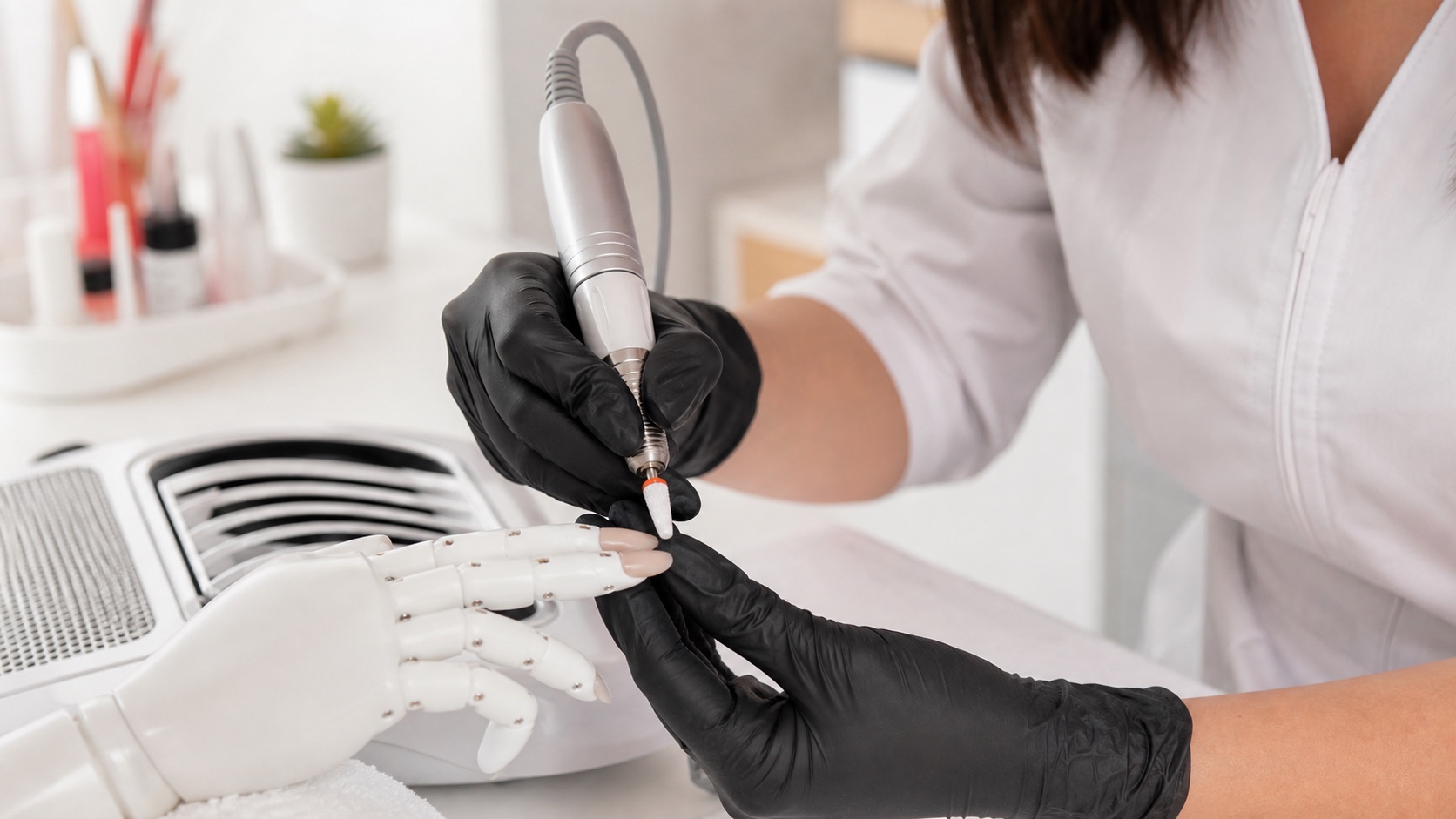
The precision of a blade or bit can create confidence without anatomical control. Nippers can take more attached tissue than intended; scissors can continue a tear; an electric file can abrade living skin or the nail plate before the client reacts. Tool choice comes after a defined permitted task, never before it.
There is no universal safe RPM for cuticle work. Bit shape, diameter, abrasive, device torque, direction, angle, pressure, tissue and operator skill change the contact. The guide to electric nail-file control explains why a number on the display cannot replace tactile and visual control. The separate guide to drill-bit selection covers geometry and material removal, not authorisation to work on living tissue.
More removal does not create better adhesion
Lifting is not solved by cutting more skin or filing deeper into the plate. Adhesion depends on a controlled clean surface, product compatibility, margins, quantity, architecture, curing and maintenance. Aggressive preparation can add sensitivity and grooves while leaving the actual adhesion variable untouched.
Map where and when lifting occurs before changing one step. Proximal lifting may involve product flooding or remaining surface residue; side lifting may involve contact with the fold or preparation access; free-edge lifting may involve length and structure. Use the nail-lifting diagnosis guide instead of treating a deeper manicure as a universal primer.
Hygiene changes after a nick or bleeding
If bleeding occurs, stop immediately and do not continue with primer, colour or gel. Avoid direct contact with blood, use the workplace exposure-control procedure and deal with single-use and reusable items according to the applicable rules. Clean visible soil before any compatible disinfection or sterilisation stage; spraying a dusty instrument is not reprocessing.
OSHA guidance for nail-salon workers identifies blood and infected skin as biological hazards and emphasises hand washing, avoiding work on open wounds and following tool-cleaning and disinfection policies. Its rules are US-specific, so they do not replace the law where you work. Use them as hazard-control context and verify local public-health, cosmetology and workplace requirements.
The BeautyLearn guide to cleaning, disinfection and sterilisation of manicure tools keeps those stages separate. A clean appearance, UV storage box or fragranced spray does not prove that a reusable instrument has completed the required process.
Keep nail product away from the skin
A controlled margin completes conservative preparation
Product belongs on the nail plate, not inside a manufactured pocket
Place
Product on the nail plate
Control
Even proximal and lateral margin
Correct
Remove flooding before curing
Never
Cure product on living skin
A conservative fold still needs a controlled product margin. Base, builder and colour should remain on the nail plate. If a layer floods, remove it completely before curing and correct the quantity or position. Curing first and filing around the skin later leaves the original exposure uncorrected and can create more dust and abrasion.
Do not open a deeper pocket so colour appears closer to the root. The temporary visual gain is smaller than the loss of control. A narrow, even visible margin is a professional result when it protects skin and permits inspection.
Aftercare supports comfort but does not treat disease
On intact skin, a suitable moisturiser or cuticle oil may improve comfort and the appearance of dryness. It does not sterilise, restore a cut barrier immediately or treat infection, allergy, eczema or another condition. Advise clients not to bite or pull hangnails and to protect hands during repeated wet work or contact with irritating cleaners.
Persistent redness, pain, swelling, itching, discharge, nail separation or pigment change needs healthcare evaluation. A technician can photograph with consent and record the timeline, but should not offer a diagnosis, sell a cosmetic cure or conceal the area under a durable coating.
Common cuticle-preparation mistakes
Calling the complete proximal fold cuticle and removing living tissue.
Creating a deep pocket so colour can be applied beneath a visible skin edge.
Increasing pressure, RPM or blade sharpness when lighting and visibility are inadequate.
Continuing after pain, blanching, heat, redness or a point of blood.
Applying primer or gel to irritated skin and curing a flooded margin.
Using one vague sanitising step for hands, surfaces, single-use items and reusable instruments.
Treating an immediately flawless photograph as proof of a sustainable service.
A final check before applying product
Is the proximal fold intact, its usual colour and free from pain or swelling?
Have you distinguished living skin and the protective seal from removable product-incompatible residue?
Have reusable tools completed the locally required process, and are single-use items new?
Is the nail plate clean without grooves, heat, sensitivity or thinned patches?
Are bleeding, fissures, discharge, separation and unexplained colour changes absent?
Can you keep every layer on the plate and remove flooding before the lamp?
Does the client understand which later signs require early removal and healthcare advice?
For structured practical learning, compare the Dry and Russian Manicure Course, the Gel Polish Course and the Complete Nail Technician Course. English course records, instructors and availability are independent from the Italian market; a closed course page is a preview, not an instruction to substitute another language’s content.
Frequently asked questions about cuticles and the proximal nail fold
Are the cuticle and eponychium the same thing?
Terminology varies between sources. Cuticle commonly describes the keratin sheet joining the proximal fold area to the plate; eponychium may be used for that seal or parts of the fold. The safe practical rule is consistent: protect living skin, do not force the proximal seal and stop when the boundary is uncertain.
Should cuticles always be cut during a manicure?
No. Dermatology guidance advises against cutting or forcefully pushing cuticles because they protect the nail root area and barrier. A manicure does not need to remove living tissue to be complete. Preparation should remain conservative, comfortable and within professional and local regulatory scope.
Can cuticles be pushed back safely?
Do not force the cuticle or proximal fold. If local practice and training include gentle surface preparation, work only with excellent visibility, low pressure and no pain. Tissue that resists, stretches, pales or becomes uncomfortable is a stop signal, not an invitation to increase force.
Why do cuticles feel rougher after cutting?
Cutting or tearing can leave an irregular dry edge as the tissue recovers, encouraging a cycle of further trimming. Do not chase the new edge. Reduce trauma, moisturise intact skin if tolerated and seek healthcare advice for persistent inflammation, cracking, pain or swelling.
What should happen if a cuticle bleeds?
Stop the service and do not apply primer, gel or colour. Avoid contact with blood and follow the workplace exposure, waste, surface-cleaning and instrument-reprocessing procedures that apply locally. Ongoing or worsening pain, redness, swelling or discharge needs healthcare assessment.
Can an electric file be used around the cuticle area?
An e-file requires specific training, a defined task, appropriate bit and control of angle, speed, direction, pressure and heat. It must not be used to excavate beneath the proximal fold or remove living tissue. When visibility or control is inadequate, do not proceed.
Does a deep manicure make gel polish last longer?
Not automatically. Wear also depends on plate preparation, product compatibility, margins, quantity, structure, curing and maintenance. Cutting skin or thinning the nail may add injury without correcting the real lifting variable. Diagnose the location and timing of failure instead.
When should gel not be placed near the cuticle area?
Do not coat broken, bleeding, red, swollen, painful, itchy or discharging skin, or a nail with unexplained separation or colour change. Even on healthy nails, product belongs on the plate rather than the proximal or lateral folds and flooding must be removed before curing.
Does cuticle oil replace manicure preparation?
No. Oil can support comfort and the appearance of intact dry skin when tolerated, but it does not clean the plate, reprocess tools, treat disease or replace the coating protocol. Remove any incompatible residue before product application according to the system instructions.
When should a client see a dermatologist or doctor?
Recommend appropriate healthcare assessment when pain, redness, swelling, itching, discharge, separation, bleeding, a new pigment band or another unexplained change persists or worsens. Repeated reactions after gel also need clinical evaluation. A nail technician observes and stops; they do not diagnose.
Can a hangnail be pulled off?
No. Pulling can extend the tear into living skin and create bleeding. Do not work on an inflamed, painful or attached fragment. Where local scope permits and training is adequate, only a clearly free edge may be carefully trimmed; uncertainty means leaving it alone.
Is removing more tissue a sign of a more advanced manicure?
No. Expertise is shown by anatomical recognition, restrained tool use, intact skin, a clean plate and a consistent stop decision. The amount removed and the closeness of colour to skin are poor quality measures. A sustainable service protects the barrier and remains comfortable after the photograph.
Clinical and workplace sources
American Academy of Dermatology — Manicure and pedicure safety
DermNet — Nail terminology and the cuticle–proximal fold seal
US Occupational Safety and Health Administration — Biological hazards in nail salons
The medical sources support anatomy, barrier protection and stop criteria; the OSHA source is workplace context and its legal requirements are jurisdiction-specific. This guide does not endorse cuticle cutting or deep manicure. Verify the legal scope and hygiene rules where you work, and explore the complete English nail guide library for adjacent technical subjects without crossing into diagnosis.