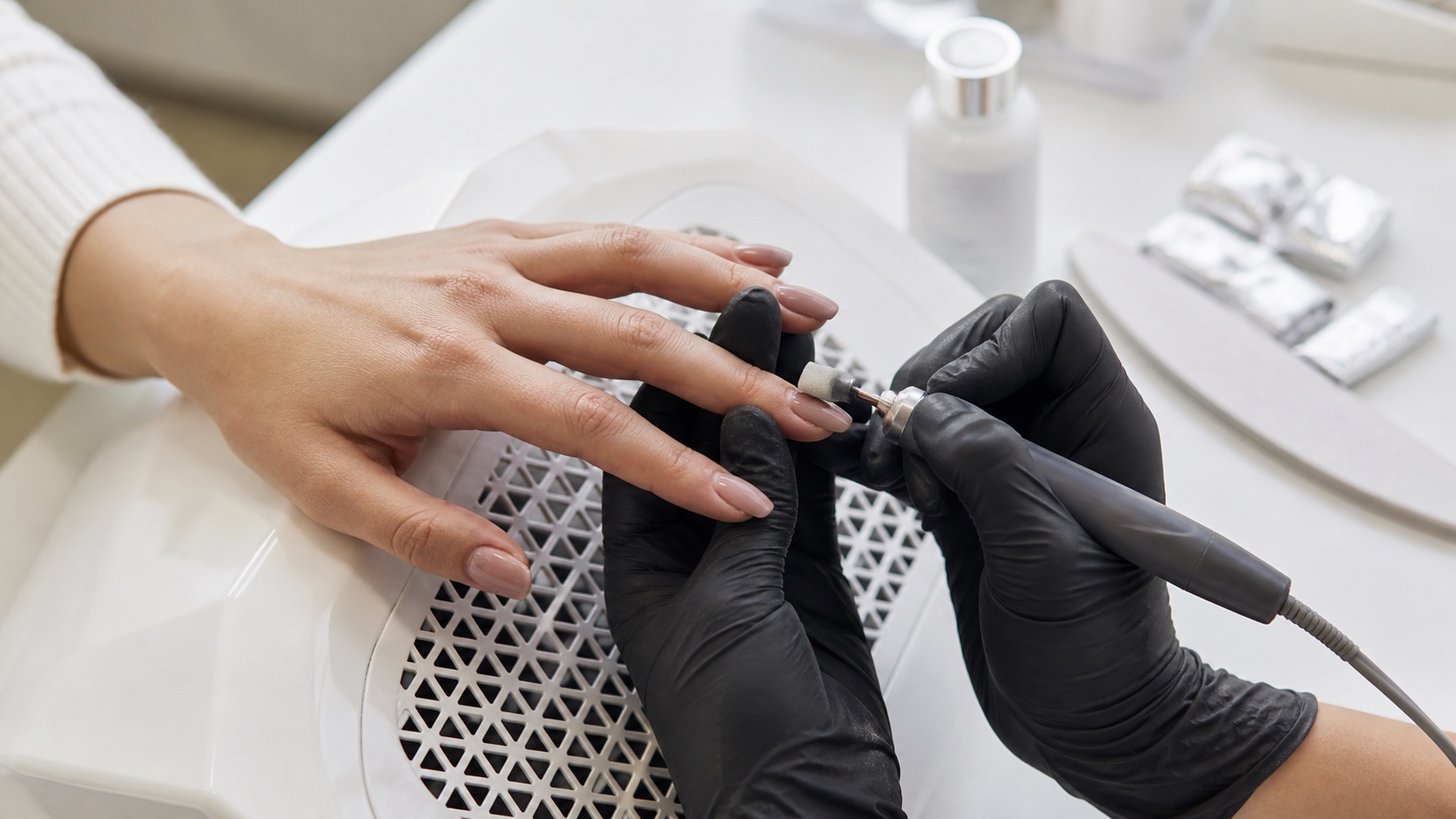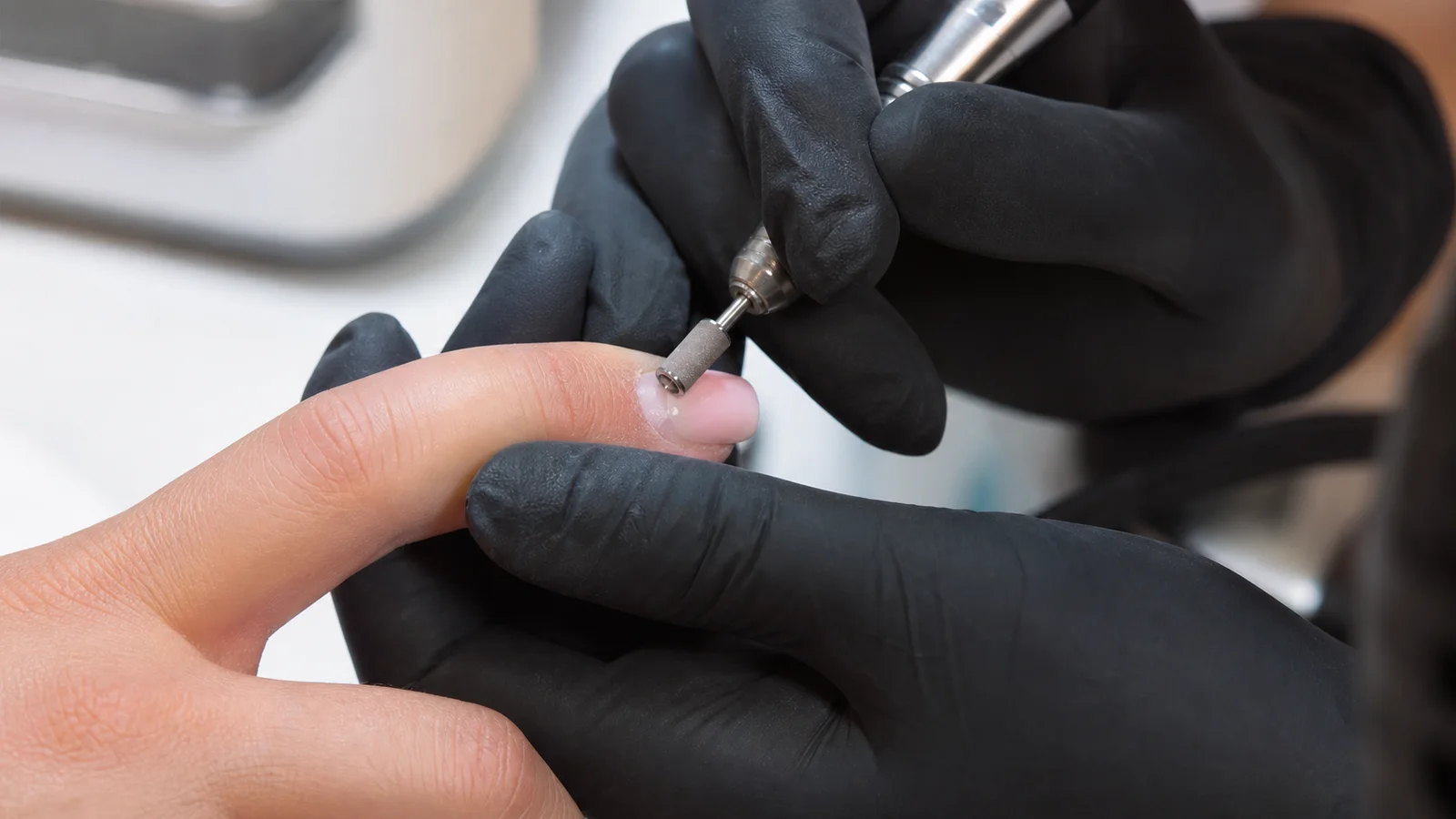
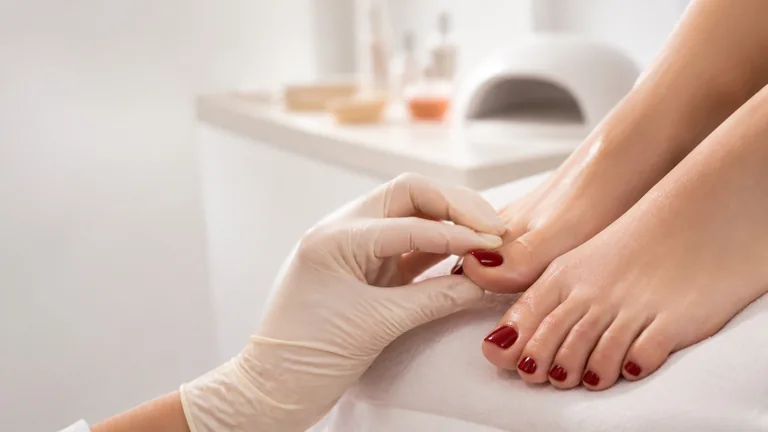
Gel polish on toenails can provide a thin, glossy colour service on intact nails, but feet are not hands placed lower on the body. Toenails grow more slowly, remain enclosed in shoes, experience repeated pressure and may display colour, thickness or separation changes that a cosmetic professional must not diagnose or hide. Good wear begins with deciding whether the nail and surrounding skin are suitable to cover at all.
A coating that still looks attached is not automatically ready to remain. Review the toes after roughly three to four weeks, or earlier when growth, pressure, lifting, discomfort, colour change or skin symptoms appear. Remove for observation instead of extending wear until visible failure.
Separate three timelines: cosmetic wear, adhesive wear and the observation window. Colour may remain shiny while the nail has grown forward, pressure has increased inside footwear or a hidden change needs inspection. The purpose of maintenance is not to prove maximum longevity; it is to preserve a predictable service and leave the natural nail visible at sensible intervals.
This guide was substantively reviewed on 5 September 2026 and is educational. It does not diagnose fungal infection, allergy, ingrown toenail, vascular disease, neuropathy or any other condition. A nail professional records external observations, stops cosmetic work when appropriate and recommends a qualified healthcare professional for assessment. Product instructions, local professional scope and client-specific medical advice take priority.
Gel polish on toenails: what changes compared with hands
Toenails normally grow more slowly than fingernails, so the growth gap may stay less obvious for longer. They also sit beneath socks and shoes, where impact, compression, heat and moisture can change comfort and wear. The great toenail may contact the shoe repeatedly; smaller toes may rub together. Long-lasting adhesion under these conditions is not the same as an unlimited service interval.
Factor | Hands | Feet |
|---|---|---|
Growth | Gap becomes visible sooner | Slower growth can hide elapsed wear |
Environment | Frequent water, chemicals and manual tasks | Shoes, friction, sweat and repeated pressure |
Observation | Nails are usually visible | Changes may remain covered and enclosed |
Service design | Length follows finger use | Thin finish and footwear clearance matter |
A gel-polish pedicure should stay thin. It does not strengthen a pathological nail, treat fungus, correct an ingrown edge or replace a toenail reconstruction. When a plate needs structural correction, first establish that cosmetic work is appropriate, then use a technique specifically trained and permitted for the case. The separate guide to cosmetic toenail reconstruction owns that intent.
How long gel polish really lasts on toenails
Three timelines define the return appointment
Attached colour is not an unlimited observation window
Cosmetic wear
Growth, gloss and visible edge
Adhesive wear
Lifting, cracks and pressure
Observation
Direct view of nail and skin
Many intact, well-prepared toenails can retain a thin gel-polish service for around three to four weeks. That is a review range, not a guarantee or compulsory minimum. Some clients need earlier removal because of growth, shoe pressure, edge wear, lifting, trauma, sport or visible change. A product may technically remain attached longer while the service becomes aesthetically grown out or professionally difficult to inspect.
Do not promise six, eight or more weeks simply because toes grow slowly. Extended uninterrupted coverage delays direct observation and allows small lifting pockets or new colour changes to remain concealed. Book the next review at application and tell the client which signs require earlier contact. The broader gel, gel polish, acrylic and acrygel wear guide compares wear without turning it into a contest.
Variables that change wear and maintenance
Natural-nail integrity, surface condition, growth direction and previous trauma.
Toe length, free-edge shape and repeated contact with the front or top of footwear.
Sport, running, hiking, dance, swimming, occupational shoes and prolonged moisture.
Conservative preparation, dust control, skin-free margins and correct capping where instructed.
Exact base, colour and top compatibility, layer thickness, pigmentation, lamp, mode and cure time.
Client aftercare and whether discomfort, lifting or colour change is reported promptly.
When wear changes, record the first area affected rather than blaming ‘oily nails’. Distal wear, lateral lifting and proximal separation point to different combinations of pressure, preparation, placement and growth. If the nail itself changes colour, thickness or attachment, stop troubleshooting as a retention problem.
Pre-service check: foot, nail plate and cosmetic history
Ask about discomfort, recent injury, previous reactions to nail products, current coating, service date, medication applied to the toes, known medical foot care, diabetes, reduced sensation and circulation concerns. This is a cosmetic consultation, not a medical history used to clear risk. Record the client’s words and visible facts without diagnosing. A declaration never overrides what is observed on the day.
With the old coating removed, compare every nail and surrounding fold in neutral light. Look for intact skin, normal attachment, even plate continuity and comfortable shoe clearance. Note new colour, thickening, crumbling, debris, separation, tenderness, swelling, discharge, wound, blister, heat or inflammation. Examine between toes only within professional scope and do not manipulate suspicious tissue.
If the nail is suitable, agree colour, finish, interval and removal plan. If uncertain, leave it visible and recommend clinical assessment. A clear photograph with consent can document the external starting point; it cannot confirm a diagnosis or prove that coverage is safe.
When to avoid gel polish on toenails
Do not hide a change that needs assessment
Describe what is visible without diagnosing it
Plate
Colour, thickness, debris or separation
Skin
Redness, wound, blister or eczema
Symptoms
Pain, heat, swelling or discharge
Decision
Leave visible and recommend care
Observed or reported sign | Professional response | Why coverage is unsuitable |
|---|---|---|
New green, yellow, white, brown or black colour | Do not cover; recommend assessment | Colour alone cannot identify the cause |
Thickening, crumbling or subungual debris | Stop cosmetic service | Needs differential assessment, not filing away |
Onycholysis or lifting from the nail bed | Leave visible and avoid product beneath it | Coverage can hide progression and trap debris |
Pain, redness, heat, swelling, discharge or wound | No service; seek timely healthcare advice | Possible injury or inflammation requires assessment |
Itching, blisters or eczema after nail products | Stop exposure and recommend medical assessment | Possible allergy cannot be patch-tested in salon |
Do not describe these signs as fungus, bacteria or allergy unless a qualified healthcare professional has diagnosed them. Nail fungus can resemble trauma or other nail disease, and diagnosis may require examination and a nail sample. Read the guide to onycholysis and green nail changes for the cosmetic stop decision, not treatment.
Diabetes, neuropathy and circulation concerns
Diabetes is not managed with a generic yes or no to a pedicure. Risk differs with sensation, blood flow, skin integrity, previous ulcers, infection history, medical advice and ability to monitor the feet. CDC guidance explains that nerve damage can reduce pain, heat and cold sensation, while poor blood flow can make wounds harder to heal. A client may therefore fail to feel a small cut, blister or pressure point.
Do not perform cutting, aggressive abrasion or coverage over any wound, blister, redness, swelling, colour change, thickened yellow nail or ingrown area. If a client has reduced sensation, circulation problems, previous ulceration or uncertainty about safe foot care, request guidance from the client’s healthcare or podiatry team before a cosmetic service. Consent does not convert a risk outside scope into an acceptable procedure.
Preparation: clean, conservative and plate-preserving
Wash or cleanse according to salon protocol, dry thoroughly and use clean, appropriately processed tools. Shorten the toenail to a functional length without digging into lateral corners or attempting to treat an ingrown edge. Remove only non-living surface material within scope. Do not cut living tissue, chase deep sidewalls or thin the plate to improve adhesion.
Use the minimum compatible abrasive and pressure required by the system. Repeated filing in one zone can create heat and thinning. Remove dust without flooding the folds, then apply only the prep products named for the exact gel-polish system. The professional nail preparation guide separates cleaning, surface preparation and chemical adhesion.
Application and lamp: thin layers and clean margins
Apply base, colour and top in the manufacturer’s permitted amounts. Keep every uncured layer off skin and out of the lateral and proximal folds. Thick colour can wrinkle or under-cure, and excess bulk can increase shoe pressure. Cap the free edge only when the product protocol and nail shape allow it without creating a ridge.
Use the lamp specified or technically validated for the exact product, its complete mode and time, and position all toes within the effective area. Wattage alone does not prove compatibility. A hard, glossy surface cannot prove full conversion beneath pigment. Review how to cure gel nails safely and never extend or shorten exposure by guesswork.
If product touches skin, remove it completely before curing. Do not wipe it across adjacent tissue or ‘seal’ it in the lamp. Repeated exposure to uncured methacrylates can contribute to sensitisation. The guide to gel nail allergy and methacrylates explains signs and medical limits.
Shoes, sport, swimming and daily care
Once correctly cured, gel polish does not need hours to dry like conventional lacquer. That does not make a bulky service immune to footwear pressure. Ask the client to arrive with clean, comfortable shoes that do not compress the toes. If the nail touches the front of the shoe, shorten it safely and reconsider thickness rather than relying on harder product.
Running, long hikes, dance and tight athletic shoes increase repeated impact. Pools and the sea do not automatically dissolve cured gel polish, but prolonged moisture, barefoot environments and unnoticed lifting change the risk context. Keep feet clean and dry, use suitable footwear in communal areas and never pick a lifted edge. Report pain, odour, colour, separation or skin change promptly.
When to remove before the planned appointment
Arrange earlier removal for lifting, cracking, pressure or pain; new colour visible through or around the coating; redness, swelling, itching, blisters, discharge or odour; trauma; a split reaching the attached nail; or a client who can no longer monitor the toe comfortably. Do not glue down a lifted zone or place fresh colour over it.
If a suspicious change appears during removal, stop once observation is possible. Photograph with consent, record product and batch, leave the area uncovered and recommend assessment. Do not file discolouration away to make the nail look normal.
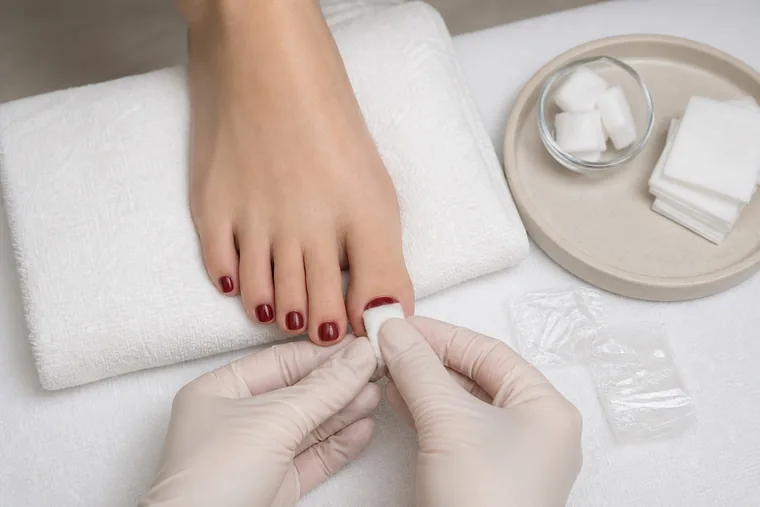
How to remove gel polish from toenails step by step
Identify, confine, wait and reassess
Resistance is information—not permission to scrape
Identify product and removal route
Open only the instructed seal
Confine remover and wait
Release gently and inspect
Confirm that every applied layer is documented as soak-off and identify the named remover, seal-opening step and exposure time.
Inspect skin and nail first. Stop for wounds, marked inflammation, pain or a change that needs healthcare assessment.
Reduce only the top layer or bulk required by the instructions, keeping abrasion away from the natural plate and skin.
Size each remover pad to the nail, limit skin contact and wrap securely without constricting the toe.
Wait the complete documented time, then assess one nail. Softened product should release with minimal pressure.
If material resists, re-check identity, layer thickness and contact. Re-wrap as permitted or reduce safely; never scrape harder.
Clean gently, compare the visible plate and surrounding tissue, document changes and decide whether any new service is appropriate.
Do not peel or lever gel polish from the nail. Removal at home becomes risky when product identity is unknown, the client cannot reach or see the toes well, sensation is reduced, or resistance is converted into force. A professional should also stop before chasing the final trace into the plate.
Removal does not mean automatic reapplication
After removal, reassess attachment, colour, thickness, comfort and skin. Mild temporary surface dryness is different from new discolouration, marked thinning, separation or inflammation. A ‘rest’ is not required by a universal calendar, but reapplication should wait whenever the nail needs observation, is uncomfortable, has been over-filed or no longer meets the service criteria.
Do not use clear polish to monitor a suspicious nail while still hiding its surface. Leave it accessible to the healthcare professional and follow any medical instructions. Cosmetic maintenance can resume only when the case is appropriate and the client can be reviewed normally.
Salon hygiene and contamination control
Perform hand hygiene, wear appropriate gloves for the task, process reusable tools through the required cleaning and disinfection or sterilisation route, and keep clean and used items physically separate. Single-use abrasives and toe separators are discarded after the client. Do not dip contaminated tools into shared jars or return decanted product to the original container.
Clean the footrest, lamp surfaces and work area between clients according to material-compatible procedures. Dust extraction and ventilation remain relevant. If the service is stopped for a suspicious nail, isolate used items and complete the same validated processing workflow; cosmetic staff do not create an improvised ‘fungus protocol’ as a substitute for diagnosis.
Professional appointment checklist
A safe pedicure begins and ends with visibility
The next colour is a new decision, not an automatic step
Screen
History, comfort, nail and skin
Apply
Thin, clean, compatible system
Review
Usually around three to four weeks
Reassess
Bare plate before reapplication
Record previous coating, date, discomfort, trauma, reactions and relevant foot-care guidance.
Observe every visible nail and surrounding skin after old product is removed.
Stop for new colour, thickening, debris, separation, wound, inflammation, pain or product allergy signs.
Prepare conservatively and keep every uncured layer off skin.
Use the documented product stack, lamp, amount and cure; keep the finished service thin.
Book review in roughly three to four weeks and provide earlier-removal signs in writing.
Training: connect technique, safety and communication
A professional gel-polish course should teach product identification, conservative preparation, skin-free application, lamp compatibility, thin finishing, removal and stop criteria—not only colour placement. Dry manicure knowledge helps understand instruments and tissue boundaries, but it does not authorise diagnosis or medical foot care.
Explore the Gel Polish course and Dry Manicure course or compare all online nail courses. English course records remain separate from the Italian catalogue and are unavailable for enrolment until the full English teaching content is ready.
Frequently asked questions about gel polish on toenails
How long does gel polish last on toenails?
A common professional review window is about three to four weeks, but wear varies with growth, footwear, pressure, sport, preparation and product system. Attached colour is not permission for unlimited wear. Remove earlier for lifting, pain, trauma, new colour or skin and nail changes.
Why can gel polish appear to last longer on toes than fingers?
Toenails grow more slowly and usually perform fewer manual tasks, so the growth gap and free-edge wear may appear later. Shoes add a different problem: repeated pressure and moisture. Longer-looking adhesion should not postpone direct observation beyond the planned review.
How often should gel polish on toes be redone?
Plan a review and removal at roughly three to four weeks unless the product or individual case requires earlier attention. Reapplication follows a fresh assessment, not automatically the calendar. Growth, pressure, condition and visible changes decide whether a new service is suitable.
Can I leave gel polish until it lifts or chips?
No. Cosmetic shine and adhesion can outlast the sensible observation interval. Waiting for failure may conceal colour change, trap moisture beneath lifting or allow a grown-out ridge to receive shoe pressure. Review and remove on schedule, with earlier contact for warning signs.
Can gel polish cover a toenail with suspected fungus?
Do not diagnose or cover a suspicious nail. Fungal infection can resemble trauma and other nail disorders, and healthcare assessment may require examination or a sample. Leave the plate visible and recommend a dermatologist, podiatrist or other qualified professional according to local care pathways.
Can a yellow or green toenail be covered for appearance?
No new unexplained colour should be hidden cosmetically. Green, yellow, white, brown or black change has several possible causes that appearance alone cannot identify. Remove existing coating safely, document the visible change and recommend clinical assessment without treating it in the salon.
Can gel polish be applied over an attached-looking but lifted toenail?
Not over onycholysis or an area separated from the nail bed. Product must not be pushed beneath a lifted plate, and coverage can hide progression or debris. Leave the area accessible and seek assessment for new, unexplained, painful or changing separation.
Can gel polish be used on an ingrown toenail?
Do not use cosmetic coating to treat, compress or disguise an ingrown edge. Pain, redness, swelling, discharge or broken skin require appropriate healthcare or podiatry assessment. Nail professionals should not dig into corners or cut tissue to make the colour service possible.
Can a person with diabetes have gel polish on toenails?
There is no safe generic answer. Sensation, circulation, wounds, infection history, medical foot-care plan and ability to monitor the feet matter. Anyone with reduced sensation, poor circulation, previous ulceration or current change should obtain guidance from their healthcare or podiatry team before cosmetic work.
Can I swim or go to the beach with gel polish on my toes?
Correctly cured gel polish is not normally dissolved by swimming, but prolonged moisture, communal barefoot areas and unnoticed lifting still matter. Dry the feet well, use suitable footwear in communal spaces and arrange removal if an edge lifts or a nail or skin change appears.
Can I put shoes on immediately after gel polish?
A fully cured gel system does not need conventional drying time, but tight footwear can press on toes and bulky product. Wear clean, comfortable shoes with adequate room. Pain or pressure is not normal and should prompt reassessment of nail length, coating thickness and shoe fit.
Does acetone always damage toenails?
Acetone can dry or irritate with excessive or uncontrolled contact, but a confined, product-specific soak is generally preferable to peeling and scraping a true soak-off coating. Protect surrounding skin, use the specified time and stop forcing material that has not softened.
How can gel polish be removed from toes at home?
Only attempt home removal when every layer is identified as soak-off, instructions are available, the toes can be seen and reached safely and there is no pain, altered sensation or suspicious change. Never peel or scrape. Uncertain product, resistance or medical foot risk calls for professional help.
Do toenails need a break between gel polish applications?
There is no universal rest calendar. The important step is complete observation after removal. Reapply only when the plate and skin are intact, comfortable and suitable. Pause for thinning, tenderness, separation, colour change, inflammation or any condition that needs monitoring or assessment.
Can gel polish on toes cause an allergy?
Nail cosmetics can cause allergic contact reactions, especially when uncured product contacts skin or cure is inadequate. Itching, swelling, blisters or eczema require stopping exposure and medical assessment. Do not perform improvised patch tests with gel on the skin.
Does gel polish protect toenails from fungus?
No. Gel polish is a cosmetic coating, not an antifungal barrier or treatment. It can conceal early colour, thickness or separation changes. Foot hygiene, suitable footwear and appropriate healthcare are separate matters; suspicious nails should remain uncovered for assessment.
Medical and safety references
Centers for Disease Control and Prevention — Your Feet and Diabetes: sensation, circulation, daily checks and signs requiring care.
American Academy of Dermatology — Nail fungus: diagnosis and treatment: why appearance alone is insufficient and professional diagnosis may use nail sampling.
American Academy of Dermatology — removing gel nail polish: confined acetone contact and avoiding picking or scraping.
DermNet — Nail cosmetics allergy: recognised reaction patterns and clinical assessment.
US Food and Drug Administration — Nail Care Products: labelled directions, warnings, ventilation and skin-contact avoidance in the US context.
Substantively reviewed on 5 September 2026. This cosmetic guide has not received independent medical or podiatry review. It does not diagnose or treat nail disease and cannot clear an individual for a service. Refer to current product instructions, local scope rules and qualified healthcare advice.