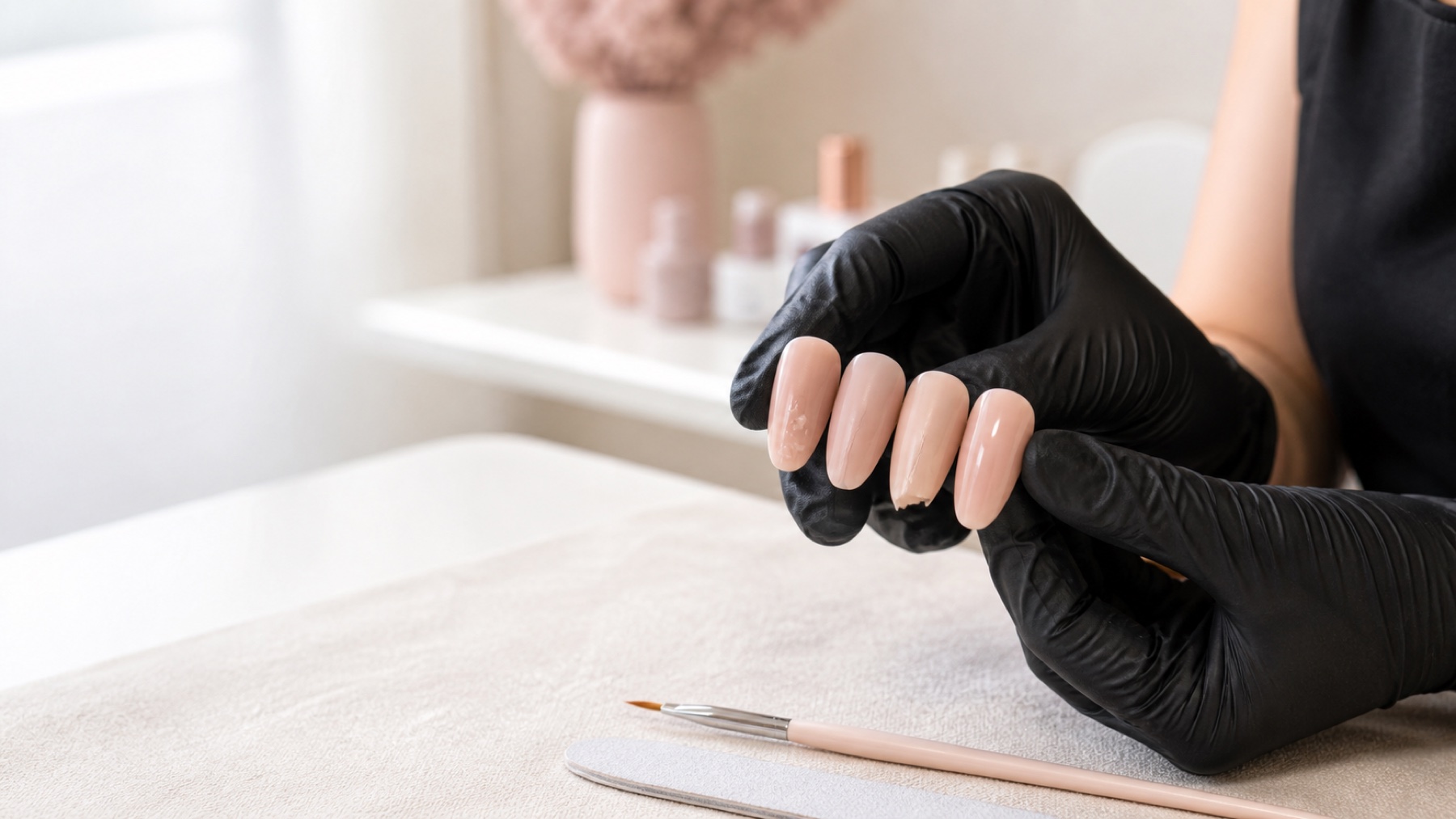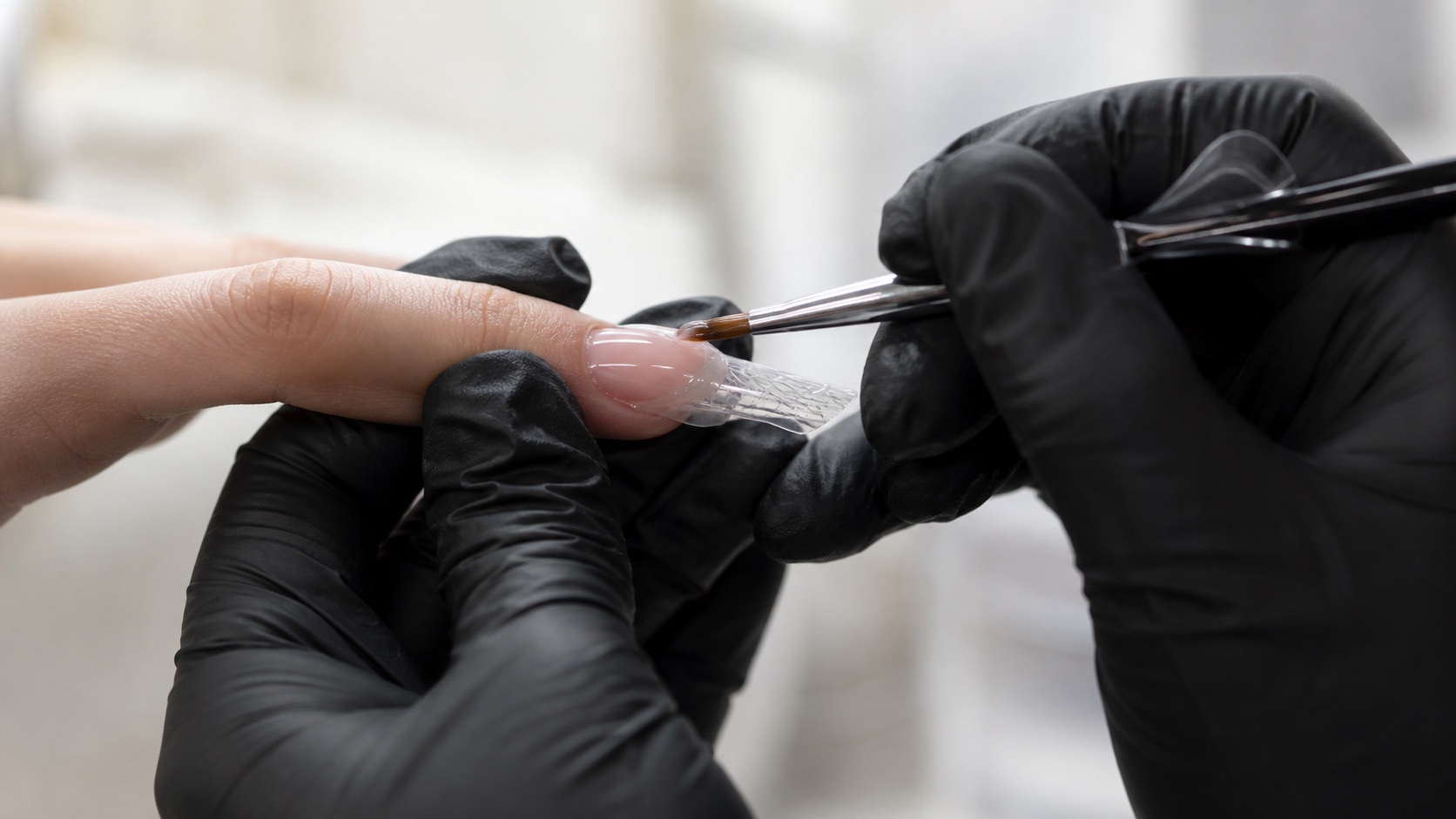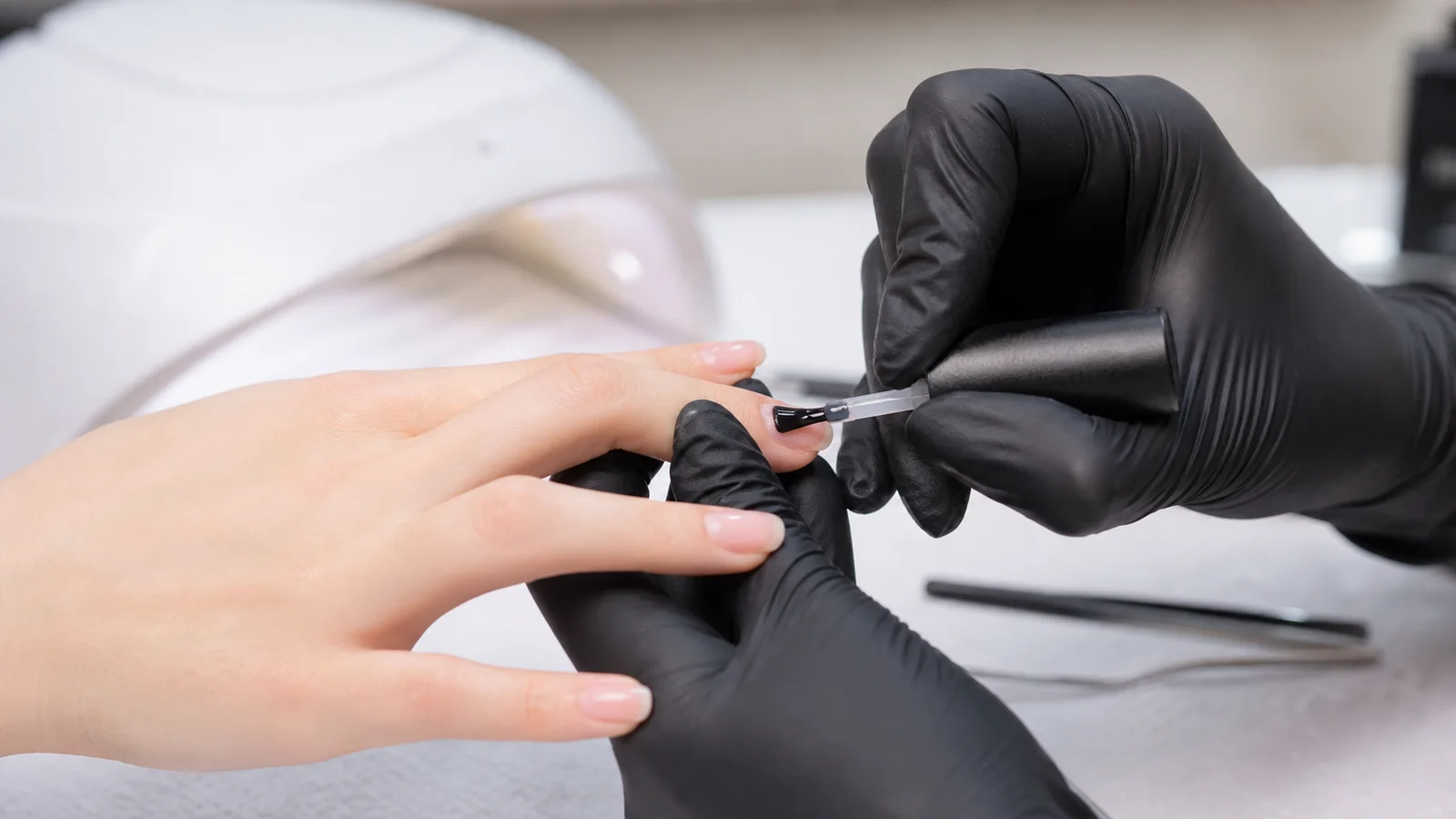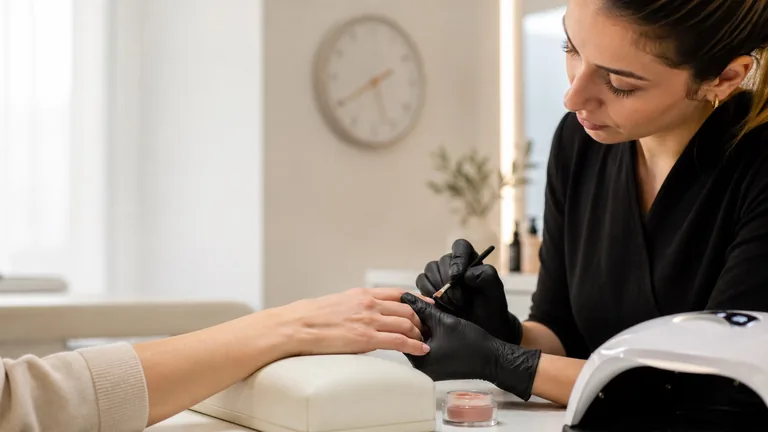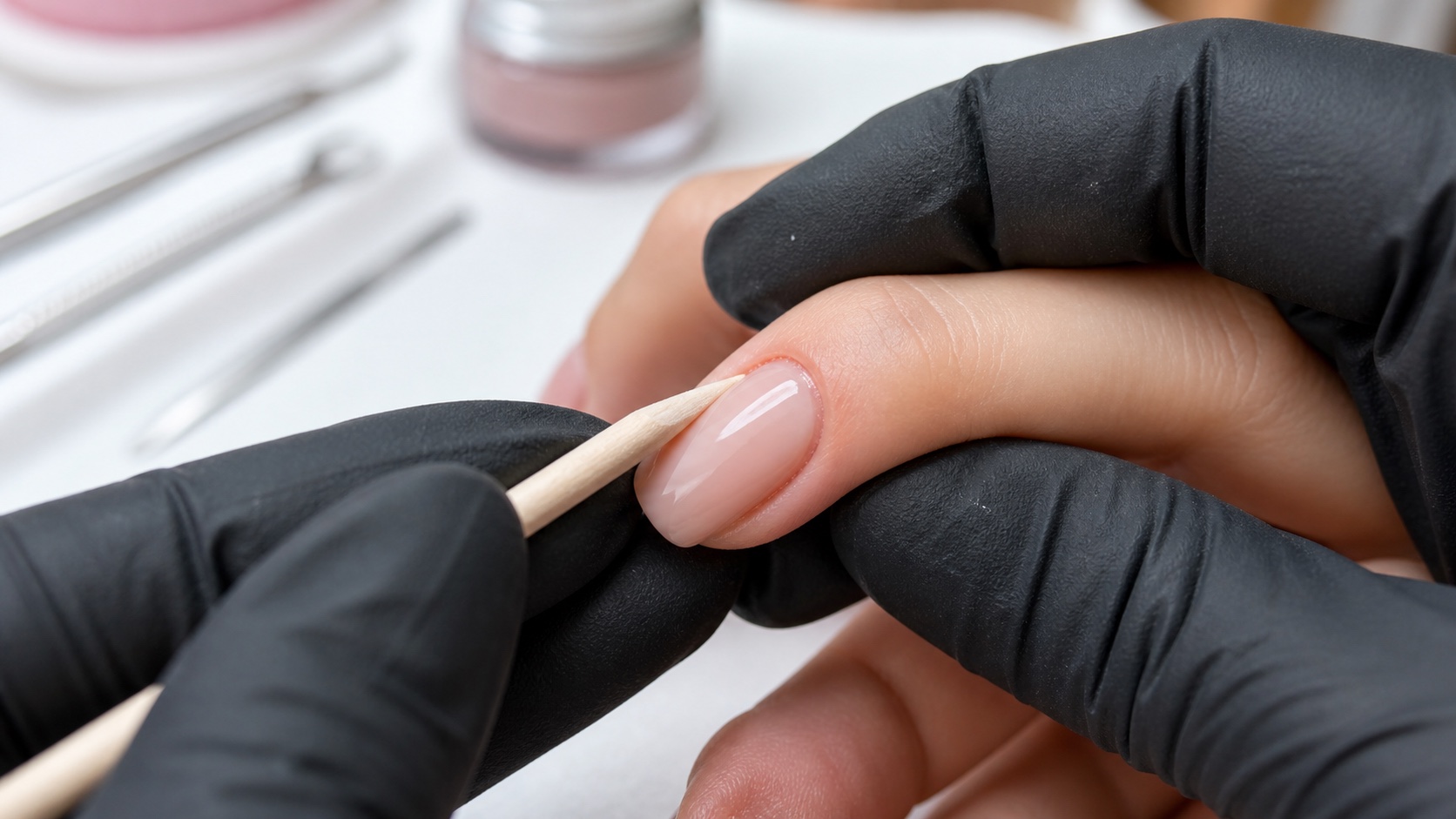
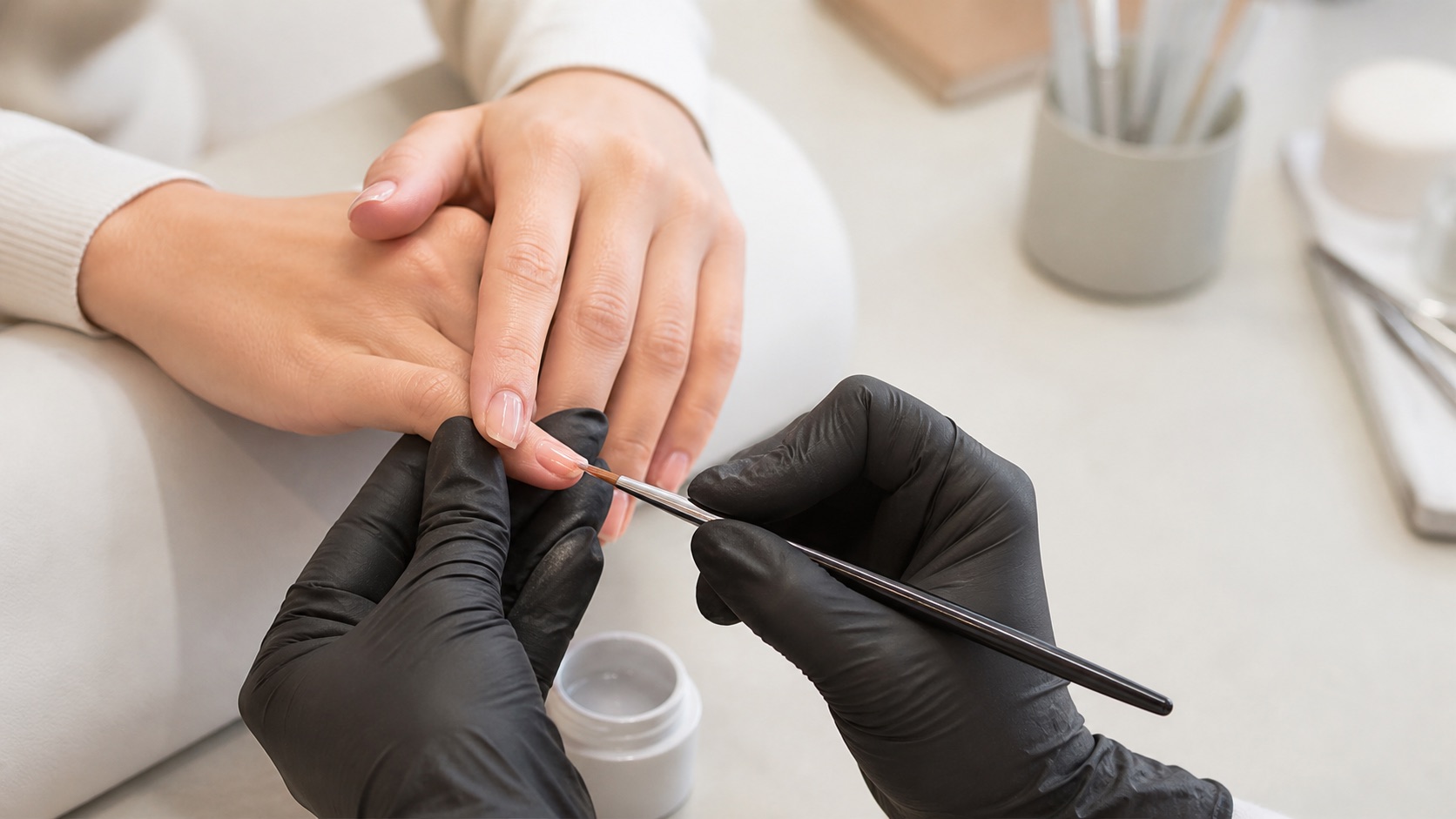
Gel, acrylic, acrygel, adhesives and related nail systems can contain reactive acrylate or methacrylate ingredients. Correctly selected and fully reacted material is different from uncured or partly cured product, but a salon cannot determine allergy from appearance alone. Repeated skin contact, contaminated surfaces, airborne dust and product misuse are preventable exposure routes that deserve a documented no-touch system.
If itching, redness, swelling, burning, blisters, cracking, nail-fold changes or symptoms away from the hands appear after a nail service, stop using the suspected products and seek healthcare advice. Urgent breathing, swallowing, faintness or severe swelling requires emergency care. Do not cover symptoms, retry another gel, or place uncured nail product on skin as a home patch test.
This guide explains methacrylate-related allergy risk and salon response without diagnosing an individual. The gel-curing guide owns lamp compatibility and exposure; the future label guide owns ingredient, batch and PAO reading; the general defect guide owns bubbles, cracks and flooding as technical failures. These topics connect, but irritation, allergy, infection and mechanical damage are not interchangeable labels.
Acrylates, methacrylates and HEMA: what the names mean
HEMA is one ingredient, not the whole category
Front-label language cannot diagnose product suitability
Methacrylates
A related chemical family
HEMA
One named methacrylate
Polymerised
After the intended reaction
HEMA-free
Does not mean risk-free
Acrylates and methacrylates are families of related chemicals used to create polymers, adhesives and light- or chemically cured nail materials. HEMA—2-hydroxyethyl methacrylate—is one methacrylate monomer, not a synonym for every gel ingredient and not the only substance that can be involved in sensitisation. Product names such as gel, acrylic or hybrid describe systems and marketing categories; they do not replace the ingredient list and safety documentation.
The European Commission’s Scientific Committee on Consumer Safety concluded that HEMA and Di-HEMA Trimethylhexyl Dicarbamate can pose sensitisation risk through misuse, inappropriate application or accidental contamination of adjacent skin, and stressed application to the nail plate with skin contact avoided. The FDA likewise notes that residual reactive methacrylate monomers can cause redness, swelling and pain in people who have become sensitised and advises avoiding skin contact.
Term | Useful meaning | What it does not prove |
|---|---|---|
Methacrylate | A chemical family used in many reactive systems. | That every member has identical exposure or allergy behaviour. |
HEMA | One named methacrylate ingredient. | That it is the only relevant allergen in nail products. |
Polymerised material | Material after the intended reaction or cure. | That an unknown application is fully cured internally. |
HEMA-free | HEMA is not declared in that formula under applicable labelling. | Allergy-free, methacrylate-free or suitable for a diagnosed person. |
Where exposure happens: skin, dust, tools and surfaces
Exposure can travel beyond the visible application
Map the entire bottle-to-client route
Skin
Wet product and contaminated gloves
Surfaces
Caps, tools, controls and phones
Dust
Hands, clothing and breathing zone
Cure
Exact system, thickness and position
Direct skin contact can occur when base, builder, colour, top, primer, monomer, adhesive or wet filing residue reaches the nail folds, fingertips or forearms. Indirect contact occurs through contaminated bottle necks, caps, lamp buttons, brushes, files, gloves, phones, handles and table surfaces. A tiny spill repeatedly transferred across the workstation can create more exposure events than one obvious flood.
Dust from filing cured or partly cured material can land on skin and clothing or be inhaled. The SCCS notes that filing and sanding may create particle exposure for professionals when protective measures are inadequate. Dust control does not replace correct curing, and gloves do not replace clean tools, closed containers, local extraction and a surface-cleaning workflow.
Route | Typical event | Primary control |
|---|---|---|
Direct skin contact | Flooded margin, wiped bead or product beneath the glove edge. | No-touch application and immediate complete removal before cure. |
Surface transfer | Contaminated cap, lamp control, tool or phone. | Defined clean and dirty zones plus prompt spill processing. |
Dust | Filing product onto hands, sleeves, face or workstation. | Source extraction, suitable PPE, cleaning and laundering controls. |
Incomplete reaction | Wrong lamp, excess thickness, dense pigment or interrupted cure. | Use the complete compatible system exactly as instructed. |
Possible signs around nails and away from the hands
Possible cosmetic-product allergy signs can include an itchy red rash, flaking or peeling, hives and swelling. Around nail services, people may also report burning, tenderness, cracked skin, blisters, nail-fold inflammation, plate separation or pain. Similar signs can have other causes, so the appearance cannot establish whether the event is allergic, irritant, infectious or mechanical.
Symptoms can appear beyond the fingers, including areas touched by contaminated hands or dust. Eyelids, face, neck and other sites may be involved. A delayed pattern does not make the product safe: allergic contact dermatitis is a delayed immune response, and sensitisation can develop after previous exposures that seemed uneventful. The salon should record timing and products without trying to name the diagnosis.
Emergency boundary: difficulty breathing or swallowing, faintness, rapidly progressive facial or throat swelling, chest symptoms or signs of anaphylaxis require urgent emergency help. A salon article cannot triage an emergency remotely.
What to do when a reaction is suspected
Stop exposure before trying to name the reaction
Documentation supports healthcare; it does not replace it
Stop use and re-exposure
Assess emergency warning signs
Preserve product and service data
Refer for healthcare assessment
Stop use and further exposure to the suspected products; do not retry a different gel during the same visit.
Assess urgency from the person’s symptoms and contact appropriate healthcare or emergency services when indicated.
Do not cover inflamed, blistered, painful, separated or unexplained nail and skin changes with more product.
Preserve product names, full ingredient information, batch numbers, safety data, lamp and service record for the healthcare professional.
Process contaminated tools, surfaces, clothing and waste according to workplace procedures, avoiding new skin contact.
Removal is not automatically the first or safest salon action when tissue is painful, swollen, blistered or the nail is separated. Avoid aggressive filing, soaking or manipulation until appropriate healthcare advice establishes what is suitable. If emergency symptoms are present, product removal must not delay emergency care.
In the United States, the FDA advises stopping use and contacting a healthcare professional after a cosmetic-product reaction, then reporting the event. Other countries have their own cosmetic-vigilance and healthcare routes. The salon should support documentation rather than promise that symptoms will resolve after a particular removal method.
Diagnosis belongs to healthcare: dermatological patch testing
A dermatologist or qualified healthcare professional may use medical history, examination and controlled patch testing to investigate allergic contact dermatitis. Patch testing uses standardised allergens and timed readings; it is not the same as placing a drop of salon gel, primer or monomer under a plaster. Uncured professional product is not designed for direct skin testing and can create or worsen exposure.
Bring exact labels, ingredient lists, product photographs, batch numbers and the service timeline. “Gel allergy” is too broad for future avoidance decisions because different systems may contain several related acrylates or other potential irritants and allergens. The healthcare professional decides what testing is appropriate and interprets cross-reactions and relevance.
A negative informal salon spot test does not clear a product, and a previous uneventful service does not rule out later sensitisation. Do not use client waivers, “sensitivity tests” or marketing claims as substitutes for medical assessment and exposure prevention.
Professional prevention: design a low-contact workstation
Prevention is a system, not a single glove
Interrupt transfer at every stage
No touch
Visible margins and controlled quantities
Contain
Clean caps, tools and work zones
Capture
Dust extraction and housekeeping
Verify
System, batches and incidents
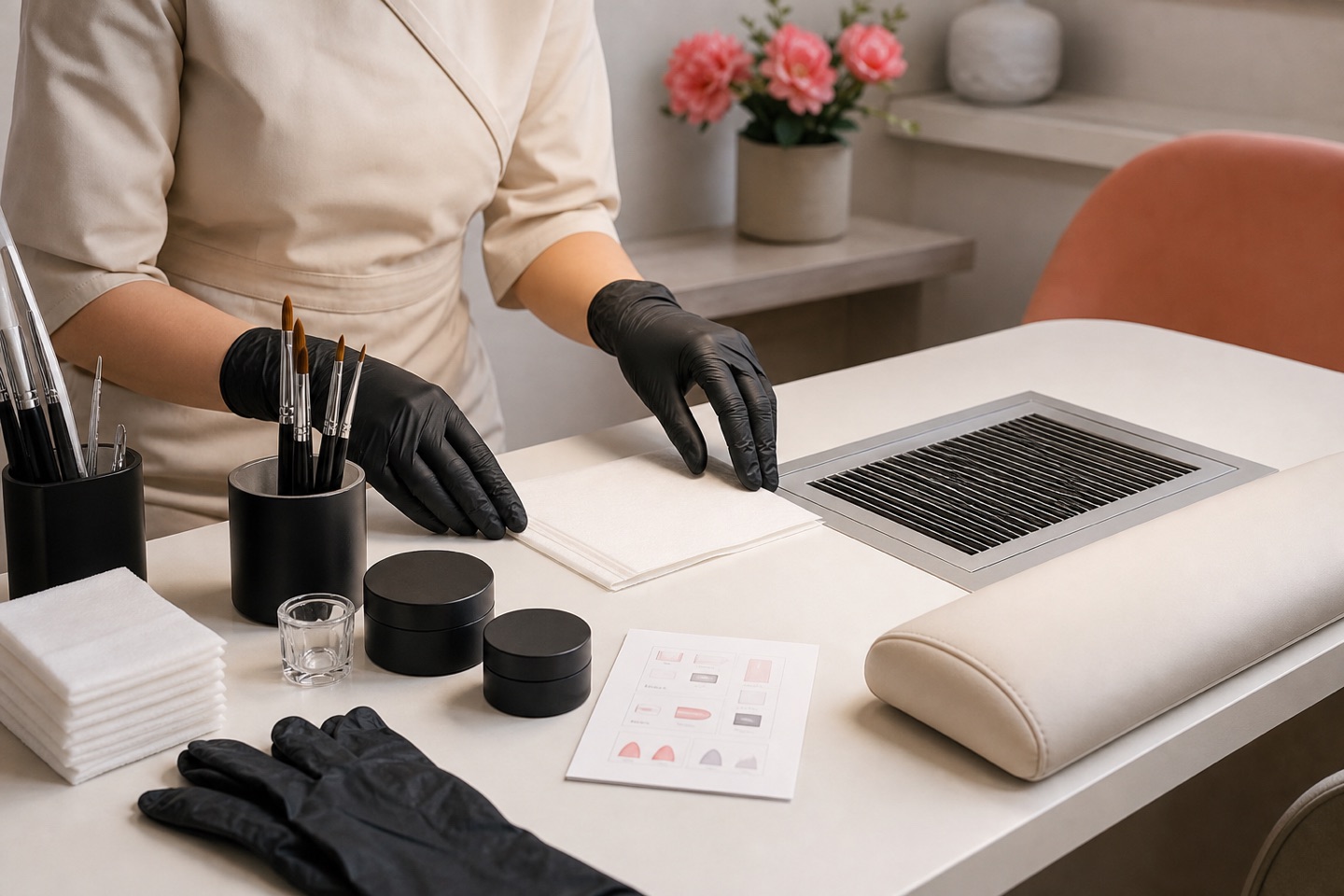
Place bottles where the working hand does not cross open containers, keep necks and caps clean, dispense only what the service requires and separate clean tools from used ones. Protect controls that cannot be processed easily and never handle phones, door handles or personal items with contaminated gloves. Clean a spill immediately under the product and workplace procedure.
Select gloves and other PPE through the safety data sheet, supplier information and workplace risk assessment; glove material, thickness and change interval matter, and contamination can occur inside or outside a glove. Replace a glove immediately after visible product contact and clean hands according to the workplace procedure. Do not rely on gloves to tolerate repeated wet-product handling.
Control dust at source with suitable extraction and maintain the equipment as specified. Avoid dry sweeping or blowing dust back into the breathing zone. Clean work surfaces and reusable tools through the established hygiene route and launder work clothing separately as required by local occupational guidance. The aim is to interrupt transfer before product reaches skin, face, clothing or the next client.
Lamp, layer thickness and system compatibility
Light-cured products depend on wavelength output, exposure, product chemistry, pigment, thickness and hand position. A higher watt number is not proof of compatibility, and a hard surface is not proof of complete internal cure. Use the lamp and times specified for the exact system and keep each layer within the permitted thickness.
Replace or maintain lamps according to the manufacturer, keep reflective surfaces clean where instructed and position every finger correctly. Dense colours, thumbs and product under opaque tips or moulds require the system’s particular method. The gel curing guide explains why improvised timing, mixed lamps and generic wattage rules cannot verify cure.
Do not mix base, builder, colour, top, primer or lamp across brands merely because each cures separately in a test tip. Compatibility includes adhesion, flexibility, inhibition layers, permitted thickness and removal as well as visible hardness. Use documented manufacturer support for the complete combination.
HEMA-free and hypoallergenic: what labels do not guarantee
HEMA-free means the formula is presented without HEMA; it does not mean free from every acrylate or methacrylate, unable to irritate, unable to sensitise, safe for skin contact or appropriate for someone with a diagnosed allergy. “Hypoallergenic” likewise must not replace the complete ingredient list, instructions and individual medical advice.
Do not recommend a substitute based only on the missing ingredient highlighted on the front label. A diagnosed person may need to avoid a broader or different group defined by their clinician. The salon can provide accurate product documentation and decline application when suitability is uncertain; it should not interpret medical test results beyond the healthcare instructions provided.
Claim | Check next | Safe wording |
|---|---|---|
HEMA-free | Full INCI, system instructions and clinician-defined allergens. | “This formula does not list HEMA; it is not allergy-free.” |
Hypoallergenic | Meaning supplied by manufacturer and complete composition. | “The claim cannot predict an individual reaction.” |
Professional only | Training, legal market access and application controls. | “Professional restriction does not make skin contact safe.” |
Salon protocol before, during and after every service
Before: ask about previous reactions and current nail or skin changes without attempting diagnosis; decline application on symptomatic or damaged areas.
Prepare: verify product, batch, instructions, safety data, compatible lamp, extraction, clean tools and spill-control supplies.
Apply: maintain a visible skin margin, use controlled quantities and remove every wet contact before cure.
Cure: follow exact layer, exposure and hand-position instructions; never use a flash cure to trap a flood on skin.
Finish: control dust, inspect folds and underside, clean the workstation and document the complete system.
Follow up: tell the client to report itching, rash, swelling, blisters, pain, separation or symptoms elsewhere and to seek healthcare advice rather than re-covering them.
The guide to gel nail defects and cuticle flooding helps prevent technical contact events; the safe removal guide explains why unknown or symptomatic product is not a routine peel-off problem.
Incident record and occupational exposure
Record the person affected, date, service, all products and batches, lamp, exposure time, visible contact or spill, dust-generating steps, PPE, cleaning response, symptom description in their words and action taken. Preserve labels and photographs without making a medical conclusion. Review whether the same batch, tool or procedure affected other services.
Technicians can also develop occupational symptoms. Do not work through recurrent itching, rash, nail-fold changes, facial symptoms or breathing complaints. Report through the workplace and healthcare routes applicable in the country, review the risk assessment and remove uncontrolled exposure. HSE notes that some artificial-nail liquids and powders can cause skin allergy and asthma.
Use the wider cosmetic-reaction stop protocol for neutral symptom documentation and emergency boundaries, and the cosmetic-label guide to organise INCI, batch, PAO and warnings. For nail services, also record lamp and cure because they influence the exposure context. Keep incident notes separate from promotional before-and-after content, restrict access to authorised staff and follow the applicable privacy retention policy.
After the immediate response, audit the workstation rather than waiting for a second case. Trace the bottle-to-brush-to-lamp route, inspect bottle necks and controls, review glove changes and extraction, and confirm that reusable tools follow the manicure-tool hygiene guide. Hygiene processing and chemical exposure control are related but not interchangeable: disinfection does not neutralise an unidentified reactive residue unless the product procedure supports it.
Frequently asked questions
What does a gel nail allergy look like?
Possible signs include itching, red rash, swelling, flaking, cracked skin, blisters or nail-fold changes, but appearance alone cannot diagnose allergy or exclude infection and irritation.
Can gel allergy appear after years without problems?
Yes, sensitisation can develop after previous exposure. A history of uneventful services does not prove that a new reaction is unrelated or safe to re-expose.
Is HEMA the only allergen in gel nails?
No. HEMA is one methacrylate; formulas may contain other related ingredients or substances capable of causing irritation or allergy. Medical testing defines individual relevance.
Are HEMA-free gels allergy-free?
No. HEMA-free does not mean methacrylate-free, irritation-free or safe for a person with a diagnosed allergy. Check the complete formula and clinical advice.
Can I patch test gel polish on my skin?
No. Do not place uncured salon product on skin as a test. Diagnostic patch testing is a medical procedure using controlled allergens and professional interpretation.
Should product be removed immediately after a reaction?
Stop exposure and seek healthcare guidance. Painful, blistered, swollen or separated tissue may make salon filing or soaking inappropriate; urgent care must not be delayed for removal.
Can I apply another brand after a suspected reaction?
Do not trial another reactive product on symptomatic tissue. Different brands may share related ingredients, and front-label claims cannot determine individual safety.
Does fully cured gel eliminate all allergy risk?
Correct cure and no-touch application reduce preventable exposure, but a salon cannot verify individual allergy or promise zero risk. Use the complete system exactly as instructed.
Does a high-watt lamp cure every gel safely?
No. Compatibility depends on wavelength output, product chemistry, pigment, thickness, exposure and position. Use the lamp specified for the exact product system.
What if uncured gel touches skin?
Stop and remove it completely before the lamp using the product procedure. Replace contaminated gloves and process affected tools and surfaces without spreading the residue.
Can nail dust cause exposure?
Yes. Filing can create particle exposure. Use source extraction, suitable PPE, cleaning and laundering controls; do not blow or dry-sweep dust into the breathing zone.
Which gloves protect against methacrylates?
Select material, thickness and change interval from the safety data sheet, supplier and workplace risk assessment. No glove justifies deliberate or prolonged wet-product handling.
Can allergy symptoms appear on the face?
Symptoms can occur away from the fingers through transfer or airborne exposure. Eyelid or facial changes require healthcare assessment rather than another salon product trial.
What information should I take to a dermatologist?
Take product names, full ingredients, batch numbers, labels, safety data, lamp and service details, timing, photographs and previous exposure history.
Can a nail technician diagnose methacrylate allergy?
No. The technician can recognise a reason to stop, document exposure and refer. Diagnosis and interpretation of patch testing belong to qualified healthcare professionals.
Which training helps prevent methacrylate exposure?
Choose training that covers no-touch application, complete product–lamp systems, skin-contact response, dust extraction, PPE, safety data, cleaning and incident documentation with practical feedback.
Official medical, regulatory and workplace sources
European sensitisation assessment: European Commission SCCS opinion on HEMA and Di-HEMA Trimethylhexyl Dicarbamate. Nail-product and methacrylate safety: US FDA, Nail Care Products.
Symptoms, medical patch testing and consumer action: US FDA, Allergens in Cosmetics and How to Report a Cosmetic Product Related Complaint. Occupational controls: UK HSE, COSHH and beauticians.
This educational guide is not medical advice and cannot diagnose, treat or clear a person for future product exposure. Follow local emergency, healthcare, occupational-safety and cosmetic-vigilance procedures. Compare English-market nail courses for prevention-focused practical training, but use healthcare professionals for symptoms and allergen testing.