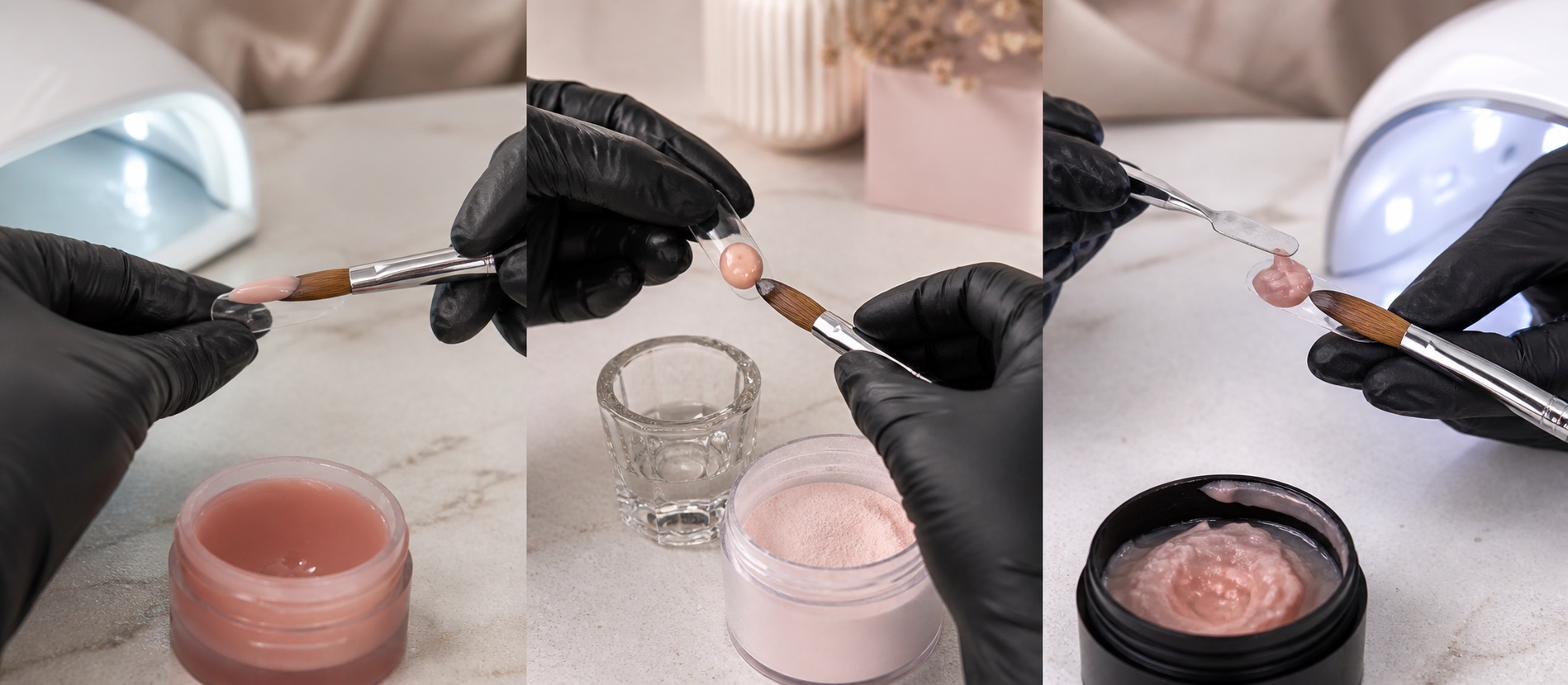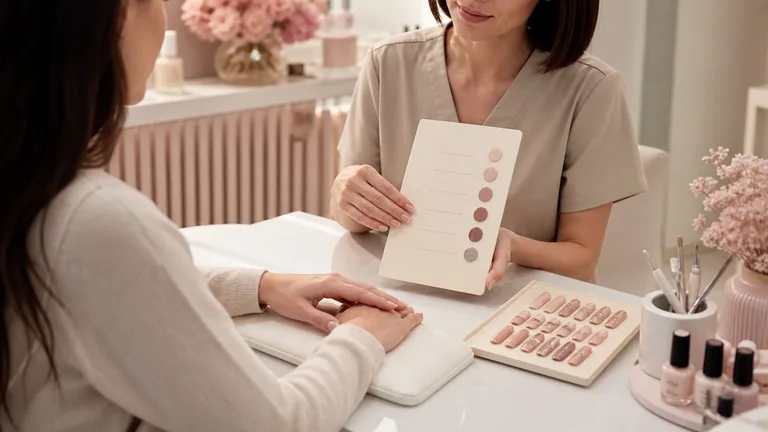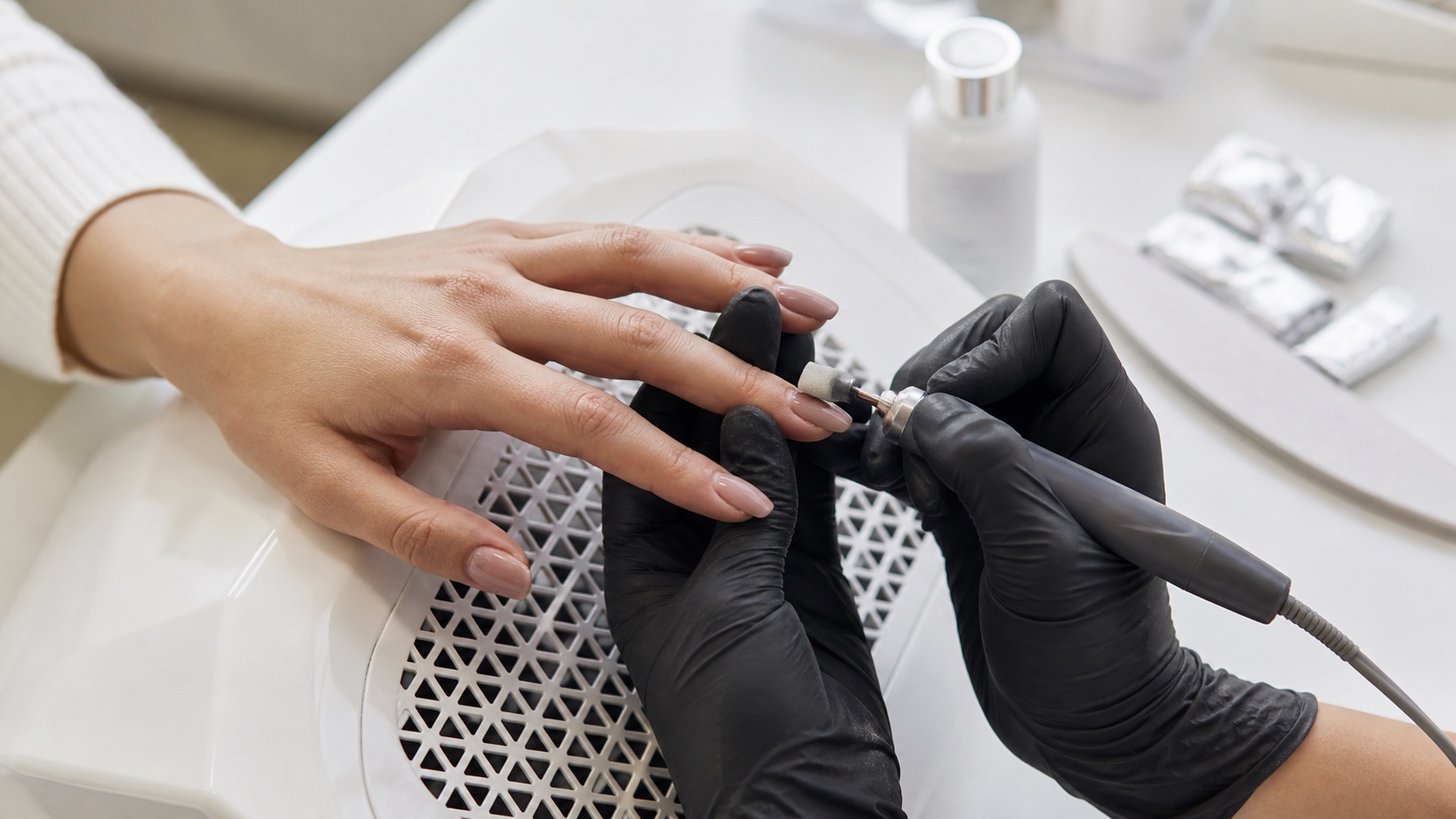
How long do nail services last? A useful answer is not one number. Gel polish, builder gel, acrylic and acrygel can still look attached after regrowth has become visible, or remain glossy while the original structure has moved away from its balanced position. Planning maintenance means separating cosmetic appearance, adhesion, nail growth, structural balance and the condition of the nail and surrounding skin.
Planning range, not a guarantee: many professional gel-polish and enhancement services are checked around two to three weeks. Bring the appointment forward for lifting, cracking, unusual colour, symptoms, rapid growth, long extensions or increased mechanical demand; do not postpone it simply because material is still attached.
This guide owns the comparison of wear windows and maintenance decisions. The gel, acrylic and acrygel comparison owns initial material selection, while the nail infill guide owns the service sequence. Here the aim is to decide when observation, repair, rebalance or removal is needed without promising the same calendar to every client.
Four different meanings of ‘how long nails last’
One manicure runs on four different clocks
Appearance, adhesion, structure and symptoms do not expire together
Appearance
Gloss, colour, chips and regrowth
Adhesion
Continuous product–nail contact
Structure
Apex, stress area and leverage
Stop signs
Pain, itch, swelling or unusual colour
A service can reach four different endpoints at different times. Marketing usually describes an expected appearance or chip-resistant wear under defined conditions. A salon must also consider whether adhesion remains continuous, whether the structure is still balanced and whether there is any reason to stop cosmetic treatment.
Meaning of duration | What to inspect | Practical endpoint |
|---|---|---|
Cosmetic wear | Gloss, colour, scratches, chips and visible regrowth | The finish no longer meets the agreed appearance. |
Adhesive wear | Continuous contact between product and nail | The first lift is assessed—not covered until everything detaches. |
Structural wear | Apex, stress area, sidewalls, length and leverage | Growth has moved the balance enough to require maintenance. |
Clinical stop point | Pain, itch, swelling, skin change, separation or unusual colour | Cosmetic work stops and the appropriate assessment route begins. |
A manicure can therefore look good while needing structural attention, or show harmless-looking regrowth while a crack deserves an earlier appointment. Conversely, normal visible growth is not itself a diagnosis or emergency. The technician records what has changed and chooses a proportionate response rather than using the most dramatic interpretation.
Typical planning window for gel polish, gel, acrylic and acrygel
Two to three weeks is a review window—not a guarantee
Every system reaches the appointment for a different reason
Gel polish
Finish, free edge and nail condition
Builder gel
Cure, adhesion and architecture
Acrylic
Growth and structural rebalance
Acrygel
Design and system—not a hybrid promise
Two to three weeks is a common review window across many professional systems, but it is not a universal expiry date or minimum guarantee. Product instructions, nail condition, service design, growth, lifestyle and the evidence observed at the return appointment all matter. Some gel-polish systems market 14-day or up-to-21-day wear; that claim belongs to the complete tested system and its conditions.
System | Common first review | What governs the next step |
|---|---|---|
Gel polish | Often around 2–3 weeks within system instructions | Regrowth, free edge, chips, lifting and nail condition |
Builder gel | Often around 2–3 weeks for infill or rebalance | Apex movement, leverage, length, sidewalls and adhesion |
Acrylic | Often around 2–3 weeks for maintenance | Growth and structural balance—not air drying versus lamp curing |
Acrygel | Usually reviewed like another structural enhancement | Design, adhesion, cure, growth and use—not the ‘hybrid’ label |
Material can remain physically present beyond the appointment window, but ‘still attached’ does not mean ‘still ideally balanced’. A chip-free gel polish likewise should not be left indefinitely while the natural nail remains hidden. Set the first return date conservatively, then personalise it using documented findings rather than stretching wear to win a longevity comparison.
Claimed wear, observed wear and a salon service guarantee
A statement such as ‘up to 21 days’ usually assumes the complete system used as instructed: permitted preparation, base, colour, top, compatible lamp, layer thickness and removal. ‘Up to’ is not a promise that every nail and lifestyle reaches the maximum. Mixing lines, changing the lamp or ignoring opacity and layer limits makes it inappropriate to transfer the same claim automatically.
A salon guarantee is a separate commercial policy. It can explain how an early chip, break or lift is reported, assessed and repaired, including exclusions and time limits. It should not encourage sealing over lifting, hiding a crack or waiting with symptoms. Distinguish a workmanship issue, an impact, a client request that exceeded suitable length and a condition that was already documented at consultation.
Photograph the completed set and each return under similar light and angles. Record product, batch, lamp where relevant, shape, length, repair, date and the exact location of changes. This gives the salon a useful comparison and helps avoid blaming either product or client from one unsupported impression. The goal is better design and timing, not a scoreboard between brands.
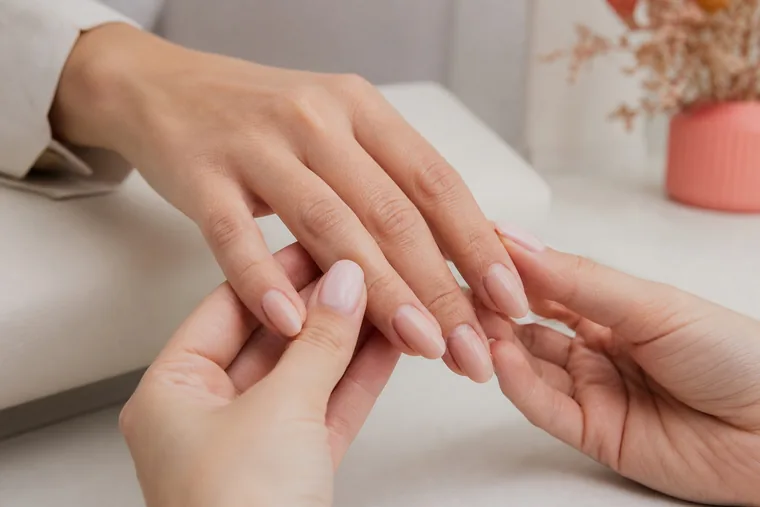
Why regrowth changes an enhancement even when it remains attached
Growth moves the built structure forward
The original apex does not stay over the same point
Day 0
Apex and stress area balanced
Regrowth
Gap opens near the proximal fold
Movement
Built volume travels forward
Review
Infill, rebalance or removal
A small study of 22 healthy young adults measured average fingernail growth at 3.47 mm per month, with differences among nails and individuals. Used only as an order-of-magnitude illustration, that average would be roughly 1.6 mm over two weeks and 2.4 mm over three weeks. It is not a personal prediction, and growth can vary with age, finger, trauma, health and other factors.
As nail grows, the visible gap opens near the proximal nail fold and the built volume moves forward relative to the living nail. On a short overlay the increased lever may be modest; on a long, narrow, damaged or heavily used extension it can matter sooner. This is why structural wear is not measured only by the absence of breaks. The nail architecture guide explains apex, stress area and lower-line balance.
Fast growth, long extensions and intensive hand use often justify an earlier review.
Short, well-adhered services with controlled leverage may reach the planned date comfortably, but still require inspection.
Thumbs and dominant fingers can behave differently; never judge the full set from the best-looking nail.
A recurring failure at the same point needs design and technique review, not a permanently shorter promise with no diagnosis of cause.
How long gel polish lasts
Gel polish is generally a thin coating on the natural nail rather than an extension designed to correct substantial leverage. Many professional systems communicate wear around 14 days and some up to 21 days when their base, colour, top and lamp are used together. Actual wear changes with nail flexibility, preparation, free-edge condition, water and chemical exposure, natural length and habits.
The objective is intact, comfortable wear within the system window, followed by controlled removal or reapplication—not maximum retention at any cost. Chips, lifting, product movement or a change in the nail should be reviewed early. The dedicated gel-polish safety guide covers application, curing and removal as one protocol.
Do not peel gel polish when an edge lifts. Peeling can remove superficial layers of the nail plate and make the next service harder to evaluate. The guide to safe product removal distinguishes soak-off, file-off and hybrid systems without treating all products alike.
How long builder gel, acrylic and acrygel last
Builder gel, acrylic and acrygel can form overlays and extensions with designed structure. Their setting chemistry and working consistency differ, but none stops natural nail growth. All need periodic assessment, shortening where appropriate and redistribution of product. Acrylic sets through a liquid-and-powder reaction; gel and acrygel require compatible light curing. That distinction does not establish a universal winner for wear.
A good return may allow an infill after all lifting is removed and the retained material is checked. Greater growth or shape change may need a rebalance that reduces more of the old architecture and rebuilds apex, length and sidewalls. Extensive lifting, uncertain product, repeated fracture, a major design change or a compromised nail can make complete removal and reassessment more appropriate.
Acrygel is sometimes marketed as combining the best of gel and acrylic, but the label does not guarantee longer wear. Product ratio or handling, adhesion layer, thickness, dual-form control, lamp compatibility, nail preparation and client use still determine the result. Apply the same evidence standard to all systems: document the service and inspect the return.
Bring maintenance forward for these signs
Do not wait for a booked date when a new problem appears. A clear photograph can help the technician triage whether the set needs prompt in-person inspection, but it cannot diagnose infection, allergy or nail disease and does not justify a home repair with household glue.
A lifted edge, pocket or area that catches hair: do not seal new product over it.
A crack, break, moving enhancement or pain under pressure: reduce mechanical use and arrange assessment.
Green, brown, yellow or another unexplained colour beneath product: stop cosmetic covering and use the appropriate referral route.
Itching, burning, swelling, blisters, rash or nail separation: stop new exposure and seek healthcare advice.
Pronounced regrowth, forward-shifted apex, difficult length or repeated impacts: rebalance earlier even without visible cracking.
Use the guide to nail lifting by location and the gel nail defects guide to organise technical observations. Symptoms belong to the cautious methacrylate allergy guide and an appropriate healthcare professional, not to a durability troubleshooting session.
Why wear varies between clients and between fingers
The most useful comparison is not between two clients but between well-documented services on the same person. Nail flexibility, shape, growth rate, chosen length, impact, occupation, prolonged wet work, chemical contact, hobbies, habits and home maintenance can change the outcome. Technique also matters: excessive or inadequate preparation, skin contact, incompatible flexibility, poor structure, incomplete cure or traumatic removal can shorten wear or damage the nail.
Preparation must be proportionate and repeatable, not progressively more abrasive whenever wear is disappointing. The natural-nail preparation guide separates removal of surface contamination from thinning the nail plate. If moisture, perspiration or very sweaty hands coincide with lifting, use the hyperhidrosis and nail-service protocol to plan timing and documentation without diagnosing a medical cause. More filing, stronger primer and thicker product are not a universal answer. Change one controlled variable, keep product–lamp compatibility intact and compare the return. If the natural nail becomes sore, thin or visibly altered, pause enhancement rather than hiding the result under a more aggressive preparation.
Aftercare should reduce avoidable mechanical and chemical stress without promising perfect wear. Advise clients not to use enhancements as tools, to wear task-appropriate gloves for wet or chemical work, to avoid picking and to report changes early. Do not frame ordinary life as misconduct or make a client financially responsible before examining the actual pattern. A short, clear aftercare note is more useful than a long list of exclusions designed only to protect a guarantee.
Record the date, system, product batch, length, shape, initial observations, repairs and findings at return. After two or three controlled appointments, a more realistic personal interval can emerge. Shorten it when leverage or lifting accumulates. Extend it only when the product directions, nail and structure support the change—not because an appointment diary is full or a competitor advertises a longer number.
Infill, rebalance or complete removal: choosing at the return
Inspect retained product before adding anything
The return appointment starts with a decision—not a refill by default
Inspect
Nail, adhesion, cracks and symptoms
Infill
Limited growth and stable material
Rebalance
Redistribute apex, length and shape
Remove
Uncertain integrity or full reassessment
Decision | When it may fit | What it must not become |
|---|---|---|
Infill | Stable retained material, limited growth and recoverable structure | Product placed over lifting, contamination or cracks |
Rebalance | Apex, stress area, length or shape needs redistribution | Adding more bulk without reducing misplaced structure |
Complete removal | Unknown integrity, extensive lifting, new system or full nail assessment | Peeling, digging or filing through the natural nail |
Build a realistic maintenance calendar
Set the first review from the system instructions, service complexity, length and initial nail assessment—often within two to three weeks.
Give written early-contact signs: lift, crack, movement, pain, itch, swelling or unexplained colour.
At return, measure or photograph regrowth consistently and record which fingers lost adhesion or balance.
Keep or shorten the interval; lengthen only when repeat evidence and product limits support it.
Reassess after any material, lamp, length, job, health or lifestyle change that could alter wear.
Explore English-market online nail courses for structured application, infill, rebalance and troubleshooting practice. Training helps a technician recognise patterns; it cannot convert an indicative maintenance interval into the same promise for every nail.
Frequently asked questions about nail service duration
How long does gel polish last?
Many systems plan approximately 14 days and some communicate up to 21 days under defined conditions. Nail flexibility, preparation, application, lifestyle and product instructions can shorten the window.
How often should builder gel be infilled?
A first review is often scheduled around two to three weeks. Regrowth, length, apex movement, lifting and the client’s hand use determine whether it should be earlier.
How long do acrylic nails last?
Acrylic may remain attached beyond two weeks, but maintenance is commonly planned around two to three weeks because the nail grows and the original balance moves forward.
Does acrygel last longer than gel?
Not automatically. Formula, preparation, structure, compatible curing, growth and client use matter more than the hybrid category name. Compare controlled returns on the same person.
Can I delay maintenance if the product is still attached?
Attachment is only one criterion. The apex and stress area may have moved, leverage may be greater and hidden nail changes may need inspection. Keep the planned review unless a technician adjusts it.
Is visible regrowth immediately dangerous?
Regrowth is normal and not an emergency by itself. It matters because appearance and leverage change. Length, growth speed, activity and structure determine the maintenance need.
Can a technician fill over lifting?
No. Non-adherent material must be identified and removed through the system procedure. Covering it does not restore adhesion and can hide a pocket that needs assessment.
When is a rebalance more appropriate than a simple infill?
When growth has displaced apex, stress area, length or shape enough that product must be reduced and redistributed rather than added only near the cuticle.
Do water, cleaning and manual work shorten wear?
Prolonged wet work, chemical exposure and impact can add stress, but they do not explain every failure automatically. Use suitable protection and document the location and pattern of defects.
Can a cracked nail wait until the booked appointment?
Contact the technician promptly. Movement, pain or a deep crack increases urgency. Do not glue, peel or file it at home because an improvised repair can hide or worsen the problem.
How much do fingernails grow in three weeks?
Using one published young-adult average of 3.47 mm per month gives an approximate 2.4 mm in three weeks. Individual nails vary, so observe the real client rather than using that figure as a deadline.
Are itching or redness normal signs of gel wear?
No. Itch, burning, swelling, rash, blisters or nail separation are not routine wear. Stop new exposure and seek healthcare advice instead of covering the symptoms.
Does more expensive product always last longer?
No. Price does not prove compatibility, preparation quality, structural design or individual wear. Judge the complete documented system and repeat outcomes, not price alone.
Should all ten nails have exactly the same wear?
Not necessarily. Dominant fingers, thumbs, shapes and impact differ. A repeated failure pattern is useful evidence, but each nail still needs inspection rather than an automatic explanation.
Research and dermatology sources
Nail growth context: Yaemsiri and colleagues’ study of fingernail and toenail growth. The reported 3.47 mm monthly fingernail average describes the study sample and is used here only for scale, not as a personal forecast.
Dermatology guidance: the American Academy of Dermatology on removing gel polish without picking or scraping and on healthy gel-manicure practice. Possible methacrylate-allergy context: the British Association of Dermatologists’ artificial-nail allergy warning.
This educational guide was substantively reviewed on 5 September 2026. Wear windows are planning ranges, not guarantees. Product instructions and direct professional assessment take precedence, and pain, inflammation, rash, nail separation or persistent abnormal colour needs appropriate healthcare evaluation rather than cosmetic troubleshooting alone.