

A makeup booking begins before the kit opens. Client and professional need to understand what is reserved, for whom, on which date, at which location, for what total price and under which conditions. A message saying confirmed may block the diary, but it does not necessarily explain a bridal trial, travel, assistants, access, delays, changes, cancellation, image use or what happens if the artist cannot attend.
Quick framework: use the brief to capture the need, the quote to define scope and total price, and accepted terms to govern payment, changes and cancellation. Identify every advance payment correctly; disclose the policy before payment; preserve the accepted version and confirmation; separate service administration, privacy, marketing and image permission; have an Italian lawyer and commercialista validate the complete flow.
This guide is expressly about agreements governed by Italian consumer and contract rules. It is educational, not a personalised contract or legal, tax, privacy or insurance opinion. It was editorially checked against official sources available on 5 September 2026 but has not received independent lawyer or commercialista review. The current law, exact sales channel, client status and factual service prevail.
Use the separate guide to VAT, ATECO, invoices and costs in Italy for business setup and tax documents. Use the professional bridal makeup guide for the technical trial, wear plan and touch-up kit. This page owns quotation, agreement, advance-payment, cancellation and no-show intent; it deliberately does not supply a ready-to-sign template.
If paid work is still a future step, first use the makeup artist career guide to plan competence, supervised practice and portfolio evidence. A polished contract cannot make an unprepared or out-of-scope service appropriate.
Brief, quote, terms and confirmation perform different jobs
One booking needs four connected records
Discover, price, govern and confirm
Brief: identify the real need
Quote: define scope and total
Terms: govern scenarios
Confirmation: preserve acceptance
The brief discovers what is required. The quote translates that request into named services, quantities, timings and price. The terms or contract explain payment, changes, cancellation, responsibility and dispute handling. The confirmation shows which identifiable offer and version were accepted. They can live in one document or connected digital flow, but each function should remain legible.
Record | Question answered | Evidence to preserve |
|---|---|---|
Brief | What does the client actually need? | People, looks, date, timing, place and constraints |
Quote | What is included in the total? | Line items, quantities, expenses, validity and total price |
Terms | What happens in defined scenarios? | Version, delivery, date and traceable acceptance |
Confirmation | Which assignment was concluded? | Durable summary of accepted service and conditions |
Electronic exchanges can help form and evidence an agreement, but reconstruction becomes fragile when price, attachments and amendments are scattered across voice notes, disappearing messages and several PDFs. Give the assignment a reference, date the offer, state its validity, identify attached terms and archive the exact version accepted. A longer contract is not stronger if important information is hidden or contradictory.
Distinguish a private consumer, bridal client, company and production
A person booking makeup mainly for personal purposes will normally engage as a consumer. A brand, agency, photographer or production contracts for professional purposes. Bridal work adds an immovable event, trial and multiple participants. A production may depend on call sheets, overtime, continuity and usage. Do not reuse one form by changing only the client's name.
Private client: exact service, date, place, timing, total price, payment, cancellation and data handling.
Bride: trial, wedding date, other people, travel, schedule, touch-ups, changes and contingency.
Production: call time, day or half-day, overtime, kit fee, assistants, continuity, approval, credit and image rights.
Company or agency: authorised contact, purchase order, billing data, payment term, change approval and deliverables.
Confirm who is the contracting party, who receives the service, who can approve extras and who pays. The bride, wedding planner and family member can all be involved without having the same legal role. On a set, the person giving creative directions may not be authorised to extend the booking or change the agreed fee.
What a professional makeup quote should make clear

A useful quote does more than state bridal makeup and a number. It lets both parties compare the promise with delivery. Identify the professional and client, service recipients, number of looks or people, trial, expected duration, start and finish time, address, travel, parking or tolls, touch-up attendance, assistants, false lashes or special materials and the total price including applicable taxes and unavoidable charges.
Describe quantity precisely: one makeup service is not a bride plus four guests.
Separate fixed scope from assumptions that can change travel, staffing or hours.
State proposal validity, acceptance method, payment dates and which sum secures the booking.
Deliver applicable terms before acceptance rather than revealing them after money is received.
Explain how a requested extra or changed location becomes an approved written amendment.
A public price list can show starting points, but an individual quote defines the requested assignment. Connect scope to the demand strategy in how to find makeup clients and present only services supported by the evidence in the makeup artist portfolio guide.
Define the bridal trial, event date and change process
A bridal trial is a separate service or a clearly defined package component. State its date, duration, preparation instructions, number of planned looks, what will be recorded and when changes require another paid trial. Explain what happens if dress, hairstyle, venue, ceremony time, participants or requested style changes after approval. A reference photograph cannot guarantee an identical result on another face, skin, product system and light.
After the trial, send a concise service summary: agreed look, critical preferences, products that must be avoided because the client reported a relevant issue, location, schedule and approved changes. Do not turn the contract into a health record or diagnose a condition. If discomfort or symptoms arise, use the separate cosmetic reaction stop guide and obtain appropriate healthcare advice.
Caparra confirmatoria, acconto and clausola penale are not synonyms
Name the payment only after deciding its function
Three familiar labels can produce different consequences
Caparra
Security tied to an agreement
Acconto
Advance part-payment of price
Penalty
Agreed consequence of breach
Review
Lawyer plus commercialista
Under Italian Civil Code Article 1385, a caparra confirmatoria supports an already concluded agreement and can produce reciprocal consequences when one party is in breach. An acconto is an advance part-payment of the price. A clausola penale predetermines a contractual consequence of breach, and Article 1384 permits judicial reduction where the penalty is manifestly excessive. Typing non-refundable deposit into a bank reference does not resolve legal character, proportionality or tax treatment.
Payment or clause | Indicative function | Validation needed |
|---|---|---|
Caparra confirmatoria | Security for contractual performance | Express agreement, reciprocity and statutory consequences |
Acconto | Advance part-payment of price | Invoice timing, balance and refund treatment |
Clausola penale | Agreed consequence of breach | Clarity, proportionality and consumer protection |
Full advance payment | Price paid before service | Withdrawal, cancellation, invoicing and repayment |
Have the lawyer validate contractual effect and the commercialista validate fiscal documentation. Agreement wording, checkout label, payment reference, invoice or other tax document, credit against the balance and refund process must describe the same operation. Do not use an English word such as retainer to avoid deciding what the sum is under Italian law.
Choose an advance amount from capacity and costs, not a magic percentage
There is no universal lawful or commercially ideal percentage for every booking. A one-hour appointment next week, a wedding reserved twelve months ahead and a production requiring two artists tie up different capacity and preparation. Measure how readily the slot could be resold, which expenses arise before the date, how much planning is needed and whether the amount remains proportionate.
Compare a fixed sum, a percentage, staged payments and a final balance near the event. A very high advance can reduce diary exposure while increasing friction and repayment disputes. A token amount may fail to reflect preparation or lost capacity. Review real data: cancellation lead time, dates successfully resold, payment fees, average order, administrative time and customer complaints.
Build a transparent cancellation and no-show ladder
Notice and recoverable capacity change the scenario
Early change, late cancellation, no-show and artist cancellation are distinct
Early
Date may still be resold
Late
Capacity and costs committed
No-show
No agreed notice received
Artist
Notice, substitute and repayment
No-show means an absence without the agreed notice; it should not become a label for every change. Separate early rescheduling, early cancellation, late cancellation, client delay, non-attendance, event-date change and cancellation by the professional. For each scenario define the notice channel, deadline, outcome, any rescheduling credit and the evidence both parties receive.
Scenario | Operational question | Term to define |
|---|---|---|
Early reschedule | Can the original capacity still be sold? | Transfer, repayment, credit and expiry |
Late cancellation | Which costs and capacity are already committed? | Proportionate outcome disclosed before booking |
No-show or serious delay | Were confirmation and reminders delivered? | Remaining service, payment and future booking |
Artist cancellation | Is an agreed substitute realistically available? | Prompt notice, reciprocal remedy and repayment |
Avoid universal statements such as no refunds for any reason or outcomes decided entirely at the artist's discretion. Standard terms used with consumers must be transparent and should not create a significant imbalance. A policy that protects only the professional while leaving her own cancellation unaddressed is operationally and legally weak.
Distance bookings and withdrawal rights require a specific review
Bookings often conclude through a website, email or chat. Italy's Consumer Code requires pre-contract information for distance and off-premises contracts and provides withdrawal rules and defined exceptions. Article 59 addresses fully performed services under stated conditions and also certain leisure services for a specific date or period. Do not assume that every dated makeup service automatically falls within an exception.
Ask the lawyer to identify when the contract concludes, which information and withdrawal form must be delivered, whether the client expressly requests performance during a withdrawal period, how a completed trial affects the analysis and which exact exception, if any, applies. A booking concluded in person at a studio may follow a different consumer-law route from one completed entirely online.
Define delays, travel, access and authorised extra time
At a wedding or production, delay can affect several people and a fixed completion time. State who provides access, suitable space, light, electricity, parking and punctual participants; when paid time begins; what can still be completed if the client or production is late; and who can authorise overtime, an assistant or extra travel. Never compromise hygiene or safe product use simply to recover lost minutes.
Full address, present contact, access rules, parking and accreditation.
Call time, setup time, makeup start and non-negotiable finish time.
Maximum people or looks compatible with the available team and time.
Rate and written approval route for waiting, overtime, location changes and extra travel.
Plan artist cancellation, substitution and force majeure carefully
The agreement should address the professional's inability to attend as carefully as client cancellation. Explain notice, repayment, whether a substitute may be proposed, the client's choice, minimum competence and how necessary booking information is shared. A personal creative service can depend heavily on identity and trust, so an artist should not assume unrestricted substitution.
A generic force majeure sentence should not become a blanket escape. Ask counsel to define the relevant events, notification and evidence, mitigation, rescheduling, substitute and money consequences. Keep a real contingency file with trusted contacts, travel buffers, duplicate essentials and emergency communications; contractual language does not create operational resilience on its own.
Separate booking data, service reminders, marketing and image permission
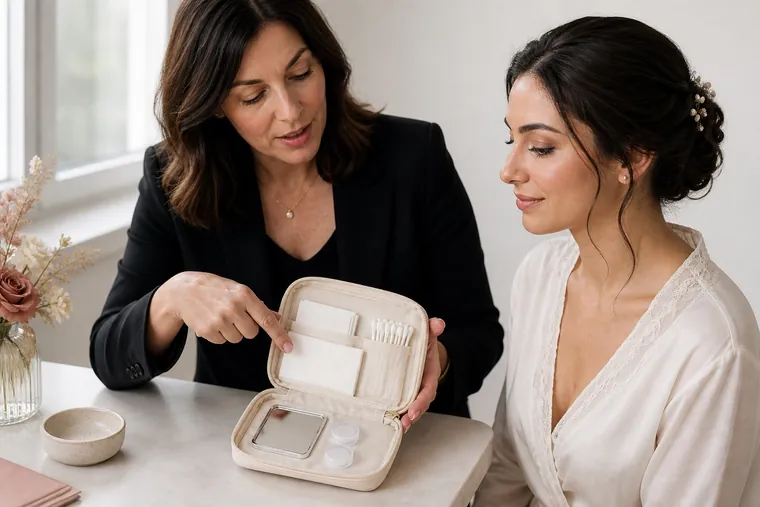
Names, contact details, location and schedule can be necessary to manage the contract, but that does not automatically authorise newsletters, promotional messages or publication of photographs. The Italian Data Protection Authority emphasises purpose limitation, minimisation, retention and demonstrable lawful processing. When consent is used, it must be freely given, specific, informed and distinguishable from other requests.
Keep booking reminders limited to the service purpose. Put optional marketing in a separate choice. Treat portfolio, organic social posts and paid advertising as understandable image-use purposes rather than one forced all-media permission. Consider the rights of the person portrayed and any photographer, studio, brand or production. Refusing optional publicity should not make an otherwise available makeup service impossible unless image use is genuinely necessary and lawfully structured for that assignment.
Use a controlled acceptance and amendment workflow
Acceptance is a versioned operational flow
Keep every later change connected to the original booking
Issue dated quote and terms
Capture affirmative acceptance
Confirm payment and service
Version every amendment
Send a dated quote and the applicable terms in a form the client can keep. Require an affirmative acceptance connected to that version; do not rely on pre-ticked marketing or image boxes. Confirm receipt of the correctly described advance payment and send one summary containing service, people, date, place, critical times, outstanding information, payment schedule and cancellation route.
Collect the factual brief and identify consumer or business customer.
Issue an itemised, dated quote with linked versioned terms and privacy information.
Capture affirmative acceptance and any optional permissions separately.
Document the advance payment consistently in contract, bank reference and tax flow.
Confirm the assignment and route every later change through a dated written amendment.
For service-quality preparation, continue with the professional makeup hygiene guide and makeup product label guide. The contract should promise only a process that the workstation, product traceability and available time can deliver.
Checklist for professional validation before use
Correct identity, authority, consumer or business status and invoicing recipient.
Complete service scope, people, trial, timings, location, travel, assistants and total price.
Legal and fiscal character of advance payments, due dates, invoice timing and balance.
Proportionate cancellation, no-show, delay, rescheduling and artist-cancellation outcomes.
Distance-contract information, withdrawal analysis and evidence of any relevant request or exception.
Changes, substitution, force majeure, complaint, governing law and dispute route.
Privacy notice, minimum necessary data, retention and security.
Separate optional choices for marketing and defined image-publication purposes.
Version number, delivery, affirmative acceptance, confirmation and amendment record.
Training and business documentation should evolve together. Explore the English makeup course catalogue or the bridal makeup course for their current curriculum and availability, then ensure the quote promises only services that are competently and lawfully offered.
Frequently asked questions about makeup contracts in Italy
Must every makeup artist use a written contract?
Not every agreement requires the same legal form, but a text the parties can retain greatly reduces ambiguity over scope, price, date and cancellation. Weddings, productions, travel, assistants and significant sums make a controlled written record particularly prudent; obtain legal advice on the exact form.
Is an accepted quote the same as a contract?
An accepted quote can document an agreement when it contains sufficient elements and connected terms, but many quotes describe mainly services and price. Verify that cancellation, amendments, images, data, substitution, responsibility and complaints are genuinely included and delivered before acceptance.
Are caparra confirmatoria and acconto the same?
No. A caparra confirmatoria has a statutory security function connected to breach, while an acconto is an advance part-payment. Contractual effects and tax documentation can differ. The agreement, payment description, invoice treatment and balance must remain consistent.
What percentage should secure a bridal makeup date?
There is no universal percentage. Consider booking lead time, preparation, committed costs, value, ability to resell the date and proportionality. Ask a lawyer and commercialista to validate the amount, legal character, payment schedule and cancellation consequences.
Can the terms say that every advance payment is non-refundable?
An absolute formula ignores legal character, which party is responsible, withdrawal rights, fairness and proportionality. Define scenarios and reciprocal consequences; do not relabel an ordinary advance as a caparra merely to prevent repayment.
Does a client who books in chat have withdrawal rights?
A contract concluded at a distance can trigger Consumer Code information and withdrawal rules, but the facts, timing and any exception must be assessed. A fixed date alone should not be treated as a universal answer for every makeup service.
How should a late bridal cancellation be handled?
Apply only conditions delivered and accepted beforehand, identify timing and responsibility, check sums already paid and whether the date can be recovered, then communicate the documented outcome. Seek advice rather than inventing a new rule during a dispute.
What happens if the makeup artist cancels?
The agreement should provide a meaningful reciprocal response: prompt notice, any agreed substitute route, the client's decision, repayment and consequences connected to the correctly characterised advance. The policy must not regulate only client default.
Can an artist send a substitute without asking?
It depends on the agreement and nature of the service. Identity, trust and style can be material, particularly for bridal work. Define proposal, competence, client acceptance, payment and minimum necessary data sharing rather than assuming unlimited substitution.
How should client delay be managed?
Disclose the tolerance and operational consequence. Explain what can be completed safely in the remaining time, when a participant or element is removed, how extra time is authorised and when rescheduling applies. Never shorten hygiene steps to recover time.
Is a cancellation policy posted on Instagram enough?
A public post does not by itself prove that a specific client received and accepted the applicable version before booking. Integrate terms into the purchase flow, retain versioned acceptance and send a durable confirmation.
Does booking makeup authorise portfolio and social photographs?
No automatic permission should be assumed. Service delivery and public image use are different purposes, and photographer or production rights may also matter. Use a separate, informed and specific route that names intended channels and uses.
Do appointment reminders require marketing consent?
Service communications and promotion have different purposes. Keep necessary booking reminders limited and transparent. Newsletter, offers, profiling and unrelated promotional contact need their own lawful basis and should not be bundled invisibly into the service.
When is an advance payment invoiced?
The answer depends on what the sum legally and fiscally represents and on the applicable tax regime. Before collecting it, have the commercialista configure document type, timing, description, VAT nature, stamp duty where relevant and credit against the balance.
Can a makeup artist use a contract template downloaded online?
A template can reveal topics but cannot prove suitability for the service, territory, sales channel, client type and tax flow. Nail, photography or wedding-planning wording may not cover trials, products, assistants, image use and personal substitution correctly.
When should the agreement be reviewed?
Review it when services, pricing, provider, online flow, premises, collaborators or law changes, and schedule periodic professional checks. Preserve previous accepted versions: replacing a website PDF does not retrospectively alter existing agreements.
Official sources and scope
Normattiva — Italian Civil Code, consolidated text current to 14 June 2026: Articles 1384 and 1385 on penalty reduction and caparra confirmatoria.
Normattiva — Consumer Code Article 49 and Article 59: pre-contract information and withdrawal exceptions.
AGCM — unfair terms in consumer contracts: the Italian competition authority's consumer resource.
Garante per la protezione dei dati personali — fundamental processing principles: purpose limitation, minimisation, retention, security and valid consent.
Agenzia delle Entrate, FiscoOggi — distinguishing caparra confirmatoria and acconto: an institutional explanation of why specific characterisation matters.
Editorial review: 5 September 2026. This English page explains an Italy-specific workflow but is not a contract, legal opinion, privacy assessment or tax instruction. Have the exact documents, booking flow and payment process reviewed before use and whenever the business changes.
Keep the client record separate from agreement and marketing
The booking terms should connect to, but not absorb, the makeup client record, photo-consent and privacy workflow.
Connect contract terms to the liability response
A booking agreement should define service scope while the makeup insurance and complaint guide.
Turn scope and cancellation terms into measurable capacity
Read their economic effect in the Italy makeup artist earnings guide.
Keep list, quote and confirmation consistent
Define the standard commercial layer in the makeup artist price-list guide.