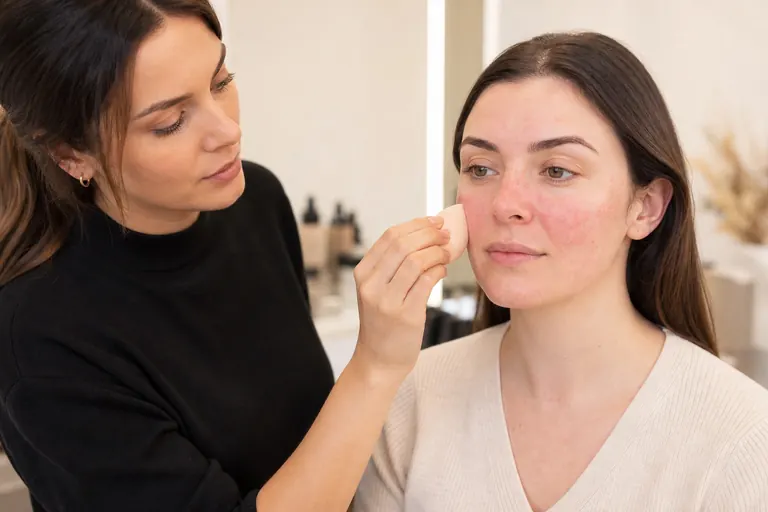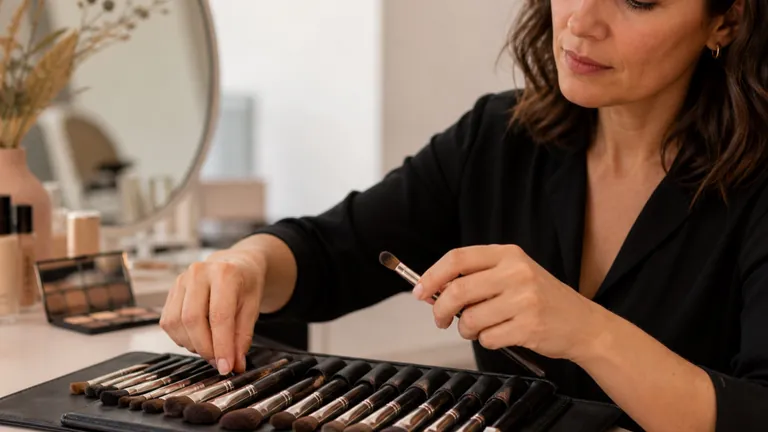
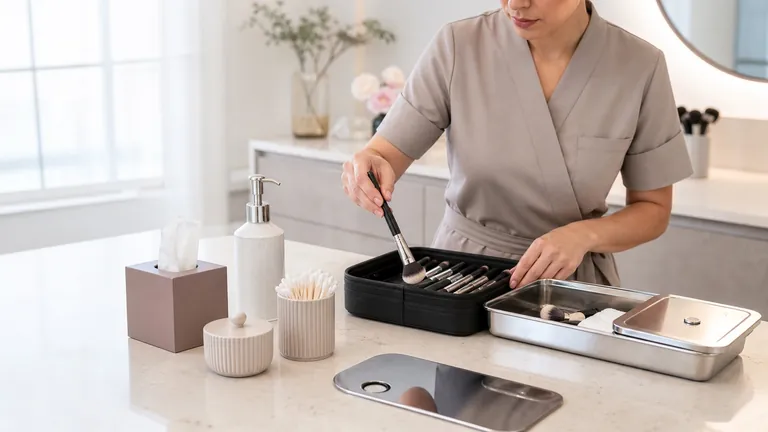
Professional makeup hygiene is not a quick spray applied to brushes at the end of a service. It is a one-way system that keeps clean and used items apart, prevents product containers from being re-entered after contact, gives each tool a compatible treatment and makes the workstation reset visible between people. A usable protocol protects the client, artist, kit and quality of the application.
Quick answer: prepare clean hands, surface and dry protected tools before the client; decant products and prevent double-dipping during application; isolate used items immediately; then remove visible residue, clean, apply any compatible disinfection required by product instructions and local rules, dry completely and store protected. Cleaning, disinfecting and sterilising are not interchangeable words.
This guide owns the professional makeup-hygiene workflow in the BeautyLearn makeup library. It does not prescribe one chemical for every material or replace workplace rules. For kit scope use the beginner makeup kit guide; for learning and course evidence use the separate makeup course checklist.
Makeup hygiene is a flow, not a final gesture
One direction, no silent return
Tools move from clean to service, used, processing and protected storage
Prepare hands, surface and tools
Decant without double-dipping
Isolate used items and waste
Clean, treat, dry and protect
Contamination can occur before, during or after application: a hand touches a phone and then a palette; an applicator returns to mascara; a damp sponge is sealed in a bag; a clean brush lies beside used ones; or a tool touches skin and then enters the original cosmetic. Focusing only on washing at night leaves each of these routes open.
Design a one-way route: protected clean storage, prepared workstation, hygienic dispensing, immediate used-item container, processing area, complete drying and protected storage again. If clean and used paths cross, treat the item according to the point where separation was lost. Labels and containers should make the correct action obvious even during a busy service.
Cleaning, disinfecting and sterilising are different processes
Three words, three different processes
Changing the label does not turn cleaning into sterilisation
Clean
Remove residue and soil
Disinfect
Use a labelled compatible process
Sterilise
Validated method for specified items
Single use
Discard after one person
Cleaning physically removes product, oils, dirt and organic residue using a method compatible with the object. Disinfection uses a product, concentration and full contact time intended to reduce specified microorganisms on compatible materials. Sterilisation is a validated process designed to destroy all forms of microbial life under defined conditions. Washing or spraying a makeup brush is not sterilisation.
There is no universal recipe for natural and synthetic fibres, glue, metal, plastic, porous foam and electrical equipment. Read both the tool manufacturer’s directions and the cleaner or disinfectant label: intended use, concentration, compatibility, contact time, rinsing, drying and ventilation all matter. Guessing a dilution or shortening the contact time makes the step unverifiable; increasing concentration can damage tools, surfaces or skin.
Process | Purpose | Do not assume |
|---|---|---|
Cleaning | Remove residue and soil | That it automatically disinfects |
Disinfection | Reduce organisms as labelled | That any material or short spray is suitable |
Sterilisation | Validated process for specified items | That ordinary brush washing qualifies |
CDC guidance reinforces two transferable principles: cleaning removes dirt and impurities, and surfaces should be cleaned before disinfecting because residue can interfere with the process. Healthcare definitions are not a salon protocol, but they show why precise terms and product directions matter. Apply the requirements written for your actual workplace, service and country.
Prepare four workstation zones before the client
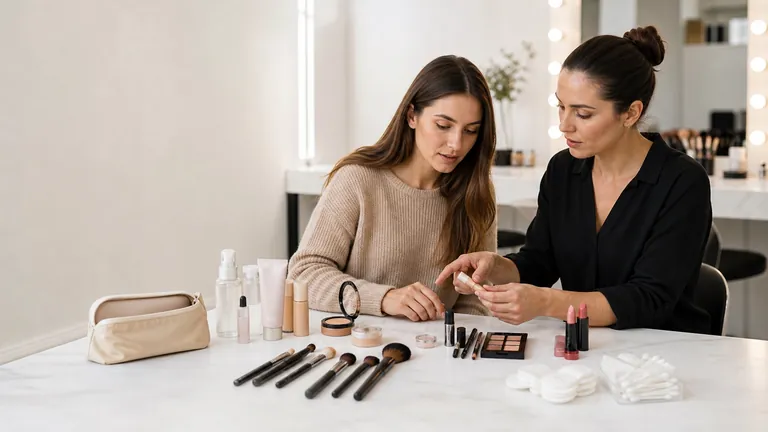
A ready station contains only what the service needs. Clean and treat the surface according to its material and the product label. Prepare dry protected brushes, palette and spatula, unopened disposables, tissues, waste and a stable closed or clearly separated container for used items. Leave unnecessary stock closed in the case; fewer exposed objects mean fewer contacts to track and reset.
Clean zone: protected brushes, packaged applicators, prepared palette, spatula and closed cosmetics.
Active zone: only decanted doses and tools currently used for this person.
Used zone: a distinct stable container that never sits inside or above the clean area.
Waste zone: reachable without carrying used cotton buds, tissues or wands across the kit.
Clean hands before preparing materials and again before contact, after waste or used tools, after a phone or door handle, and whenever the clean sequence is interrupted. Hand sanitiser does not always replace soap and water when hands are visibly dirty. Gloves do not repair a poor workflow: a contaminated glove transfers material just as a bare hand does.
A brush protocol between every person
Isolate the brush immediately after use; never return it to the clean holder.
Remove surface product without driving residue into the ferrule or spreading it across the sink.
Wash with a compatible cleanser, working through the fibres without twisting or soaking construction not intended for immersion.
Rinse thoroughly while limiting water movement towards the ferrule and handle.
Apply any appropriate disinfection only when material and label support it, using the full contact time.
Rinse if directed, reshape and dry completely in a clean ventilated position that protects the ferrule.
Inspect and store only when fully dry in a clean covered container.
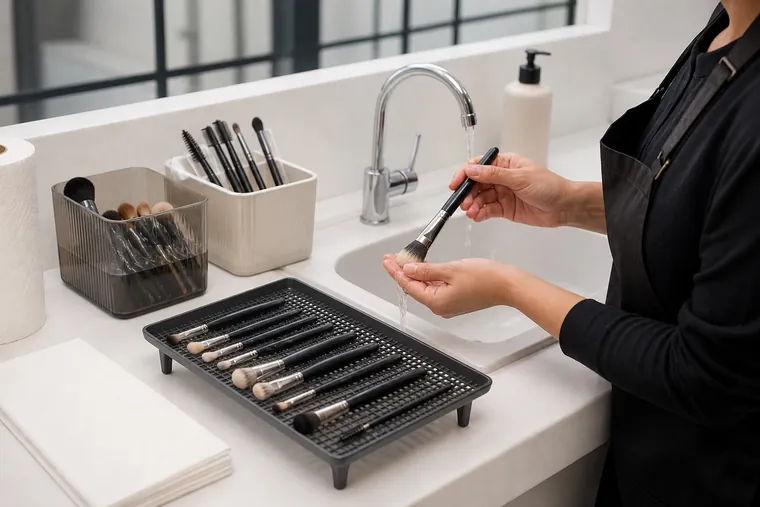
An instant brush cleaner may help change colour during one service on the same person when the product permits it. It does not automatically replace the complete between-client process. A brush that feels dry seconds after spraying is not therefore ready for another client. Own enough copies of frequently used shapes to allow real cleaning and drying time.
Natural fibres, synthetic fibres and non-immersible tools
Fibres, adhesives, ferrules, handles and coatings do not respond equally to water, detergents or disinfectants. Prolonged contact can loosen glue, swell wood, stiffen fibres or strip a finish. Start with technical instructions rather than a viral recipe. When directions are unavailable, do not make an aggressive procedure sound universally safe.
A porous or complex object that cannot be processed reliably should not travel between clients. Electrical and non-immersible equipment needs the surface method approved by its manufacturer. If a clean tool falls, touches hair, clothing or an uncontrolled surface, remove it from the service until its appropriate process has been completed.
Sponges: reusable does not mean shared while damp
A sponge absorbs foundation, water, oil and cleanser below the surface. Assign it to one person during a service, never return it to product and never move it damp to someone else. Discard single-use foam after use. A manufacturer-described reusable sponge still requires compatible cleaning, any required treatment and complete internal drying before another use.
A sealed damp pouch encourages stagnation and hides whether the core is dry. After processing, inspect for retained colour, odour, tearing, cracking or deformation. If cleanliness and complete drying cannot be verified, do not reuse it on another person. Keeping enough sponges does not remove the need for a safe turnaround plan.
Prevent double-dipping in mascara, lips and cream products
Protect the product before contact
Palette, spatula and disposables prevent a return to the container
Decant
One dose on a clean palette
Apply
Tool assigned to one person
Repeat
Fresh dose and applicator
Discard
Residue never goes back
Use a disposable mascara wand without returning it to the tube after lash contact. A second pass requires a new wand and a hygienic way to collect a fresh dose. Do not cut or modify a used wand to make it fit back inside. Eye-area products need particularly careful handling because contamination, irritation or applicator injury can have serious consequences.
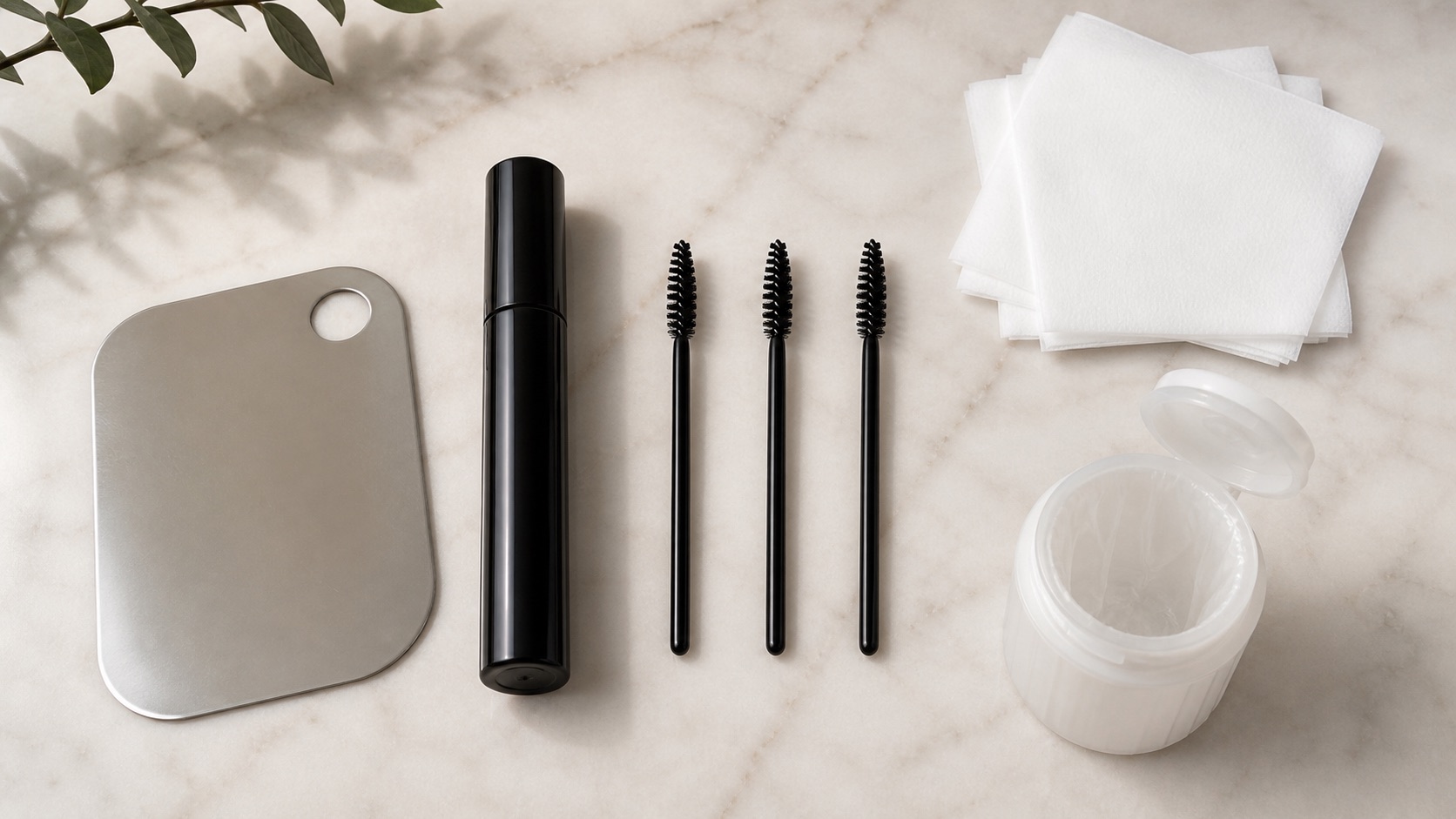
Decant lipstick, concealer, gel and cream with a clean or disposable spatula before application. Product remaining on the palette does not return to its container. Sharpenable pencils need a documented method for removing the exposed layer and processing the sharpener; mechanical pencils require product-specific handling. Never add water or saliva to dried mascara.
Protect powders and palettes before contact
Dry powder can be contacted by a brush, fingers, droplets or an uncontrolled surface. The most predictable strategy is to transfer a workable dose hygienically or reserve clean tools and product contact for one person. Do not blow on powder or brushes: it distributes particles and droplets over an area you can no longer define.
Do not mist an arbitrary liquid into pans and call the palette sanitised. Formula compatibility, complete wetting, concentration, contact time and final product performance are unknown, while texture and preservation can change. Preventing the contaminated tool from entering the product is more controllable than attempting to rescue the product later.
Reset surfaces, textiles and high-touch objects
Remove waste and used items without placing them in the clean zone. Remove visible residue and process the worktop, chair, headrest, mirror touchpoints, lamp controls, handles and other contacted surfaces according to the material and product label. Keep the personal phone outside the workflow; after touching it, restore hand hygiene before returning to the face or products.
Use clean textiles, capes, headbands and towels for each person and store them away from used laundry. Protect hard-to-process porous surfaces with appropriate single-use barriers or replace them with washable materials. Ventilation and tidiness support the process but do not replace cleaning or any disinfection required by the setting.
Take the protocol to mobile and event work
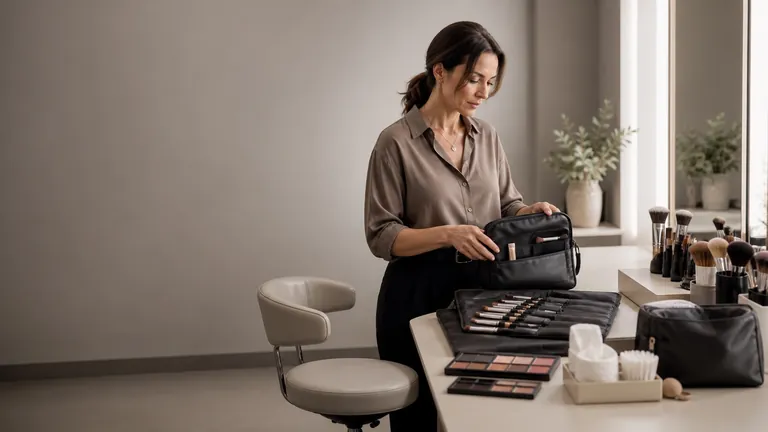
At a hotel, home or venue you cannot assume a washable counter, nearby water, suitable light or enough space. Bring a clean barrier, identifiable closed containers for clean and used tools, sufficient disposables, waste bags and the hand and surface products required for your plan. Secure tools so they do not roll loose inside a case.
Do not rush-process one brush set in the event room and immediately reuse it across a group. Plan multiple sets or a genuinely suitable separate processing area with full drying time. Used materials travel enclosed and separated. The professional bridal makeup guide shows how this hygiene time belongs in the schedule rather than an invisible gap.
Know when not to apply makeup
A makeup artist observes and stops; they do not diagnose. Do not apply over open wounds, discharge, marked inflammation, significant pain, a suspected contagious presentation or an inflamed eye area. Ask the person to seek appropriate healthcare assessment and reschedule where suitable. A client’s request or event does not override a safe stop decision.
If burning, itching, swelling or another unexpected reaction develops, stop using the product, remove it carefully where appropriate and recommend medical advice according to severity. Record the product, lot and circumstances without claiming a cause. Follow local adverse-event reporting requirements. A patch test cannot guarantee that a later application will be tolerated.
Service, daily and periodic hygiene routines
The protocol continues beyond one appointment
Each frequency controls a different operational failure
Before
Hands, clean zone and disposables
After
Used tools, waste and surfaces
Daily
Process, dry and store
Periodic
Dates, lots, condition and stock
When | Core actions | Verify |
|---|---|---|
Before each person | Hands, surface, dry tools, doses and disposables | Clean and used routes are separate |
After each person | Waste, used tools, surfaces and textiles | Nothing returns clean without processing |
End of day | Complete cleaning, drying, stock and containers | No sealed moisture or residue |
Periodic review | Open dates, integrity, lots, stock and tool condition | Changed products and damaged tools are removed |
A simple log can record solution preparation where relevant, scheduled deep cleaning, sponge replacement, cosmetic opening dates and anomalies. The aim is not paperwork for every brush stroke. It is to make easy-to-forget controls visible, especially when several artists share stock or the kit travels.
Frequent hygiene failures
Spraying a visibly dirty brush and calling it sterilised.
Closing damp brushes or sponges in a case.
Using one sponge or mascara wand across people.
Re-entering a product after contact with skin, eyes or lips.
Mixing the used-item container with temporary clean storage.
Touching phone, handles or hair without restoring hand hygiene.
Shortening a labelled contact time because a tool is needed.
Covering a presentation that should trigger a stop and referral.
Frequently asked questions about makeup hygiene
How often should professional makeup brushes be cleaned?
After each person before reuse on someone else. Keep enough sets for the full process and drying time; a quick colour-change spray is not automatically a between-client reset.
Are cleaning and disinfection the same?
No. Cleaning removes residue and soil. Disinfection is a separate labelled process for compatible material, concentration and contact time when it is required.
Does alcohol spray sterilise brushes?
No. Sterilisation is a different validated process. A spray does not replace cleaning and is usable only as its label and tool compatibility permit.
Can the same sponge be used on several clients?
Not within one service cycle. Discard single-use foam. Reusable sponges still need verified processing and complete drying before another person.
How is mascara used professionally?
Use a disposable wand without double-dipping. After lash contact it does not return to the tube; a new pass requires a new applicator and fresh hygienic product.
Can lipstick be applied directly from the bullet?
For multi-client work, decant a dose with a clean or single-use spatula and apply from the palette. Leftover decanted product does not return.
How should brushes dry?
Reshape them and dry completely in a clean ventilated position that prevents water collecting at the ferrule, following the manufacturer’s construction guidance.
Can clean brushes remain uncovered?
During a controlled service they can occupy the clean zone. For storage, protect fully dry tools from dust, moisture and used items.
What if a clean brush falls on the floor?
Remove it immediately to the used zone. It becomes available only after the complete compatible process.
Do gloves replace hand hygiene?
No. Prepare hands correctly and change gloves when contaminated. A glove that touches a phone or used item has interrupted the clean sequence.
When should a makeup service be postponed?
For open lesions, discharge, marked inflammation, pain, eye symptoms or a suspected contagious presentation. Stop without diagnosing and recommend appropriate healthcare assessment.
What should be bought first for a hygienic workstation?
A system rather than one miracle product: enough brushes, palettes and spatulas, disposables, separate containers, clean textiles and compatible products for tools and surfaces.
Continue your professional makeup pathway
Apply the workflow while practising with the beginner kit and throughout a bridal service. Evaluate teaching with the makeup course checklist and connect technical practice, portfolio evidence and local requirements through how to become a makeup artist. The English-market professional makeup tools course and full makeup course catalogue have independent teachers, curricula and availability.
Sources and scope
Authoritative background includes CDC cleaning and disinfecting definitions, FDA microbiological safety information for cosmetics, Using Cosmetics Safely and FDA eye cosmetic safety guidance. These do not replace the rules or product approvals applying to a professional workplace.
Editorial review: 5 September 2026. This guide is educational, not a universal infection-control regulation or medical advice. Product labels, tool instructions and current local law determine the final protocol. It contains no competitor links and makes no claim that one spray, UV box or device sterilises a makeup kit.
When your skills need to become clear evidence, use the makeup artist portfolio guide to select relevant projects, photograph them faithfully, state roles and manage consent, credits and image rights.
Before selecting foundation and concealer, check how to prep skin before makeup: this guide orders cleansing, moisturiser, daytime sunscreen, targeted primer and settling without overloading the surface.
To adapt eyeshadow, liner and lash weight to visible anatomy, continue with the corrective eye makeup guide: it maps hooded, small, close-set and prominent eyes while keeping blending mechanics and whole-face visagism distinct.
For a focused method on temporary eyebrow shape, reference points, colour and product choice, continue with eyebrow mapping: shape, colour and makeup products. It keeps brow makeup distinct from permanent services and hair-removal procedures.
For a focused process on lip proportion, liner, layering and wear, continue with the corrective lip makeup guide. It keeps temporary lip makeup distinct from permanent and medical procedures.
To combine complexion, brows, eyes, cheeks and lips into one efficient service, continue with the professional day-makeup guide. It connects product decisions to intensity, natural-light checks and realistic wear.
To choose head shape, density and fibre from the mark you need, continue with the professional makeup-brush guide. It connects product loading, first contact, pressure and angle to a repeatable result.
False lashes and periocular tools
Temporary strips and clusters must not pass between clients. Review fitting, application and removal of false eyelashes.
Stop when biological symptoms appear
Hygiene reduces preventable exposure; for warning signs, documentation and referral use the cosmetic reaction guide.
Keep labels connected to every decanted product
Hygiene and decanting depend on traceability; review how to read a professional makeup label.
Make traceability part of hygiene
Product, batch, area and decision records support a clean workflow; review the makeup client-record and privacy guide.
Connect hygiene controls to insurance evidence
Prevention records and incident facts support the makeup liability and complaint workflow.
Make the clean workflow visible in the workstation layout
Translate cleaning rules into ready, active, used and waste zones with the professional workstation guide.
Prevent double dipping during complexion work
Apply the hygiene system through the acne-prone skin makeup protocol.
Keep the eye-area protocol intact for glasses wearers
Combine workstation control with the makeup-for-glasses stop criteria.
Protect recently shaved and facial-hair areas
Combine the hygiene system with the men’s and groom makeup stop criteria.
Prevent mascara double dipping
Apply the eye-product workflow in the professional mascara hygiene guide.
Keep removal supports separated by zone and client
Add the professional makeup-removal workflow.
Keep clean tools mechanically gentle
Continue with the rosacea makeup application protocol.
Decant correctors before working near the eyes
Use hygiene within the professional colour-correction protocol.
Scale hygiene for face and body camouflage
Use the specialist camouflage workflow.
To translate a personal palette into complexion, cheek, eye and lip decisions, use personal colour analysis and make-up by season. It separates foundation matching, colour correction, iris, placement and cosmetic safety from the broad seasonal colour direction.