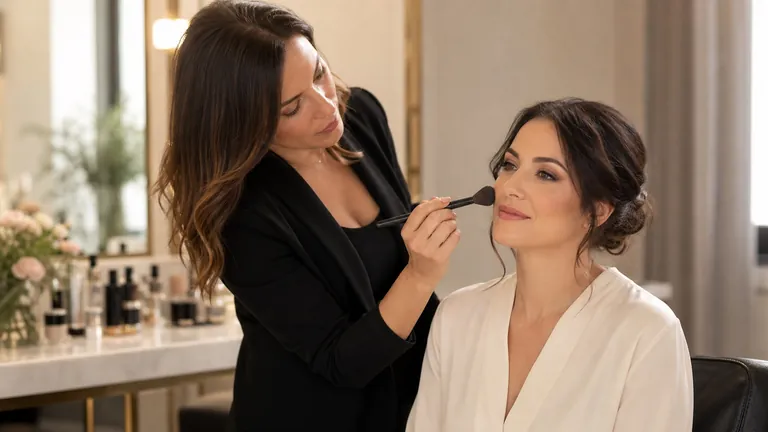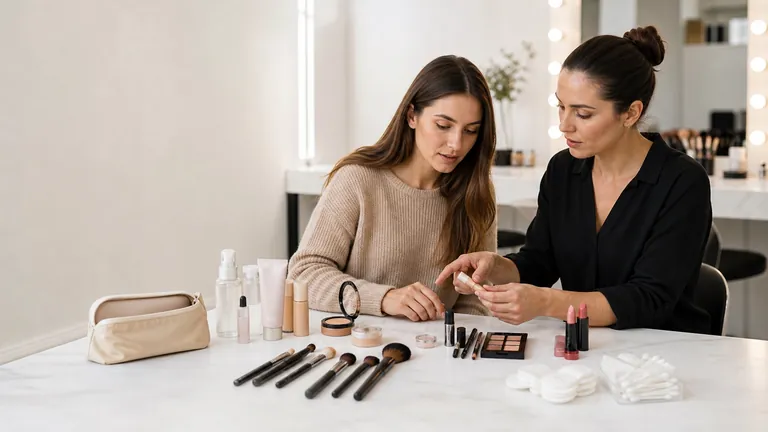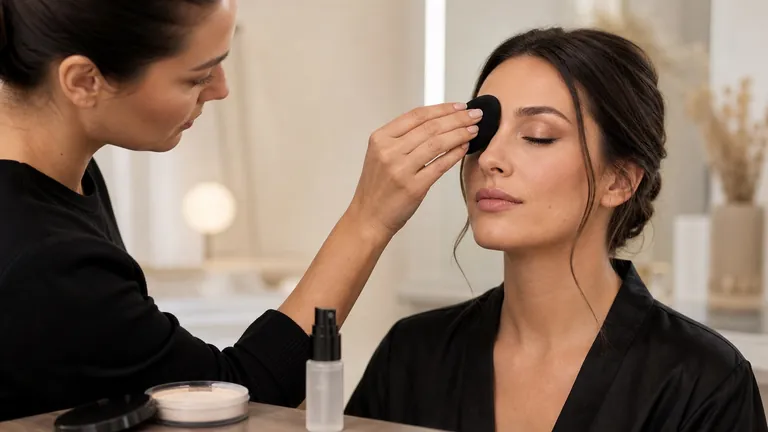
Professional bridal makeup is not simply a luminous look expected to remain unchanged for many hours. It is a designed service. The artist gathers the real conditions of the event, tests the proposed result during a trial, records a repeatable product map, coordinates with hair and photography, protects the wedding-day timeline and hands over a small touch-up plan. Quality appears in the complexion and details, but also in how reliably the service reduces surprises on a day that cannot be repeated.
Quick answer: schedule the trial early enough to revise the design, record every approved product and placement, estimate the final service with a realistic buffer and agree a personal touch-up kit. On the wedding day, reproduce the tested system, inspect it in natural light and unfiltered photographs, and do not introduce a new formula, lash or technique unless a documented contingency genuinely requires it.
This article owns the end-to-end bridal-service intent in the BeautyLearn makeup guide library. It covers the brief, makeup trial, wear test, wedding-day workflow and touch-up handover. Course choice, general career planning, face analysis, product-kit foundations and eyeshadow mechanics have their own pages. Keeping those intents separate prevents the bride’s service plan from becoming a shallow catalogue of unrelated techniques.
Why bridal makeup is a service, not an isolated look
Four stages, one approved project
The brief, trial, wedding day and touch-up handover must connect
Brief
Person, context and conditions
Trial
Look, comfort and wear verified
Event
Recipe, timing and final review
Handover
Simple kit and named person
An evening look can often be judged mainly by appearance, comfort and wear for one occasion. Bridal work adds emotion, close photography, video, clothing, hair, ceremony time, weather, tears, greetings, travel and other people being prepared in the same room. The result has to remain coherent in person, on camera and in motion throughout a schedule the artist cannot restart.
A responsible artist does not promise an immovable face for an absolute number of hours. They design compatibility, resilience and maintainability for the individual and conditions. They explain what the booked service contains, gather relevant information without diagnosing, test the system, define who will manage touch-ups after departure and record contingencies that have already been considered.
The wearer remains central. Bridal does not mean one level of coverage, one colour family, one gender expression or one idea of timeless beauty. Ask what must remain recognisable—freckles, skin texture, brow character, lip shape, cultural styling or a familiar intensity—and what the person wants to change. Consent continues during the trial and final application.
Build the bridal brief before choosing products
Reconstruct the day before opening a foundation bottle. Ask for date, place, season, ceremony time, likely light, indoor and outdoor periods, travel, photography and video, the number of services, and the exact moment the bride must be completely ready. Gather visual references as prompts for intensity, texture and mood—not as a promise to copy another face.
Skin and comfort: usual routine, declared sensitivities, known allergies, contact lenses, previous reactions and any current reason application may need to stop.
Aesthetic brief: coverage, finish, eye definition, lashes, lip colour, features to preserve and acceptable level of transformation.
Context: clothing, neckline, veil, jewellery, hair, flowers, cultural details, event palette and photographic style.
Logistics: full address, parking, access time, stairs, workspace, electricity, useful daylight, room occupants and an on-the-day contact.
Terms: fee, deposit, travel, trial status, start and finish times, delays, cancellation, additional people and support after the artist leaves.
Translate inspiration into observable decisions: semi-matte skin with freckles visible, soft outward eye direction, a lip close to the wearer’s natural value, or enough contrast to remain legible in photographs. The corrective makeup and visagism method helps connect those choices to the whole face without treating a geometric template as the client brief.
When to schedule the bridal makeup trial
There is no correct week for every wedding. The trial should be close enough to represent current skin, hair, clothing and preferences, yet early enough to allow a second check if a major variable changes. Many artists work several weeks before the event, but travel, appointment availability, ongoing treatments, dress fittings, hair trials and the complexity of the look can change the sensible window.
Avoid scheduling immediately after an invasive skin treatment, significant sun exposure or while the application area is painful, inflamed or infected. A makeup artist does not decide whether a medical condition is safe to cover. Stop and ask the client to seek appropriate professional advice when the presentation falls outside cosmetic scope. The products and tools tested should match, or be verified equivalents of, the system intended for the wedding.
Coordinate, but do not force, the hair and clothing timeline. Seeing hair direction, neckline, jewellery and veil can improve the trial conversation. When that is impossible, use accurate photographs and samples, document assumptions and reserve a controlled final review. A changing inspiration board is not a reason to improvise an entirely new face on the day.
A professional bridal makeup trial step by step
From inspiration to a repeatable recipe
A useful trial creates decisions, photographs and instructions
Confirm the brief and boundaries
Build, move and review
Check light, camera and wear
Record the recipe and backup
Reconfirm the brief, practical conditions and non-negotiables before preparing the skin.
Observe the skin and choose proportionate preparation. More layers do not automatically create longer wear.
Build in blocks—complexion, brows, eyes, cheeks and lips—while keeping the whole face visible.
Invite specific feedback in a normal mirror: more definition, less shine, freckles visible, a softer lip or a different lash weight.
Check with eyes open, during speech and smile, from close range and conversation distance.
Inspect near a window, in expected preparation light and through consistent, unfiltered photographs.
Record the recipe: order, amounts, shades, mixtures, brush roles, lashes, fixing and touch-up products.
Give preparation and aftercare instructions, then agree how wear feedback will be reported.
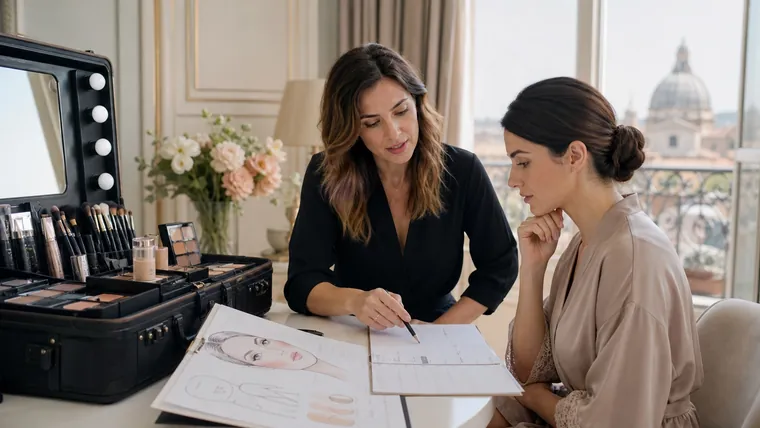
The trial should not become an unlimited series of full looks. When two directions are plausible, compare one variable: lip value, eye intensity, complexion finish or lash density. Repeatedly removing and rebuilding the whole face can irritate skin and makes it difficult to identify which change genuinely improved the result. Set the included time and number of revisions before the appointment.
Document a repeatable bridal makeup recipe
A final photograph is not enough to reproduce a service. Record the date, observed cosmetic condition, preparation, exact products and shades, mixtures, approximate amounts, tools, placement, lashes, fixing steps, lip method, timings and the client’s comments. Note what was rejected as well as what was approved so a discarded option does not return by accident.
Use version control. If clothing, tanning, hair, skin routine or preference changes, update the record rather than relying on scattered messages. Keep a clear current version and note who approved the change. Store personal information and identifiable photographs securely, use them only for the agreed purpose and obtain separate permission before using any image in a portfolio or promotion.
Also record the backup decision. If a tested lipstick is discontinued, a lash is unavailable or the preparation room has poor light, which verified alternative will be used? A contingency becomes professional only when it is compatible, packed and understandable before the event.
How long a bridal trial and wedding-day application take
Work backwards from the protected ready time
Setup, application, review and buffer are all real work
Setup
Access, light and hygiene
Apply
Reproduce the tested recipe
Review
Movement, light, photos and kit
Buffer
Delay and coordination
Trial and final service do not take the same time. A trial includes consultation, comparison, adjustments, wear instructions, photographs and notes. On the wedding day the design is decided, but setup, interruption, coordination and final control are real work. As planning examples—not universal promises—a trial may occupy roughly 90–150 minutes and a final bridal application roughly 75–120 minutes, plus setup and close-down. Technique, skin, detail, lashes, coverage, environment and the artist’s tested pace change the estimate.
Stage | Planning allowance | What changes it |
|---|---|---|
Setup and hygiene | 15–30 minutes | Access, light, room and workstation |
Bride application | 75–120 minutes, indicative | Skin, complexity, lashes and interruption |
Review and handover | 10–20 minutes | Lighting, photographs, lips and kit |
Protected buffer | 15–30 minutes | Delays, access and coordination |
Calculate backwards from ready time, not ceremony time. Include dressing, photographs, travel and instructions from the photographer or planner. Adding people without recalculating team and schedule compresses the bride’s review first. Punctuality comes from an honest timeline and protected buffer, not from rushing the most important service.
Design longevity through compatibility and wear testing
Longevity does not rise automatically with every primer, powder and spray added. Preparation should answer the skin in front of you and each formula should be allowed to settle. Apply thin amounts, concentrate coverage only where required, test compatibility between textures and set selectively. The finish must tolerate expression and light contact without feeling rigid or looking heavily powdered.
Wear-test the system, not one hero product. Skincare, SPF, base, correction, powder, spray, colour cosmetics and weather interact. Observe the trial for several hours where possible and record shine, separation, creasing, transfer, lip wear and comfort. Photographs at consistent intervals are more useful than a general message that it lasted well.
Match foundation depth and undertone in the event context, checking face, neck and exposed body areas without forcing one uniform opaque colour. The detailed foundation matching method covers depth, undertone, oxidation and surface variation. The bridal record should preserve the shade and mixture that survived the trial, not a number remembered from another season.
Eyes, tears, lashes and lips need tested contingencies
Plan eye intensity and direction with the eyes open. If the client reports easy watering or contact-lens discomfort, test products and application order in advance and avoid new formulas on the day. False lashes and adhesives must be intended for their use, comfortable, hygienically handled and proportionate to the agreed result. Stop for unexpected pain, swelling, irritation or signs outside cosmetic scope.
Use the eyeshadow blending guide to control pressure and transitions before adding bridal durability. Waterproof claims do not replace technique, and waterproof is not the same as resistant to every oil, rub, tear or environmental condition.
For lips, combine gentle preparation, controlled outline, thin colour layers and a realistic reapplication plan. Observe comfort, transfer and how the shade photographs. Do not hand over an opened shared lipstick. Decant a hygienic personal portion where suitable, supply a new individual product if included, or agree that the bride will buy the exact tested shade.
What belongs in a bridal touch-up kit
Few items, plain instructions
A touch-up kit is not a second professional case
Shine
Blot first; powder only if needed
Tears
Absorb without rubbing
Lips
Tested personal colour
Handover
Named person and simple labels
The touch-up kit should be small, labelled and usable without professional technique. It is not a miniature artist case. Include only what the bride or a nominated person can use safely: blotting papers, tissues, individually packed cotton buds, a small mirror and the tested lip product in a personal format. If necessary, add a small hygienic amount of the tested powder or concealer with precise directions.
Shine: blot first; add a light amount of powder only if needed, without repeatedly building texture.
Tears: absorb moisture near the inner corner without rubbing the complexion or pulling mascara through it.
Lips: use only the agreed personal colour and the amount practised at the trial.
Unexpected damage: contact the artist if support was booked; do not experiment with untested products.
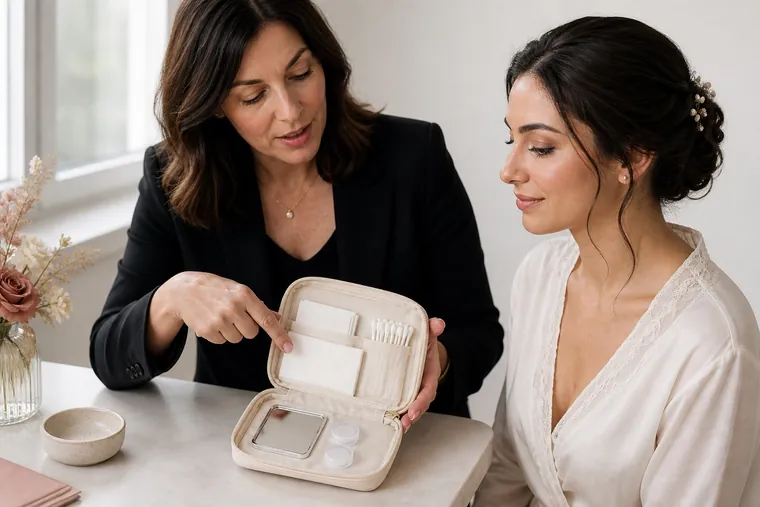
Hand the kit to the bride or a named attendant and explain every item in under two minutes. Closed containers and plain labels reduce mistakes. Record who received it and any storage limit. Products left in a hot vehicle, shared across people or transferred into an unclean container do not become safe because the event is important.
Organise the professional kit around the approved recipe
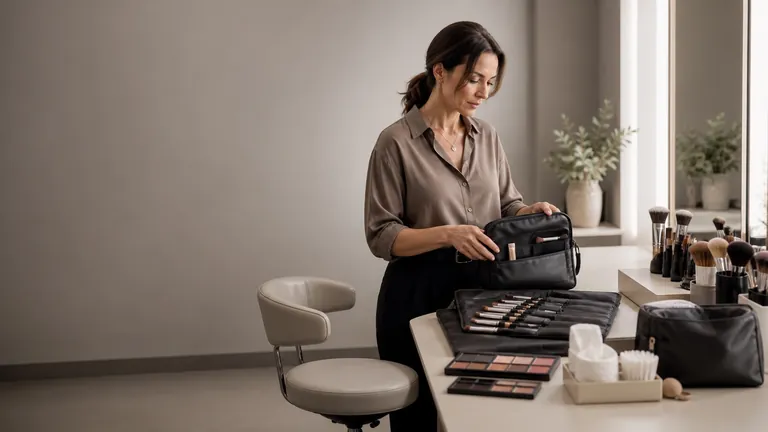
Pack the trial recipe, verified alternatives, clean tools, single-use applicators, palettes and spatulas that can be properly cleaned, workstation protection and sensible backup stock. Organise by function and service order rather than brand. Keep clean, in-use, used and waste zones distinct, and never return a contaminated applicator to the original product.
Bring backups for genuine critical points: matched base alternatives, agreed lashes, compatible adhesive, core tools and lighting if the room is uncertain. An enormous case does not replace the record; it increases search time and makes an untested substitution more likely. The beginner makeup kit guide supplies the function-first foundation before a working bridal kit expands.
Protect the wedding-day timeline and workspace
Share a written run sheet with the bride and relevant coordinator. Define arrival, setup, start and finish of each service, final review, dressing and departure. When working with a hairstylist or other artists, identify dependencies: some stages can overlap, while complexion, liner and lash application need a stable head position, a clear face and enough uninterrupted space.
Protect the final section of the schedule. Photographs, phone calls, deliveries and visitors are not invisible time. Agree who can remain in the room and who answers questions. If the artist is running late, communicate early and simplify only within the tested brief. Do not silently remove hygiene, skin preparation or final inspection to recover time.
Each additional guest is a complete service with consultation, hygienic setup, application and review. Adding someone between stages of the bride is not a small favour. Confirm the number, service level, start time, fee and staffing before the day. Use a separate schedule so the bride’s protected completion time remains visible.
Check makeup in real light, photographs and movement
Inspect the completed makeup close up and from conversation distance, front, profile and three-quarter view. Ask the bride to speak, smile and lower the eyes. Check near neutral daylight where available, then in the actual room and with a consistent unfiltered camera. Flash can reveal reflectance or colour differences, but a phone screen is not an absolute colour reference.
Use photography to answer specific questions: does face depth connect with neck and chest, do brows share visual weight, is eye direction balanced, has powder accumulated, and does the lip edge remain credible from the side? Do not chase every change produced by automatic exposure, portrait processing or display brightness. The live face and destination conditions remain primary.
Hygiene, stop criteria and professional limits
Wash hands, prepare a cleanable surface, dispense products hygienically, use clean brushes and single-use applicators where appropriate, and separate every used item immediately. Do not double-dip mascara, lip or cream-product applicators. Follow label directions, storage conditions and local requirements. A quick spray does not automatically make a visibly used tool ready for another person.
FDA guidance advises clean instruments, no sharing of eye cosmetics, avoiding application when the eye or surrounding skin is inflamed, and stopping use when irritation occurs. Its broader safe-use guidance also recommends reading labels and reporting unexpected reactions. These principles support—not replace—the infection-control rules and professional scope applying in the country and setting where the service is delivered.
Do not diagnose acne, dermatitis, infection, allergy or another condition. Do not guarantee that a patch test proves future tolerance. If symptoms are unexpected, significant or worsening, stop cosmetic application and recommend appropriate medical assessment. A wedding deadline does not expand a makeup artist’s clinical scope.
Common bridal makeup service mistakes
Skipping the trial or treating it as a demonstration without approved records and consistent photographs.
Testing one product but changing the rest of the skincare, base, lash or fixing system on the wedding day.
Promising an absolute wear time without considering skin, climate, contact, tears and maintenance.
Accepting extra people without changing schedule, staffing and fee.
Correcting continuously from a phone display while ignoring the live face and actual light.
Handing over a shared, untested or overcomplicated touch-up kit.
Final bridal makeup artist checklist
Brief, scope, terms, address, payment status and contacts confirmed.
Current trial record contains photographs, products, amounts, placements and client notes.
Run sheet is shared with protected ready time and buffer.
Clean kit, verified alternatives, light and hygiene supplies packed.
Personal touch-up kit prepared and a responsible person named.
Final checks planned in real light, movement and consistent photographs.
Frequently asked questions about professional bridal makeup
Is a bridal makeup trial really necessary?
It is strongly recommended because it tests aesthetics, comfort, products, wear, photography and communication. It removes avoidable new decisions from the wedding day.
How far before the wedding should the trial be?
Early enough for revisions and close enough to represent current skin, hair and preferences. Several weeks is common, but there is no universal interval.
How long does a bridal makeup trial take?
A planning range of roughly 90–150 minutes may cover consultation, application, comparison, photographs and records. Complexity and the agreed format can change it.
How long does wedding-day bridal makeup take?
Roughly 75–120 minutes can be a starting estimate, plus setup and review. Use the tested look, artist pace, skin and logistics to build the actual schedule.
Should bridal makeup last 24 hours?
That is not a responsible universal promise. Wear depends on skin, formulas, weather, contact and maintenance. Design realistic resilience and a touch-up plan.
What should the bride bring to the trial?
Useful references, clothing and hair information, any agreed personal product, contact-lens details and relevant declared sensitivities or previous reactions.
Can the bride try two complete looks?
Yes if included, but comparing one or two variables is often more informative and less irritating than repeatedly removing a full face. Clarify time and fee.
What goes in the bridal touch-up kit?
Usually blotting paper, tissues, packed cotton buds, a mirror and personal lip colour; sometimes tiny hygienic portions of tested complexion products with directions.
Who should carry the touch-up kit?
A named attendant or planner who has received the explanation and can access it. Keep it away from extreme heat and contamination.
Can a shared professional lipstick be used for touch-ups?
Do not hand over an opened shared item. Use a hygienic personal portion, a new product or an exact tested lipstick owned by the bride.
How can bridal makeup avoid looking heavy in photographs?
Prepare proportionately, use thin controlled layers and inspect in several lights. Photographs check reflectance and balance but do not replace live observation.
Is a bridal makeup course enough to start charging clients?
A course can provide structure and demonstrations. Work also needs sound foundations, varied practice, wear tests, hygiene, a portfolio, reliable terms and compliance with local rules.
What if the bride changes the look after the trial?
Define whether the change needs a new trial, update the current record and confirm time or fee implications. Do not bury the final decision in informal message threads.
Continue the professional makeup pathway
Develop the service through the English-market bridal makeup course and connect whole-face planning with the corrective makeup course. Before choosing training, use the makeup course checklist. Career, portfolio and local requirements are mapped separately in how to become a makeup artist. Browse all online makeup courses and verify the current English-market teacher, curriculum and availability on each page.
Sources and editorial scope
Cosmetic-use boundaries draw on FDA eye cosmetic safety guidance and its current Using Cosmetics Safely guidance. Local hygiene, data-protection, contracting, insurance and occupational rules must be checked where the artist works.
Editorial review: 5 September 2026. Planning times are examples, not guarantees. This page is educational, contains no competitor or brand links and does not diagnose skin or eye conditions. It deliberately owns the bridal trial-to-handover workflow; course selection, career, pricing, contracts, photography and individual makeup techniques remain distinct intents.
Protect every practical exercise and client service with the makeup hygiene workflow. It separates clean and used zones, prevents double-dipping and gives brushes, sponges, products and surfaces a traceable route between people.
When your skills need to become clear evidence, use the makeup artist portfolio guide to select relevant projects, photograph them faithfully, state roles and manage consent, credits and image rights.
When skills and evidence are ready for the market, continue with how to find makeup clients: local discovery, authentic reviews, relevant partnerships, clear quotations, privacy-aware follow-up and booking measurement.
After matching colour, compare foundation texture, coverage and finish: this guide separates formula performance from undertone and tests thin layers, tools, setting, texture and wear.
Before selecting foundation and concealer, check how to prep skin before makeup: this guide orders cleansing, moisturiser, daytime sunscreen, targeted primer and settling without overloading the surface.
To adapt eyeshadow, liner and lash weight to visible anatomy, continue with the corrective eye makeup guide: it maps hooded, small, close-set and prominent eyes while keeping blending mechanics and whole-face visagism distinct.
For a focused process on lip proportion, liner, layering and wear, continue with the corrective lip makeup guide. It keeps temporary lip makeup distinct from permanent and medical procedures.
To turn colour, blending and correction into a complete look for changed light, continue with the professional evening-makeup guide. It organises focal hierarchy, reflection, flash checks and realistic long wear.
To adapt these product and placement decisions to moving lines and mature texture, continue with the makeup for mature skin guide. It uses zone-based preparation, thin layers and selective setting without age-based rules.
To test how skincare, sunscreen, primer and foundation behave as one film, continue with the primer and foundation compatibility guide. It replaces water-versus-silicone myths with measured layering and A/B wear tests.
For a controlled comparison of depth, warmth and cheek colour, continue with the contour, bronzer and blush guide. It covers colour, film order, anatomical placement and troubleshooting without one-size-fits-all maps.
Trial the lash and adhesive before the event
Do not introduce an unfamiliar adhesive on the wedding day. Measure, test and document the temporary false eyelashes.
Test setting and touch-ups before the wedding
Plan powder, spray and wear diagnosis through the long-wear makeup guide.
Include a camera test in the bridal trial
Review flashback, powder, texture and touch-up using the photographic makeup guide.
Add a reaction protocol to bridal planning
A trial and client record support preparation but never remove the need for a cosmetic reaction stop protocol.
Turn the bridal trial into a defined booking stage
The technical trial needs clear scope, changes and cancellation terms; use the makeup artist contract guide for Italy.
Record the bridal trial without building a medical history
Preferences, products, reactions and private reference images need proportionate documentation; use the makeup client-record workflow.
Build the event module from the confirmed trial
Protect the event-day result using the modular professional makeup kit workflow.
Measure the complete bridal assignment
Translate trial, travel and event time through the bridal earnings and capacity model.
Make the bridal trial visible in the offer
Translate the protocol into clear inclusions using the bridal price-list framework.
Explain what the bridal package includes
Help clients compare trial, travel and event-day scope with the professional makeup cost guide.
Coordinate the groom’s service with the wedding schedule
Use the groom makeup workflow.
Test mascara wear before the wedding day
Add formula and removal decisions from the professional mascara guide.
Add weather to the bridal trial brief
Use the outdoor heat-and-humidity checklist.
Plan sun protection within an outdoor bridal service
Use the sunscreen-and-makeup protocol.
Trial bridal makeup on reactive skin
Add the rosacea makeup stop criteria.
Test iris colour in ceremony lighting
Add the eye-colour palette protocol.
Document bridal trial decisions and revisions
Continue with the client face-chart protocol.