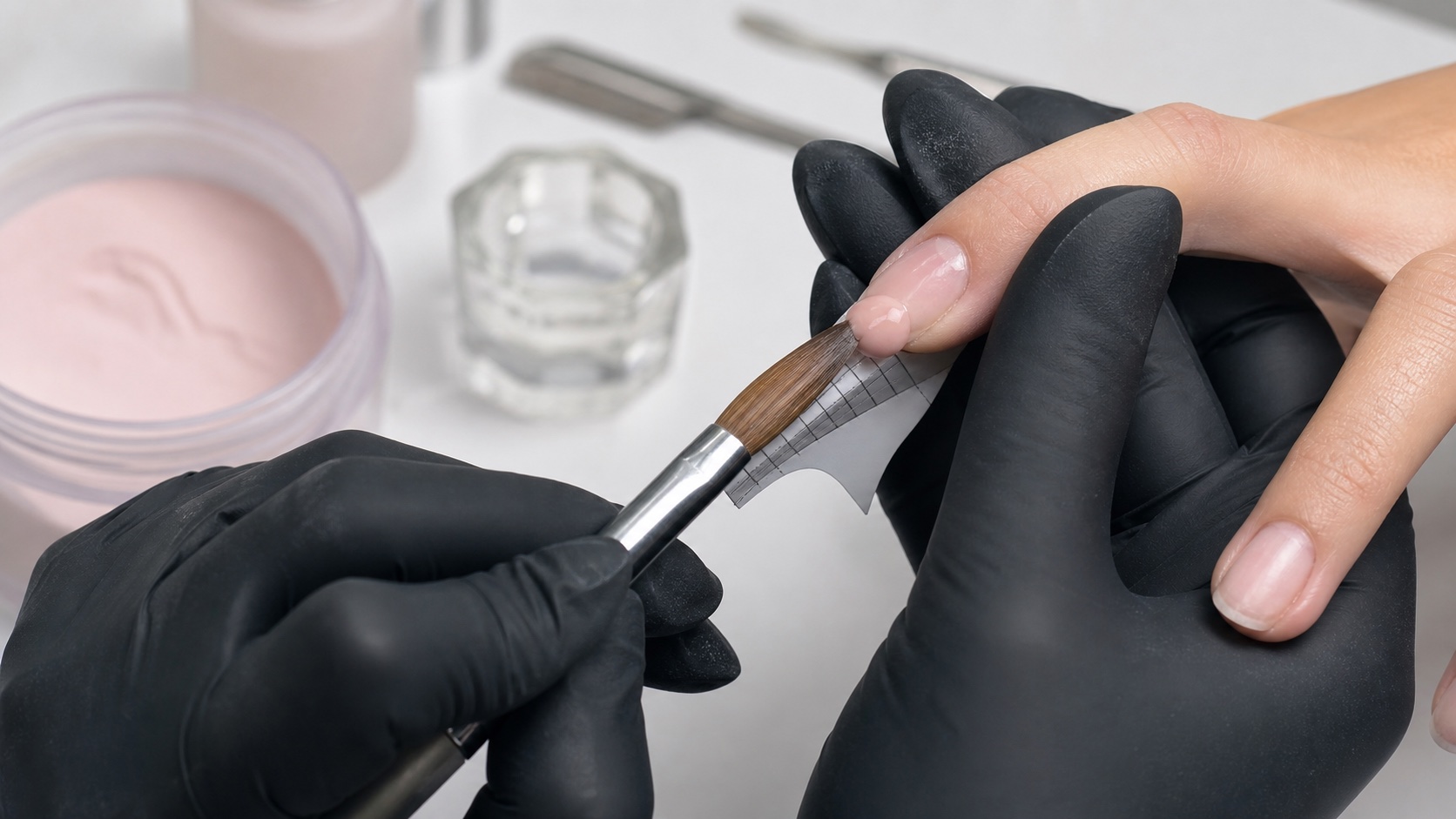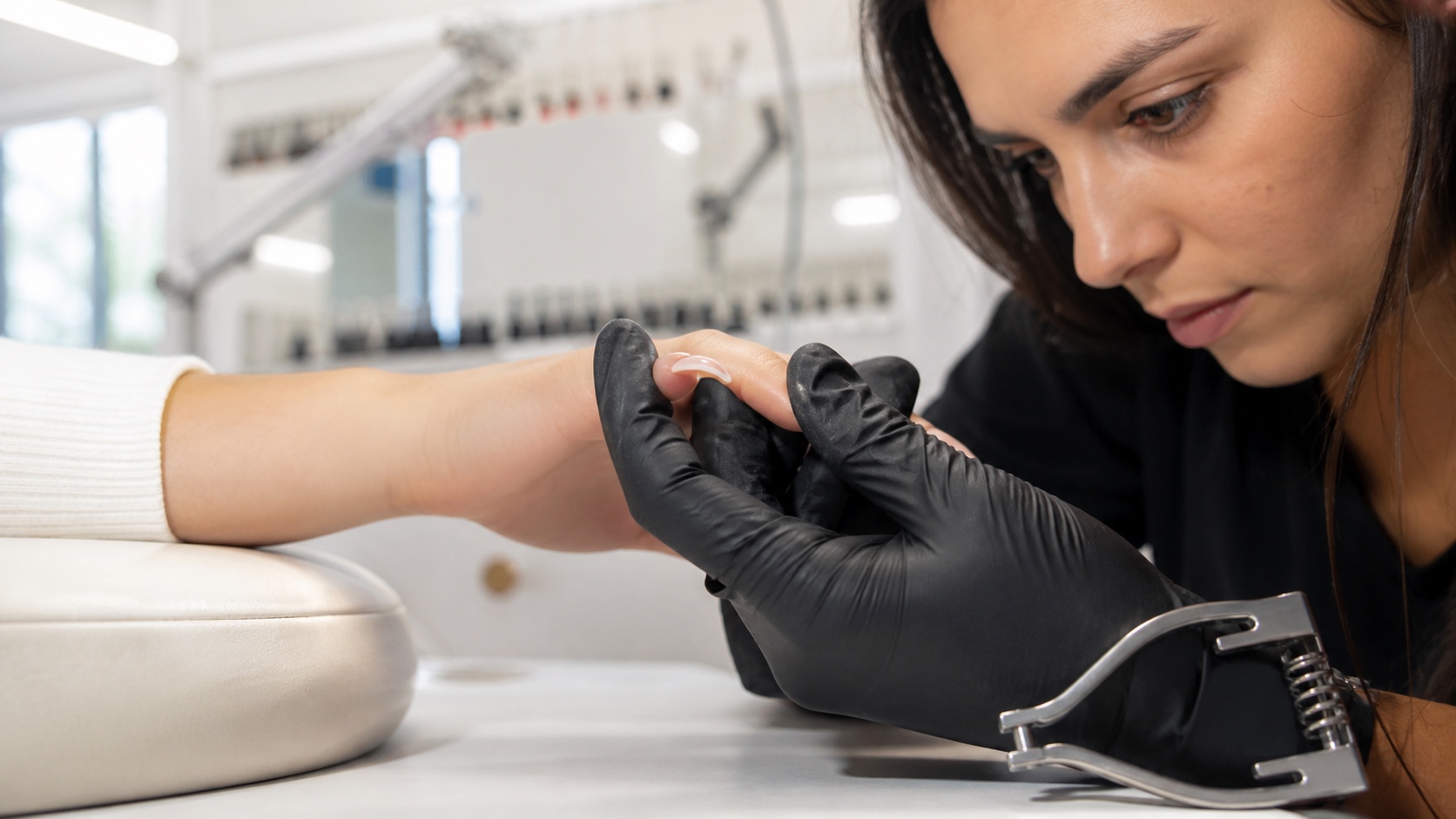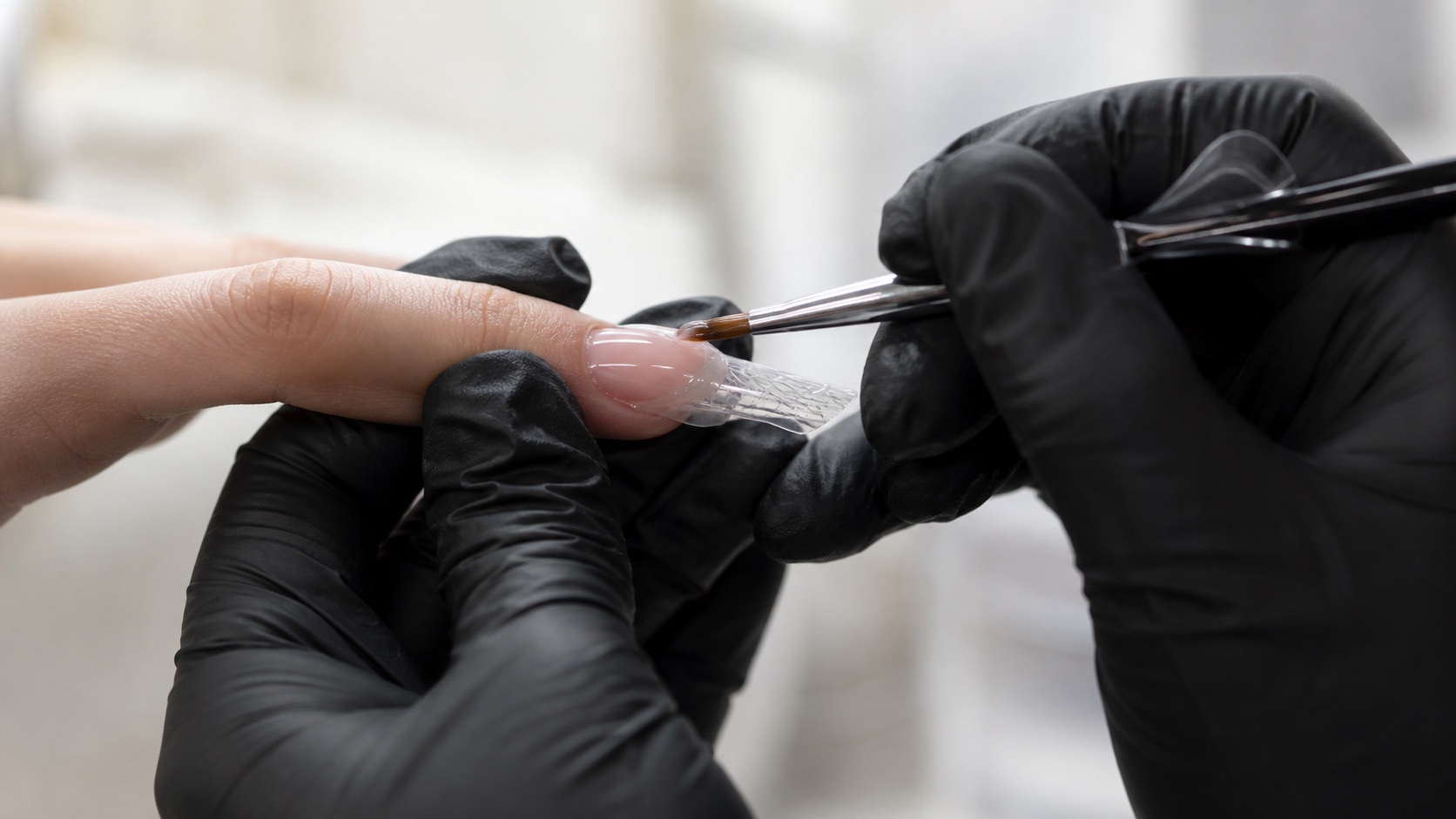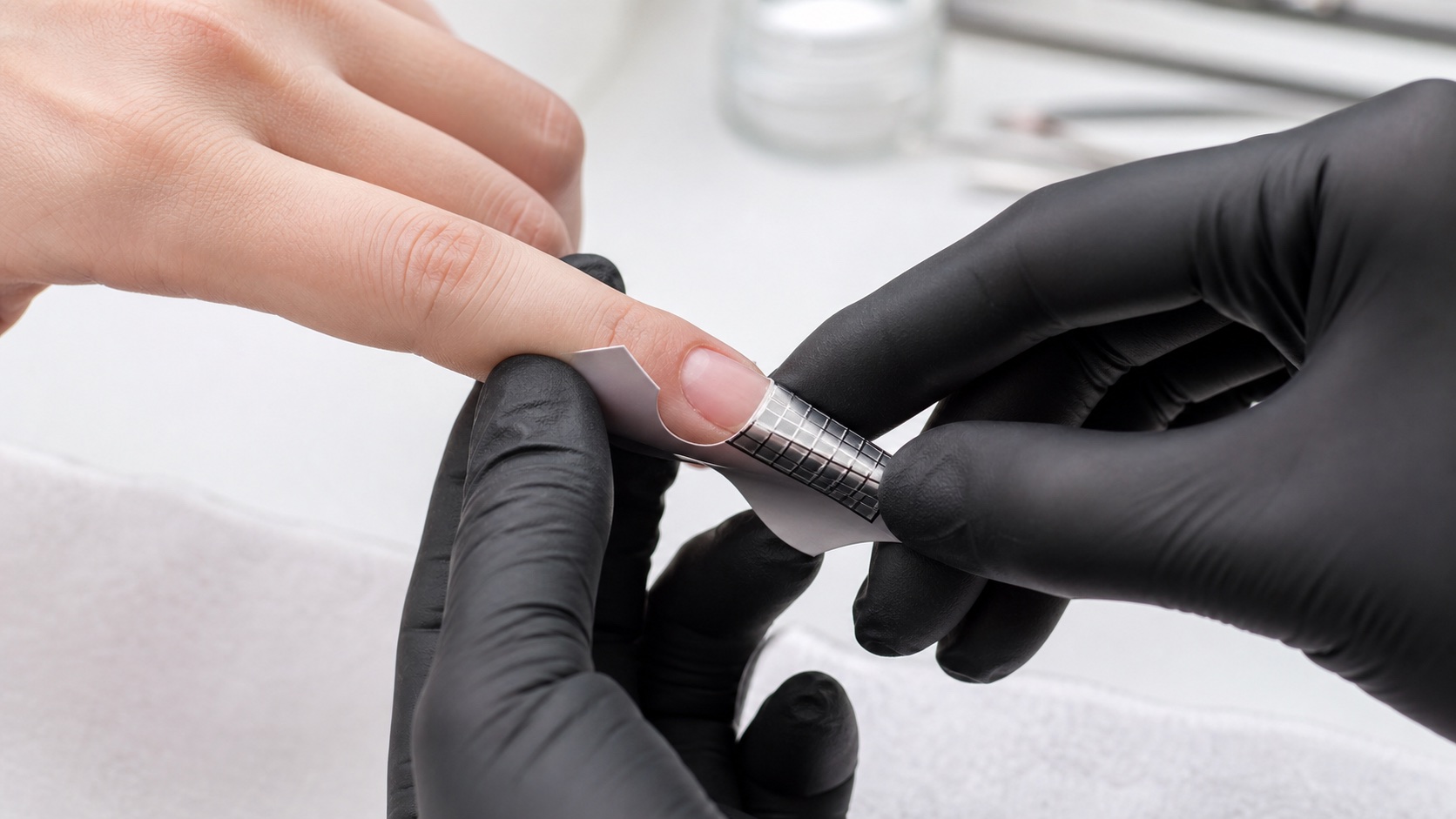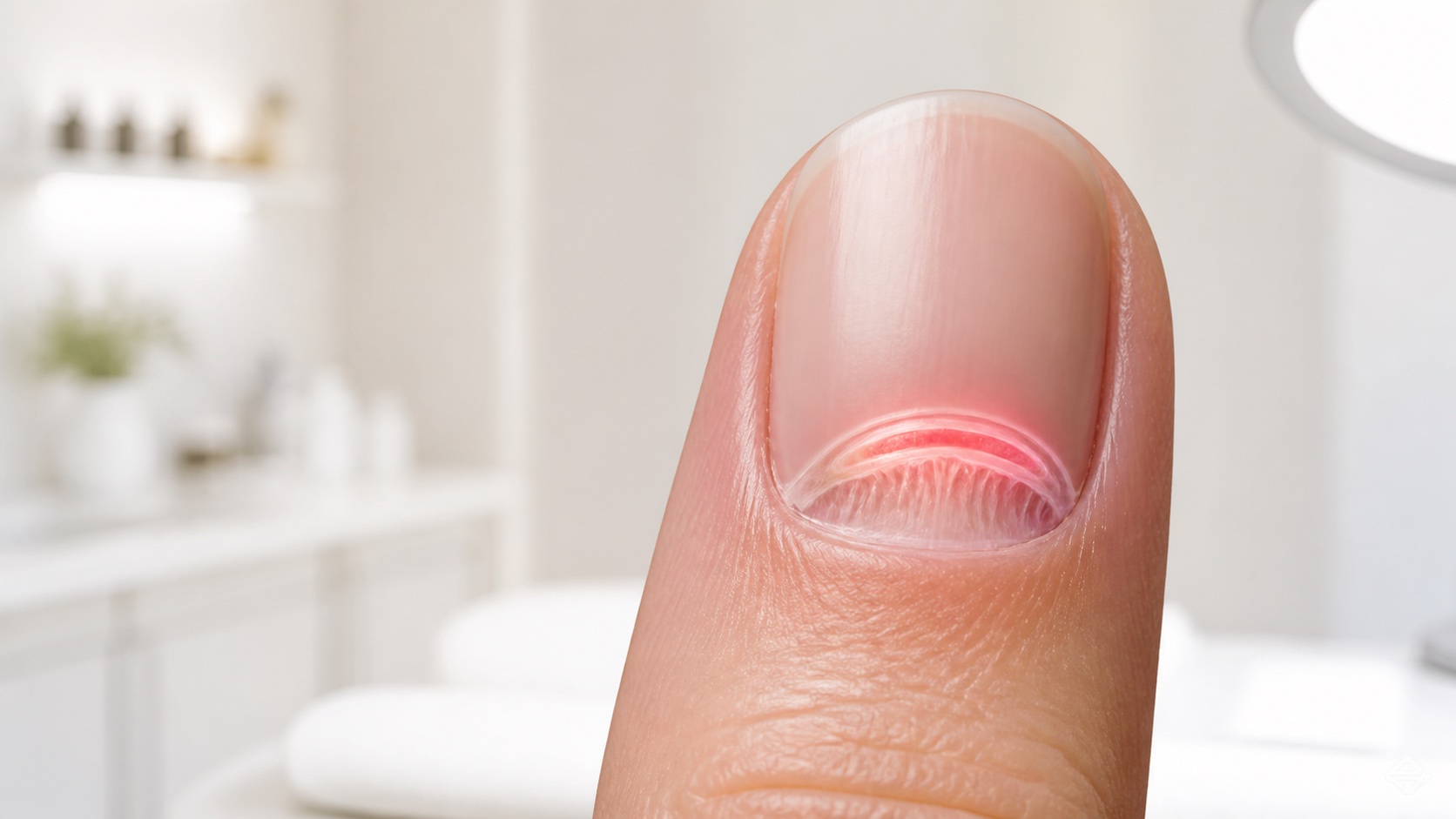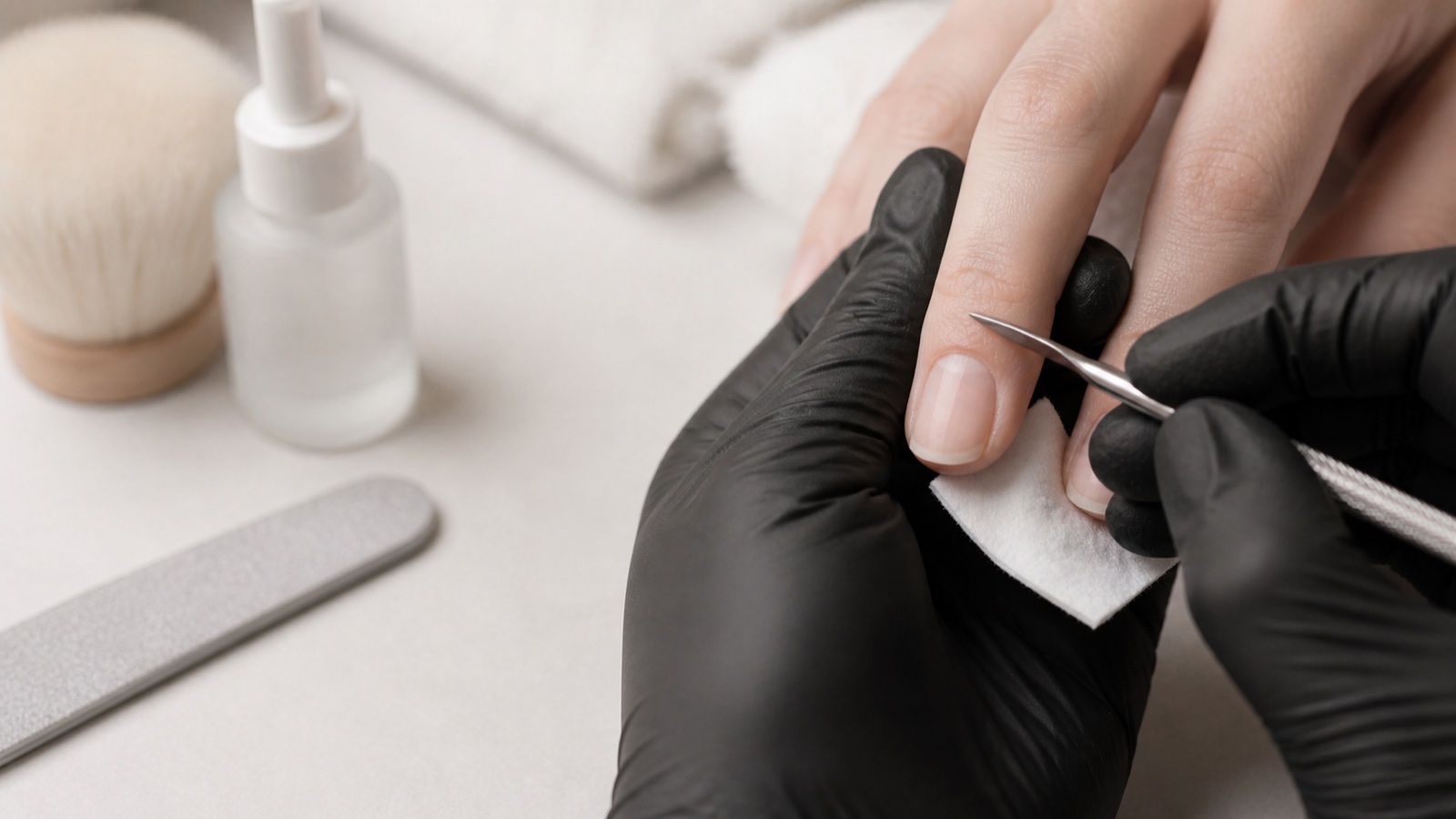
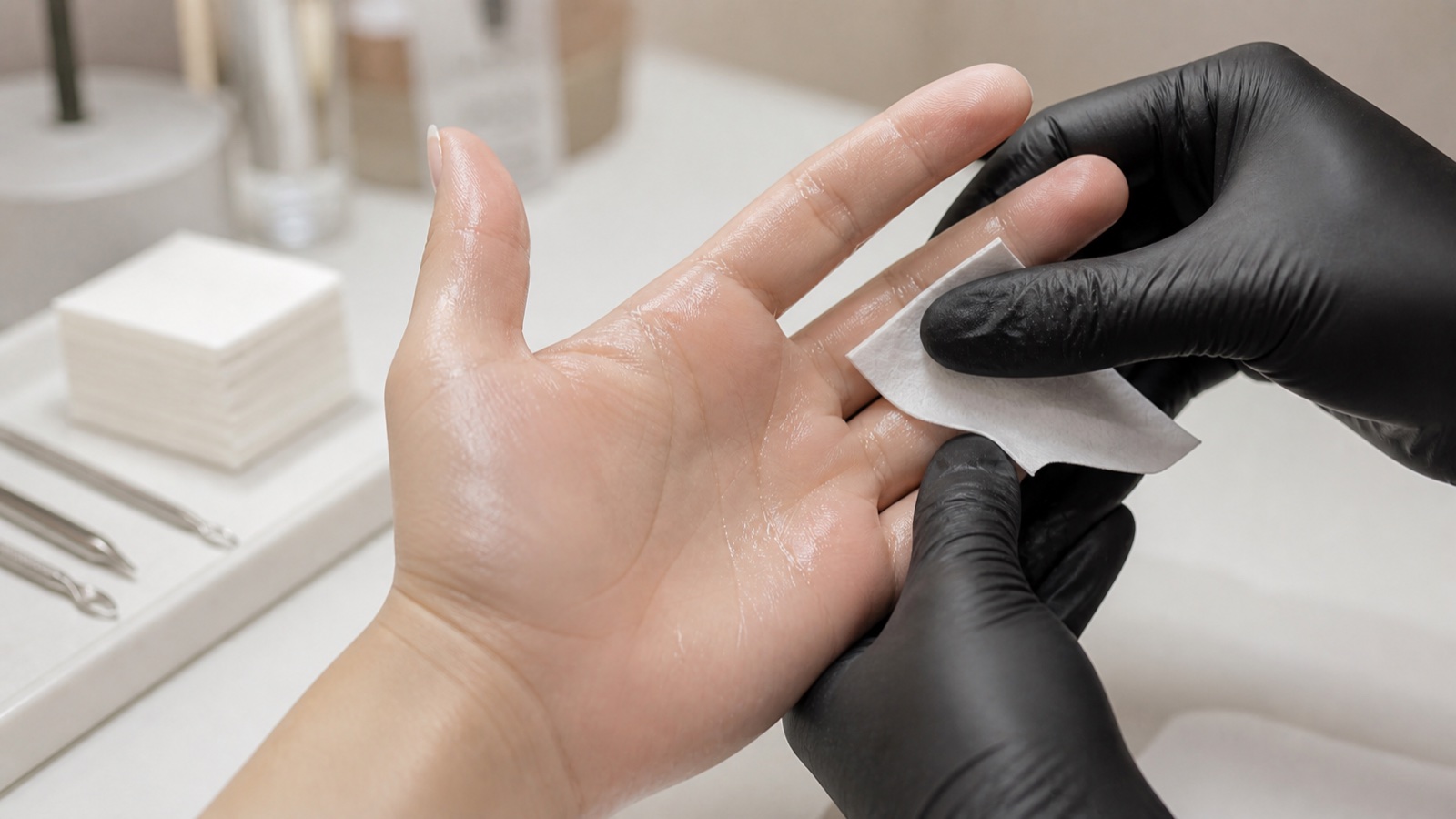
Palmar hyperhidrosis is excessive sweating of the hands beyond what the body needs for temperature control. During a nail service, continuing moisture can make it harder to keep the nail plate dry after preparation and to prevent accidental recontamination. It does not prove that an enhancement will lift. Wear depends on the complete process: assessment, preparation, compatible products, controlled skin clearance, cure or setting, structure and maintenance.
Protocol at a glance: inspect the skin and nails first; postpone for broken, significantly macerated or inflamed skin and unexplained nail changes; keep the room comfortable; prepare only a few nails at a time; dry with fresh lint-free material; use dehydrator, primer or bonder only when the documented system requires it; record the process and arrange an earlier check.
This is a cosmetic-service workflow, not a guide to diagnosing or treating hyperhidrosis. A nail technician should not prescribe antiperspirants, medication, iontophoresis or injections. New, sudden, generalised or night-time sweating—and sweating accompanied by other symptoms—belongs in a healthcare conversation. Treatment choices remain with an appropriately qualified clinician.
This page owns the operational intent ‘how to do nails on sweaty hands’. The nail-lifting guide owns failure diagnosis by location and timing; the nail-primer guide owns adhesion-product differences. Use them together without treating sweat as the automatic cause of every service problem.
What palmar hyperhidrosis is—and what the salon can observe
Describe the service condition; do not diagnose the cause
Moisture control belongs to the desk, treatment to healthcare
Observe
Moisture, skin and nail condition
Adapt
Shorter preparation batches
Record
Products, timing and wear
Refer
New symptoms or damaged tissue
Sweating is normal physiology. Hyperhidrosis describes sweating that is excessive for the body’s cooling needs and can interfere with tasks such as holding tools, writing or using a device. Palms are a commonly affected site. Clinicians distinguish primary hyperhidrosis from sweating secondary to a medicine or another condition; a cosmetic consultation cannot make that distinction.
Sweat is not evidence that the nail is ‘oily’. For the service, the practical issue is recurrent moisture after preparation, contact from wet fingertips and difficulty maintaining a repeatable surface. Anxiety, warmth and a long appointment may also change what happens at the desk. Record the observation without promising a cause.
Observation | Salon response | Professional boundary |
|---|---|---|
Habitual localised palm sweating; intact skin | Use a shorter controlled sequence and document wear | Do not diagnose the type or cause |
Moisture returns immediately | Work in two- or three-nail batches; reconsider complexity | Do not compensate with aggressive filing or extra acid |
Macerated, broken, painful or inflamed skin | Postpone the cosmetic service | Recommend appropriate medical assessment |
Sudden, night-time or generalised sweating | Pause assumptions and advise a healthcare conversation | Do not suggest a treatment or medication change |
Why very sweaty hands need a shorter, controlled workflow
The plate can become visibly moist between preparation and adhesion.
A client may touch prepared nails while drying or closing the hands.
Periungual skin can soften, making forceful preparation especially inappropriate.
Heat, stress and an uncomfortable desk may increase visible sweating.
Preparing all ten nails creates more time for moisture and touch contamination to return.
Treat hyperhidrosis as one variable, not a complete adhesion diagnosis. If lifting occurs, also inspect first location, time to failure, natural-nail preparation, product on skin, lamp compatibility, liquid-to-powder ratio, architecture, impact and home maintenance. Change one controlled variable rather than escalating every step.
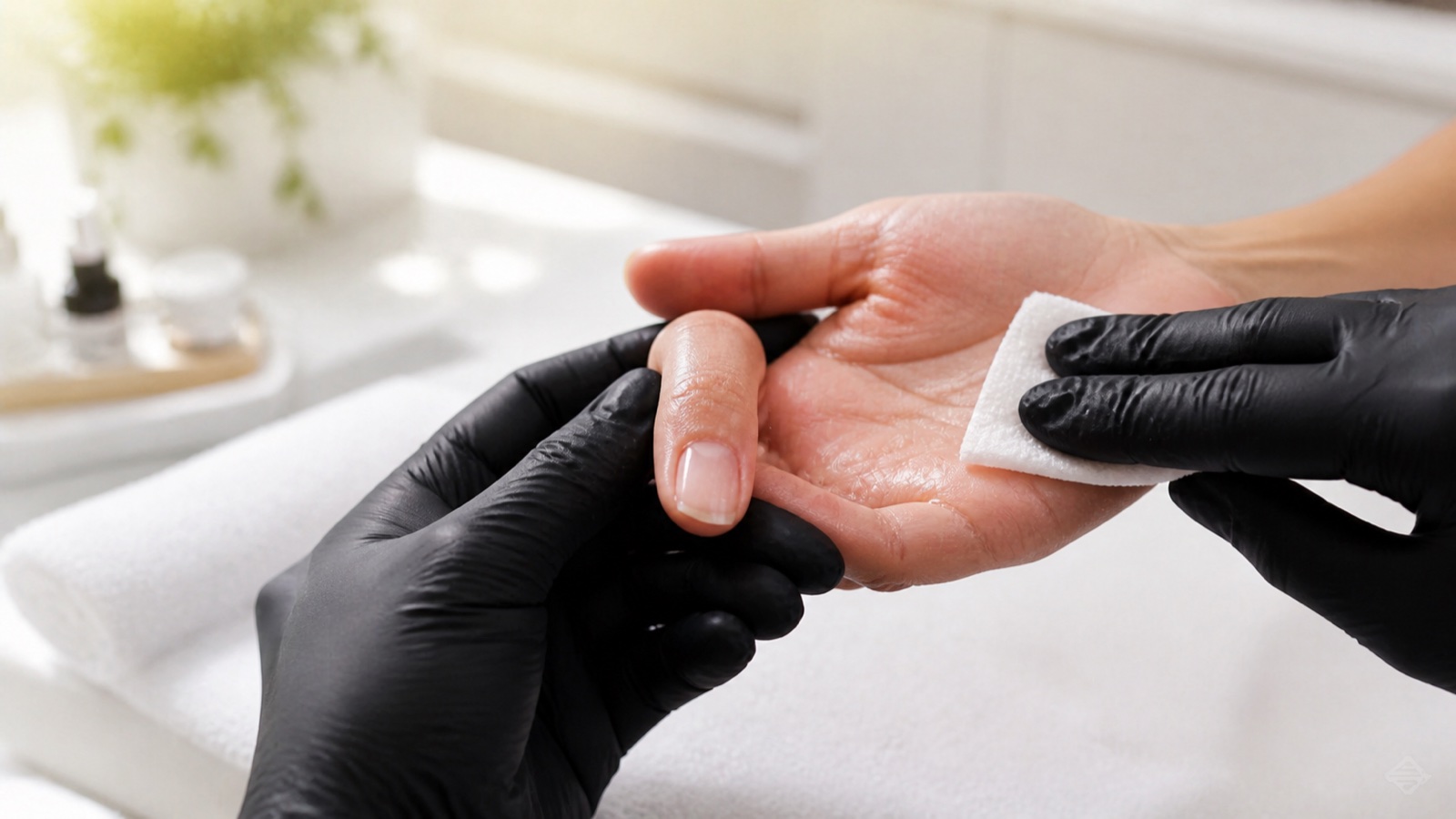
Pre-service decision: proceed, simplify or postpone
Decide before opening adhesion products
Skin integrity is the first gate
Proceed
Habitual moisture, intact base
Simplify
Small batches and practical length
Postpone
Pain, damage, discharge or change
Proceed with a documented adaptation
Sweating is familiar and localised, skin is intact and there is no significant redness, swelling, pain, discharge, unusual odour or unexplained nail change. Explain that the workflow may use smaller batches and that an early review is useful. Do not guarantee a universal wear period.
Simplify and reassess during the appointment
Skin is very moist or softened but intact, or moisture returns as soon as it is dried. Choose a short practical shape, reduce the service complexity and prepare only a few nails at a time. If a controllable surface cannot be maintained without repeated abrasion or chemical steps, stop and reschedule rather than forcing the service.
Postpone and refer appropriately
Do not enhance over cracked, bleeding, significantly macerated or inflamed skin, nor over a nail with pain, discharge, major separation or a suspicious new change in colour, thickness or shape. New sudden sweating, sweating during sleep or other systemic symptoms warrant medical advice. Document observable facts; do not name a disease.
Use the cautious framework in yellow nails and warning signs when colour or texture has changed. Opaque product should never be used to conceal evidence that needs assessment.
Prepare the client and workstation without treating the condition
Ask useful questions within scope
Is the hand sweating habitual or new?
Is it limited to the palms, and does it occur during sleep?
Is a clinician already involved, and are there instructions relevant to skin integrity?
Where and when did previous enhancements lift?
Are sensitivity, wounds, dermatitis or unexplained nail changes present today?
Never ask a client to stop prescribed treatment. Do not prescribe a medical antiperspirant or improvise timing around iontophoresis or medication. Their healthcare professional handles treatment; the manufacturer documentation governs salon cosmetics.
Set up for minimal delay and contact
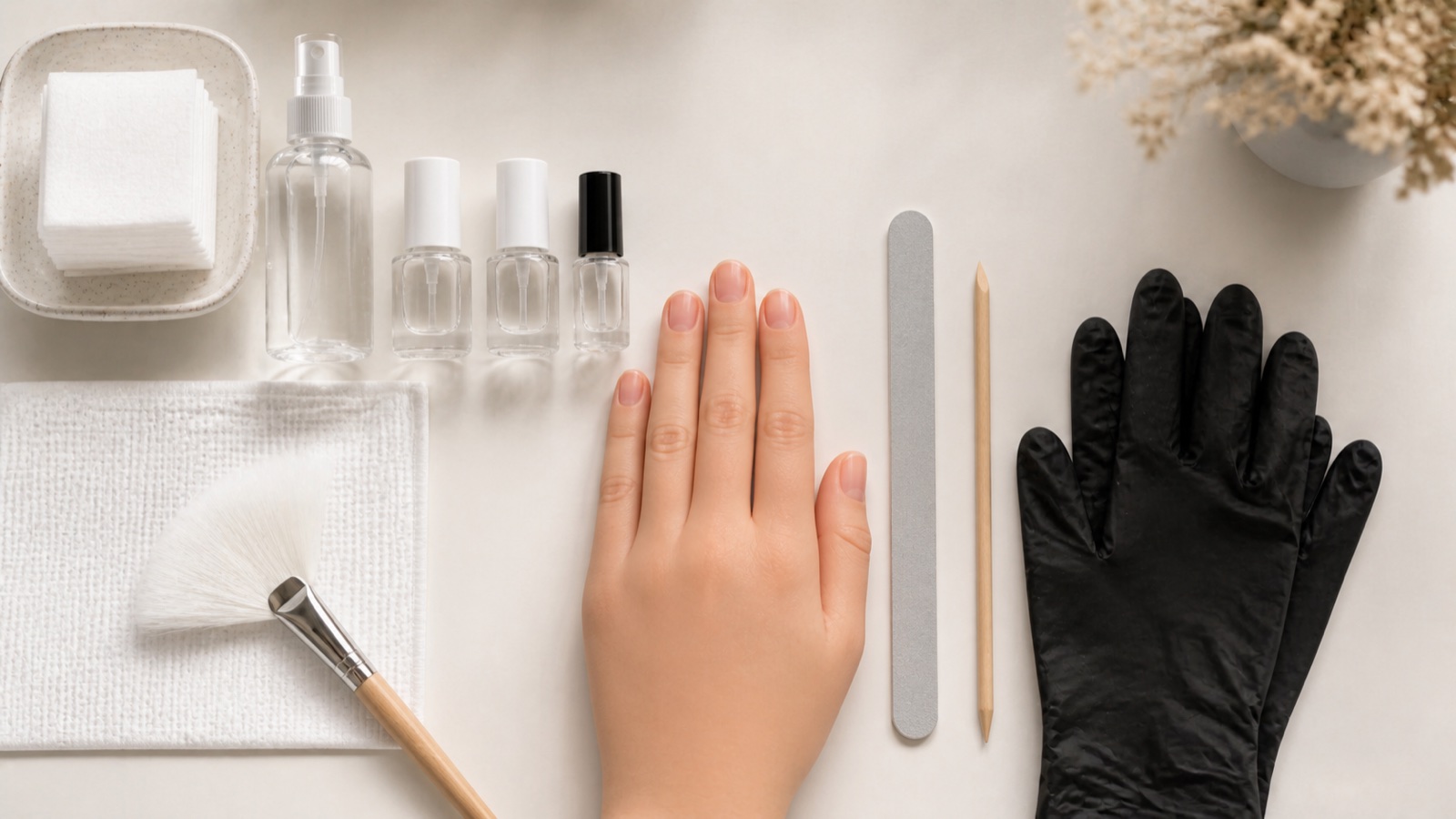
Keep the room comfortable and use appropriate local ventilation. Prepare fresh lint-free wipes, clean tools and the complete compatible system before starting. Keep containers closed when not in use. Rest the waiting hand open on a clean support rather than folded into the palm. Avoid phone, hair or face contact after preparation.
Give neutral pre-appointment instructions
Ask the client to arrive with clean hands and without unagreed cream, oil or cosmetic treatment around the nails. This does not treat sweating; it removes an additional residue variable. Do not recommend harsh remedies or antiperspirant on the nail plate immediately before the appointment.
Seven-stage nail protocol for sweaty hands
Shorten the gap between preparation and adhesion
Control one small batch at a time
Dry, inspect and divide batches
Prepare minimally and recheck
Apply compatibly and verify
Record and review early
1. Hygiene, drying and a fresh inspection
Follow the salon hygiene protocol. Dry hands, fingertip pads and lateral spaces thoroughly with clean material, then inspect before any product. Never cut or abrade living tissue to create a drier-looking margin. Damaged skin increases exposure to irritants and sensitising uncured product.
2. Work on one hand or a few nails at a time
Do not complete all preparation and leave ten nails exposed. Prepare, verify and move into the next documented step on one hand—or two or three nails when moisture returns quickly. Keep the sequence compatible with the system instead of inventing a new order.
3. Prepare the plate without thinning it
Remove only non-adherent tissue and surface shine to the degree specified. Extra filing does not make a sweating nail permanently dry or more adhesive. It can reduce the plate and increase discomfort. Prevent touching after the surface is prepared.
4. Recheck moisture immediately before adhesion
If visible moisture returns, blot with a new lint-free wipe and allow the surface to dry without blowing on it. Apply nail prep, dehydrator, primer or bonder only when the system names it, in the stated quantity and order. Keep it off skin and do not stack repeated coats by guesswork.
5. Apply one compatible product system
Maintain controlled margin clearance and system-supported thickness. For gel and acrygel, use the named or compatible lamp, hand position and full exposure schedule. For acrylic, control the supported liquid-to-powder ratio and room ventilation. Sweat is not a reason to mix brands without documented compatibility.
6. Check skin clearance and structure before continuing
Inspect every margin before the next hand. If sweating increases, pause, dry surrounding skin without touching prepared or coated nails and continue only when the desk is controllable. Uncured product on skin must be removed according to the system before cure; never cure over it to save time.
7. Record the protocol and book an early review
Record product names and batches, adhesion steps, lamp and times or acrylic ratio, length, shape and observations. With consent, capture consistent photos. An earlier review shows whether lifting is localised or repeatable and lets you test one change rather than adding more filing and primer together.
Gel, acrygel or acrylic: is one better for hyperhidrosis?
There is no universal evidence that one enhancement material is best for every person with hyperhidrosis. Choose a complete system you can control and document. Changing material at every appointment makes cause-and-effect harder to read.
System | Operational characteristic | Control point |
|---|---|---|
Gel | Gradual placement before light cure | Exact compatible lamp, thickness and time |
Acrygel | Stable paste while shaping | Compatible shaping liquid, base and cure |
Acrylic | Timed liquid-and-powder setting | Ratio, bead control and ventilation |
Compare working behaviour in gel vs acrylic vs acrygel, then use the gel nail extensions guide for the full gel workflow. Material choice cannot replace assessment, dry surface control or a sound structure.
Mistakes that make the service less controlled
More aggression is not more adhesion
Do not stack uncontrolled variables
Avoid
Deep filing to chase dryness
Avoid
Repeated acid or skin contact
Prefer
Fresh materials and small batches
Prefer
One documented change
Filing more deeply in an attempt to dry the plate.
Applying acid primer repeatedly or allowing it onto skin.
Preparing all ten nails while moisture returns.
Blowing on the surface, reusing a wipe or touching to test dryness.
Combining unrelated product lines without declared compatibility.
Covering damaged skin or an altered nail to avoid losing the appointment.
Guaranteeing wear before observing the individual service.
More primer does not mean more adhesion. On sweaty hands, a short clean sequence is more useful than aggressive preparation.
Maintenance and troubleshooting after the service
Choose a manageable length and arrange an initial review earlier than the salon’s usual maintenance interval. Ask the client not to pick, glue or seal lifted material at home. Water entering a lifted pocket is not solved by coating over it; unstable material needs professional assessment and controlled removal.
If a problem repeats, compare photos and records. Note finger, first location, day noticed, activities, impact and whether surrounding skin changed. Use the lifting framework, correct one plausible variable and avoid turning each refill into increasingly invasive preparation.
Hyperhidrosis treatment remains healthcare
Clinical-strength antiperspirants, iontophoresis, oral medicine, botulinum toxin and other treatments described by dermatology sources have indications, contraindications and possible adverse effects. They are outside a nail service. The technician may explain the operational difficulty and suggest medical advice, but must not select, dose, schedule or change treatment.
For controlled technique and troubleshooting, compare BeautyLearn’s current online nail courses by curriculum and level and continue through the English nail guide library. English courses and teachers remain independent market records.
Frequently asked questions
Does hyperhidrosis always cause nail lifting?
No. It can complicate moisture control, but lifting can also involve preparation, skin contact, product compatibility, cure, structure, impact or maintenance.
Do sweaty hands always need acid primer?
No. Use acid, acid-free primer, bonder or no primer only as the complete system directs. Keep every adhesion product off skin.
Can I apply dehydrator twice?
Only if the manufacturer permits it. Repetition cannot replace small-batch preparation or a decision that the service is not controllable today.
Should the client use antiperspirant before the appointment?
A nail technician should not prescribe it. The client should follow healthcare advice and tell the technician about products relevant to skin integrity.
Is gel, acrygel or acrylic better?
There is no universal winner. Choose one internally compatible system you understand and document rather than switching products by guesswork.
Should the waiting hand wear a glove?
An occlusive glove may retain heat and moisture. An open relaxed hand on a clean support is usually the more controlled waiting position.
Does sweat mean there is nail fungus?
No. Sweating cannot diagnose infection. New colour, odour, thickening, pain or separation should not be covered and may need clinical assessment.
When should the appointment be stopped?
Stop for broken or significantly macerated skin, pain, swelling, discharge, inflammation, unexplained nail change or an uncontrollable surface.
How long do extensions last on sweaty hands?
There is no reliable universal duration. Individual sweating, skin and nail condition, system, structure, length, activities and maintenance all contribute.
Can I file more to improve adhesion?
No. Extra abrasion does not stop sweating and may thin the plate. Follow the minimum preparation documented for the system.
Can I mix primer and base from different brands?
Only when compatibility is explicitly documented. An improvised combination makes both safety and failure analysis less reliable.
Why arrange an earlier first check?
It provides real wear evidence before a small issue grows and helps identify location, timing and one useful protocol adjustment.
Sources and editorial review
Editorial review: 5 September 2026. This guide addresses salon organisation only and does not replace diagnosis or hyperhidrosis treatment.
This page owns nail-service adaptation for sweaty hands. Medical hyperhidrosis care, lifting diagnosis, primer selection and complete product workflows remain separate intents.