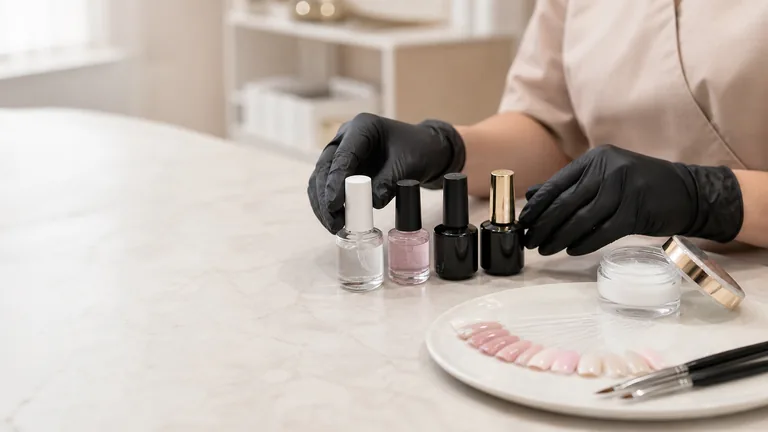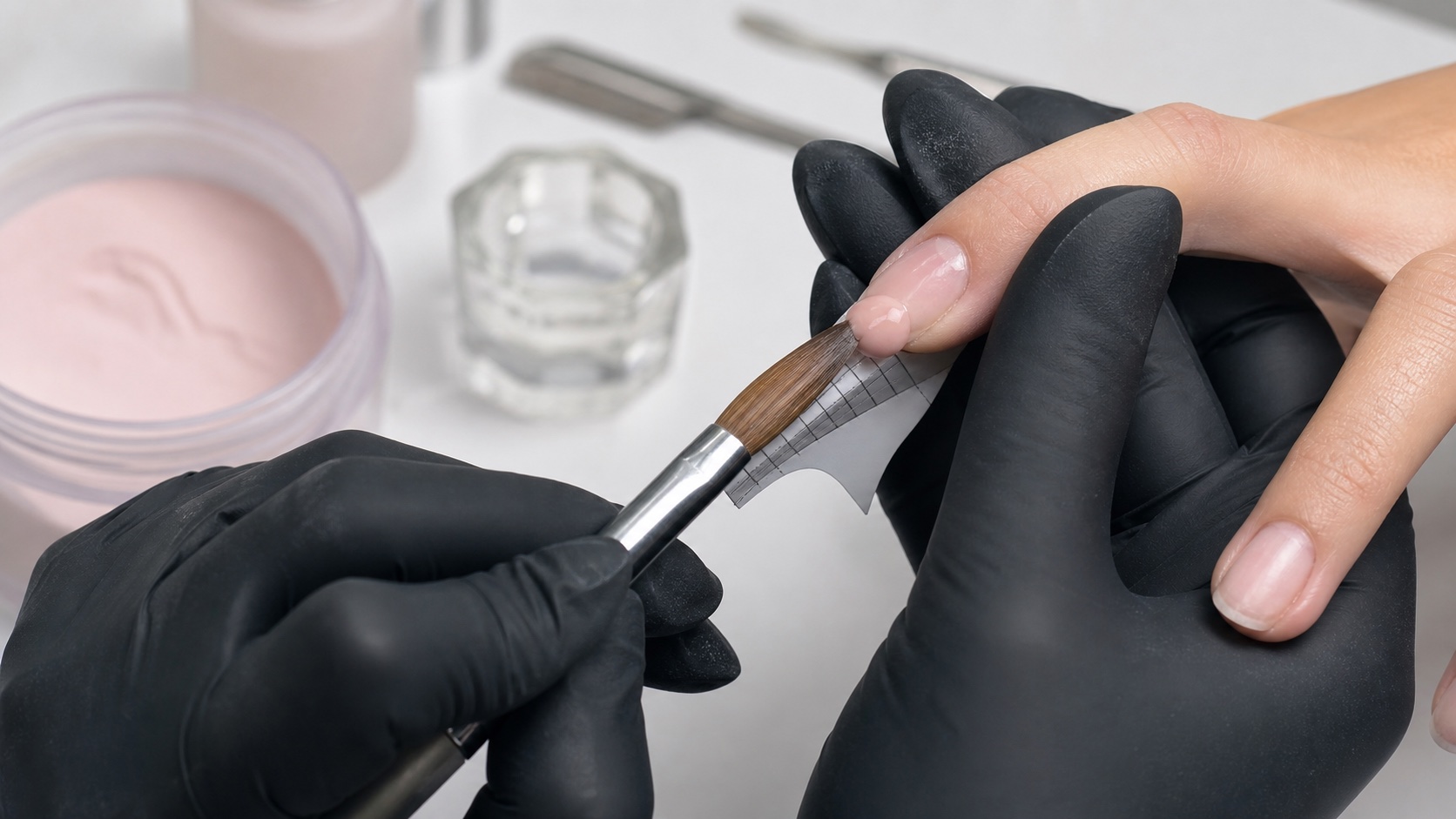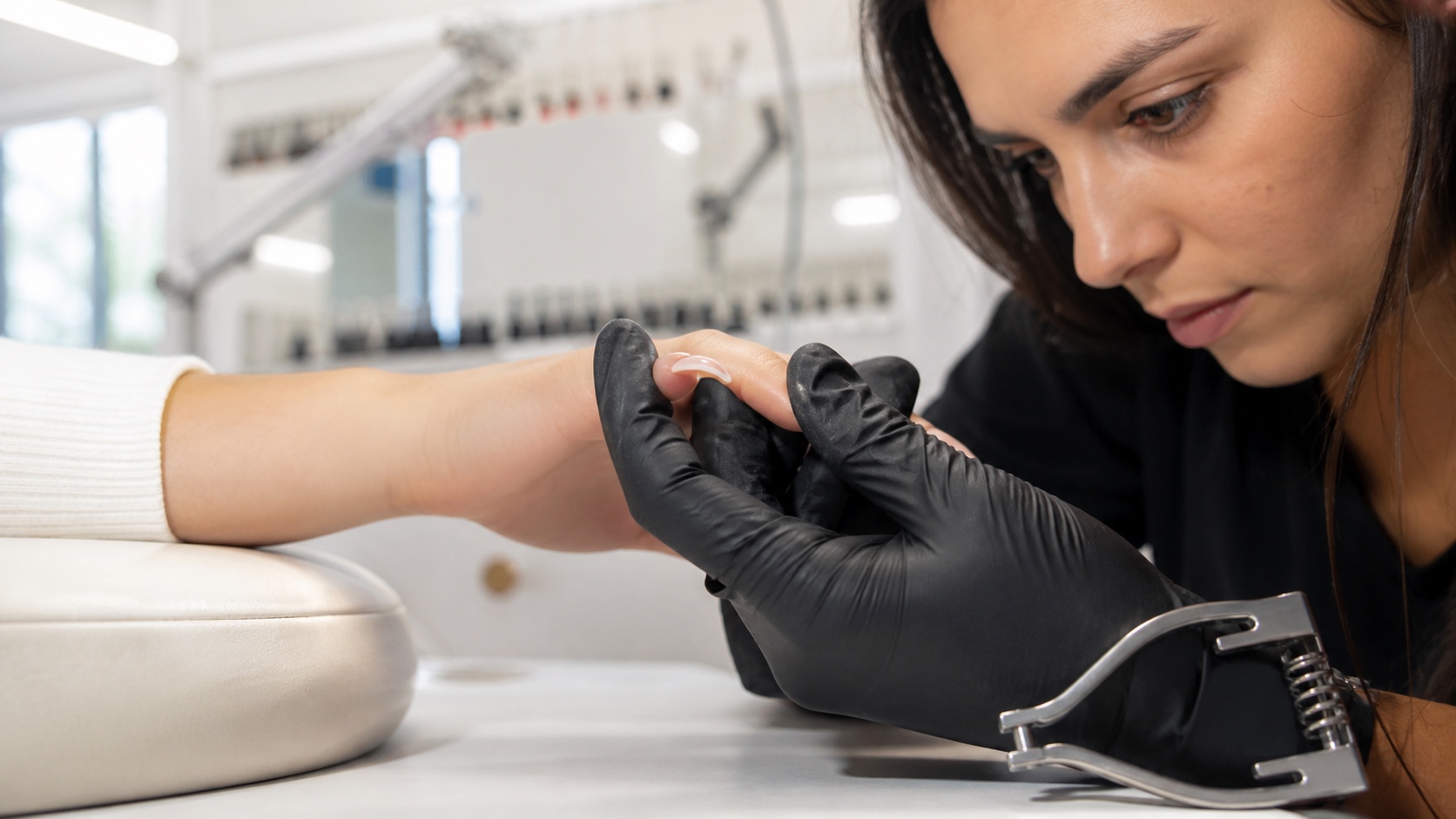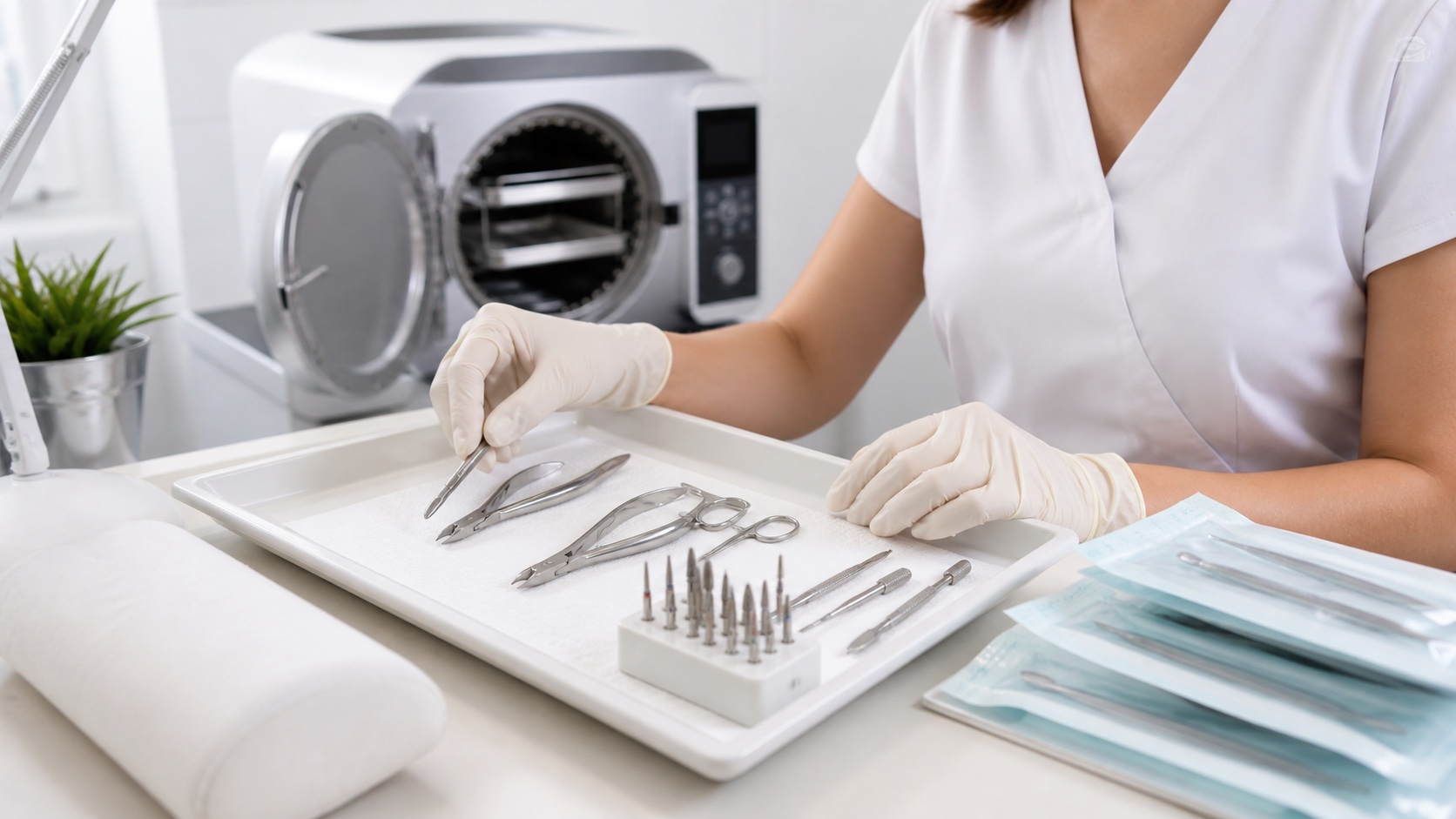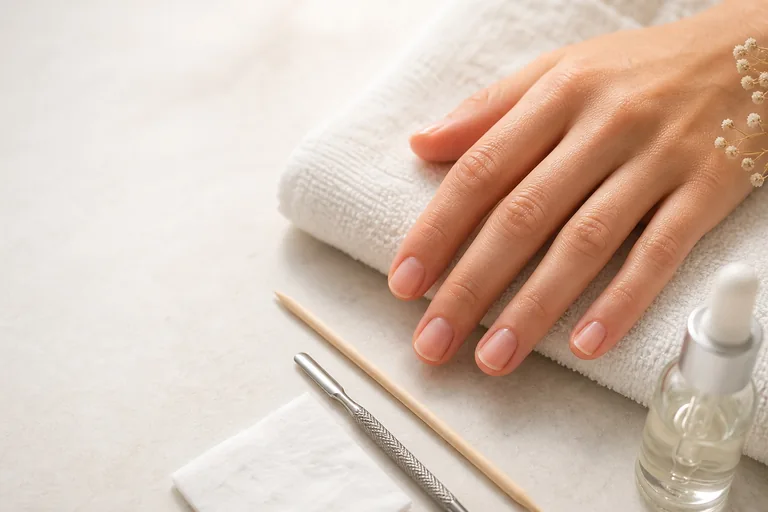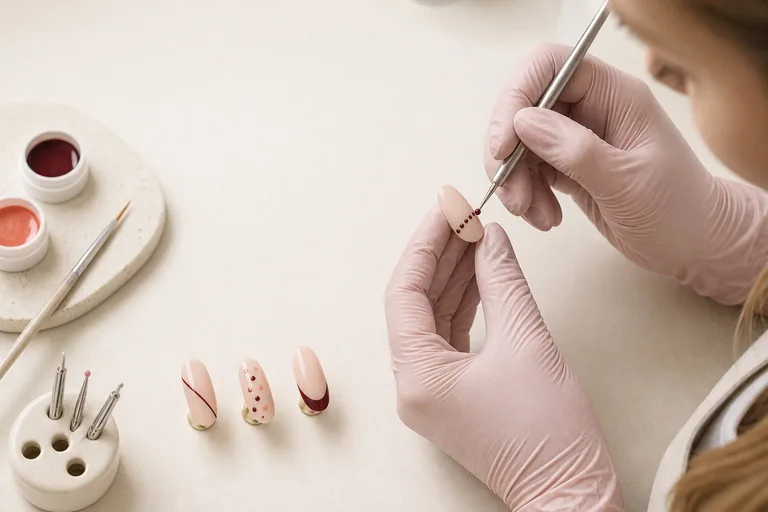
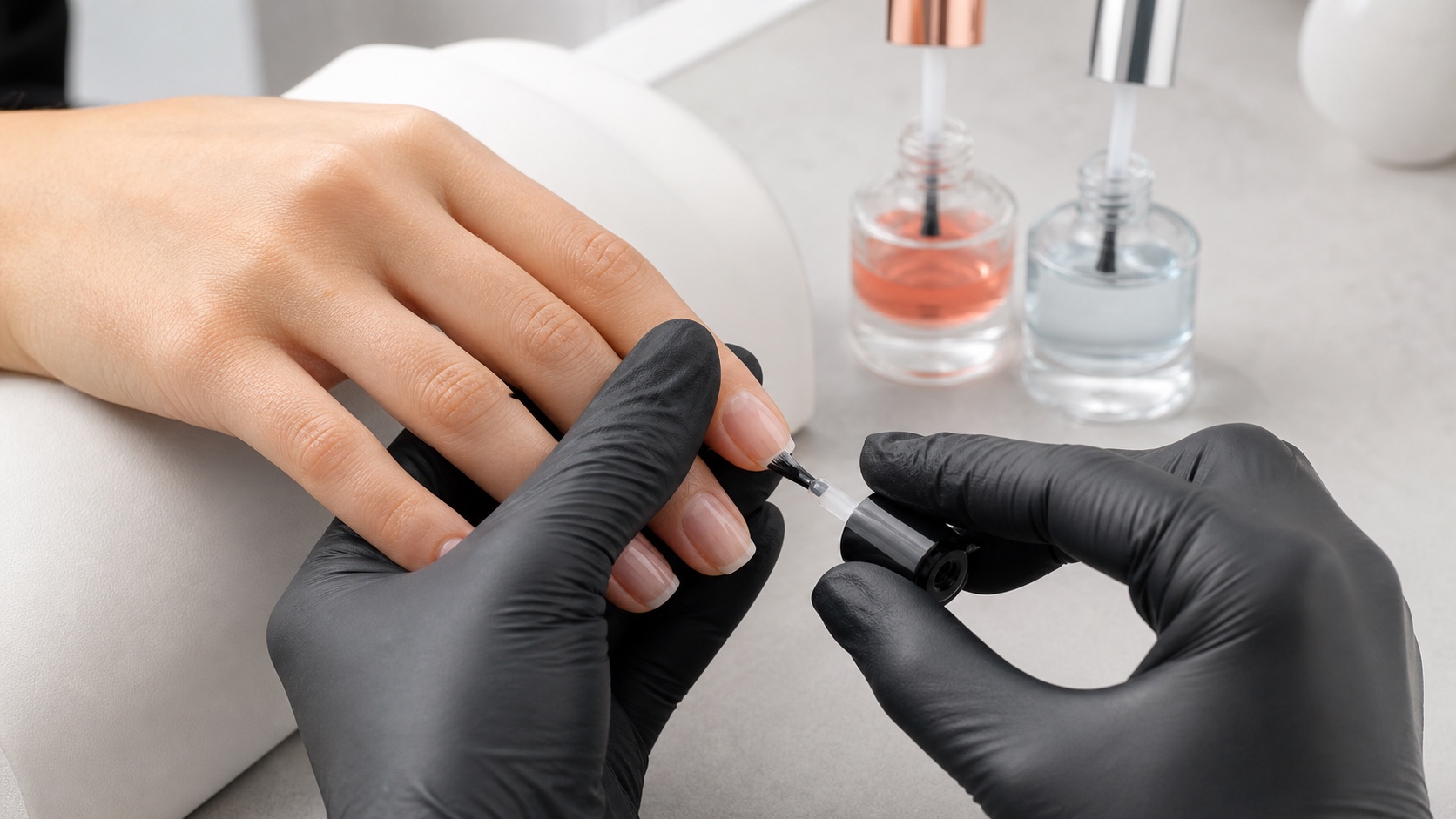
Nail primer is an adhesion product used before some gel, acrylic, acrygel and soak-off systems. It is not a universal step and it cannot rescue poor preparation, incompatible products, uncured material or an unbalanced structure. Dehydrator, acid primer, acid-free primer, bonder and base coat describe different functions; treating them as interchangeable is one of the quickest ways to make a protocol less predictable.
Quick answer: a dehydrator temporarily reduces surface moisture and oil. An acid primer commonly uses methacrylic acid and demands exceptional control. An acid-free primer creates an adhesive bridge without free methacrylic acid, but may still contain sensitising acrylates or methacrylates. “Bonder” is an ambiguous commercial name: it may air-dry, remain tacky or require curing. The manufacturer’s complete system instructions always outrank a generic routine.
This professional education guide explains product roles and decision-making, not a brand-independent recipe. Always read the current label, instructions and safety data sheet for the exact product and market. Stop if product reaches the skin or if burning, itching, swelling, blistering or another reaction develops. For the wider technique, use the professional hand-filing guide, the nail-lifting diagnostic guide and the BeautyLearn English nail guide library.
What nail primer can—and cannot—do
Adhesion is a chain, not a bottle
Primer changes one interface only
Assess nail and skin
Prepare without thinning
Use the compatible chemistry
Cure and build correctly
Adhesion depends on a chain of conditions: a suitable natural nail, controlled removal of non-living tissue from the plate, a clean and dust-free surface, compatible chemistry, precise placement, correct curing where required and a structure that carries the intended length. Primer changes only the chemical interface between the natural nail and the next product. It cannot replace any missing link in that chain.
When lifting repeats, identify its location and timing before changing preparation. Cuticle-area lifting may point to invisible tissue, flooding or leverage; free-edge chipping can involve length, shape or wear; widespread separation can involve contamination, product compatibility or curing. Adding two coats of a stronger primer without identifying the failure introduces another variable and may make safe removal harder.
Problem | Can primer solve it? | Better check |
|---|---|---|
Oil or temporary surface moisture | A specified prep product may help | Hand washing, drying and system instructions |
Product touching skin | No | Application control and margins |
Incorrect lamp or incomplete cure | No | Declared lamp, cure time and layer thickness |
Excess length or weak architecture | No | Shape, apex, stress area and client use |
Dehydrator, primer, bonder and base are different
Identify the function before the name
Four labels can describe very different steps
Dehydrator
Temporarily reduces surface oil and moisture
Acid primer
Methacrylic-acid adhesion step
Acid-free
Adhesive bridge; still avoid skin
Bonder/base
Meaning depends on the complete system
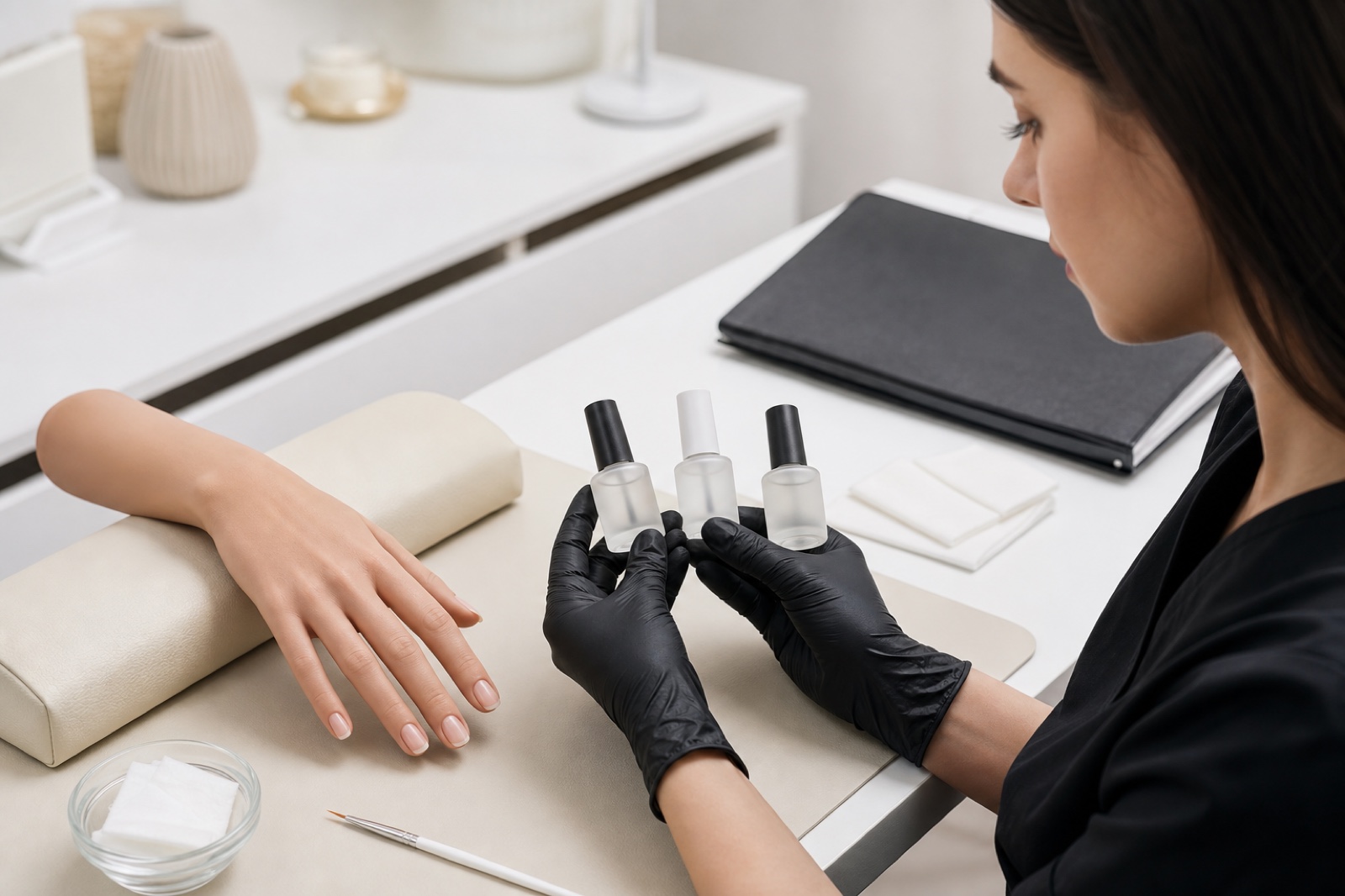
Dehydrator or nail prep
A dehydrator is usually a volatile solvent-based preparation liquid. It temporarily removes surface moisture and oils, then evaporates. It does not necessarily leave an adhesive film and does not automatically replace primer. Names such as nail prep, pH prep and pH balancer are used inconsistently, so the name on the bottle cannot establish the function.
If instructions call for a dehydrator, apply it after the specified mechanical preparation and cleaning step. Let it evaporate exactly as directed and do not touch the plate afterwards. A nail that quickly regains a slight sheen is not evidence that another layer is needed; temporary dehydration is not meant to change the nail permanently.
Acid primer
Acid primer commonly contains methacrylic acid. The US Food and Drug Administration explains that methacrylic acid has been used in nail primers to help acrylic products adhere and that these products raise distinct safety concerns. It is not the same substance as the methacrylate monomers used to build an enhancement.
An acid primer belongs only in a system that expressly calls for it. The brush is drained until it carries an extremely small amount, and product remains on the natural nail plate with a visible margin from cuticle and sidewalls. A flooded, glossy surface is not “extra adhesion”; it is excess exposure. Drying appearance and waiting time vary, so do not rely on the rule that every acid primer must turn chalky.
Acid-free primer
Acid-free usually means that the formula does not contain free methacrylic acid. It does not mean acrylate-free, methacrylate-free, hypoallergenic or safe for skin contact. Many acid-free primers leave a thin tacky film that bonds to the next layer; others behave differently. Repeated skin contamination can contribute to sensitisation even when the client feels nothing during the appointment.
Use one controlled coat only when that is the declared protocol. Do not cure an air-dry product unless instructed and do not wait for a tacky primer to become matte simply because another brand behaves that way. “Gentler than acid primer” is not permission to flood the proximal fold.
Bonder, bonding gel and base coat
Bonder is the least precise term. It may describe an air-dry acid-free primer, a pH preparation liquid, a light-cured bonding gel or another adhesion step. Establish whether it evaporates, stays tacky or cures; which lamp it needs; whether it belongs on the whole nail or selected areas; and which base, builder or monomer must follow.
Base coats and bonding gels are curable parts of a coating system. They may provide adhesion, flexibility or reinforcement, but they are not automatically primers. Some systems use prep, primer and base; some use a bonding gel; some require only a dedicated base; and some warn against extra primer. A longer product stack is not a stronger protocol.
Acid versus acid-free primer: a decision framework
The system decides before the nail label
“Difficult nails” is not a product specification
System specifies acid
Use the minimum controlled amount
System specifies acid-free
Keep the tacky film off skin
System uses base only
Do not add an extra primer
Instructions unclear
Pause and obtain technical documentation
Question | Acid primer | Acid-free primer |
|---|---|---|
Typical chemistry | Often methacrylic acid | Adhesion promoters without free methacrylic acid |
Common finish | May evaporate to a matte appearance | May remain glossy or tacky |
Risk assumption | Corrosive or irritating formula requires strict control | Still may sensitise; avoid all skin contact |
Selection rule | Only when the complete system specifies it | Only when the complete system specifies it |
Do not select primer from a social-media label such as “oily nails”, “problem nails” or “maximum hold”. Begin with the coating system, then the approved preparation sequence. Consider the condition of the natural nail, previous reactions, removal plan, client wear and the actual failure pattern. A stronger chemical step is not appropriate on a damaged, painful, separated or suspicious nail.
Choosing primer for gel, acrylic, acrygel and soak-off systems
Builder gel
One builder-gel system may specify dehydrator and acid-free primer; another may use a cured bonding layer; another may bond through its base alone. Do not add acid primer because a previous gel lifted. Check the exact lamp, layer thickness, base and builder combination. The gel nail extensions guide explains the full workflow and why chemical preparation is only one stage.
Acrylic liquid-and-powder
Acid primers have a long history in liquid-and-powder systems, but modern acrylic ranges may specify an acid-free option. The material name alone does not decide the primer. Monomer, polymer powder, primer and preparation products must form a documented system. Ratio and bead control remain independent adhesion variables; see the acrylic nail extensions guide.
Acrygel or hybrid gel
Acrygel is shaped like a paste and cured in a lamp. Depending on the range, it may require dehydrator, primer, base or a particular bonding gel. Slip solution does not perform the primer’s role and contamination near the cuticle can undermine adhesion. Compare the materials in gel versus acrylic versus acrygel without borrowing one system’s prep sequence for another.
Soak-off gel polish
An aggressive primer may be unnecessary or prohibited for a soak-off service. Some systems need only gentle preparation and their base; others allow acid-free primer on recurrent lifting zones. Maximum adhesion is not automatically desirable when safe soaking and plate preservation are part of the service design. Record what was used so retention and removal can be evaluated together.
Controlled nail-primer application protocol
Minimal product, visible safety margin
Precision matters more than coverage
Plate
Smallest even amount required
Cuticle
Leave a visible margin
Sidewalls
No flooding or pooling
Next layer
Use only the named compatible product
Assess the nail plate and surrounding skin. Do not apply to pain, breaks, separation, unexplained colour or inflamed tissue.
Perform the system’s mechanical preparation without thinning the plate. Remove non-living tissue and dust with clean tools.
Apply dehydrator only if specified, allow the declared evaporation and avoid touching the prepared surface.
Drain the primer brush against the bottle neck until it carries the smallest controllable amount.
Touch only the natural nail plate, leaving a clearly visible margin from cuticle, sidewalls and any broken skin.
Air-dry or cure exactly as instructed. Do not infer readiness from another brand’s appearance.
Continue promptly with the named compatible product, preventing hair, dust, oil and skin contact.
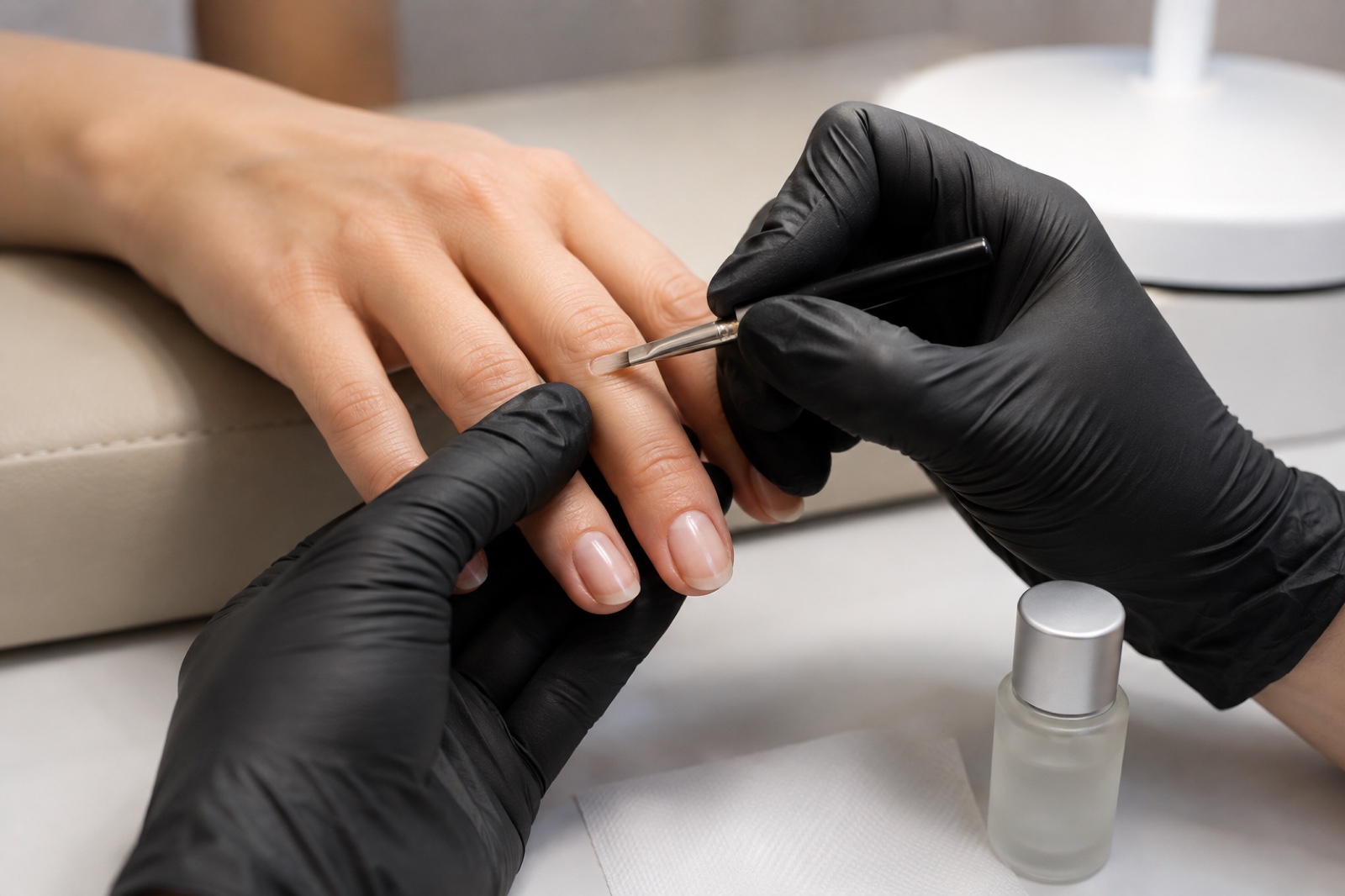
If adhesion seems to require flooding, repeated coats or several different primers, stop adding chemistry. Recheck preparation, product compatibility, curing, architecture, length, removal history and client use. A predictable protocol is one you can trace—not the one with the most bottles.
Common primer mistakes and what they reveal
Flooding cuticle or sidewalls: application control and product quantity need correction.
Two or three coats “for difficult nails”: the lifting cause has not been isolated.
Mixing brands without written compatibility: initial adhesion says nothing about complete curing or removal.
Curing an air-dry primer or air-drying a bonding gel: the product’s function was inferred from its name.
Applying over dust or after touching the plate: the adhesive interface is contaminated.
Treating burning as proof of action: exposure has occurred and first-aid instructions must be followed.
Using primer on a lifted, discoloured or damaged nail: a stop criterion has been mistaken for an adhesion problem.
Safety: acid-free does not mean harmless
The European Commission’s Scientific Committee on Consumer Safety concluded that HEMA and Di-HEMA TMHDC can pose sensitisation risk when products are misused or adjacent skin is contaminated. EU restrictions place products containing those ingredients in the professional-use category and require warnings. A primer without HEMA may still contain other acrylates or methacrylates; “HEMA-free” and “acid-free” are not allergy guarantees.
FDA guidance identifies methacrylic acid as a nail-primer ingredient and stresses label directions and warnings. Current CDC/NIOSH guidance lists methacrylate compounds among common salon exposures and recommends controls including ventilation, closed containers and suitable personal protective equipment. Gloves complement precise technique; they do not make deliberate skin application acceptable.
Never perform a homemade “patch test” by applying primer or gel to skin. Intentional exposure can sensitise.
Replace contaminated gloves immediately and clean a spill according to the safety data sheet.
Keep bottles upright, closed and stored within the stated temperature and light limits.
Do not decant into an anonymous container; the label, lot and hazard information must remain traceable.
Follow first-aid instructions after contact and seek healthcare advice for persistent or significant symptoms.
How to read the label, instructions and safety data sheet
Before adding a product, record its full name, manufacturer, lot, declared function and compatible system. Find whether it air-dries or cures, where it is applied, how many coats are allowed, whether an inhibition layer remains and which exact product follows. Confirm the current market instructions rather than relying on a distributor’s abbreviated caption.
The ingredient list identifies substances but rarely tells you their exact percentage or the finished product’s behaviour. The safety data sheet addresses hazard classification, first aid, spills, handling, storage and exposure controls. A professional protocol needs both technical use directions and safety documentation. If traceability is missing, do not improvise a role for the bottle.
Frequently asked questions about nail primer
Is nail primer always necessary?
No. Some systems require it, some use another bonding step and some specify base coat only. Follow the exact range instructions.
What is the difference between dehydrator and primer?
Dehydrator usually removes temporary surface moisture and oil; primer promotes adhesion. One does not automatically replace the other.
Is acid-free primer safer?
It avoids free methacrylic acid but may still contain sensitising ingredients. Keep every primer off the skin and follow its safety data.
Does acid-free mean HEMA-free?
No. The terms describe different aspects of a formula. Check the exact ingredient list and do not treat either claim as hypoallergenic.
How do I know when primer is dry?
Use the stated time and finish for that product. Some become matte; others remain glossy or tacky; bonding gels may need curing.
Can I use two coats on nails that lift?
Only if the manufacturer expressly allows it. First investigate preparation, contamination, compatibility, curing and structure.
Can I mix primer and gel from different brands?
Do not assume compatibility. Use a documented complete system or obtain written technical confirmation for the exact combination.
Can primer touch the cuticle?
No. Keep a visible margin from cuticle and sidewalls. Product on skin increases irritation and sensitisation risk.
Should nail primer burn or feel warm?
Burning is not proof of adhesion. Stop, follow the product’s first-aid instructions and seek advice if symptoms persist or are significant.
Can primer fix lifting at the cuticle?
Not if the cause is invisible tissue, flooding, over-filing, leverage, contamination or curing. Diagnose the location and process first.
Can I use nail primer on a damaged nail?
Do not apply to broken skin, pain, separation, unexplained colour or a suspected disorder. Postpone and refer when appropriate.
Where can I learn a complete preparation protocol?
Compare complete, level-appropriate paths in the BeautyLearn online nail courses. A coherent system is safer than collecting isolated product tricks.
Sources and editorial review
Editorial review: 5 September 2026. Product formulas and instructions change; check the current label and safety data sheet for the exact market and system.
This guide owns the broad nail-primer comparison and application intent. Detailed gel, acrylic, acrygel, filing, lifting and allergy topics remain with their dedicated English guides to prevent overlap.