Sunscreen and makeup: order, amount and reapplication

A practical guide to wearing sunscreen with makeup: correct order, adequate amount, settling, formula compatibility, reapplication and focused cosmetic touch-ups.

Irene TomasiIrene Tomasi5 September 2026 13 min read
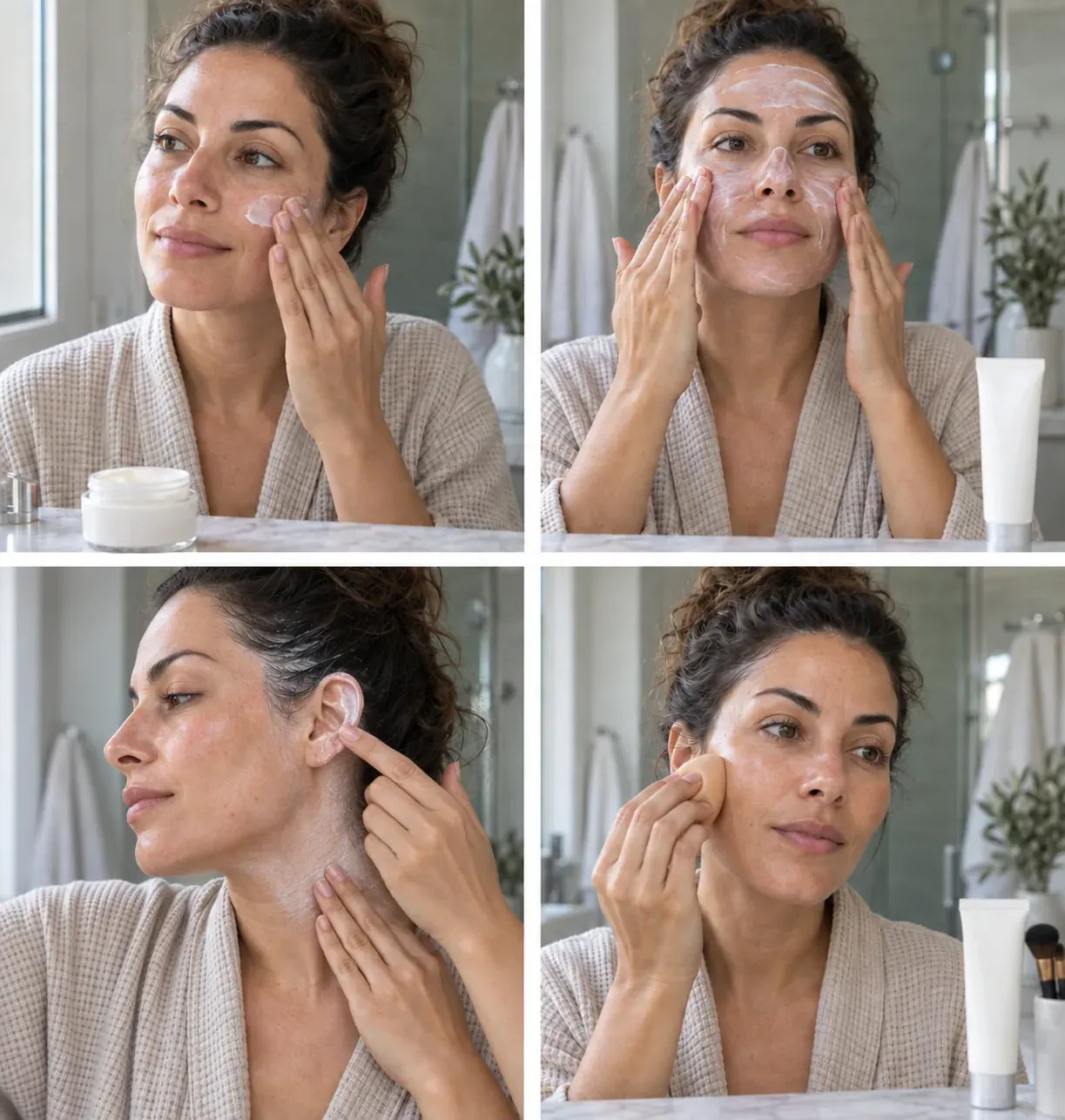
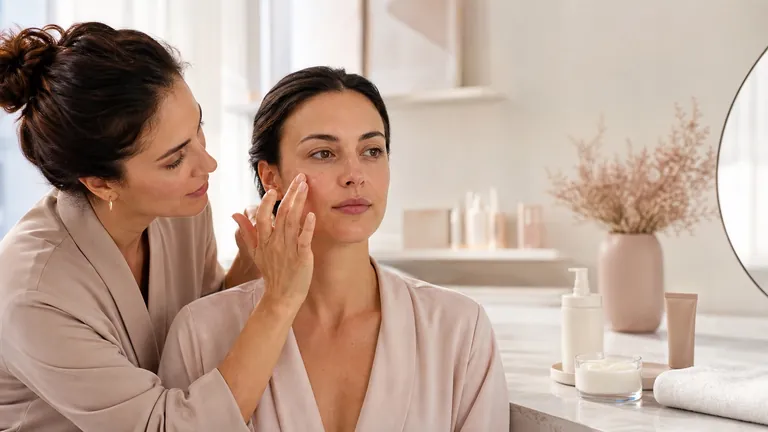
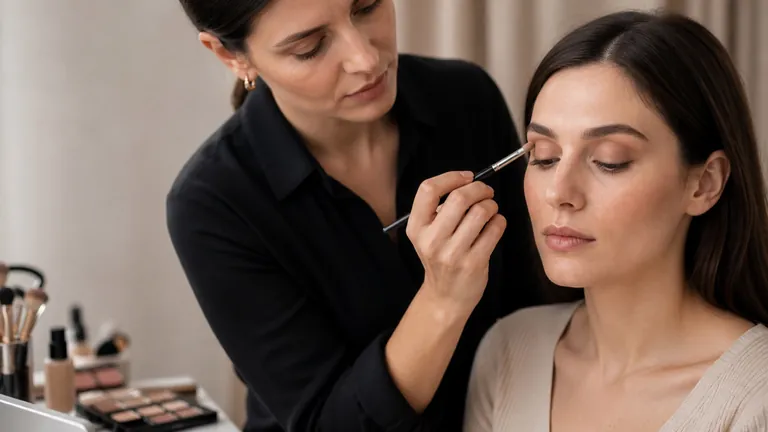
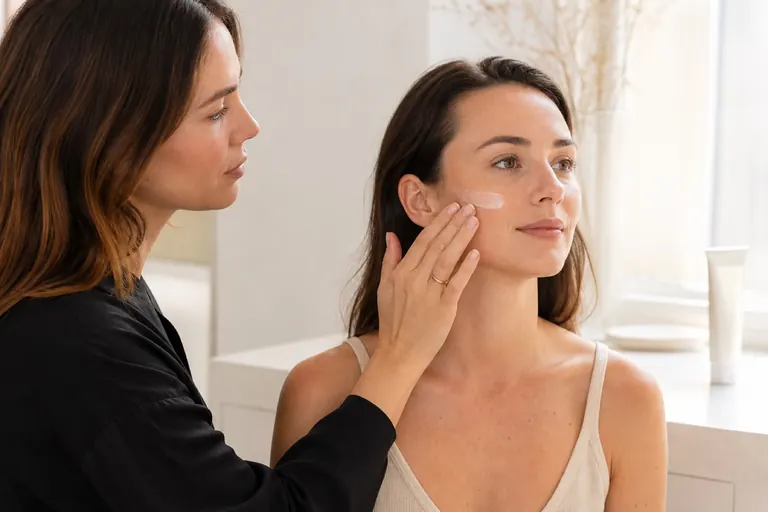
Makeup artist applies an even layer of facial sunscreen to an adult client before makeup
On this page
  1. 1 Use the correct order: skincare, sunscreen, then makeup
  2. 2 Apply enough sunscreen under makeup
  3. 3 Read UVA, UVB, SPF and water-resistance information separately
  4. 4 Distinguish exposure timing from cosmetic settling time
  5. 5 Apply primer and foundation without moving the sunscreen film
  6. 6 Diagnose pilling, patchiness, separation and white cast by cause
  7. 7 Reapply according to exposure, removal and the product directions
  8. 8 Understand the methods and limits of reapplying over makeup
  9. 9 Repair makeup after sunscreen reapplication
  10. 10 Treat makeup with SPF as support, not an automatic shortcut
  11. 11 Wear-test sunscreen and makeup as one system
  12. 12 Change the plan for commuting, ceremonies, beaches and pools
  13. 13 Avoid common sunscreen-and-makeup errors
  14. 14 Frequently asked questions about sunscreen and makeup
  15. 14.1 Does sunscreen go before or after makeup?
  16. 14.2 How long should sunscreen settle before foundation?
  17. 14.3 How much sunscreen is needed on the face?
  18. 14.4 Can SPF foundation replace sunscreen?
  19. 14.5 How can sunscreen pilling under makeup be reduced?
  20. 14.6 How often should sunscreen be reapplied?
  21. 14.7 Can sunscreen be reapplied over foundation?
  22. 14.8 Are SPF sprays and powders enough for reapplication?
  23. 14.9 Does primer go before or after sunscreen?
  24. 14.10 Does SPF 50 last longer than SPF 30?
  25. 14.11 Can tinted sunscreen replace foundation?
  26. 14.12 Does powder ruin sunscreen?
  27. 14.13 Is water-resistant sunscreen needed under makeup?
  28. 14.14 What should happen if sunscreen burns or irritates?
  29. 15 Official sources and scope
  30. 16 Plan a tolerated sunscreen and makeup system
  31. 17 Keep sunscreen protection separate from colour coverage

Sunscreen and makeup must work together without turning UV protection into a cosmetically elegant but inadequate veil. The question is larger than which bottle comes first. Amount, uniform coverage, timing before exposure, film compatibility, rubbing, sweat and a realistic reapplication plan all matter. A perfect foundation finish over too little sunscreen is not a sound trade-off, while excessive skincare and makeup layers that pill are not automatically more professional.

Short answer: apply sunscreen as directed to every exposed area, in an adequate amount, after the necessary skincare and before makeup. Let it form an even settled film; do not reduce the amount to improve the finish. Outdoors, reapply according to the label—general AAD and FDA guidance commonly says about every two hours and after swimming or sweating—even when this means repairing or rebuilding part of the makeup. Shade, clothing, a wide-brimmed hat and UV-protective sunglasses remain part of the plan.

This guide is written by Irene Tomasi, a makeup artist with 10 years of professional experience. It owns the interface between sun protection and makeup: order, adequate application, settling, makeup placement, reapplication over or through a look and cosmetic repair. The separate daily face-sunscreen guide owns the broader skincare intent—SPF, UVA, texture and everyday sunscreen selection. The skin-preparation guide owns the rest of pre-makeup skincare. Keeping those intents separate prevents one page from becoming a generic sunscreen or routine article.

Use the correct order: skincare, sunscreen, then makeup

Protection first, makeup after settling

Complexion products must not replace or drag the sunscreen film

1

Necessary skincare

2

Even sunscreen

3

Timing and settling

4

Light makeup placement

Keep skincare purposeful, apply sunscreen as directed and begin makeup only after the complete protective film is even and stable.
  1. Cleanse as needed and apply only useful skincare, allowing each formula enough time to settle.

  2. Distribute sunscreen across all exposed skin, including ears, hairline, neck and other uncovered areas.

  3. Respect the product’s timing before exposure. General AAD and FDA guidance uses about 15 minutes before going outdoors.

  4. Apply primer or makeup only once the film is even and a controlled press no longer redistributes it.

  5. Plan reapplication before departure: exposure duration, water, sweat, clothing and access to clean tools determine the practical method.

Calling sunscreen ‘the last skincare step’ means that it normally closes the morning skincare sequence before makeup. It does not mean the first full application belongs over completed foundation. Nor does it automatically prohibit a compatible primer placed after the sunscreen has settled. The decisive points are the sunscreen directions, the correct amount and whether subsequent gestures leave the protective film even rather than mixing, thinning or removing it.

Apply enough sunscreen under makeup

Do not reduce the amount to improve the finish

Choose a texture that can be applied correctly, not a token veil

Adequate

Full exposed surface

Even

No forgotten edges

Settled

Film is not dragged

Renewed

According to exposure

The label, exposed area and even coverage determine the application; SPF makeup and powder do not automatically compensate for too little sunscreen.

Labelled protection is measured through standardised testing conditions, so applying substantially less can reduce real protection. The product directions are the primary reference. AAD currently gives at least one teaspoon for the face and describes this as roughly the amount that covers the length of the index and middle fingers. Such practical references help with consistency, but they do not replace the labelled amount, the exposed surface and even distribution.

The makeup-specific temptation is to halve the sunscreen dose to avoid shine, weight or white cast. Solve that upstream by finding a face sunscreen whose full application the person can use comfortably, then designing the look around its finish. Do not compensate for underapplication with traces of high-SPF foundation, powder or mist. SPF is not a timer, and a higher number does not authorise a longer interval without reapplication.

Choice

Problem

Better response

Less sunscreen for less shine

Incomplete film and lower protection than expected

Change texture or finish, not the required amount

Many full skincare layers

Sliding, pilling and long settling time

Remove non-essential layers and allow settling

SPF foundation as sole protection

Cosmetic amount may be far below the tested application

Use dedicated sunscreen as directed

High SPF without reapplication

False sense of unlimited duration

Reapply and use shade, clothing and accessories

Read UVA, UVB, SPF and water-resistance information separately

SPF primarily expresses protection against UVB-related sunburn under the test conditions. UVA protection needs its own broad-spectrum or market-specific labelling. No sunscreen blocks all UV radiation. AAD recommends broad-spectrum, water-resistant SPF 30 or higher for exposed skin, but even a well-chosen product is only one part of photoprotection.

Read water-resistance duration, reapplication intervals, age or area restrictions, eye warnings and expiry information. Water resistant does not mean waterproof or sweatproof. It does not remove the need to reapply after swimming, sweating or towel drying as directed. The makeup-label guide separates ingredient declaration, traceability, PAO, warnings and claims. For extreme conditions, continue with waterproof makeup for heat and humidity.

Distinguish exposure timing from cosmetic settling time

There is no universal number of minutes that makes every sunscreen compatible with every foundation. Track two different intervals. First is the timing before sun exposure stated on the label; general AAD and FDA advice commonly says about 15 minutes. Second is the practical time required for the sunscreen film to become even enough that a light makeup press does not lift or drag it.

In a professional service, apply sunscreen early and use the interval to organise the station, discuss the look or complete non-disruptive steps. Return to complexion only when there are no wet pools, thick borders or accumulations around brows and hairline. Do not rub to accelerate the process. When a combination still pills after reasonable settling, change one component during a wear test rather than cutting sunscreen dose on the event day.

Apply primer and foundation without moving the sunscreen film

Begin with very little primer only where it answers a visible need. Press or place instead of massaging repeatedly. Apply foundation with a clean sponge or brush and moderate pressure, distribute one thin veil and add concealer locally. Every extra pass increases the chance of redistributing the sunscreen beneath, especially at the hairline, nose, upper lip and high-friction zones.

A tinted sunscreen can reduce the number of complexion layers when its shade is workable and the product is still applied in the amount needed for protection. Do not downgrade it to a dot of foundation used only over discolouration. The guide to foundation texture, coverage and finish owns cosmetic selection; the undertone and shade-matching guide owns colour assessment.

Diagnose pilling, patchiness, separation and white cast by cause

  • Immediate pilling: review excessive amounts, too many layers, insufficient settling and rubbing. Remove variables and retest one combination at a time.

  • Bare patches: check uneven sunscreen distribution or makeup dragged across the film. Work section by section and inspect perimeters.

  • Later separation: record sebum, sweat, friction, formula compatibility and thickness. Do not blame one ingredient without evidence.

  • White cast or flashback: evaluate formula, distribution, shade, lighting and camera separately before the event.

If burning, itching, swelling or significant irritation appears, stop and do not conceal the signal under another layer. The cosmetic reaction guide explains cosmetic stop criteria and healthcare escalation without attempting diagnosis.

Reapply according to exposure, removal and the product directions

AAD and FDA guidance commonly recommends reapplying sunscreen about every two hours while outdoors and after swimming or sweating, with the specific label controlling details. Reapplication is not triggered only when makeup looks shiny or skin already appears pink. It is part of a protection plan tied to time, exposure, water and mechanical removal.

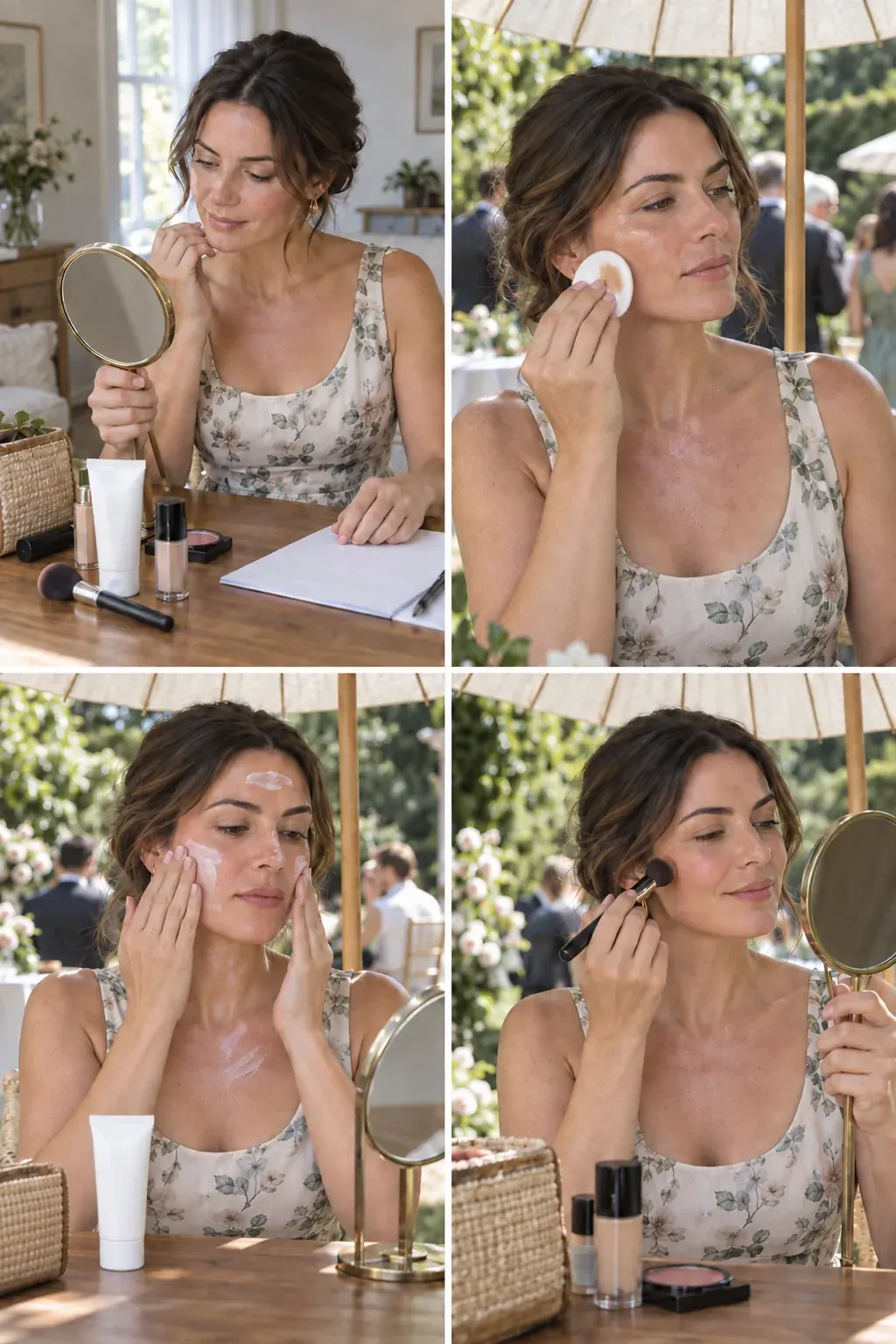
For a long outdoor event, plan time blocks: an adequate initial application, shade when possible, a visible reminder and a scheduled reapplication point. Protective clothing, sunglasses and a broad-brimmed hat reduce exposed surface and help preserve the makeup, but they do not make sunscreen optional on remaining exposed areas. Reapply lip protection too according to its directions.

Understand the methods and limits of reapplying over makeup

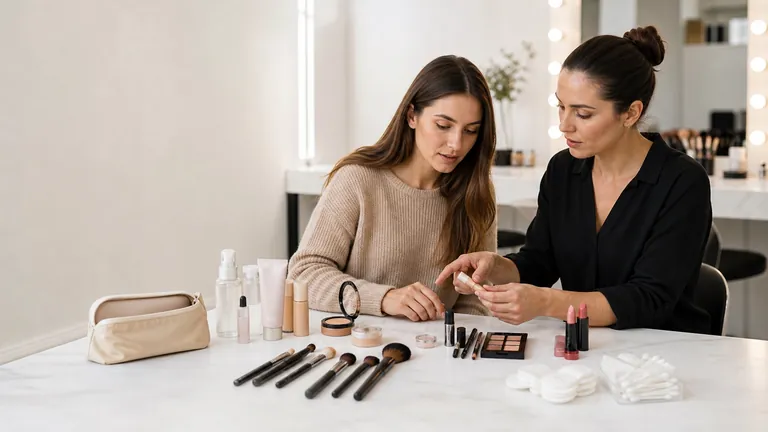
Organised kit with sunscreen, compact, clean puff, blotting paper, mirror, sponge, sunglasses and hat for reapplication over makeup
Reapplication needs a suitable product, adequate coverage, clean tools and physical protection

The most controllable approach—especially after heavy sweat, water or long wear—is to gently remove compromised complexion makeup in the affected zones, reapply sunscreen evenly and rebuild only the essential cosmetic layers. It is not always convenient, but it makes the protective step visible instead of confusing a quick cosmetic touch-up with adequate reapplication.

Format

Possible advantage

Limit to control

Cream or fluid pressed with a clean sponge

Visible section-by-section distribution

Adequate amount, uniformity and alteration of the base

Sunscreen stick

Portable and precise across defined areas

Required passes, distribution and possible makeup drag

Spray or mist

Fast for authorised areas when designed for that use

Coverage is hard to verify; avoid inhalation, eyes, face spraying and wind as directed

Powder with SPF

Convenient for shine and cosmetic integration

Do not assume a light cosmetic amount recreates the initial protection

Every format must be used as labelled. Do not spray a product not designed for facial application directly towards eyes or mouth, and do not count a quick airborne cloud as proof of even dose. If correct reapplication changes the look, protection remains the priority. Pack a small concealer, lip product and powder so only the altered cosmetic zones need to be rebuilt.

Repair makeup after sunscreen reapplication

Reapply protection before rebuilding appearance

A cosmetic touch-up is not automatically sunscreen reapplication

1

Shade and blot

2

Reapply protection

3

Let the film settle

4

Repair makeup locally

Blot, apply the labelled sunscreen amount to the exposed area, let it settle, then replace only concealer, cheek or lip colour that changed.
  1. Move into shade or a cooler setting and blot sweat or surface oil without dragging the existing film.

  2. Reapply sunscreen according to its format and directions, covering the whole relevant exposed area without thin borders.

  3. Allow it to settle, then inspect in useful light. Do not assume the entire base needs replacing.

  4. Restore concealer, cheek colour or lips only where changed, with clean tools and minimal layers.

  5. Set selectively at the end. Powder cannot replace sunscreen that has been removed.

For a summer event, connect this sequence to the professional bridal makeup protocol and to the general makeup-longevity guide. A setting spray may modify makeup finish or resistance, but it does not automatically renew an inadequate or mechanically removed sunscreen layer.

Treat makeup with SPF as support, not an automatic shortcut

Foundation, skin tint, primer, powder and mist with SPF can contribute to a system or make some touch-ups easier. Their labelled value is tied to test conditions and amount. If a sheer finish uses far less product, the face cannot simply be assigned the printed protection as though the tested application were reproduced.

Use SPF makeup as a contribution rather than permission to skip adequately applied sunscreen when exposure calls for it. Tinted sunscreen with iron oxides may be relevant to visible-light protection and dark-mark concerns, but shade range, broad-spectrum status, SPF, amount and tolerance belong to the actual product. A diagnosed pigment condition warrants personalised dermatological advice.

Wear-test sunscreen and makeup as one system

The test includes the second sunscreen application

A beautiful first finish is incomplete if reapplication cannot be managed

1

Record the full order

2

Check the first finish

3

Reapply as planned

4

Evaluate and refine

Record product, amount and timing, inspect in daylight and camera, then rehearse protection renewal before the actual outdoor service.
Makeup artist applies an even layer of facial sunscreen to an adult client before complexion makeup
Test adequate sunscreen application, settling, makeup and reapplication as one complete system
  • Record products, amounts, order and settling intervals rather than relying on memory.

  • Check natural light, camera, mobile zones, hairline, glasses and skin comfort.

  • Rehearse reapplication at the planned time; the look must remain manageable beyond the first layer.

  • Change one variable—skincare, sunscreen texture, primer, base or tool—before retesting.

  • Never use an aesthetic test to diagnose allergy or calculate individual medical protection.

For camera checks, use the photographic makeup guide to separate true white cast, flashback, texture and exposure. For a wearable daytime finish above sunscreen, use the professional day-makeup sequence. For inflamed lesions or acne-prone skin, use the dedicated application guide so coverage never takes priority over skin integrity.

Change the plan for commuting, ceremonies, beaches and pools

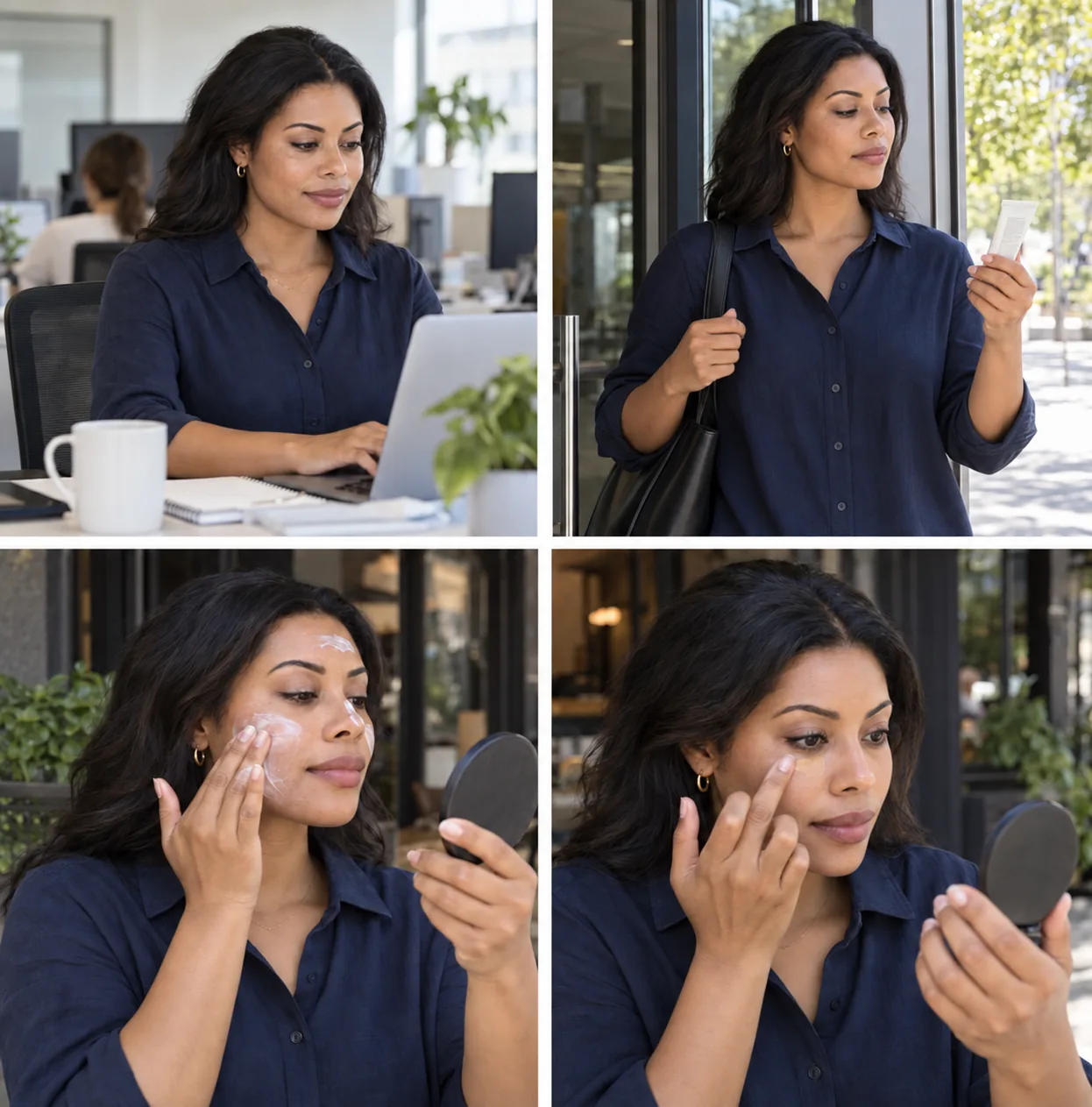
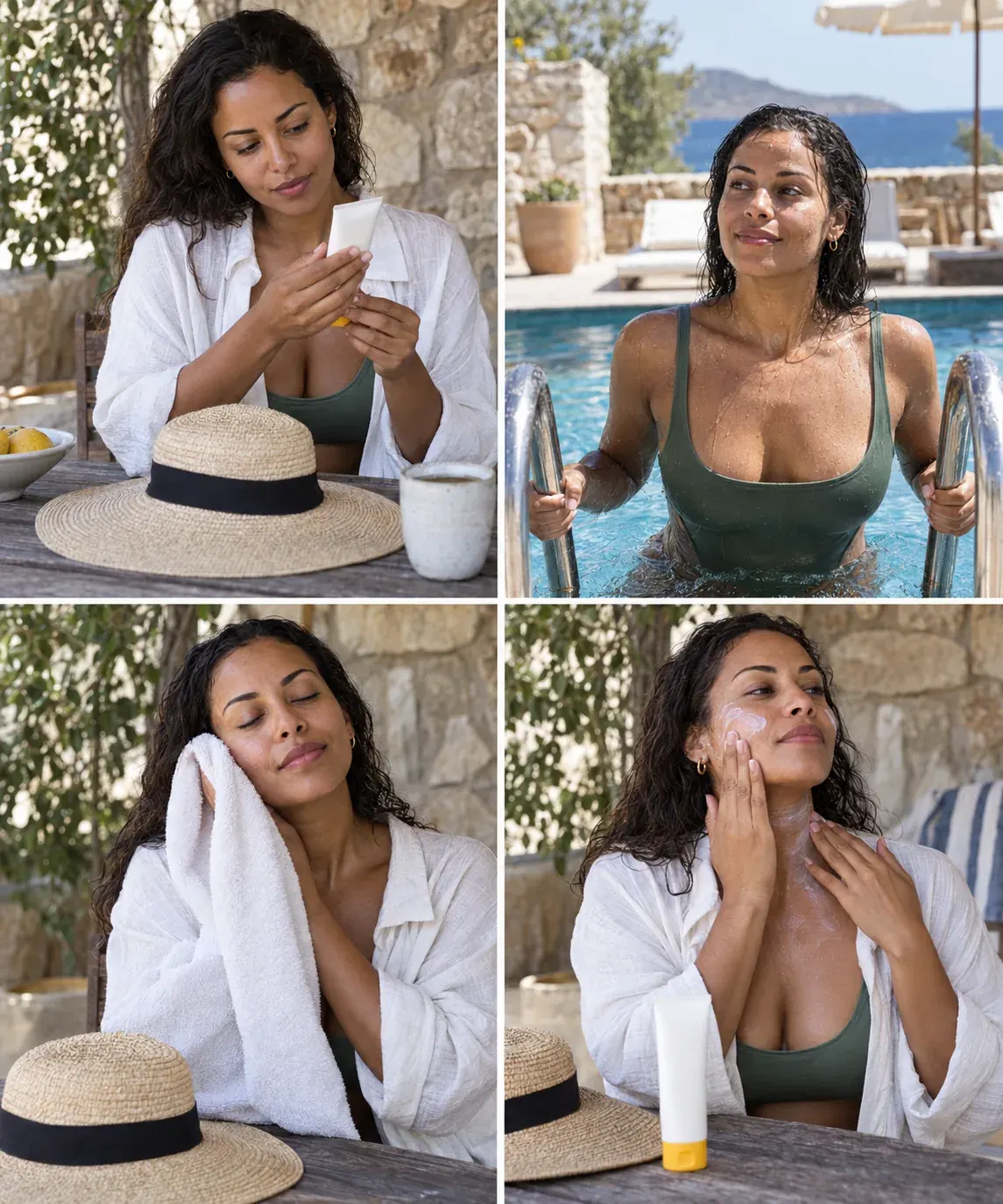
A short urban journey may need an adequate first application, shade and a small kit. An outdoor ceremony needs a reapplication time, a mirror and a rehearsed repair. A beach, pool or high-sweat day prioritises suitable water-resistant sunscreen reapplied after water, sweating and drying, with minimal makeup that can be rebuilt. Time near windows, driving and repeated indoor-outdoor transitions also require an honest exposure assessment rather than a plan based only on the first photograph.

Ask how long the day lasts, where the person will move, what clothing covers and whether clean hands and tools will be available. Decide which cosmetic elements are truly worth maintaining. For water exposure, a defined brow, resistant mascara and protected lip may be more realistic than preserving an untouched full-coverage base.

Avoid common sunscreen-and-makeup errors

  • Using less sunscreen to make foundation look more refined.

  • Treating SPF foundation or powder as equivalent to a complete initial application.

  • Massaging primer and foundation until the sunscreen film lifts.

  • Confusing higher SPF with longer duration or complete UV protection.

  • Waiting for redness or visible makeup damage before reapplying.

  • Spraying too little, into wind, or around eyes and mouth without reading directions.

  • Forgetting ears, hairline, neck, lips and other exposed edges.

  • Relying on sunscreen alone and abandoning shade, clothing, hats and sunglasses.

At the end of exposure, remove sunscreen and resistant cosmetic films without aggressive rubbing. The complete makeup-removal guide separates eyes, lips and complexion and matches each area to a compatible remover.

Build these decisions into a repeatable professional service through the BeautyLearn makeup courses, including the beginner makeup course, the complete makeup artist course and the bridal makeup course. English-market availability remains separate from the Italian catalogue.

Frequently asked questions about sunscreen and makeup

Does sunscreen go before or after makeup?

The first application goes after necessary skincare and before makeup, following the sunscreen directions. Reapplication during exposure may happen over makeup or require partial removal.

How long should sunscreen settle before foundation?

There is no universal cosmetic interval. Respect the label’s timing before exposure and wait until the film is even and resists gentle makeup placement without being dragged.

How much sunscreen is needed on the face?

Follow the product directions and cover every exposed area. AAD currently uses at least one teaspoon for the face as a practical reference, including the length of two fingers.

Can SPF foundation replace sunscreen?

Not when it is applied in a small appearance-led amount that does not reproduce the tested dose, uniform coverage and reapplication. Treat it as support, not an automatic substitute.

How can sunscreen pilling under makeup be reduced?

Remove unnecessary skincare, let films settle, press primer and base lightly, and test combinations one at a time. Do not reduce sunscreen amount to hide incompatibility.

How often should sunscreen be reapplied?

Follow the label. General AAD and FDA guidance commonly says about every two hours outdoors and after swimming or sweating, with timing adjusted to the product’s directions.

Can sunscreen be reapplied over foundation?

Yes when format, amount and method produce adequate distribution, but makeup may change. After heavy water or sweat, clearing and rebuilding an area can be more controllable.

Are SPF sprays and powders enough for reapplication?

Do not assume a quick mist or light cosmetic powder recreates the first protection. Use products designed for the purpose, in their labelled amount and method.

Does primer go before or after sunscreen?

Cosmetic primer generally follows settled sunscreen and precedes foundation. Apply only where needed, without dragging, and check both products’ directions and compatibility.

Does SPF 50 last longer than SPF 30?

No. A higher SPF does not authorise longer exposure without reapplication. Amount, uniformity, water, sweat and mechanical removal still determine the practical plan.

Can tinted sunscreen replace foundation?

It can even the complexion and reduce layers when the shade works, but it must still be applied in the amount required for protection, not only over discolouration.

Does powder ruin sunscreen?

It depends on film and movement. Light pressing after settling may be less disruptive than rubbing, but powder is not reapplication and cannot fill areas the sunscreen missed.

Is water-resistant sunscreen needed under makeup?

It is particularly relevant when water or sweat is expected, but selection still depends on skin, exposure and directions. Water resistance has a stated duration and still needs reapplication.

What should happen if sunscreen burns or irritates?

Stop application, do not conceal the reaction and follow appropriate product directions. Significant, persistent or eye symptoms require professional healthcare assessment.

Official sources and scope

Substantive review: 5 September 2026. This educational cosmetic content is written by Irene Tomasi, a makeup artist with 10 years of experience. It does not replace the product label, medical or dermatological advice, or a complete sun-protection plan. Continue with the English makeup guide library or develop the service method through the BeautyLearn makeup courses.

Plan a tolerated sunscreen and makeup system

Use the rosacea and sensitive-skin makeup guide.

Keep sunscreen protection separate from colour coverage

Continue with the vitiligo camouflage and sunscreen protocol.

Continue learning