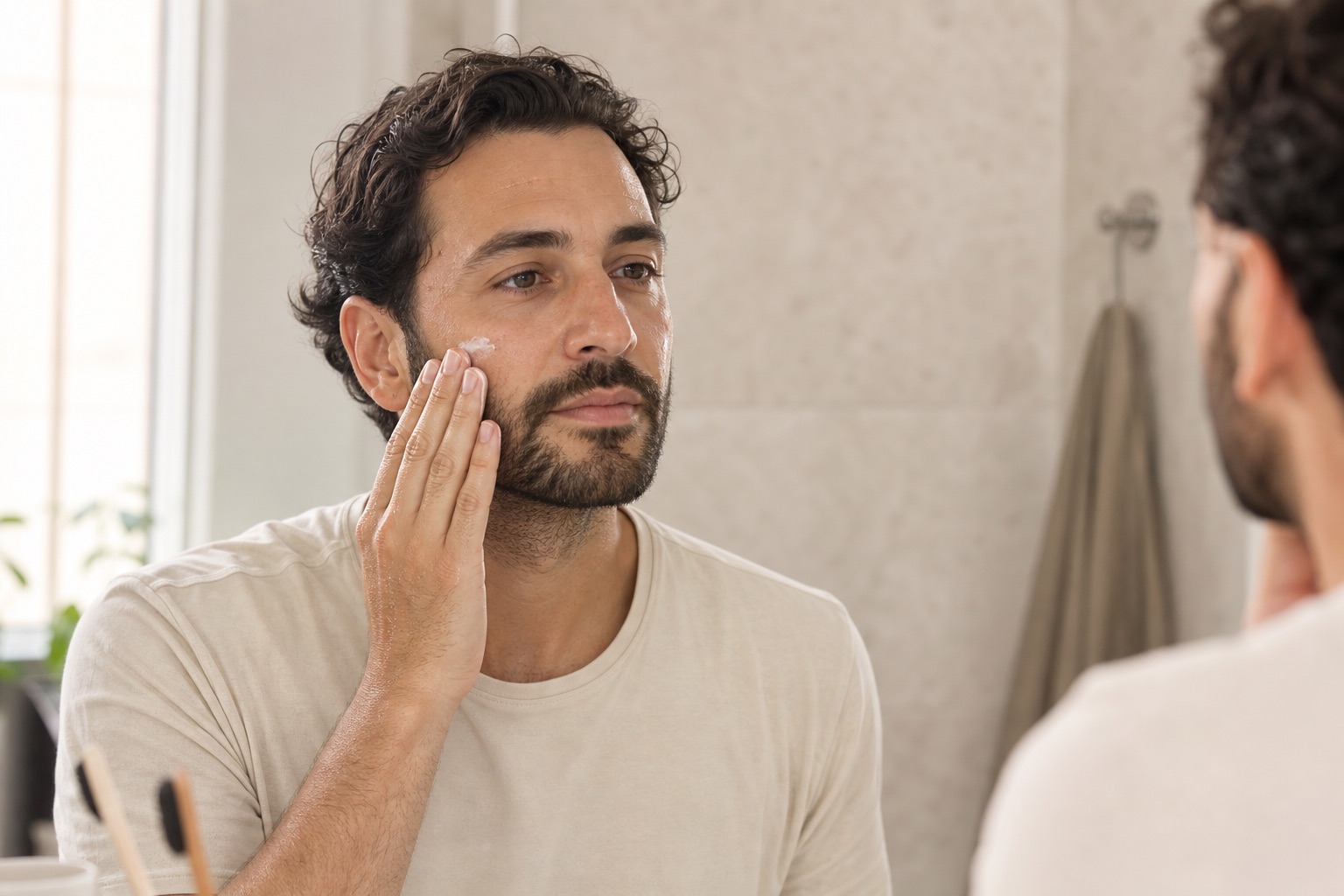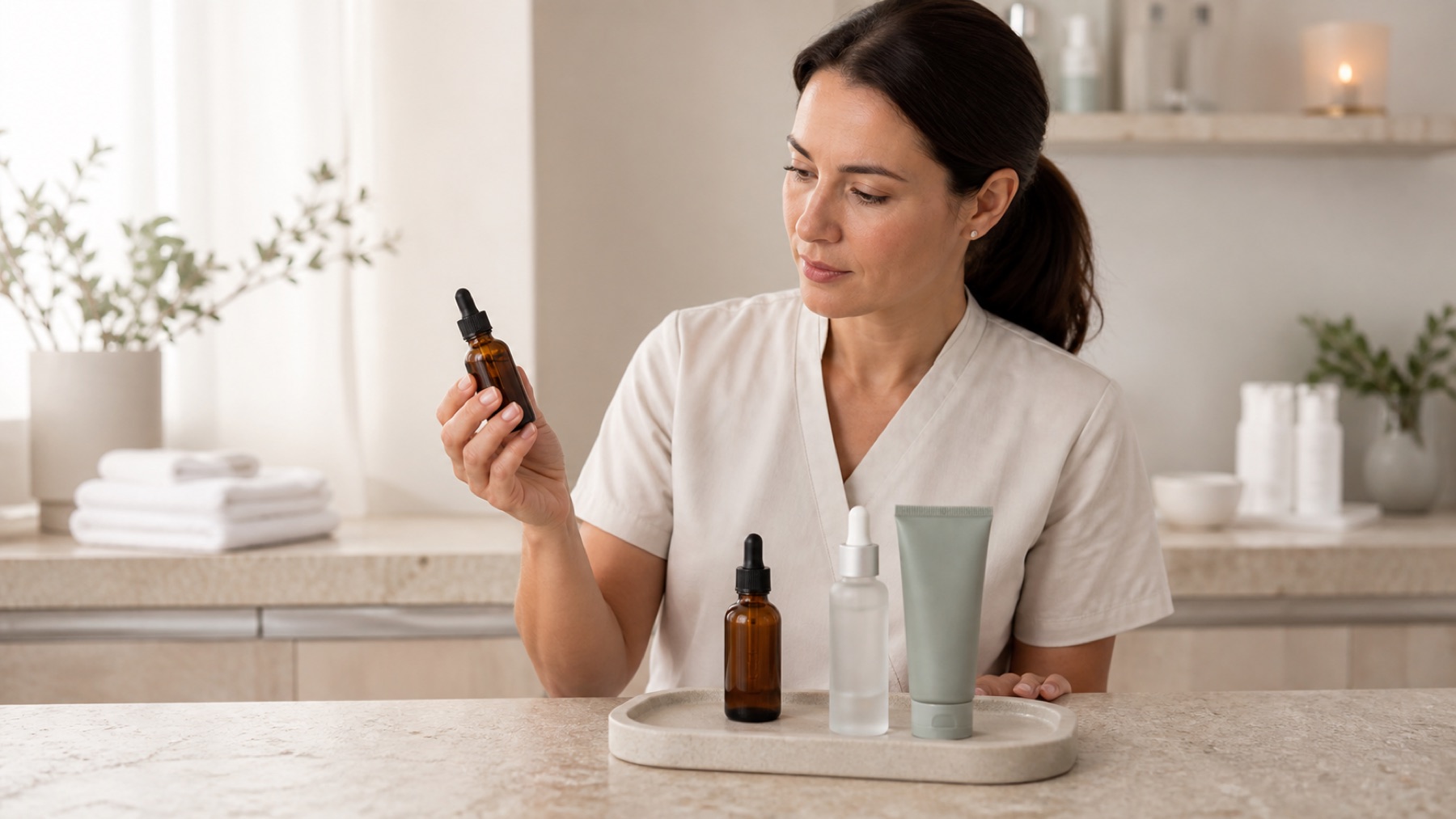

Face sunscreen is a daily photoprotection strategy, not simply the final serum in a routine. SPF describes performance measured under standardised conditions, primarily against UVB-induced erythema. UVA protection, application amount, film uniformity, texture, exposure and reapplication determine what happens outside the laboratory. The most useful product is appropriate for the setting, properly tested and comfortable enough to apply in a generous, even layer.
Quick answer: choose a broad-spectrum face sunscreen with SPF 30 or higher and suitable UVA protection, in a texture you can apply evenly at the labelled amount. Cover the face, ears, jawline and exposed neck. Do not dilute it into moisturiser, and do not assume a light dusting of powder or one swipe of a stick provides the tested dose. When outdoors, reapply about every two hours and after swimming, heavy sweating or towelling, following the product label and actual exposure.
This page owns the daily-skincare intent: SPF, UVA, application amount, cosmetic texture and exposure-based reapplication. A future English guide will separately cover sunscreen under makeup and reapplication over makeup. Until that page is published, this guide does not create a broken link or duplicate techniques for foundation, powders, cushions and sprays.
What daily sun protection needs to do
Ultraviolet radiation reaching the earth includes UVA and UVB. UVB contributes strongly to sunburn; UVA penetrates more deeply, contributes to photoageing and cellular damage and can pass through some window glass. Both contribute to skin-cancer risk. Visible light can worsen some pigmentation, particularly in deeper skin tones and conditions such as melasma, but that does not mean everyone needs the same tinted sunscreen.
Sunscreen reduces exposure when selected and used correctly, but it does not provide total protection or permission to extend time in the sun. Shade, clothing, a broad-brimmed hat, sunglasses and sensible timing remain part of the strategy. European Commission guidance specifically requires warnings against staying in the sun too long and exposing babies and young children directly.
Plan around expected exposure rather than the season name. A short commute, lunch outdoors, work beside a large window, sport, altitude, reflective surfaces and photosensitising medicines are not equivalent. Record time, duration, uncovered areas, water or sweat and the ability to reapply. Comfort, eye migration, missed edges and shine also reveal whether the formula is genuinely sustainable without confusing sensory preference with measured protection.
Regular use is not only an appearance recommendation. The Nambour community trial associated daily broad-spectrum sunscreen use with less progression of photoageing over four and a half years than discretionary use. Follow-up melanoma findings were encouraging but involved small numbers and require cautious interpretation. Sunscreen is prevention, not treatment for an existing lesion or a replacement for skin examination.
What SPF measures — and what it does not
SPF means Sun Protection Factor. ISO 24444 specifies an in-vivo method based on the erythemal response to ultraviolet exposure with and without sunscreen. Because erythema is driven mainly by UVB, the SPF number does not by itself describe the complete UVA curve, visible-light protection, film durability or the amount an individual will apply.
SPF 30 does not mean exactly 30% of rays are blocked, and SPF 50 does not mean total protection. The number cannot safely be multiplied by a person’s usual burn time: UV intensity, latitude, time of day, reflection, skin response, medicines, dose, missed spots and film loss all alter exposure. Simple ‘percentage blocked’ comparisons hide the biological test and real-use variability.
Higher SPF provides useful margin because people commonly underapply, but it cannot repair a patchy film or hours of unprotected exposure. Dermatology guidance commonly recommends broad-spectrum SPF 30 or higher. Deeper skin tones may burn less visibly but still receive UVA and UVB damage; skin colour does not make photoprotection unnecessary.
UVA, UVB and the European UVA symbol
European Commission Recommendation 2006/647/EC sets a recommended minimum UVA protection factor of one third of the labelled SPF and a critical wavelength of at least 370 nm. The UVA symbol in a circle communicates this relationship when used under the recommendation. It does not mean UVA and UVB are blocked by the same percentage, and two products with the same SPF can have different spectral profiles.
ISO 24443:2021 describes an in-vitro procedure for characterising UVA photoprotection through the absorbance curve and calculating parameters such as UVA-PF and critical wavelength. The method is not intended for loose or pressed powders. A face powder carrying an SPF claim therefore cannot be assumed equivalent to a cream tested as a continuous film.
Broad spectrum, PA ratings, UVA stars and the circled-UVA symbol belong to different systems and markets. Do not convert them with an improvised chart. For an EU-market product, read SPF, the UVA indication, water resistance where relevant, directions and responsible-person details. A dermatologist may specify additional UVA1 or visible-light criteria for a medical condition.
How much face sunscreen to apply
The labelled performance is tested at a standard application density of 2 milligrams per square centimetre. Many people apply less, and protection can fall disproportionately as the film thins. Half the amount does not reliably provide half the labelled SPF; the reduction varies with product and film.
Converting 2 mg/cm² to grams requires the area being covered. Face size, hairline, ears, neck, décolletage, beard and product left on fingers all change the total. A teaspoon or ‘two-finger rule’ is therefore a practical reminder rather than a universal measuring instrument. Nozzle width, texture, finger length and whether the neck is included change the volume.
Use the manufacturer’s stated amount for face or face and neck as the first reference. When instructions are less specific, apply a generous, complete and even film without missing edges. Two consecutive thin passes can improve distribution as long as the total is not reduced. Weighing a package before and after several applications can provide a personal consistency check, but only when the covered area remains comparable.
Commonly missed areas
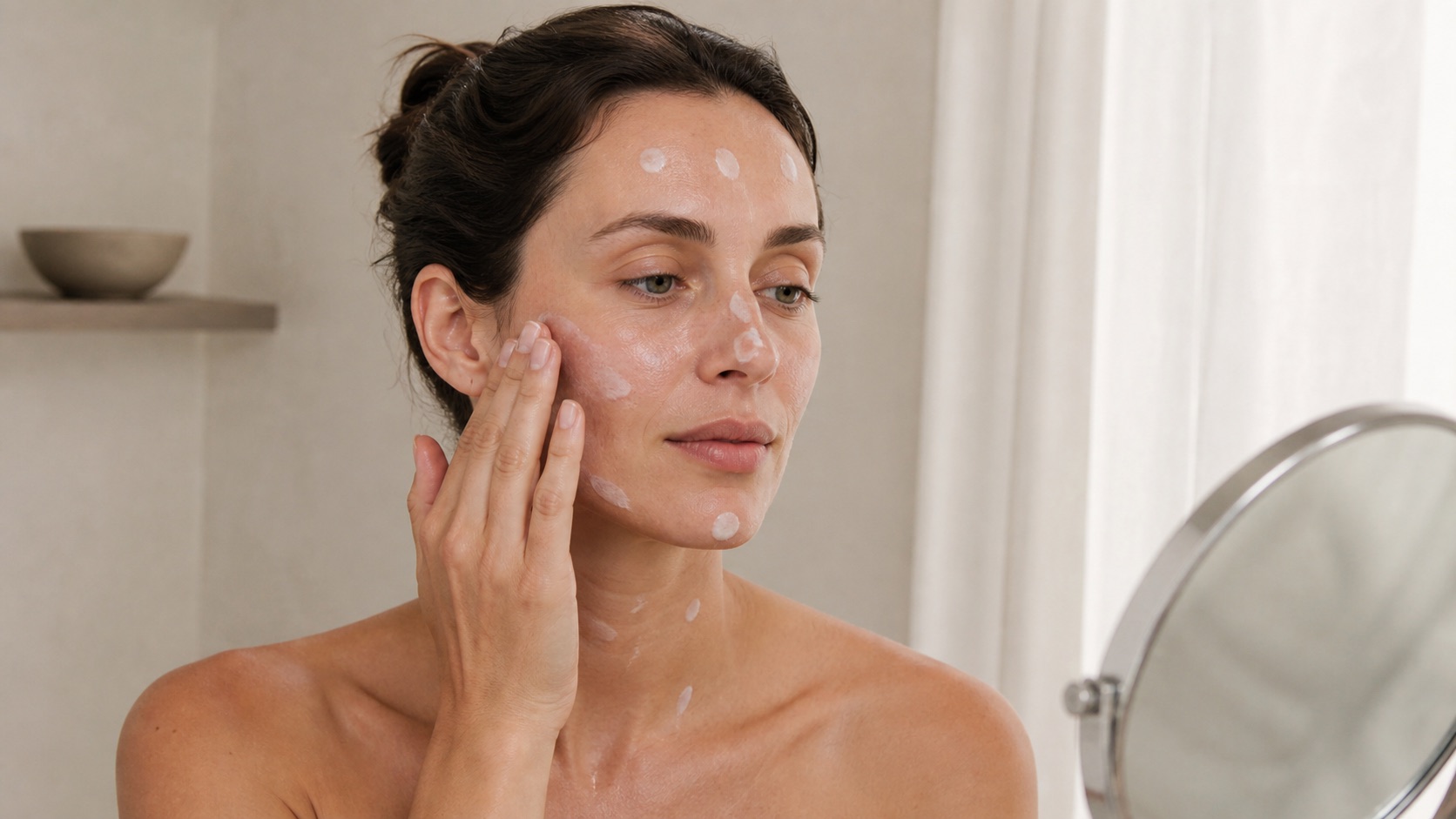
Cover forehead, temples, cheeks, bridge and sides of the nose, outer perioral area, chin, jawline, outer ears and exposed neck. Avoid eyes, mucosa, nostrils and the ear canal. Hairline, eyebrows, beard, sideburns and folds can interrupt the film; use gentle pressing and spreading without pushing sunscreen into mucosa.
A thinning scalp needs a hat and, on exposed skin, a product intended for that area. Lips need an SPF lip product applied frequently. Clothing may cover the neck or chest, but moving collars and open necklines create exposure; include those areas when they will not remain reliably covered.
Where sunscreen sits in a skincare routine
In the morning, sunscreen closes the skincare sequence on exposed areas. After appropriate cleansing, use only necessary treatment and moisturiser, let layers settle enough to avoid moving them, then apply sunscreen. Product directions take priority; a ritual thirty-minute wait is unnecessary unless specified.
Do not mix sunscreen with moisturiser, oil, pigment or foundation in the palm. Uncontrolled dilution and distribution can disrupt the tested film. A moisturiser with SPF can serve as the sunscreen step when it is a properly labelled photoprotective product and is applied at its required amount. A day cream containing filters without an adequate sunscreen claim is not automatically equivalent.
If the sunscreen is moisturising enough, a separate moisturiser may be unnecessary. If skin feels dry, choose a compatible base or a richer sunscreen rather than adding layers that pill. The guide to humectants, emollients and occlusives helps match function and texture without turning order into a rigid formula.
Face sunscreen textures: fluid, cream, gel-cream and tinted
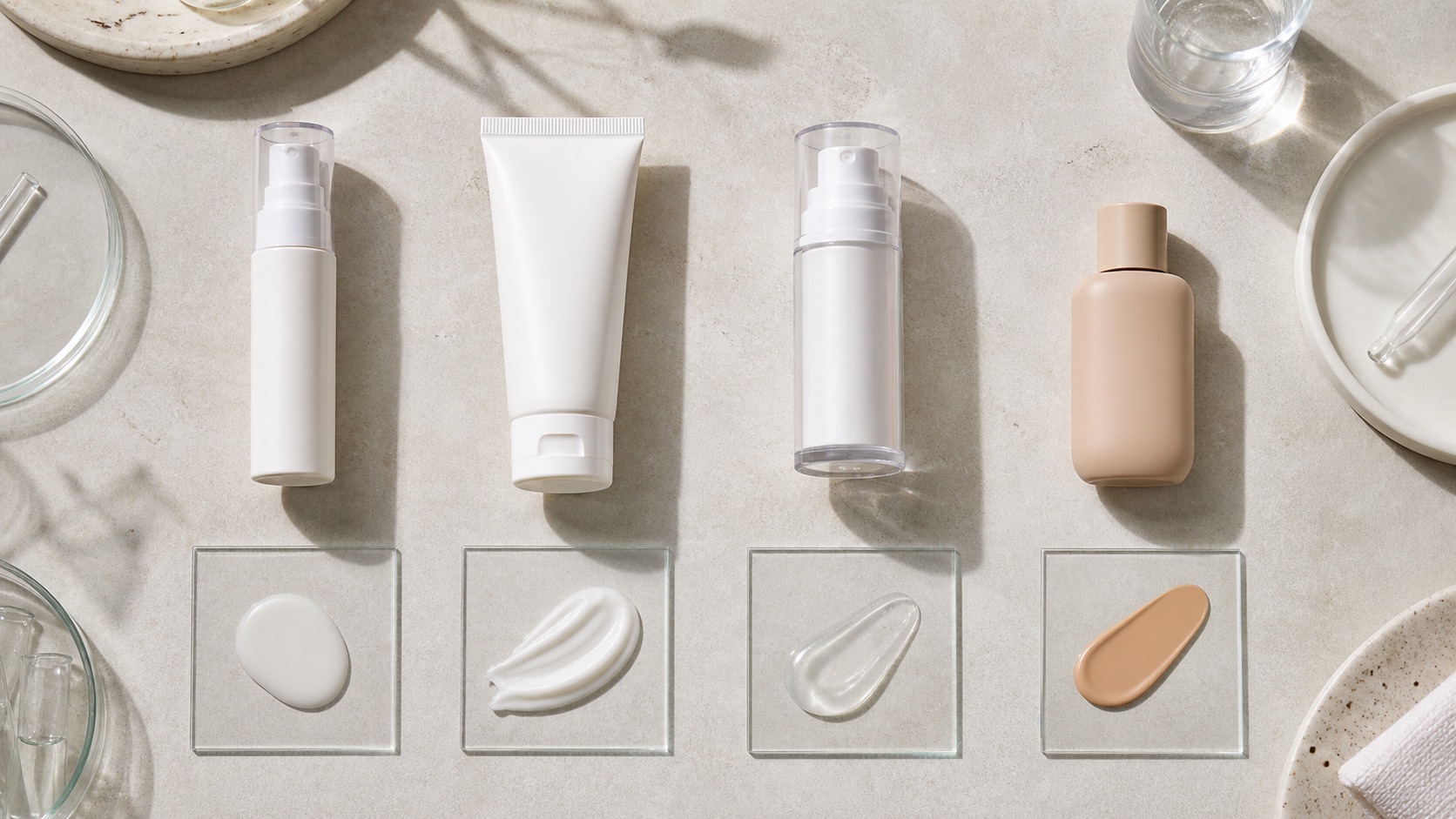
Texture does not determine protection level. Fluid, lotion, cream and gel-cream products can all achieve high SPF and UVA performance when properly formulated and tested. They differ in feel, spread, film, shine and tolerance. Test the full labelled amount across the face for several days rather than judging one drop on the back of the hand.
Dry or dehydrated skin
A cream or emulsion containing humectants and emollients may remove the need for a separate moisturiser. Observe tightness later in the day, settling into folds and interaction with cleansing and treatments. A rich texture is not automatically comedogenic, and dry skin does not always require a face oil; the complete formula and full dose matter.
Oily, combination or acne-prone skin
Fluids and gel-creams may feel lighter, but a highly alcohol-based or intensely mattifying formula can increase discomfort. ‘Non-comedogenic’ is useful product information but cannot guarantee that no individual will develop lesions. Introduce one sunscreen while keeping the routine stable. Inflammatory or persistent acne belongs with a dermatologist; sunscreen filters do not treat acne.
Sensitive skin and the eye area
Sensitive does not automatically mean mineral, and fragrance-free does not guarantee tolerance. Burning may relate to a damaged barrier, UV filters, solvents, preservatives, fragrance or migration with sweat. Try a simple formula on a limited area and keep it out of mucosa. Persistent burning, swelling or a significant reaction needs stopping and appropriate assessment.
Tinted sunscreen and visible light
Tinted formulas containing pigments such as iron oxides can reduce some visible light in addition to UV, which can matter for certain hyperpigmentation concerns. Clinical research in melasma has found benefits from adding visible-light protection in specific treatment contexts. This does not make tint mandatory for everyone.
The shade must allow a full photoprotective amount without an unacceptable mask or grey cast. If colour forces underapplication, choose a better shade range or use an appropriate untinted sunscreen as the base. Never add foundation to the sunscreen bottle to adjust its colour.
Organic and inorganic filters
Organic UV filters absorb radiation through their molecular structure. Zinc oxide and titanium dioxide are inorganic filters that absorb substantial UV and can also scatter or reflect some radiation, so calling them purely physical screens is inaccurate. Products combine filters to build spectral coverage, photostability and a usable film.
Mineral does not automatically mean natural, harmless, child-safe, reef-safe or non-irritating; organic does not mean toxic or inferior. Safety and authorisation are assessed by substance, form, concentration and use conditions, and the finished cosmetic needs its own safety assessment. Avoid moral rankings built from environmental or absorption studies removed from their regulatory context.
A theoretically impressive filter system is not useful if the product leaves a cast that causes underapplication, migrates into the eyes or separates on skin. A pleasant texture without adequate UVA coverage or water resistance for the setting is also insufficient. Evaluate spectrum, stability, film, packaging, storage, tolerance and instructions together.
Water resistance, sweat and friction
Water resistant does not mean waterproof. The claim describes retained performance after specified test conditions, not a permanent film. Follow the stated interval and reapply after swimming, heavy sweating, towelling or friction. Sport, beach and mountain exposure usually need a formula designed for that context, not simply the lightest everyday fluid.
Masks, collars, phone contact, tissues, rubbing the eyes and touching the face all remove or redistribute film. Reapplication decisions should include physical loss, not only elapsed time. If repeated eye migration is a problem, consider a more resistant formula around the orbital bone while using hats and sunglasses as additional protection.
When and how often to reapply
When outdoors, the AAD advises reapplication approximately every two hours and immediately after swimming or sweating, following the bottle. European guidance also stresses frequent reapplication, especially after perspiring, swimming or towelling. That interval is a practical outdoor rule, not proof that every indoor layer disappears precisely at two hours.
For largely indoor days, consider proximity to windows, a later trip outside, time since application, rubbing and the individual medical context. A person moving between outdoor appointments needs a different plan from someone remaining away from windows. When uncertain and exposure is meaningful, reapply rather than trying to calculate a personal residual SPF.
Use the same careful coverage as the first application. A stick needs repeated overlapping passes to build a film; a mist needs sufficient product and even distribution without inhalation; powder is difficult to apply at a dose comparable with a cream. These formats can be useful for touch-ups but should not be assumed to provide a full base from a few gestures.
Sunscreen with vitamin C, acids and retinoids
Vitamin C can complement a morning antioxidant strategy but does not replace sunscreen. If an acidic serum makes the sunscreen sting or pill, simplify the routine and consult the vitamin C guide rather than reducing the sunscreen amount.
AHA, BHA and PHA products may alter tolerance and some AHA cosmetics carry specific sun-sensitivity warnings. Use the exfoliant guide for formula and frequency. Retinol and retinal require gradual introduction and consistent protection, but sunscreen does not authorise ignoring irritation or product directions; see the cosmetic retinoids guide for the medicine boundary.
If water or moisturiser already burns, the skin has fissures or widespread scaling, do not conceal the overload with an increasingly rich sunscreen. Reduce the routine using the damaged barrier guide and seek care when signs persist. Shade, hats and clothing can support protection while a tolerable formula is identified.
When sunscreen choice needs medical guidance
Melasma, vitiligo, lupus, photodermatoses, suspected filter allergy, photosensitising treatment, immunosuppression, previous skin cancer and recent procedures require an individual plan. SPF 50+ may be one component, while a dermatologist may specify UVA1 coverage, tint, reapplication, clothing and lesion surveillance. Never stop a medicine because its leaflet mentions photosensitivity without contacting the prescriber.
A new, asymmetric, changing, bleeding or non-healing lesion should not be covered and watched for months. Sunscreen reduces future exposure; it does not treat an existing lesion. After a significant reaction, bring the package, ingredient list, batch and photographs to the clinician rather than diagnosing an allergy to ‘chemical’ or ‘mineral’ filters yourself.
Common face-sunscreen mistakes
Reading SPF as a percentage blocked or a safe multiplier of time in the sun.
Ignoring UVA performance and choosing only the highest front-label number.
Applying a token amount to avoid shine and missing ears, jawline and neck.
Mixing sunscreen with moisturiser or foundation and disrupting the tested film.
Treating water-resistant as waterproof and skipping reapplication after towels or sweat.
Using a few stick passes, a light mist or powder as the only dose without checking coverage.
Choosing mineral or chemical as a moral category rather than evaluating spectrum and tolerance.
Applying once in the morning despite hours outdoors, water, sweat and friction.
A professional sunscreen assessment protocol
In consultation, record exposure before recommending a product: work indoors or outside, hours, sport, water, windows, uncovered areas, treatments, medicines and sensitivity. Then record SPF, UVA indication, water resistance, texture, tint, format, stated amount, PAO and directions. Test the full dose for distribution, comfort, eye migration, edges, shine and realistic reapplication.
Use a record across three or more comparable days. Do not declare a sunscreen comedogenic from one use or ignore repeated burning. If full amount and texture are incompatible, change formula instead of systematically reducing dose. UV photography can illustrate missed areas but does not measure personal SPF or replace standardised testing.
Frequently asked questions about face sunscreen
What SPF should I use on my face every day?
Dermatology guidance commonly recommends broad-spectrum SPF 30 or higher; intense exposure, pigmentation or a medical plan may call for SPF 50/50+. UVA protection, adequate amount and an even film matter alongside the number.
Does SPF 50 protect twice as much as SPF 25?
No. SPF is a ratio from an erythema-based test, not a linear percentage of rays blocked or a simple time multiplier. Dose, uniformity, UVA coverage and film loss make arithmetic comparisons misleading.
How much sunscreen should I use for face and neck?
Testing uses 2 mg/cm², but the total depends on covered area and formula. Follow the product amount; two-finger and teaspoon methods are variable reminders. Two consecutive passes can improve uniformity without reducing the total.
Is the two-finger sunscreen rule accurate?
It is an estimate, not a universal measurement. Finger dimensions, nozzle, product density and whether the neck is included change the result. Use it only when consistent with the label and full-area coverage.
Does sunscreen go before or after moisturiser?
It usually closes the skincare routine after treatment and moisturiser unless directions say otherwise. When the sunscreen is moisturising enough, a separate cream may be unnecessary. Never mix the two in the palm.
Do I need sunscreen in winter?
UV does not disappear in cold weather, and snow and altitude can increase exposure. Consider the UV index, time outside, reflection, uncovered areas and medical context rather than temperature alone.
Do I need sunscreen indoors?
The answer depends on window type, distance, time by glass, later outdoor activity and individual photosensitivity. Someone away from windows all day has a different exposure from a person working beside a large sunlit window.
How often should face sunscreen be reapplied?
When outdoors, approximately every two hours and after swimming, sweating or towelling, following the label. Indoor decisions depend on later exposure and film loss; one rigid interval cannot replace context.
Does water-resistant sunscreen last all day?
No. The claim describes performance after specified test conditions, not a permanent film. Reapply at the stated interval and after swimming, sweating, towelling or substantial friction.
Are mineral or chemical filters better?
Neither category wins universally. Inorganic and organic filters both absorb UV and can be combined in different systems. Choose tested spectrum, film, tint, comfort and suitability for the exposure.
Is tinted sunscreen always better?
No. Iron-oxide tint can add visible-light protection useful for some pigmentation, but the shade must allow full application. A dermatologist can tailor this choice for melasma or persistent hyperpigmentation.
Can foundation or SPF powder replace sunscreen?
The amount normally used for makeup is usually too small and patchy to provide the tested sunscreen dose. Use a dedicated face-sunscreen base and treat makeup SPF as supplementary.
Can a stick or spray provide the only protection?
Only if applied at the labelled amount and uniformity, which is difficult with a few swipes or a light mist. Avoid inhalation and never spray directly onto the face unless the label permits it.
Why does sunscreen sting my eyes?
It may migrate with sweat or sebum, or the formula may contain an ingredient not tolerated. Keep it out of mucosa and try a more resistant eye-area-compatible product. Persistent burning or swelling needs assessment.
Can I dilute sunscreen with moisturiser?
No. Mixing makes amount, distribution and film formation unpredictable. Choose a lighter sunscreen or omit separate moisturiser when appropriate while keeping the sunscreen intact.
Is there a safe UV tan if I use sunscreen?
There is no damage-free UV tan. Sunscreen reduces exposure but does not block all radiation and must not be used to extend sun time. Combine it with shade, clothing and safer timing.
Scientific and regulatory sources
European Commission Recommendation 2006/647/EC on sunscreen efficacy, UVA protection and claims. Read EUR-Lex
ISO 24444:2019 for in-vivo determination of SPF. Read the ISO overview
ISO 24443:2021 for in-vitro determination of UVA photoprotection. Read the ISO overview
American Academy of Dermatology guidance on choice, amount and reapplication. Read the AAD guidance
Hughes et al.: randomised trial of daily sunscreen and skin ageing. Read the PubMed record
Castanedo-Cazares et al.: trial of UV and visible-light protection in melasma. Read the PubMed record
Continue your skincare pathway
Place sunscreen inside a stable morning and evening routine, adapt texture after observing skin type and current condition and use the skincare actives pillar to avoid overload. Browse the English skincare guide hub or explore online skincare courses for structured learning.
For benefits, realistic concentration comparisons and tolerance, read the niacinamide skincare guide before adding another niacinamide product to the routine.
For a complete morning and evening plan based on sebum, shine and comfort, read the oily and combination-skin routine before adding another mattifying or exfoliating step.
To distinguish a stable dry profile from temporary surface water loss and build a practical routine, read dry vs dehydrated skin: differences, textures and review criteria.
For a tolerable base, treatment support and clear referral criteria, read the acne-prone skincare guide without treating oily skin, irritation and acne as the same condition.
To separate a recurring sensitivity pattern from temporary reactivity and build a controlled baseline, read the sensitive versus sensitised skin guide for tolerance testing, a minimal routine and clear referral criteria.
To distinguish an acne lesion from a normal follicular structure and visible texture, read the blackheads, sebaceous filaments and visible pores guide for realistic skincare, strip and extraction limits.
For a cautious distinction between cosmetic discolouration and a mark that needs assessment first, read the facial dark spots and skincare guide for photoprotection, cosmetic options, measurement and dermatology referral criteria.
For a simple base when comfort, hydration and tolerance change over time, read the mature-skin skincare guide for essential care, photoprotection and the gradual introduction of one active at a time.
For a careful comparison of dryness, puffiness, structural bags and different dark-circle components, read the eye-area skincare guide for a simple routine, periocular safety and realistic cosmetic limits.
For a practical routine shaped by skin, shaving and facial hair rather than gendered packaging, read the men’s skincare guide for cleansing, moisturising, razor-bump prevention, beard care and sunscreen.
For a repeatable professional method that separates observation from diagnosis, read the cosmetological skin-analysis guide for type, current conditions, tools, documentation, privacy and referral limits.
To turn cosmetic observations and existing products into a plan a client can understand and follow, use the professional skincare-consultation protocol for intake, product audit, written handover, follow-up and referral boundaries.
For a proportionate record of products, reported reactions, separate permissions, photographs, retention and professional stop decisions, read the skincare client-record guide without turning cosmetic documentation into an improvised medical chart.
Translate daily sunscreen into a makeup-compatible system
Continue with the sunscreen-and-makeup guide.