Prepping skin before makeup means creating a clean, comfortable and predictable surface, not building the longest possible routine. Professional skin prep reads the visible condition on the day, respects products the person has already used and adds only what the makeup result needs: gentle cleansing where necessary, measured moisturising, sunscreen for daytime and targeted primer when it solves a defined problem. Amount, compatibility and settling matter more than the number of steps.
Quick answer: begin with clean hands and a surface that is clean without aggressive rubbing; respect any personal treatment already in use; apply a suitable amount of moisturiser and daytime sunscreen; start makeup when the layers have settled rather than while they are wet or excessively slippery. Primer is optional and local. If a layer pills, stop, remove the affected area and simplify instead of covering the debris.
This guide owns the order, amount and cosmetic preparation immediately before makeup. It does not choose foundation colour, which belongs to the undertone and foundation matching guide, or compare foundation formats and finishes, covered in the foundation texture and coverage guide. A full home skincare routine has a different purpose from event skin prep. Practise the sequence through the beginner makeup course and the wider English makeup course catalogue.
The essential skin-prep order before makeup
The essential sequence
Every layer needs a defined purpose
Hygiene and observation
Cleanse only if needed
Moisturiser and daytime SPF
Targeted primer and base
The American Academy of Dermatology gives a general order of cleansing, treatment or medication, moisturiser and/or sunscreen, followed by makeup. In professional work, adapt that structure without changing prescribed routines. A makeup artist can ask, observe and apply cosmetics within scope; they do not diagnose a skin condition or instruct a client to stop treatment.
Brief and observation: ask what is already on the skin, known sensitivities, the desired finish, wear time and environment.
Hygiene: clean hands and prepare tools, palette and disposables without double-dipping.
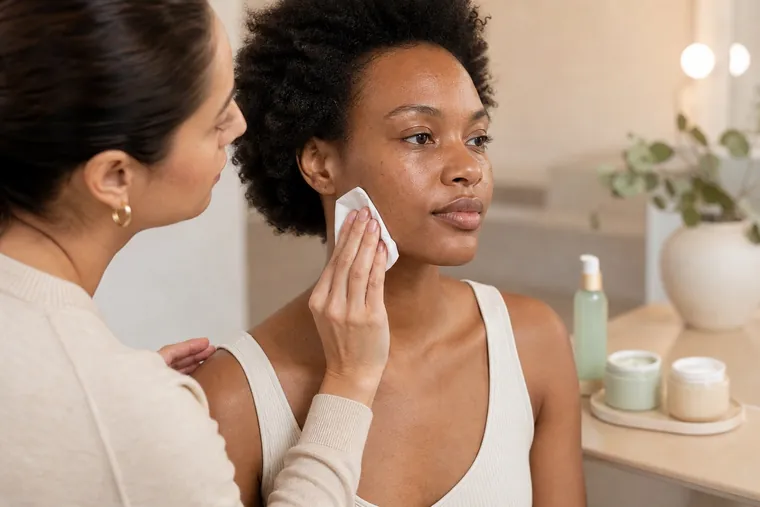
Gentle cleansing: remove sweat, makeup or incompatible residue only when necessary, then pat rather than scrub.
Personal treatment: do not remove or layer over medication arbitrarily; clarify the person’s instructions.
Moisturising: dose by zone and wait until excess slip has reduced.
Daytime sunscreen: keep the labelled amount and application directions beneath makeup.
Targeted primer: add it only where it improves grip, comfort, optical texture or shine control.
Base: begin with little product once the surface is even and settled.
Observe the surface without turning makeup into diagnosis
Look for visible shine, reported tightness, small flakes, pores, raised texture, moving zones and residue from the existing routine. These observations guide amount and gesture; they are not disease labels. If there is an open wound, suspected infection, significant swelling, strong burning or a sudden reaction, stop the service and recommend appropriate healthcare assessment.
Observation | Operational goal | Prudent first test |
|---|---|---|
Tightness or flakes | Comfort and flexible film | Simple moisturiser and low friction |
Localised shine | Zone adhesion | Thin layers; primer only where needed |
Pores or raised texture | Evenness without thickness | Minimal product and light pressure |
Product-heavy surface | Reduce residue and interfaces | Blot excess instead of adding layers |
When gentle cleansing is useful before makeup
Gentle cleansing helps when sweat, obvious oil, previous makeup or heavy overnight products remain. It should not leave the surface tight or become an improvised peel. Use lukewarm water and a tolerated cleanser where possible, work with fingertips or a clean soft support, then pat dry. Scrubs, harsh brushes and last-minute acids may increase irritation and make the surface less predictable.
If the person arrives with a complete morning routine and the skin is comfortable, removing everything is not automatically helpful. Ask which products are present, assess slip and intervene only on the problem areas. Do not wipe away sunscreen or a prescribed layer merely because your usual sequence starts from bare skin.
Toner, serum, eye cream, moisturiser and oil: what is necessary?
Every added product creates another interface beneath foundation. Toner may feel pleasant but is not mandatory. One familiar lightweight serum may support comfort, but several serums do not make the prep more professional. Moisturiser is often the most useful step: use the minimum that relieves tightness and vary it by zone. Face oil is not a universal primer; it may alter adhesion, coverage and dry-down in formulas not tested with it.
Toner or essence: optional; avoid introducing an irritating or highly fragranced formula before an important service.
Serum: one light, already tolerated product; multiple films increase the opportunities for pilling.
Eye product: a minimal amount away from the lash line; excess can destabilise concealer and mascara.
Moisturiser: enough for comfort, not a wet layer that moves beneath foundation.
Oil or balm: only on a genuinely dry area after testing it with the selected base.
Daytime sunscreen stays beneath makeup
For daytime, sunscreen follows the preceding skincare layers and remains under makeup. Use the labelled amount, warnings and directions. The FDA advises applying sunscreen 15 minutes before sun exposure and reapplying at least every two hours, and more often after swimming or sweating. Local public-health advice and the specific product label may differ. Makeup does not automatically replace adequate sunscreen even when the colour product carries an SPF claim.
Distribute the sunscreen evenly and allow its film to settle without continuous rubbing. If it pills or leaves an irregular surface, do not simply reduce the required amount. Test a different compatible combination, simplify earlier layers or schedule more settling time. The separate daily face sunscreen guide owns daily amount, texture and reapplication; this page only places sunscreen within makeup prep.
How long to wait between skincare and makeup
Settling, not a universal stopwatch
Time windows help; the deposited film decides
Serum
About 30–90 seconds
Moisturiser
About 2–5 minutes
Sunscreen
Follow its label
Primer
Often 30–60 seconds
No universal stopwatch fits every formula. Temperature, quantity, humidity, emulsion and the number of layers change settling. Use visual and tactile evidence: the surface should not be wet; a clean finger should not move a visible layer; and a clean tissue placed without rubbing should not lift a large amount. The following are working windows, not fixed rules. Product directions take priority.
Step | Example working window | Evidence to continue |
|---|---|---|
Light serum | About 30–90 seconds | No drops or mobile film |
Moisturiser | About 2–5 minutes | Comfort without excess slip |
Sunscreen | Label directions; before exposure as instructed | Even settled film |
Primer | Often around 30–60 seconds | Stable distribution, not wet |
Example times help organise practice but should never override the observed film. Write down products, approximate amount, room conditions and what happened when foundation was applied. A recorded combination is more useful than repeating “wait longer” without knowing which layer was still moving.
Check absorption and residue before foundation
View the face from the front and side. Where excess product creates strong mobile shine, press a clean tissue lightly without wiping the whole preparation away. If one area still feels tight, add a very small amount only there. If a finger moves the layers, wait or simplify. The T-zone, cheeks and eye area do not need identical preparation.
Face primer is optional and targeted
Primer is useful when it adds a function that skincare and foundation do not already provide: optical softening of pores, added grip, easier glide on a dry zone or local shine control. Applying it over the whole face by habit adds thickness and makes it harder to identify which layer caused a failure.
Test primer and foundation together. Two formulas may work well alone but pill when amount, polymers or repeated rubbing are incompatible. Do not use the simplified “water with water, silicone with silicone” rule as a guarantee: the complete composition, dose, dry-down and deposited film matter more than spotting one ingredient near the top of a list. The professional makeup products course supports formula reasoning without replacing real compatibility tests.
Adapt prep for dry, combination and mature surfaces
Prepare by zone, not by a single label
Cheeks, T-zone and eye area may need different amounts
Cheeks
Comfort with low friction
T-zone
Localised control
Eye area
Minimal settled product
For a surface showing tightness or small flakes, do not pour on face oil immediately before makeup. Cleanse only if necessary, apply a simple moisturiser, let it settle and work with low pressure. Keep powder and mattifying primer to essential areas. If one patch still lifts, remove that local film and rebuild a thin layer instead of adding more.
A shiny surface can still need comfort. Choose light familiar products, allow moisturiser to settle and control only the T-zone when required. Do not aggressively degrease the whole face when cheeks behave differently. A wear test distinguishes even luminosity from foundation separation.
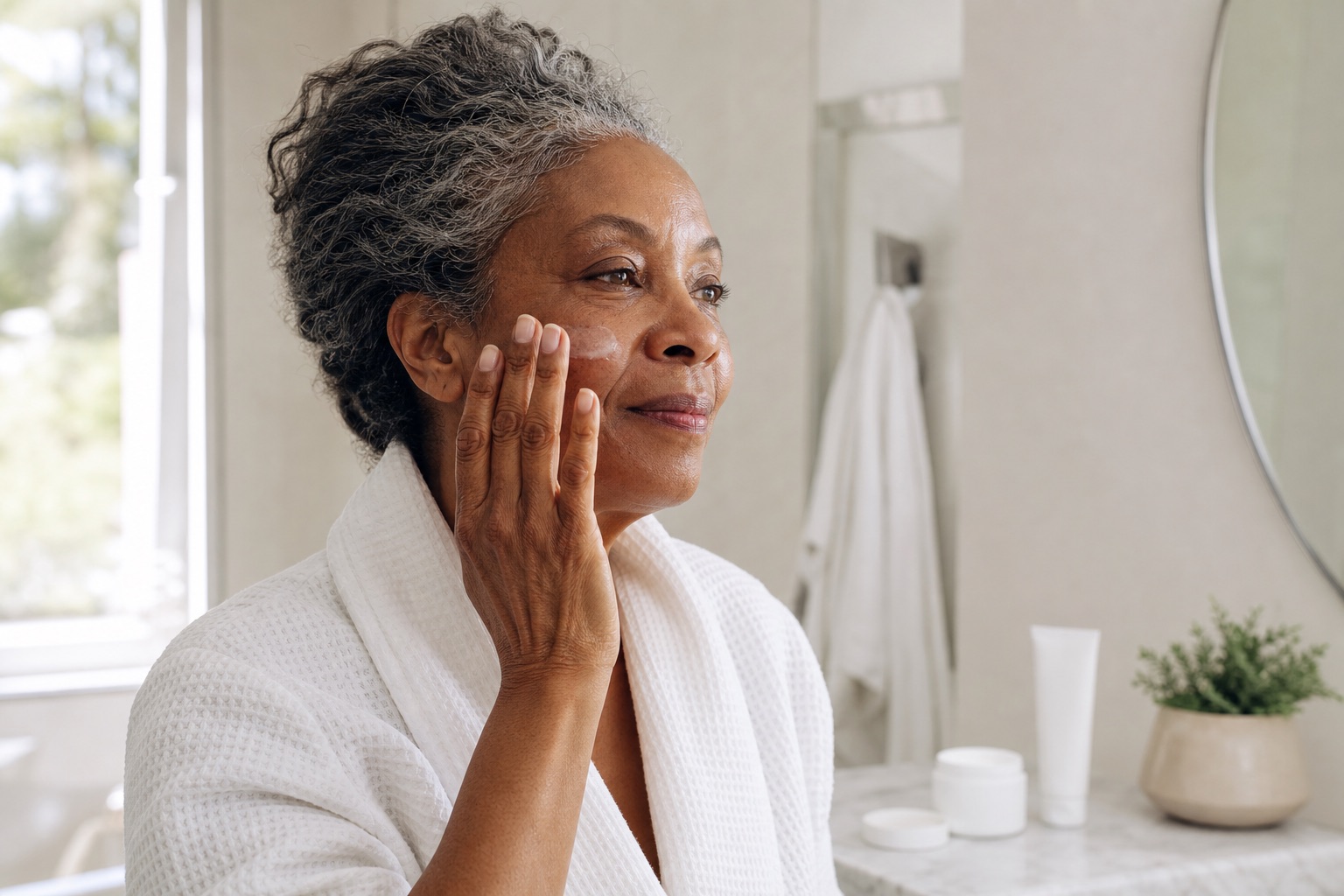
On mature skin, aim for comfort and flexibility rather than erasing normal lines. Use small amounts around eyes and mouth, wait for settling and remove excess from folds before base. Dry primer, rich concealer and heavy powder can accumulate exactly where the face moves most. Inspect while the person talks and smiles.
Sensitive or acne-prone skin and dermatological treatment
On sensitive skin, use as few already tolerated products as possible and avoid introducing strong fragrance or last-minute exfoliation. For acne-prone skin, the AAD suggests looking for labels such as oil-free, non-comedogenic or “won’t clog pores”, removing makeup before sleep and cleansing gently. Do not squeeze lesions or move shared applicators between skin and packaging.
If a person uses retinoids, topical medication or has recently undergone a dermatological procedure, do not improvise active products, peels or massage. Ask what advice they received and postpone when the barrier is not intact or a healthcare professional has advised against cosmetics. “Hypoallergenic” cannot guarantee an absence of reactions.
Why skincare pills under foundation
When pilling appears, stop
Adding more product traps the particles in the base
Remove the affected area
Simplify the layers
Press instead of rubbing
Record the combination
Pilling may come from too much product, unsettled layers, friction, incompatible film behaviour or a surface already overloaded. An ingredient list alone cannot always identify the cause. When particles appear, stop. More primer or foundation embeds them into the base and makes the texture harder to repair.
Remove the affected local area gently without rubbing the whole face.
Restart with fewer products and smaller amounts.
Allow settling, then press the next layer instead of repeatedly sweeping.
If pilling returns, change one formula at a time and record the combination.
Three prep protocols for different time windows
Available time | Sequence | Priority |
|---|---|---|
10 minutes | Brief, hygiene, residue correction, targeted moisturiser, respect existing SPF, local primer | Do not add unnecessary steps |
30 minutes | Gentle cleanse, zone moisturising, settling, daytime protection, small base test | Check compatibility before the full face |
60 minutes or trial | Full brief, baseline photo, preparation, zone test, base, multiple-light review and product record | Document a repeatable system |
Professional checklist before foundation
Have I asked what is already on the skin and about known sensitivities?
Are hands, palette, brushes and sponges within a clean professional workflow?
Does every added product have a named function?
Has daytime sunscreen been respected according to the label and setting?
Is the surface settled and even, without a mobile film or pilling?
Have moisturiser and primer been varied by zone rather than applied automatically everywhere?
Have I tested a small foundation amount before continuing?
Practise this sequence within a complete routine, then protect it with the makeup hygiene guide and the progressive exercises in learning makeup from scratch.
Frequently asked questions about skin prep before makeup
What is the correct skincare order before makeup?
A general order is gentle cleansing when needed, personal treatment, moisturiser, daytime sunscreen, optional targeted primer and makeup. Use only necessary steps and follow product instructions.
How long should moisturiser settle before foundation?
About two to five minutes can be a working range, but formula and amount matter. Continue when the surface is comfortable rather than wet or excessively slippery.
Is face primer always necessary?
No. Use it when it adds a defined function such as grip, local shine control or optical smoothing, and test it with the selected foundation.
Does sunscreen go before or after primer?
Sunscreen completes the daytime skincare layers beneath makeup; cosmetic primer follows after the sunscreen film has settled. Always follow the sunscreen label.
Must the face be washed immediately before makeup?
Cleanse when sweat, oil or incompatible residue is present. If a suitable morning routine is already settled, correcting local excess may be more useful than removing everything.
How do I prep dry-looking skin without making it heavy?
Use gentle cleansing only if needed, one simple moisturiser in a measured amount and realistic settling time. Avoid stacking oil, rich cream and primer without a compatibility test.
How do I prep oily or combination skin?
Do not strip the whole face. Use light familiar products, differentiate T-zone and cheeks, and add primer or powder only where shine affects the required wear.
Why does skincare pill beneath foundation?
Common variables include excessive amounts, too many layers, insufficient settling, friction and incompatible films. Remove the local area, simplify and change one variable per test.
Can face oil be used as primer?
Only after a focused test. Oil may improve comfort in one dry area but reduce adhesion, coverage and wear of an incompatible foundation.
How should the eye area be prepared?
Use very little product away from the lash line, allow it to settle and blot accumulation from folds. Excess eye cream can destabilise concealer and mascara.
Can makeup be applied over irritated or broken skin?
Do not proceed where skin is broken or there is major swelling, pain, burning or an unexpected reaction. Stop and recommend appropriate healthcare guidance.
How can I verify that a skin-prep combination works?
Test a small area with the same foundation, tool and setting, then inspect immediately, after settling and after realistic wear. Record the combination instead of changing several variables together.
Sources and next steps
Review the American Academy of Dermatology guidance on skincare and makeup order, an essential routine and makeup with acne-prone skin. For safety and daytime protection, see FDA guidance on using cosmetics safely and sunscreen use. Continue with the English makeup guide library or compare current online makeup courses.
To separate hue, value, saturation, contrast and controlled neutralisation, continue with the makeup colour theory guide. It treats colour as a testable design decision rather than an automatic pairing.
To combine complexion, brows, eyes, cheeks and lips into one efficient service, continue with the professional day-makeup guide. It connects product decisions to intensity, natural-light checks and realistic wear.
To adapt these product and placement decisions to moving lines and mature texture, continue with the makeup for mature skin guide. It uses zone-based preparation, thin layers and selective setting without age-based rules.
To test how skincare, sunscreen, primer and foundation behave as one film, continue with the primer and foundation compatibility guide. It replaces water-versus-silicone myths with measured layering and A/B wear tests.
When skin preparation must stop
If burning, itching, swelling or new redness appears, do not add skincare or primer; follow the cosmetic reaction stop protocol.
Prepare for the booked service
Before confirming, read the client guide to professional makeup costs.
Keep preparation compatible with acne care
Use the stop rules in the acne-prone skin makeup guide.
Prepare recently shaved skin without assumptions
Adapt preparation through the men’s makeup guide.
Close the service with a planned removal method
Complete preparation with the makeup-removal guide.
Let skincare settle before a hot-weather base
Continue with the heat-and-humidity makeup guide.
Keep adequate sunscreen under the makeup sequence
Use the sunscreen-and-makeup protocol.
Reduce preparation when skin is highly reactive
Apply the rosacea and sensitive-skin makeup protocol.
Prepare the under-eye area without excess slip
Continue with the dark-circle layering guide.