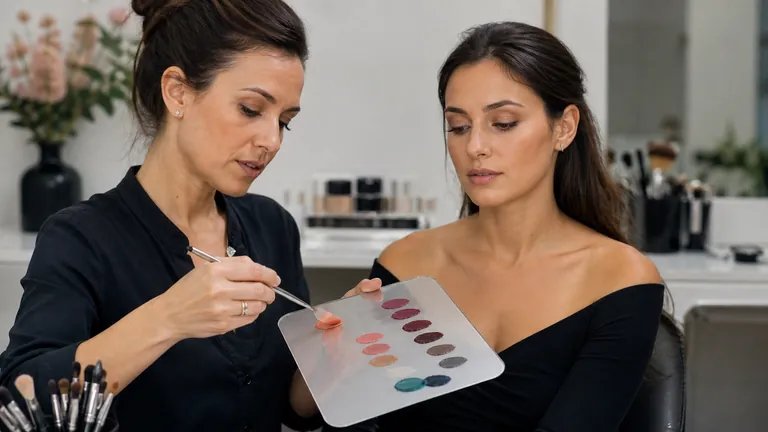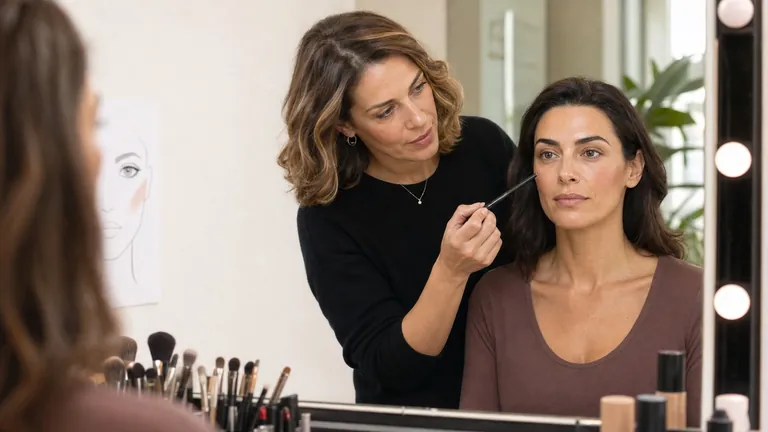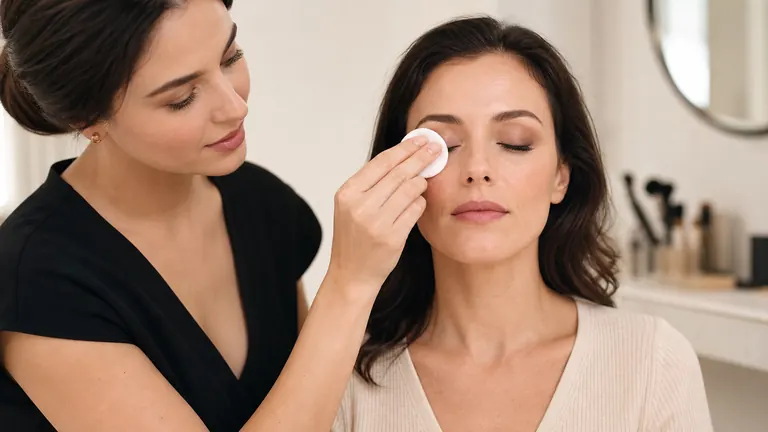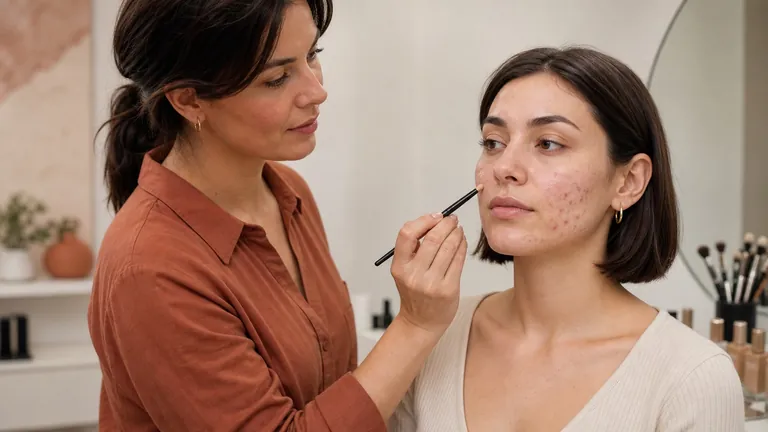
Heat does not change every part of a makeup look in the same way. Your forehead may turn shiny while coverage stays intact; sweat may bead above the lip; glasses may lift foundation from the nose; lashes may mark the upper lid. For waterproof makeup in heat, sweat and humidity, choose resistance where exposure calls for it and keep the rest light enough to repair. First identify what changed. Shine, visible sweat and missing pigment call for different touch-ups.
Start with the conditions and a workable sequence
Ask how long the look must last, where the person will be, what activity and accessories are involved, and who can handle touch-ups.
Use familiar skin prep. Apply sunscreen according to its directions, then let each layer settle before makeup.
Keep complexion layers thin. Add concealer only where coverage is needed, and choose eye and lip formulas you can remove comfortably.
Use the trial to decide which zones need setting and which need fewer layers. Check the full look after several hours in conditions close to the event.
If sweat appears, cool down when possible, blot, wait, then replace colour only where it has lifted.
This is an order of decisions, not a fixed shopping list. The guide to making makeup last covers general powder and spray technique. Here, climate and physical contact determine what needs to change.
Heat, humidity, oil and friction: what to inspect
Heat can increase sweating. In very humid air, sweat evaporates more slowly and may remain on the skin. Sebum can create shine without visible droplets. Glasses, a veil or a collar may remove colour through repeated contact; a water-resistant formula does not cancel that friction. Inspect the forehead, upper lip, sides of the nose, lids and accessory contact points separately instead of judging the whole face from one front-facing photo.
Before choosing the base, ask about outdoor time, air-conditioned rooms, dancing, tears, stage lights, glasses and opportunities for a break. That short brief helps distinguish climate exposure from a product pairing or contact problem.
What waterproof, transfer-resistant and long-wear claims tell you
Waterproof / water-resistant
- Useful trial
- Check the finished product against water under the maker's stated conditions.
- What the claim cannot settle
- It does not prove the whole look will resist oil, sweat and rubbing.
Transfer-resistant
- Useful trial
- After the product sets, check realistic contact with clean glasses, fabric or a phone.
- What the claim cannot settle
- Repeated pressure may still leave a mark.
Long-wear
- Useful trial
- Compare the look over time in similar light and conditions.
- What the claim cannot settle
- A stated number of hours is not a personal guarantee in every climate.
Read the specific finished-product claim, permitted area, instructions and warnings on its label. Do not infer a product's performance from one ingredient or extend an eye-product claim to the entire face. Sunscreen water-resistance labels describe sunscreen testing; they are a separate decision from the word waterproof on makeup. The makeup label guide explains where to find instructions and warnings.
Prepare skin and sunscreen without unstable layers
Cleanse and moisturise with products the person already tolerates. Give skin care time to settle. If primer and foundation pill while you apply them, stop and remove the rolled-up patch. Try less product or a different pairing on that small area rather than coating the pills. The primer and foundation compatibility guide explains how to test that pairing; the skin-prep guide covers the full order.
For outdoor time, choose sunscreen for the activity and follow its application and reapplication directions. Let the sunscreen set before pressing makeup over it. Waterproof foundation or foundation with SPF does not make the sunscreen waterproof or replace reapplication. The sunscreen and makeup guide handles how to reapply when makeup is already on.
Keep foundation from turning patchy when you sweat
Start with a thin veil of foundation from the centre outward. Use little or none where product tends to collect, such as around the nostrils and upper lip. If a mark still needs coverage, tap a small amount of concealer on that spot and soften its edge. After the base sets, press a little powder only on zones that became shiny in the trial. A stable cheek does not need the same layers as the nose.
If the base separates during application, another full layer is unlikely to fix that patch. Remove the material that has clumped, rebuild locally with less product, and check whether the skin care or sunscreen underneath makes the base slip or clump. If the patch fails again after one repair, stop adding colour. Clean and redo that small area only if time, clean tools and a tested product allow; otherwise accept lighter coverage.
Check mascara and eyeliner with eyes open
Remove only excess skin care from the lid, apply thin eye layers and let them set before adding more. Then open your eyes and check whether the lashes touch the upper crease. A small mark there can result from contact and oil even without rain or tears. Test placement and formula after settling. Adding powder close to the eye will not diagnose the cause.
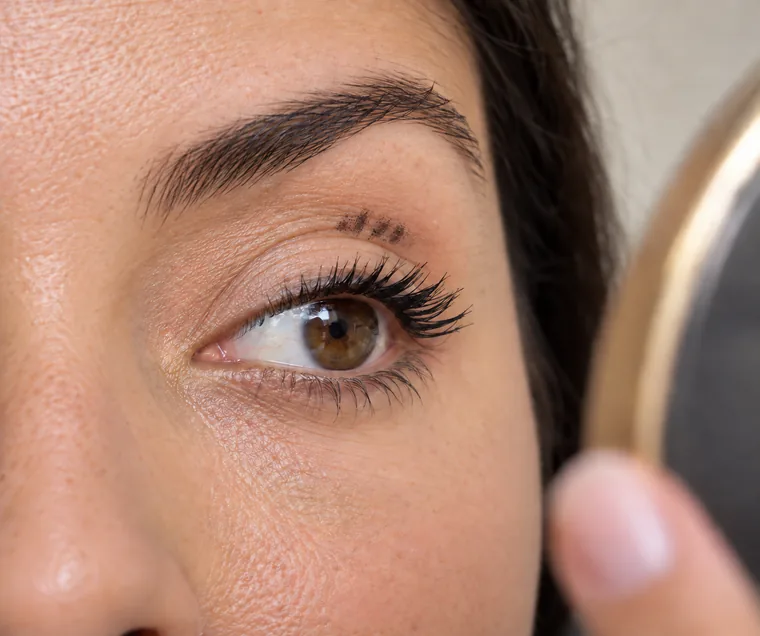
During a trial in a warm room, a small mascara print appears on the upper crease after half an hour, without tears. With the eyes open, check whether the lash tips touch that spot; remove only the mark with a clean applicator, away from the inner eye. In the next trial, use less mascara on the tips or change formula, then check again after the same interval. If the mark returns, a waterproof label alone has not solved the contact problem.
For a concrete product example, Maybelline Sky High Waterproof has root-to-tip application directions and the maker specifies waterproof eye-makeup remover. A tubing formula is another option when its own wear and removal directions fit the person; do not assume every tube mascara removes the same way. Test the formula on the person who will wear it, then check whether removal is comfortable without rubbing. The professional mascara guide covers formula choice and hygiene.
Lips, cheeks and glasses: test physical contact
Add cheek colour a little at a time and judge it in light similar to the event. Choose a lip texture you can restore after eating or drinking: blot the lip line, redefine it with pencil if needed, then apply a thin layer. A very dry stain is not automatically more comfortable or easier to repair.
Wear the glasses planned for the event for several minutes before leaving. Remove them and check the nose pads and temples. If a mark appears, try less base at that point next time rather than covering it with more layers. Test a veil, collar or phone with similarly clean, realistic contact. The makeup with glasses guide goes further into frames and lenses.
Set with powder or spray only where it helps
Press a little powder onto dry zones that lose definition; do not sweep it over makeup that is still damp. A setting spray may alter finish or resistance when its formula is made for that purpose, but it cannot repair an incompatible base or absorb sweat already on the face. Follow the product's distance and use-area directions, protect eyes and mouth as instructed, and let it dry untouched. Compare the trial result: extra tightness or irritation is a reason to change the plan.
How to touch up makeup after sweating
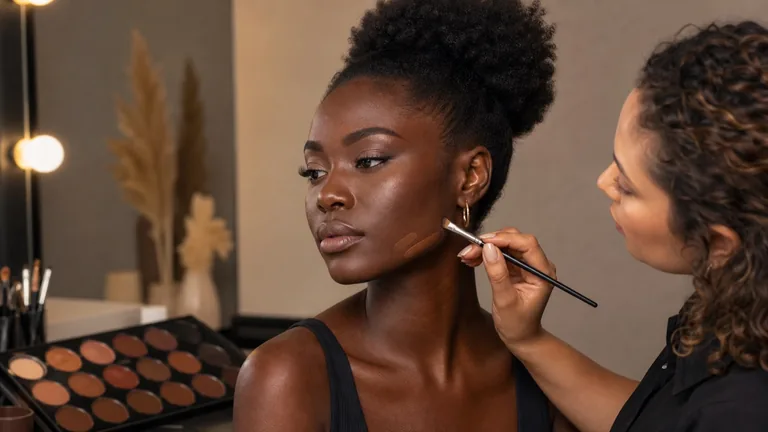
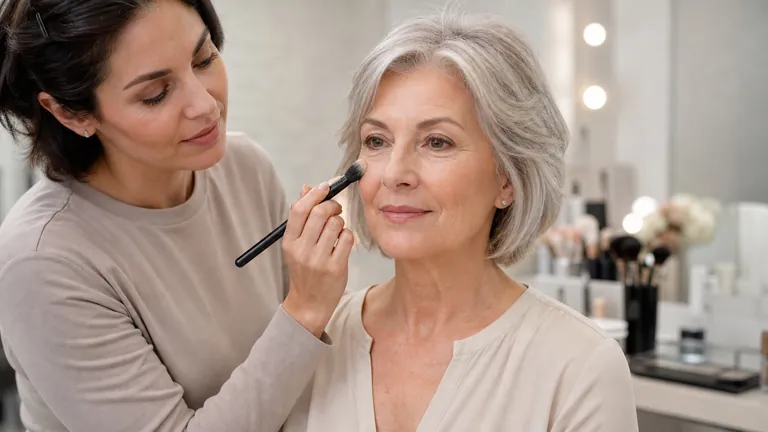
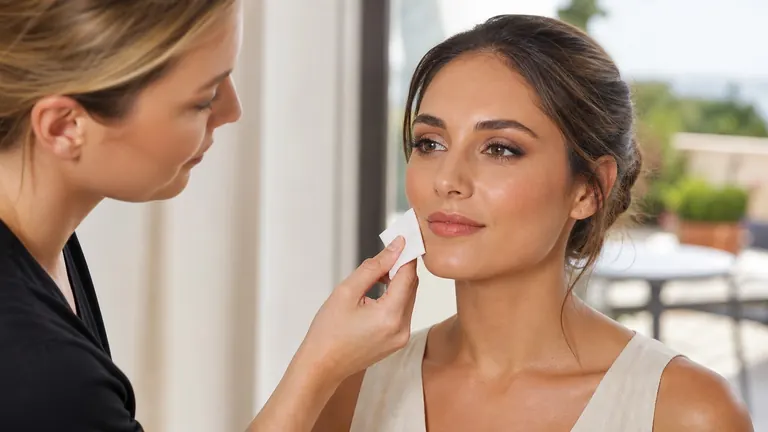
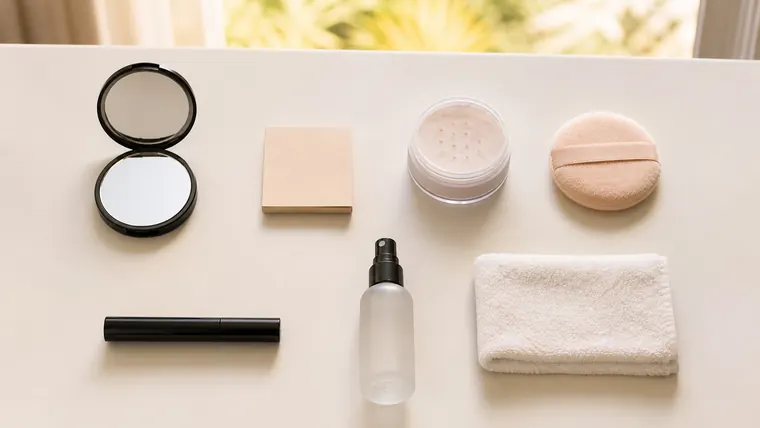
Inspect the makeup closely in adequate light. These three images are illustrations, not measured before-and-after results. The useful question is whether colour is actually missing.
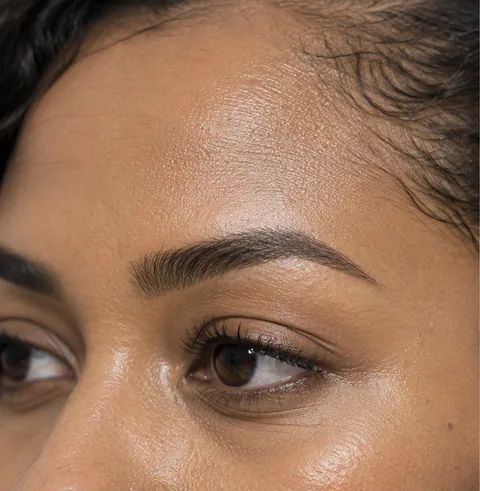
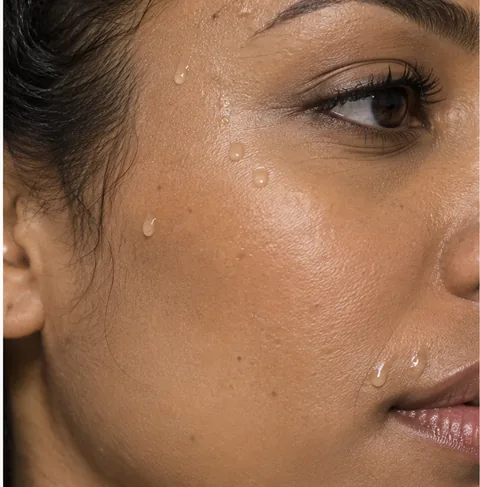
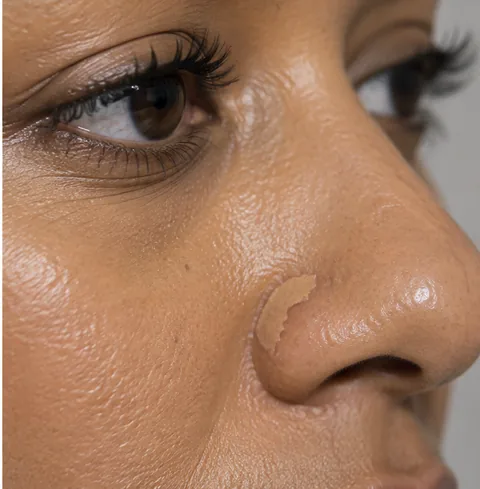
For the repair itself, move somewhere cooler when possible and press with clean paper without dragging. Let the area dry before adding product. If coverage is missing, use a clean applicator and a tiny amount of the tested base, feather the edge, let it set and powder only that spot. Stop if the colour was even all along.
When working on someone else, keep clean and used tools separate. A small kit needs blotting paper, a clean applicator reserved for that person, a little product for local repair and the chosen lip product. Avoid shared testers and applicators; the workstation hygiene guide covers professional handling.
A practical case: outdoor ceremony to air-conditioned room
This is an illustrative teaching case, not a measured client's result. A ceremony begins outside and moves to a cool reception room; the wearer has glasses and afternoon photographs. In the trial, apply a thin base, check the eyes with the glasses on, and prepare blotting paper and lip colour. Set illustrative checkpoints for 10:00, 12:00 and 14:00, and photograph the fresh look in comparable light. The first photo cannot show what happens after moving from the outdoor ceremony into the cool room.
At the first break, the forehead reflects light but coverage remains even: blot and skip more foundation. Later there are droplets above the lip and a mark under a nose pad: blot, wait, and repair only where colour is gone. After food or drinks, restore the lips with the wearer's own product. In the next trial, change one variable, such as less base on the nose bridge, and check again with the same glasses. Hand over the small kit with a clear plan for who will do each touch-up; the bridal makeup trial guide covers the complete service plan.
Run a wear test you can compare
Test skin care, sunscreen, base, eyes and setting together in conditions close to the actual setting, without deliberately exposing anyone to unsafe heat. Record products, order, amounts, conditions and checkpoints. Take unfiltered photos from similar distance and in similar light. Inspect forehead, nose, upper lip, cheeks, eyes and lips separately. Note when shine, droplets, transfer, discomfort or missing colour appear, then record how long the repair takes and what you did in that area.
The printable wear-test sheet has a filled example and a blank page. Record the observed problem separately from the one change planned for the next trial. Spraying water onto a hand swatch can test a sample; it cannot reproduce facial oil, expression, sweat, glasses or removal.
Exercise, reactive skin and heat safety
An intense workout has a different goal from an event look. In its acne-and-exercise advice, the American Academy of Dermatology recommends removing makeup before a workout and patting sweat away with a clean towel. If skin burns, becomes irritated or cannot tolerate removal, stop using that cosmetic and simplify the look. The sensitive-skin guide covers tolerance and when to stop.
For example, someone whose skin tends to flush wants to keep a full event base through an intense class. If the product starts to sting as they sweat, adding more setting spray is the wrong test. Stop using that formula and gently remove the makeup as soon as it is safe and practical; plan to go without it for the next workout. Check whether the discomfort resolves; persistent or worsening symptoms call for medical advice rather than more coverage.
If someone becomes dizzy, nauseated or weak during a service, stop the makeup work and seek a cool place and appropriate help. Confusion, fainting or other severe signs need urgent help under local guidance. A touch-up must not delay it; makeup does not protect against heat illness.
Remove resistant makeup at the end of the day
Plan removal when choosing the formula. Choose an eye-safe remover for mascara and suitable removers for the lip and face products. Give the remover time to loosen the makeup, then wipe it away gently without rubbing. Waterproof and tubing mascaras can require different removal methods; follow the particular maker's directions. The complete makeup-removal guide gives the zone-by-zone routine. If a product causes burning or swelling, stop using it and see the cosmetic reaction guide.
Sources and scope
NOAA/National Weather Service — humidity and slower sweat evaporation.
US FDA, Eye Cosmetic Safety — eye-area hygiene and use limits.
American Academy of Dermatology, acne and workouts — makeup removal and sweat blotting in the workout context.
CDC/NIOSH, Heat-related Illnesses — warning signs and response priorities.
American Academy of Dermatology, sunscreen labels — sunscreen water-resistance label meaning.
Substantive review: 28 September 2026. Cosmetic education by Irene Tomasi. The photographs and event case are illustrative; they do not establish product performance or replace product directions, medical assessment or heat-safety procedures.