A beginner makeup kit should help you practise a small group of skills well. It does not need to reproduce a retail counter or a working artist’s case. Begin with hygienic handling, dependable tools and a limited set of adaptable products. Add shades, textures and specialist items only when a planned exercise, model or service creates a clear need. Buying by function makes the kit easier to understand, clean, carry and replace.
Quick answer: start with hand and tool hygiene, simple skin preparation, one workable complexion route, concealer, a controllable powder, a small cheek and eye selection, two lip options, seven to nine brush functions, clean single-use applicators, a mixing palette and separate clean and used storage. You do not need twenty foundations, an enormous eyeshadow palette, an airbrush or every trending product. The kit should grow after practice exposes a genuine gap.
This guide owns the beginner-kit intent in the BeautyLearn makeup guide library. Use learn makeup from scratch to plan technique order, the makeup course cost guide to budget for tuition and compulsory materials, and the course-selection checklist to assess teaching. A later professional kit and workstation guide will cover service stock, shade breadth, backups and operational capacity; this page deliberately does not.
Think in functions, not shopping categories
List the actions your next exercises require: prepare, even, correct, set, add dimension, define eyes, shape brows, colour lips, apply without contaminating the product, clean and document. Every item must answer one of those actions. When two products perform the same job in the same exercise, one can usually wait. When a product cannot be handled hygienically on another person, it is not ready for a shared practice kit even if its colour looks useful.
Separate three contexts. A personal kit can be matched to one face and used directly according to its instructions. A learner kit for consenting adult models needs more shade planning and a method that prevents applicators from returning to the original container. A professional service kit needs broader representation, stock control, backups, traceability and procedures for repeated clients. A beginner does not need to buy the third kit before understanding the first two.
Question | Useful decision | Common mistake |
|---|---|---|
Which skill am I practising? | Buy only the missing function | Buying because an item is trending |
Who will use it? | Separate personal and shared handling | Sharing direct applicators |
What do I already own? | Inventory, test and record it | Duplicating shades and textures |
Build the kit in three layers
Let practice approve the next layer
The kit expands only when a technique or real brief creates a missing function
Layer 1
Hygiene, core formulas and tools
Layer 2
One function for the next technique
Layer 3
Range for real people and briefs
Evidence
Attempts, photographs and feedback
Layer one supports today’s fundamentals: hygiene, simple preparation, base, concealer, powder, one cheek colour, a compact eye palette, mascara for personal use or single-use wands for models, a pencil, two lip options and distinct brush functions. Layer two follows the next technique: perhaps colour correctors, a different finish, brow control, false lashes or a more precise liner. Layer three responds to real briefs and varied people: shade breadth, bridal wear, mature skin, photography, editorial finishes or professional service stock.
This sequence also protects learning. A huge palette allows you to change colour whenever a result disappoints, which can hide whether pressure, amount, placement or blending caused the problem. A small predictable selection keeps variables visible. Once the movement becomes repeatable, expanding the kit has a technical purpose: you are adapting a known principle rather than purchasing around an unidentified error.
Audit exercises, people and workspace before buying
Write down the next four practices. For example: lightweight skin preparation and base on yourself; discreet colour correction on a consenting adult; a matte daytime eye with a visible transition; and a lip with two intensities. For each practice, note the person, skin appearance, depth, undertone, available light, products you already own and one observable standard. The missing item becomes specific rather than imaginary.
Inspect the workspace too. You need a stable washable surface, readable neutral-looking light, a steady chair, mirror, clean water or the appropriate cleaning setup, and a place where clean and used items cannot meet. A decorative lamp and expensive case do not compensate for a dark, crowded surface. A phone can document progress when its position, exposure and light stay consistent and no beauty filter changes colour or texture.
Hygiene comes before colour
A one-way hygiene workflow
Clean product handling should never return through a used applicator
Prepare hands and surface
Remove product to a palette
Apply with a clean tool
Separate used items
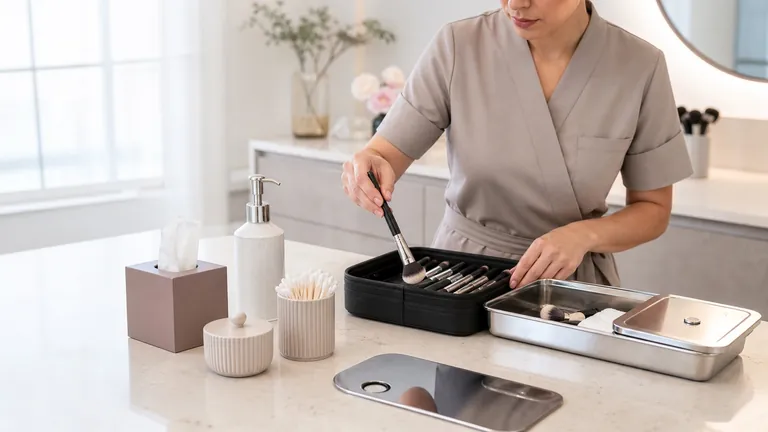
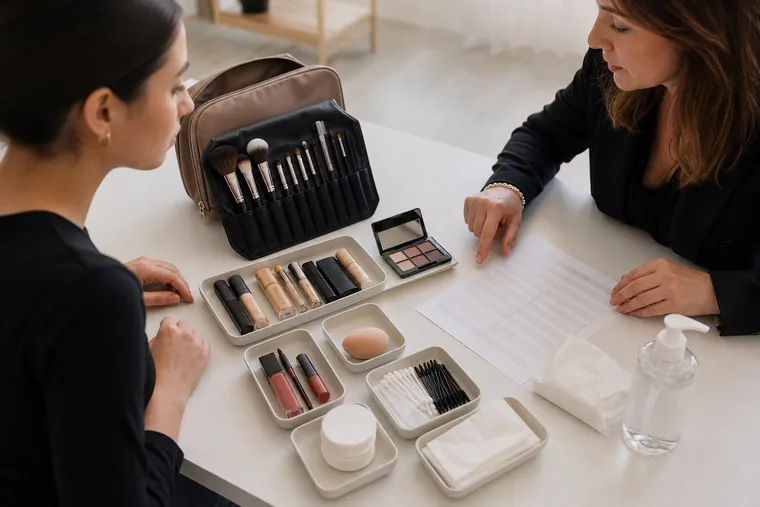
Prepare hand-cleaning supplies appropriate to the setting, tissues, suitable pads or gauze, disposable mascara and lip applicators, a washable mixing palette, a spatula for creams and a separate closed area for used tools. Check every product’s directions and intended area. Sticks, pots and tubes with built-in wands should not move directly between people when that contact can carry material back into the pack.
Use a one-way workflow: clean hands and surface, remove only the needed amount, work with a clean or single-use applicator, then place the used tool in its own zone. Never return a used brush to the clean roll. If you touch a phone, hair, face or unprepared surface, restore the relevant hygiene step before continuing. Do not improvise one disinfectant for every brush, palette and container; materials and products require compatible methods and complete drying.
The US Food and Drug Administration advises consumers not to share makeup and explains that hands and applicators can introduce microorganisms. Its eye-cosmetic guidance also says to stop using a product if irritation occurs and not to apply eye cosmetics while the eye is inflamed. These are broad safety principles, not a complete professional infection-control protocol. Training, manufacturer instructions and the rules applicable where you practise still matter.
Skin preparation: keep the variables readable
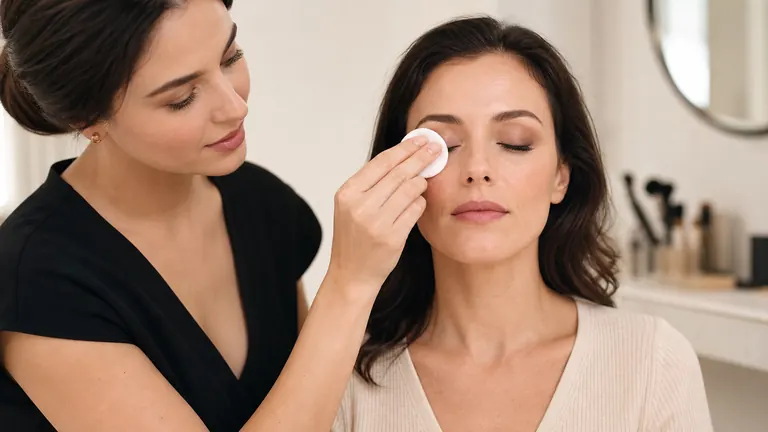
A beginner does not need a collection of active skincare. Use a gentle cleansing route suitable for the setting, a moisturising product compatible with the individual and simple lip preparation. Observe comfort, shine, tightness, dry texture and the way makeup sits without diagnosing a skin condition. Persistent redness, broken skin, suspected infection, swelling, pain or an unexpected reaction are reasons to stop and, when appropriate, seek qualified healthcare advice.
Each preparation layer needs a reason you can observe: improve comfort, reduce a flaky appearance or support an even application. Multiple serums, primers and sprays make it difficult to identify what caused pilling, separation or excessive slip. Record the combination and waiting time. If the base changes, keep the preparation stable for the comparison instead of changing every product at once.
Complexion: versatility before shade volume
For personal practice, one well-matched base and concealer are enough. For adult models, do not automatically buy a complete foundation range. Plan the actual people you will practise on and choose a small considered range only when needed. Learn to distinguish depth, undertone, coverage and finish. Check whether a manufacturer permits products to be mixed and record every combination. Adding more of a visibly wrong shade does not make it correct.
Add a powder whose amount you can control and one adaptable cheek colour. Bronzer, contour and highlighter belong in the kit when an exercise needs those separate functions. A colour corrector becomes useful when you can name the contrast you intend to neutralise, apply a thin controlled layer and evaluate it in reliable light. Owning every corrector colour before learning that decision usually creates waste rather than range.
Avoid anonymous decanting. A small amount can be removed onto a clean palette immediately before use, but the original product should remain identifiable. Keep the name, shade, batch or lot information, opening date and relevant directions. If you transfer material for a legitimate reason, confirm container compatibility and the labelling and professional obligations that apply; a smaller unlabelled pot is not automatically safer or more practical.
Eyes and brows: a compact palette teaches more
Choose a compact palette with a light, medium and deep matte plus one controlled reflective finish. This is enough to study placement, transition, volume, intensity and highlight. Add a manageable pencil and one brow option suited to the people in your planned exercises. Glitter, loose pigments, waterproof systems and many special textures introduce handling, removal and compatibility questions; add them after the fundamental movement is stable.
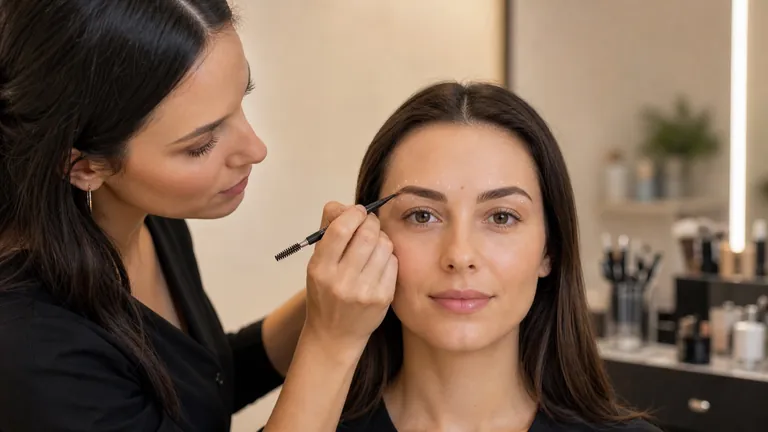
Keep personal mascara personal. When working on another adult, use a new single-use wand for each removal from the container and never double-dip a used applicator. False lashes are not an essential first purchase. They can enter when you can prepare the lash line, use an appropriate adhesive according to its directions, control placement and stop when comfort or eye safety is uncertain. Do not let a dramatic finish replace basic edge and symmetry practice.
Lips: learn edges and intensity with fewer products
Begin with a shade near the wearer’s natural lip range, one more intense option and a pencil that supports the intended shape. Choose finishes that allow you to see the border and symmetry. Very deep shades and highly volatile or difficult-to-remove textures can wait until control improves. For shared practice, remove product with a clean spatula or new applicator and work from the palette; do not pass a lipstick bullet or gloss wand directly between people.
Practise changing opacity and shape before multiplying colours. Blotting, layering and a precisely controlled edge can create several outcomes from a small set. Photograph the lips frontally and at a slight angle in the same light. A beauty filter or automatic colour shift makes the comparison unreliable and can persuade you to buy a different shade when the real variable is the photograph.
Brushes: buy seven to nine functions, not a large set
Choose the working function
Shape, density and flexibility matter more than the number on the set
Complexion
Base and concealer placement
Powder
Setting and cheek colour
Eyes
Deposit and transition
Detail
Liner, brows and lips
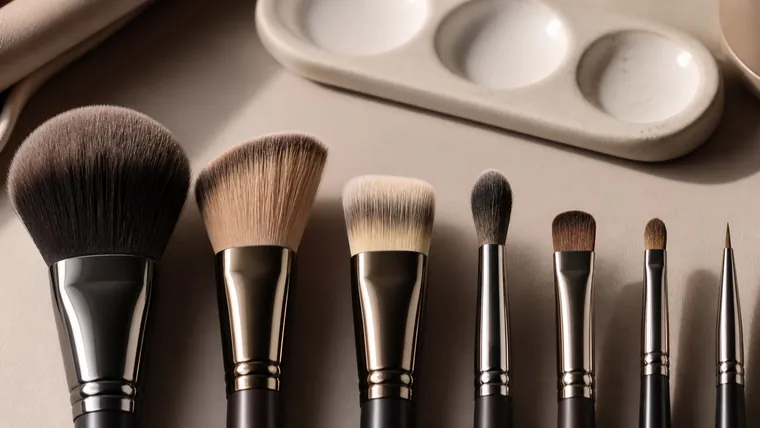
An initial brush group can cover seven to nine functions: base or concealer placement, powder, cheeks, broad eye blending, precise shadow placement, liner or detail, brows and lips. Manufacturers name shapes differently, so judge the working part. Size must fit the area; density controls deposit; flexibility affects pressure and transition; edge and point affect precision. Two nearly identical brushes do not add a skill unless you can describe the different result or need a clean rotation.
A sponge or powder puff can complement brushes, but it also needs a cleaning, drying and replacement plan. Inspect tools for residue, odour, shedding, cracked handles, exposed metal or changes in texture. Dry them in a position suitable for their construction and store them only when fully dry. A professional belt is not an early priority if it mixes clean and used tools or keeps damp brushes enclosed.
Make colour a small working grammar
Organise colour by role. Neutrals build shape and transitions; controlled contrasts correct or emphasise; a small accent group supports a brief. Learn temperature, value and chroma before buying close duplicates. Two browns that behave almost identically do not expand your working vocabulary. A predictable light, middle and deep option lets you test proportion and pressure across several looks.
Colour theory does not prove that two formulas are physically compatible. Before mixing products, read each manufacturer’s directions and test only in an appropriate way. Record ratios and results on a face chart or practice sheet so a useful combination can be reconstructed. When a colour looks different on camera, check light, exposure and white balance before assuming the cosmetic itself is wrong.
Light, mirror, face chart and photographs belong in the kit
Poor light hides complexion mismatch, abrupt edges and asymmetry. Aim for even illumination without a strong coloured cast, and inspect from both working distance and farther away. A stable mirror lets the model review the result without reaching through your clean area. You do not need a studio on day one; you need conditions consistent enough to compare one attempt with the next.
Add face charts, pencil, removable labels and a simple practice record with date, person, consent, objective, products, sequence, photographs, feedback and the next change. The kit includes the method used to measure progress, not only objects applied to a face. The guide to how long professional makeup takes to learn explains why time, repetitions, variety and feedback need to be read together.
Storage: separate clean, used, liquids and records
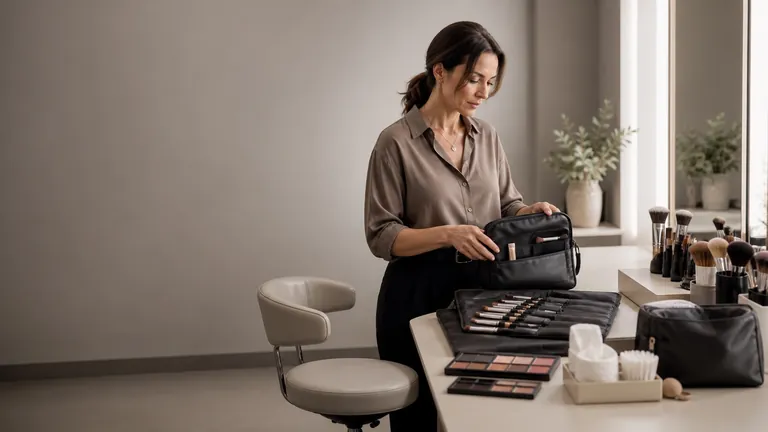
Create physically separate areas for clean brushes, single-use items, closed cosmetics and used tools. Keep liquids closed and upright where practical, cushion powders and protect everything from excessive heat, moisture and direct sunlight according to product instructions. Do not leave a kit in a hot vehicle. Clear or labelled pouches reduce searching and make leakage, crumbs and damaged packaging easier to notice.
Record opening dates and read the label. Under the EU Cosmetics Regulation, the label framework includes information such as precautions and batch identification; for relevant products with a minimum durability above 30 months, the period after opening indicates the time after opening for which the product is safe and can be used without harm. It is not a universal timer divorced from storage, hygiene and the manufacturer’s directions.
Do not invent one expiry rule for every foundation, mascara or powder. Formula, packaging, contamination, temperature and intended use differ. Stop and investigate abnormal changes in odour, colour, texture, performance or the container. Keep labels legible and avoid separating a pan or sample from its identity without a reliable record. The safest-looking organiser is not useful if nobody can identify what is inside.
What not to buy at the beginning
Very large palettes full of near-duplicate colours: they increase choice and ageing stock before technique is controlled.
A full foundation wall without planned models: start from real depth and undertone needs, not the display.
Several primers and setting sprays with overlapping claims: add one only when you can name the observable problem and comparison.
Special-effect pigments, airbrush equipment and complex adhesives before foundational handling and safety are established.
A giant brush bundle where many shapes repeat: select working functions and add clean rotation later.
Unlabelled decants and marketplace products with unclear seller, directions, ingredients or traceability.
This is not an argument for buying the cheapest item. It is an argument for delaying items whose quality you cannot yet evaluate or whose function is absent from the practice plan. Spend first where failure prevents learning: hygienic handling, readable light, intact tools, suitable core formulas and the ability to repeat an exercise.
A four-week staged buying plan
Four weeks, one justified change at a time
Every purchase needs an exercise and an observable success criterion
Week 1
Inventory, hygiene and light
Week 2
Preparation and complexion
Week 3
Eyes, brows and lips
Week 4
Review use and repeated gaps
Week one is an audit: clean and inspect what you own, build the hygiene module, label opening dates, test light and assign every brush a function. Week two concentrates on skin preparation and complexion under two controlled conditions. Week three adds the compact eye, brow and lip grammar. Week four reviews photographs, product consumption, cleaning time and the mistakes that repeated. Only then approve an item for the next month.
For each proposed purchase, write five fields: missing function, exercise, person or surface, observable success criterion and replacement cost. Add a sixth field after testing: keep, change method or replace. A product that looked exciting but never appears in a scheduled exercise stays on the future list. This pause prevents urgency and advertising from becoming the curriculum.
Module | Beginner scope | Control |
|---|---|---|
Hygiene | Hands, palette, spatula, disposables, clean and used zones | The workflow never moves backwards |
Complexion | Simple preparation, base, concealer, powder and cheek colour | Each shade and texture has a reason |
Eyes and lips | Small functional colour range | No duplicate without a new exercise |
Tools | Seven to nine brush functions, sponge or puff if needed | Clean, dry, intact and traceable |
Study | Light, mirror, face chart, photographs and practice record | Attempts remain comparable |
Common beginner-kit mistakes
The first mistake is buying a supposedly complete case without mapping its contents to exercises. The second is spending on colour while forgetting hygiene, light and reliable tools. The third is practising on one face only and assuming that more shades will replace observation. The fourth is losing opening dates, product identity and cleaning history. The fifth is watching shopping videos instead of completing and comparing attempts.
Avoid preventive perfectionism as well. You do not need the final professional case before the first lesson. Build a system that can grow. One justified purchase after three attempts is more valuable than five products bought because you fear looking unprepared. If you are choosing structured training, compare the online and in-person course formats and check how each one supports kit use, demonstration, model practice and feedback.
Turn the kit into a learning system
Choose one skill, keep most variables stable, complete the attempt, photograph it and write one correction. Repeat under comparable conditions. Rotate the person, skin appearance or brief only after you understand what the stable version taught you. This method makes missing shade, tool and formula functions visible and prevents the kit from expanding faster than your ability to use it.
The current English makeup course catalogue lets you inspect bounded routes such as the beginner makeup course, professional makeup tools course and professional makeup products course. English-market teachers, curricula, included materials and availability must always be checked on each course page; a guide cannot replace those current conditions.
Frequently asked questions about beginner makeup kits
What should a complete beginner makeup kit contain?
There is no universal complete list. Start with hygiene, simple preparation, a base, concealer, powder, cheek colour, compact eye selection, pencil, brow option, mascara for personal use or single-use wands, two lip options, seven to nine brush functions, palette, spatula, mirror, light and a practice record. Add specialist items only for a defined exercise.
How much should I spend on my first makeup kit?
The useful amount depends on what you own, your exercises, models and whether training includes materials. Price hygiene, core functions and realistic replacement first. Buy in stages and review use after practice. A smaller kit with no unexplained duplicates can provide more learning value than a large promotional bundle.
How many foundation shades does a beginner need?
For personal practice, usually one appropriate shade. For models, the range follows the actual adults scheduled, not an arbitrary number. Study depth, undertone and finish; check formula-mixing directions and record combinations. Broad professional shade inventory belongs to a later operational stage.
How many makeup brushes should I buy?
Count functions rather than package size. Seven to nine distinct functions can cover complexion, powder, cheeks, eye blending and placement, precision, brows and lips. Choose size, density and flexibility for the movement. Duplicate brushes become useful later for clean rotation or genuinely different results.
Are brushes or sponges better for beginners?
Neither is universally better. They distribute and finish products differently. Learn one tool for placement and one for controlling amount or finish, then compare under stable conditions. Every reusable tool requires compatible cleaning, complete drying and replacement when it deteriorates.
Can I use my personal makeup kit on models?
Only when the product and your process allow hygienic removal without contaminated applicators returning to the pack. Use a clean palette, spatulas and new single-use applicators, separate used tools immediately and never share direct mascara or lip applicators. Personal shades and packaging may also be unsuitable for varied practice.
Do I need primer and setting spray?
Not automatically. Add a product when you can define the visible problem, the intended function and a fair comparison. Many preparation layers can cause slip, pilling or separation and make the cause harder to identify. Foundations can be learnt first with a simple stable preparation.
Do I need a large eyeshadow palette?
No. A compact set with light, medium and deep mattes plus one controlled reflective finish can teach shape, transition, volume and intensity. Expand when a new brief requires a colour or behaviour you do not have. More pans can mean more duplicates and ageing stock.
How should I clean and organise the kit?
Use separate zones for clean tools, disposables, products and used items. Follow compatible cleaning and manufacturer instructions, dry reusable tools completely and clean the case itself. Keep labels and opening dates readable, protect products from unsuitable heat and moisture, and investigate leakage, damage or sensory change.
When should makeup in the kit be replaced?
Use the labelled minimum durability or period after opening where applicable, manufacturer directions, storage history and product condition. No single replacement calendar fits every formula. Changes in smell, colour, texture, performance or packaging and suspected contamination deserve caution even before a labelled period ends.
Should I buy a ready-made student kit?
It can work when the full inventory, sizes, shades, seller, directions and replacement costs are clear and the contents match your curriculum. A high piece count is not evidence of usefulness. Compare every item with the exercises and ask whether suitable products you already own are accepted.
When is it time to expand the kit?
Expand when a new technique needs a missing function, you have an appropriate person or surface on which to practise it, and you can state how success will be judged. If the item only makes you feel more prepared but has no scheduled task, keep it on a future list.
Are expensive makeup products easier to learn with?
Price alone does not predict suitability, shade, handling or teaching value. Evaluate the formula for its intended exercise, directions, seller traceability, packaging and predictable performance. Avoid both prestige assumptions and purchases so cheap or unclear that identity, safety information or replacement cannot be verified.
What is the difference between a beginner and professional makeup kit?
A beginner kit supports bounded learning with a small planned group of people. A professional kit must support repeatable paid services, broader representation, stock, backups, service hygiene, records, transport and business continuity. It should grow from demonstrated service needs rather than a generic shopping checklist.
Can a good kit replace a makeup course?
No. Products cannot design practice, explain visible causes or review a corrected attempt. Independent learning is possible, but the kit remains equipment. If you choose training, inspect outcomes, demonstrations, tasks, feedback, tutor evidence and conditions rather than assuming an included kit proves quality.
How do I avoid wasting products while practising?
Schedule exercises before buying, remove only the quantity needed, keep variables stable, record what was used and review consumption monthly. Prefer a small colour grammar and planned models. Do not stock every possible shade before the practice calendar creates a real need.
Official references and editorial scope
The FDA pages on using cosmetics safely and eye cosmetic safety support the general hygiene, sharing and stop advice. The official EU Cosmetics Regulation supports the labelling context described here. Readers should use the rules and competent authorities applicable in their own market.
Editorial review: 5 September 2026. This is a function-based learning checklist, not a product endorsement, universal professional standard, dermatological assessment or substitute for manufacturer instructions. It contains no competitor links and recommends no brands. Irene Tomasi’s authorship supplies a professional makeup perspective; medical, occupational and market-specific safety questions require the relevant qualified source.
If the final document affects your decision, use the makeup certificate and qualification verification guide. It separates private completion records, assessed credentials, regulated qualifications, accreditation and local licences before you rely on a recognition claim.
For a controlled complexion match, use the foundation depth and undertone protocol. It separates depth, undertone and surface variation, then tests comparable jaw swatches in stable light after the formula settles.
Connect complexion colour to whole-face design with the corrective makeup and visagism method. It separates structure, proportion, colour and texture, then plans brows, blush, light and shadow around an agreed priority instead of a standard face map.
Practise controlled colour placement with the eyeshadow blending guide. It separates brush load, pressure, placement and edge work so patchiness can be diagnosed before more pigment is added.
Turn technique into a repeatable event service with the professional bridal makeup guide. It connects the brief, trial record, wear test, wedding-day timing and personal touch-up handover without replacing detailed technique or career pages.
Protect every practical exercise and client service with the makeup hygiene workflow. It separates clean and used zones, prevents double-dipping and gives brushes, sponges, products and surfaces a traceable route between people.
After matching colour, compare foundation texture, coverage and finish: this guide separates formula performance from undertone and tests thin layers, tools, setting, texture and wear.
Before selecting foundation and concealer, check how to prep skin before makeup: this guide orders cleansing, moisturiser, daytime sunscreen, targeted primer and settling without overloading the surface.
For a focused method on lash-line thickness, wing direction and open-eye balance, use the eyeliner guide for different eye shapes. It keeps line mechanics distinct from full eye morphology and eyeshadow blending.
For a focused method on temporary eyebrow shape, reference points, colour and product choice, continue with eyebrow mapping: shape, colour and makeup products. It keeps brow makeup distinct from permanent services and hair-removal procedures.
For a focused process on lip proportion, liner, layering and wear, continue with the corrective lip makeup guide. It keeps temporary lip makeup distinct from permanent and medical procedures.
To separate hue, value, saturation, contrast and controlled neutralisation, continue with the makeup colour theory guide. It treats colour as a testable design decision rather than an automatic pairing.
To combine complexion, brows, eyes, cheeks and lips into one efficient service, continue with the professional day-makeup guide. It connects product decisions to intensity, natural-light checks and realistic wear.
To choose head shape, density and fibre from the mark you need, continue with the professional makeup-brush guide. It connects product loading, first contact, pressure and angle to a repeatable result.
To test how skincare, sunscreen, primer and foundation behave as one film, continue with the primer and foundation compatibility guide. It replaces water-versus-silicone myths with measured layering and A/B wear tests.
For a controlled comparison of depth, warmth and cheek colour, continue with the contour, bronzer and blush guide. It covers colour, film order, anatomical placement and troubleshooting without one-size-fits-all maps.
Check the physical label before a product enters the kit
Before comparing quantities and formats, use the makeup label guide for INCI, batch, PAO and warnings.
Move from a learning kit to a service-based professional system
When practice becomes client work, continue with the professional makeup kit and workstation guide.
Keep drawing tools separate from the client kit
Continue with the face-chart materials workflow.