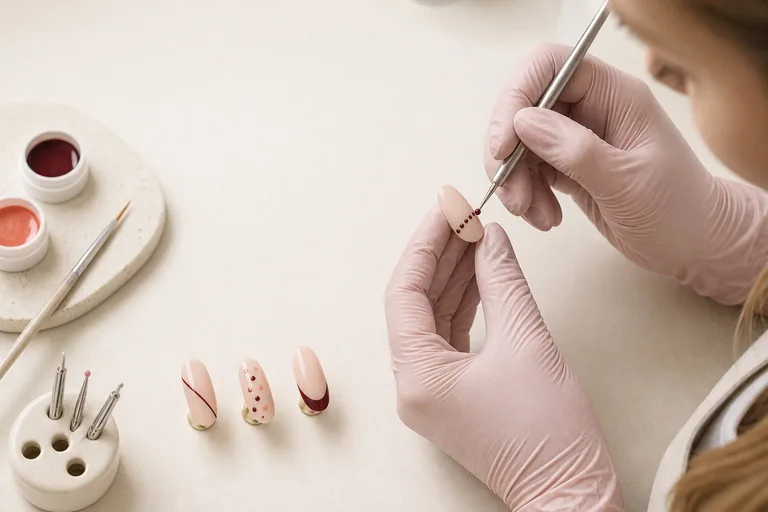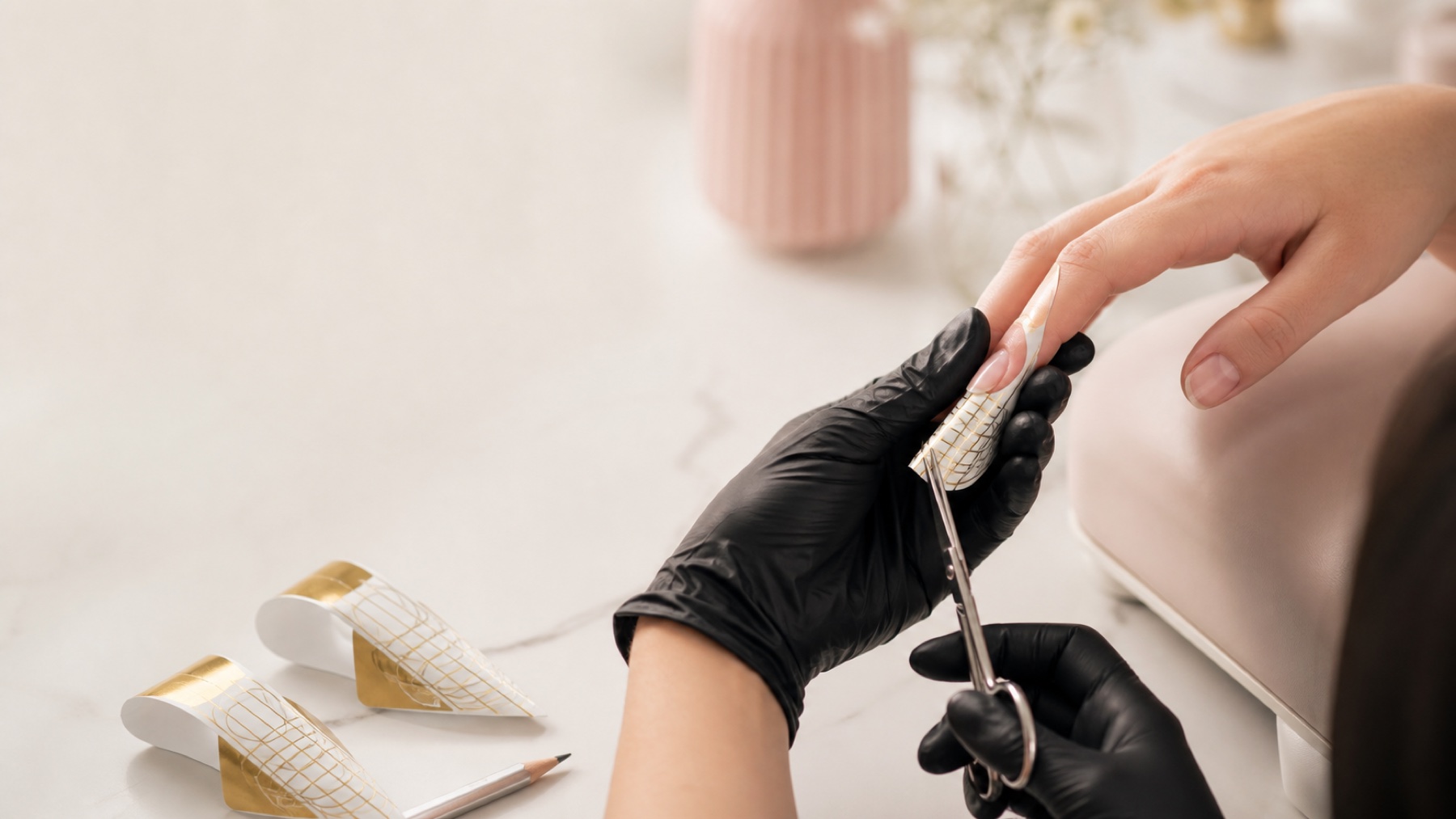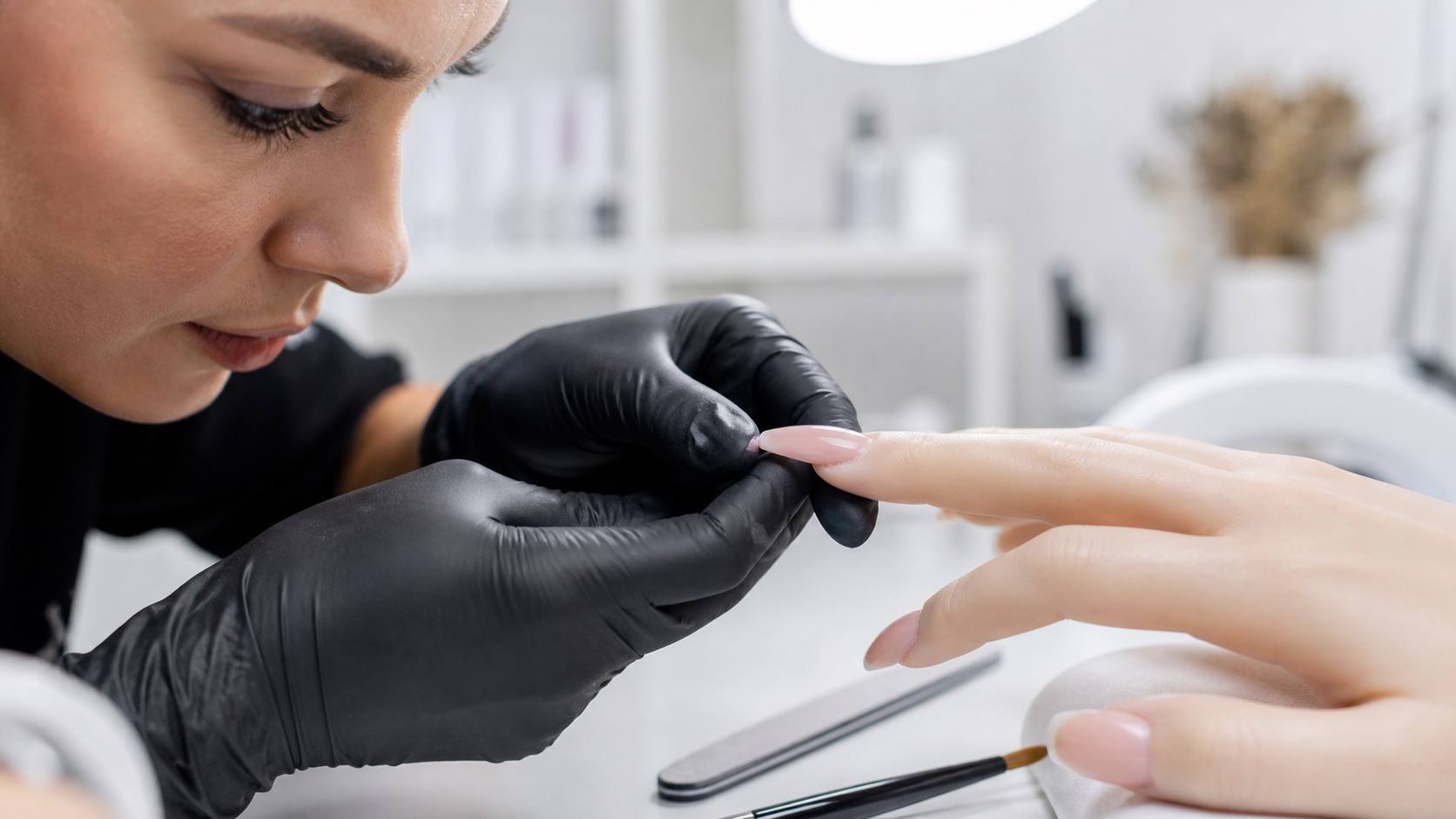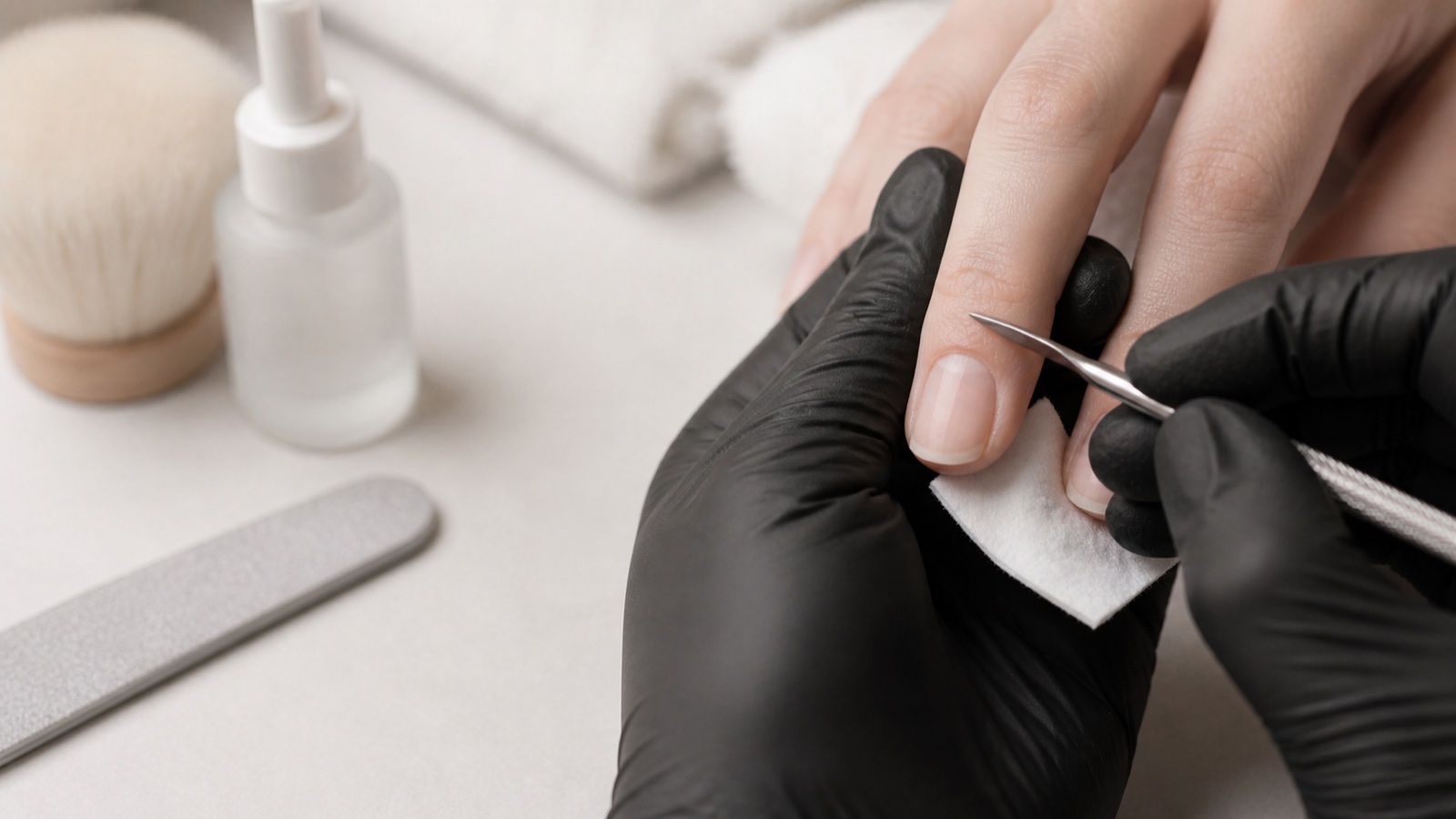
The best nail shape is not produced by a rule such as ‘wide hands need almond nails’ or ‘long fingers should wear square’. A considered choice brings together the natural nail plate, each finger’s visual axis, transverse curve, available length, desired effect and the way the person uses their hands. The result should look intentional without removing natural side support or creating an extension the client cannot maintain.
Quick answer: first compare nail-bed length with width, then inspect every finger from above, the side and the front. Round and squoval shapes are often practical at short lengths; oval and almond create a stronger vertical direction; square and coffin need sufficient length and compatible side support. These are design effects and technical considerations—not rules about which hands are attractive.
This guide owns the search intent ‘which nail shape suits my hands?’ and the professional consultation used to answer it. Read the nail-matrix guide for living anatomy, the nail-architecture pillar for complete enhancement structure and the apex guide for high-point placement. Here, morphology means observable proportions and direction, not a rigid classification of people.
What nail morphology means in a beauty consultation
Observe three levels without labelling the person
Morphology supports a design conversation
Hand
Overall proportions and relaxed view
Finger
Individual visual axis
Nail
Bed ratio, curve and growth
Client
Preference, use and maintenance
Nail morphology describes the visible shape and proportions of the nail plate, its longitudinal and transverse curves, its growth direction and its relationship with the nail bed and surrounding folds. Healthy nails are not identical templates. Published anatomical descriptions explain that curvature contributes to the plate’s fit and strength, while measured studies report differences between fingers and between people.
A beauty professional observes rather than diagnoses. The task is to describe the current base and translate a preference into a manageable design. Keep three levels separate: the proportions of the whole hand, the axis of each distal finger and the dimensions and curve of each individual nail. None of them creates an obligation to ‘correct’ the person.
Observation | Useful question | What not to infer |
|---|---|---|
Nail-bed length and width | Which outline preserves support and gives the requested effect? | That one proportion is more feminine or attractive |
Finger and nail axis | Where should the visual centre of the tip sit? | That every nail needs an identical angle |
Natural curve and growth direction | Can the requested shape be supported naturally or does it need trained extension work? | A medical diagnosis from appearance alone |
Work and daily hand use | What length and corners can the client realistically maintain? | That lifestyle removes personal choice |
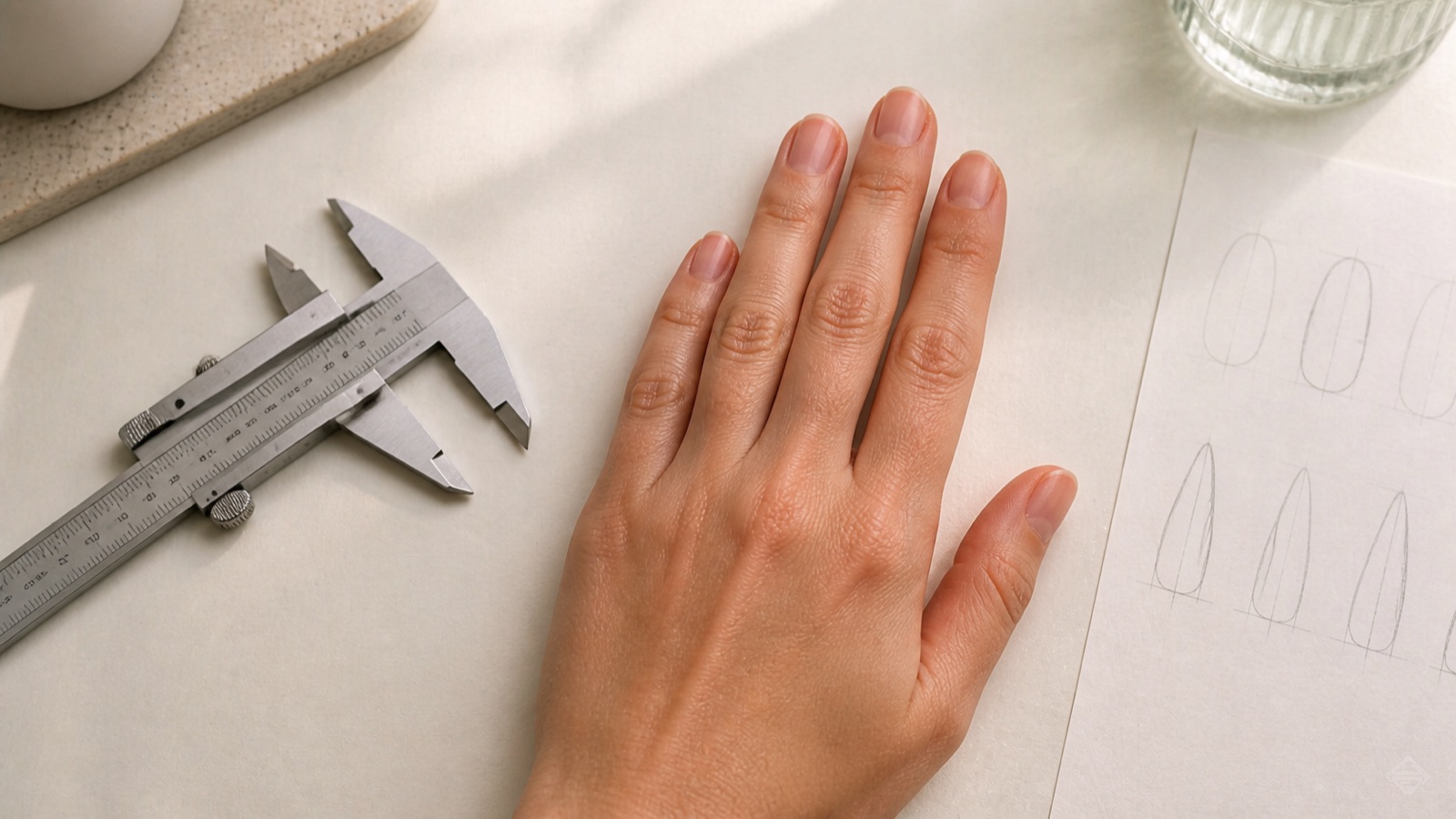
Five checks before choosing a nail shape
Choose length before naming the shape
A repeatable consultation replaces a hand-type rule
Length-to-width ratio
Finger and plate axis
Curve and growth direction
Sustainable daily length
Whole-hand coherence
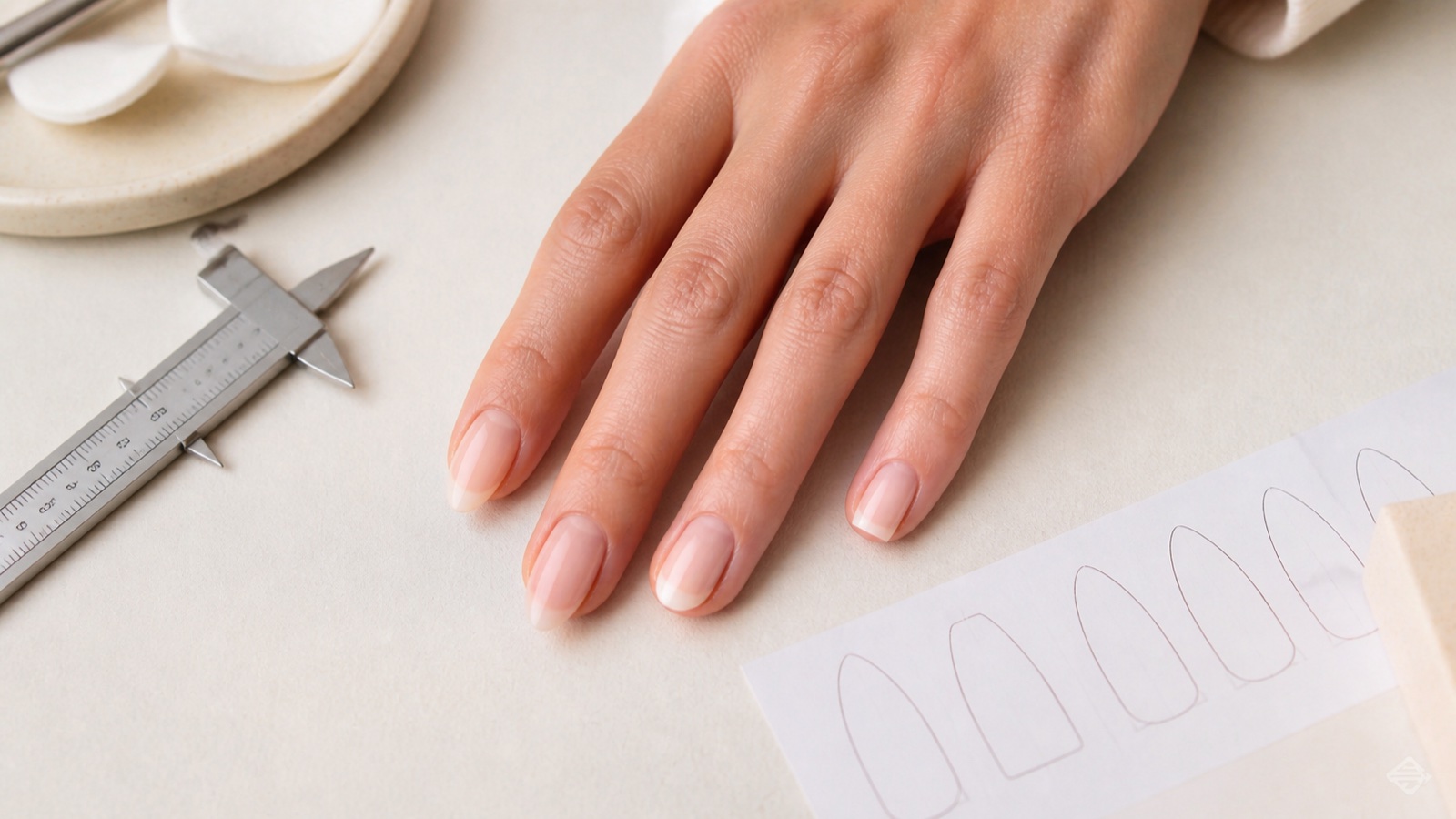
1. Nail-bed length compared with width
Look at the attached plate rather than letting the existing free edge change your impression. A nail may look short because it was recently filed, or because its visible bed is genuinely wider than it is long. An oval outline can continue the eye vertically; a wide straight tip emphasises the horizontal line. Do not manufacture narrowness by cutting into the natural side boundaries.
2. The axis of every finger
Rest both hands naturally and inspect from above. A distal finger may deviate slightly and its nail plate may not sit on the same visual line as the hand. Centre the proposed tip for that finger instead of copying one stencil angle across all ten. A perfectly symmetrical practice tip can look crooked on a real hand when its axis is ignored.
3. Transverse curve and growth direction
View the plate from the side and the front. It may be relatively flat, strongly curved, downward-growing, upturned or laterally directed. Top-view shape cannot be separated from support. A neat almond outline on a descending axis remains visually hooked, and an aggressively narrowed tip on a strongly curved plate can sacrifice lateral balance.
4. A genuinely sustainable length
Ask about typing, instruments, gloves, sport, caring duties, manual work and maintenance frequency. A long coffin set may match a photograph but conflict with the client’s routine; a short squoval may provide the more satisfying result. Practicality is a design input, not a judgement about who is allowed to wear a style.
5. Coherence across the whole hand
Compare the hand open, relaxed and in a normal conversational position. Thumb and little finger have different bases, widths and curves, so the nails need visual family resemblance rather than millimetre duplication. Check close-up accuracy, then step back: the client experiences the set as ten nails together.
Six common nail shapes compared
Every outline has a visual effect and a requirement
Do not cut support to imitate a silhouette
Round / squoval
Practical, short outlines
Oval / almond
Progressive vertical taper
Square
Parallel sides and clear corners
Coffin
Taper plus a straight tip
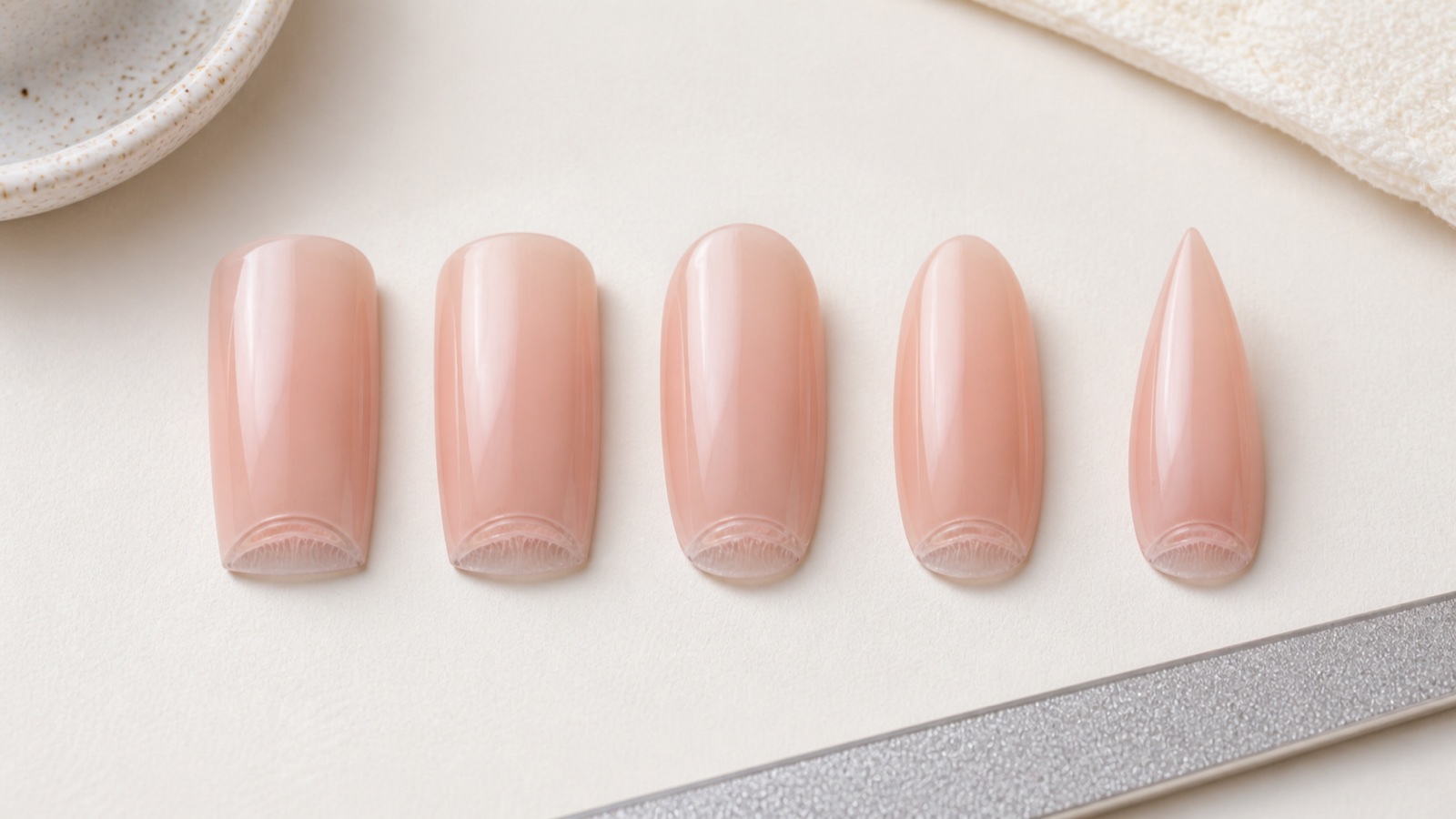
Shape | Outline and visual effect | Length and technical consideration |
|---|---|---|
Round | Soft arc that follows a short free edge | Practical at short length; no strong elongating effect |
Squoval | Mostly straight tip with softened corners | Versatile at short or medium length; retain readable sides |
Oval | Gradual curve that creates vertical direction | Needs enough free edge to curve without thinning the sides |
Almond | Tapered sides meeting a soft centred tip | Needs usable length and controlled axis; do not carve it from a very short plate |
Square | Parallel sides, straight free edge and clear corners | Graphic horizontal effect; corners and side support need care |
Coffin or ballerina | Tapered sides ending in a straight tip | Most legible at medium or long length with planned artificial structure |
Choosing a shape for different hand proportions
The suggestions below describe common optical effects, not compulsory corrections. A client’s preference comes first. A consultation should show what each option may emphasise and what it requires technically, then support an informed decision.
Shorter-looking fingers or a wider nail plate
A proportionate oval or soft almond often carries the eye vertically. If daily life requires a short nail, squoval with softened corners is a credible alternative. Never chase an elongating illusion by filing beyond the natural side path. Colour, negative space and finish also change visual proportions without removing support.
Long, slender fingers
Many outlines can look balanced. A medium square or squoval introduces a horizontal line, while oval and almond continue verticality. Decide according to the client’s desired effect, actual nail width, usable length and tolerance for corners—not because long fingers have one correct shape.
Broad palm or stronger-looking fingers
A medium oval or almond can create a lighter visual flow, while a tidy squoval remains useful for low-maintenance strength. The aim is not to hide the hand. Consistent proportions and clean finishing are usually more persuasive than an extreme taper.
Narrow hand or very tapered fingers
Round, short oval and squoval can preserve balance without adding more taper. Long almond is still valid when it is a deliberate preference and the structure and lifestyle support it. A short square can also provide an intentional graphic contrast.
Different axes across the fingers
Work finger by finger. The perceived centre may need a small adjustment on index, middle and ring fingers even though the finished outline carries the same name. Compare the hand open and at rest; alignment with the plate alone may not look aligned with the complete finger.
Natural nail shape versus an enhancement
On a natural nail, the available free edge and side boundaries limit the outline. If there is not enough length for an almond, more filing does not create it—it removes support. Gel, acrylic or acrygel can add length and redirect an axis, but that design freedom comes with greater responsibility for architecture, product compatibility and maintenance.
Coordinate the chosen outline with apex position, side support, lower line and free-edge thickness. Use the professional filing guide to refine without overfiling and compare gel, acrylic and acrygel before choosing a system. Filing should clarify a planned structure, not rescue an unsuitable base by removing natural nail.
A seven-step professional consultation
Explain two feasible options
Preference and technical limits can coexist
Listen
Preference, work and maintenance
Observe
Both hands and three views
Propose
Two reasoned alternatives
Verify
Axis, structure and full-hand result
Ask about preference, work, daily hand use and realistic maintenance.
Observe both relaxed hands rather than one demonstration finger.
Inspect each nail from above, the side and the front in neutral light.
Set the maximum sustainable length before naming the shape.
Offer two reasoned options and explain visual effect, maintenance and limits.
Sketch or preview the tip and confirm its axis before building or filing.
Review all ten nails together and record comparable views for the next visit.
A useful recommendation sounds like this: ‘A short squoval follows your current length and manual work. If you want a more elongated effect, we can plan a medium oval, but it needs additional length and maintenance.’ The explanation informs; it does not impose a beauty rule.
Common shape-selection mistakes
Copying a trend photograph without comparing real length, axis and curvature.
Forcing almond from a very short free edge by filing away the sides.
Using one rigid template on fingers with different widths and directions.
Treating the technician’s taste as a necessary correction.
Checking only from above and missing asymmetric thickness from the front.
Claiming a shape changes finger anatomy rather than visual perception.
Ignoring work, sport and maintenance when choosing length and corners.
When to postpone a cosmetic nail service
Stop the aesthetic assessment for pain, swelling, discharge, bleeding, broken or inflamed skin, nail-plate separation, a new unexplained colour, marked thickening or a rapidly changing shape. A nail professional may document what is visible and postpone the service, but should not diagnose a condition or hide the sign beneath opaque product.
Read the guide to yellow nails and warning signs for a cautious triage framework and the nail-biting guide before proposing long shapes on a very short or traumatised base. When the sign is unclear, defer and recommend appropriate medical assessment.
Practise shape analysis without risking a natural nail
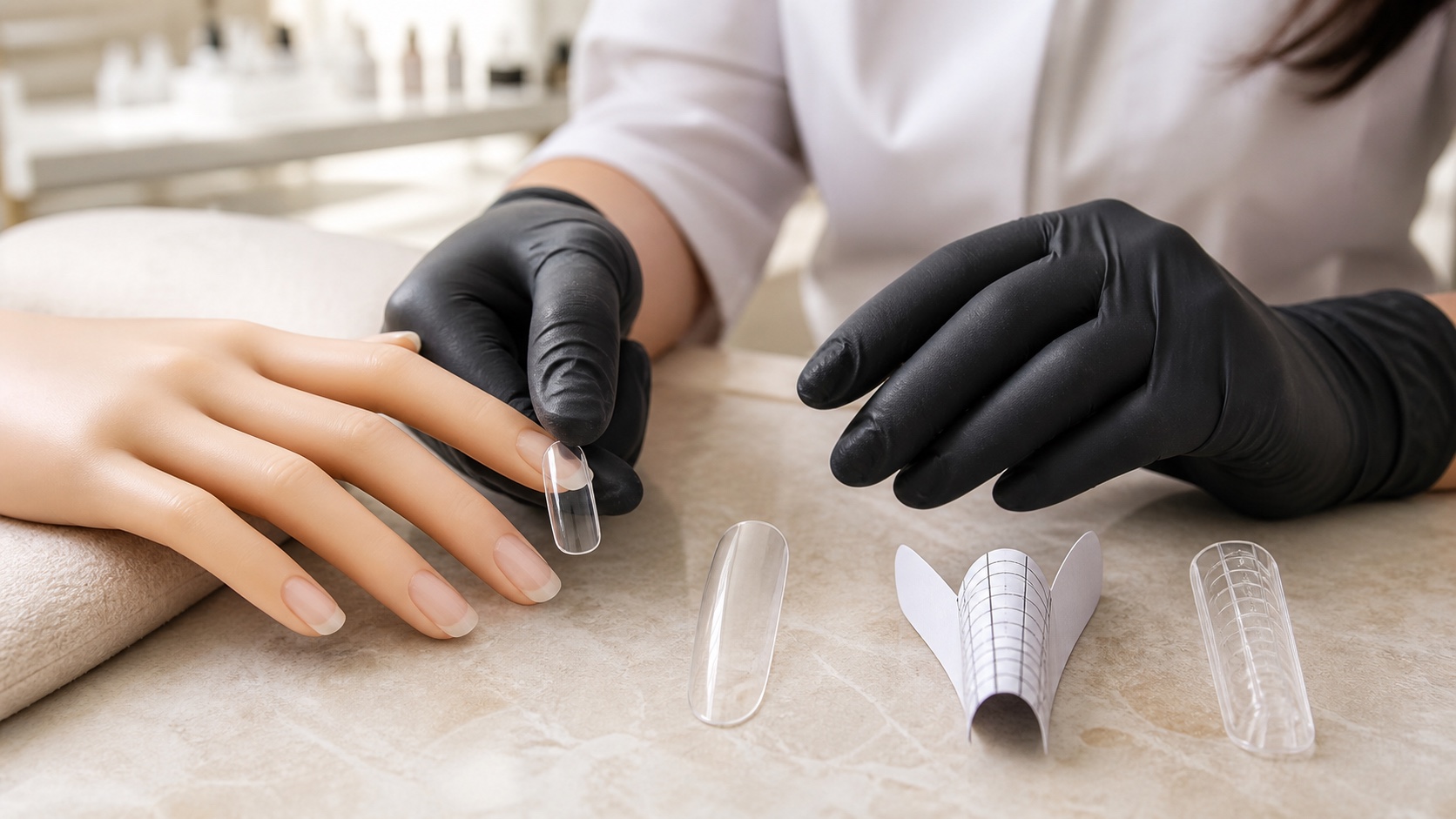
Photograph five suitable practice hands or use neutral training cards. Mark nail-bed length, width and finger axis without making value judgements. Propose a practical short shape and an elongated alternative for each case. On tips, build the same length in round, squoval, oval, almond, square and coffin; compare where side lines begin to converge and which forms require additional length.
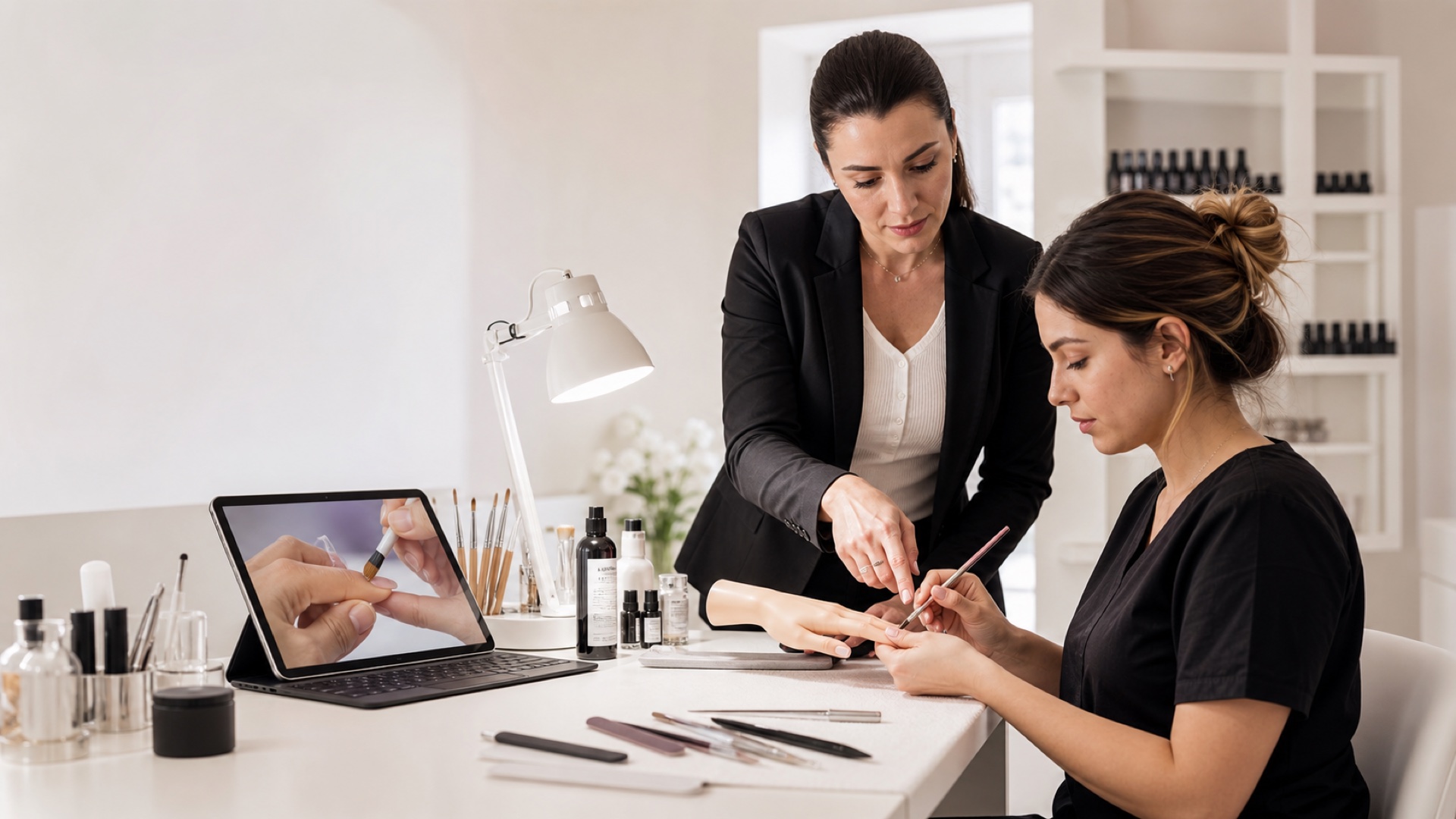
For guided application and correction, compare the current BeautyLearn online nail courses by curriculum and level, then continue through the English nail guide library. English course, teacher and enrolment records remain separate from the Italian market.
Frequently asked questions about nail shapes
Which nail shape makes fingers look longer?
Oval and almond often create a stronger vertical direction, especially at a proportionate length. Nail width, colour and axis change the effect; no outline alters finger anatomy.
Can short nails be shaped almond?
A recognisable almond needs room for the sides to converge without being removed. On a very short natural nail, choose a short oval or use a correctly structured extension.
Is square suitable for a wide nail plate?
It can be when the client wants a geometric result and the length is manageable. It emphasises width more than oval; squoval retains a tidy tip with softer corners.
What is the strongest nail shape?
No outline is strong independently of length, structure and condition. Short round or squoval nails are often practical, while balanced architecture and maintenance remain decisive.
Can coffin nails be created on natural nails?
Only when sufficient length and side support exist. The geometry is usually clearer in a planned enhancement; narrowing a short natural nail can remove useful support.
Must all ten nails have exactly the same outline?
They should look coherent, not mechanically identical. Width, curve and axis vary by finger, so small individual adjustments often create the more uniform set.
How often should the shape be corrected?
Growth changes length and balance. Timing depends on growth rate, material, design and daily use; follow the system and maintenance plan before the outline becomes unstable.
Can I choose a different shape on each hand?
Yes, although salon sets usually aim for visual coherence. Technical adjustments can differ between hands without changing the name of the finished shape.
Are almond nails always flattering?
No shape is universally flattering. Almond creates taper and vertical direction but needs adequate length, side support and a client who enjoys that effect.
Is squoval the same as a short coffin?
No. Squoval retains mostly parallel sides and softened corners; coffin has tapered sides and a straight tip, usually at a longer length.
Can nail shape correct downward growth?
Filing the free edge alone cannot redirect the complete nail. A trained enhancement may visually correct the axis, but support and architecture must be redesigned together.
Should the technician decide the shape?
The technician should explain feasible options, effects and maintenance. The informed client chooses within what can be delivered responsibly on the current base.
Sources and editorial review
Editorial review: 5 September 2026. Shape recommendations describe design and practical service decisions; they are not medical assessments or universal beauty rules.
This page owns shape choice by hand and nail morphology. Anatomy, complete architecture, apex placement, product systems and filing retain their dedicated search intents to prevent overlap.