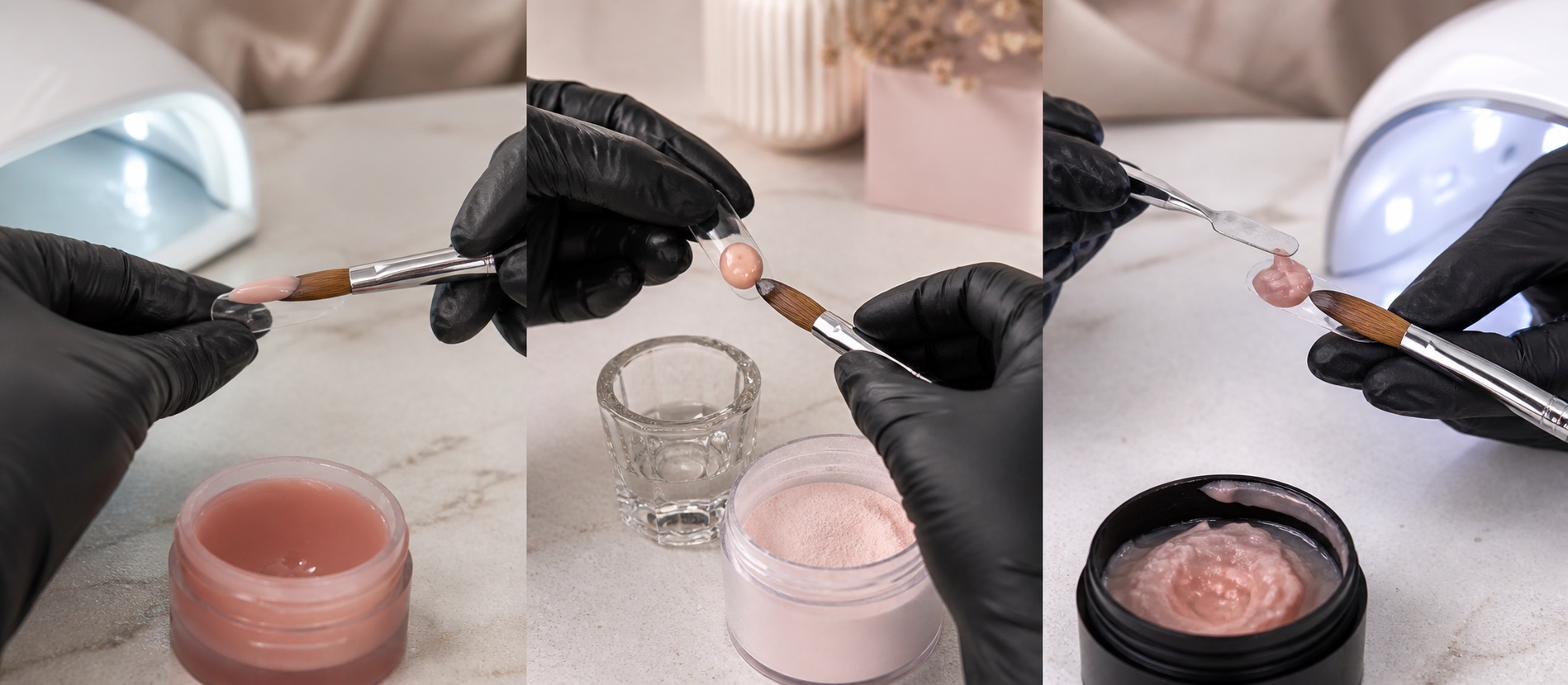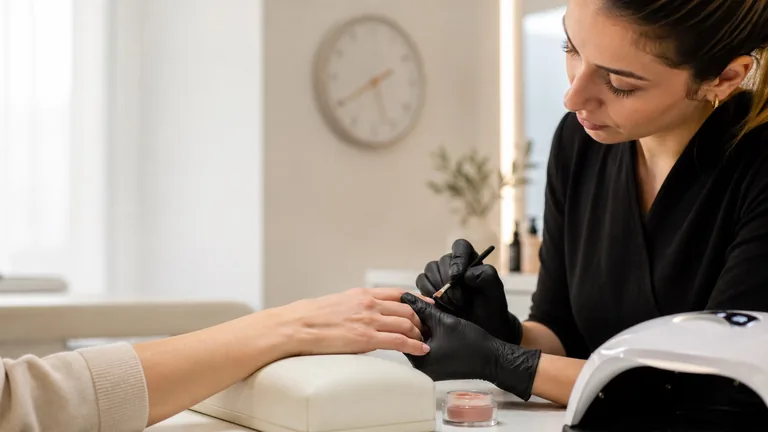

Choosing an online or in-person nail course is not a contest between a screen and a classroom. The useful question is which learning design lets you see the complete technique, practise it repeatedly, receive specific correction and demonstrate improvement while meeting any local training rules. A strong format supports that cycle; a weak format can fail in either location.
Short answer: online learning is strongest when close demonstrations can be replayed and practice fits your schedule. In-person learning is strongest when a tutor can immediately correct pressure, posture, angles and product quantity. Blended learning can combine both, but only when the stages are coordinated. Compare evidence, not format labels.
This guide owns the learning-format comparison. The nail technician career guide owns the full route into work, while the practice-timeline guide owns milestones and time. Here the decision stays focused on demonstrations, practice, feedback, access, assessment and total learning conditions.
Online and in-person nail courses compared
Factor | Online potential | In-person potential |
|---|---|---|
Demonstration | Pause, replay and compare close views when filming is complete and legible. | See the gesture live and request another angle or explanation. |
Practice | Schedule repeated sessions with your own workstation and materials. | Use structured class time and continue independently afterwards. |
Feedback | Photo, video, live or assignment review if scope and response time are defined. | Immediate correction, limited by class size and tutor observation time. |
Schedule | Flexible, but requires a personal practice calendar and access long enough to use it. | Fixed dates create momentum; absence and overload may be harder to recover. |
Total cost | Course, kit, equipment, models, connectivity and practice consumption. | Course, travel, meals, accommodation, lost work time and materials not included. |
Review | Possible until access expires; check downloads, updates and platform terms. | Depends on notes, handouts or authorised recordings after the live gesture ends. |
These are possibilities, not guarantees. A poorly filmed library may teach less than a clear live demonstration. A large classroom may provide less individual correction than a rigorous remote-review system. Ask what you will see, do, submit, receive and retain—not merely where the tutor stands.
The complete learning cycle: observe, practise, correct and repeat
Format serves the learning cycle
Neither a screen nor a classroom can remove a stage
Observe
Purpose, angle, quantity and checks
Practise
One measurable objective
Correct
Specific evidence-based feedback
Repeat
Verify the change under control
Manual competence develops when information becomes controlled action. First observe the purpose, angle, pressure, quantity and check. Next repeat one defined objective. Document the result and, when relevant, the hand movement. Receive feedback that identifies an observable issue and a priority change. Then repeat under comparable conditions and test whether the correction holds.
Course quality depends on whether this loop is designed. Watching all modules is content completion, not proof that preparation, structure or removal is safe and repeatable. A classroom attendance sheet also cannot prove that each participant received enough practice or achieved the assessed outcome.
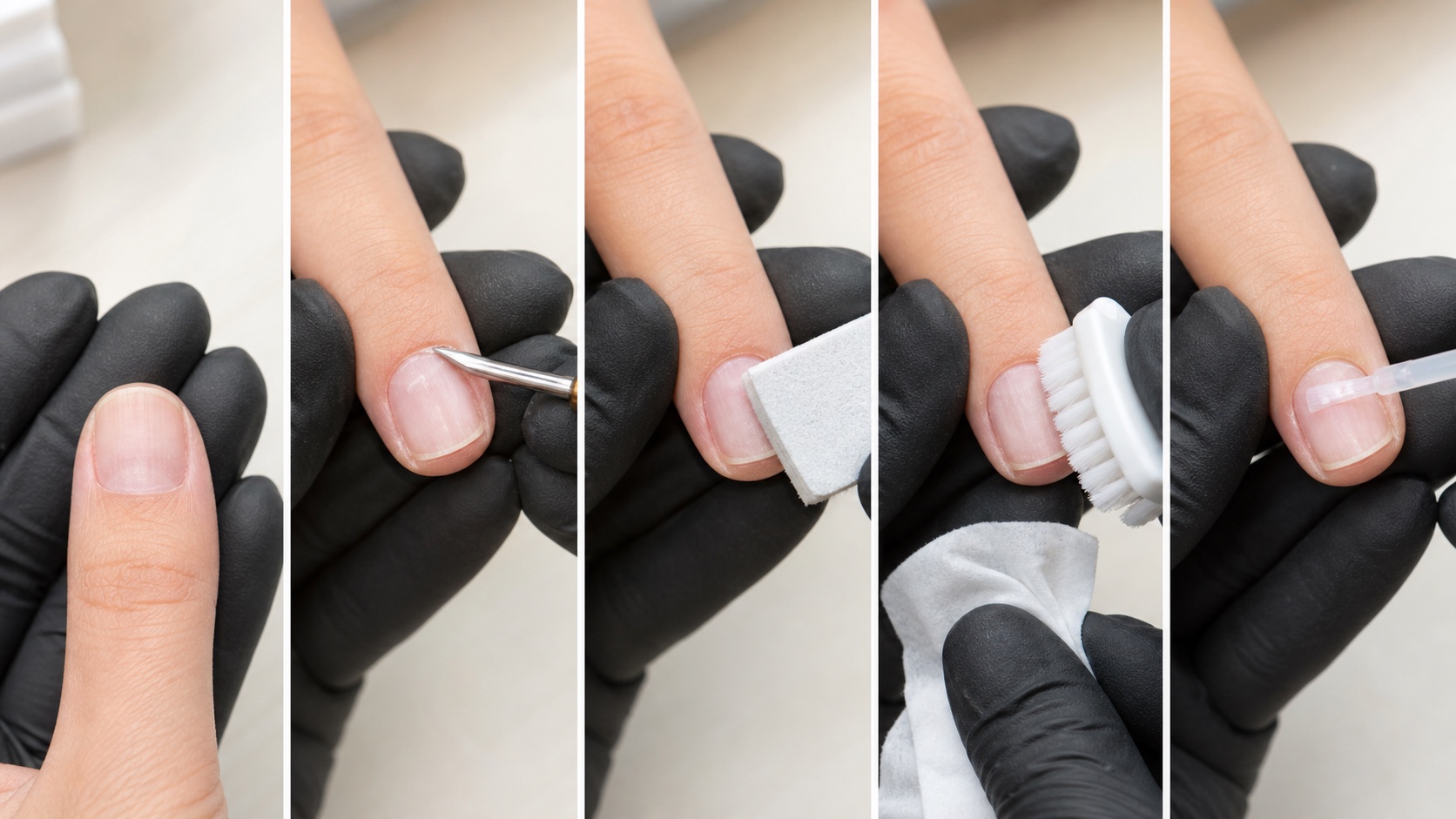
Use the nail preparation guide as an example of a skill that needs visible sequence, pressure control and an intact natural plate—not a before-and-after image alone.
When an online nail course works well
Online quality must be visible before purchase
Replay matters only when the right information is on screen
Video
Complete, close and multi-view
Tasks
Progressive and measurable
Access
Long enough for repetition
Feedback
Scope, criteria and timing
Online study can suit irregular schedules, distance from a school, caring responsibilities, disability or a need to replay complex sequences. The European Commission describes digital education as the use of digital tools, technologies and content to support teaching, learning and assessment; it also frames quality, inclusion and accessibility as central. Flexibility is an opportunity, not proof that a particular course is effective.
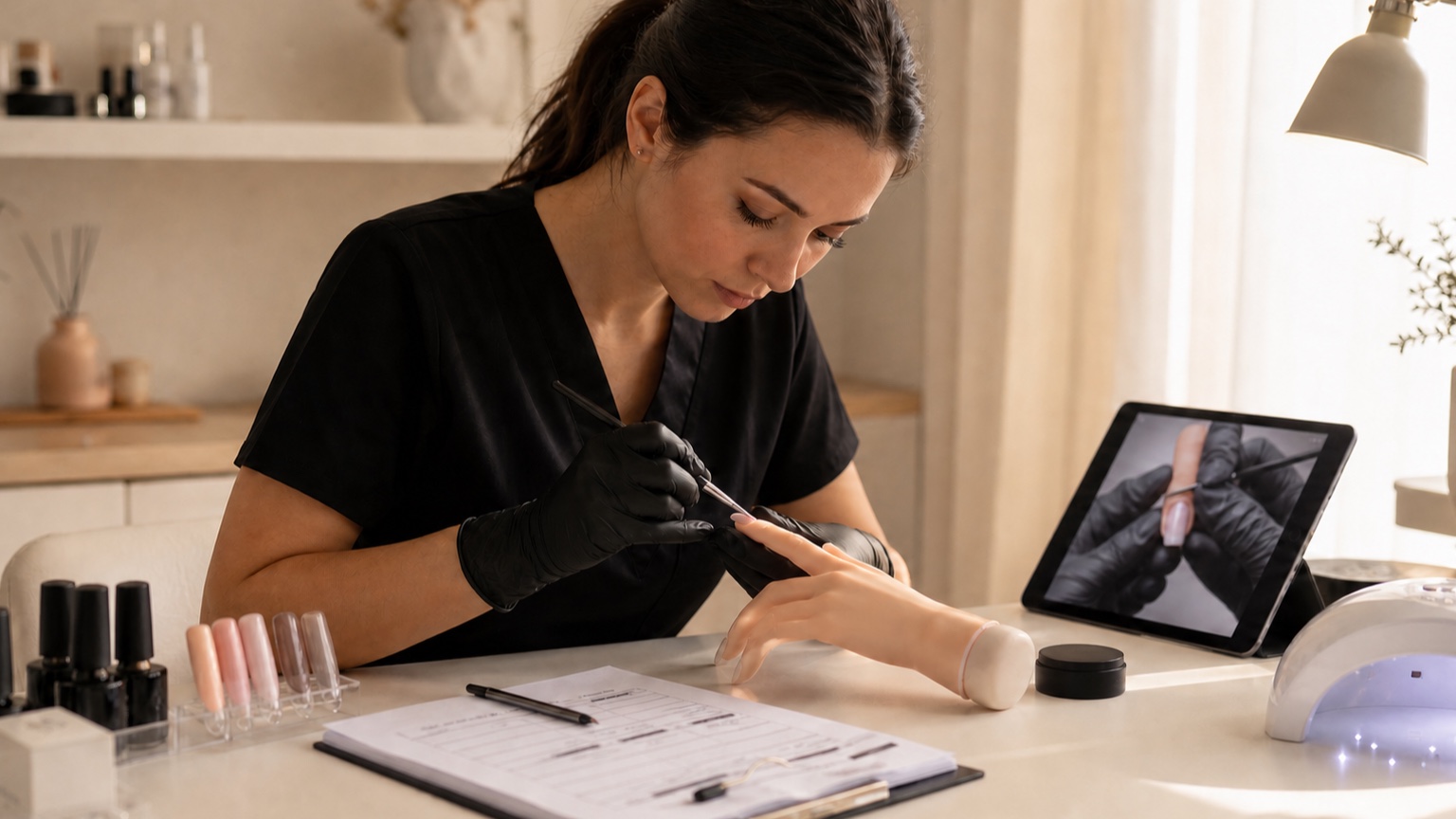
The camera shows the tutor’s working hand, brush angle, bead or gel quantity, side profile and front view without hiding critical stages.
The syllabus separates explanation, demonstration, exercises, assessment and maintenance rather than presenting one edited set.
Access lasts long enough to alternate study with practice and revisit earlier material after feedback.
Captions, readable documents, playback controls and a clear interface support actual access rather than nominal availability.
Practice submissions and tutor response conditions are written before purchase, including number, format, criteria and timing.
The limitations must be actively compensated. A screen cannot feel filing pressure, automatically see posture or notice every unsafe habit outside the frame. Submit video of the process where permitted, use top/side/front result views, and seek synchronous or in-person correction when a movement remains unreadable. A clip library without tasks or assessment may be useful reference content, but it is not automatically a complete practical course.
When in-person training adds the most value
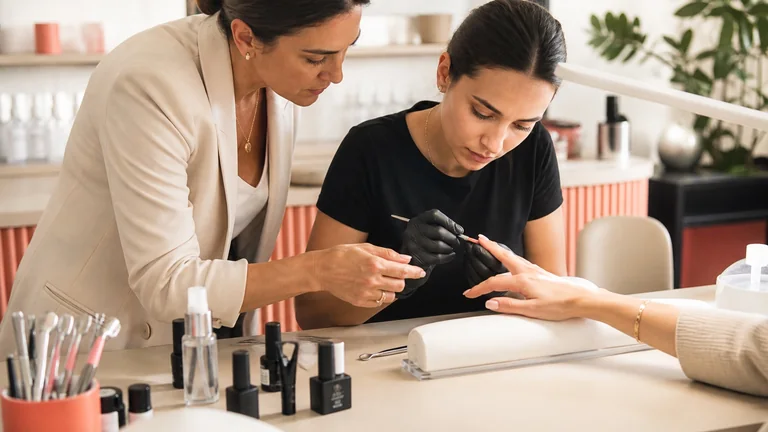
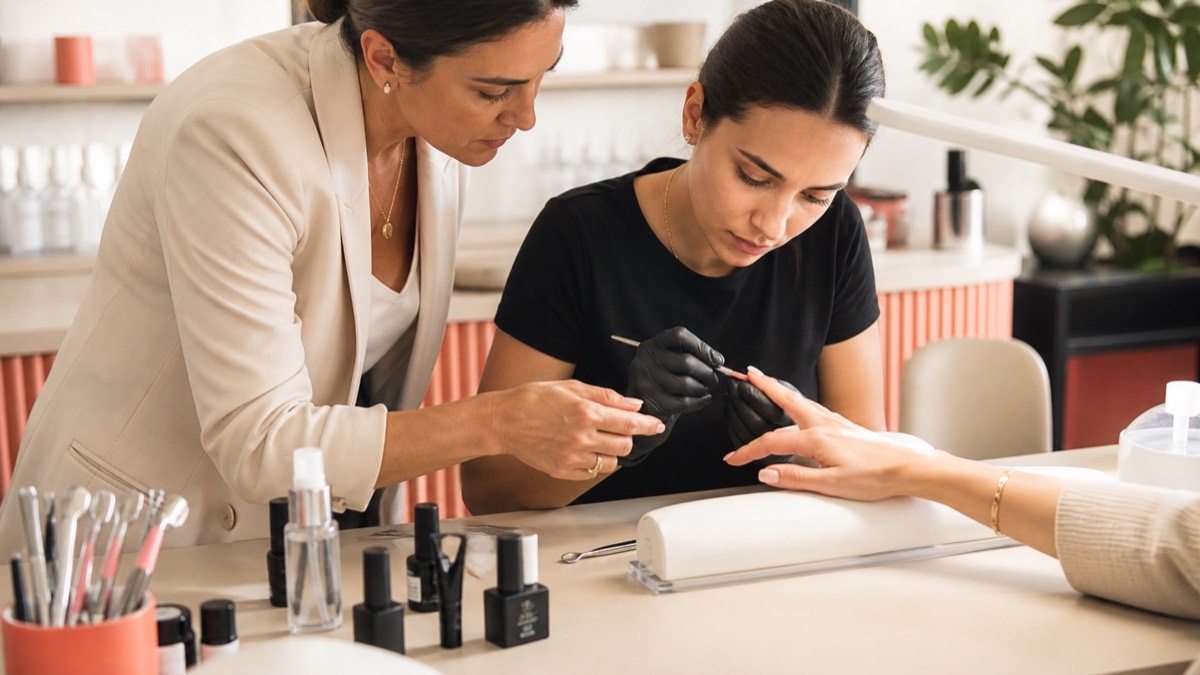
Direct supervision is particularly useful when a beginner cannot yet recognise excessive pressure, an unstable hand, incorrect tool angle, uncontrolled product or an unsafe working position. A tutor can interrupt the gesture before it becomes repeated habit, demonstrate on the learner’s exact setup and compare tactile or visual cues that are difficult to capture remotely.
Physical attendance does not guarantee individual practice. Ask for class size, number of workstations, model arrangements, practical hours, tutor-to-learner ratio and the method used when someone does not meet a criterion. Clarify whether products are available only during class and how you will repeat the same system afterwards.
Cognitive and physical overload also matter. A dense day may feel productive while leaving too little time to consolidate several techniques. Request the syllabus beforehand, arrive prepared, write the correction rather than only photographing the result, and schedule the next repetition soon after class. Live training is a high-value checkpoint when it connects to work before and after it.
Blended learning is useful only when the stages connect
Blended is a sequence, not a label
Each mode should prepare evidence for the next
Prepare
Theory and demonstrations online
Submit
Exercises reveal real gaps
Correct
Live work targets known issues
Verify
Repeat and review afterwards
Blended is a sequence, not a label. Its value comes from the relationship between preparation, observed practice, correction and later verification against the same visible criteria, under conditions the learner can reproduce independently.
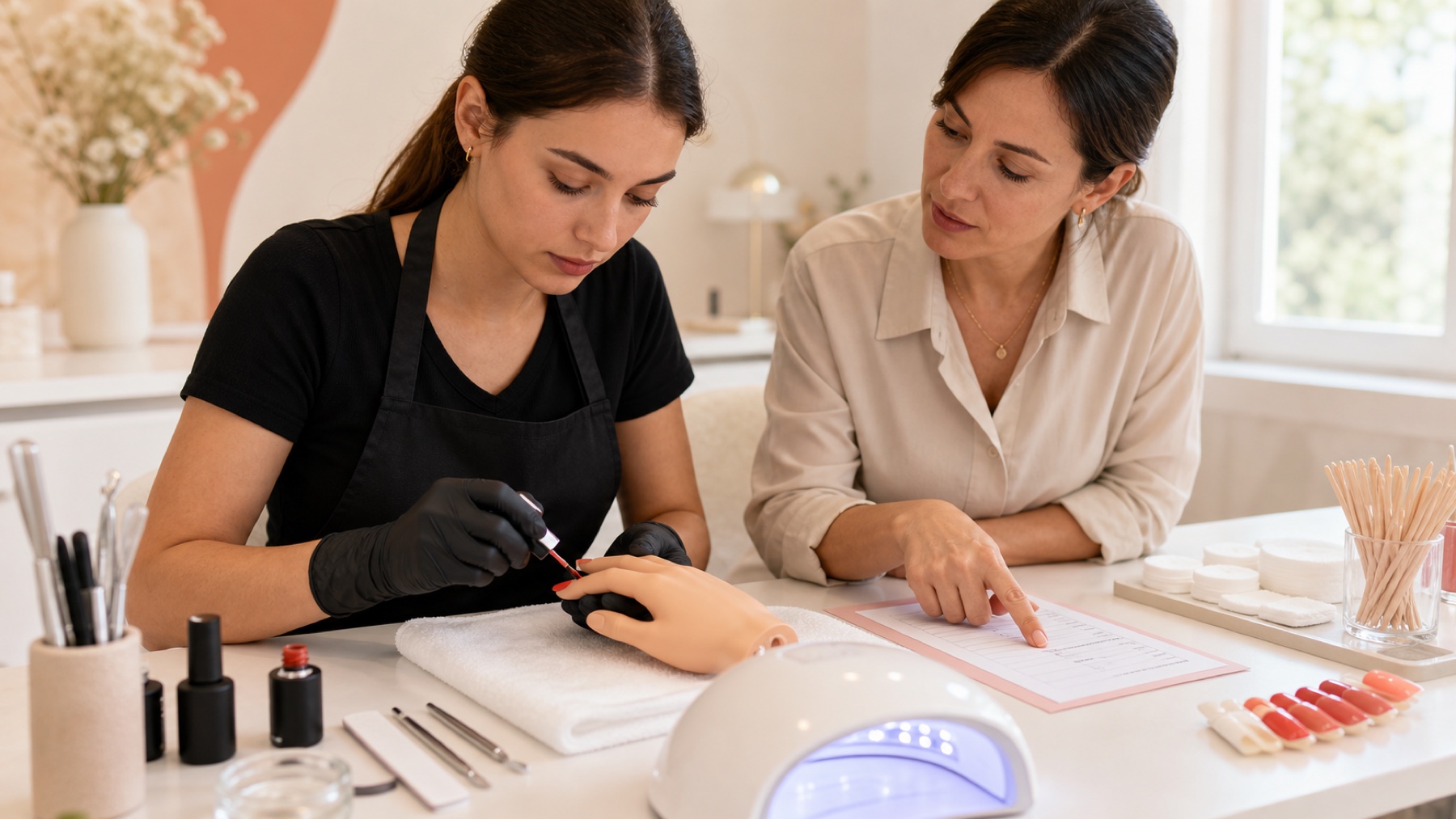
A meaningful blended course might assign online anatomy and product theory first, require controlled exercises, use the live session to correct known problems, and return to online demonstrations for later repetition. Each mode has a declared job. Simply offering videos plus one unrelated classroom day does not create an integrated programme.
Ask which modules precede the workshop, what evidence must be submitted, which movements are assessed live, what feedback is recorded and what happens afterwards. The tutor should be able to explain how an online observation becomes a physical task and how the live correction is verified later.
Match format to the skill, not to a slogan
Learning need | Useful delivery features | Evidence to request |
|---|---|---|
Anatomy, product and safety | Structured explanation online or live, with current sources and cases. | Questions, scenarios and clear stop decisions. |
Preparation and filing | Close repeatable views plus feedback on pressure, angle and surface. | Process video and intact, controlled natural nail. |
Product control | Replayable quantities and tutor review of your application. | Clean perimeter, correct cure and repeatable thickness. |
Architecture | Multi-view demonstration and correction online, live or blended. | Axis, apex, sidewalls and free edge agree in three views. |
E-file movement | Direct or high-quality process observation, then repeated controlled drills. | Stable support, direction and contact without heat or pain. |
No delivery mode removes the need for manufacturer instructions, hygiene and scope. Use the guides to professional e-file control and nail architecture to identify what a course demonstration and assessment should make visible.
Feedback quality matters more than feedback speed
Useful feedback names the location and observable defect, suggests the likely stage that created it, sets one priority action and asks for evidence after repetition. ‘Good’, ‘wrong’ or a drawn line on one top-view photograph is not enough to correct a three-dimensional service.
Before enrolling, ask what you may submit, whether the tutor sees the process, how many reviews are included, whether resubmission is allowed and how long support remains open. In class, ask whether the tutor records criteria or whether correction ends when the day finishes. Feedback should become a reusable practice instruction.
Document date, exercise, product system, complete time, top/side/front views, tutor correction and next result. The nail technician portfolio guide helps separate a learning record from a public portfolio and keeps permissions visible.
Access, inclusion and learning conditions
Travel, shift work, caring responsibilities, disability, language, internet access, device size, captions, physical workstation and fatigue can change which format is realistically usable. Accessibility is not a bonus feature. Ask for captions or transcripts, keyboard and playback controls, readable resources, breaks, physical access, lighting and any reasonable adjustment route before purchase.
UNESCO frames educational technology around human-centred, ethical and equitable use. For a private vocational decision, the practical lesson is simple: technology should expand meaningful participation and feedback, not shift every burden to the learner or hide an inaccessible course behind ‘study anywhere’.
Calculate total cost and usable practice time
Compare course fee plus required kit, compatible equipment, product replenishment, models, assessment or resit fees, travel, accommodation, meals, childcare and lost work time. For online study include the workstation and the practice consumption needed to complete every assignment. A lower fee can become the higher total when essential materials are excluded.
Also compare access with your calendar. Sixty hours of content do not help if access expires before you can practise between modules. One live weekend may be difficult to absorb when it introduces several systems without a review route. Price the learning cycle you can complete, not the largest hour count.
The current BeautyLearn online nail-course catalogue lets you compare the declared level and curriculum of each English-market course. Those pages describe the available programme; the criteria in this guide remain useful for any provider.
Ask for evidence before you buy
A course page should let you evaluate more than its finished photographs. Request a real lesson sample, the complete syllabus and an example practice brief. The sample should show whether hands remain in frame, critical quantities are visible, editing preserves necessary timing, the tutor explains why each checkpoint matters and the result is assessed from relevant views. Marketing footage is not automatically a teaching sample.
Ask who provides feedback and whether that person is the named tutor. Clarify the number of submissions, permitted file formats, maximum length, required views, usual response window, resubmission and what happens after access expires. ‘Tutor support included’ can mean anything from technical platform help to detailed practical review; the written conditions should remove that ambiguity.
For an in-person course, request the timetable rather than the total day length. Separate registration, theory, tutor demonstration, breaks, learner practice, model work, cleaning, assessment and sales presentation. Confirm class size, assistant roles and how much individual observation is realistically available. A certificate ceremony belongs to the schedule but does not increase practical supervision.
Check whether the course teaches a complete system or requires unlisted purchases. The beginner nail kit guide helps identify product, lamp and equipment questions. The manicure-tool hygiene guide helps test whether training distinguishes single-use items, cleaning, disinfection, sterilisation and protected storage instead of using one vague word for every process.
Finally, ask to see assessment criteria before the final task. Criteria should describe observable performance such as intact surrounding skin, controlled preparation, clean product perimeter, correct system use, coherent structure and safe removal. If completion depends only on watching a percentage of videos or attending the day, the document may show participation but tells you less about practical competence.
Check certificate and local recognition separately
Online or in-person delivery does not by itself determine whether a document is a private completion certificate, an approved qualification or evidence accepted by a regulator. Ask who issues it, what assessment was passed, what legal or professional claim is made, and which named authority recognises it for which purpose.
The exact route varies by jurisdiction. Read the certificate and licence verification guide before paying because a course format cannot replace an approved programme, practical examination or supervised hours when local rules require them.
A decision checklist before enrolment
Compare evidence, cost and usability together
The cheapest or most convenient format may be unusable
Learning
Level, curriculum and feedback
Access
Schedule and adjustments
Total cost
Kit, travel and assessment
Status
Certificate and local rules
Does the full curriculum match my level and exact target technique?
Can I see a real lesson sample with close, complete, multi-view demonstration?
How many practical tasks, individual observations and corrected resubmissions are included?
What class size, tutor time, platform access and accessibility conditions apply?
Which kit, equipment, models, travel and assessment costs remain outside the fee?
What does the certificate document, and does my local authority require a different approved route?
Can my real calendar support observation, practice, feedback and corrected repetition before access ends?
Frequently asked questions
Is an online or in-person nail course better for beginners?
Beginners often benefit from direct correction, but a rigorous online course can work when it provides complete close demonstrations, progressive tasks and process feedback. Choose the design that makes your early pressure, posture and product control observable.
Can nail extensions really be learned online?
Theory and technique can be taught online, but manual competence comes from real practice. You need compatible materials, a workstation, suitable training supports and models, assessment evidence and correction—not video completion alone.
Does an in-person course guarantee more practical work?
No. Verify practical hours, class size, workstations, model arrangements and individual tutor time. A large group or long demonstration may leave little practice. Repetition after class remains essential.
How should remote feedback work?
The provider should define accepted photos or video, required views, assessment criteria, number of submissions, response time and resubmission. Useful feedback identifies the defect, probable process stage and next exercise.
Is blended training always the best option?
No. It adds value only when online preparation, live correction and later verification form one sequence. If the classroom simply repeats the video or no corrected repetition follows, the blended label says little.
How long should course access last?
Long enough for your realistic cycle of study, practice, feedback and repetition. Compare the programme with your weekly hours and ask what happens to videos, support, assignments and updates when access expires.
Are kits normally included?
There is no standard. Ask for the exact list, sizes, equipment, products used only in class and replenishment needed for practice. Do not replace a documented system with random alternatives without checking compatibility.
Is an online certificate worth less?
Delivery mode alone does not determine legal or professional status. Issuer, approved programme, assessment, jurisdiction and intended purpose matter. Verify the claim with the named authority rather than relying on ‘recognised’.
What makes an online nail demonstration high quality?
Stable close views, true speed where relevant, visible quantities, full preparation and removal, top/side/front checks, clear audio, captions and explanation of errors. A polished final image cannot replace the process.
Do I need a model for online training?
Many controls can begin on tips or a training hand. Suitable informed models are later needed for assessment, hand management, wear, infill and removal. Follow the course progression and never practise on a doubtful condition.
Can I combine a recorded course with private practical lessons?
Yes. Prepare with the recorded sequence, bring documented problems to the live lesson, obtain specific correction and use the recording for later repetition. Confirm that both teach compatible systems and methods.
Which format is usually cheaper?
Online tuition may reduce travel and premises cost, but the fee alone is not the total. Add kit, equipment, practice products and feedback; for in-person learning add travel, accommodation, models and lost work time. Compare completed learning cycles.
Official sources and editorial boundary
Digital-learning context: European Commission, Digital Education Action Plan. Human-centred and equitable technology context: UNESCO, AI and technologies in education. These policy sources explain digital-learning principles; they do not evaluate a specific private course or replace local vocational-training rules.
Editorial boundary: this page compares delivery conditions. It does not claim that BeautyLearn or any format replaces approved education, supervised hours, practical examination or licensing where required. Verify current local rules and the provider’s written terms before enrolment.