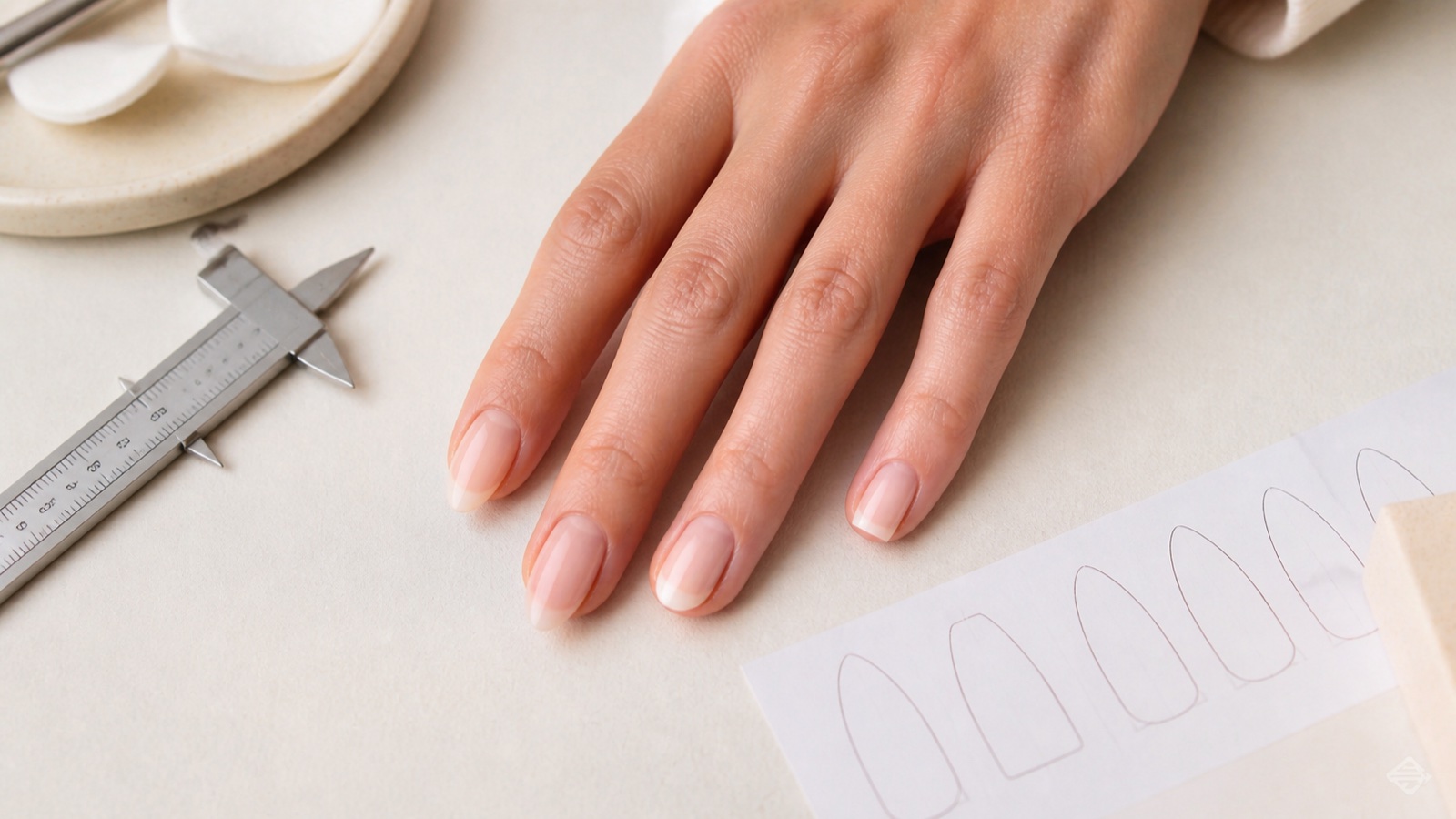
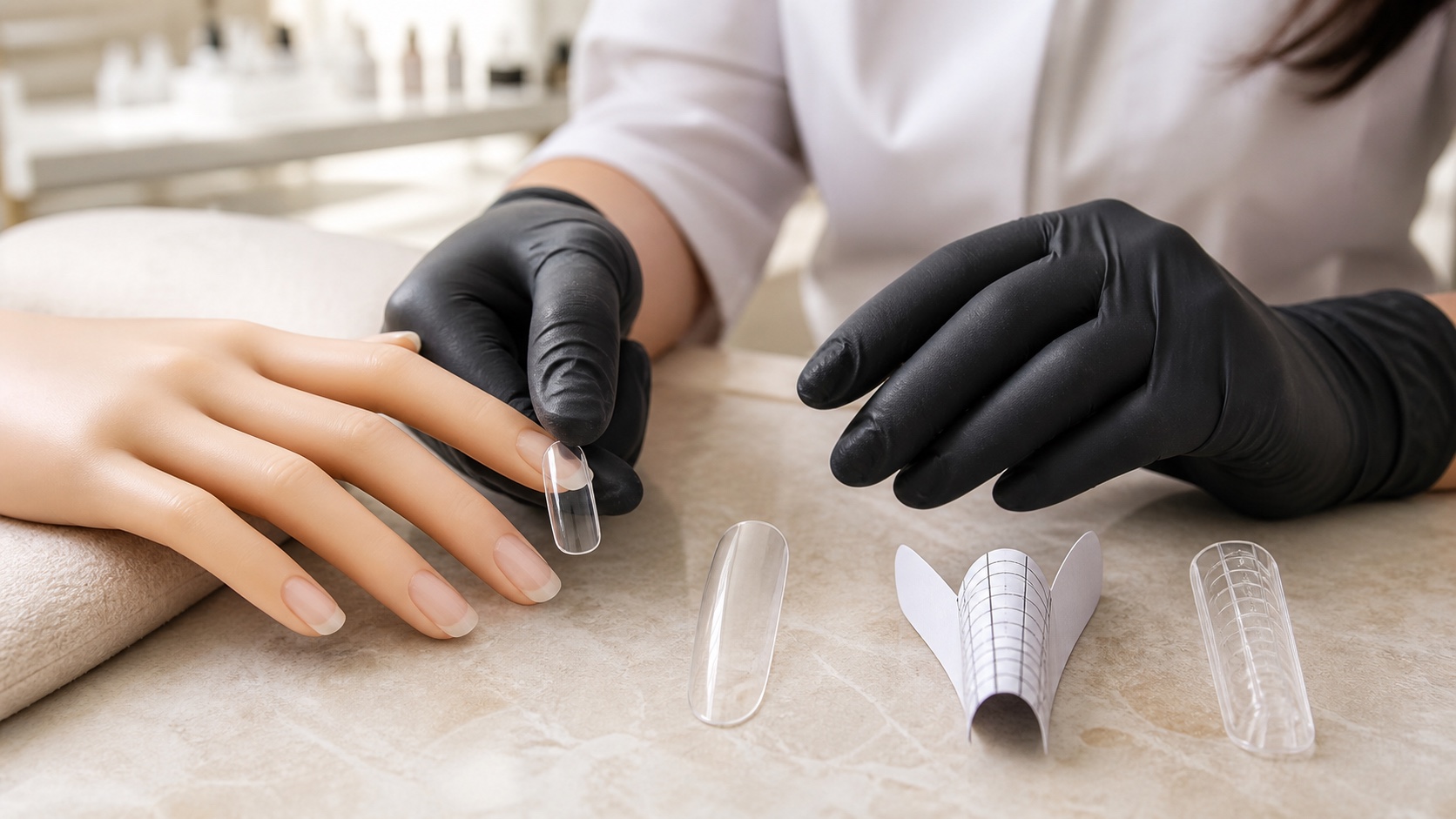
Classic nail tips, soft-gel full-cover tips, sculpting forms and dual forms are not four names for the same extension. They place support in different locations, transfer different parts of the final shape and concentrate technical risk at different stages. The best choice depends on the natural nail, required length, product system, desired customisation, maintenance plan and the technician’s actual control—not on which method looks fastest in a short video.
Short answer: a classic tip remains under the free edge as part of the extension; a full-cover gel tip becomes the complete preformed extension; a sculpting form is removed after product is built above it; and a dual form is removed after material shaped inside it has cured on the nail. Fit and structure still need professional judgement in every method.
This page owns the comparison intent. The sculpting-form guide teaches lower-support fitting, while the dual-form guide teaches upper-mould sizing and seating. Here they appear only deeply enough to make an informed method choice and avoid treating gel tips and dual forms as synonyms.
The key difference: what stays on the nail and where structure is built
Four supports, four different jobs
Name what remains and where the shape is created
Classic tip
Partial permanent support under overlay
Gel tip
Full permanent preformed extension
Sculpting form
Temporary support from below
Dual form
Temporary mould from above
Method | Support position | What remains | Where structure is controlled |
|---|---|---|---|
Classic tip | Bonded to part of the natural nail and extending beyond it. | The plastic tip stays beneath the overlay. | Tip fit and blend, then product architecture over both surfaces. |
Full-cover gel tip | Covers the nail from near the cuticle to the new free edge. | The entire preformed tip remains as the extension. | Preformed apex and curve, modified by size, placement and adhesive layer. |
Sculpting form | Fits beneath the free edge as temporary lower support. | Only the cured enhancement product remains. | The technician builds lower line, axis, length, apex and walls. |
Dual form | Sits over product as a temporary upper mould. | Only the cured enhancement product remains. | Material quantity, mould curve, seating, underside and later correction. |
This distinction predicts the workflow. A classic or full-cover tip requires permanent fit across the natural nail. A sculpting form must align under the nail while the extension is created above. A dual form carries uncured product to the nail and transfers its upper shape before being released. Calling all four ‘tips’ hides the exact skill that needs assessment.
Classic nail tips: partial support that stays under the overlay
A classic tip usually bonds to a contact area near the free edge, creates immediate length and remains below gel or acrylic. The sidewalls, C-curve and contact area must fit without forcing the natural nail. Too small a tip can pinch or flare at the sides; too large a tip may require excessive reduction and still sit incorrectly. The adhesive layer should be controlled, without air pockets or skin contact.
After bonding, the transition may need blending according to the tip and system. Blending means reducing a manufactured step while preserving the natural nail and tip strength; it does not mean filing a hollow into the plate. Product architecture must then join natural nail and plastic extension into one balanced structure. The tip supplies length, not a finished apex.
Full-cover gel tips: a preformed soft-gel extension
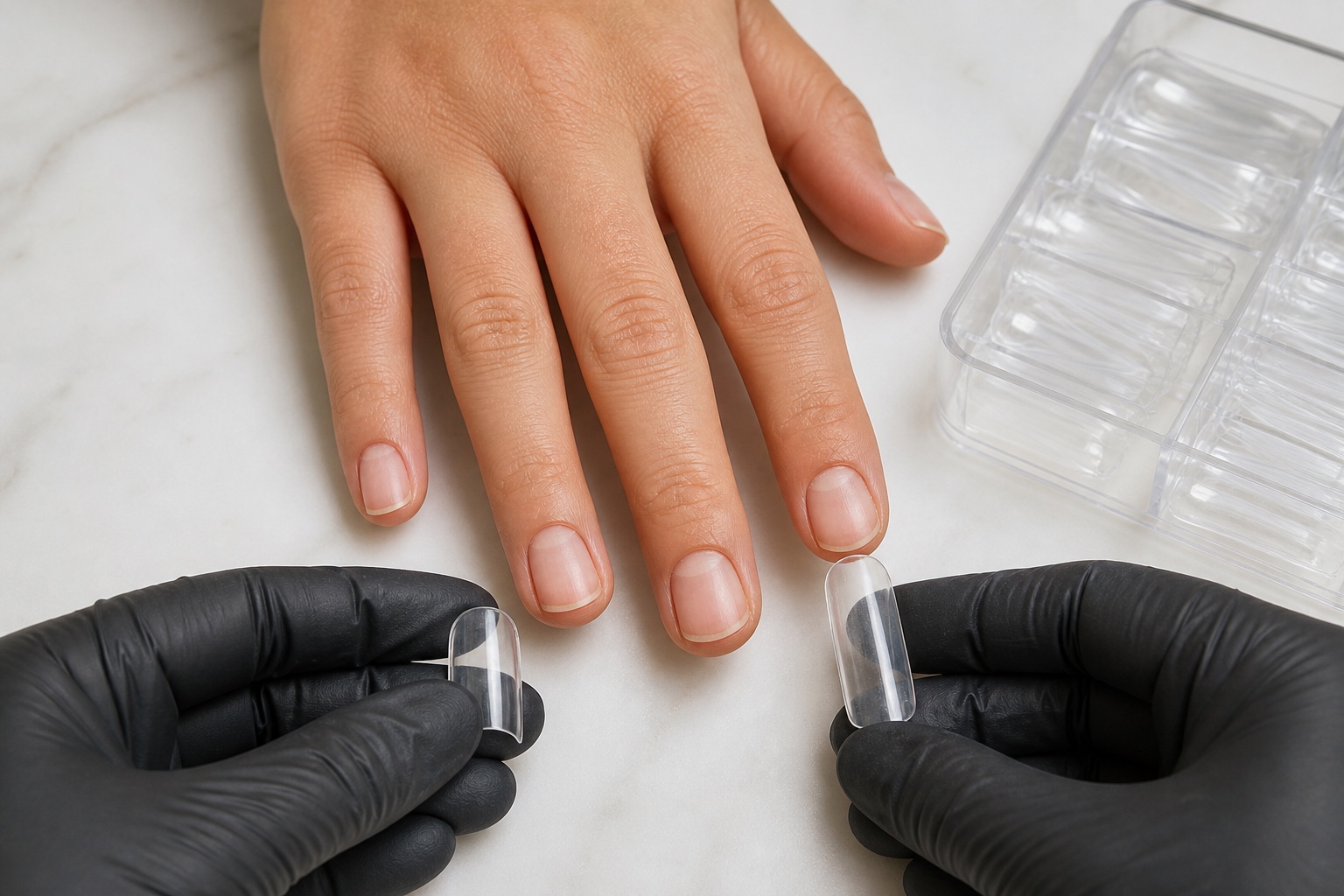
A full-cover gel tip extends from the cuticle area to the finished length and contains a preformed curve and apex. It is attached with the adhesive or gel specified by the system and cured while held in exact position. The method can reduce surface building and filing, but it moves difficulty into size selection, natural-nail compatibility, adhesive quantity, bubble-free seating, alignment and light access.
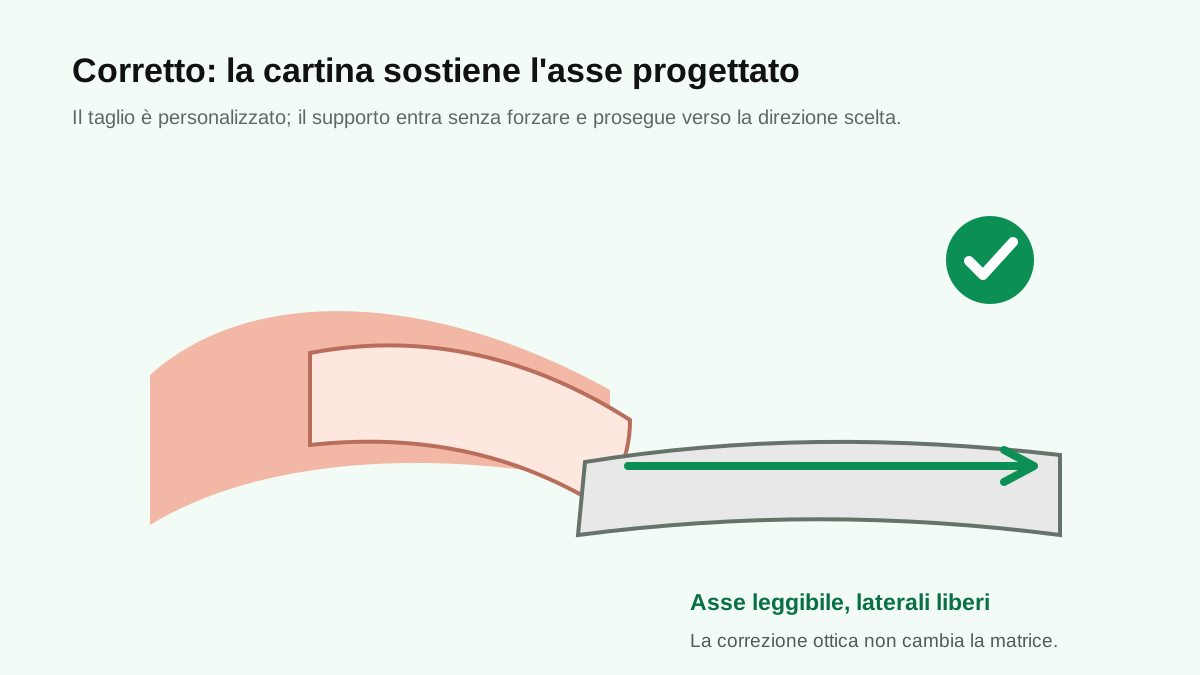
The tip should cover sidewall to sidewall without pressure and follow the nail’s longitudinal curve. A visible gap is not solved by filling it with a large amount of adhesive unless the system explicitly provides a safe correction method. A preformed apex may not suit every nail bed, length or growth direction. The guide to hooked, ski-jump and sideways-growing nails explains why an apparently convenient mould can reproduce or exaggerate the wrong axis.
Because light must pass through the tip and adhesive layer, opacity, decoration, product thickness, lamp and hand position matter. Do not assume that any clear tip with any gel and lamp forms a compatible system. Follow the full-cover system instructions for tip preparation, adhesive, flash cure, final cure and removal.
Sculpting forms: custom construction from the lower line
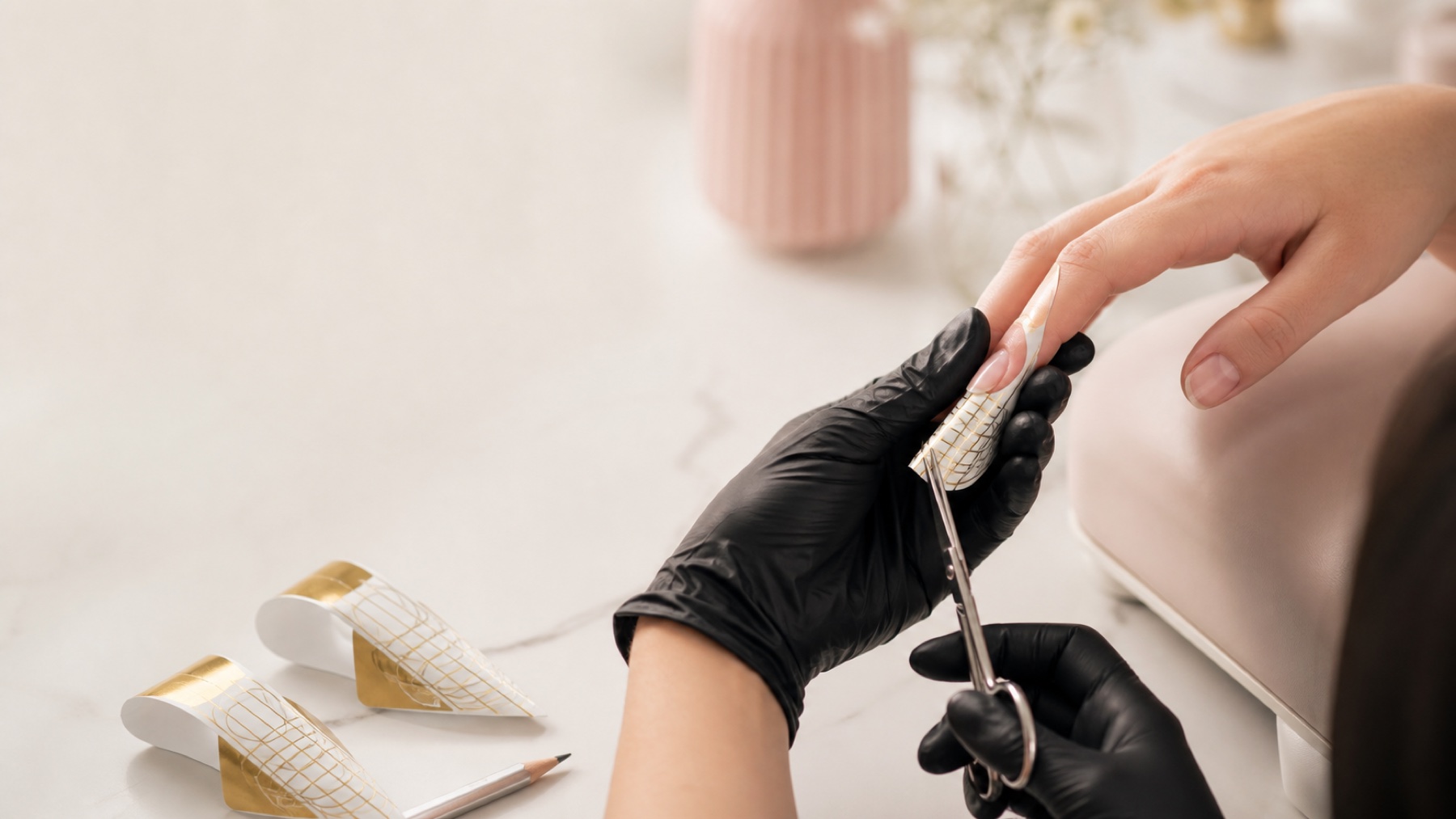
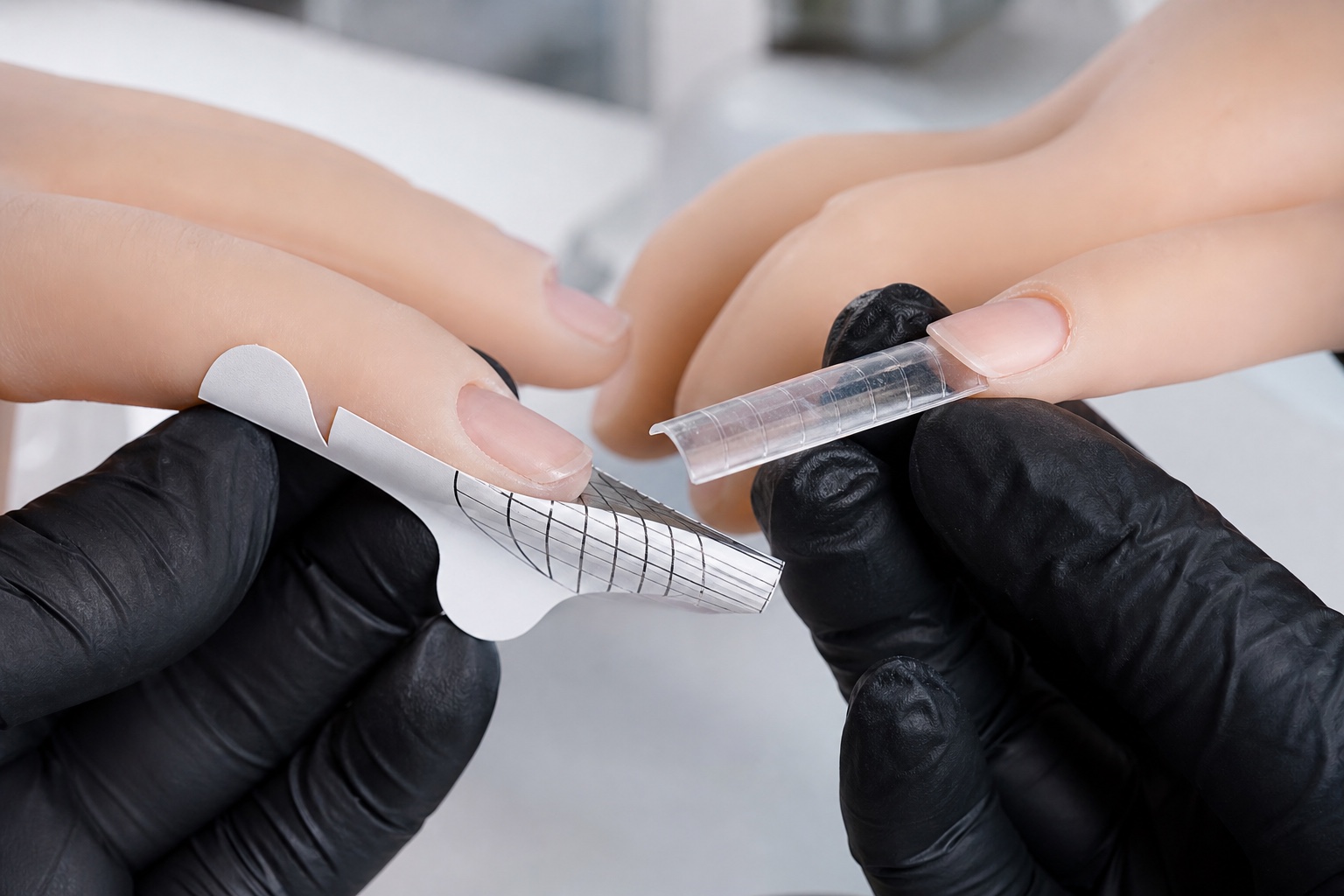
A sculpting form—or paper nail form—is cut and closed beneath the natural free edge so product can extend over it. The form is temporary and removed after the material has enough cure or set to support itself. This method exposes every structural decision: central axis, lower line, sidewalls, length, upper arch and apex.
Customisation is its advantage and its learning demand. The opening must match the hyponychium and lateral folds without pressure or gaps, and the form must align with the correction plan rather than automatically following a downward or upward natural edge. Cutting more does not guarantee better fit; each cut should solve an observed contact point while preserving symmetry and stability.
Dual forms: material shaped inside a removable upper mould
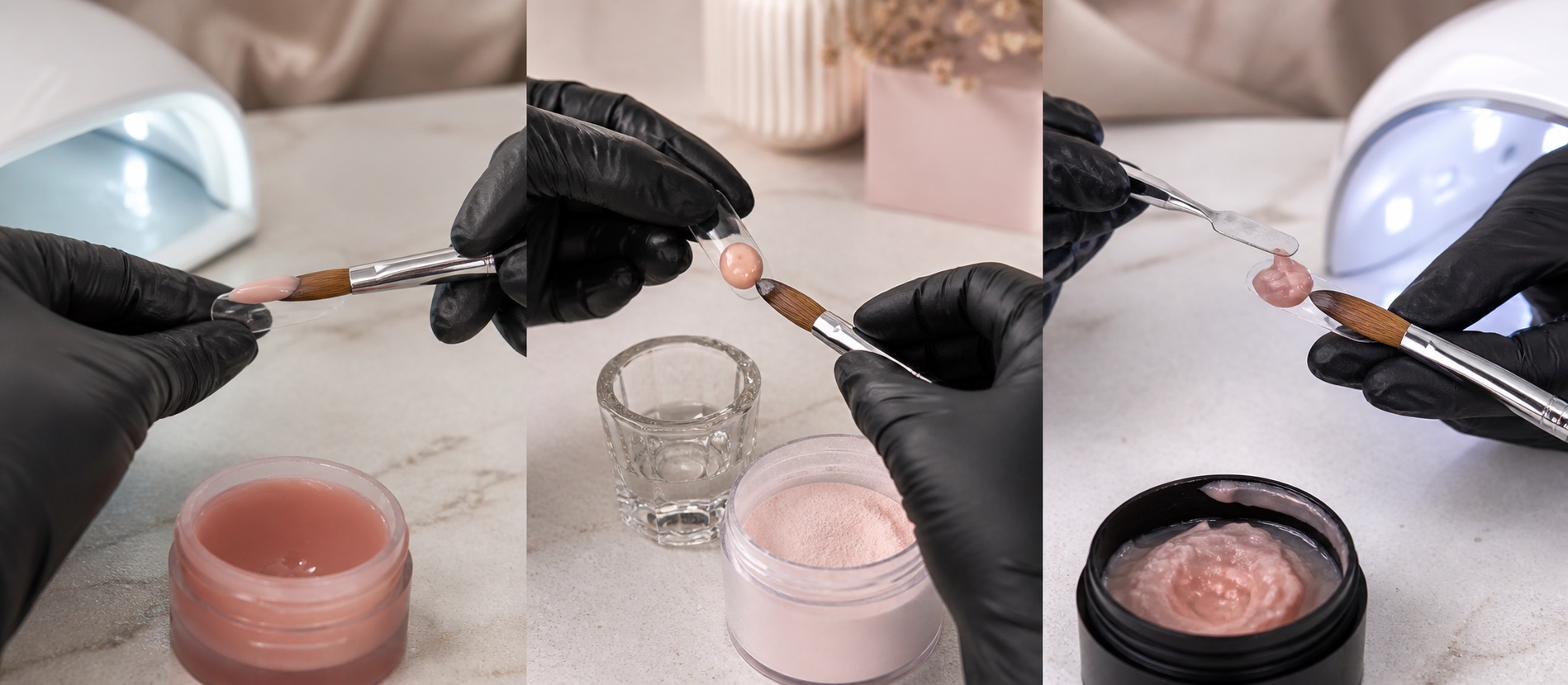
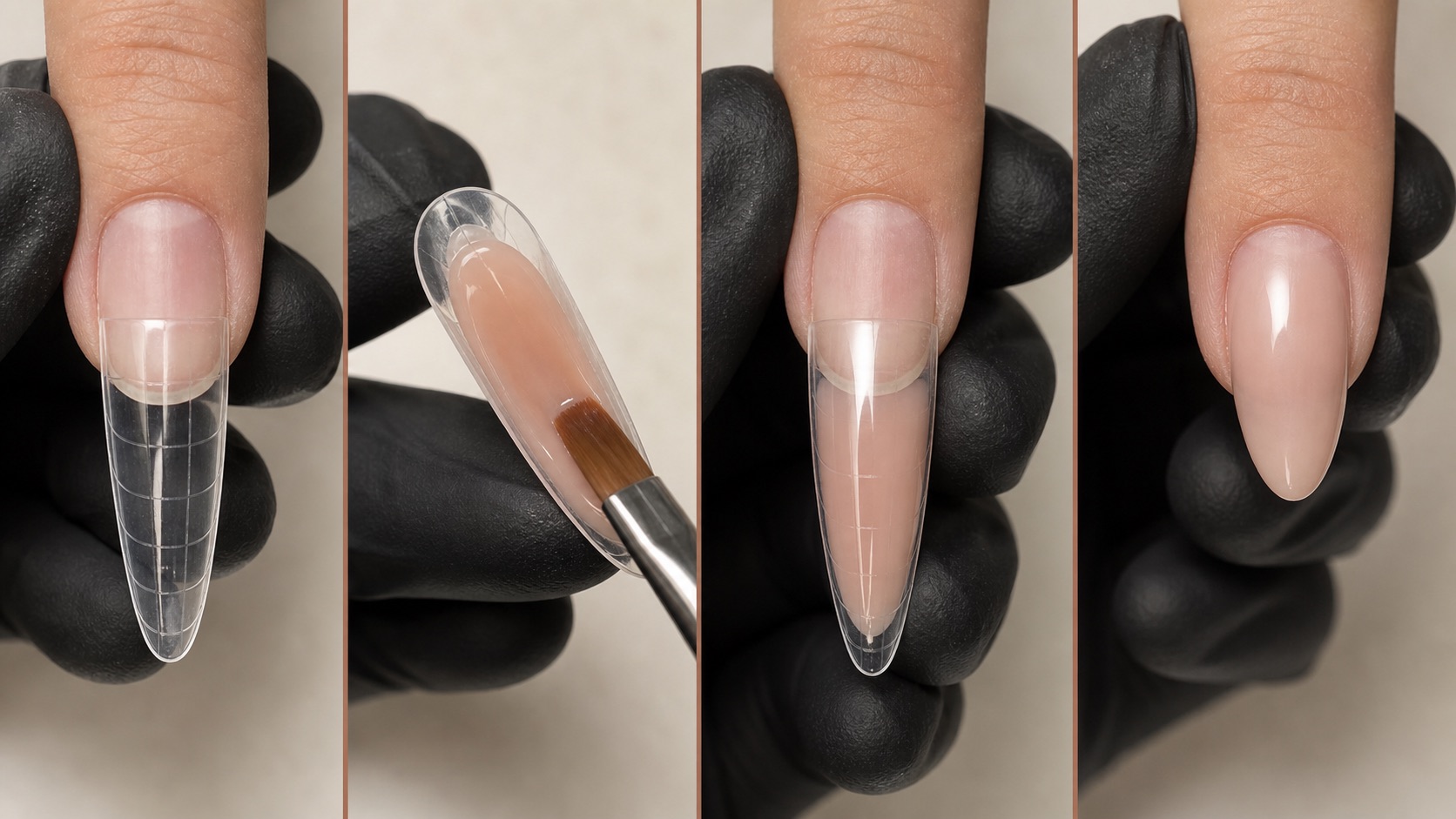
A dual form is a reusable mould selected to cover the nail, filled with gel, acrygel or another compatible enhancement material, positioned over the prepared nail and removed after curing. Unlike a full-cover gel tip, the form itself does not remain. Unlike a sculpting form, it transfers the upper surface rather than supporting the extension from below.
The amount and distribution inside the mould determine the perimeter, apex and free edge. When the form is seated, excess must not squeeze onto skin and the product must connect cleanly underneath. A mould that looks correct from above can be too narrow, too curved, off-axis or hollow below. After removal, the surface may need little filing, but underside, perimeter and architecture must still be assessed.
Complete comparison: customisation, speed and learning curve
Question | Classic tip | Full-cover gel tip | Sculpting form | Dual form |
|---|---|---|---|---|
Custom fit | Moderate: contact area and sidewalls constrain fit. | Limited by full preformed curve and sizes. | High when cutting and alignment are controlled. | Moderate to high within available mould shapes. |
Main time saver | Immediate free-edge length. | Preformed surface, shape and length. | None automatically; precision reduces correction. | Upper surface can emerge smooth. |
Primary risk | Poor contact fit, bubbles and over-blending. | Wrong size, trapped air, misalignment or incomplete cure. | Gaps, tilted form and incorrect lower direction. | Excess, bubbles, underside step or distorted seating. |
Maintenance | Usually maintained through overlay and infill. | Often removed and replaced, depending on system. | Product can be rebalanced without the form. | Product can be rebalanced without the mould. |
A fast application for one nail anatomy may require extensive correction on another. Measure complete service time: sizing, preparation, fitting, attachment or building, cure, underside work, filing, colour, removal and rebooking. A method is efficient only when its fit and maintenance remain controlled, not when the first extension leaves the mould quickly.
How to choose by natural nail and desired result
For a regular nail that matches a preformed size, a full-cover gel tip can create a consistent short salon shape when the complete system is followed.
For a nail needing a highly individual lower line or axis correction, a properly fitted sculpting form provides greater customisation.
For a learner practising product architecture, sculpting or overlays make structure more visible than relying entirely on a preformed upper shape.
For controlled acrygel placement with a suitable mould match, dual forms can reduce upper-surface filing but require careful underside and perimeter inspection.
For a damaged, painful, inflamed, separated or suspicious nail, the correct method is no extension and referral within professional scope.
Use the nail morphology guide to separate visual shape choice from structural fit. A client may like a tapered form, but natural sidewalls, nail-bed width, growth direction, length and daily use determine how that request can be translated sustainably.
A four-point fit test before adhesive or product
Dry fit before product makes errors harder to reverse
Printed sizes are only a starting reference
Width
Sidewall to sidewall without force
Curve
No unsupported hollow or pressure
Axis
Centred in top and front views
Access
Perimeter, underside and light visible
Width: the support reaches the required sidewalls without pressure, flare or a narrow gap.
Longitudinal curve: it follows or deliberately corrects the profile without creating a hollow that must be flooded.
Axis: viewed from above and front, the support aligns with the planned extension rather than drifting with a rotated finger.
Access: you can see and control perimeter, adhesive or product, underside and—where light curing is used—lamp exposure.
Dry-fit all five nails before preparation advances. Choose by the widest point or required contact area, not by the printed size alone; numbering varies by range. If the support must be held under force to look correct, the fit is not stable. Modify only when the system permits and the change preserves strength and symmetry.
Product compatibility and curing under a mould or tip
A clear support does not guarantee a complete cure
Compatibility is a documented system property
Match
Product, support and lamp system
Control
Thickness, opacity and position
Expose
Flash and final cure as instructed
Verify
No guesswork from watts or hardness
Do not assume that a builder gel, tip adhesive or acrygel can be interchanged because each hardens under a lamp. The system must define preparation, bonding layer, intended tip or form, maximum thickness, lamp and cure. The complete acrygel application guide shows how material behaviour and support must be considered together. A full-cover tip can change how light reaches the adhesive; a dual form and dense opaque material can create thick or shadowed zones. Follow instructions for hand position, flash cure and final cure.
Wattage cannot prove compatibility or complete cure. The gel-curing guide explains spectrum, intensity, layer thickness, opacity and position. A hard surface is not evidence that deeper product received the required exposure. Never add time by guesswork to compensate for an undocumented combination.
Infill, correction and removal by method
Classic-tip, sculpted and dual-form enhancements can often be rebalanced by removing colour and lifting, reducing length and thickness where appropriate, preserving sound material and rebuilding the shifted apex. The original temporary form or mould is no longer part of maintenance. A full-cover gel-tip system may instruct removal and replacement rather than a conventional structural infill; follow its documented protocol.
Removal depends on the material and complete system, not the support name alone. Some soft-gel tips and adhesives may soak; hard gels or acrylic overlays may require filing; mixed layers can behave differently. Use the guide to safe removal of gel, acrylic, acrygel and gel polish and never pry a full-cover tip or cured enhancement away from the nail plate.
Common mistakes by support
Classic tips fail through narrow sizing, incomplete contact, bubbles, excessive adhesive, skin contact, over-blending or an overlay that ignores the transition. Full-cover tips fail through forced curve, wrong width, trapped air, adhesive flooding, tilted seating or incomplete cure. Sculpting forms fail through gaps, asymmetric cutting, an open or pinched tunnel and a lower line that fights the intended axis. Dual forms fail through incorrect mould size, excess or insufficient product, movement during seating, bubbles, skin contamination and an uncontrolled underside.
Locate lifting by zone and time rather than blaming the support immediately. The nail-lifting guide helps review preparation, perimeter, stress, cure and maintenance. A method that repeatedly requires aggressive natural-nail preparation or excessive thickness is not being made safer by its retention.
A practice plan that keeps the variables separate
Compare methods only after comparable practice
One attempt cannot establish which method is better
Fit
Ten labelled dry examples
Connect
Adhesive or product under control
Build
Five matched short extensions
Complete
Maintenance or safe removal
Practise one support and one short shape at a time. First dry-fit and label ten examples without adhesive or product. Next add the connection step on training supports, preserving size and axis. Then build or attach a coordinated five-tip set and inspect top, side, front and underside using the nail-architecture checkpoints. Finally complete maintenance or removal so the exercise covers the full life of the service.
Do not compare your first sculpting form with your twentieth gel tip and conclude that one method is inherently superior. Record experience level, nail shape, length, material, fit corrections, application time, filing time, result and removal. The post-course practice plan provides a scoring and feedback framework, while the beginner technique guide helps decide when extension work belongs in the sequence.
Frequently asked questions
Are gel tips and dual forms the same?
No. A full-cover gel tip stays on the nail as the extension. A dual form is an upper mould removed after the product placed inside it has cured.
What is the difference between a classic tip and a gel tip?
A classic tip generally covers part of the nail and is overlaid with enhancement product. A full-cover gel tip spans the whole nail and brings a preformed surface, curve and apex.
Are tips or sculpting forms better for beginners?
Tips can simplify immediate length; forms make structural decisions visible and customisable. Neither removes preparation, fit, architecture, curing and removal. Choose the method taught completely with feedback.
Do full-cover gel tips fit every natural nail?
No. Available width, longitudinal curve, apex and sidewall shape may not match. Do not force a tip or fill a large unsupported space unless the manufacturer provides an appropriate method.
Are dual forms always faster than sculpting forms?
No. They can reduce upper filing when fit and product quantity are correct, but difficult sizing, underside correction, bubbles or excess may remove that advantage.
Can any builder gel attach a full-cover gel tip?
Do not assume so. Use the adhesive or gel, tip preparation, lamp and cure defined by the complete system. Similar product appearance does not establish compatibility.
Do sculpting forms require a natural free edge?
A small edge can help fitting, but skilled form cutting and products may accommodate some very short nails. Suitability depends on anatomy, skin condition, system and technician control.
Why will a dual form not release?
Possible causes include unsuitable mould material, incomplete cure, product or top overlapping the form, excessive flexing or removal technique. Follow system instructions and never force it against the nail.
How can I avoid bubbles under a gel tip?
Correct the dry fit first, use the specified adhesive quantity and seat in the instructed direction while maintaining stable pressure. A bubble should be corrected before final cure, not covered.
Which method gives the most custom shape?
A sculpting form generally offers the greatest freedom to design length, lower line and axis, provided the technician can fit and build it. Preformed tips and dual forms remain limited by available sizes and curves.
Can gel tips and dual forms be reused?
Full-cover gel tips remain on the client and are not reused. Dual forms may be reusable when the manufacturer permits and they can be cleaned, processed and inspected appropriately.
Which extension method lasts longest?
There is no universal winner. Fit, preparation, product compatibility, cure, architecture, length, wear and maintenance affect retention. Long wear does not compensate for damage or unsafe application.
Which method should I learn first?
Learn natural-nail preparation and short overlay control first, then select one extension method taught with complete fit, structure, cure, maintenance and removal criteria. Add another support after the first is repeatable.
Official sources and editorial boundary
General nail-product safety: US Food and Drug Administration, Nail Care Products. Workplace chemical and physical hazards: CDC/NIOSH, Nail Technicians: Workplace Safety and Health. These sources support general safety context; the exact extension system must still follow its manufacturer instructions and current local rules.
Editorial boundary: this comparison does not diagnose nails, declare one product universally safe, replace hands-on training or certify competence. It does not authorise services where a qualification or licence is required. Stop for pain, inflammation, broken skin, reaction or an unsuitable nail.
Compare the current English-market nail courses by the support actually taught, natural-nail prerequisites, product system, camera views or live demonstration, practical submissions and feedback. A course title should not make gel tips, sculpting forms and dual forms appear interchangeable.