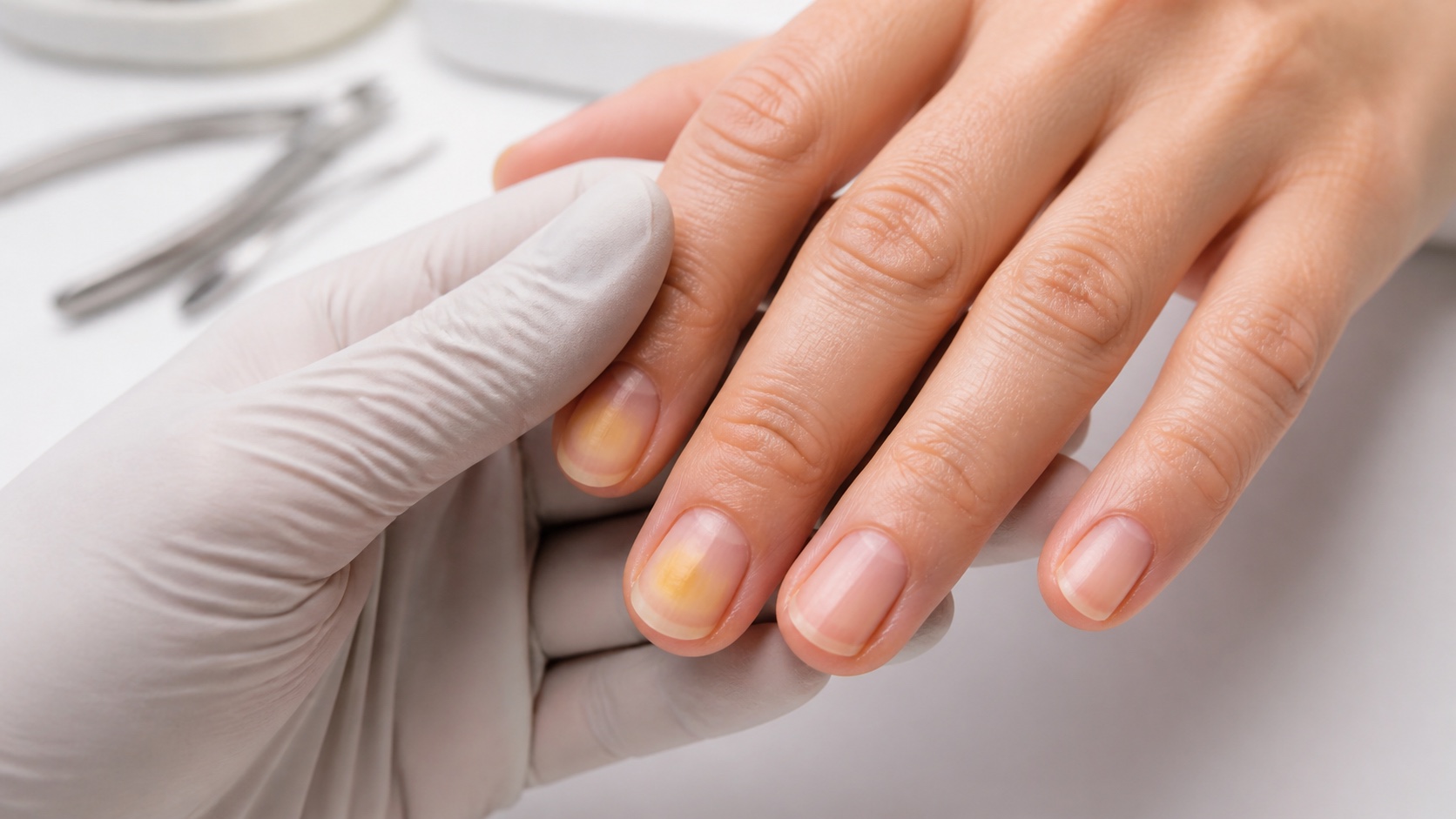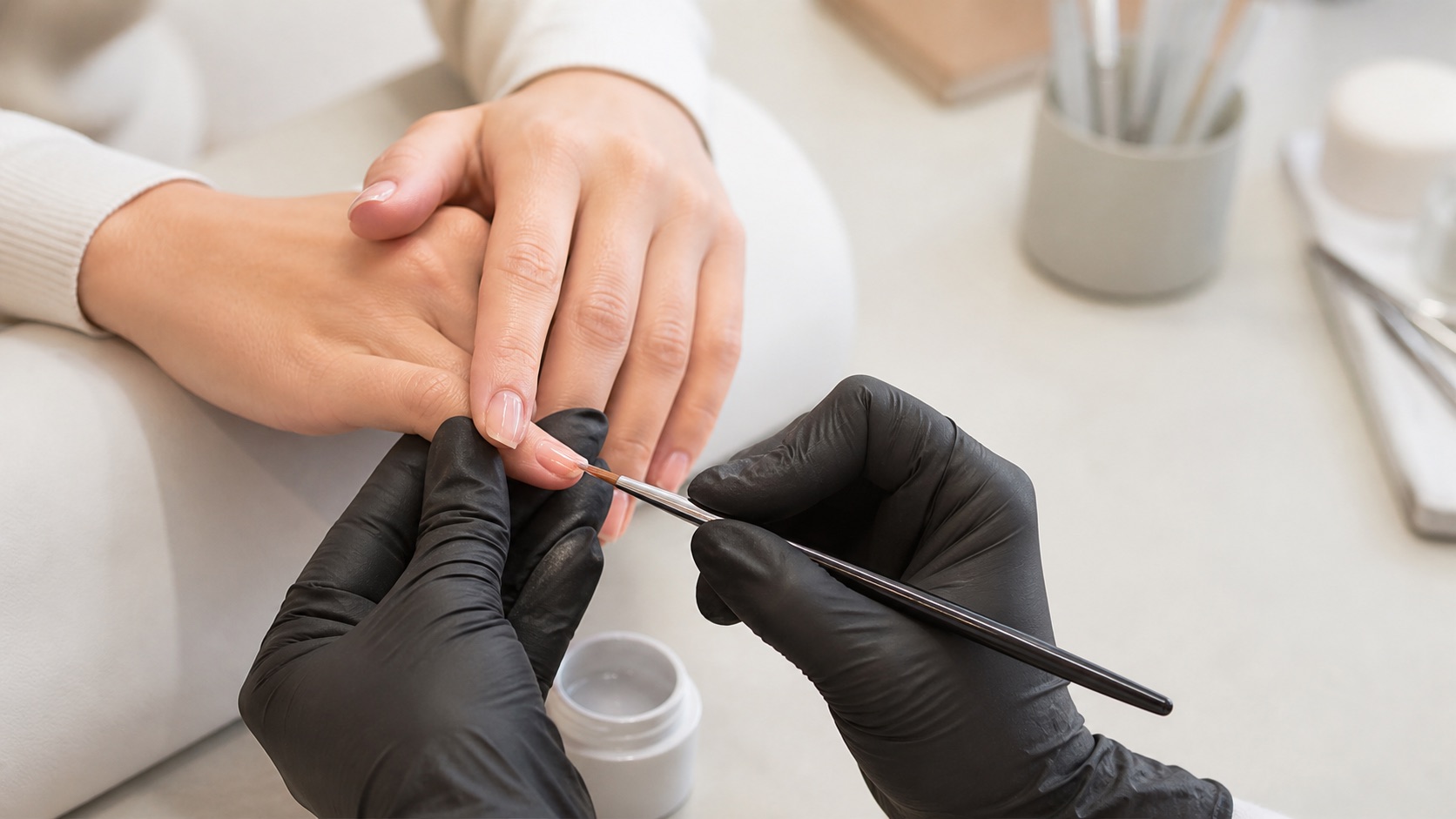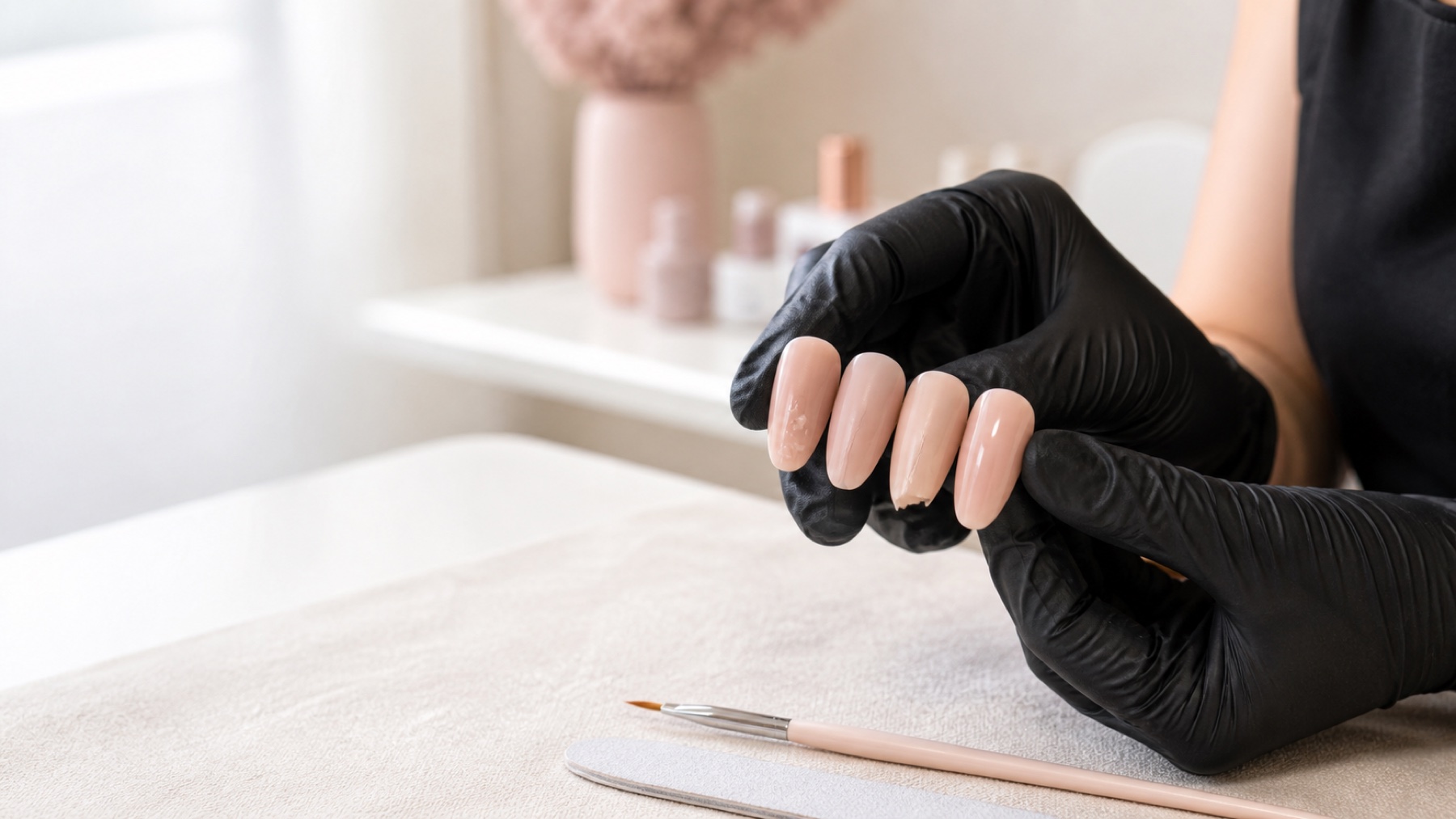
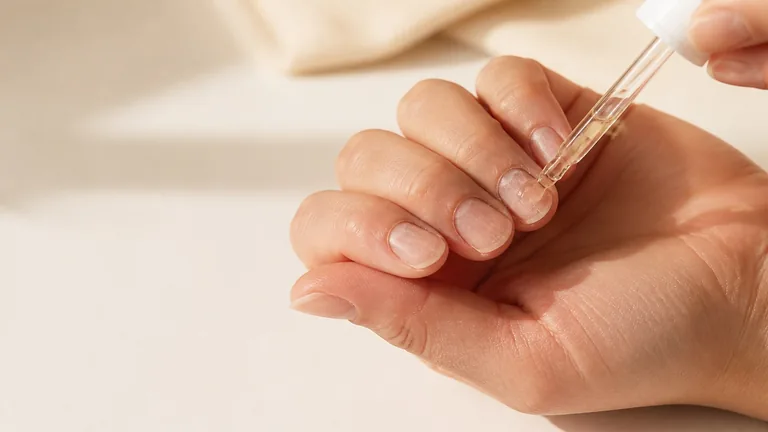
Nails that feel soft, thin, dull, tender or layered after gel removal are a common concern. That appearance does not prove that gel ‘burned’ the nail. The result may reflect aggressive initial preparation, repeated filing during infills, peeling or prising product away, excessive pursuit of every residual base layer, repeated solvent and water exposure, or a skin or health condition that happened to become visible when the enhancement was removed.
Do not peel remaining product or buff a thin nail smooth. Keep the free edge short, protect hands from repeated wet work and detergents, moisturise nails and surrounding skin, and allow visible regrowth. Do not cover pain, separation, unexplained colour, redness, swelling, broken skin or discharge. Persistent or widespread change needs medical assessment.
‘Damaged’ is a description, not a diagnosis. This page helps a client or nail professional organise observations and reduce further mechanical stress; it does not prescribe supplements or treat disease. Use the professional product-removal guide for material-specific removal and the onycholysis and green nail guide when the natural plate is detached or discoloured. Browse the English nail guide library for adjacent technical topics without merging their search intent into this recovery guide.
What ‘damaged nails after gel’ can actually describe
One complaint can describe several different signs
Name the observation before choosing the response
Surface
Dullness or mild roughness
Free edge
Layers, snags and splitting
Plate
Flexibility, tenderness or thinning
Red flags
Colour, lifting, pain or inflamed skin
The phrase can refer to temporary surface dullness, a plate that bends more than usual, layers splitting at the free edge, superficial white patches, grooves, sensitivity or true separation from the nail bed. Each sign calls for a different response. Polishing a dry surface is not the same as managing an over-filed plate, and pain should never be filed away as though it were a visual defect.
Observation | Possible technical context | First prudent decision |
|---|---|---|
Dull, dry-looking surface | Surface dehydration or mild abrasion | Protect and observe; do not buff again |
Free edge splits into layers | Lamellar splitting, often aggravated by wet-dry cycles | Shorten gently, moisturise and reduce exposure |
Very flexible or pressure-sensitive plate | Possible thinning during preparation or removal | Stop e-file, buffer and new coatings |
Colour, lifting, pain or inflamed skin | Not explained by simple dryness | Do not cover; seek healthcare advice |
Compare all ten nails, the hands and feet when appropriate, and the new growth at the proximal edge. A local pattern matching filing zones suggests a different history from several nails changing at once. Pattern recognition guides what information to record; it does not establish a medical cause.
Does gel always damage the natural nail?
No. A compatible gel system applied and removed correctly on a suitable nail does not inevitably cause major plate damage. Risk rises when adhesion is created by removing layers of natural nail, when every infill revisits and thins the same zone, when lifted product is peeled away, or when an e-file passes through the enhancement and repeatedly contacts the plate. A technically compliant product cannot compensate for an uncontrolled process.
The American Academy of Dermatology notes that gel manicures can be associated with brittleness, peeling and cracking, and advises medical assessment for unusual or persistent changes. It also warns that artificial nails can worsen problems when the natural nail is already soft or damaged. These points do not let anyone allocate blame from a photograph. Review the complete timeline: starting condition, preparation, wear, lifting, infill, removal and the client’s daily exposures.
UV or LED exposure is a separate topic from plate thinning. The nail lamp compatibility guide owns curing-system selection, while the safe gel-polish guide connects assessment, clean application, complete cure and removal. Avoid collapsing every adverse outcome into one explanation.
Common causes after gel or enhancement removal
Review the whole service timeline
Damage can accumulate before it becomes visible
Assess
Natural nail and client factors
Prepare
Abrasive, pressure and repeated passes
Wear
Lifting, impact and wet work
Remove
Soak, file, peel or leverage
Damage often develops across a sequence rather than one dramatic moment. Modest over-preparation repeated over several appointments can become significant. Product that has already lifted can take superficial nail layers with it when pulled. A newly exposed plate may then split more easily during cleaning, washing and impact. Record the stage at which symptoms first appeared instead of changing every product at once.
Aggressive preparation: a coarse abrasive, excessive pressure or repeated passes remove more plate than necessary. The natural-nail prep guide separates surface cleaning from over-filing.
Peeling or leverage: raised product can take keratin layers when it is pulled, scraped with a pusher or used as a handle for another tip.
Chasing a perfectly bare surface: removing every trace of a stable base can thin the centre, sidewalls and free edge where visibility is poorest.
Wrong removal method: a file-off product will not become soak-off because acetone is left longer; a soluble product should not be forced before it softens.
Repeated wet-dry cycles and detergents: water, cleaners and micro-impact can worsen splitting while the compromised section grows out.
Allergic or irritant contact, inflammatory disease or another condition: itching, eczema, swelling, separation and persistent change require a healthcare route, not stronger adhesion.
Why peeling and scraping can be worse than controlled acetone use
A soak-off material should be removed according to its system: reduce only the top layer if instructed, confine appropriately sized solvent-soaked material to the plate, protect surrounding skin and wait for the product to release. Resistance is information. The system may need more time, the seal may be incomplete, layers may be too thick, or the product may not be designed to soak off. Resistance is not permission to scrape harder.
Acetone can dry and irritate nails and skin, particularly with repeated or widespread contact. That is why exposure should be limited to what the exact removal requires. The AAD nevertheless warns that picking or filing gel polish off improperly can significantly damage the nail. For hard gel, acrylic or another file-off system, mechanical removal requires a readable product boundary, controlled bit or file, light pressure and a deliberate residual buffer where appropriate.
Never combine incomplete soaking with metal scraping until the plate looks uniformly pale. Stop for heat, pain, redness, bleeding, unexpected colour or an unclear boundary. If product identity is unknown, assume neither solubility nor file resistance. The full gel, acrylic, acrygel and gel-polish removal guide provides a decision tree rather than one universal method.
A recovery plan for the first weeks
Protect first; judge recovery from new growth
Comfort may improve before the plate is fully replaced
Now
Stop peeling, buffing and recoating
Days
Short edge, moisture and wet-work protection
Weeks
Photograph new growth consistently
Return
Only when comfortable, intact and suitable
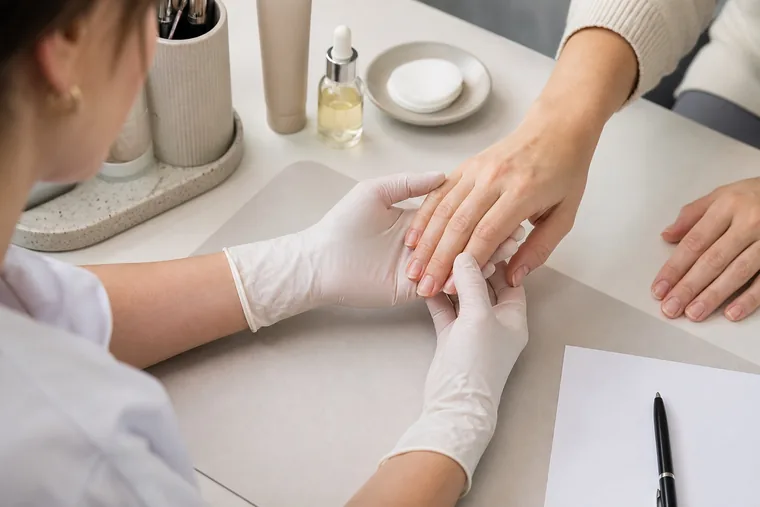
No cosmetic product can instantly replace nail-plate layers that were mechanically removed. The practical aim is to prevent additional trauma while new nail grows from the matrix. Comfort and surface flexibility may improve before the plate has fully renewed; that improvement should not be mistaken for restored thickness. Photographs in the same neutral light every two or three weeks are more useful than daily close inspection.
Stage | Goal | Practical actions |
|---|---|---|
First 48 hours | Stop new mechanical stress | Do not buff; shorten gently; observe pain and skin |
First two weeks | Protect the free edge and skin barrier | Keep short, moisturise, use gloves for wet work |
Following weeks | Track new growth | Compare photos, prevent picking, trim the old section |
Before recoating | Confirm suitability | No pain, separation, abnormal colour, inflammation or marked fragility |
Apply a simple moisturising product or petrolatum to nails and surrounding skin several times a day, especially after washing. Cuticle oil can improve surface flexibility and comfort, but it does not rebuild removed layers. Use suitable gloves for cleaning and prolonged wet work, and avoid leaving waterproof gloves on damp hands for extended periods. File only the free edge with a fine, controlled abrasive to remove snags; do not thin the surface to make it look even.
How long natural nails take to grow out
The plate grows from the matrix, so an already thinned section must move towards the free edge and be trimmed progressively. The AAD states that fingernails take about six months to grow out, while toenails may need twelve to eighteen months. Age, digit, trauma, health and matrix condition all affect the timetable. Claims of complete recovery within a few days cannot match nail biology.
Look for a boundary between newer, more regular proximal growth and the older compromised area. If new plate continues to emerge fragile, ridged, misshapen or discoloured, the issue is not confined to the surface previously filed and deserves medical assessment. The nail matrix anatomy guide explains why cosmetics can protect an existing plate but cannot arbitrarily accelerate matrix production.
When not to apply gel, rubber base or gel polish
A flexible base is not automatically a treatment for a thin nail. It still requires preparation, contact with reactive nail ingredients, curing and eventual removal. If the plate hurts under pressure, bends unusually, shows red areas, is detached or has irritated surrounding skin, another coating can hide progression and add a new cycle of stress.
Do not cover persistent pain, burning or marked sensitivity.
Do not cover a lifted, green, yellow, brown or black area without a clear healthcare assessment.
Do not apply over red, swollen, cracked, itchy, blistered or weeping skin.
Do not use a rigid overlay simply to stop a severely thinned plate from flexing.
Do not proceed when several nails are changing or abnormal growth continues from the proximal area.
Itching, swelling, blisters or eczema around the nails or elsewhere after a nail service may indicate allergic or irritant contact and should trigger product cessation and medical advice. Read the gel allergy, methacrylate and HEMA guide without using it to self-diagnose or select a substitute product.
When returning to gel polish or enhancements may be reasonable
Return does not depend on a fixed number of days. The plate should be comfortable, attached, free from unexplained colour or inflammation and stable enough to tolerate both preparation and the planned removal. After mild surface dryness, a pause and visible normal growth may be enough. After true thinning, waiting until the most compromised section has advanced and can be trimmed is more prudent.
When service resumes, choose a short length, the minimum preparation the compatible system requires and a predictable removal route. Photograph the starting point with consent, avoid mixing brands without documented compatibility and schedule observation before overgrowth changes the structure. Training through online nail courses should teach assessment and removal as seriously as colour and architecture; it is not a repair treatment for an unsuitable nail.
Oils, hardeners and biotin: realistic expectations
Oils, creams and petrolatum can reduce dryness and improve surface flexibility and the surrounding skin barrier. A hardener may temporarily reduce bending or protect the free edge, but some formulas may make a plate too rigid or irritate skin. No cosmetic glues biological layers back onto the nail or treats allergy, infection, psoriasis or matrix disease.
Do not start biotin or another supplement simply because nails appear weak. Evidence of benefit in people without a deficiency is limited, and supplements can interact with medical assessment. The US Food and Drug Administration warns that high biotin intake can interfere with some laboratory tests, including some troponin tests. Discuss supplements with a clinician, disclose them before blood testing and investigate suspected deficiency rather than treating nail appearance as proof.
Signs that need a dermatologist or other medical professional
Cosmetic pause or healthcare assessment?
Persistent abnormal new growth changes the decision
Monitor gently
Mild surface dryness after known removal
Pause
Tenderness, marked flexibility or splitting
Assess
Persistent, spreading or multiple-nail change
Prompt help
Pain, pus, heat, swelling or systemic illness
Seek assessment when the cause is unclear, the change persists or worsens, new growth remains abnormal, several nails are involved or skin, hair or general health changes at the same time. Stop services for pain, increasing tenderness, redness, warmth, swelling, pus, separation, unexplained pigment, itching, blistering or bleeding. A new or changing dark streak should not be covered while waiting to see whether it grows out.
Prompt advice is particularly important for diabetes, reduced immunity, impaired circulation, cancer treatment or another condition that may change healing or infection risk. Emergency thresholds and professional pathways vary by country. Use local medical advice; a nail educator cannot grade an individual emergency from text or a photograph.
A professional prevention protocol for future services
Record the starting condition and exclude pain, separation, abnormal colour and inflamed skin before preparation.
Use the least abrasive compatible preparation, controlled pressure and no repeated passes over the same natural-plate zone.
Keep product off skin, follow the complete product-lamp system and respect layer thickness and cure instructions.
At maintenance, map stable product, lifting and new growth before filing; do not thin old and new natural plate indiscriminately.
Identify soak-off, file-off and mixed layers before removal. Never convert resistance into force.
Document heat, pain, lifting, breakage and removal outcome so repeated patterns can be corrected at process level.
Checklist when nails look thin or damaged
Stop peeling, scraping, surface buffing and new cosmetic coatings.
Shorten the free edge gently and remove snags without filing the plate.
Moisturise nails and surrounding skin and protect hands during wet work.
Photograph the proximal growth in consistent light every two or three weeks.
List previous products, preparation and removal steps without assuming the diagnosis.
Seek medical advice for persistence, spread, pain, inflammation, separation, colour change or abnormal new growth.
Frequently asked questions about weak nails after gel
Does gel always ruin natural nails?
No. Damage is not inevitable, but risk rises with aggressive preparation, repeated filing, skin contact, incomplete cure and forced removal. The condition before service and daily exposure also matter.
How long do thin nails take to recover after gel?
An already thinned section must grow towards the free edge. Fingernails take about six months to replace completely and toenails longer, although comfort can improve earlier. Persistent abnormal new growth needs assessment.
Can rubber base strengthen a thin nail?
It can create a cosmetic layer on a suitable nail, but it cannot replace removed plate and it requires preparation and removal. Do not apply it over pain, marked thinning, separation, abnormal colour or irritated skin.
Does acetone damage nails?
Acetone can dry and irritate nails and skin, especially with excessive contact. For a true soak-off product, controlled exposure is generally preferable to peeling or scraping. Follow the exact system and protect surrounding skin.
Will cuticle oil make the new nail grow thicker?
Oil can improve surface flexibility and dryness, but it does not replace removed plate layers or rapidly change matrix output. Use it for barrier support, not as a treatment claim.
Should I take biotin for weak nails?
Not without medical discussion. Benefit is not guaranteed without deficiency, and high-dose biotin can interfere with laboratory tests. Tell healthcare professionals about supplements before testing.
Are white patches after gel removal fungal infection?
Not necessarily. Trauma, dehydration, residue and superficial plate change can all appear white. A photograph cannot determine the cause. Persistent, spreading, thickened or detached change needs assessment.
Can I buff the surface until it looks smooth?
Not when the plate is already thin or tender. Removing more material to erase unevenness can worsen the problem. Protect the surface, keep the edge short and allow the area to grow out.
When should I see a dermatologist?
Seek advice when change is unexplained, persistent, worsening, present in several nails or begins in new growth. Pain, inflammation, discharge, separation, pigment, itching or blisters require stopping cosmetic services.
Can structured gel polish protect nails while they grow?
Only on a healthy, suitable and comfortable plate. A coating adds product exposure, preparation and eventual removal. Short natural nails and protection from impact may be more prudent during early recovery.
How can I tell whether healthier nail is growing?
Compare the proximal area emerging from beneath the fold in consistent photographs. It should become more regular and remain comfortable and attached. Continued abnormal texture, shape or colour needs medical review.
Dermatology and health sources
American Academy of Dermatology — Gel manicures: tips for healthy nails: brittleness, breaks, moisturising, pauses and persistent-change advice.
American Academy of Dermatology — Removing gel nail polish: confined acetone use, avoiding scraping and typical nail-growth times; updated August 2023.
American Academy of Dermatology — Reducing artificial nail damage: filing, thinning and the risk of covering already damaged nails.
DermNet — Nail terminology: nail signs including lamellar splitting and plate changes.
NHS — Nail problems: general nail care and unexplained changes that need medical advice.
US Food and Drug Administration — Biotin interference with laboratory tests: risk of incorrect results in some assays.
Substantively reviewed on 5 September 2026. This educational guide does not diagnose nail disease, prescribe supplements or provide individual medical care. Chiara Daso is a Nail Master and educator, not the reader’s healthcare professional. Unexplained, painful, inflamed, detached, discoloured or persistent nail changes require appropriate local healthcare advice.