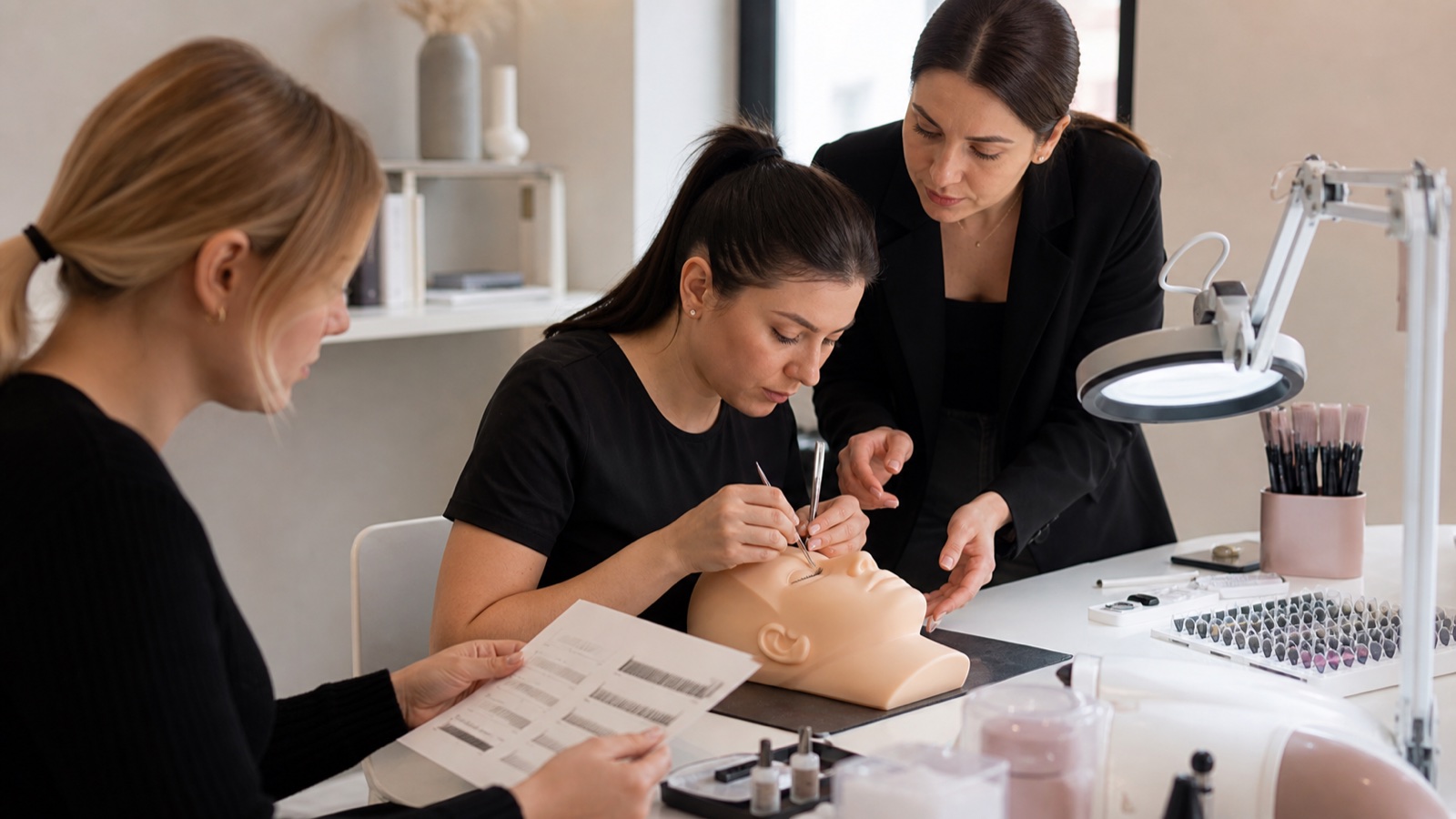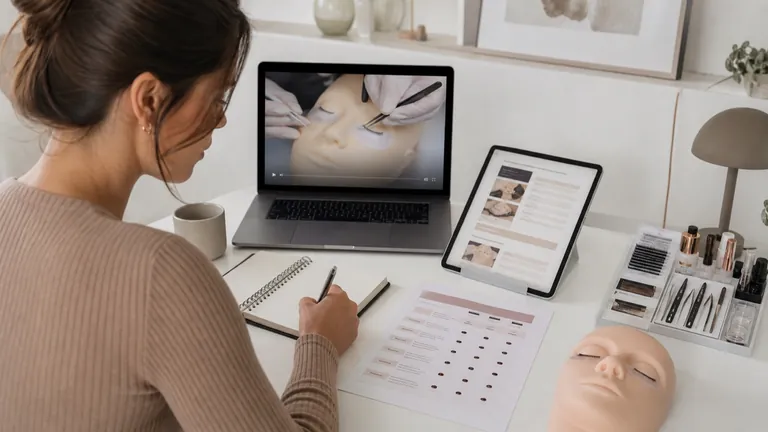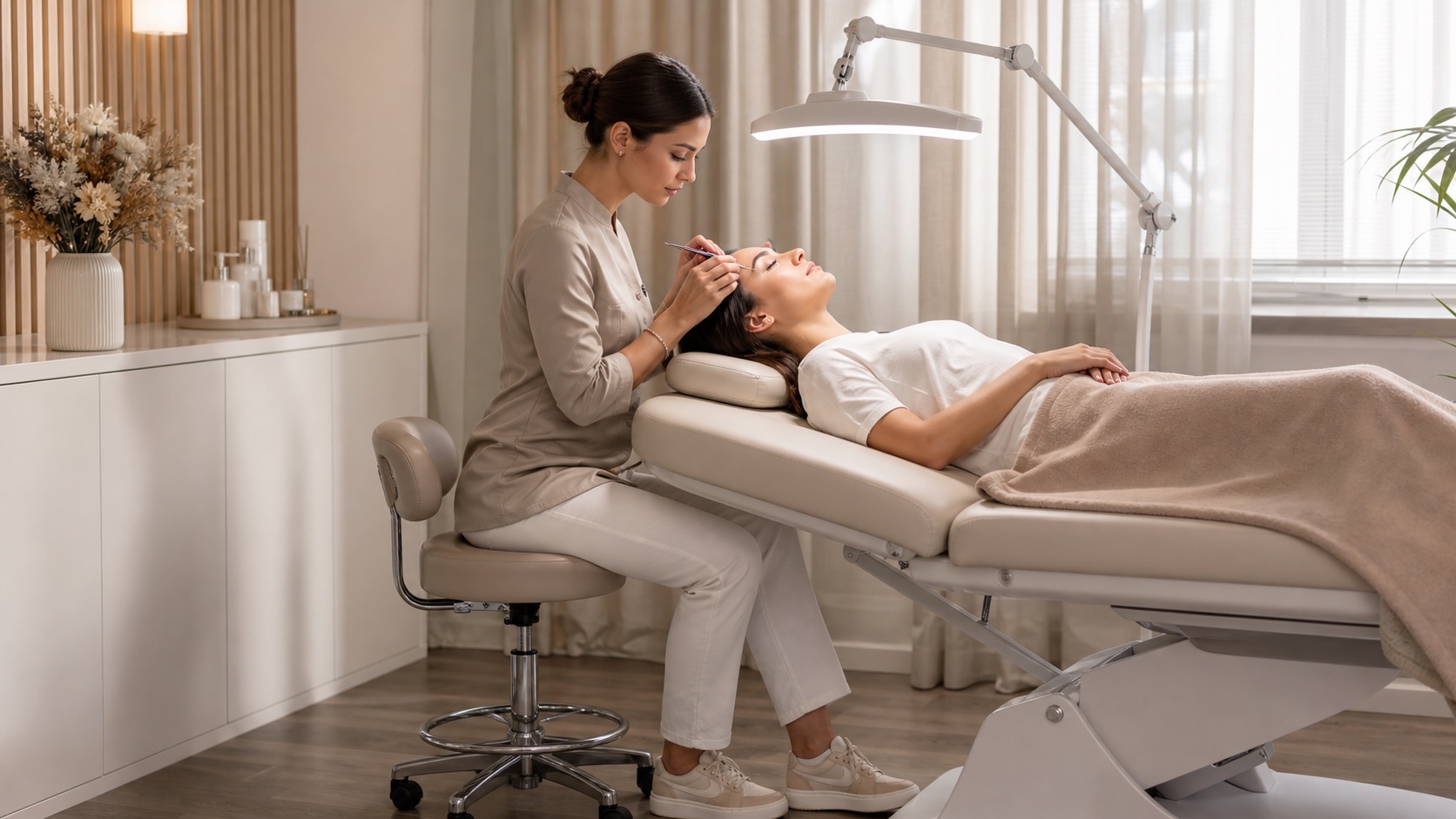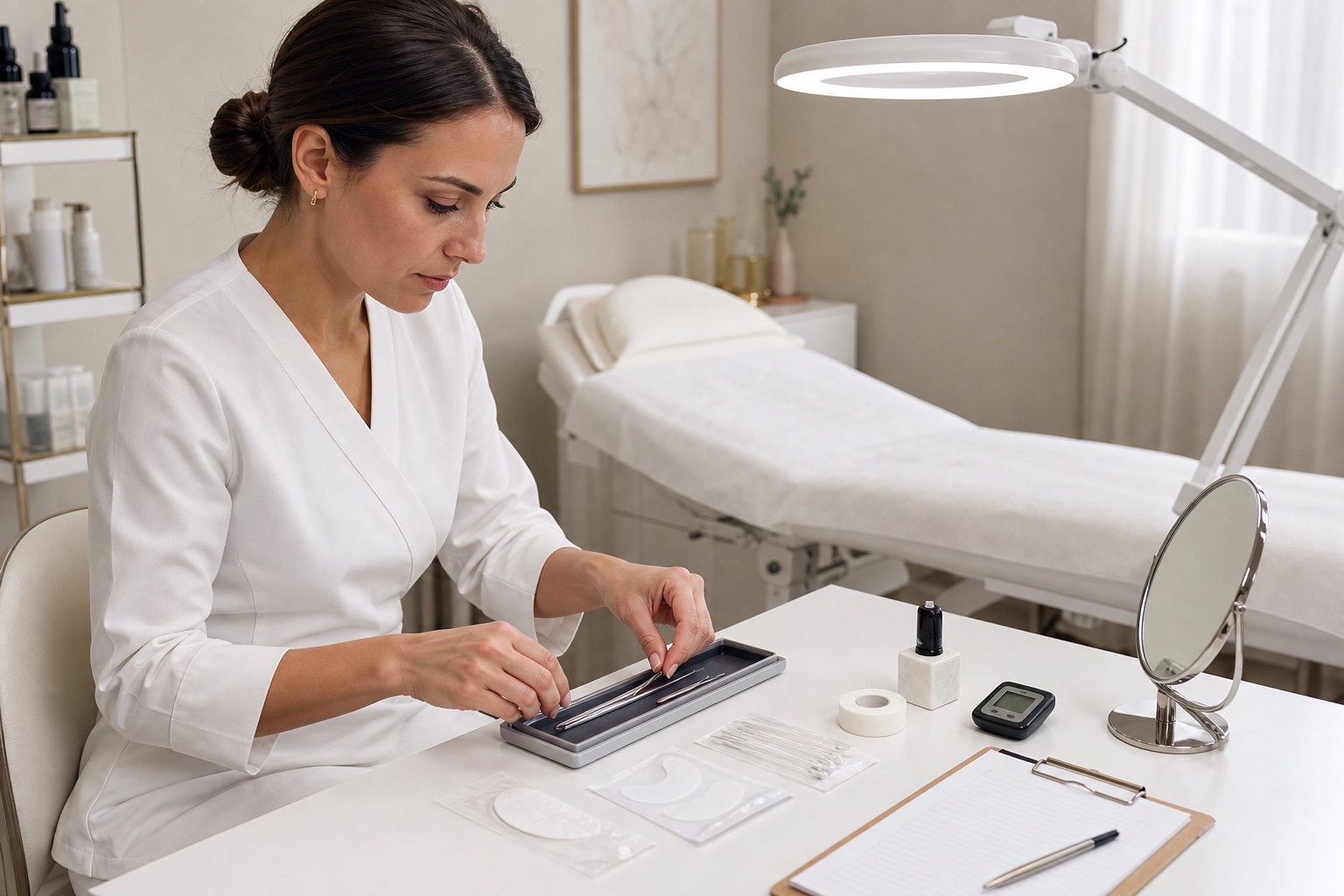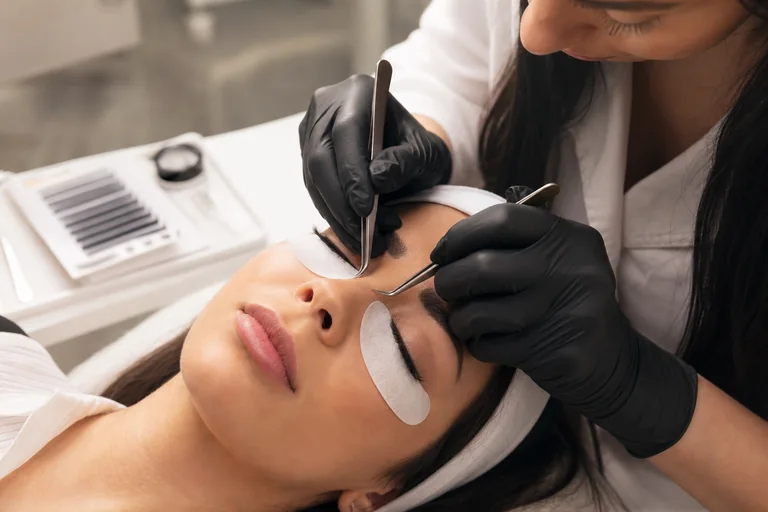

Do you need a licence to do lashes? There is no honest worldwide yes-or-no answer. Eyelash extensions, lash lifts and tinting can sit inside different legal categories depending on the country, state, province, region, council, service and premises. A private lash-course certificate may document training, but it is not automatically a government licence, regulated qualification or permission to trade.
This guide owns legal-entry intent for BeautyLearn's English market. The guide to becoming a lash artist covers career development, practice and portfolio. The guide to choosing an online lash course evaluates teaching quality. Here the purpose is narrower: distinguish documents, identify competent authorities and build a verifiable route from intended service to lawful work.
Rules change, and official guidance can be revised after publication. This page was reviewed on 5 September 2026 and is educational rather than individual legal, tax, licensing or insurance advice. Before advertising or accepting payment, describe each intended service and work setting to the competent authority and obtain current written confirmation for the exact location.
Quick answer: certificate, qualification and licence are not the same
One certificate cannot answer every legal question
Learning, practitioner, premises and business are separate layers
Certificate
What the course actually evidences
Qualification
Public framework where applicable
Licence
Person, premises or both
Business
Registration, insurance and operation

Start with jurisdiction, not the wording on a certificate. Verify whether the specific lash service is regulated, who may perform it, whether the practitioner or premises needs a licence, which training is accepted, what insurance requires and whether home, mobile or salon work changes the answer. Complete every applicable layer before taking clients.
A course certificate can be genuine and useful. It may record attendance, completion, an internal assessment or a practical standard set by the provider. It can support a CV, portfolio, insurer conversation or salon application. Its value is the evidence it contains; the words professional, accredited, diploma or internationally recognised do not independently create legal authority.
A regulated qualification is defined or recognised through a public framework in a particular jurisdiction. A practitioner licence authorises an individual under stated conditions. A premises licence or registration concerns the location. Business registration, tax registration, planning permission and insurance answer further questions. One document does not silently replace the others.
The actual treatment matters more than the job title. Lash artist, lash technician, lash stylist and lash maker are market labels. An authority or insurer may look instead at whether you attach fibres with cyanoacrylate adhesive, chemically reshape natural lashes, tint near the eye, work from home, rent a chair, employ staff or travel to clients.
Why lash requirements change by country, region and service
The same service can cross four jurisdictions
Country, state or region, council and premises
Country
National occupation and product framework
State / region
Qualification or practitioner rules
Council
Local treatment and premises licensing
Address
Planning, landlord and insurer
Professional regulation is territorial. A service may require a named occupational licence in one US state, fall within a broader beauty qualification elsewhere, be controlled mainly through local premises rules in another place, or combine several layers. Even neighbouring councils can administer premises requirements differently when local legislation applies.
Texas provides a concrete example, not a global template. Its Department of Licensing and Regulation currently has an Eyelash Extension Specialist licence route with a 320-hour course at a licensed school plus written and practical examinations. The same official scope page states that certain broader Texas licences may perform the services. This proves why a generic online completion certificate cannot be assumed to satisfy every location.
The United Kingdom also cannot be reduced to one sentence. GOV.UK directs businesses to contact the relevant council about massage and special-treatment premises licensing. London borough rules can cover practitioners, premises or named treatment lists; one council's page expressly includes eyelash and eyebrow tinting and curling. That example does not mean every UK council treats every lash service identically. It means postcode and service description belong in the check.
Within the EU and EEA, regulation and recognition can vary by host country. The European Commission's Regulated Professions Database and national assistance points help identify a regulated profession and competent authority. A qualification obtained in one country is not automatically a universal passport for every activity, and a course marketed in English is not necessarily recognised across English-speaking or European markets.
The seven layers to verify before offering a lash service
Permission is a chain, not a badge
Service, person, place, business, insurance, work status and products
Define
Separate extension, removal, lift and tint
Verify
Practitioner and premises
Protect
Insurance and product scope
Operate
Business, people and records
1. Service scope. List extensions, removal, infills, lash lift and tint separately. Include the product type, body area and whether the service changes natural hair chemically. Do not ask an authority only whether lash work is allowed; vague language produces vague answers.
2. Practitioner status. Check whether the person needs a specific lash, esthetics, cosmetology, beauty-therapy or other occupational licence or qualification. Ask whether the rule applies to the owner, every operator, a designated supervisor or a combination. Verify renewal, continuing education and display requirements.
3. Premises and work model. A commercial salon, room rental, home studio, mobile service, training model day and pop-up may trigger different permissions. Check planning or zoning, landlord or mortgage terms, hygiene facilities, fire safety, accessibility, waste, occupancy and council or establishment licensing.
4. Business and tax registration. Permission to perform a treatment is not the same as establishing a legal business. Confirm business form, registration, tax, invoicing, consumer information, pricing and record retention with the relevant public bodies and a qualified adviser where needed.
5. Insurance. Ask a regulated broker or insurer whether the exact services, products, location, qualifications, trainees, employees and mobile work are covered. A policy name such as beauty liability does not prove that extensions, lift, tint and teaching are all included. Obtain endorsements and exclusions in writing.
6. Employment and contracting. A salon's licence does not automatically establish a worker's qualification or employment status. Employees, independent contractors and chair renters can have different tax, insurance, supervision and documentation duties. The commercial label in a contract may not decide the legal reality.
7. Products and consumer safety. Use products legally supplied for the intended purpose and market, retain labels and batch data, follow manufacturer instructions and maintain consultation and incident procedures. Training never expands a product's authorised use or turns a cosmetic professional into a healthcare practitioner.
How to read a lash training certificate accurately
Read the document as evidence, not decoration. Identify the learner, provider, tutor, service, level, learning hours, delivery mode, assessment, result, date and verification route. A certificate that says attendance should not be described as a competency assessment. A provider's practical pass should not be described as a state examination unless it truly is one.
Ask what accredited means and by whom. It might refer to a private continuing-education body, an insurer-recognised syllabus, a regulated awarding organisation, a school licence or simply internal marketing. These are not interchangeable. Obtain the accreditor's full legal name, scheme, standard, certificate number and public verification page.
International certificate is especially ambiguous. It can honestly mean that learners from several countries attend the programme; it does not prove automatic legal recognition in those countries. Ask the provider to state precisely which public authority accepts the award for which occupation and location, then confirm that claim independently.
Course quality still matters where a certificate is not a legal licence. An assessed programme should show consultation, anatomy, hygiene, product instructions, controlled practice, troubleshooting, removal and stop criteria—not only a finished photograph. Explore current BeautyLearn lash courses only after identifying the legal pathway that applies to you.
A repeatable official-source verification method
Turn online research into a traceable decision
Destination, service statement, authority, closed questions, evidence
Pin country, region, council and postcode
Describe products and treatment precisely
Ask the competent public authority
Store scope, date, link and response

Step 1: define the destination. Record country, state or province, region, municipality or council and postcode. If you work in multiple locations, create a row for each. Online research without a precise destination mixes rules that may never apply to the same person.
Step 2: write a service statement. Example: individual eyelash extensions attached to natural eyelashes with professional cyanoacrylate adhesive, plus infill and professional removal, performed from a dedicated room in a home. Prepare separate statements for lift and tint because an authority or insurer may classify them differently.
Step 3: find the competent authority through official government portals. Search for occupational regulation, beauty or cosmetology board, local licensing, public health, planning and business registration. A trade association or course provider can suggest a route, but it should not be the final authority for its own certificate.
Step 4: ask closed, traceable questions. Does this exact service require a practitioner qualification or licence? Which one? Does this address require establishment approval? May it be performed by an employee, renter, trainee or mobile operator? Which official page, statute, rule or application supports the answer?
Step 5: preserve the date, URL, contact, response and attachments. Save the version that governed the decision, then calendar renewal and recheck dates. A screenshot from a social post has no reliable scope; a dated authority response is easier to revisit when the service or premises changes.
Practitioner licence, premises licence and business registration
A practitioner licence follows an authorised person and may define permitted services, supervision and renewal. An establishment or premises licence attaches to a location and may govern facilities, responsible persons, inspections and displayed information. Business registration identifies the trading entity. None alone proves the other two.
Home working adds residential questions. Permission from a beauty regulator does not override lease, landlord, mortgage, planning, zoning, insurance, occupancy or nuisance rules. Mobile work adds transport, safe setup, hand hygiene, waste, lighting and product-storage problems. Verify the model you will actually use rather than an imagined salon.
Changing address, owner, legal entity, services or staff can trigger notification, variation or a new application. Build a compliance register with issuing body, number, scope, site, named person, issue date, expiry, renewal window and evidence location. Do not discover at renewal that the licence covered only an old room or service.
Operational evidence matters after approval. Use the lash workstation hygiene guide for a one-way workflow, and the lash client record guide for minimum data, products, batches and follow-up. A certificate in a drawer cannot replace a controlled service.
Insurance: what to confirm in writing
Give the insurer the legal name of the business and every treatment. Include classic, volume and other extension techniques, removal, lift, tint, retail products, training, model work, employees, contractors, home or mobile work and any overseas activity. Ask whether the policy covers treatment liability as well as public and product liability where relevant.
Disclose the qualification and certificate exactly. Do not convert completion into regulated status on an application. Ask whether the insurer requires a particular award, practical assessment, number of supervised cases, patch-test process, product brand, consent wording or incident reporting timeline. Conflicts between insurer conditions and manufacturer instructions must be resolved before treatment.
A policy can be active yet not cover the disputed event if the service, person, premises or procedure is outside scope. Store the schedule, wording, endorsements, proposal answers and renewal confirmation. When you add a new system or service, obtain confirmation first rather than assuming it is similar enough.
Working in a salon, renting a room or being self-employed
Work status changes responsibility, not the need to verify
Employee, renter and owner need a written allocation of duties
Employee
Personal scope plus employer systems
Renter
Contract, own cover and site approval
Owner
Entity, people, premises and renewals
Trainee
Supervision, permission and model terms
Employees should ask who holds the premises approval, which practitioner credentials are required, how insurance responds and who controls products, consultation, records and incidents. A manager's verbal assurance cannot alter a statutory requirement. Keep personal qualifications current even when the salon stores copies.
Room renters and self-employed artists should not assume that rent purchases legal cover. The agreement should define permitted services, licences, insurance, stock, waste, cleaning, record controller, complaints, access and termination. Confirm that the premises approval covers your service and trading arrangement.
Trainee and model work also needs a defined framework. Free does not always mean exempt, and public advertising can matter. Confirm supervision, consent, product responsibility, insurance and whether the school or salon licence covers the activity. Never use model status to bypass a stop criterion or permission that would apply to a paying client.
Moving country or using a qualification earned abroad
Start again from the destination's rules. Gather syllabus, learning hours, practical log, assessments, identity of provider and awarding body, certificate, licence history and translations where required. The destination authority—not the original school—decides equivalence, recognition or additional training.
In the EU and EEA, check whether the relevant broader profession is regulated in the host country and consult the named competent authority or assistance centre. If the exact market term lash artist is absent, search the activity and broader occupations such as beautician or aesthetician; then ask how extensions, lift and tint are classified.
Do not advertise internationally recognised unless you can state the recognition mechanism. Portability can mean employer familiarity, private insurer acceptance or formal public recognition, and those outcomes differ. Native English wording does not make a qualification legally portable.
Red flags in course and licence claims
Be cautious when a seller promises that one certificate lets anyone work anywhere; refuses to name the authority; uses accreditation without a verifiable scheme; says no rules exist because lash artist is not a protected title; or treats business registration as permission to perform a regulated service.
A logo wall is not evidence of scope. Check every body's public register and what it actually approves. Membership may provide education, standards or insurance access without being a government licence. A certificate number may verify that a document exists but not that it meets your local entry requirement.
Beware of fixed legal answers copied between countries, states or councils. The strongest course response is not yes; it is a transparent boundary: what the course certificate evidences, what it does not, and where the learner must verify permission. Responsible providers update links rather than guaranteeing future rules.
A pre-opening checklist for lash professionals
Open the diary only when every required row is evidenced
One row per service and location
Service
Permission and accepted qualification
Location
Premises, planning and facilities
Protection
Insurance, products and incidents
Renewal
Owner, evidence and recheck date
Create a matrix with one row per service and location. Columns should include professional regulator, accepted qualification, individual licence, premises approval, planning or zoning, business and tax registrations, insurer confirmation, product market status, hygiene system, client record, privacy notice, incident route, renewal and evidence link.
Run one documented test journey before launch: enquiry, consultation, record, product and batch selection, setup, stop decision, aftercare, payment, complaint and adverse-event escalation. This exposes gaps that separate certificates cannot reveal. Use the pre-treatment lash consultation guide to define professional scope without salon diagnosis.
Only then publish services and prices. Keep claims narrower than verified permission and demonstrated competence. Recheck when moving, hiring, changing business form, adding tint or lift, teaching, working mobile, switching insurer or expanding abroad. Compliance is a maintained system, not a certificate acquired once.
Frequently asked questions
Do I need a license to do eyelash extensions?
It depends on the exact jurisdiction and service. Some places require a named eyelash-extension, esthetics, cosmetology or beauty licence; others regulate a broader occupation, practitioner, premises or local special treatment. Identify country, state or province, council and work address, then ask the competent authority about extensions, infills and removal separately before accepting payment.
Do I need a licence to perform lash lifts?
Possibly, and the answer may differ from extensions because a lift chemically reshapes natural lashes. Ask the occupational regulator and local licensing authority how lash lift and tint are classified, which qualification is accepted and whether the practitioner or premises requires approval. Insurer and manufacturer requirements can add conditions but cannot replace public permission.
Is a lash course certificate enough to work professionally?
Not automatically. It may be valuable evidence of attendance, completion or private assessment, but it does not silently become a government licence, regulated qualification, business registration, premises approval or insurance. Verify what the certificate states, who issued it and which authority accepts it for your service and location. Complete every separate requirement before trading.
What does an accredited lash course mean?
Accredited is incomplete without the accrediting body's legal name, scheme, standard and authority. It could mean private continuing education, an insurer-recognised syllabus, a regulated award or a licensed school programme. Ask for the public verification route and exact consequence. Never infer a state licence or international legal recognition solely from the word or logo.
Is an international lash certificate valid in every country?
No certificate is universally valid merely because it says international. The term may describe the audience, brand or private standard. The destination jurisdiction decides whether the activity is regulated and whether foreign training is recognised, accepted by an employer or sufficient for insurance. Check the host authority with the full syllabus and assessment evidence before moving or offering services there.
Can I do lashes from home?
Only after checking the professional, business and residential layers for that address. Home work may involve planning or zoning, lease or mortgage consent, insurer approval, council or establishment licensing, hygiene facilities, fire safety, waste and client access. A practitioner certificate does not override property rules. Obtain written confirmation for each service and the actual room.
Can I work as a mobile lash artist?
Rules and insurance must explicitly allow it. Mobile work can change local registration, travel radius, product storage, hand hygiene, lighting, waste, electricity, emergency access and record security. Ask whether each destination needs approval and how client homes are assessed. Do not assume that avoiding a permanent salon removes premises or practitioner duties.
Does salon insurance cover every lash artist working there?
Not necessarily. Cover may depend on employment status, named persons, qualifications, treatments, products and premises. A renter may need an independent policy; an employee may still have procedural conditions. Ask for written confirmation that extensions, removal, lash lift and tint are covered for your role. Keep certificates of insurance and never rely only on a manager's verbal statement.
Do I need insurance if lash work is not licensed locally?
Absence of a specific occupational licence does not remove liability, product, premises, employer or consumer obligations. Appropriate insurance may be commercially or contractually required and remains a prudent protection, but only a regulated broker or insurer can confirm suitable cover. Disclose every service, qualification, location and work model honestly and retain the response.
Can a beauty therapist automatically perform every lash service?
Not automatically. A broader qualification may authorise certain services in some jurisdictions, but competence, scope, product training, premises approval and insurance still require verification. Check the qualification's regulated scope and local rules, then obtain specialist training with assessed practice. Legal eligibility is not evidence that a person can safely design and perform every extension or lift technique.
Can a salon licence replace my personal qualification?
Usually these answer different questions. A premises or establishment licence may approve a location and named treatments, while practitioner rules determine who may perform them. Some systems combine or connect them, so verify the local scheme rather than relying on the labels. Ask the authority to confirm your personal status, the salon's approval and supervision requirements in writing.
Does business registration let me offer lash treatments?
Business registration identifies or establishes a trading entity; it does not automatically authorise a regulated treatment or approve a premises. Complete occupational, local, health, planning, tax, consumer and insurance checks separately. A registration portal accepting a beauty description is not proof that the person and address satisfy every rule. Keep the competent authority's confirmation with your records.
Can I work on paying clients while I am still training?
Only if local rules, school or salon approval and insurance permit that exact arrangement. Verify who supervises, who holds responsibility, how the model or client is informed, what may be charged and which products and records are covered. Free model work is not automatically outside regulation. Training status never justifies working beyond competence or continuing when a stop criterion appears.
Can I use a foreign lash qualification in a new country?
The destination authority decides. Prepare the certificate, awarding body, syllabus, hours, practical log, assessments, licence history and translations. Search both the market title and broader regulated occupation. You may need recognition, equivalence, additional education, an examination or a new licence. Employer or insurer acceptance is not the same as formal permission to practise.
Are eyelash extension and lash lift requirements identical?
Do not assume so. Extensions attach fibres with adhesive; a lift uses a chemical system on natural lashes; tint introduces another product category. Authorities, insurers and councils may classify them differently. List extensions, infills, removal, lift and tint individually in every enquiry and policy. Approval for one named treatment does not silently include all related services.
How do I check if a lash qualification is publicly recognised?
Ask for the award's exact legal title, awarding body, framework or school licence, level, public register and recognition decision. Search the competent authority's own database and send the full document for confirmation. A private verification page can prove issuance but not public status. Keep the dated official reply and recheck if you change service, location or work model.
Who should I ask about lash licensing requirements?
Start with official occupational or beauty regulators and the local authority responsible for the premises. Add business and tax agencies, planning or zoning, public health where relevant and a regulated insurance adviser. A course provider or trade association can help identify questions, but do not ask a certificate seller to be the sole judge of its legal sufficiency.
How often should I recheck lash business requirements?
Review them at least before each renewal and whenever you add a service, move, work mobile, start teaching, hire, rent space, change legal entity, insurer or product system, or enter another jurisdiction. Record issue dates, expiry and source links. Subscribe to regulator updates where available. A correct answer from several years ago is not permanent permission.
Does a patch test make a lash service legally compliant?
No. A patch or alert test, where manufacturer instructions or local rules require one, is one product-specific procedure. It does not grant a licence, diagnose allergy, predict every reaction or replace consultation, exposure control, records and stop criteria. Follow the exact system and jurisdiction, document the result and never advertise a negative test as a guarantee.
What records should a licensed lash artist keep?
Keep licences, qualifications, insurance, premises approvals, renewal evidence, regulator correspondence and product records. For each client, retain the lawful minimum needed for consultation, decisions, products and batches, aftercare and follow-up under applicable privacy rules. Record incidents and required notifications. Storage periods and access rights vary, so obtain local guidance rather than copying a universal form.
Does a higher-level lash technique need a new licence?
Maybe. Volume, mega-volume, coloured fibres or a different adhesive may remain within an existing regulated scope, but the answer depends on local wording, insurer conditions, premises approval and demonstrated competence. Notify the insurer and check the authority before advertising a new service. Even without a new licence, specialist training and documented practice may be essential.
Can online lash training meet a licensing requirement?
Only the competent authority can confirm that. Some schemes prescribe a licensed school, hours, in-person practical work or examinations; others do not regulate delivery in the same way. Compare the course curriculum and assessment, then ask the authority whether that exact provider and award satisfy the entry route. Do not rely on a generic statement that online certificates are accepted.
Official sources and next steps
For Europe, begin with the European Commission Regulated Professions Database and the Your Europe regulated-professions guide. They explain that regulation and recognition vary by host country and direct users to competent authorities and national contact points.
For examples of local variation, see the official GOV.UK special-treatment premises licence finder and the Texas eyelash-extension specialist licence route. These examples do not govern other locations; they demonstrate why postcode, service and current official confirmation matter.
The FDA's Eye Cosmetic Safety guidance supports caution around eye-area products and stopping for irritation, but it is not a licence checker. Browse the full English lash guide hub and current lash courses after verifying your jurisdiction. This page cannot replace local legal, tax, insurance or licensing advice.
For a currency-neutral model of paid appointments, full service time, occupancy, costs and operating profit, use the lash artist earnings guide. It keeps professional earnings separate from client price comparison and future rate-card construction.
To build a traceable unit price from complete time, real product use, overhead, labour, fees and margin, use the professional lash service pricing guide. It keeps the rate card distinct from client quote comparison and monthly earnings analysis.
For a repeatable capture workflow covering permission, lighting, focus, honest before-and-after comparison, colour and editing limits, use the professional lash photography guide. It documents completed work without replacing live technical or safety checks.
To turn real work into a coherent path through evidence, authentic reviews, enquiry, booking, follow-up and appropriate return, use the lash portfolio and client acquisition guide. It measures qualified appointments without promising demand or income.
To adjust the complete lash workstation and plan static-load interruption, reach, light, tools and recovery without prescribing treatment, use the lash artist ergonomics guide. It complements technical and hygiene controls without replacing individual assessment.
For a cautious framework on apparent lash breakage or thinning, serum limits, treatment pauses and clinical referral, read the fragile or thinning eyelashes guide. It supports a stop-or-proceed decision without diagnosing the cause or promising regrowth.