Professional mascara is not selected from the claim on the box alone. Formula, wand geometry, amount, natural-lash pattern and hand movement work as one system. The same product may separate a fine lash line and clump a dense one when loaded and layered identically. Good technique begins with observation, continues with a reasoned product-and-tool choice and ends with close-up, open-eye and profile checks.
Short answer: choose the formula behaviour first—washable, water-resistant, waterproof or tubing—then use a wand proportionate to lash length, density and access. Remove excess by the method intended for the packaging, work from near the roots towards the tips without touching the mucosa, build thin layers while the film remains workable and separate before it sets. On a client, use a clean disposable wand for each dip. Once it touches lashes or skin, it must never return to the tube.
This guide is written by Irene Tomasi, a makeup artist with 10 years of professional experience. It owns mascara formula, wand, application, wear, removal and shared-kit hygiene. The false-eyelash guide owns band lashes and adhesive, while the corrective eye makeup guide owns eye-shape design. This page focuses on developing and controlling the natural lash fringe.
Formula, wand and movement are three separate variables
The result comes from three variables
No formula can correct the wrong wand or movement by itself
Formula
Film, resistance and removal
Wand
Shape, teeth and flexibility
Movement
Load, direction and layers
Separating the variables prevents rushed conclusions. Transfer onto the lid can result from formula, excess amount, unsettled eye cream, eye anatomy or repeated contact between lashes and skin. Clumps may come from an overloaded wand, thickened product, dry layers stacked together or a brush that cannot pass through that lash density. Replacing the mascara without changing the gesture often moves rather than solves the problem.
Define an observable target: separation, root depth, length, volume, curl, colour or resistance. ‘Make it intense’ is vague; ‘dark roots, separated tips and no upper-lid transfer during an evening event’ gives the artist something to test. The aim determines the film behaviour, wand scale, amount and order of checks.
Washable, water-resistant, waterproof and tubing formulas
Formula family | Useful behaviour | Control point |
|---|---|---|
Washable or traditional | Often straightforward to adjust and remove for trials and daily looks | May transfer with moisture, watering or skin contact; test the individual product |
Water-resistant or waterproof | Designed for greater resistance under the manufacturer’s test conditions | Needs compatible removal; the claim is not an indelibility or universal-tolerance guarantee |
Tubing | Forms polymer sleeves around lashes and removes by the stated protocol | Volume, wear and removal vary across products; follow the specific directions |
Primer or topcoat | Can change volume, colour, curl hold or resistance | Compatibility and working time are not universal; test the complete system |
Words such as waterproof, volume or lift do not predict the result alone. Read the label and removal directions, consider the client’s known tolerance and test the product in the intended conditions. A resistant formula may help around tears and humidity, but be unsuitable when comfortable removal is the priority. Tubing can reduce some forms of smudging yet cannot compensate for incompatible skincare, constant lid contact or incorrect amount.
For a wedding or long event, test mascara before the service day. Use the professional bridal makeup guide to place that trial within a full schedule, and the long-wear makeup guide to distinguish resistance from an absolute wear promise.
Read fibres, waxes, pigments and film formers as a formula
Performance comes from the complete formulation rather than one ingredient in isolation. Waxes and structuring agents influence consistency and deposit; pigments shape colour and opacity; film-forming polymers affect adhesion, flexibility and resistance; fibres, when present, may increase the impression of length but need control to avoid aggregation or fallout. Two mascaras with similar ingredient lists can have different proportions, working times and applicators.
Never add water, eye drops, saliva or solvent to make thickened mascara more fluid. That changes the system and can introduce contamination. Stop using a product when smell, colour, texture, container or performance changes. Consult how to read a makeup label for PAO, batch and warnings, then follow the manufacturer’s directions.
Fibre and moulded elastomer wands behave differently
Traditional fibre brushes may hold substantial product and distribute volume, but performance depends on bristle length, spacing and arrangement. Moulded elastomer applicators—often loosely called silicone—can offer regular teeth and precise separation. Neither family is universally better. A dense brush may overload short lashes; widely spaced teeth may cross a dense fringe effectively yet leave too little product on sparse fine lashes.
Consider stem flexibility as well. A flexible wand follows movement but may reduce control close to the roots; a rigid stem transmits precision but requires very light pressure. Test amount, handling and access off the client before introducing a product into the professional kit.
Straight, tapered, curved, hourglass and micro wands
Shape guides use but does not guarantee it
Scale and load must match the natural lash fringe
Straight
Linear distribution
Tapered
Precise tip and broad base
Curved
Arc contact and lift
Micro
Short, lower and corner lashes
Shape | May facilitate | Required control |
|---|---|---|
Straight cylinder | Even deposit and linear combing | Scale relative to the eye and access to corners |
Tapered | Precision with the tip and broader deposit with the base | Controlled rotation that keeps the loaded side away from skin |
Curved | Following the lash arc and lifting the fringe | Correct orientation of the curve and limited pressure |
Hourglass | Contact across several lash zones and visible volume | Potentially heavy edges and a relatively bulky shape |
Micro or precision | Short, lower and corner lashes | More passes across a broad lash line |
Shape suggests a use but does not guarantee it. Product distribution on the teeth and the artist’s grip and orientation remain decisive. A professional kit often benefits more from two genuinely different controlled tools—one precise and one broader—than from many nearly identical mascaras.
Assess natural lashes, lids and the intended result
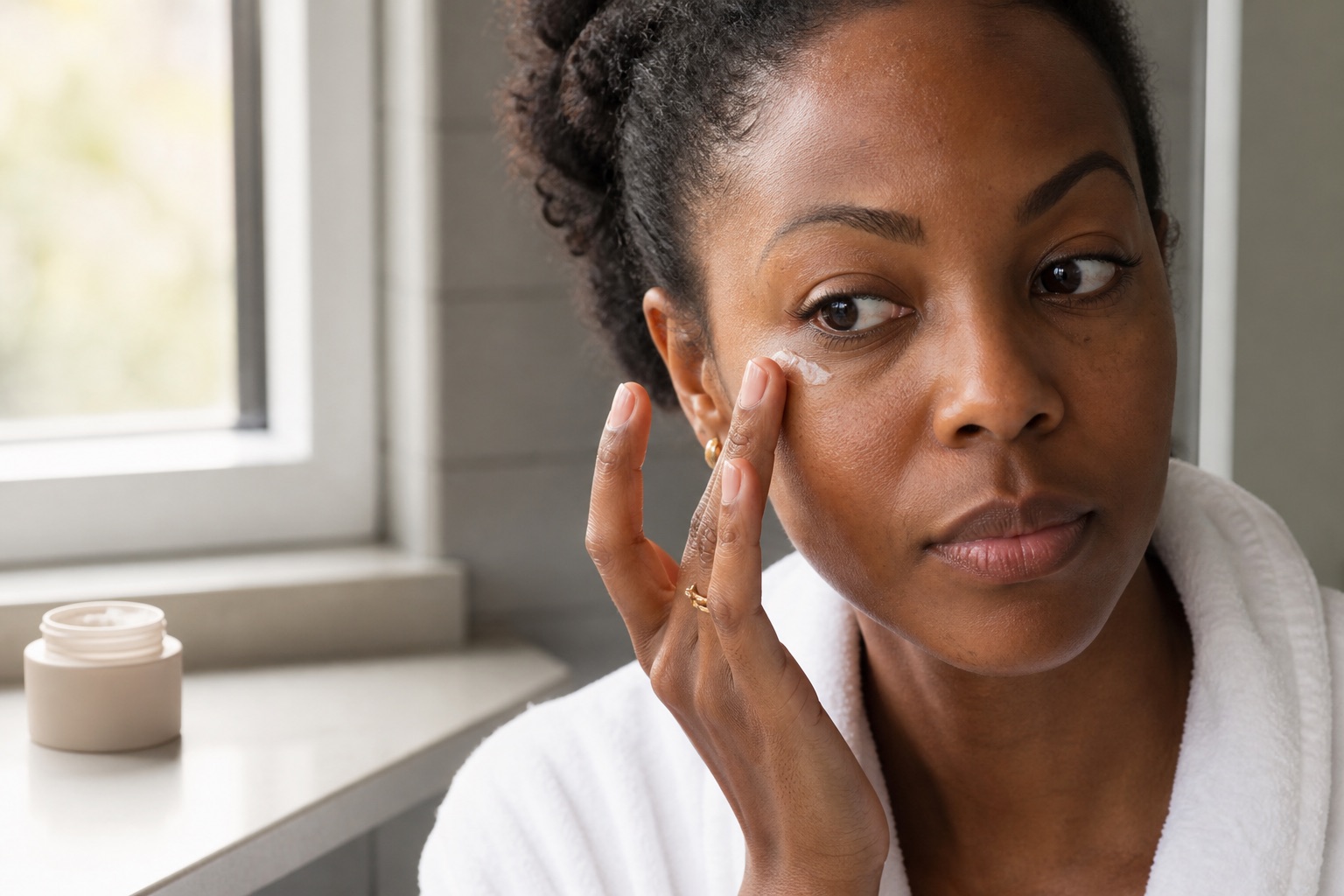
Length and density: determine wand scale, amount and number of passes.
Natural direction: straight, downward or crossed lashes require different separation and support.
Lid space: deep-set eyes, covered mobile lids and skin-touching lashes increase transfer risk.
Sensitivity and watering: require cautious testing and stopping when discomfort begins.
Glasses and photography: review length, curl and intensity through the frame and intended light.
Do not apply mascara to a red, painful or swollen eye, or where there is discharge or suspected infection. Do not diagnose. Stop the service and suggest appropriate healthcare. The makeup-with-glasses guide adds lens clearance and frame checks once eye health and comfort allow cosmetic application.
Use an eyelash curler before mascara, not on a rigid film
A conventional curler is normally used on clean, dry lashes before mascara. Clamping lashes after product has made them rigid can create an abrupt bend or contribute to breakage. Check that the pad and frame are intact, position without pinching the lid and use short progressive presses instead of one forceful closure. Do not heat the tool through improvised methods or force a curl the lashes cannot support.
If curl drops, do not automatically add more mascara. Review formula weight, amount on the tips, preparation and humidity. Curl should support the eye design rather than replace liner, shadow and proportion.
A controlled sequence for upper-lash application
Little product and continuous control
A second layer is built only where needed
Pick up and unload
Roots without contact
Comb and direct
Separate and inspect
Protect the area, direct the client’s gaze and stabilise the hand without pressing on the eye.
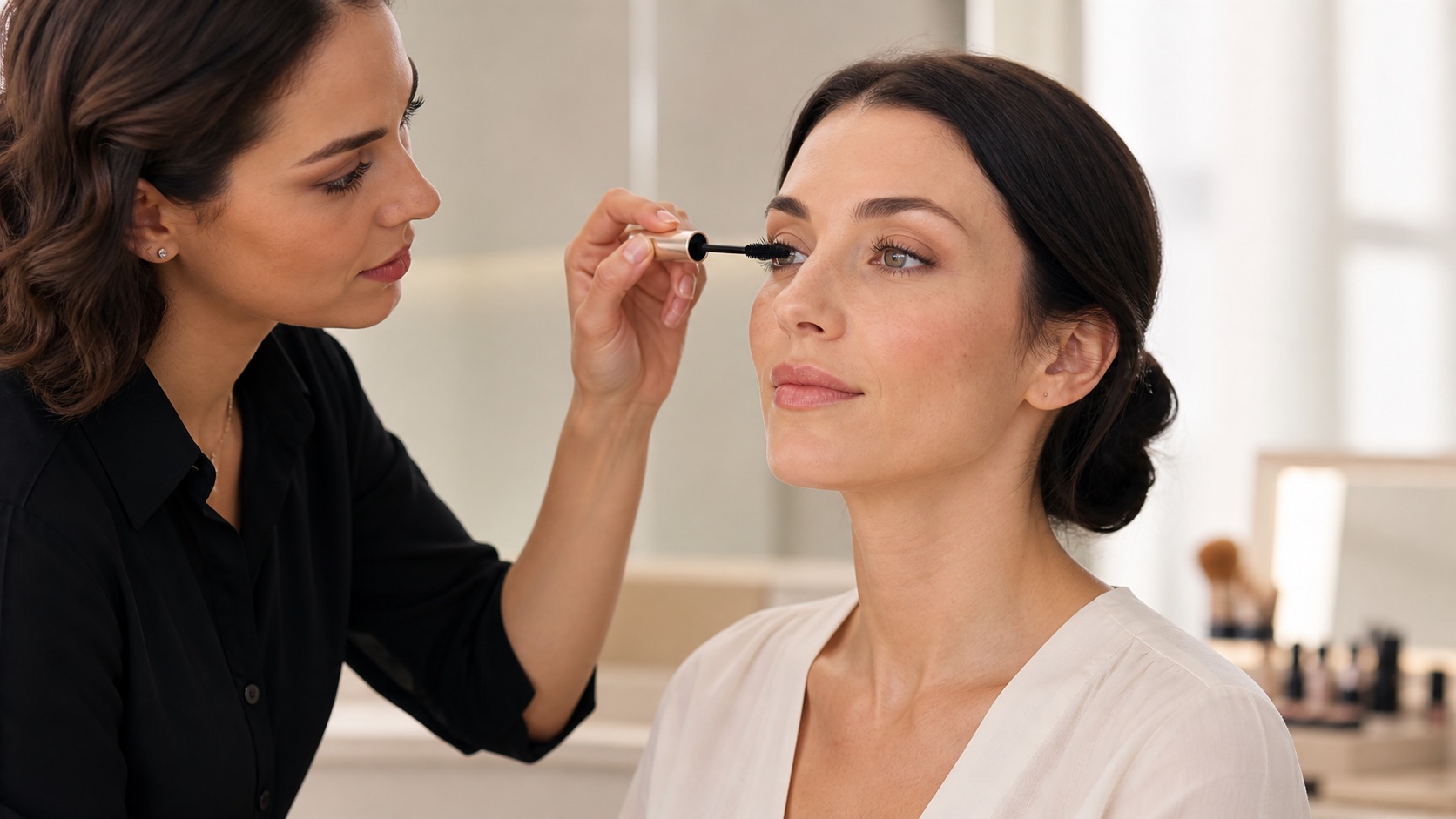
Pick up little product. In a shared professional service, use a clean disposable wand for every entry into the tube.
Place the applicator close to the roots without touching mucosa or the waterline. Use only the movement needed to distribute.
Comb towards the tips in the intended direction. Rotate only when wand geometry and control require it.
Use proportionate portions of the wand on inner, centre and outer lashes instead of dragging one load everywhere.
Build a second layer while the first remains workable and place it only where the target needs more product.
Separate early with a clean, safe tool. Never use a needle, pin or sharp tweezers beside the eye.
Check with eyes open and from the side. Let accidental marks dry before lifting them locally without rubbing.
A zigzag movement is optional. On fine or crossed lashes it can aggregate product; progressive linear combing may separate more effectively. The best movement is the one that achieves the agreed result with the least necessary deposit.
Lower, corner and very short lashes need a smaller load
Reduce the amount dramatically on lower lashes. Use the nearly unloaded tip of a clean wand or a compatible micro applicator while the client looks slightly upward without straining. Decide whether to colour the whole length or only the roots. Excess length or depth can visually lower the eye, accentuate under-eye shadow or transfer to skin when it does not fit the design.
At inner corners, use a barely loaded tip directed away from the mucosa. Do not chase every lash when access is unstable. Adapt direction and intensity to the entire eye look, not to a stand-alone lash trend.
Build volume, length and definition without unstable clumps
For volume, concentrate the first controlled deposit near the roots and lighten through the tips. For length, comb each section fully before the film sets. For definition, reduce amount, use teeth that can pass through the fringe and separate any crossing early. Repeatedly coating already rigid tips can make the result heavy and prone to flaking.
When clumps appear, do not keep brushing blindly. Identify whether they are wet and movable or dry and brittle. A clean comb may separate a workable film; pulling through a fully set mass can strain lashes. If the structure is no longer correctable without discomfort, remove and restart rather than escalating force.
Correct lid marks, transfer and fallout by cause
For a fresh lid mark, avoid spreading it through wet shadow. Let the mascara dry, lift it with a precise clean tool, then restore only the disturbed transition. For repeated transfer, check unsettled skincare, excess tip load, lash-to-lid contact and formula. Setting the entire eye with more powder does not correct every cause.
Flaking can reflect old or altered product, too many dry layers, a brittle formula interaction or friction. Record the combination and change one variable at a time during a trial. Do not promise that one mascara is smudge-proof or flake-proof for every eye and environment.
Professional hygiene: one clean wand for each dip
One clean applicator for every entry
After client contact, the wand never returns to the tube
Clean disposable wand
One entry only
Apply without re-dipping
Discard immediately
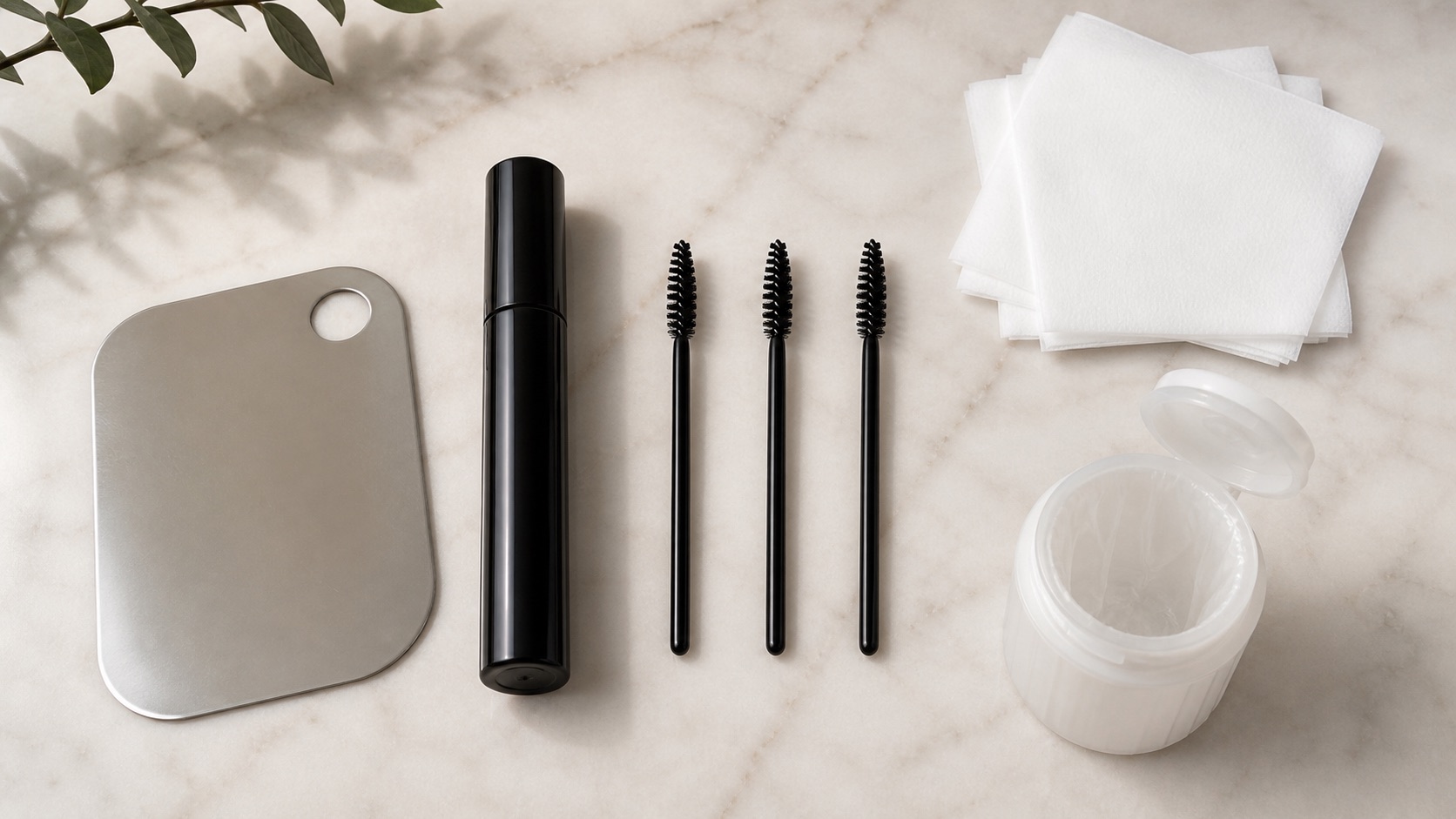
Do not apply from the original wand directly onto multiple clients. Use a clean disposable applicator, dip once and discard it after contact with lashes or skin. It must not return to the tube. If more product is needed, open a new wand. Prepare enough applicators before starting and keep unused and contaminated items physically separate.
Do not pump a wand in the tube, dilute mascara or share curlers without an appropriate cleaning and disinfection protocol. Wash hands, protect clean tools from the used area and discard single-use items immediately. Use the full makeup hygiene protocol and the professional kit and workstation guide to organise states and flow.
Follow PAO, batch, storage and manufacturer instructions, and discard sooner after contamination or a change in smell, colour, texture or behaviour. Dating the opening supports traceability but does not make an altered product safe. Consumer guidance from the FDA describes replacing mascara after about three months; local label directions and the actual product condition still govern professional decisions.
When not to apply mascara and when to stop
Red, painful or swollen eye; discharge, unusual crusting or suspected infection.
Burning, intense itching, persistent watering or increasing discomfort during application.
Product with changed smell, colour, consistency or packaging, or known or possible contamination.
Movement or positioning that makes the gesture unsafe beside the eye.
Medical instruction to avoid eye cosmetics or the client’s request to stop.
After an unexpected reaction, stop, add no more products and seek appropriate healthcare according to severity. Significant pain, marked swelling, breathing difficulty or visual disturbance require urgent assistance. A makeup artist documents and stops; they do not diagnose or treat.
Remove according to the formula without rubbing
Read the product directions. Many traditional and waterproof formulas are loosened by holding a compatible remover against closed lashes, waiting and guiding residue downward without pulling. Tubing formulas may call for warm water and gentle pressure to slide the sleeves away. Do not impose one method on every mascara or assume that a removed tube is a fallen lash without examining it.
Remove mascara completely before sleep without repeated scrubbing along the lash line. When a client wears lash extensions, follow the aftercare compatible with that adhesive system and do not claim that every mascara or remover is suitable. The professional makeup removal guide owns the full removal sequence once published in English.
Professional final checklist
Do formula and removal match context, comfort and the trial result?
Is the wand proportionate and the load minimal but sufficient?
Do root depth, direction, corners and lower lashes support the eye design?
Are there no unstable clumps, wet marks, mucosal residue or tips touching glasses?
Has every used disposable wand been discarded without re-entering the tube?
Does the client report no burning, pain, itching or persistent watering?
Has the result been checked with eyes open, in profile, through glasses and on camera where relevant?
Develop product choice, posture and control through the online makeup course catalogue, the beginner makeup course, the professional makeup products course and the complete makeup artist course. Competence grows through documented trials, clean tools and deliberate corrections.
Frequently asked questions about professional mascara
What is the best professional mascara?
No product is best for everyone. Select for natural lashes, target, comfort, resistance, removal and wand geometry, then test the whole system.
Are waterproof and water-resistant the same?
Not necessarily. Claims depend on the product and test conditions. Read the label and do not treat either term as protection against all water, sweat, tears and friction.
What is tubing mascara?
It forms polymer sleeves around lashes and removes through a product-specific protocol, often warm water and gentle pressure. Wear and removal vary, so follow the directions.
Does a silicone wand always separate better?
No. Tooth spacing, flexibility, product amount and lash density determine the result. A moulded wand may be precise but still load a particular fringe badly.
Is zigzag always the correct movement?
No. It can distribute product near the roots, but may aggregate fine or crossed lashes. Use minimal oscillation and linear combing according to the result.
How many mascara coats can be applied?
There is no universal number. Use the minimum needed and layer while the film is workable. Stop when lashes become rigid, joined or brittle.
How can lid marks be avoided?
Reduce the load, use a proportionate wand, stabilise the hand and direct the gaze. Let a mark dry before lifting it locally rather than wiping it wet.
Should mascara be applied to lower lashes?
Only when it supports the design. A small amount defines; excess can lower the visual weight, emphasise under-eye shadow or transfer.
Can the original wand be used on a client?
Not in a shared professional protocol. Use a clean disposable wand for each dip and never re-enter the tube after contact with skin or lashes.
Can dry mascara be diluted with water or eye drops?
No. Water, saliva and eye drops can alter the formula and introduce contamination. Replace a thickened or changed product.
How often should mascara be replaced?
Follow PAO and manufacturer instructions and discard sooner after contamination or any change in smell, colour, consistency or packaging. FDA consumer guidance also mentions about three months.
Should lashes be curled before or after mascara?
Normally before, on clean dry lashes. Clamping a rigid mascara film can create an abrupt bend or breakage. Use an intact tool and progressive pressure.
How is waterproof mascara removed?
Use compatible remover and enough contact time: hold, wait and guide residue away without rubbing. Follow the specific formula directions.
When should mascara not be applied?
Do not apply it to a red, painful, swollen or discharging eye, during suspected infection or with an altered product. Stop after burning or persistent watering.
Eye-cosmetic safety sources
U.S. Food and Drug Administration — Cosmetics Safety Q&A: Eye Cosmetic Safety: clean instruments, no sharing, stopping during irritation or infection and consumer replacement guidance.
U.S. Food and Drug Administration — Eye Cosmetic Safety: contamination, intended eye-area use and safe application behaviour.
U.S. Food and Drug Administration — Using Cosmetics Safely: no water or saliva in mascara and disposal of altered or contaminated cosmetics.
European Commission — cosmetics legislation: the EU framework for cosmetic-product safety and responsible persons.
Substantive review: 5 September 2026. This cosmetic educational guide by Irene Tomasi does not replace medical, ophthalmological or dermatological care. Continue through the English makeup guide hub or build practical control through the online makeup courses.
Choose eye-film resistance for the real environment
Continue with the waterproof makeup climate guide.
Frame the iris without defaulting to black
Continue with the brown, green and blue eye-colour guide.