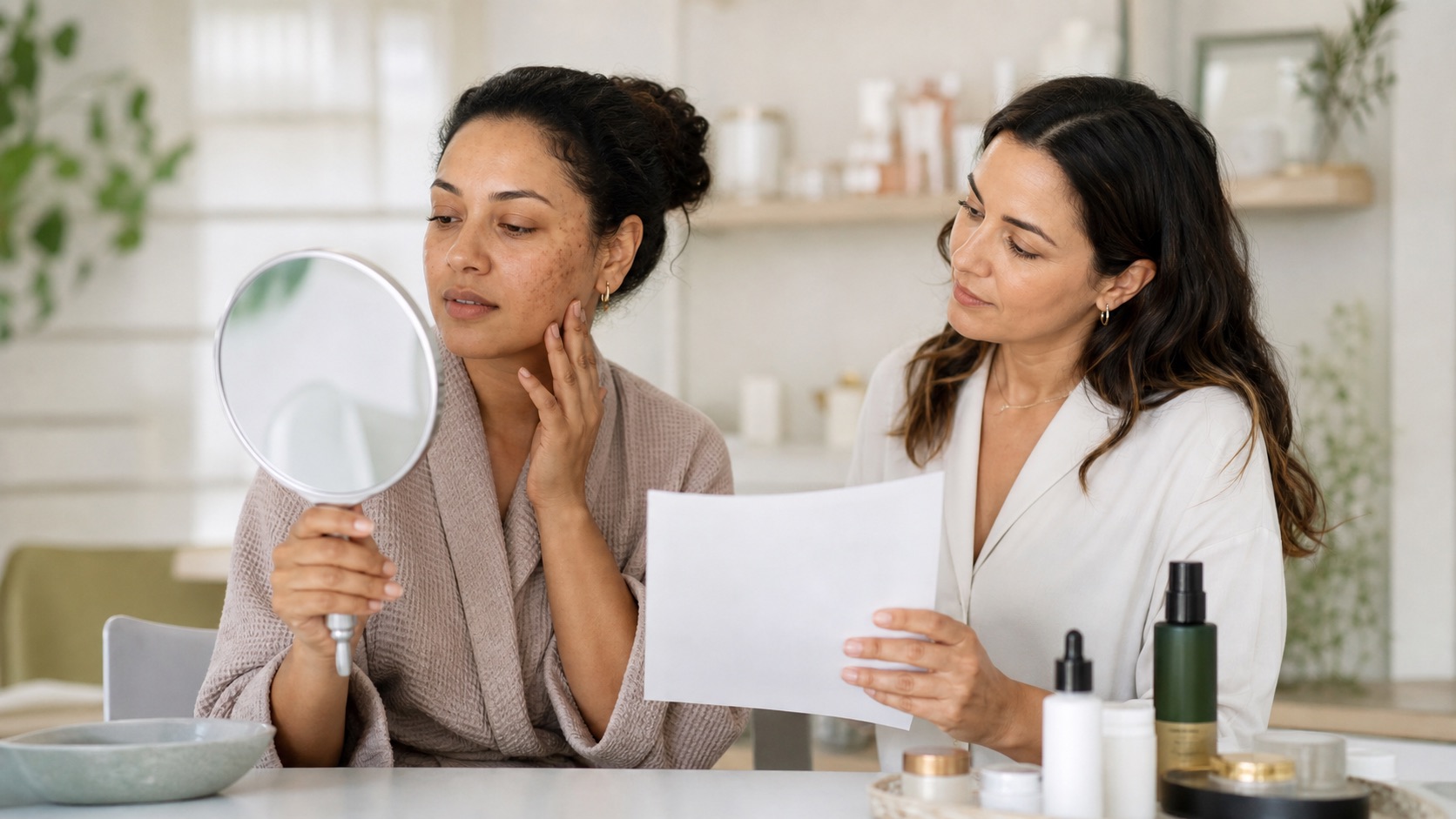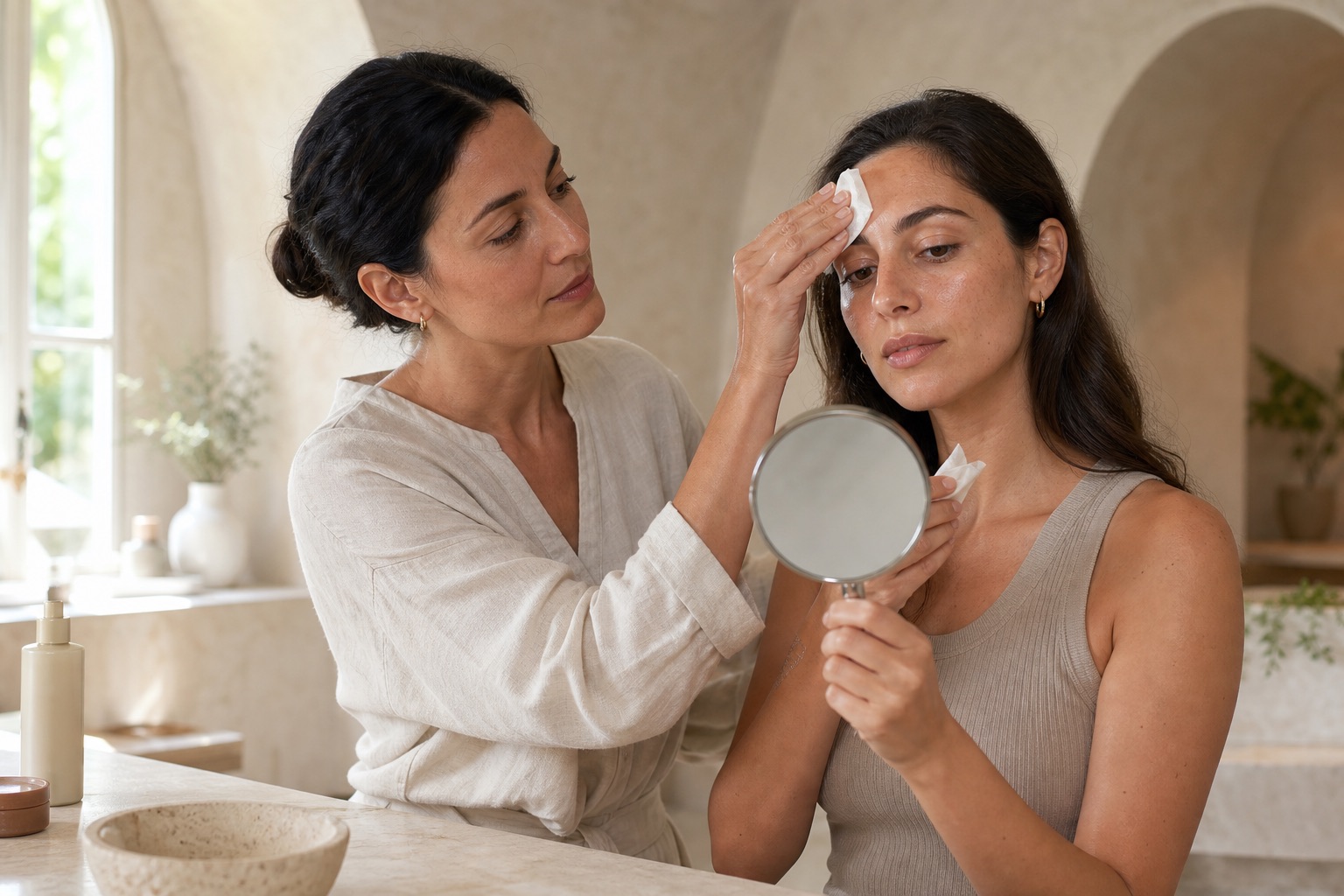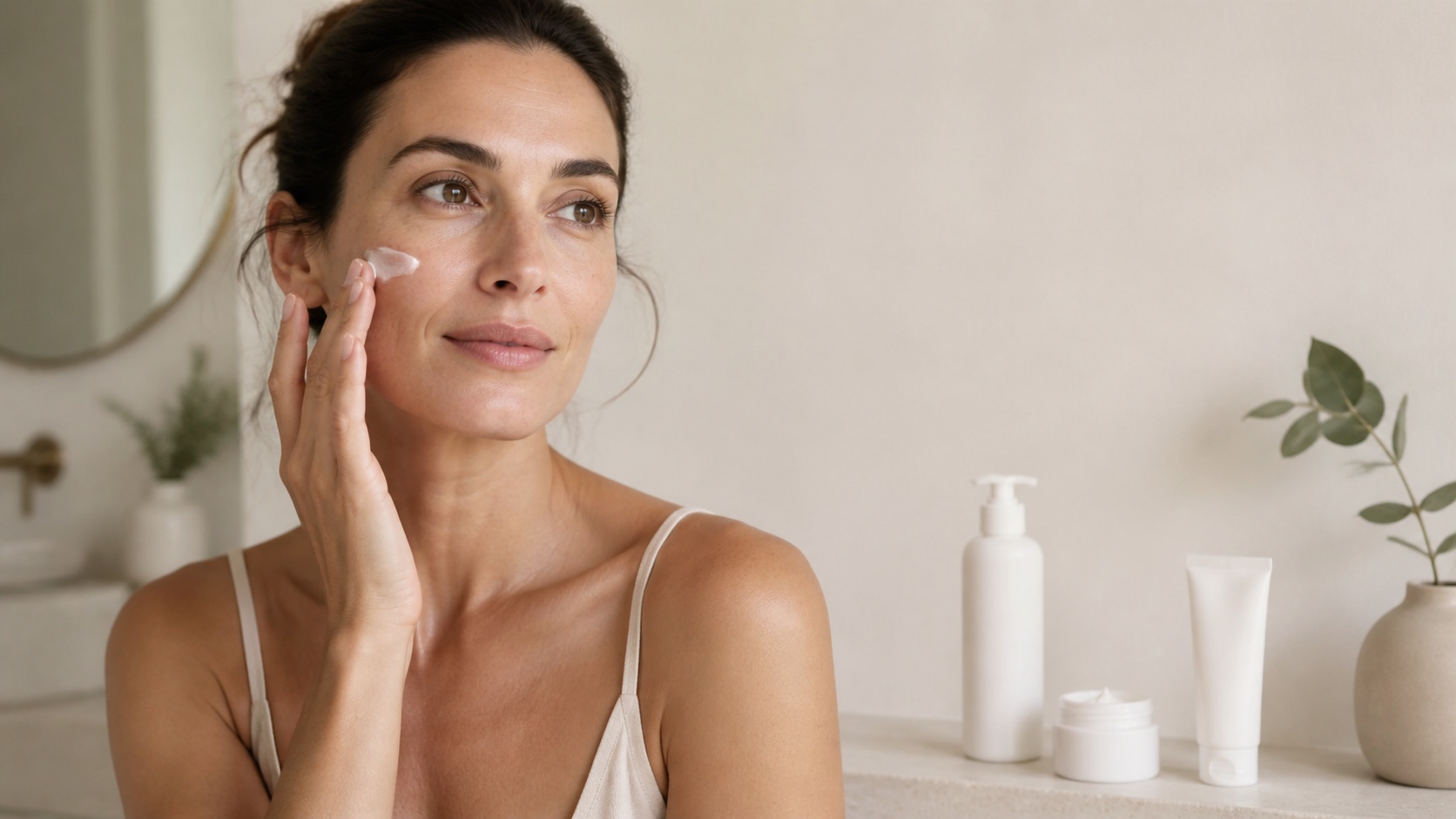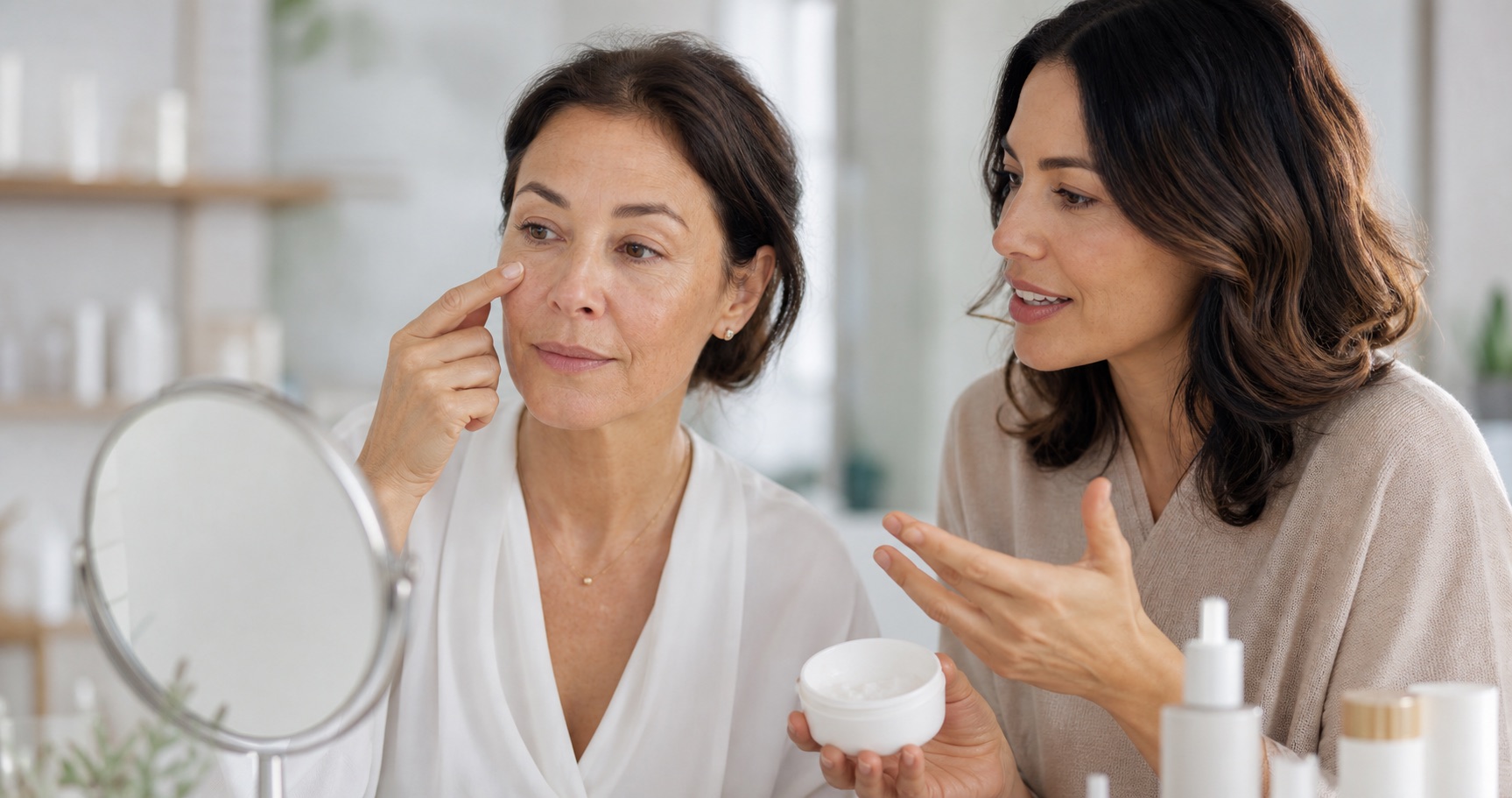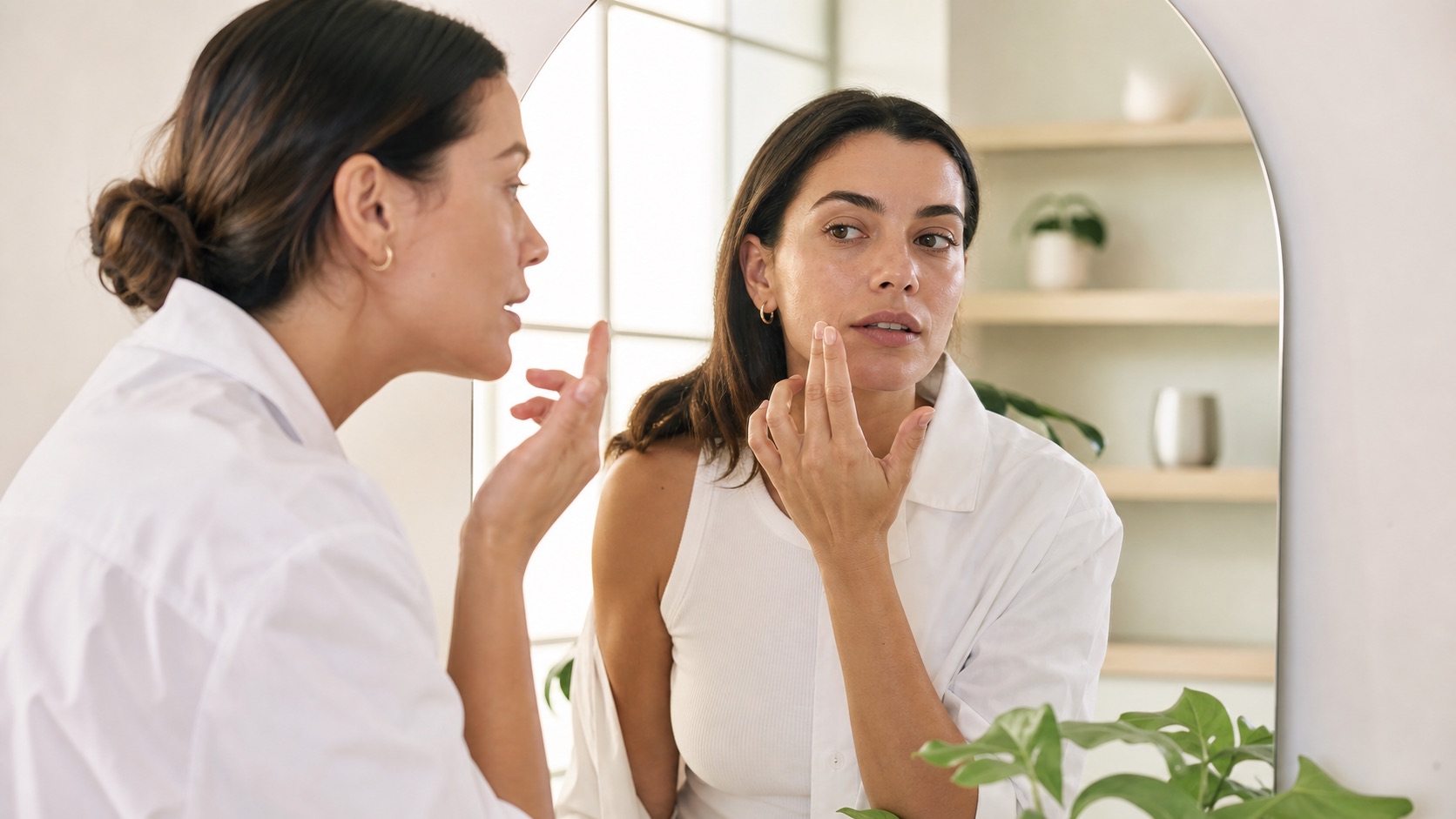

Skincare for acne-prone skin should do a few things exceptionally well: cleanse without friction, maintain comfort and barrier function, make clinician-directed treatment easier to follow and provide reliable sun protection. It should not promise to diagnose or cure acne through a sequence of cosmetics. Acne vulgaris is an inflammatory disorder of the pilosebaceous unit; ‘acne-prone skin’ is a useful cosmetic descriptor, but it does not determine lesion type, severity or cause.
Quick answer: build a base with a gentle cleanser, a tolerated non-comedogenic moisturiser and broad-spectrum sunscreen. Add one treatment according to its label or prescription, without compensating with scrubs, astringent alcohol or multiple actives. Do not squeeze lesions. Painful nodules or cysts, scarring, persistent dark marks, rapid worsening, uncertain diagnosis or significant psychological distress require medical assessment. Cosmetic care should support — never delay — the dermatologist.
This page owns the cosmetic-support intent: routine, treatment tolerance, adherence and referral criteria. The oily and combination-skin routine owns sebum and shine because oily skin and acne are not synonyms. A future English makeup guide will separately cover preparation, coverage, hygiene and when not to apply makeup; this page does not create a broken link to it.
For universal order, use the morning and evening routine pillar. This article does not build a drug protocol, select antibiotics or prescription retinoids, or advise on isotretinoin. It requires independent dermatological review and has not been medically reviewed; use it as cosmetic education, not diagnosis or prescription.
Acne-prone skin and acne: similar words, different responsibilities
Open and closed comedones, papules, pustules, nodules and cysts do not carry the same meaning or risk. Their position on a face does not automatically reveal hormones, gut health, liver function or diet; face mapping cannot replace history and examination. Folliculitis, rosacea, perioral dermatitis and cosmetic reactions may also cause bumps or redness that a non-medical observer can mistake for acne.
Cosmetics can improve cleansing, hydration, sun protection and sensory comfort. Some non-prescription products contain blemish-focused ingredients, but classification, permitted claims and concentrations vary by market. Diagnosis, severity grading and therapeutic decisions belong to qualified clinicians. Do not use ‘purging’ to normalise every deterioration; irritation, dermatitis and acne progression need different interpretations.
Acne is not evidence of poor hygiene. More washing does not clear follicles in proportion to frequency and can increase tightness, burning and scaling. Surface sebum is not dirt, and shiny skin can be irritated or dehydrated. The aim is not a squeaky finish but a clean surface compatible with treatment, moisturiser and sunscreen.
What supportive skincare can realistically do
A stable cosmetic base removes unnecessary variables. When cleanser, moisturiser and sunscreen remain consistent, it becomes easier to see whether treatment is tolerated, whether its schedule is sustainable and whether a new symptom coincides with one product. The base does not replace treatment, but it may reduce dryness and irritation that otherwise lead to inconsistent application or unplanned discontinuation.
The American Academy of Dermatology notes that benzoyl peroxide, salicylic acid, topical retinoids and isotretinoin can dry or irritate skin and that an appropriate moisturiser may improve tolerance. This does not mean moisturiser treats acne by itself. It means comfort and adherence are concrete parts of care, particularly when clinical improvement takes weeks.
Research adding cleansers and moisturisers to treatment includes open-label, observational and industry-connected studies. It may support a role for simple care but cannot prove that one commercial brand is necessary. Judge functions, formula and individual tolerance, and disclose conflicts when using branded evidence.
The essential base: cleanser, moisturiser and sunscreen
Three functions form the readable base. Cleanser removes sweat, residue and surface film without scrubbing; moisturiser reduces tightness and supports the barrier; sunscreen limits ultraviolet exposure and helps avoid adding contrast to post-inflammatory marks. A fourth product enters only with a defined objective and compatible directions.
‘Non-comedogenic’, ‘oil-free’ and ‘won’t clog pores’ can narrow the search but are not personal guarantees. Testing cannot predict every skin, amount, climate and product combination. Unless a reaction requires earlier stopping, assess the finished cosmetic consistently rather than replacing the entire base after one new lesion.
Morning routine for acne-prone skin
Step 1 — Gentle cleansing, not degreasing
Use lukewarm water and fingertips. Dermatology guidance recommends gentle washing up to twice daily and after sweating, without abrasive scrubs, brushes or cloths. If prescribed treatment has made the skin very dry, ask the prescriber whether the morning step should be adjusted. Clinical instructions take priority over generic routines.
Step 2 — Treatment only when directed
Apply treatment in the amount, area and frequency stated on its label or by the prescriber. Do not shift timing, double the next dose after forgetting or apply only to one visible spot unless directions say so. Some treatments cover the entire acne-prone area; others have different instructions. A general article cannot replace the individual plan.
Step 3 — A compatible moisturiser
Choose a lotion, gel-cream or cream that remains comfortable; fragrance-free is sensible for reactive skin. Glycerin, ceramides, dimethicone and other humectant or lipid components can support comfort in appropriate formulas. The guide to humectants, emollients, occlusives and ceramides explains their roles; here compatibility with treatment is the priority.
Step 4 — Sunscreen you can apply generously
Use broad-spectrum SPF 30 or higher outdoors, with water resistance when relevant and a finish that does not encourage underapplication. On deeper skin tones or with post-inflammatory hyperpigmentation, test tint and cast at the full amount. The daily face-sunscreen guide covers UVA, application amount and reapplication.
Evening routine: remove, treat and recover
Step 1 — Remove sunscreen and makeup without pressure
If makeup or a resistant sunscreen requires it, use an emulsifying first cleanser and follow with a water-based cleanser only when needed. The double-cleansing guide owns this decision. Do not massage inflamed papules for minutes or rub with textured pads to make the cotton appear perfectly clean.
Step 2 — Apply treatment as agreed
Wait for the skin condition specified by the leaflet or clinician. Do not independently stack benzoyl peroxide, retinoids, acids and scrubs because they are all marketed for blemishes. Mechanisms and tolerance differ. If a medicine is prescribed, do not reduce, stop or alternate it without discussing side effects with the prescriber or pharmacist.
Step 3 — Moisturise before or after only as instructed
Some plans place moisturiser before treatment, after it or in both positions to improve tolerance. The popular ‘sandwich’ method is not universal and could alter medicine application. Follow the clinical plan. For a cosmetic, start with the simplest sequence and record burning, tightness, scaling and practicality over the following hours.
Cosmetic actives: one priority, not a race
Salicylic acid, azelaic acid, niacinamide, cosmetic retinoids and other actives are not equivalent and may not share the same legal classification between countries. The skincare actives guide explains selection and total load; the AHA, BHA and PHA guide separates exfoliant families. Clinical acne treatment should begin with a qualified professional, not online popularity.
Niacinamide may already be present in cleanser, serum, moisturiser and sunscreen. Combining all four does not guarantee more benefit. The niacinamide guide explains concentrations and tolerance. Cosmetic retinol and retinal are not interchangeable with prescribed retinoids; use the retinoids guide without using it to modify treatment.
Topical and oral antibiotics are not cosmetic tools. Current clinical guidance stresses responsible antibiotic use and combination strategies selected by clinicians to limit resistance. Isotretinoin and hormonal treatments require assessment, prescription and monitoring. Pregnancy, breastfeeding or trying to conceive requires professional review of retinoids and other treatments before use.
Treatment tolerance: support without hiding warning signs
Mild dryness, tightness or scaling can accompany several treatments, but intensity and duration matter. Record product, amount, location, onset and progression. Burning does not prove efficacy. A gentle cleanser and moisturiser may improve comfort; the damaged skin barrier guide helps remove cosmetic overload, not alter prescribed treatment.
Contact the prescriber when irritation, pain or scaling makes adherence difficult, spreads or has an uncertain cause. Do not add someone else’s corticosteroid, essential oils or home remedies just to maintain the same schedule. Swelling of lips, tongue or throat, breathing difficulty, widespread blistering or systemic symptoms require urgent medical help.
Do not call every eruption purging. That informal term is sometimes used for a temporary lesion increase with turnover-altering treatments, but it cannot explain diffuse burning, itch, swelling, plaques or eruptions in new areas. Continuing a harmful product while waiting for ‘detoxification’ can delay appropriate care.
Post-acne marks and scars are not the same
After a lesion, a flat red, purple or brown mark may remain. Post-inflammatory erythema and hyperpigmentation differ from depressed or raised scars. Sunscreen reduces one factor that can sustain visible contrast but does not promise erasure. On deeper skin tones, persistent pigmentation can be a strong reason to seek earlier dermatological advice.
Deep nodules, long inflammation and manipulation increase the risk of lasting change, but no routine can guarantee zero scarring. Do not wait for a painful lesion to ‘ripen’ and do not perform home extractions. NICE recommends considering specialist referral when acne causes scarring or persistent pigmentary change. Controlling active disease comes before treating its aftermath.
Daily habits: useful hygiene without punishment
Cleanse gently up to twice daily and after substantial sweating; pat sweat rather than rubbing.
Do not pick, pop or scratch lesions; manipulation increases inflammation, dark marks and scar risk.
Keep phones, glasses, helmets and makeup tools reasonably clean without blaming every surface as the cause.
Keep oily hair products away from the forehead if a repeated relationship is observed, changing one variable at a time.
Do not begin restrictive diets or supplements as a self-diagnosed cure; discuss repeated patterns with a clinician or dietitian.
Avoid indoor tanning and deliberate sun exposure to ‘dry’ lesions; temporary dryness is not treatment.
How to document progress without obsessive counting
Record approximate inflamed-lesion burden by area, presence of painful nodules, post-cleanse comfort, treatment tolerance, new marks and impact on daily life. Take one weekly photograph in consistent light, distance and time, without makeup or filters. Do not count every pore or compare your face with retouched images.
Record the start date for each cosmetic. In the first days, assess burning, itch, swelling and usability; later, assess continued use and the outcome agreed with the clinician. One good day does not prove a cure and one papule does not prove failure. Treatment may take weeks, but pain, scarring or rapid worsening should not wait.
When to see a dermatologist
Arrange assessment for deep painful nodules or cysts, scarring, persistent pigmentary change, widespread chest or back involvement, rapid worsening or uncertainty that the condition is acne. Lack of response to an appropriate course, frequent relapse or need for prescription treatment are also reasons to stop cycling through cosmetics.
Seek medical advice for sudden adult onset accompanied by markedly irregular periods, new terminal hair growth, hair loss or other signs that may require hormonal assessment; cosmetics cannot establish the cause. Pregnancy, breastfeeding or planning pregnancy needs treatment review before retinoids or other medicines.
Psychological impact matters at any apparent severity. Avoiding people, school, work or photographs, persistent shame, anxiety, low mood or thoughts of self-harm require timely support. NICE includes persistent psychological distress among referral considerations. Contact local emergency or crisis services when there is immediate risk.

A safe protocol for beauty and skincare professionals
Collect a non-diagnostic record: products, schedules, reported medicines, prescriptions, allergies, comfort, duration and objective. Observe without naming a disease. Do not grade acne severity, extract inflamed lesions or advise stopping treatment. If the client already has medical care, ask them to verify relevant routine changes with that professional.
Provide a basic routine with order, indicative amount, area, frequency and stop criteria. Obtain specific consent for photographs and do not reuse them for promotion without separate authorisation. Explore online skincare courses for structured learning in cosmetic observation, formulation and professional boundaries.
Frequently asked questions about acne-prone skincare
What is the minimum routine for acne-prone skin?
A gentle cleanser, tolerated moisturiser and broad-spectrum sunscreen form the base. Add one treatment according to its label or prescription. The base cannot cure every form of acne, but it reduces friction and overload and makes treatment response easier to interpret.
Are oily skin and acne-prone skin the same?
No. Sebum can contribute to the follicular environment, but shine is not acne, and acne can coexist with dry irritated skin. Oily-skin routines manage texture and zones; acne diagnosis and treatment depend on lesion type, severity, duration, outcomes and medical history.
Does acne-prone skin need moisturiser?
Often yes, especially when treatment causes tightness or scaling. Choose a compatible non-comedogenic formula and adjust texture and amount. Moisturiser supports comfort and adherence; it does not replace treatment.
Is salicylic acid always the best choice?
No. Formula, concentration, frequency, other treatments and tolerance change its usefulness. It does not treat every lesion or scar. Follow the label or clinical advice and do not automatically combine it with retinoids, peels and scrubs.
Does niacinamide treat acne?
It can support barrier, comfort and some cosmetic endpoints in specific formulas, but it does not replace diagnosis or therapy. Higher percentages do not guarantee better results. Use it for a defined function and assess the complete formula.
Does makeup always worsen acne?
No. Non-comedogenic products, clean tools, light layers and complete removal can suit many people. Avoid open, bleeding or very painful skin and do not share applicators. Makeup technique remains a separate intent from skincare treatment support.
How long does acne treatment take to work?
Comfort and irritation appear early, while visible treatment benefit may take several weeks and clinical plans are often reviewed after a defined course. Follow the agreed schedule instead of increasing dose. Pain, scarring or rapid deterioration should be assessed sooner.
Can I squeeze blackheads and spots?
Avoid it. Pressure and manipulation can increase inflammation, tissue damage, pigmentary change and scarring. Professional extraction is not suitable for every lesion and does not replace treatment. Painful nodules and damaged skin need particular caution.
When does acne require a dermatologist?
For painful nodules or cysts, scars, persistent dark marks, widespread involvement, rapid worsening, uncertain diagnosis or lack of response. Sudden adult onset with possible hormonal signs, pregnancy and need for prescription medicine also require professional assessment.
Can a beauty professional diagnose acne?
No. They can observe the surface, collect cosmetic information, explain cleansing and moisturising, and recognise referral signs. They cannot diagnose, prescribe, alter treatment or promise a cure. Responsible referral is part of professional competence.
Clinical and professional sources
American Academy of Dermatology: dermatologist-reviewed acne skincare habits. Read the AAD guidance
American Academy of Dermatology: moisturiser and treatment tolerance. Read the AAD guidance
American Academy of Dermatology: current acne clinical guideline. Read the guideline page
NICE NG198: acne management, referral, scarring and mental-health recommendations. Read NICE recommendations
Dreno et al.: barrier and supportive skincare consensus with declared industry funding. Read the PubMed record
Snyder et al.: systematic review of adherence to acne treatment. Read the PubMed record
Browse the English skincare guide hub for separate guidance on cleansing, hydration, barrier, actives and sunscreen, or explore online skincare courses for structured professional learning.
To separate a recurring sensitivity pattern from temporary reactivity and build a controlled baseline, read the sensitive versus sensitised skin guide for tolerance testing, a minimal routine and clear referral criteria.
To distinguish an acne lesion from a normal follicular structure and visible texture, read the blackheads, sebaceous filaments and visible pores guide for realistic skincare, strip and extraction limits.
For a cautious distinction between cosmetic discolouration and a mark that needs assessment first, read the facial dark spots and skincare guide for photoprotection, cosmetic options, measurement and dermatology referral criteria.
If you are turning this topic into a structured learning plan, use the online skincare-course selection checklist to compare curriculum, teacher, demonstrations, practice, feedback, access, total cost and certificate wording without confusing private training with professional authorisation.
If you want to turn this knowledge into a defined service, continue with the guide to becoming a skincare consultant: it connects training, demonstrable skills, portfolio, boundaries, work models and a controlled launch without confusing cosmetic consultation, beauty treatment and healthcare.