
Niacinamide is a form of vitamin B3 used in cleansers, serums, moisturisers and sunscreens. In specific formulas and study conditions, it has supported barrier function and improved measurements related to oiliness, uneven tone, texture and visible photoageing. That does not make it a universal cure. Concentration, vehicle, complete formula, frequency, skin condition, objective and duration all influence the result.
Quick answer: do not choose niacinamide by chasing the highest percentage. Useful clinical evidence often involves finished products containing about 2% to 5%. A 10% serum is not automatically twice as effective and may add an unnecessary variable. Start with a formula suited to your skin, introduce it into a stable routine and assess comfort and change over several weeks. Stop for persistent burning, swelling, blistering or clear deterioration.
This page owns the complete niacinamide intent: functions, concentration, formulation, introduction, combinations and tolerance. The skincare actives guide remains the planning reference for choosing an active and managing total routine load. Separate thin pages for 2%, 5% and 10% niacinamide would compete for the same question, so the comparison stays here.
Niacinamide, nicotinamide and niacin are not interchangeable names
Niacinamide and nicotinamide are names for the same molecule, the amide form of nicotinic acid. On an EU cosmetic ingredient list it appears as NIACINAMIDE. Niacin, or nicotinic acid, is another form of vitamin B3 and can cause vasodilation and flushing. A label or article that says only ‘vitamin B3’ without identifying the form hides a relevant distinction.
The European Commission describes CosIng as an informative, non-legally binding database. The presence of an INCI name does not mean a substance is approved for every cosmetic use, and a listed cosmetic function does not prove that every finished product delivers it. The EU Cosmetics Regulation and its annexes establish legal conditions, while each finished product needs a safety assessment and claims require appropriate evidence.
Niacinamide participates in cell biology as a precursor for coenzymes including NAD and NADP. That mechanism is relevant background, not a consumer efficacy test. Penetration, stability, dose, vehicle and bioavailability separate a plausible pathway from a visible outcome. A mechanistic explanation can support a hypothesis; it cannot replace a controlled study of the applied product.
What niacinamide may do: an evidence map
Claims about niacinamide do not all rest on the same evidence. Some come from cell culture, some from instrumental measurements and some from small clinical studies of one proprietary formula. Several influential studies involved industry researchers or funding. That does not invalidate a result, but it makes formulation, comparator, sample, duration and endpoint essential when translating findings into advice.
Barrier support and stratum-corneum lipids
Experimental work reported increased synthesis of ceramides and other stratum-corneum lipids in cultured keratinocytes, together with reduced transepidermal water loss after topical nicotinamide in dry skin. Later studies of complete moisturisers containing niacinamide and other components measured changes in hydration and barrier-related endpoints. These findings support a role within a formula; they do not show that a few drops of serum rebuild a severely damaged barrier by themselves.
If the practical goal is comfort and lower water loss, vehicle can matter as much as the highlighted active. A moisturiser combining humectants, emollients and occlusives may be more useful than a concentrated watery serum followed by nothing. Use the guide to humectants, emollients, occlusives and ceramides to decide what structural role the product must fill.
Sebum and visible shine
A study using a 2% topical niacinamide formulation reported changes in facial sebum measurements after several weeks, but endpoints did not behave identically in Japanese and Caucasian groups. The result suggests possible help with oiliness; it does not prove that niacinamide regulates sebum for everyone or permanently shrinks pores.
Shine, measured sebum, visible pore size and acne are related but not synonymous. A mattifying product can change reflection without altering secretion. Pores may look more prominent because of oil, structure, age, dehydration or lighting. Acne is multifactorial. Keep cleanser, moisturiser and photography stable when observing one new product, instead of changing several actives at once.
Uneven tone and melanosome transfer
In laboratory models, niacinamide did not directly inhibit tyrosinase but reduced transfer of melanosomes from melanocytes to keratinocytes. In the same research programme, 2% and 5% finished formulations were associated with improvement in pigmentation endpoints in specific groups over several weeks. This is not skin bleaching and does not mean every dark mark has the same cause or response.
Post-inflammatory marks, solar lentigines, melasma and pigmented lesions require different reasoning. A new, asymmetric, irregular, itchy, bleeding or changing lesion needs medical assessment. Daily face sunscreen remains central: niacinamide has no SPF and cannot compensate for insufficient coverage or continued exposure.
Texture, apparent redness and visible photoageing
In a split-face study of 50 white women aged 40 to 60, a 5% niacinamide moisturiser used for twelve weeks improved several appearance endpoints compared with its vehicle, including fine lines, hyperpigmented spots, texture, red blotchiness and sallowness. The authors were affiliated with the manufacturer. This is useful evidence for that sample, formula, duration and measurement set, not a guarantee for every serum.
Apparent redness is not a diagnosis of rosacea. A change in a cosmetic study does not make the ingredient a treatment for inflammatory disease. Multi-ingredient moisturiser studies may show that a complete formula performs better than a comparator without isolating the contribution of niacinamide. Attribute claims to the tested product unless the study design genuinely isolates the ingredient.
Acne, rosacea and dermatitis: the cosmetic boundary
Niacinamide is often marketed as an acne treatment, but the evidence does not justify a universal therapeutic promise. Studies of 4% formulas, moisturisers and combinations use different comparators and outcomes; one trial did not find additional benefit from adding nicotinamide to topical clindamycin over clindamycin alone. A cosmetic may support comfort, barrier and shine, but it does not replace diagnosis or evidence-based treatment.
Rosacea, atopic dermatitis, seborrhoeic dermatitis and contact dermatitis cannot be identified from an ingredient quiz. Some niacinamide-containing moisturisers have been studied in controlled protocols, but they also contained other ingredients. Persistent papules, widespread pustules, plaques, fissures, crusts, marked itch or eye involvement require an appropriate clinician.
Do not apply a new cosmetic to broken, infected or acutely inflamed skin unless a clinician has advised it. If water or a plain moisturiser already stings, use the damaged skin barrier guide to simplify first. Adding an active to compensate for over-exfoliation makes the reaction harder to interpret.
Niacinamide concentrations: what the percentage does and does not mean
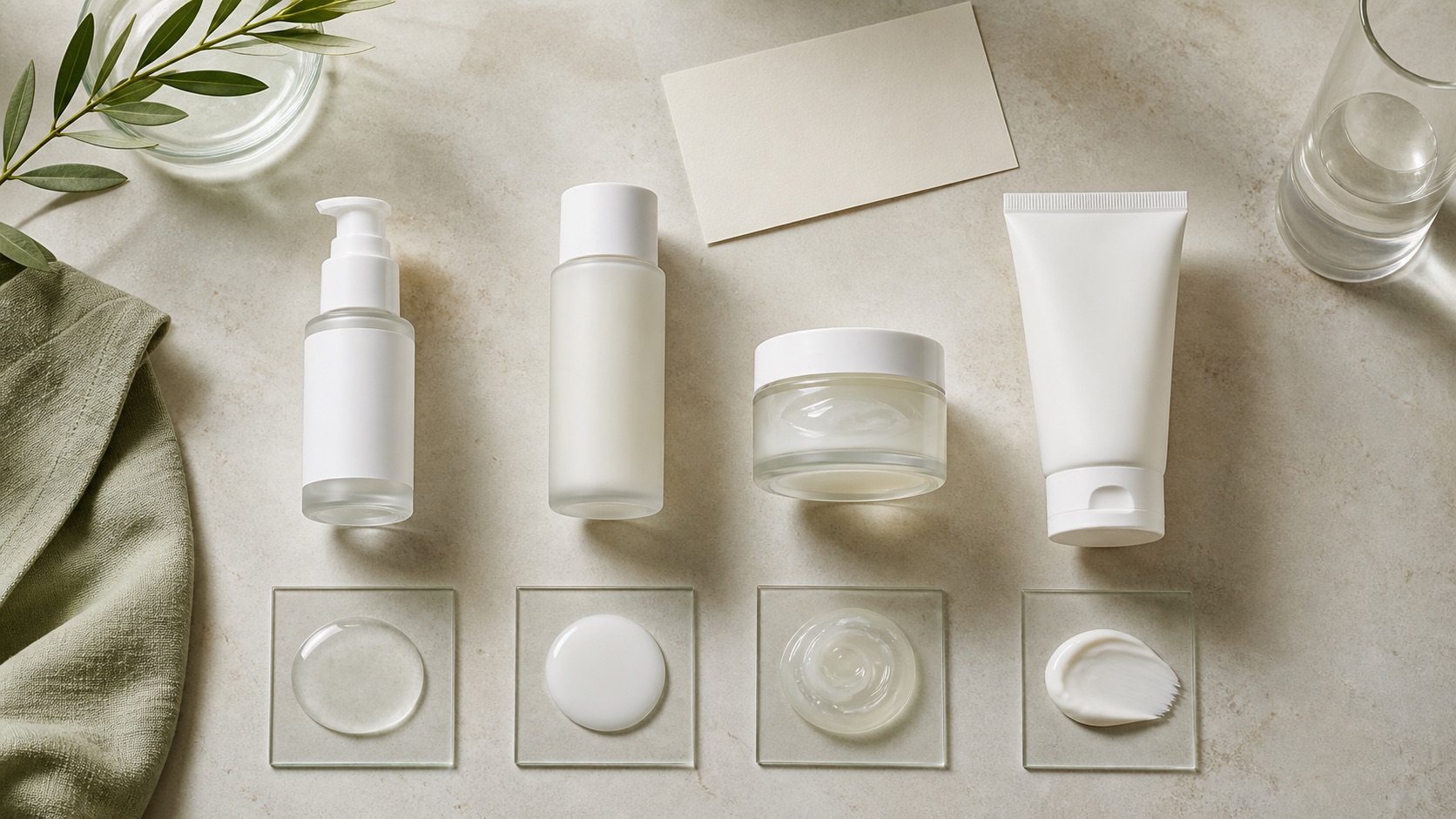
A percentage describes the amount of niacinamide incorporated according to the manufacturer’s formulation method. It does not reveal raw-material purity, stability, penetration, application dose or clinical benefit. Two 5% serums can use different solvents, pH systems, preservatives, polymers and humectants, and may feel or perform differently. They are not interchangeable copies simply because the front labels match.
Below 2%, or no percentage on the label
A low concentration is not automatically useless. Niacinamide may be part of a barrier moisturiser, cleanser or sunscreen whose performance depends on the whole formula. If the percentage is not disclosed, the INCI list cannot reconstruct it precisely. In the EU, ingredients at concentrations of 1% or less may be listed in any order after those above 1%, so position is not a reliable percentage calculator.
About 2% to 5%: the better-documented range
Clinical studies on sebum, pigmentation and visible photoageing have often used finished formulas containing 2%, 4% or 5% niacinamide. This does not establish one perfect dose or mean every objective needs 5%. It tells us that this range includes examples tested on people, with specific endpoints and readable limitations.
For reactive skin or a routine already containing several products, a moisturiser in this range can be easier to interpret than a separate 10% booster layered over products that may already contain niacinamide. Start with the role the formula must perform, then consider the percentage.
10% and above: higher is not automatically better
Ten per cent is common in retail products, but it does not automatically deliver twice the effect of 5%. Safety evaluations and use tests describe tolerance under their particular conditions; they do not prove superior clinical efficacy for a higher percentage across barrier, oiliness and uneven tone. Consumer popularity is not a dose-response trial.
Recent protocols may include 10% niacinamide with other ingredients or procedures. Those designs do not isolate the contribution of niacinamide and should not be converted into do-it-yourself high-concentration recipes. If a well-formulated 4% or 5% product is effective and comfortable, there is no rule requiring an increase.
Formula, vehicle and pH matter more than a ranking
Niacinamide is water soluble and appears in aqueous serums, emulsions, gels, creams, cleansers and sunscreens. Vehicle affects deposition, evaporation, film, compatibility with adjacent layers and sensory feel. Stickiness, pilling or tightness may come from polymers, solvents, surfactants or the combined routine rather than niacinamide itself.
pH and heat can influence stability. Under severe or prolonged conditions niacinamide can hydrolyse to nicotinic acid, but that does not mean layering a modern vitamin C serum with a niacinamide product instantly creates a flushing dose on skin. Finished products are formulated and tested as systems. Mixing powders, changing pH or decanting them removes that control.
Opaque or airless packaging is not a universal requirement for niacinamide, although packaging still protects the complete formula from contamination and misuse. Follow the period-after-opening mark, closure and storage instructions. A marked change in smell, colour, texture or separation is a reason to stop and contact the manufacturer, not to repair the product at home.
Why a niacinamide product may sting or cause redness

Niacinamide is generally well tolerated in studied formulas, but no ingredient is universal. Stinging may relate to concentration, an already irritated barrier, solvents, preservatives, fragrance, pH, excess application or combined use with acids and retinoids. A raw material’s reputation for gentleness does not make every product containing it gentle.
Mild transient tingling does not prove efficacy and should not be pursued. Increasing burn, lasting redness, itch, plaques, swelling, blistering or involvement of eyes and lips require stopping and gentle rinsing; important or persistent reactions need healthcare advice. Do not label every deterioration as purging. Niacinamide does not have to trigger accelerated exfoliation.
A home area test cannot exclude allergy or reproduce full-face use, but it may reveal an obvious response. Apply a small amount of the finished product to a limited intact area according to its directions, repeat cautiously, then test one facial area. Diagnosis of allergic contact dermatitis requires medical patch testing with standardised substances and timed readings.
How to introduce niacinamide without losing the signal
First stabilise the morning and evening routine around cleansing, moisturising and sunscreen. Choose one niacinamide product, photograph the target area in comparable light and record frequency, comfort and change. Twice-daily use from day one is not mandatory. Follow the label and increase only when tolerated.
Order follows format. A watery serum usually sits after cleansing and before moisturiser; a niacinamide cream can be the moisturiser; a cleanser is rinsed; a sunscreen containing it remains primarily sunscreen and needs its photoprotective amount. Thin-to-thick is a useful orientation, not a law that overrides product directions.
Match the observation period to the endpoint. Comfort, stinging and pilling appear quickly; oiliness, uneven tone and texture need weeks and comparable photographs. Replacing a product after three days because no visible result has appeared creates overload. Removing a tolerated product that produces no useful change after a reasonable period is also valid.
Choosing a niacinamide formula by skin condition
Dry or dehydrated skin often benefits from a cream or emulsion that pairs niacinamide with humectants and emollients. Oily or combination skin may prefer a fluid, but does not need to avoid every lipid. Sensitive skin benefits from fewer new variables, a lower or moderate concentration and slow introduction. The guide to skin types and conditions prevents oil production, water deficit and reactivity from being treated as one problem.
Acne-prone skin should be assessed through the complete formula and the person’s treatment plan. A light serum is not automatically non-comedogenic, and a cream is not automatically pore-clogging. Do not add niacinamide over several drying acne treatments just to counter irritation. Persistent inflammatory acne needs dermatological assessment.
For darker skin tones, preventing irritation matters because inflammation may leave persistent post-inflammatory hyperpigmentation. Introduce gradually, use consistent sunscreen and stop rather than pushing through burning. Niacinamide is not a bleaching ingredient and should not be used to erase normal skin colour.
Niacinamide with vitamin C, exfoliating acids and retinoids
Niacinamide and vitamin C
There is no universal rule forbidding them together. Modern finished products may contain both, and separate formulas can be layered if each is stable and tolerated. The practical issues are often total formula load, stinging and pilling rather than instantaneous conversion of niacinamide into nicotinic acid. Introduce them separately and consult the vitamin C guide for form and oxidation.
Niacinamide with AHA, BHA or PHA
The ingredients are not universally incompatible, but exfoliating acids can irritate independently. A soothing reputation does not allow niacinamide to cancel an excessive acid schedule. Introduce one formula at a time, separate applications if that improves interpretation and reduce the exfoliant when burning or scaling appears. The AHA, BHA and PHA guide owns acid selection and frequency.
Niacinamide with retinol or retinal
They can coexist, including in one professionally formulated product, but compatibility does not mean two new products should begin together. Retinoid directions take priority. If dryness, burning or scaling develops, reduce total treatment load rather than adding more niacinamide. See the retinol, retinal and cosmetic retinoids guide for gradual introduction and the medicine boundary.
How to compare two niacinamide products
Begin with intended role: stand-alone serum, moisturiser, cleanser or sunscreen. Record percentage if disclosed, full INCI, format, fragrance, package, price per usable amount, instructions and period after opening. Then compare application amount, finish, compatibility with sunscreen, comfort after several hours and whether the product replaces or merely adds a step.
Do not count the number of ‘active’ ingredients as a quality score. A focused moisturiser can outperform a crowded serum because it is used consistently and meets the actual need. Likewise, a low-cost product is not automatically weak, and an expensive 10% formula is not automatically refined. Evidence belongs to the tested finished product, not to the price or marketing vocabulary.
Use a simple one-variable comparison: finish one side-by-side period with product A, allow the routine to stabilise, then assess product B under comparable conditions. Avoid applying different products to each half of the face if they migrate, if the condition is inflammatory or if that design encourages you to ignore a reaction. Personal observation is not a clinical trial, but it can improve purchasing decisions.
Common mistakes with niacinamide
Choosing 10% or more because the number looks stronger, without defining an objective.
Layering a niacinamide serum over several products that already contain it.
Calling persistent stinging, redness or new lesions a necessary purge.
Using it to compensate for excessive exfoliation or an irritating retinoid schedule.
Treating redness, acne or pigmentation as diagnoses made from a product label.
Mixing pure niacinamide powder into creams and losing control of concentration and stability.
Changing cleanser, serum, moisturiser and sunscreen at once, then attributing every change to niacinamide.
Expecting it to replace sunscreen, prescription treatment or medical assessment.
A professional observation protocol
Record the client’s objective in observable language: midday shine, tightness, a measured area of uneven tone or tolerance of a basic moisturiser. Document current products, frequency, recent procedures, known reactions, medicines and clinician-directed treatment without diagnosing. Photograph only with consent, consistent light, distance, angle and no beauty filter.
Choose one finished product whose role fits the routine. Record brand, exact name, batch, percentage if declared, INCI, start date, area and instructions. Review immediate comfort, then scheduled checkpoints appropriate to the objective. Stop criteria include persistent burning, spreading redness, swelling, blistering, eye or lip involvement and clear inflammatory worsening.
A beauty professional can organise cosmetic observation and refer when needed; they should not diagnose allergy, acne severity, rosacea or a pigmented lesion. Claims should remain proportional to the evidence. ‘This 5% moisturiser improved this measured endpoint in one study’ is more accurate than ‘niacinamide cures redness’.
Frequently asked questions about niacinamide
What percentage of niacinamide should a beginner use?
There is no universal beginner number. A well-formulated moisturiser around 2% to 5% is often easier to integrate and this range includes several clinically studied examples. Sensitive or overloaded skin may need a simpler product or no new active until comfort is restored.
Is 10% niacinamide too strong?
Not automatically, but it is not automatically better either. Some people tolerate it, while others gain no advantage or find the formula irritating. Compare the complete product, begin gradually and step down if a lower percentage meets the same objective more comfortably.
Can niacinamide be used every day?
Many finished formulas are designed for daily use, but frequency is not a duty. Follow the label, begin conservatively when skin is reactive and increase only without persistent burning, redness or worsening. Using it in several daily products may add more exposure than expected.
Can niacinamide and vitamin C be used together?
Yes, there is no universal prohibition. They may coexist in one finished formula or be layered if both products remain stable and comfortable. Introduce separately so that stinging, pilling or oxidation can be traced to the relevant product.
Can niacinamide and retinol be combined?
They can be compatible, but two new products should not start on the same day. Retinoid directions and tolerance govern the schedule. Niacinamide cannot neutralise an excessive retinoid frequency, and persistent scaling or burning calls for simplification.
Can niacinamide be combined with salicylic acid?
There is no universal chemical conflict, but salicylic acid remains an exfoliant and may irritate. Evaluate the formulas, introduce them separately and do not use niacinamide as permission to overuse BHA. Reduce or stop when discomfort builds.
Does niacinamide treat acne?
It should not be presented as a universal acne treatment. It may support the barrier or visible oiliness, and particular formulations have been studied in acne-prone skin, but persistent or inflammatory acne needs diagnosis and treatment appropriate to severity and history.
Does niacinamide fade dark spots?
Some 2% to 5% formulations improved pigmentation endpoints in specific studies. Different marks have different causes, so sunscreen and assessment of suspicious or changing lesions remain essential. It should not be applied to an unexplained lesion as a substitute for examination.
Does niacinamide shrink pores?
It does not remove or permanently close pores. A change in oiliness, surface film or texture may make them less visible, while follicular structure, age and lighting still influence appearance. Be cautious with permanent before-and-after claims.
Why does a niacinamide serum burn?
Concentration, an irritated barrier or another part of the formula may be responsible; burning does not prove an allergy to niacinamide. Stop if discomfort increases or persists. Swelling, blisters or eye and lip involvement need prompt healthcare advice.
Does niacinamide cause purging?
There is no mandatory niacinamide purge. New lesions may reflect irritation, the vehicle, occlusion, another active or the natural course of acne. Do not continue automatically: remove the new variable and assess spread, duration and associated symptoms.
Should I patch test niacinamide?
A cautious home test of the finished product on a small intact area may reveal an obvious response but cannot rule out allergy. Move gradually to the face and follow the label. Medical patch testing is a different, standardised diagnostic procedure.
Can I add niacinamide powder to moisturiser?
No. Adding powder makes concentration, dissolution, pH, preservation and distribution uncertain and may destabilise the product. Choose a finished cosmetic formulated and safety-assessed for the intended use.
Scientific and regulatory sources
European Commission: CosIng scope, regulatory limitations and ingredient information. Read the Commission page
Cosmetic Ingredient Review: safety assessment of niacinamide and niacin. Read the PubMed record
Tanno et al.: nicotinamide, stratum-corneum lipids and epidermal barrier. Read the PubMed record
Draelos et al.: 2% niacinamide and facial sebum measurements. Read the PubMed record
Hakozaki et al.: melanosome transfer and cutaneous pigmentation. Read the PubMed record
Bissett et al.: split-face 5% niacinamide study on visible ageing endpoints. Read the PubMed record
Wohlrab et al.: randomised studies of a niacinamide-containing lamellar moisturiser. Read the PubMed record
Dos et al.: clindamycin compared with clindamycin plus 4% nicotinamide. Read the PubMed record
Place niacinamide after appropriate cleansing, keep the routine stable and use the actives pillar to manage total load. Browse the English skincare guide hub or explore online skincare courses for structured professional learning.
For a complete morning and evening plan based on sebum, shine and comfort, read the oily and combination-skin routine before adding another mattifying or exfoliating step.
To distinguish a stable dry profile from temporary surface water loss and build a practical routine, read dry vs dehydrated skin: differences, textures and review criteria.
For a tolerable base, treatment support and clear referral criteria, read the acne-prone skincare guide without treating oily skin, irritation and acne as the same condition.
To separate a recurring sensitivity pattern from temporary reactivity and build a controlled baseline, read the sensitive versus sensitised skin guide for tolerance testing, a minimal routine and clear referral criteria.
To distinguish an acne lesion from a normal follicular structure and visible texture, read the blackheads, sebaceous filaments and visible pores guide for realistic skincare, strip and extraction limits.
For a cautious distinction between cosmetic discolouration and a mark that needs assessment first, read the facial dark spots and skincare guide for photoprotection, cosmetic options, measurement and dermatology referral criteria.
For a simple base when comfort, hydration and tolerance change over time, read the mature-skin skincare guide for essential care, photoprotection and the gradual introduction of one active at a time.
For a careful comparison of dryness, puffiness, structural bags and different dark-circle components, read the eye-area skincare guide for a simple routine, periocular safety and realistic cosmetic limits.
To turn cosmetic observations and existing products into a plan a client can understand and follow, use the professional skincare-consultation protocol for intake, product audit, written handover, follow-up and referral boundaries.