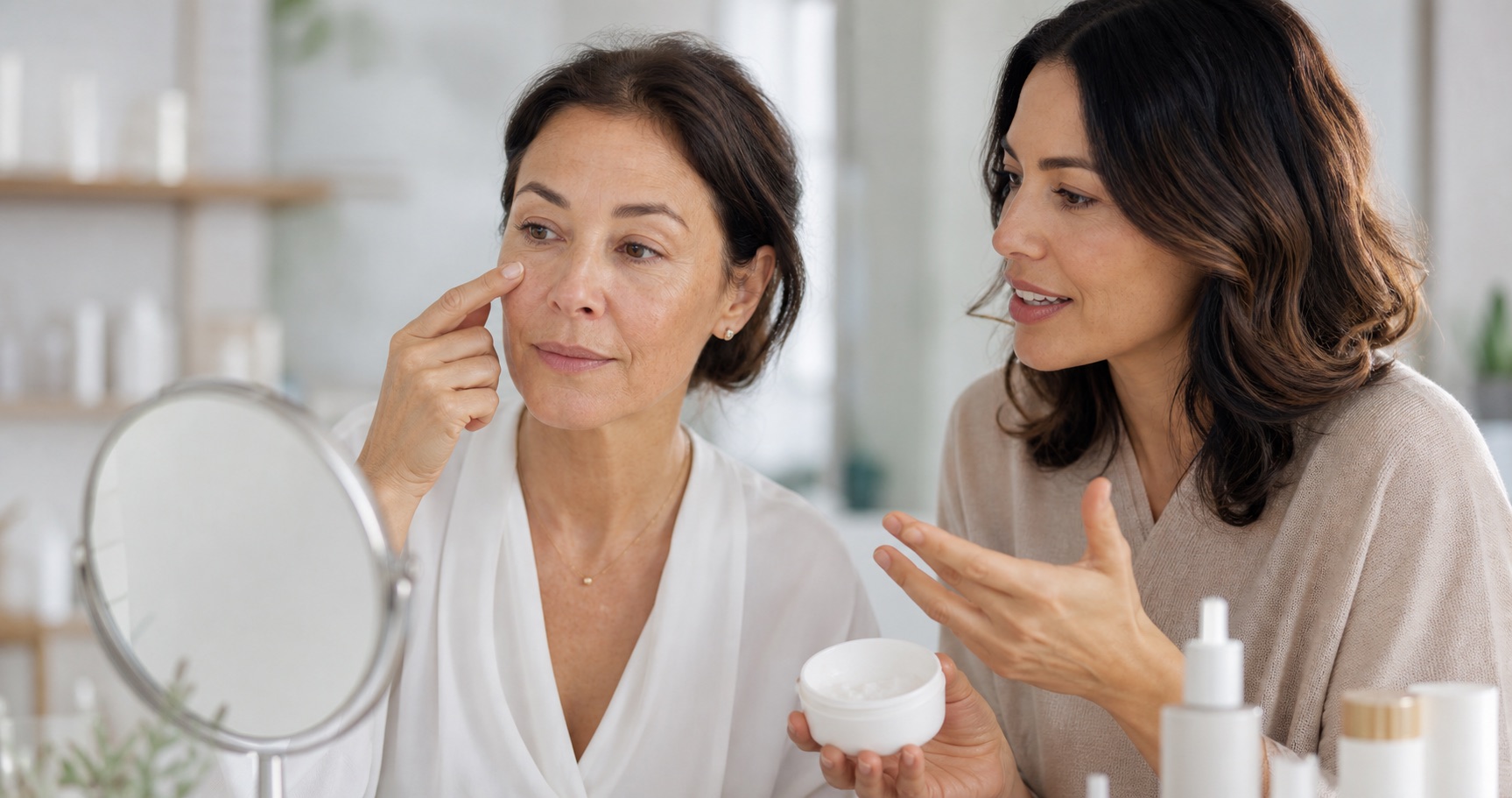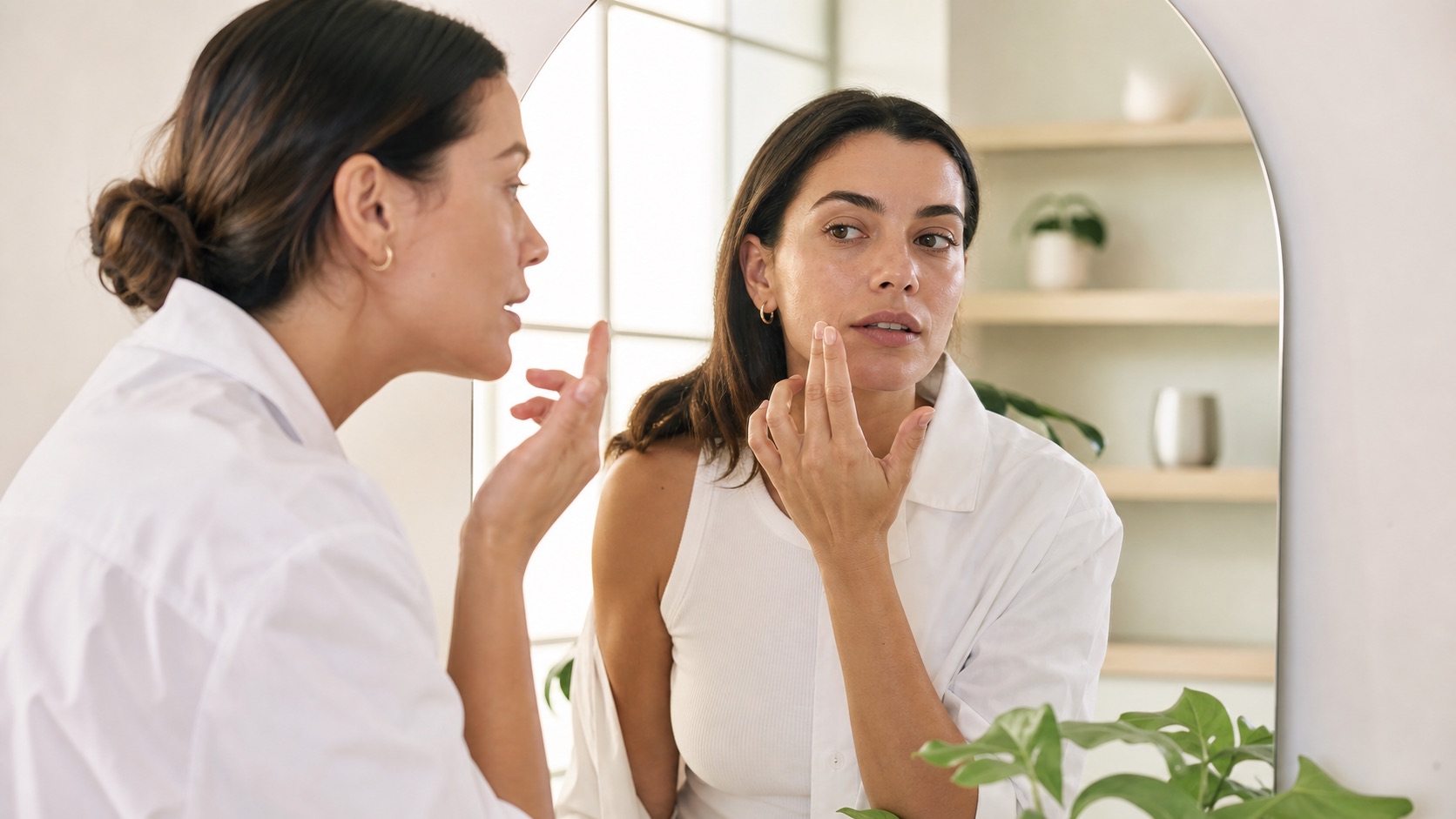

‘Dark spot’ describes a colour difference, not its cause. A flat mark left after a blemish, symmetrical patches that appeared during pregnancy, freckles, solar lentigines and a new pigmented lesion may all look darker than nearby skin, yet they do not belong to the same pathway. Reaching immediately for a brightening serum skips the most important question: what am I looking at, and is cosmetic treatment appropriate before it is assessed?
Quick answer: daily broad-spectrum photoprotection is the most transferable foundation. In some pigmentary disorders, visible light matters too and a tinted sunscreen with iron oxides may be discussed with a dermatologist. Cosmetics can support evenness, tolerance and prevention of further post-inflammatory marks, but they cannot diagnose melasma, solar lentigo or skin cancer. A new, changing, irregular, itchy, painful, crusting or bleeding mark needs assessment before attempts to fade it.
This article owns the facial-dark-spots intent: cautious observation, photoprotection, cosmetic options, measurement and dermatology referral. The vitamin C guide owns forms and stability; the niacinamide guide owns concentration and tolerance. This page does not create a broken link to untranslated colour-correction or camouflage guides.
This guide requires independent dermatological review and has not been medically reviewed. It cannot diagnose a pigmented lesion, prescribe treatment or replace dermoscopy and clinical history. If one mark is new, looks unlike the others or changes, do not wait for a cosmetic trial to reveal what it is.
Dark spot, discolouration and hyperpigmentation: use precise words
Discolouration describes a change in colour. Hyperpigmentation means visibly more pigment than surrounding skin; hypopigmentation means less. None identifies the cause. Brown, grey, blue-grey, red or purple may reflect pigment, depth, blood vessels, inflammation or a combination. ‘Brightening’ is a cosmetic objective, not a diagnosis.
Depth cannot be established from a selfie. A dermatologist combines onset, distribution, evolution and direct examination and may use dermoscopy, a Wood's lamp or other investigation. A cream is not safe simply because the area looks flat. A suspicious lesion can initially be painless and resemble an age spot.
Four common pigment scenarios that should not be confused
Post-inflammatory hyperpigmentation
Post-inflammatory hyperpigmentation can follow acne, eczema, irritation, a wound, friction or a procedure. It is flat and follows the affected area; it is not a scar, although both can coexist. On medium-to-deep skin tones it may look dark brown, grey or blue-grey and remain visible for longer. Stopping the inflammation that continues to create marks comes before aggressive fading.
Melasma
Melasma often forms symmetrical brown or grey-brown patches on the cheeks, forehead, upper lip, nose or chin. Hormones, pregnancy, some medicines and light can contribute, but pattern alone is not a diagnosis and other conditions can resemble it. A dermatologist can evaluate the presentation, contributing factors and treatment plan.
Freckles and solar lentigines
Freckles may vary with exposure, while solar lentigines are associated with accumulated ultraviolet damage and tend to persist. Calling both ‘sun spots’ is convenient but imprecise. The American Academy of Dermatology advises having apparent age spots checked before treatment because actinic keratosis and skin cancer can resemble a benign lentigo.
A new or evolving pigmented lesion
A new or changing lesion follows a different pathway. Asymmetry, an irregular border, multiple colours, a notable diameter and especially evolution form the ABCDE warning framework. Also notice the ‘ugly duckling’ — one mark unlike the others — and symptoms such as itching or bleeding. Do not apply acids to see whether it changes; arrange assessment.
Red flags come before a brightening routine
Book an examination for a mark that is new, unlike the rest or changing in size, shape, border, colour or elevation. Persistent itch, pain, scaling, crust, ulceration or bleeding also matter. The ABCDE framework is an aid, not a requirement to wait until every sign appears. One meaningful change or a professional concern is enough to check.
Do not conceal the lesion for the appointment or treat it with a peel first. Keep an unedited photograph and note when the change was noticed. If a mark is rapidly changing, bleeding repeatedly or accompanies spreading inflammation, contact a healthcare service promptly. Skincare cannot triage malignancy from colour alone.
Observe without diagnosing: build an initial record
Record when the mark appeared, whether it is stable, which areas are involved and what came before it: blemish, rash, waxing, burn, irritating product, pregnancy, medicine, sun exposure or procedure. Note itch, pain, scale, crust, elevation and bleeding. A flat mark after a known blemish is different from a growing lesion, but history never removes the need to examine suspicious features.
Photograph in diffuse light with the same camera, distance, angle and time of day. Disable beauty filters, aggressive HDR and automatic colour correction where possible. White balance shifts brown and red, while flash can flatten or exaggerate contrast. Photographs document evolution and response; they do not name a disease or reveal pigment depth.
Do not delay assessment to improve your photographs
A record is useful for an already assessed condition or a mark clearly linked to a known event. It should not create a waiting period for a suspicious lesion. If the mark is new, changing, bleeding or simply different, a dermatologist takes priority over a more controlled before photograph.
Photoprotection is the foundation before any active
UVA and UVB contribute to skin damage and pigment activation. Reviews of melasma and post-inflammatory hyperpigmentation consider broad-spectrum sun protection an essential component and also discuss visible light, particularly in more deeply pigmented skin. Sunscreen does not erase a mark on its own, but it reduces a stimulus that can maintain or darken it.
Choose broad-spectrum SPF 30 or higher in a texture and shade that allow full, even application. SPF mainly describes protection against UVB-related erythema; it is not a complete measure of UVA or visible-light protection. Follow the product's market-specific UVA labelling and directions rather than assuming the largest SPF number answers every exposure.
Visible light and tinted sunscreen with iron oxides
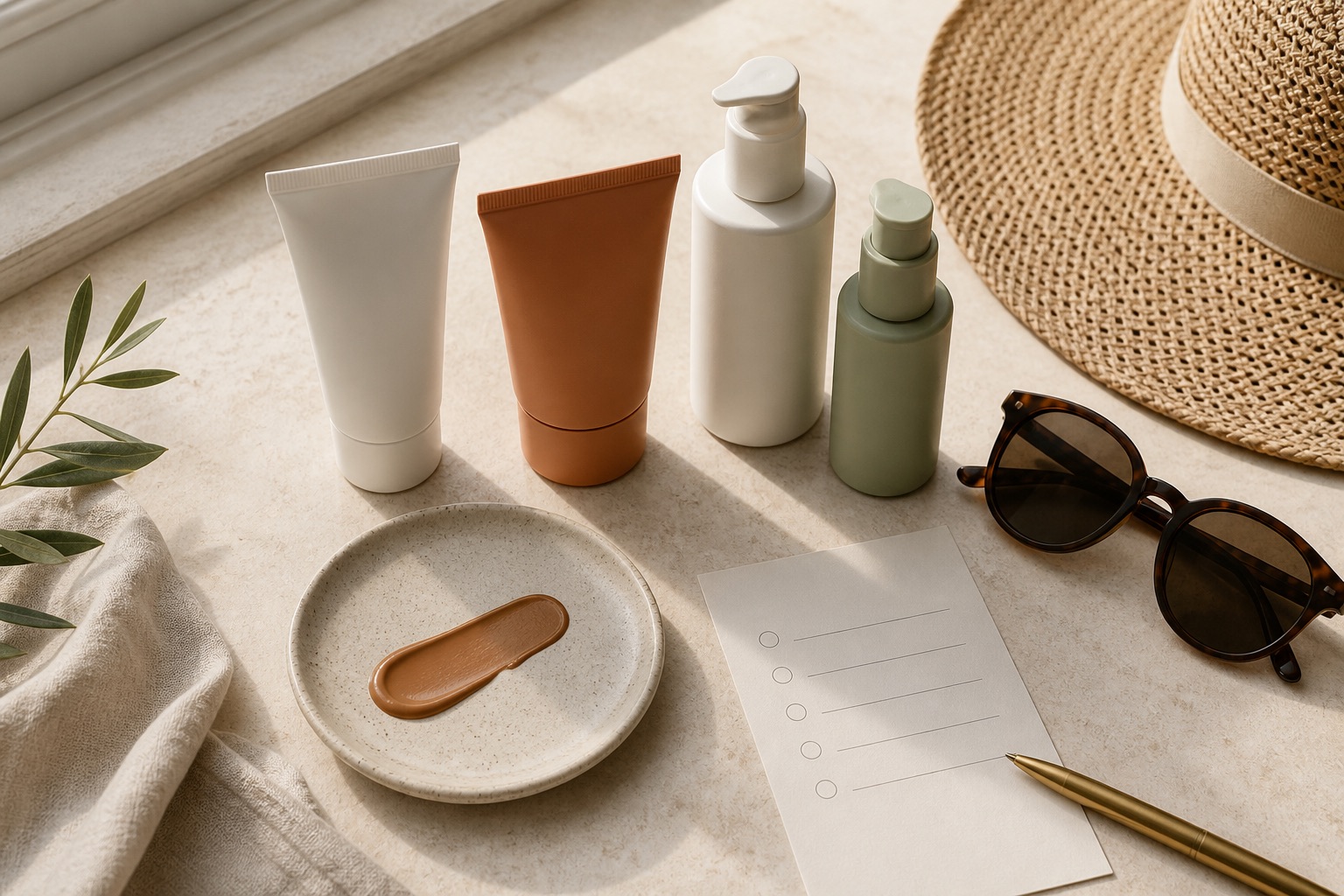
Visible light can worsen melasma and some hyperpigmentation, with a larger concern in medium-to-deep skin tones. A dermatologist may recommend a tinted sunscreen containing iron oxides in addition to broad-spectrum UV protection. The tint has a functional role only when the product provides relevant visible-light attenuation and can be applied evenly at the labelled amount.
Not every tint provides equal coverage and not every skin tone can find an acceptable shade. Colour does not replace UVA and UVB filters. Formula, amount, evenness, cost, undertone and willingness to reapply decide whether a product works in real life. Test the full amount along the jaw and across the entire face, not one thin swatch on the hand.
Amount, reapplication and physical protection
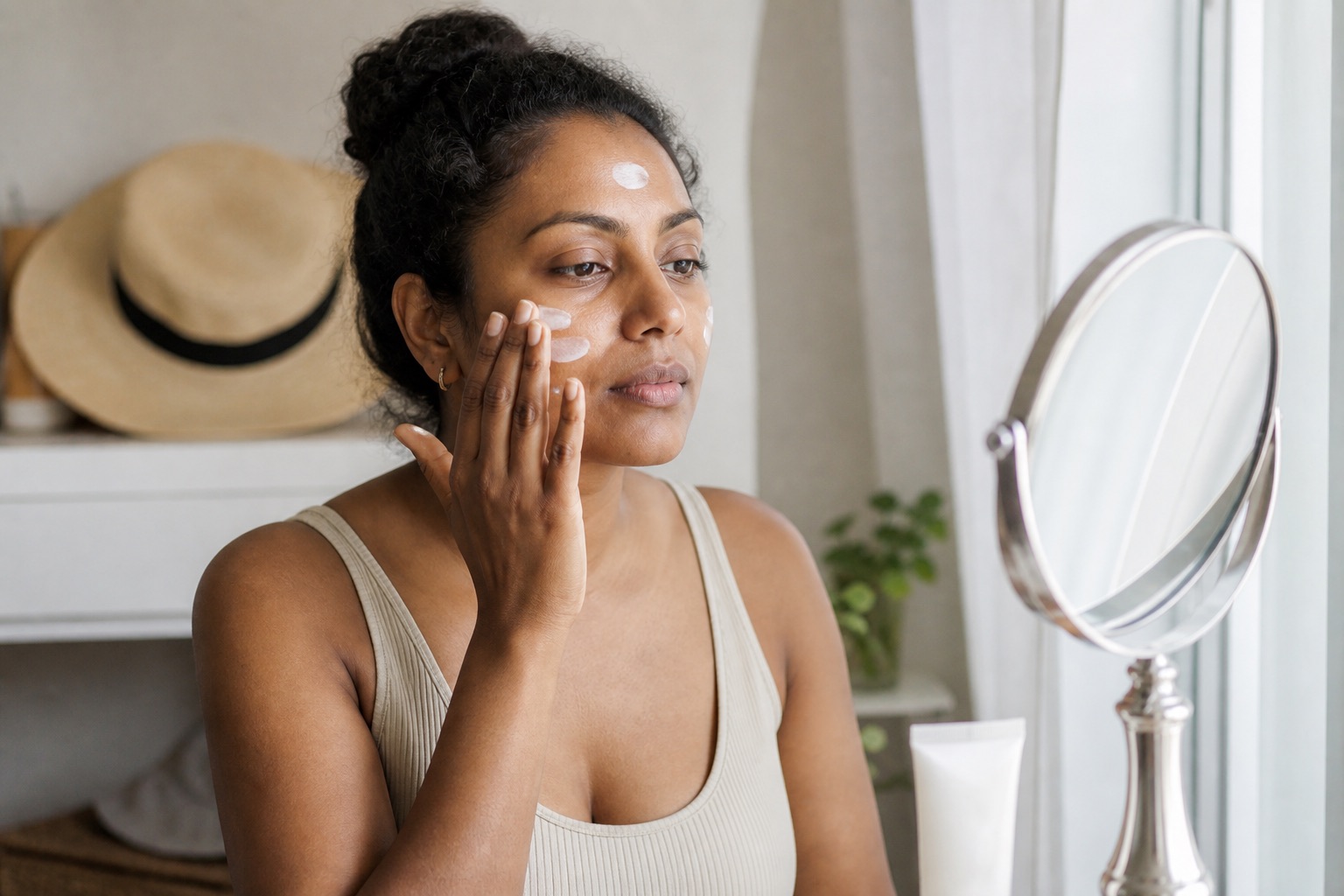
Apply sunscreen as the final morning skincare step before makeup to the face, ears, neck and other exposed areas. Dot and distribute it rather than mixing it with moisturiser or foundation in the palm. The daily face-sunscreen guide owns application amount, texture, water resistance and reapplication.
Reapply during prolonged exposure and after sweating, swimming or rubbing, following the label. Time mainly indoors is not equivalent to hours outdoors, but windows, commuting and daily habits change exposure. A broad-brimmed hat, shade, sunglasses and selecting lower-exposure times reduce the received dose without depending on another perfect cosmetic layer.
Control the process that keeps creating new marks
If each blemish leaves a mark, preventing new inflammatory lesions is at least as important as treating existing pigment. The acne-prone skincare guide explains cosmetic support, tolerance and clinical referral. Squeezing and friction can prolong inflammation and increase post-inflammatory colour change.
If discolouration follows dermatitis, shaving, waxing, a mask or an irritating product, remove the stimulus and restore comfort before adding acids. The damaged barrier guide supports de-escalation, and the sensitive-versus-sensitised skin guide separates a recurring tendency from temporary reactivity.
Do not stop prescribed medicine because you suspect it affects pigmentation. Ask the prescriber whether a colour change is a known effect and whether the plan should be adjusted. An active with pigment evidence is not automatically appropriate on inflamed or broken skin.
Morning routine for facial dark spots
Step 1 — Cleanse only when needed
Use a cleanser that removes the actual film without persistent tightness or burning. More cleansing does not fade pigment. If the skin is dry or reactive in the morning, water or no wash may be sufficient unless clinical directions say otherwise. The double-cleansing guide explains how cleansing decisions follow residue, not a pigmentation label.
Step 2 — Use one selected antioxidant or tone-evening product
Apply one treatment already selected for the target and tolerated. Vitamin C, niacinamide, azelaic acid and exfoliants are not compulsory members of the same morning routine. One stable variable gives more information than four low-dose products started together.
Step 3 — Moisturise and complete photoprotection
Use moisturiser where needed, then apply sunscreen uniformly. If pilling occurs, do not reduce sunscreen. Check previous-layer amount, film compatibility, settling time and rubbing. The skin hydration guide can simplify several moisturising functions into one compatible product.
Evening routine: remove, treat one priority and support the barrier
Step 1 — Remove tinted sunscreen and makeup gently
Use the minimum method that fully removes the day's film. Resistant products may need an emulsifying oil or balm followed by a mild water-based cleanser; lighter films may need one step. Friction can sustain inflammation, so do not scrub pigmented areas with pads in an attempt to polish colour away.
Step 2 — Apply one primary treatment
Follow the label or dermatology plan and do not add a second exfoliant because the first result is slow. If a prescription contains several stages, this general guide must not change their order. Keep recovery nights if tolerance requires them and record burning, scale and new inflammation.
Step 3 — Maintain a readable baseline
Finish with a tolerated moisturiser. The morning and evening routine pillar explains universal sequence and frequency. Here the priority is avoiding a brightening stack that causes enough irritation to produce further discolouration.
Cosmetic ingredients: choose by diagnosis, evidence and tolerance
Vitamin C
Vitamin C can contribute antioxidant effects and influence melanogenesis, but L-ascorbic acid and derivatives are not interchangeable. Concentration, pH, stability, packaging and vehicle change performance and tolerance. An oxidised or painful formula does not become valuable because its advertised percentage is high. Use the dedicated vitamin C guide to assess colour changes and storage.
Niacinamide
Niacinamide has been studied for barrier, sebum and selected pigmentation endpoints, generally in specific complete formulas. Those results do not prove that 10% is always better than 5% or that every serum clears melasma. It may be practical when one well-tolerated product can meet several cosmetic needs.
Azelaic acid
Azelaic acid appears in cosmetics and medicines at different strengths and indications. Dermatologists may consider it in acne, melasma or post-inflammatory hyperpigmentation, but the bottle does not diagnose the condition. Formula, skin state, pregnancy context, local regulation and the complete plan determine its role.
Retinoids and exfoliants
Cosmetic retinol and retinal differ from prescription retinoids. They can affect turnover and pigment distribution but also introduce irritation and pregnancy precautions. Use the cosmetic retinoids guide for context and the AHA, BHA and PHA guide for exfoliation limits. Over-exfoliation can maintain inflammation and make hyperpigmentation worse.
The skincare actives pillar helps select one priority and avoid incompatible load. There is no universally ‘best’ ingredient independent of the type of mark, skin tolerance, treatment status and photoprotection.
Untraceable brighteners, imported products and DIY remedies
Avoid products without a legible ingredient list, responsible company, batch, period-after-opening information and warnings. Dermatology authorities have reported undeclared mercury or corticosteroids in some imported lightening products. Rapid change accompanied by thinning, acne, rash, burning or unusual discolouration is not a cosmetic success.
Lemon juice, bleach, baking soda, vinegar, essential oils and abrasive mixtures are not controlled alternatives. pH, concentration, contamination and phototoxicity are unknown. Irritation can create new post-inflammatory hyperpigmentation, particularly on more deeply pigmented skin. Use traceable products with clear instructions and report adverse reactions through the appropriate national system.
Pregnancy and breastfeeding require product review
Pregnancy can influence melasma and changes which actives are appropriate. Review the whole routine with an obstetric clinician, dermatologist or pharmacist. Do not start retinoids or medicinal lighteners independently, and do not stop another medicine without the prescriber. A simple tolerated routine and photoprotection can remain the focus while treatment decisions are reviewed.
Skin tone, contrast and the risk of misleading comparisons
Post-inflammatory colour change can be more persistent and visually prominent in medium-to-deep skin tones, while redness may be less obvious in a photograph even when inflammation is active. Do not reduce a person's skin to a Fitzpatrick number or infer sensitivity, oiliness or treatment tolerance from colour. The skin types and conditions guide keeps sebum, hydration, reactivity and pigmentation as separate observations.
Automatic exposure can brighten darker skin in one image and darken it in the next, creating an apparent pigment change. Include a neutral reference, keep camera settings stable and compare both the mark and the surrounding skin. Continue the full photoprotection plan while collecting images; a better photograph should never require unprotected exposure.
Measure progress without chasing daily colour changes
Take an unfiltered photograph approximately every four weeks in the same diffuse light, distance, angle and camera settings. Record new lesions, change in border or surface, comfort, products, adherence and sun exposure. Daily close-ups amplify lighting noise and encourage unnecessary product changes.
Flat post-inflammatory marks can take months to fade; deeper pigment may persist for years. Do not let a long expected timeline explain a lesion that is evolving. Cosmetic progress means fewer new inflammatory marks, stable tolerance and gradual evenness under controlled conditions, not total removal promised by a deadline.
A responsible protocol for skincare and beauty professionals
Screen for referral before proposing a service
Collect history, duration, evolution, triggers, reported medicines, pregnancy, procedures, symptoms and sun-protection habits. Observe in diffuse light and document only with specific consent. Describe ‘flat patch after inflammation’ rather than declaring ‘melasma’. Do not hide a new lesion inside a commercial brightening programme.
Build a cosmetic plan only after the presentation is appropriate
For an assessed cosmetic concern, establish tolerated cleansing, moisturiser where needed and applicable photoprotection. Add one priority, provide amount, frequency and stop criteria, and schedule review. Do not promise total removal or sell a peel for every spot. Explore online skincare courses for structured education in formulation, observation, records and professional limits.
Refer when the pattern is uncertain or changes
A beauty professional does not diagnose, decide whether a lesion is benign or select medical therapy. If the mark changes or the client reports bleeding, persistent itch, pain or systemic symptoms, stop the cosmetic pathway. Good documentation and timely referral are part of competent care.
When to see a dermatologist
Arrange assessment for a new mark or one unlike the others; change in size, shape, border, colour or elevation; asymmetry or multiple colours; persistent itching, pain, crusting, ulceration or bleeding; rapid growth; an unexamined apparent age spot; discolouration without a known event; widespread or sudden pigmentation; cosmetic failure or irritation; or significant emotional impact.
Seek advice promptly if pigmentation follows a new medicine, occurs with other symptoms, develops during pregnancy with uncertainty about actives or follows a complicated procedure. Do not wait for every ABCDE sign. Earlier assessment is more valuable than months of treating the wrong phenomenon.
Frequently asked questions about facial dark spots
How can I tell which type of dark spot I have?
Colour or a selfie cannot establish it. History, distribution, a preceding event, evolution and symptoms can guide a clinician, but melasma, post-inflammatory hyperpigmentation, lentigines and pigmented lesions overlap visually. A new, changing or different mark should be examined before brighteners or procedures.
Are marks after blemishes scars?
Often not. Post-inflammatory hyperpigmentation is flat colour change; a scar changes contour or structure. They can coexist. Preventing new inflammation and avoiding picking reduce new marks. Persistent active acne, scars or painful lesions need a dermatology plan.
Can sunscreen remove dark spots?
It rarely clears them alone, but it reduces a stimulus that can darken them and undermine other treatment. Adequate amount, reapplication, shade and clothing matter. The cause may also require a cosmetic, prescription or procedure selected after assessment.
Do I need tinted sunscreen with iron oxides?
It can be useful for melasma and visible-light-aggravated hyperpigmentation, especially in medium-to-deep skin tones, but it is not universal. It must also provide suitable UVA and UVB protection, match the skin well enough for full application and fit the dermatologist's plan.
Can vitamin C and niacinamide be used together?
Many modern formulas can coexist, but theoretical compatibility does not guarantee tolerance in a specific routine. Introduce one product, watch for stinging and pilling and check whether other steps already contain the same actives. Both are optional, not a prerequisite for a valid routine.
What is the best cosmetic active for dark spots?
There is no winner independent of diagnosis. Vitamin C, niacinamide, azelaic acid, retinoids and hydroxy acids have different evidence, mechanisms and risks. Identify the condition and ongoing trigger first, then choose a formula that fits tolerance, regulation and photoprotection.
Can I combine several acids to work faster?
Stacking acids, scrubs and retinoids raises irritation risk, which can create more post-inflammatory hyperpigmentation. Introduce one variable at its labelled frequency. Burning, marked peeling or worsening is a stop signal, not a request for a stronger percentage.
How long do post-blemish marks take to fade?
They may take months. Dermatology guidance commonly notes six to twelve months for superficial spots only a few shades darker, while deeper pigment can persist for years. New inflammation, sun and irritation slow progress. A changing isolated lesion is not placed on this cosmetic timeline.
Can melasma be diagnosed from a photograph?
No. Symmetrical distribution may suggest it, but several conditions can look similar. A dermatologist examines the skin and may use dermoscopy or a Wood's lamp. A photo records change but cannot confirm diagnosis or pigment depth.
Are sun spots always harmless?
No. Many lentigines are benign, but actinic keratosis or skin cancer can resemble an age spot. Have an isolated mark checked before fading or laser treatment. New appearance, evolution, irregularity, multiple colours, itch or bleeding increase urgency.
Can lemon juice fade spots safely?
No. Acidity and concentration are uncontrolled, and citrus or essential oils may irritate or react with light. Inflammation can leave another dark mark, particularly in more deeply pigmented skin. Use traceable products with clear instructions instead of kitchen mixtures.
Can dark spots be treated during pregnancy?
Photoprotection and gentle care remain useful, but review every active with an obstetric clinician, dermatologist or pharmacist. Do not start retinoids or medicinal lighteners independently. Hormonal pigmentation may change over time, so treatment can be delayed or adapted.
When does a dark spot need prompt examination?
When it is new, different or evolving; asymmetrical; irregular at the border; contains several colours; grows, itches, hurts, crusts, ulcerates or bleeds. An apparent age spot never assessed also deserves examination before acids, brighteners or laser. Do not wait for every warning sign together.
Clinical and scientific sources
American Academy of Dermatology: causes and cautious management of dark spots in deeper skin tones. Read the AAD guidance
American Academy of Dermatology: melasma self-care, photoprotection and tinted sunscreen. Read the AAD guidance
American Academy of Dermatology: why an apparent age spot should be checked before treatment. Read the AAD guidance
American Academy of Dermatology: ABCDE warning signs for melanoma. Read the AAD guidance
Fatima et al.: review of photoprotection in melasma and post-inflammatory hyperpigmentation, with declared industry relationships. Read the PubMed record
Tan et al.: systematic review of topical treatments for post-inflammatory hyperpigmentation. Read the PubMed record
Zhou et al.: review of visible light and tinted sunscreens for more deeply pigmented skin. Read the PubMed record
Browse the English skincare guide hub for distinct guidance on routines, actives, tolerance, acne and sunscreen, or explore online skincare courses for structured professional learning.
For a simple base when comfort, hydration and tolerance change over time, read the mature-skin skincare guide for essential care, photoprotection and the gradual introduction of one active at a time.
For a careful comparison of dryness, puffiness, structural bags and different dark-circle components, read the eye-area skincare guide for a simple routine, periocular safety and realistic cosmetic limits.
For a repeatable professional method that separates observation from diagnosis, read the cosmetological skin-analysis guide for type, current conditions, tools, documentation, privacy and referral limits.
To turn cosmetic observations and existing products into a plan a client can understand and follow, use the professional skincare-consultation protocol for intake, product audit, written handover, follow-up and referral boundaries.
For a proportionate record of products, reported reactions, separate permissions, photographs, retention and professional stop decisions, read the skincare client-record guide without turning cosmetic documentation into an improvised medical chart.
If you are turning this topic into a structured learning plan, use the online skincare-course selection checklist to compare curriculum, teacher, demonstrations, practice, feedback, access, total cost and certificate wording without confusing private training with professional authorisation.
If you want to turn this knowledge into a defined service, continue with the guide to becoming a skincare consultant: it connects training, demonstrable skills, portfolio, boundaries, work models and a controlled launch without confusing cosmetic consultation, beauty treatment and healthcare.