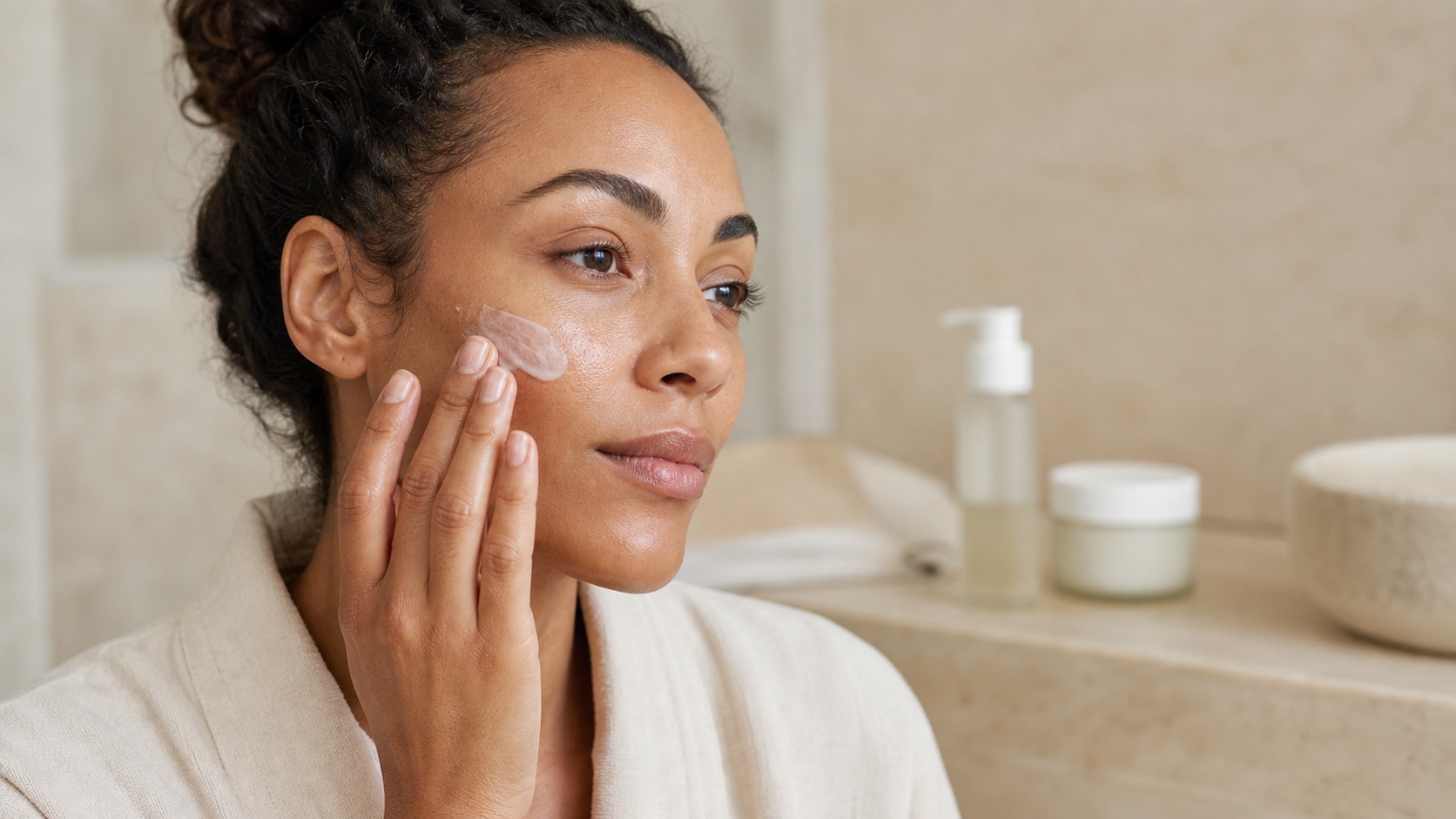
Skin hydration is not the job of one fashionable ingredient. A useful moisturising formula may attract and hold water, smooth gaps at the surface, reduce water evaporation and supply lipids that support the stratum corneum. Humectants, emollients, occlusives and ceramides describe overlapping functions; many well-designed products combine several of them.
Quick answer: humectants such as glycerin and hyaluronic acid help bind water; emollients improve softness and surface smoothness; occlusives reduce transepidermal water loss; ceramides are barrier lipids whose value depends on the complete formulation. Choose the finished product by comfort, texture, climate and tolerance — not by the loudest ingredient on the front label.
This guide owns the broad intent for cosmetic hydration, including glycerin and topical hyaluronic acid. It does not create separate thin pages for each basic moisturising ingredient. Begin with the skincare routine order and use the skin types and conditions guide to describe oil distribution, comfort and reactivity before choosing texture.
What skin hydration really means
In skincare, hydration chiefly concerns water in the stratum corneum, the outer layer that helps the skin resist environmental stress and control water loss. Water content, the organisation of corneocytes and lipids, natural moisturising factors and the surrounding climate all influence flexibility, smoothness and comfort.
Moisturising does not mean forcing water deep into every layer, sealing the skin absolutely or treating a medical cause of dryness. A cosmetic may improve softness, reduce visible flaking and support the surface barrier. Persistent severe dryness, itch, fissures or inflammation may have a clinical cause and requires assessment rather than endless product layering.
‘Hydrating’ and ‘moisturising’ are often used interchangeably in marketing. Instead of relying on the word, ask what the whole formula does: how it binds water, changes surface feel, reduces evaporation, supplies lipids, spreads and remains tolerable during repeated use.
A functional map: humectants, emollients, occlusives and ceramides
These categories are a teaching map, not four sealed boxes. One ingredient may contribute to more than one function, and the finished product matters more than a list of individual roles. A light lotion can contain humectants, emollients and a modest occlusive phase; a rich balm may prioritise occlusion while still including water-binding ingredients.
Humectants help attract and retain water within the upper skin layers. Common examples include glycerin, hyaluronic acid, urea at cosmetic concentrations and some sugars.
Emollients fill small irregularities between surface cells and improve slip, softness and flexibility. Fatty alcohols, esters, oils and silicones can contribute.
Occlusives form a water-loss-reducing film. Petrolatum is a strong example; waxes, silicones, mineral oil and richer lipids can provide varying occlusion.
Ceramides are part of the intercellular lipid system of the stratum corneum. Their practical performance depends on type, concentration, ratio to other lipids and formulation.
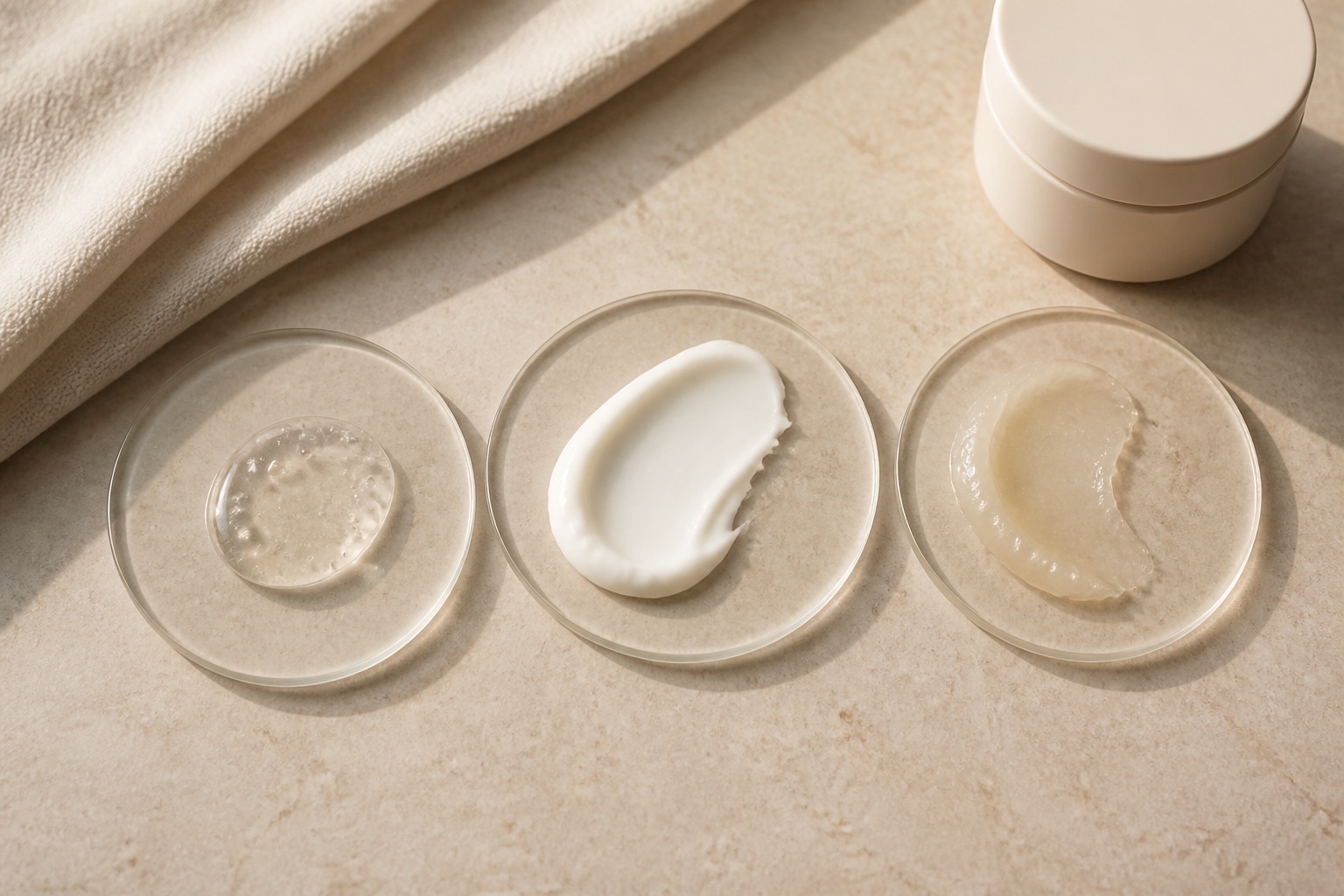
Humectants: binding water without working alone
Humectants interact with water and help increase hydration within the stratum corneum. Their effect depends on the vehicle, concentration, surrounding humidity, barrier state and what else the formula contains. A humectant serum is not automatically a complete moisturiser, particularly when the skin benefits from emollient lipids or a stronger reduction in water loss.
The claim that every humectant ‘pulls water out of the skin’ in dry air is an oversimplification. Finished formulas are not single raw materials placed on an inert surface. Water, emollients, occlusives and film-formers interact. Judge the product through its complete ingredient list, directions and performance in the environment where it is used.
Applying a moisturiser to slightly damp skin can help trap surface water when the directions allow it, but dripping-wet skin is not compulsory and some treatments require dryness. If a humectant-only layer leaves tightness, add or choose a more complete moisturiser rather than repeatedly applying more serum.
Glycerin: familiar, effective and formula-dependent
Glycerin, also called glycerol, is a widely used humectant with a strong history in moisturising products. It can support water content and barrier-related functions when incorporated into an appropriate vehicle. Its ubiquity is not evidence that it is basic or inferior; dependable ingredients often appear across price points because they work well in formulation.
Percentage alone does not rank glycerin products. Very high levels can feel sticky, while a lower percentage in a balanced emulsion may be more pleasant and therefore used consistently. Packaging rarely states the exact amount, and ingredient order does not reveal a precise concentration for every component.
The useful question is not whether glycerin is ‘better’ than hyaluronic acid. They can coexist and have different molecular behaviour, sensorial profiles and formulation needs. Compare the finished products on comfort, spread, residue, compatibility with sunscreen or makeup and tolerance over time.
Topical hyaluronic acid: realistic benefits and limits
Hyaluronic acid and sodium hyaluronate are water-binding materials used in topical products. Molecular size, chemical modification, concentration and vehicle affect how they behave. In cosmetics they can improve surface hydration, feel and the temporary appearance of fine dehydration lines; they do not reproduce the effect of injectable fillers.
‘Low molecular weight’ is not automatically superior, and ‘multi-weight’ is not proof of clinical performance. Smaller fragments may interact differently with the skin and tolerance varies. Product testing on the finished formula is more informative than a marketing diagram of molecules descending through the skin.
You may apply a hyaluronic-acid product to slightly damp skin if the label allows it, then use a moisturiser that supplies the missing functions. If the formula pills, feels tight or interferes with sunscreen, reduce the amount or simplify the layers. A dedicated hyaluronic serum is optional when your moisturiser already performs well.
Emollients: smoothing the surface
Emollients improve the feel and flexibility of the stratum corneum by filling small spaces between surface cells and providing slip. They can make rough or flaky skin look smoother without literally rebuilding deep tissue. Oils, esters, fatty alcohols, triglycerides and silicones can all act as emollients depending on the formula.
An emollient is not necessarily greasy. Lightweight esters and volatile silicones can produce a dry touch, while plant butters and heavier oils feel richer. ‘Oil-free’ does not mean emollient-free, and plant origin does not guarantee better tolerance. Fragrance compounds and botanical extracts may matter more to a reactive user than whether the emollient is natural or synthetic.
Choose the sensory finish you can use at the required amount. A technically elegant formula abandoned because it feels unpleasant offers little practical value. Conversely, a rich cream may be excellent at night yet uncomfortable under a daytime sunscreen; context is part of product selection.
Occlusives: reducing evaporation without sealing skin completely
Occlusive ingredients reduce transepidermal water loss by creating a surface film. Petrolatum is among the most effective and best-known examples, while mineral oil, dimethicone, waxes and richer lipids provide different levels and sensory profiles. Occlusion is a gradient, not an airtight seal.
Petrolatum is often described online as inherently pore-clogging or unsafe, but purified cosmetic-grade petrolatum has a long history of use. Individual products can still feel too heavy or unsuitable for a particular area. The complete formula, amount, use conditions and user response matter more than a blanket verdict.
A thin layer of a more occlusive product over a tolerated moisturiser can help selected dry areas, especially in cold or low-humidity conditions. It is not automatically appropriate over active acne, a suspected infection, an undiagnosed rash or every strong treatment. Follow clinical advice when a condition is present.
Ceramides and the skin barrier
Ceramides are major lipids in the material between corneocytes, alongside cholesterol and fatty acids. They contribute to the organised barrier that limits water loss and entry of irritants. Cosmetic formulas may contain skin-identical or related ceramides, pseudo-ceramides and lipid systems designed to support barrier function.
The word ‘ceramide’ on the front of a jar does not tell you the type, amount, ratio, delivery or performance. Reviews suggest that formulation and the balance with other lipids can matter. A ceramide product is not compulsory for every person, and a well-tolerated moisturiser without a highlighted ceramide claim may still work very well.
For diagnosed atopic dermatitis or another barrier disorder, treatment belongs with a healthcare professional. A moisturiser may support care but does not replace prescribed anti-inflammatory or other therapy. Avoid turning a cosmetic ingredient into a promise to cure disease.
Choosing gel, serum, lotion, cream or ointment
Texture describes the vehicle and sensory experience, not a universal skin-type match. Gels often feel light and may suit humid weather or users who dislike residue. Lotions spread easily over larger areas. Creams usually provide more emollient structure, while ointments and balms are more occlusive. Serums can deliver humectants efficiently but may not cover every moisturising function.
For recurring tightness or flaking, look for a formula that combines water-binding, emollient and water-loss-reducing functions.
For an oily-feeling T-zone, a light lotion or gel-cream may be easier to use consistently, but do not assume shine eliminates the need for comfort support.
For reactive skin, reduce fragrance and unnecessary complexity, introduce one product and assess stinging, itching and redness over time.
For cold, wind or very dry indoor air, a richer evening texture or targeted occlusive layer may reduce water loss.
Application and layering without unnecessary complexity
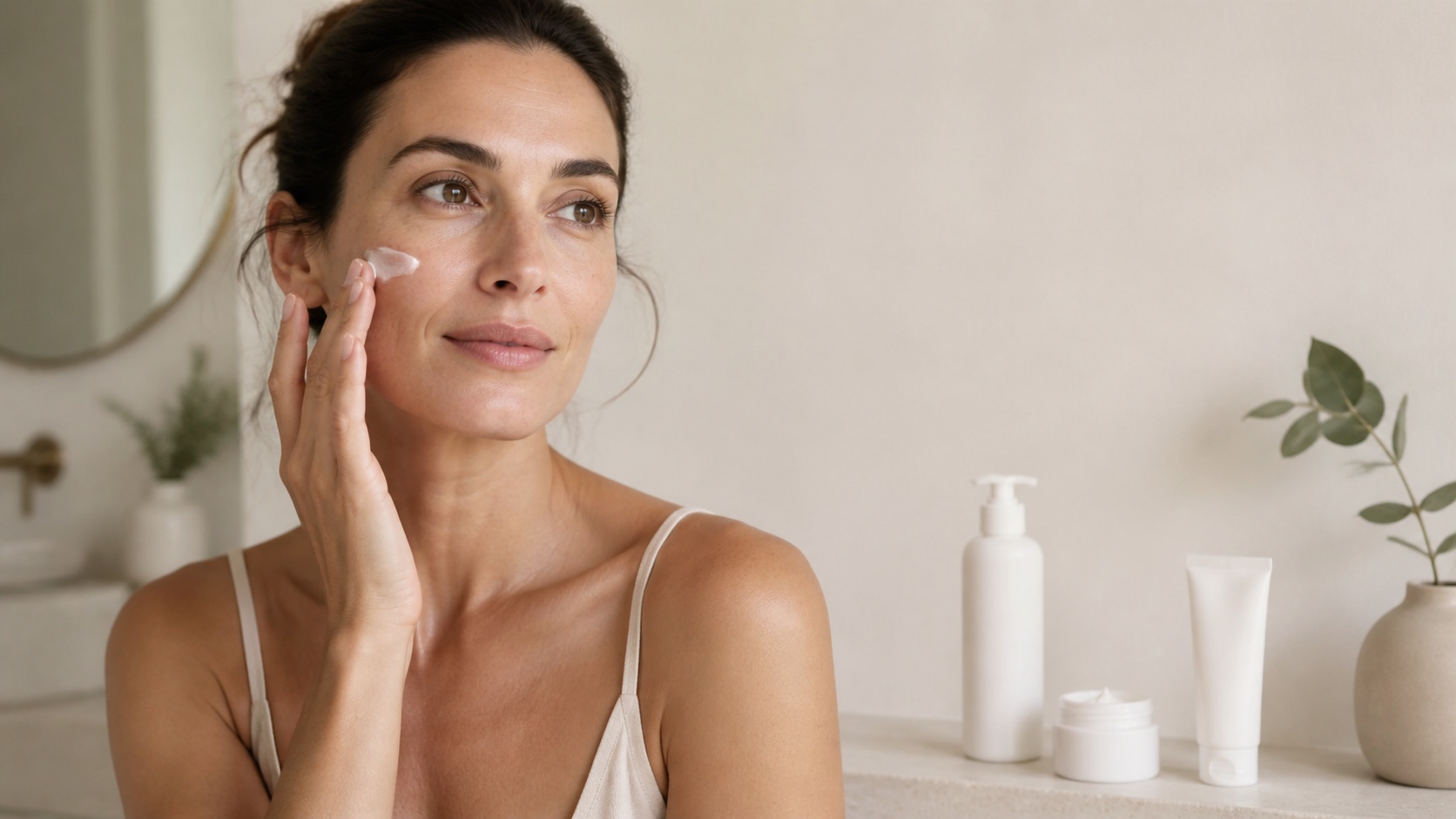
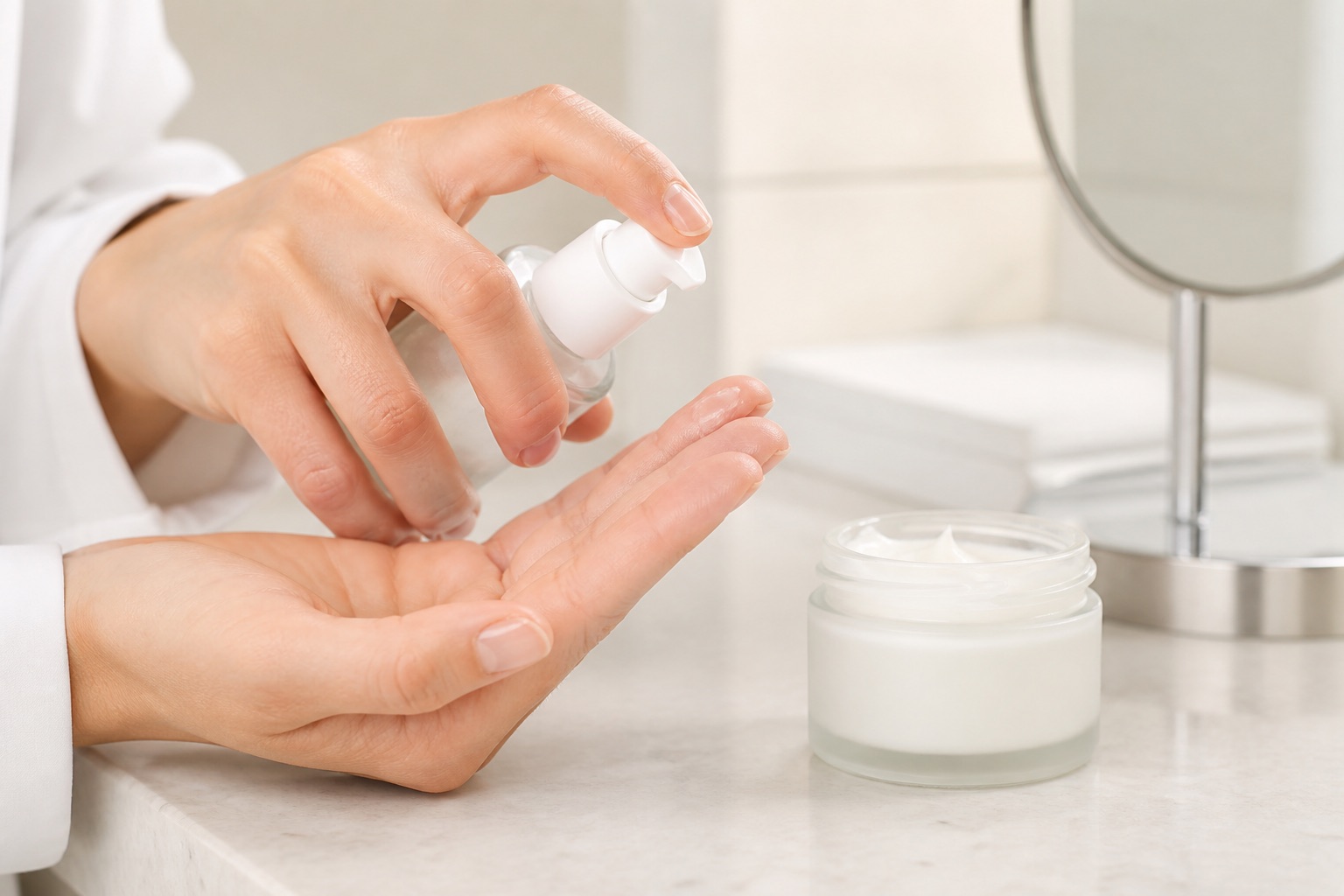
Apply moisturiser after cleansing and any directed treatment. Slightly damp skin can be useful when the product directions permit it. Spread an even layer with gentle pressure rather than a long massage. Increase the amount only when coverage is incomplete or comfort fades quickly; reduce it if the product remains excessively tacky or pills under sunscreen.
A separate hydrating serum under cream is optional. It can be pleasant or add a specific function, but one complete moisturiser may be enough. If you layer, change one variable at a time and keep sunscreen as the final morning skincare film. At night, an occlusive top layer may be used on selected areas when appropriate.
Adapting hydration without diagnosing
Dry, dehydrated, oily and sensitive describe different dimensions, not mutually exclusive boxes. An oily face may benefit from a lightweight moisturiser; dry skin may need greater emollience and occlusion; sensitive skin may need fewer potential irritants; a temporarily dehydrated surface may improve when harsh cleansing or over-exfoliation is corrected.
Use the observation method in the skin types and conditions guide. Do not infer eczema, rosacea, allergy or another condition from texture alone. When signs persist, worsen or include pain, fissures, bleeding, marked itch or swelling, stop cosmetic experimentation and seek suitable assessment.
Common moisturising mistakes
Buying several humectant serums while omitting the emollient or occlusive function the skin actually needs.
Judging a product from one hero ingredient instead of the complete formula and repeated use.
Assuming the richest product is the best for every dry-feeling face, even when it causes discomfort or interferes with sunscreen.
Avoiding moisturiser solely because the skin is shiny, while continuing aggressive cleansing that worsens tightness.
Applying moisturiser over an untreated reaction and continuing the suspected trigger instead of stopping and assessing it.
Expecting topical hyaluronic acid to behave like injectable filler or ceramides to cure a diagnosed skin disease.
How to read a moisturiser label
Start with the product’s stated use and directions, then consider texture, packaging, fragrance, treatment-area restrictions and warnings. The INCI list helps identify ingredients and broad formula architecture, but it does not give every exact percentage, manufacturing process, purity specification or finished-product performance.
Look for a coherent combination rather than a checklist. Glycerin near the beginning can suggest a meaningful humectant role; fatty alcohols, esters, oils and silicones may provide emollience; petrolatum or waxes may increase occlusion; ceramide names show presence but not the optimised ratio. Product testing and your real tolerance complete the picture.
Frequently asked questions about skin hydration
What is the difference between a humectant, emollient and occlusive?
Humectants help bind water, emollients smooth and soften the surface, and occlusives reduce water evaporation. The functions overlap and many moisturisers combine all three. Choose the finished formula rather than trying to build a routine from isolated raw-material categories.
Do glycerin and hyaluronic acid do the same job?
Both are humectants, but they differ in structure, molecular size, formulation and feel. Neither is universally superior. Glycerin has extensive use in moisturisers; hyaluronic materials can support surface hydration. Compare complete products, not marketing headlines.
Must hyaluronic acid be applied to wet skin?
Not necessarily. Slightly damp skin may suit some formulas, but the product directions and other treatments decide. Follow with a moisturiser if the serum does not provide enough emollience or occlusion, and simplify if the layers pill or feel tight.
Does glycerin dry skin in low humidity?
The claim is too absolute for finished cosmetics. Glycerin is usually formulated with water, emollients and occlusive or film-forming ingredients. Environment matters, but assess the complete product and your comfort rather than assuming one ingredient reverses its role.
Does every moisturiser need ceramides?
No. Ceramides are important barrier lipids and can be useful in well-formulated products, but a moisturiser without a highlighted ceramide claim may still hydrate and support comfort effectively. Formula, lipid balance and tolerance matter.
Does petrolatum always clog pores?
No universal rule supports that claim. Purified cosmetic petrolatum is a strong occlusive with long-standing use. A heavy product may still feel unsuitable for a person or area, so consider the full formula, amount and response.
Do I need a hydrating serum under moisturiser?
It is optional. One balanced moisturiser may already supply humectant, emollient and occlusive functions. Add a serum only when it offers a clear benefit and remains compatible with the rest of the routine.
Does oily skin need moisturiser?
It may benefit from a lightweight moisturiser, especially when cleansing or treatment creates tightness. Sebum and hydration are different parameters. Choose a comfortable texture rather than assuming shine replaces barrier support.
When should moisturiser be applied?
After cleansing and any treatment that must contact the skin first. Slightly damp skin can be useful if permitted. In the morning, sunscreen remains the final skincare layer; at night, moisturiser commonly closes the routine.
Can drinking more water replace moisturiser?
No. Maintain normal general hydration, but dietary water and the stratum-corneum barrier are not interchangeable. A topical moisturiser directly changes surface water binding, feel and evaporation in ways drinking extra water does not reliably reproduce.
Sources and further reading
American Academy of Dermatology: practical dry-skin care and moisturising ingredients. Read the AAD guidance
DermNet: emollients, moisturisers, functional ingredient groups and application. Read the DermNet overview
Review of skin-barrier hydration mechanisms and moisturiser formulation. Read the PubMed record
Systematic review and meta-analysis of ceramide moisturisers in atopic dermatitis, interpreted within its clinical scope. Read the PubMed record
Continue your skincare pathway
Place moisturiser inside the complete morning and evening routine, review oil distribution and reactivity with the skin types guide and keep cleansing proportional with the double cleansing guide. Browse the English skincare library or compare the online skincare courses for structured study.
If new burning, tightness or reactivity follows product overload, use the damaged skin barrier guide to simplify the routine and recognise when cosmetic troubleshooting must stop.
Before adding or combining targeted products, use the skincare actives guide to separate chemical compatibility, cumulative irritation and duplicated function.
For a complete comparison of exfoliant families, frequency and stop criteria, read the AHA, BHA and PHA guide before adding another acid, scrub or exfoliating device.
For form, percentage, gradual introduction and the boundary between cosmetics and medicines, use the retinol, retinal and cosmetic retinoids guide before changing strength, frequency or combinations.
For vitamin C form, stability, oxidation, packaging and routine use, read the complete vitamin C skincare guide before comparing percentages or adding another antioxidant serum.
For SPF, UVA, full application amount and exposure-based reapplication, read the daily face-sunscreen guide before adjusting treatment layers or reducing the sunscreen dose.
For benefits, realistic concentration comparisons and tolerance, read the niacinamide skincare guide before adding another niacinamide product to the routine.
For a complete morning and evening plan based on sebum, shine and comfort, read the oily and combination-skin routine before adding another mattifying or exfoliating step.
To distinguish a stable dry profile from temporary surface water loss and build a practical routine, read dry vs dehydrated skin: differences, textures and review criteria.
For a tolerable base, treatment support and clear referral criteria, read the acne-prone skincare guide without treating oily skin, irritation and acne as the same condition.
To separate a recurring sensitivity pattern from temporary reactivity and build a controlled baseline, read the sensitive versus sensitised skin guide for tolerance testing, a minimal routine and clear referral criteria.
To distinguish an acne lesion from a normal follicular structure and visible texture, read the blackheads, sebaceous filaments and visible pores guide for realistic skincare, strip and extraction limits.
For a cautious distinction between cosmetic discolouration and a mark that needs assessment first, read the facial dark spots and skincare guide for photoprotection, cosmetic options, measurement and dermatology referral criteria.
For a simple base when comfort, hydration and tolerance change over time, read the mature-skin skincare guide for essential care, photoprotection and the gradual introduction of one active at a time.
For a careful comparison of dryness, puffiness, structural bags and different dark-circle components, read the eye-area skincare guide for a simple routine, periocular safety and realistic cosmetic limits.
For a practical routine shaped by skin, shaving and facial hair rather than gendered packaging, read the men’s skincare guide for cleansing, moisturising, razor-bump prevention, beard care and sunscreen.
For a repeatable professional method that separates observation from diagnosis, read the cosmetological skin-analysis guide for type, current conditions, tools, documentation, privacy and referral limits.
To turn cosmetic observations and existing products into a plan a client can understand and follow, use the professional skincare-consultation protocol for intake, product audit, written handover, follow-up and referral boundaries.
For a controlled hands-on protocol covering preparation, pressure, zone sequence, contraindications and realistic claims, read the cosmetic facial-massage guide and keep every movement inside professional scope.
For a verifiable clean-to-used workflow covering hands, textiles, tools, surfaces, cosmetic dispensing and turnover, read the skincare workstation-hygiene guide before designing or auditing a hands-on service.