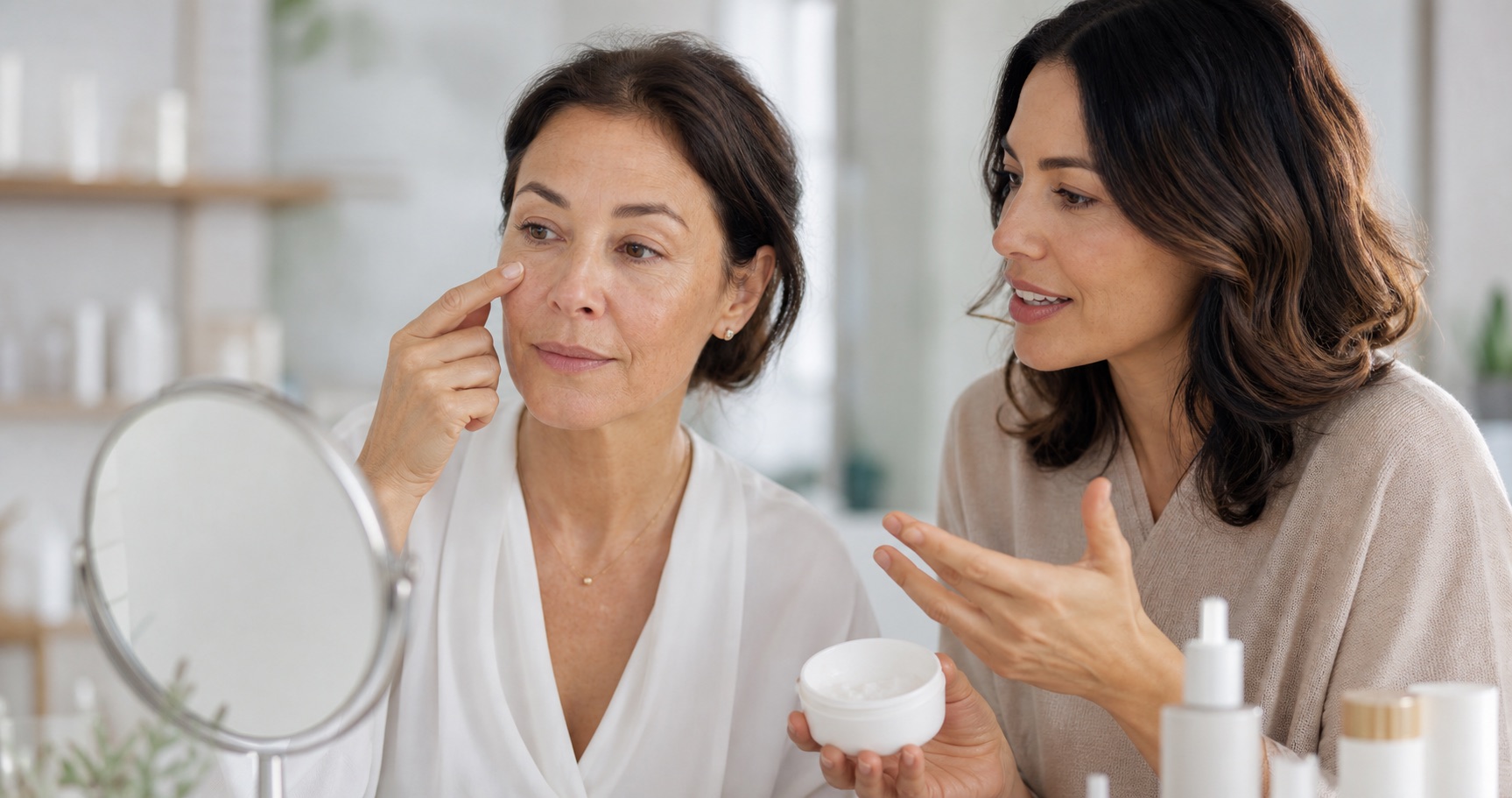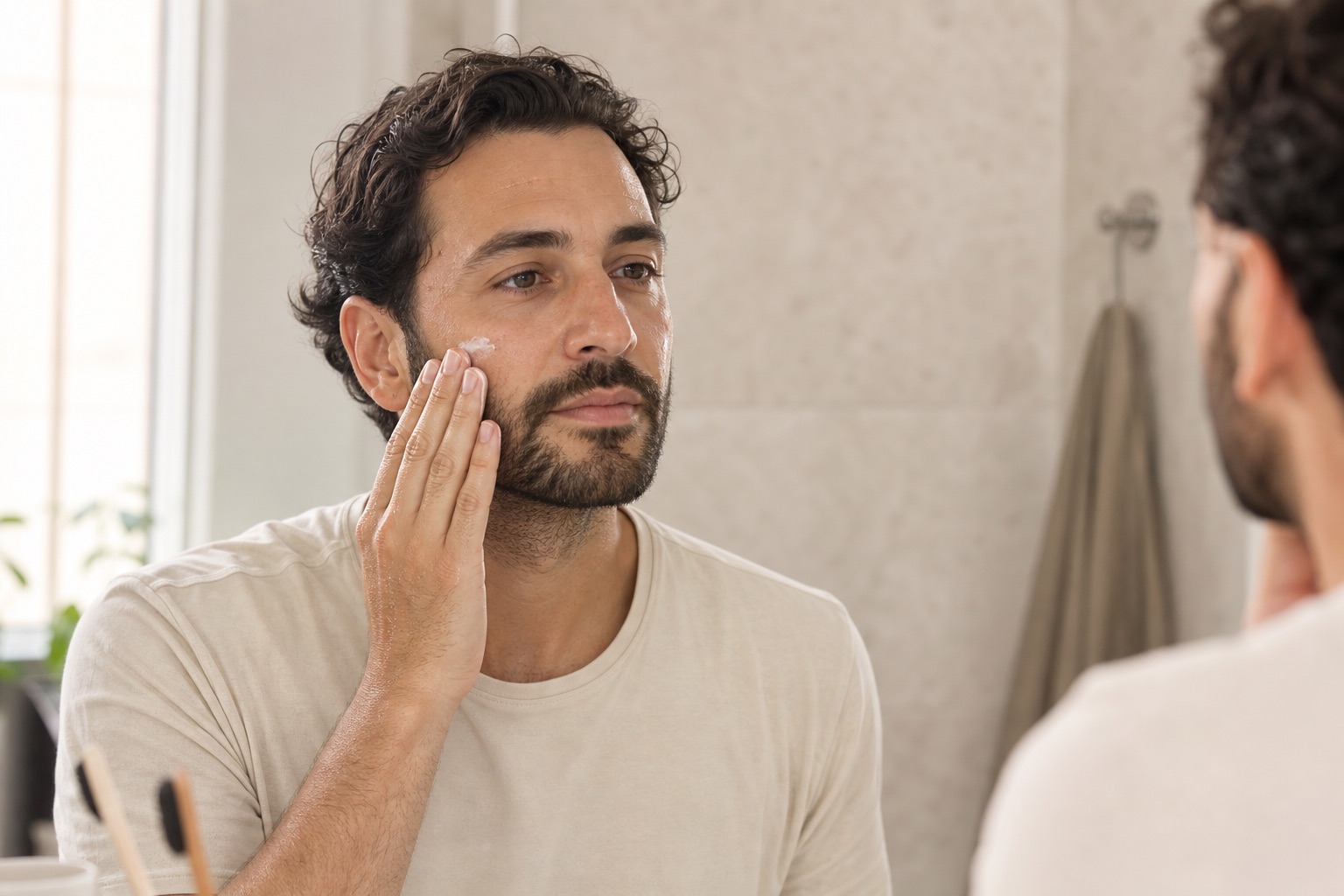

An effective skincare routine is not the longest routine you can assemble. It is a short, repeatable sequence that supports a realistic goal without leaving your skin persistently tight, sore or irritated. For most people the basic order is straightforward: cleanse, apply any targeted treatment, moisturise, and finish with sunscreen in the morning. Product directions and advice from your dermatologist or doctor always take priority over a general online sequence.
Quick answer: in the morning, cleanse as gently as your skin needs, apply an optional treatment, moisturise if required and finish with sunscreen. In the evening, remove makeup and resistant sunscreen, cleanse, apply an optional treatment and finish with moisturiser. A beginner can start with cleanser, moisturiser and sunscreen; toner, essences, several serums, oils and masks are optional.
This is the introductory pillar for the BeautyLearn skincare library. It answers both ‘what is skincare?’ and ‘how do I start a skincare routine?’ so those questions do not need thin, competing articles. If you want a structured programme rather than a standalone reference, compare the online skincare courses and check the programme, level and enrolment status on the individual course page.
What skincare actually means
Skincare is the regular cosmetic care of the skin. In practical terms, it covers cleansing what has accumulated on the surface, maintaining comfort and hydration, protecting exposed skin from ultraviolet radiation and, when appropriate, addressing one clearly defined cosmetic concern. It is not a diagnosis, it does not replace medical treatment and it does not require a shelf full of products.
Your skin is already a functioning barrier. It does not need to be ‘detoxed’, forced to breathe or scrubbed until it feels squeaky clean, and pores do not open and close like doors. A cleanser removes surface material; a moisturiser helps reduce water loss and improve comfort; sunscreen reduces UV exposure when it is applied correctly. Targeted products are additions for specific goals, not compulsory steps borrowed from every trend.
Claims such as ‘natural’, ‘clean’, ‘dermatologist tested’ or ‘non-comedogenic’ do not guarantee universal tolerance. The complete formula, amount used, frequency, combinations and individual response all matter. Read the label, directions, warnings and period-after-opening symbol, and stop using a product if a significant or persistent reaction develops.
A beginner skincare routine: three essential functions
If you are starting from zero, build a stable foundation before adding actives. The three useful functions are gentle cleansing, moisturising when your skin needs it and daily sun protection. The American Academy of Dermatology also recommends a simple cleanse–moisturise–protect framework. It is a starting point, not a rule that every person must use the same texture or cleanse with the same frequency.
Gentle cleanser: removes dirt, sweat, excess sebum and residue without requiring abrasive tools, rough scrubs or very hot water.
Moisturiser: choose a texture that leaves your skin comfortable and use it as directed, often while the skin is still slightly damp.
Morning sunscreen: choose broad-spectrum protection suited to your exposure and follow the labelled amount, application and reapplication directions.
Keep this simple routine consistent long enough to assess tolerance instead of changing everything every few days. Add only one targeted product at a time. If burning, itching, unusual dryness or new breakouts appear, a controlled introduction makes the likely trigger much easier to identify.
The general product order — and when it changes
Order matters because some products are intended for clean skin, while sunscreen needs to form the final, even skincare film. A practical sequence is cleanse, treat as directed, moisturise and protect. ‘Thinnest to thickest’ can be a useful shorthand for compatible cosmetics, but it is not a universal scientific law.
The formulation and its directions can change the sequence. A prescribed topical medicine may require dry skin; a leave-on treatment may have a specific frequency; an oil may be designed to sit before or after cream; and one product may combine several functions. Instructions on the pack, in the leaflet or from the treating professional come before a generic chart.
You do not need a fixed five-, ten- or twenty-minute pause between every layer. Unless the directions say otherwise, spread the product evenly, avoid rubbing and move on once the surface is no longer excessively wet. If layers pill, first try less product, fewer layers and less friction rather than assuming a dangerous ingredient conflict.
Morning skincare routine: step-by-step order
The morning routine prepares exposed skin for the day and ends with sun protection. It does not have to duplicate the evening routine. You may need a full cleanse, a quick rinse or another approach agreed for your circumstances. The useful test is whether you remove what is necessary without leaving the skin persistently tight, red or rough.
1. Cleanse gently
Use lukewarm water and your fingertips, then rinse without abrasive sponges and pat dry with a clean towel. The AAD generally advises washing the face in the morning, in the evening and after heavy sweating rather than repeatedly throughout the day. If cleansing leaves lasting tightness, review the formula, amount, water temperature and frequency.
2. Apply a targeted treatment, if you use one
Apply the single treatment chosen for a defined goal and follow its labelled amount and frequency. A serum is not a requirement for ‘doing skincare properly’. If you use a topical medicine or have a prescription plan, do not move, combine or stop it because of a generic routine found online.
3. Moisturise for comfort and barrier support
Use enough moisturiser to cover the intended area comfortably without prolonged rubbing. Gel, lotion, cream and ointment describe different textures and levels of occlusion, not a hierarchy of quality. Oily skin can still feel dehydrated, while dry skin may prefer a richer emulsion. Choose by response and complete formula rather than by a single marketing label.
4. Finish with sunscreen
Sunscreen comes after the other morning skincare products and before makeup. Choose broad-spectrum protection, apply an adequate, even amount to exposed areas and follow the product directions for timing and reapplication, particularly after swimming, sweating or rubbing. Sunscreen works alongside shade, clothing, a hat and other exposure-reduction measures; it does not replace them.
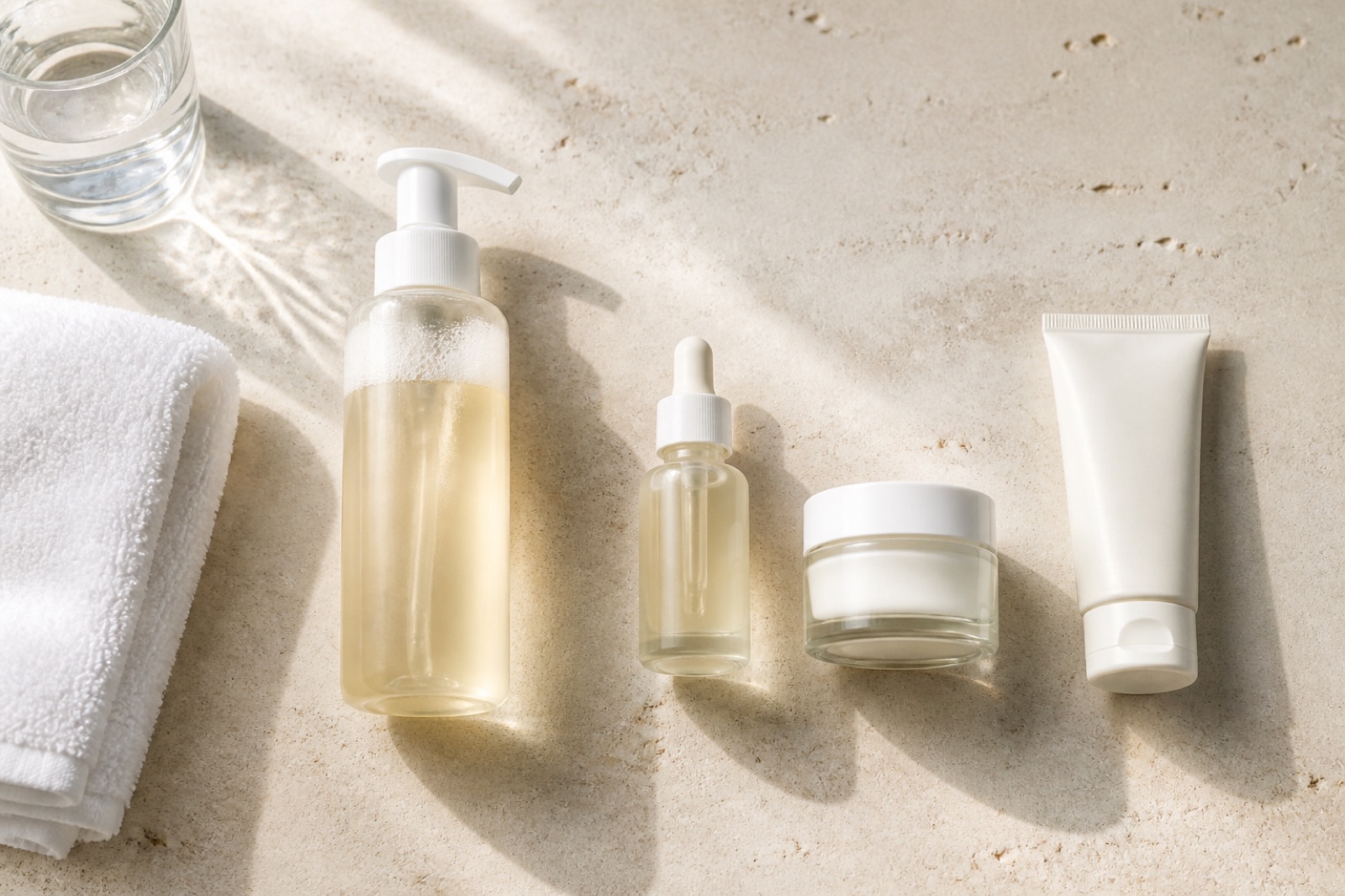
Evening skincare routine: step-by-step order
The evening priority is to remove the day’s residue without turning cleansing into an assault. Makeup, water-resistant sunscreen, sweat and pollution may need more thorough removal. Bare skin after a low-exposure day may not need two cleansers. Double cleansing is a functional option, not a compulsory ritual.
1. Remove makeup and resistant sunscreen when needed
Choose a remover that can dissolve what you are actually wearing and follow its directions. Work gently around the eyes and lips instead of rubbing harder to save time. A cleansing oil or balm can be useful for resistant films, but it is not automatically the best first step for everyone.
2. Cleanse and rinse thoroughly
Clean the face, hairline and any area where residue remains. If your first product is designed to cleanse and rinse clean, a second wash is not mandatory. Judge the result: skin should feel clean and comfortable, not stripped until it feels tight.

3. Use the evening treatment as directed
Apply treatment under the conditions required by the formula: on dry or damp skin, at the labelled frequency and only after another layer when instructed. Combining multiple exfoliants, retinoids or other potentially irritating products does not make results arrive faster. Introduce one change and monitor comfort and consistency.
4. Finish with moisturiser
Use moisturiser if your routine and skin require it. It may be the same formula you use in the morning or a different texture; there is no automatic need for a product labelled ‘night cream’. A richer product can help when weather, cleansing or treatment increases dryness, provided it remains comfortable and suitable for you.
Essential products versus optional extras
Cleanser, moisturiser and sunscreen cover the core functions for many beginners. Every extra should earn its place by answering clear questions: what concern does it address, how should it be used, what does it add or replace, and how well is it tolerated? If those answers are unclear, postponing the purchase is often the most sensible choice.
Toner and essence can hydrate or deliver specific ingredients, but neither is required to ‘rebalance’ every skin type.
Serum is a product format, not a function. Assess the complete formula and the job it is meant to do.
Eye cream is optional. Some people prefer a dedicated texture; others tolerate their facial moisturiser around the orbital area when used as directed.
Facial oil may increase comfort and occlusion, but it does not automatically replace water, humectants or a balanced moisturising formula.
Masks and scrubs are not daily essentials. Aggressive scrubbing and frequent exfoliation can increase irritation rather than improve the routine.
Amounts, waiting times and layering
There is no universal amount for every cleanser, treatment or moisturiser because dispensers, formulas and treatment areas differ. Start with the labelled directions and use enough for an even layer without waste or discomfort. Sunscreen is different because quantity is part of the tested protection: cover all exposed areas with the amount directed on the product rather than using a pea-sized rule for the entire face and neck.
A four-step routine should not take an hour because of invented waiting rules. Let each layer distribute evenly and settle enough that the next one does not drag it away. When pilling occurs, reduce the amount, friction and number of layers. Pilling often reflects film-formers, incompatible textures or over-application; by itself it does not prove that two ingredients create a harmful chemical reaction.
How to introduce a new product without losing the signal
Name the reason for adding it: comfort, hydration, protection or one defined cosmetic concern.
Read the directions, frequency, warnings, areas to avoid and period after opening before the first application.
Add one product to a stable routine while keeping cleanser, moisturiser and sunscreen unchanged.
Start at the labelled or professionally recommended frequency; do not double it because you cannot see an immediate result.
Record the date, frequency, approximate amount, comfort and any reaction. Comparable photographs can support observation but cannot diagnose a condition.
Testing a small area can reduce uncertainty for some products, but it cannot guarantee that a reaction will never appear on the whole face or after repeated use. If you have known allergies, dermatitis, ongoing treatment, pregnancy or another skin concern, seek appropriate advice before introducing products that raise questions.
A simple seven-day setup plan
This is an organisation exercise, not a promise of visible transformation in one week. If you already follow a prescribed routine, do not replace it with this plan.
Day 1: photograph your products, read every direction and discard only items that are spoiled, expired or impossible to identify.
Day 2: practise gentle cleansing with lukewarm water, fingertips and a clean towel; note how the skin feels afterwards.
Day 3: adjust the amount and texture of moisturiser without adding serums or masks.
Day 4: check even sunscreen application across the face, ears, neck and any other exposed area.
Day 5: arrange the morning sequence physically from left to right and keep the evening group separate.
Day 6: review residue, pilling, stinging, dryness and any step you consistently skip.
Day 7: keep the version you can sustain and decide whether one specific goal genuinely requires a targeted product.
Common skincare routine mistakes
Starting ten products at once, which increases cost, irritation risk and uncertainty about what is helping.
Treating post-cleanse tightness as proof of cleanliness rather than a possible sign of poor tolerance.
Stacking scrubs, acids and retinoids too frequently in the hope that more intensity means faster progress.
Applying several skincare layers over sunscreen and disrupting the protective film before makeup.
Replacing the routine every week, making it impossible to separate normal fluctuation, irritation and genuine results.
Copying somebody else’s routine without considering different goals, tolerance, climate, treatment and preferences.
When to stop and seek professional assessment
Stop the suspected product and seek advice if you develop swelling, hives, blisters, pain, significant burning, discharge, eye or lip involvement, rapid worsening or breathing difficulty. Breathing difficulty requires urgent medical help. A milder reaction that persists also deserves assessment, especially when it affects an existing diagnosed condition.
Do not repeatedly cover a reaction with new cosmetics and do not deliberately retry a product that caused a serious response. Persistent acne, rosacea, eczema, pigment changes, a new lesion or unexplained symptoms are not solved by rearranging product order. This guide provides general cosmetic education and cannot replace individual medical evaluation.
Frequently asked questions about skincare order
What is the correct order for a skincare routine?
The general sequence is cleanser, optional treatment, moisturiser and sunscreen in the morning. In the evening, remove makeup or resistant sunscreen when needed, cleanse, use any directed treatment and finish with moisturiser. Formula-specific or medical directions override a generic order.
How many products does a beginner need?
Three functions are often enough to begin: cleansing, moisturising and sun protection. That does not mean everybody must own exactly three bottles. It means toner, essence, multiple serums, eye cream, oil and masks are not prerequisites. Add one product only when it has a clear purpose.
Does serum go before or after moisturiser?
A leave-on serum commonly goes after cleansing and before moisturiser, but ‘serum’ describes a format, not an absolute rule. Check the directions and function. Prescribed or potentially irritating treatments should follow the professional plan rather than a texture chart.
Is toner a necessary step?
No. A toner can feel pleasant, hydrate or provide a targeted ingredient, but it is not required after every cleanse and it should not burn to be effective. If the basic routine works, there is no missing slot to fill.
How long should I wait between products?
There is no universal interval. Unless the product gives a specific time, let the layer settle enough that the next one does not drag it away. Reduce amount, rubbing and total layers if products pill. A precise wait matters only when required by the formula, sunscreen or prescribed treatment.
Does sunscreen go before or after moisturiser?
Sunscreen is the final morning skincare layer and comes before makeup. Follow the label for amount, timing and reapplication. If the sunscreen itself provides enough moisturising comfort, a separate cream may be unnecessary, provided you still apply the sunscreen adequately.
Do I need to double cleanse every evening?
No. Double cleansing can help when one product dissolves resistant makeup or sunscreen and a second completes cleansing. If one suitable cleanser removes what you wear and leaves the skin comfortable, adding another may offer no benefit.
How do I know whether my routine is working?
First assess execution and tolerance: can you follow it consistently, does the skin remain comfortable, are there no significant reactions and is sunscreen applied correctly? Then measure one specific concern under comparable conditions. Persistent, painful, scarring or worsening problems need professional assessment rather than random additions.
Sources and further reading
American Academy of Dermatology: general product order and the irritation risk of using too many products. Read the AAD guidance
American Academy of Dermatology: a simple, budget-conscious routine based on cleansing, moisturising and protection. Read the AAD beginner guidance
American Academy of Dermatology: lukewarm water, fingertips and gentle face washing. Read Face washing 101
DermNet: the functions of emollients, humectants and occlusives in moisturising products. Read the DermNet overview
Continue learning
Browse the English skincare guides as each specialist topic is editorially reviewed and published. For structured teaching that combines skin observation, product selection and controlled cosmetic facial massage, explore the skincare and facial massage course. The course page remains the source of truth for its programme, level and current enrolment status.
Before selecting textures or treatments, use the skin types and conditions guide to separate oil distribution, hydration and sensitivity without turning cosmetic observation into a diagnosis.
For makeup, water-resistant sunscreen and residue removal, read the double cleansing guide before making two washes an automatic part of every evening.
For a functional comparison of moisturising ingredients and textures, continue with humectants, emollients, occlusives and ceramides without judging a finished moisturiser from one hero ingredient.
If new burning, tightness or reactivity follows product overload, use the damaged skin barrier guide to simplify the routine and recognise when cosmetic troubleshooting must stop.
Before adding or combining targeted products, use the skincare actives guide to separate chemical compatibility, cumulative irritation and duplicated function.
For a complete comparison of exfoliant families, frequency and stop criteria, read the AHA, BHA and PHA guide before adding another acid, scrub or exfoliating device.
For form, percentage, gradual introduction and the boundary between cosmetics and medicines, use the retinol, retinal and cosmetic retinoids guide before changing strength, frequency or combinations.
For vitamin C form, stability, oxidation, packaging and routine use, read the complete vitamin C skincare guide before comparing percentages or adding another antioxidant serum.
For SPF, UVA, full application amount and exposure-based reapplication, read the daily face-sunscreen guide before adjusting treatment layers or reducing the sunscreen dose.
For benefits, realistic concentration comparisons and tolerance, read the niacinamide skincare guide before adding another niacinamide product to the routine.
For a complete morning and evening plan based on sebum, shine and comfort, read the oily and combination-skin routine before adding another mattifying or exfoliating step.
To distinguish a stable dry profile from temporary surface water loss and build a practical routine, read dry vs dehydrated skin: differences, textures and review criteria.
For a tolerable base, treatment support and clear referral criteria, read the acne-prone skincare guide without treating oily skin, irritation and acne as the same condition.
To separate a recurring sensitivity pattern from temporary reactivity and build a controlled baseline, read the sensitive versus sensitised skin guide for tolerance testing, a minimal routine and clear referral criteria.
To distinguish an acne lesion from a normal follicular structure and visible texture, read the blackheads, sebaceous filaments and visible pores guide for realistic skincare, strip and extraction limits.
For a cautious distinction between cosmetic discolouration and a mark that needs assessment first, read the facial dark spots and skincare guide for photoprotection, cosmetic options, measurement and dermatology referral criteria.
For a simple base when comfort, hydration and tolerance change over time, read the mature-skin skincare guide for essential care, photoprotection and the gradual introduction of one active at a time.
For a careful comparison of dryness, puffiness, structural bags and different dark-circle components, read the eye-area skincare guide for a simple routine, periocular safety and realistic cosmetic limits.
For a practical routine shaped by skin, shaving and facial hair rather than gendered packaging, read the men’s skincare guide for cleansing, moisturising, razor-bump prevention, beard care and sunscreen.
For a repeatable professional method that separates observation from diagnosis, read the cosmetological skin-analysis guide for type, current conditions, tools, documentation, privacy and referral limits.
To turn cosmetic observations and existing products into a plan a client can understand and follow, use the professional skincare-consultation protocol for intake, product audit, written handover, follow-up and referral boundaries.
For a proportionate record of products, reported reactions, separate permissions, photographs, retention and professional stop decisions, read the skincare client-record guide without turning cosmetic documentation into an improvised medical chart.
For a controlled hands-on protocol covering preparation, pressure, zone sequence, contraindications and realistic claims, read the cosmetic facial-massage guide and keep every movement inside professional scope.
For a verifiable clean-to-used workflow covering hands, textiles, tools, surfaces, cosmetic dispensing and turnover, read the skincare workstation-hygiene guide before designing or auditing a hands-on service.
If you are turning this topic into a structured learning plan, use the online skincare-course selection checklist to compare curriculum, teacher, demonstrations, practice, feedback, access, total cost and certificate wording without confusing private training with professional authorisation.
If you want to turn this knowledge into a defined service, continue with the guide to becoming a skincare consultant: it connects training, demonstrable skills, portfolio, boundaries, work models and a controlled launch without confusing cosmetic consultation, beauty treatment and healthcare.
Turn the protocol into a proportionate inventory with the professional skincare and facial-massage kit guide: it sizes furniture, textiles, tools, consumables, cosmetics, stock and optional equipment to the real service instead of building an unnecessarily complex trolley.