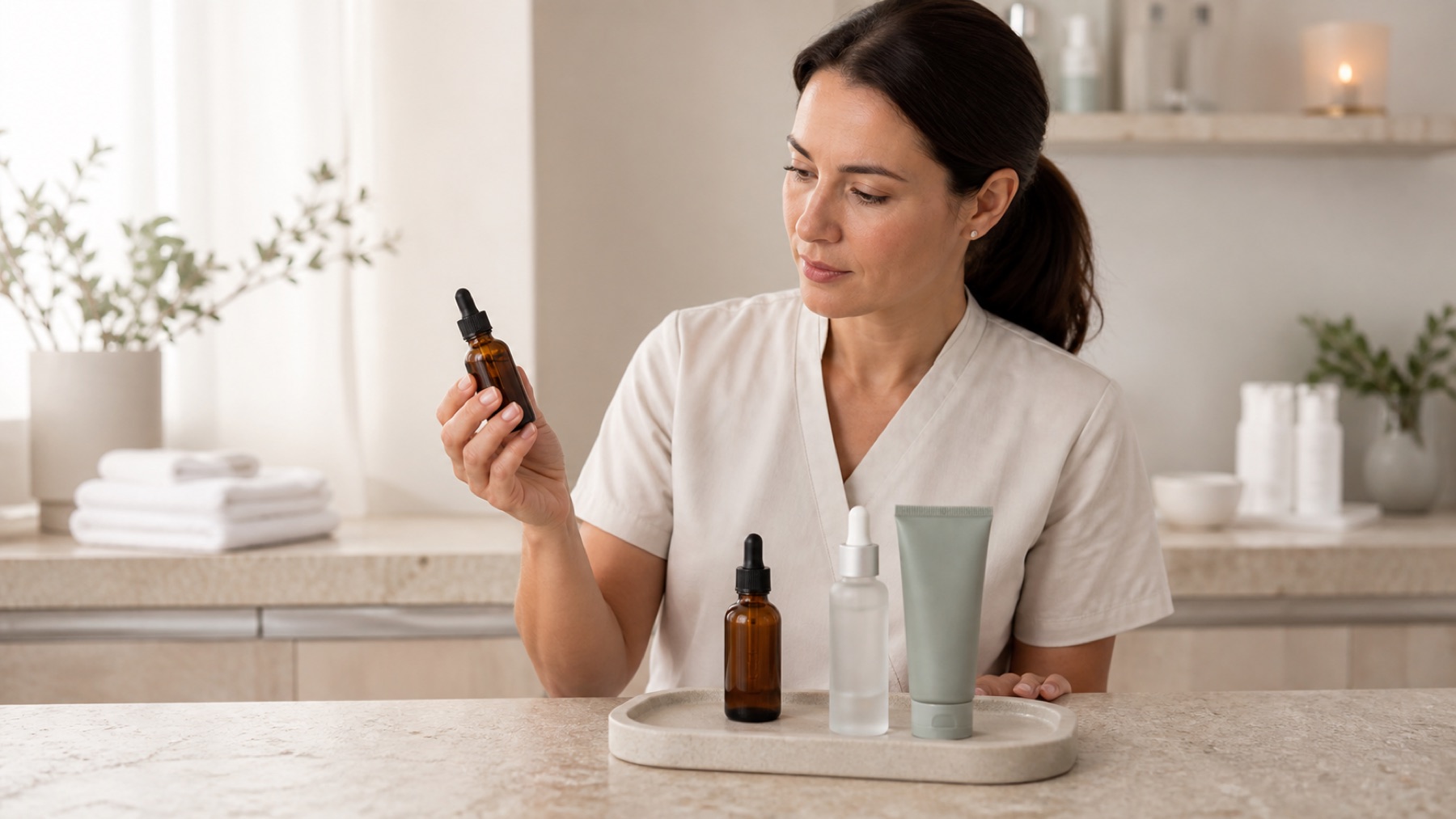

Double cleansing is not a universal rule and it is not a compulsory nightly ritual. It is a two-stage strategy: the first product loosens makeup, water-resistant sunscreen and other oil-soluble films; the second completes cleansing with a rinse-off cleanser when that extra step is genuinely needed. Two cleansers are useful when one cannot remove the products you wear comfortably — not because two is always cleaner or healthier than one.
Quick answer: use a cleansing oil or balm when you need to dissolve long-wear makeup or resistant sunscreen, then emulsify and rinse exactly as directed. Add a gentle second cleanser only when residue remains, the first product is designed to be followed by one, or you prefer the finish and your skin tolerates it. If one cleanser removes everything and leaves the skin comfortable, a second wash has no automatic benefit.
This page owns the complete BeautyLearn search intent for facial cleansing and double cleansing, including oil- versus water-based products and when to wash once or twice. Product order across the whole day stays in the morning and evening skincare routine guide. That separation prevents thin, overlapping articles.
What facial cleansing is meant to do
Cleansing removes material you do not want to leave on the surface: excess sebum, sweat, dirt, airborne particles, cosmetic residue, makeup and sunscreen. The goal is not to remove every lipid, ‘open’ pores, detoxify the skin or produce a tight squeaky sensation. Skin should be clean enough for the actual load present and remain comfortable afterwards.
Water removes some water-soluble substances well but struggles with adherent oil-soluble films. Surfactants contain regions that interact with oils and with water, helping disperse residue so it can be rinsed away. Cleansing oils and balms add a lipid phase that can dissolve many oily films and pigments, while emulsifiers and surfactants in the complete formula support controlled removal.
More foam does not necessarily mean better cleansing, and less foam does not prove that a product is ineffective. Surfactant blend, concentration, formula structure, pH, local water, amount of residue, contact time and technique all affect performance and tolerance. Even a gentle formula may irritate when used too frequently, too long or with excessive rubbing.
Surfactants, emulsification and rinsing
A surfactant is not automatically harsh. Its family, concentration, blend, aggregate size, pH and supporting ingredients all matter. Modern synthetic detergent bars and liquid syndets can interact less aggressively with stratum-corneum proteins and lipids than traditional alkaline soap, but you cannot predict gentleness from one isolated ingredient or from the claim ‘natural’.
During rinsing, water, gentle movement and emulsification help carry away the mixture of cleanser and residue. A facial cleansing oil normally contains emulsifiers that turn the film milky as water is added. A pure cooking oil or cosmetic oil not formulated as a cleanser may dissolve oil-soluble material, but it may not emulsify or rinse in the same way.
pH is one compatibility factor, not a complete ranking system. A skin-compatible pH may be useful, while surfactants, fragrance, preservatives, contact time and frequency remain relevant. ‘pH balanced’, ‘dermatologist tested’, ‘hypoallergenic’ and ‘non-comedogenic’ do not guarantee universal tolerance.
Oil-based cleansers: oils, balms and bi-phase removers
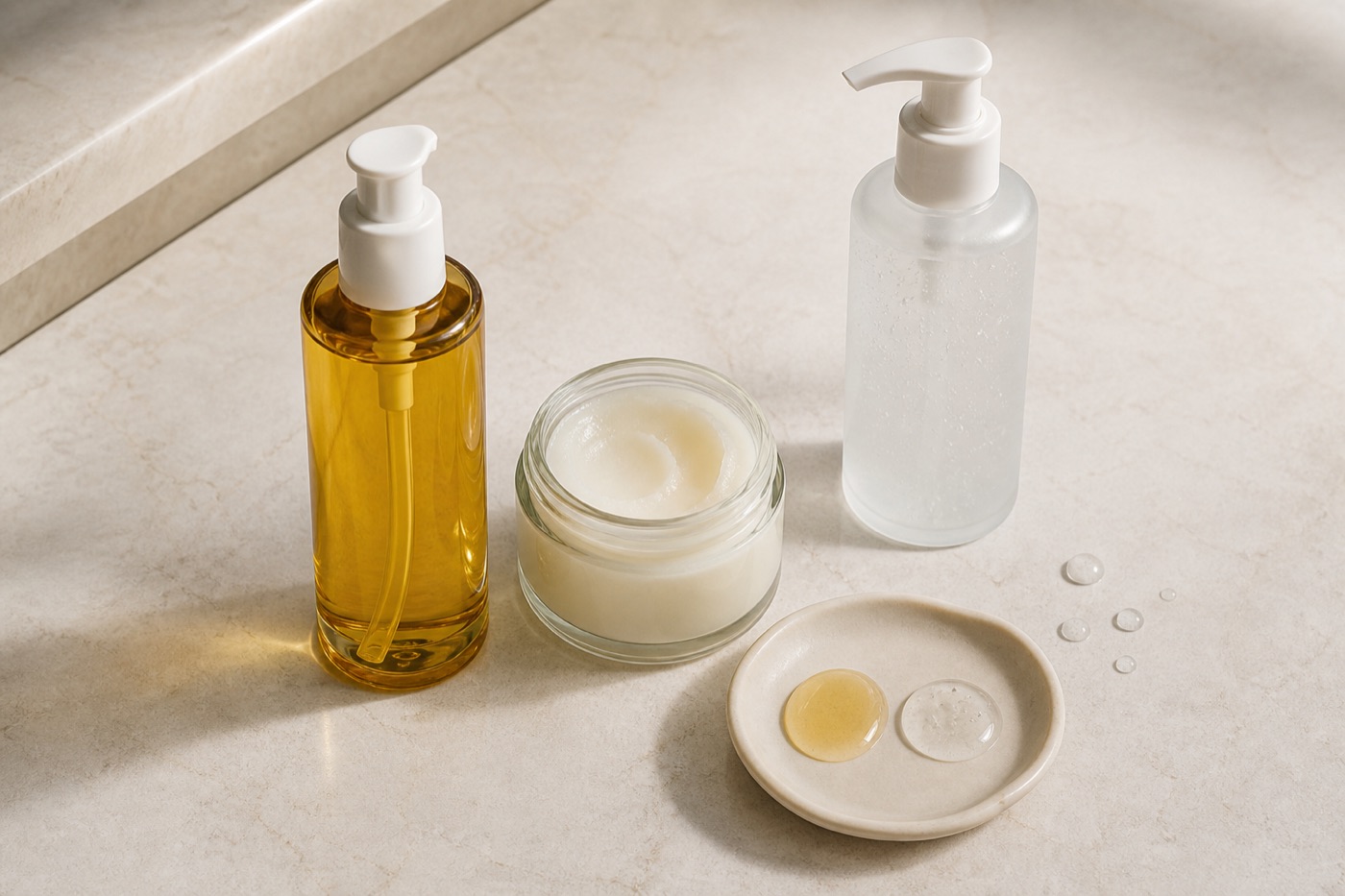
An oil-based first cleanse may be a liquid oil, a solid balm or a bi-phase remover. Its lipid phase helps dissolve foundation, pigments, long-wear lip products, film-formers and resistant filters. Balm melts with the warmth of the fingers, oil remains fluid and a bi-phase formula often needs shaking. Texture alone does not determine efficacy, gentleness or suitability.
Many cleansing oils and balms go onto dry hands and a dry face, are spread briefly, receive a small amount of water to emulsify and are then rinsed. Follow the label: some formulas require damp skin, a cotton pad, a cloth or a specific eye-area technique. Do not extend massage in an attempt to ‘pull out’ blackheads. A cleanser removes surface film; it does not perform controlled follicular extraction.
Oil-based does not automatically mean comedogenic, nor does it mean suitable for everyone. The complete formula, rinse, residue, frequency and individual response decide. Burning, itching, persistent redness or recurrent new lesions are reasons to stop and reassess — not evidence of a cleansing ‘purge’.
Water-based cleansers: gels, creams, milks, foams and micellar water
‘Water-based cleanser’ is a practical label rather than one precise chemical category. Gel, cream, milk, ready-made foam and micellar water can all use water as a main phase while containing very different surfactant systems. A cleansing cream may contain substantial lipids; a gel may be mild or highly degreasing; foam may come from the pump rather than a higher cleansing strength.
The second step is commonly a rinse-off gel, cream or mousse. Its purpose is to remove what remains without chasing the sound or feel of ‘squeaky clean’ skin. Persistent tightness, heat or burning after rinsing means you should reconsider formula, amount, contact time, water temperature and whether the second step is needed.
Micellar water contains surfactants organised into micelles and can remove light makeup and surface residue. Some labels describe it as leave-on while others recommend rinsing. Follow the directions and observe comfort. Repeatedly wiping until every cotton pad is perfectly white increases friction and waste; pad colour is not a validated measure of cleanliness.
What double cleansing actually means
A proper double cleanse is a functional sequence, not simply washing twice with the same cleanser. Stage one targets an adherent load, often with oil, balm, bi-phase remover or another suitable makeup remover. Stage two washes the remaining surface with a gentle rinse-off cleanser when required. The intended result is removal of unwanted residue without signs of over-cleansing.
‘Oil dissolves oil’ is a useful shorthand but an incomplete explanation. The lipid phase solubilises many lipophilic substances, then emulsifiers and surfactants allow that material to disperse in water. A well-designed single cleanser may already remove both water- and oil-soluble residue. The better question is whether the actual product load is removed completely and comfortably.
There is no mandatory frequency. For many people double cleansing is occasional or limited to evenings with makeup or water-resistant SPF. Others tolerate it more frequently, while some get an excellent result from one product. In the morning, when there is no resistant daytime film to remove, two cleansers are rarely justified by this logic.
When a double cleanse can be useful
Consider two stages for long-wear foundation, theatrical or photographic makeup, waterproof mascara and lip products, or a sunscreen labelled water resistant that your usual cleanser does not remove. A targeted first product may reduce the rubbing otherwise needed with the second. It can also help when the first remover dissolves the film but leaves a residue the user finds uncomfortable.
A small clinical study compared water, foaming cleanser and cleansing oil for sunscreen removal. Cleanser and oil performed similarly on a non-water-resistant product; the oil left less residue from the water-resistant sunscreen. The finding is useful but limited to a small sample and specific products. It does not prove that every oil outperforms every cleanser or that two stages are always necessary.
Highly pigmented or film-forming makeup: a targeted first stage can reduce friction during the final wash.
Water-resistant sunscreen: check that the film is removed without repeating aggressive washing.
Obvious residue after a remover: add a second stage only when compatible with the first product’s directions and your tolerance.
Professional work: plan removal around the actual formulas applied, the eye area and the client’s reported sensitivities.
When one cleanser is enough
One cleanser is sufficient when it removes the load present, rinses properly and leaves the skin comfortable. That may be true on a no-makeup day, with easily removed sunscreen, in the morning or with one formula designed to dissolve and rinse everything you wear. Adding a second wash by habit increases time, product use and surfactant contact without a guaranteed benefit.
Oily or acne-prone skin does not automatically require two washes. Sebum is not dirt and acne is not caused by failing to scrub the face hard enough. The AAD recommends gentle cleansing with fingertips, usually up to twice a day and after sweating for acne-prone skin. More washing and friction can increase irritation.
If you follow treatment for acne, rosacea, eczema or another condition, the clinician’s plan comes before a trend. Use the skin types and conditions guide to document oil distribution and reactivity without diagnosing, then discuss persistent concerns with the appropriate professional.
How to double cleanse step by step
The directions on the packaging remain the authority. This sequence describes the common case of an emulsifying oil or balm followed by a rinse-off cleanser. It does not automatically apply to every milk, bi-phase remover or micellar formula.
Wash and dry your hands, secure the hair and remove contact lenses if the product or eye-care advice requires it.
Apply the labelled amount of oil or balm to dry hands and a dry face when instructed. Spread without prolonged pressure or massage.
Work gently over the areas with the most film. Respect eye and lip suitability and any specified contact time.
Add a little water and emulsify until the product turns milky when this is part of the directions, then rinse with lukewarm water.
Assess residue without rubbing. If a second stage is needed, apply a gentle cleanser as directed.
Rinse the hairline, sides of the nose, jaw and neck, then pat with a clean towel.
Record comfort. Persistent tightness, burning or redness means the formula, amount, duration or second stage needs review.
Massage time and water temperature
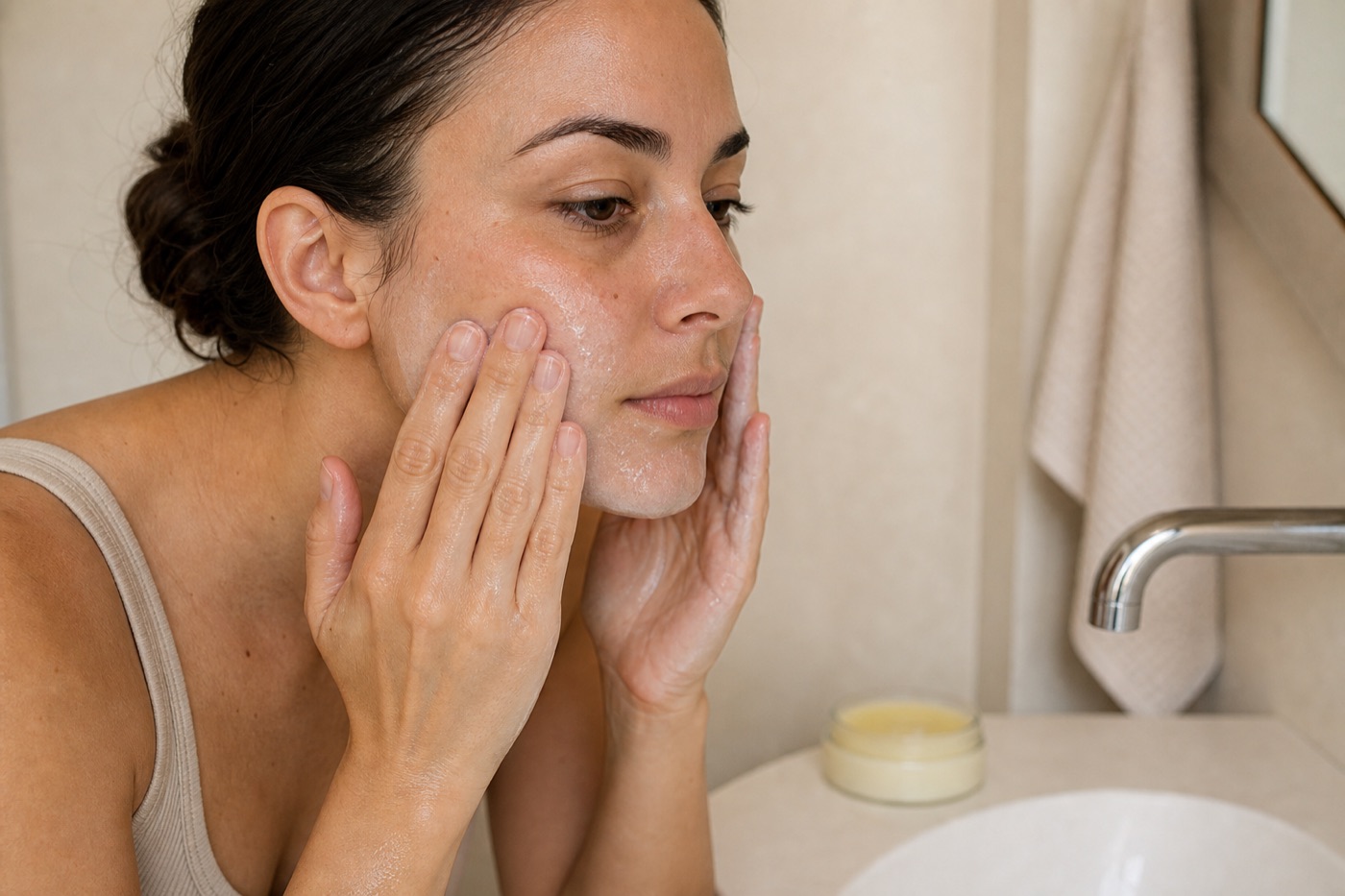
There is no universal scientific sixty-second rule for every cleanser. Contact should be long enough to spread the formula and remove the load as directed, without turning massage into prolonged friction. Resistant eye or lip products may need a short labelled dwell time; reactive skin may tolerate less contact.
Use lukewarm water and fingertips. The AAD advises against very hot water, harsh scrubs, abrasive cloths and unnecessary washing. Alternating boiling and cold water does not open and close pores; pores do not work like doors.
Rinse thoroughly but not indefinitely. A formula may intentionally leave a light emollient film; decide whether that is compatible with the directions and next step rather than calling it dirt. If pigment or sunscreen remains in precise areas, improve the removal technique instead of repeatedly washing the entire face.
Choosing between oil, balm, milk, gel and foam
Choose by the load to remove, the rinse method and tolerance rather than a rigid ‘skin type equals texture’ chart. Oil is convenient for resistant films; balm can make the dose easy to control; milk provides slip; a rinse-off cream or gel may work alone; mousse delivers pre-formed foam. These are formats, not quality scores.
Read the exact function: makeup remover or cleanser, eye-area suitability, dry or damp application, rinse requirements and amount.
Consider fragrance, exfoliating acids and other relevant ingredients in the context of the whole formula and your known tolerance.
Match removal to what you wear. A waterproof product may need a targeted remover even when the rest of the face needs only one gentle cleanser.
Prefer a method you can rinse completely without repeated cotton pads, rough cloths or excessive contact time.
Signs of over-cleansing
Persistent tightness, new roughness, flaking, burning, itching, redness or increased reactivity after washing can indicate poor tolerance. They do not identify one responsible ingredient by themselves. Review frequency, amount, hot water, friction, tools, two-stage cleansing and other exfoliating or retinoid products used at the same time.
Cleansers can remove surface lipids and interact with the stratum corneum. Modern formulas can be mild, but repeating exposure still changes the total load. If the skin is already irritated, under treatment or affected by inflamed lesions, do not solve the problem by adding more cleansing. Follow appropriate clinical advice and stop a suspected product when a significant reaction occurs.
Common facial cleansing mistakes
Using two stages automatically even when the first removes everything comfortably.
Treating pure oil as interchangeable with a formulated cleansing oil even though it may not emulsify or rinse cleanly.
Massaging for a long time to extract blackheads or sebaceous filaments, increasing friction without controlled extraction.
Using tight, stripped-feeling skin as proof that cleansing worked better.
Compensating for the wrong formula with brushes, rough cloths or repeated cotton pads.
Calling burning or recurrent lesions ‘purging’ even though cleansing is not meant to worsen the skin before it works.
Cleansing in professional skincare practice
Before removing makeup in a professional setting, document products present, reported sensitivities, contact lenses and visible conditions. Dispense hygienically, never return a used spatula to a jar, use fresh supports for each person and area, and close packaging promptly. Clean hands and controlled product handling matter more than a theatrical ritual.
A beauty professional does not diagnose acne, rosacea, dermatitis or allergy and does not promise that double cleansing will purify the skin. Suspected infection, significant reaction, pain or concerning lesions are stop-and-refer situations. The skincare and facial massage course places cleansing, observation and manual skills in a structured cosmetic-learning context without crossing into healthcare.
Frequently asked questions about double cleansing
Should I double cleanse every night?
No. It is useful when one stage needs to dissolve resistant makeup or sunscreen and another completes cleansing. If a single product removes what you wear and leaves the skin comfortable, the second is optional.
What is the difference between oil- and water-based cleansers?
An oil-rich phase helps dissolve pigments and oil-soluble films, while emulsifiers support rinsing. ‘Water-based’ covers many gels, creams, milks, foams and micellar products with different surfactants. The categories overlap; choose by what must be removed and how the formula performs.
Do I apply cleansing oil to dry or wet skin?
Many oils and balms go onto dry skin before water is added for emulsification, but this is not universal. Follow the specific directions for the formula, permitted areas and removal method.
Can oily or acne-prone skin use a cleansing oil?
It may be tolerated and useful for resistant products, but suitability depends on the complete formula, rinse, frequency, current treatment and individual response. Oily skin does not automatically need two cleansers, and acne is not treated by degreasing more aggressively.
Should micellar water be rinsed off?
Follow the formula’s directions. Some are marketed as leave-on and others advise rinsing. If residue, stinging or tightness occurs, review the product rather than rubbing repeatedly. Micellar water contains surfactants; it is not simply plain water.
Do I need two cleansers if I only wear sunscreen?
Not always. One appropriate cleanser may remove a non-resistant sunscreen, while a highly film-forming or water-resistant product may benefit from an oil-based remover or two stages. Assess the labelled resistance, real result and comfort.
Does double cleansing remove blackheads?
It removes surface oil and residue but cannot guarantee removal of blackheads or sebaceous filaments and does not replace acne treatment. Prolonged oil massage can add friction and may confuse pilled product with follicular material.
How long should I cleanse my face?
There is no universal sixty-second target. Use the minimum time needed to distribute the product, dissolve the actual film and rinse as directed without rubbing. If you need prolonged massage or several repetitions, the cleanser may not match the load.
How do I know I am over-cleansing?
Persistent tightness, new roughness, flaking, burning, itching or redness after washing are signals to review. Reduce unnecessary steps and assess water temperature, contact time, friction and other active products. Persistent symptoms, pain or fissures need professional assessment.
Sources and further reading
American Academy of Dermatology: gentle face washing, lukewarm water, fingertips and practical frequency. Read Face washing 101
DermNet: soaps, cleansers, surfactant action and possible effects of over-cleansing. Read the DermNet overview
Clinical study comparing water, cleanser and cleansing oil for sunscreen removal. Read the PubMed record
Review of cleanser technology, soap, syndets and surfactants. Read the PubMed review
Continue your skincare pathway
Place cleansing inside the complete sequence with the skincare routine order guide, and use the skin types and conditions guide to document oil, comfort and sensitivity. Browse all English skincare guides or explore the online skincare courses for structured learning.
If new burning, tightness or reactivity follows product overload, use the damaged skin barrier guide to simplify the routine and recognise when cosmetic troubleshooting must stop.
For a complete comparison of exfoliant families, frequency and stop criteria, read the AHA, BHA and PHA guide before adding another acid, scrub or exfoliating device.
For SPF, UVA, full application amount and exposure-based reapplication, read the daily face-sunscreen guide before adjusting treatment layers or reducing the sunscreen dose.
For benefits, realistic concentration comparisons and tolerance, read the niacinamide skincare guide before adding another niacinamide product to the routine.
For a complete morning and evening plan based on sebum, shine and comfort, read the oily and combination-skin routine before adding another mattifying or exfoliating step.
To distinguish a stable dry profile from temporary surface water loss and build a practical routine, read dry vs dehydrated skin: differences, textures and review criteria.
For a tolerable base, treatment support and clear referral criteria, read the acne-prone skincare guide without treating oily skin, irritation and acne as the same condition.
To separate a recurring sensitivity pattern from temporary reactivity and build a controlled baseline, read the sensitive versus sensitised skin guide for tolerance testing, a minimal routine and clear referral criteria.
To distinguish an acne lesion from a normal follicular structure and visible texture, read the blackheads, sebaceous filaments and visible pores guide for realistic skincare, strip and extraction limits.
For a cautious distinction between cosmetic discolouration and a mark that needs assessment first, read the facial dark spots and skincare guide for photoprotection, cosmetic options, measurement and dermatology referral criteria.
For a simple base when comfort, hydration and tolerance change over time, read the mature-skin skincare guide for essential care, photoprotection and the gradual introduction of one active at a time.
For a careful comparison of dryness, puffiness, structural bags and different dark-circle components, read the eye-area skincare guide for a simple routine, periocular safety and realistic cosmetic limits.
For a practical routine shaped by skin, shaving and facial hair rather than gendered packaging, read the men’s skincare guide for cleansing, moisturising, razor-bump prevention, beard care and sunscreen.
To turn cosmetic observations and existing products into a plan a client can understand and follow, use the professional skincare-consultation protocol for intake, product audit, written handover, follow-up and referral boundaries.
For a verifiable clean-to-used workflow covering hands, textiles, tools, surfaces, cosmetic dispensing and turnover, read the skincare workstation-hygiene guide before designing or auditing a hands-on service.