AHA, BHA and PHA are not three rungs on a ladder from mild to strong. They are different ingredient families delivered through products that vary in acid type, concentration, pH, vehicle, contact time, application area and frequency. Choosing well takes more than comparing ‘7% glycolic’ with ‘2% salicylic’: you need to know what the finished product is designed to do and what other sources of exfoliation or irritation are already in the routine.
Quick answer: AHAs such as glycolic and lactic acid are commonly used for surface texture and tone; in skincare, BHA usually means salicylic acid and is used in formulas for clogged pores and blemish-prone skin; PHAs such as gluconolactone and lactobionic acid form a distinct family with a smaller evidence base. None is automatically gentle. Begin with one finished product at its lowest labelled frequency and do not stack exfoliants.
This page owns BeautyLearn’s broad comparison of AHA, BHA and PHA, including glycolic, lactic and salicylic acid and the ‘how often should I exfoliate?’ intent. The wider method for choosing and combining targeted ingredients belongs in the skincare actives guide. If cleansing, water or moisturiser already stings, use the damaged skin barrier guide instead of searching for a supposedly gentler acid. This is cosmetic education, not a guide to diagnosing acne, rosacea, dermatitis or pigmentation disorders, and it does not teach professional peels.
What exfoliation changes — and what it does not
The stratum corneum is the organised outer layer of the epidermis. Corneocytes and intercellular lipids are not useless ‘dead skin’ waiting to be stripped away; together they limit water loss and help control entry of external substances. Cosmetic exfoliation changes the shedding and appearance of the most superficial cells. It may make the surface look smoother or brighter, but it does not open the skin, remove toxins or replace normal cell turnover.
Visible flaking is not required for a result. Burning, persistent redness and scaling do not prove that an acid is working harder; they suggest that dose, frequency, formula or context may exceed tolerance. The absence of tingling does not prove that a product is inactive either. Sensation is influenced by vehicle, barrier condition and application and cannot measure efficacy.
Scrubs, rough cloths, cleansing brushes, shaving, waxing, microdermabrasion and acids work differently but can add to the same surface burden. Your inventory should therefore include habits and devices as well as serums. Gentle cleansing and appropriate skin hydration make comfort and response easier to read.
AHA, BHA and PHA at a glance
AHA means alpha hydroxy acid. Glycolic acid and lactic acid are the best-known examples; mandelic and citric acid may also appear, along with related salts. BHA means beta hydroxy acid, although skincare labels use the term almost as a synonym for salicylic acid. PHA refers to polyhydroxy acids or related compounds such as gluconolactone and lactobionic acid, which contain multiple hydroxyl groups.
The family name does not predict intensity or tolerance by itself. A carefully buffered leave-on at modest activity may be easier to tolerate than a concentrated mask. A rinse-off cleanser has a different exposure from an overnight serum. Even products displaying the same percentage can behave differently because pH, free-acid availability, solvents, buffering and supporting ingredients differ.
AHAs: glycolic, lactic and other alpha hydroxy acids
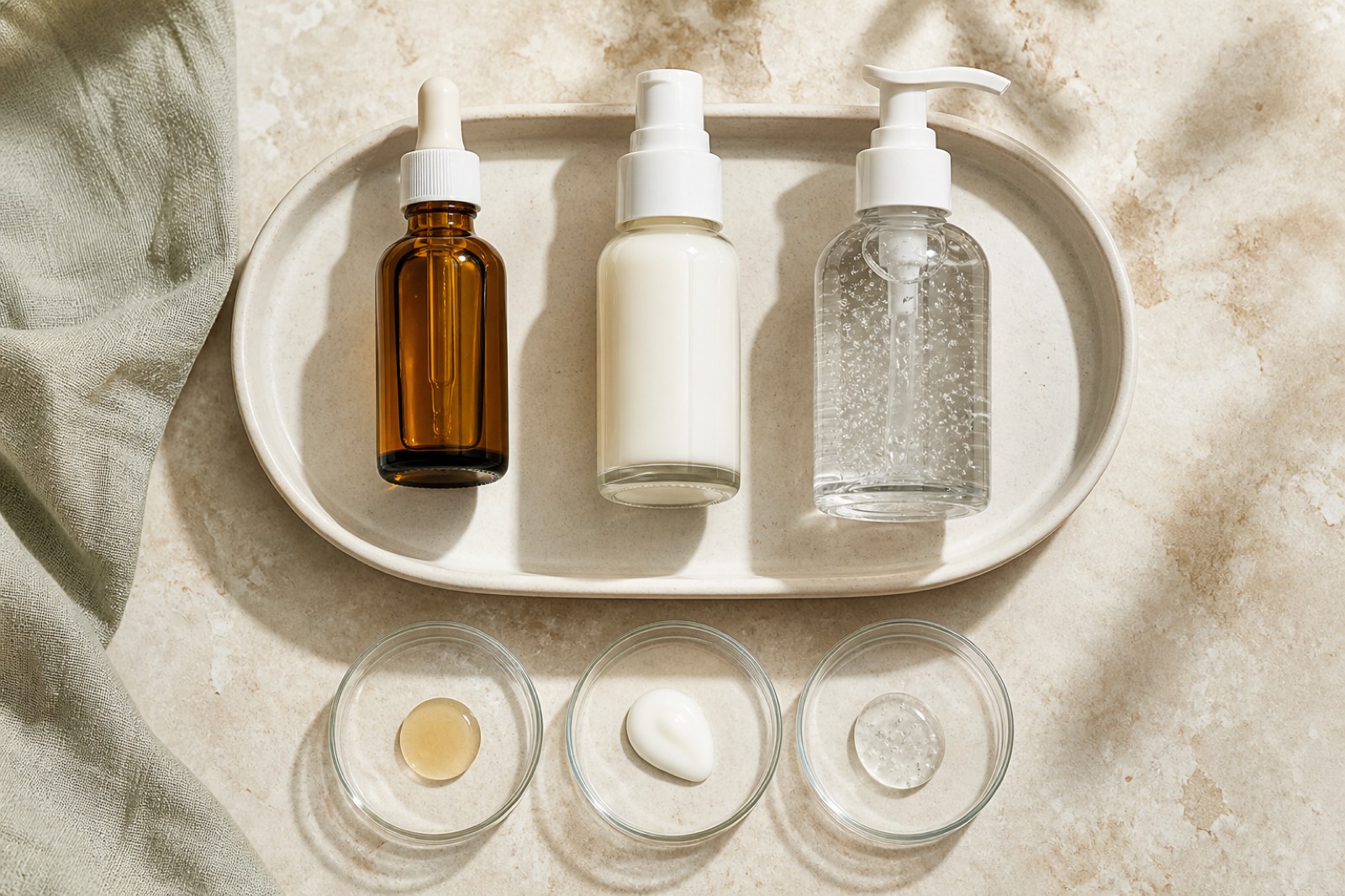
AHAs are water-soluble and commonly used to improve the appearance of roughness, dullness and uneven-looking surface tone. That does not mean every AHA behaves alike or that ‘AHA for dry skin’ is enough information to select a product. The specific acid, concentration, pH, vehicle and use pattern determine the exposure.
The US Food and Drug Administration warns that cosmetics containing AHAs may increase skin sensitivity to the sun during use and for about a week after stopping. Its recommended sunburn alert covers sunscreen, protective clothing and limiting sun exposure. That warning does not mean every acid creates identical sensitivity, nor does sunscreen make any concentration or schedule safe.
Evidence from controlled professional peels cannot be transferred directly to a home cosmetic. A short-contact peel selected and monitored by a trained practitioner is not equivalent to an overnight toner used every day. High percentages seen in professional protocols are not targets to recreate through mixing, extra layers or invented contact times.
Glycolic acid: smaller does not automatically mean better
Glycolic acid has a small molecular structure and a long history in cosmetic and professional use. It is often chosen for rough texture and superficial signs, but greater penetration does not mean better for every user. Skin that is irritated, freshly shaved or recovering from a procedure may react to a product that was previously tolerated.
Do not treat glycolic percentage as a universal unit of strength. Five per cent in one product is not necessarily half as active as ten per cent in another because the number omits pH, buffering, free acid and vehicle. A glycolic toner, AHA mask and exfoliating moisturiser may create substantial combined exposure even when each is marketed as gentle.
Lactic acid: more than a gentler glycolic acid
Lactic acid is an AHA and can contribute both exfoliating and humectant properties within a formula. Its presence does not guarantee mildness. Concentration, pH, fragrance, solvents and accompanying actives can change tolerance completely. Choose it when the whole product and texture fit the goal, not because a chart automatically assigns it to dry skin.
Mandelic acid, citric acid and multi-acid blends also need to be read as finished products. Molecular size can inform formulation, but it does not establish a universal ranking. Citric acid may mainly adjust pH in one product and be marketed as an active in another. An ingredient list alone does not always disclose purpose or percentage.
BHA and salicylic acid: what changes in practice
In skincare marketing, BHA usually means salicylic acid. It is lipophilic relative to AHAs and appears in products aimed at oiliness, clogged pores and acne lesions. The American Academy of Dermatology includes salicylic acid among ingredients used to unclog pores and exfoliate. That does not turn every salicylic cosmetic into acne treatment or allow a user to diagnose the cause of blackheads, papules or redness.
Salicylic acid is subject to regulatory restrictions that vary by product purpose, type, body area and population. European SCCS opinions, for example, distinguish preservative use from other functions and describe specific conditions. The practical rule is to use a compliant finished product designed for the intended area, following its label, rather than transferring percentages from professional peels or hair products to the face.
Salicylic acid can dry or irritate, particularly alongside retinoids, benzoyl peroxide, other acids or medicines. Salicylate allergy, pregnancy, breastfeeding, use on children, large areas and medical conditions require advice based on the actual product. Do not apply it to broken skin or try to ‘dry out’ already inflamed skin.
PHAs: gluconolactone and lactobionic acid without absolute promises
Gluconolactone and lactobionic acid are the PHAs most often discussed. Their structures contain several hydroxyl groups, and they have been studied for humectant and stratum-corneum effects as well as exfoliation. Some findings are encouraging, but the evidence base is smaller and often relates to specific formulas, limited samples or combinations with other ingredients.
‘PHA for sensitive skin’ is therefore not a universal rule. A gluconolactone product may be manageable, yet it can still sting or irritate, and fragrance, preservatives, solvents or other actives remain part of the experience. During a phase of burning or widespread reactivity, stability comes before finding another exfoliant.
PHAs are not simply risk-free, larger AHAs. Evaluate them with the same framework: a precise goal, the complete formula, a single-product introduction, conservative frequency and clear stop criteria. A well-tolerated product does not need replacing merely to follow a newer ingredient trend.
Percentage, pH and the finished formula
A percentage on the label may refer to one ingredient, an acid blend or a branded complex. pH affects ionisation and the behaviour of hydroxy acids; buffering can stabilise the system; solvent and vehicle affect spread and contact. Without those variables, comparing percentages is incomplete. Even with the full specification, individual tolerance cannot be predicted exactly.
Never lower pH by adding lemon juice, vinegar or household acids. Do not neutralise a cosmetic with baking soda, dilute professional solutions or mix serums in your palm to invent an intermediate strength. These changes alter a formulated system without tools to assess stability, contamination or local concentration. Mixing with moisturiser may distribute unevenly and is not the same as choosing a milder product.
Cleanser, toner, serum, mask or peel: format changes exposure
An acid cleanser is rinsed away and has short contact, yet daily use and rubbing may still add to the total burden. A leave-on toner or serum remains on skin; a mask has a defined contact time; saturated pads add friction; a spot product limits area. Do not compare these formats by percentage alone, and never convert a rinse-off product into a leave-on treatment.
Place the product within a stable morning and evening routine rather than duplicating cleansing and treatment. If you remove makeup or resistant sunscreen, the double-cleansing guide separates necessary removal from excessive exfoliating steps.
How to choose AHA, BHA or PHA for a goal
Start with one observable goal. An AHA formula may suit superficial roughness and dullness; a salicylic-acid product may be more relevant to clogged pores; a PHA product may be formulated with hydration and tolerance in mind. These are directions for comparing finished products, not rigid prescriptions by skin type.
First separate stable skin type from temporary condition with the guide to skin types and conditions. Oiliness and tightness can coexist, and redness does not identify the right acid family. Persistent, extensive or scarring problems need dermatological assessment rather than stronger exfoliation.
Then compare format, area, labelled frequency, fragrance, other actives and whether you can maintain moisturiser and sun protection. The theoretically ideal active that makes sunscreen intolerable is a poor practical choice. Buy one exfoliant and complete the inventory before adding acid cleansers, boosters or masks.
How often to exfoliate: there is no universal calendar
‘How many nights per week?’ has no single answer. Appropriate frequency depends on formula, instructions, area, concurrent products, previous tolerance and goal. Once a week is not automatically too little; nightly use is not a target. The cautious starting point is the lowest frequency stated by the manufacturer, not a timetable based solely on AHA, BHA or PHA.
Keep cleanser, moisturiser and sunscreen stable. Introduce the exfoliant alone and record date, area, amount and response. Observe several applications without raising amount and frequency together. If it is tolerated but the goal is not improving over a realistic period, change one variable. If tightness, burning or scaling increases, reduce or stop rather than ‘push through’.
A small-area cosmetic test may reveal some local reactions, but it cannot guarantee repeated full-face tolerance or diagnose allergy. Do not perform home challenges after a significant reaction. Swelling, hives, blistering or breathing difficulty require stopping and appropriate care; medical patch testing is a different process.
Morning and evening application order
Follow the product instructions. For some leave-on products, gentle cleansing, exfoliant, moisturiser and morning sunscreen is a workable sequence; a rinse-off acid must follow its contact time and rinsing directions. There is no universal ‘lowest pH first’ rule that gives permission to stack multiple actives.
Dry skin before application may reduce rapid spread or sting for some formulas, while other products are designed for damp skin or cleansing contact. Do not invent mandatory twenty-minute waits. If layers pill, using less or separating them may improve the film, but pilling is not proof of chemical incompatibility.
What not to introduce alongside an exfoliant
The common problem is not that two ingredients instantly cancel one another. It is cumulative irritation and loss of a clear signal. Do not introduce AHA, BHA or PHA at the same time as a retinoid, second acid, benzoyl peroxide, scrub, brush, abrasive device or professional procedure. Treat a formulated multi-active product as one tested product; do not recreate it with separate bottles.
Alternating nights reduces simultaneous layering but does not erase weekly exposure. Three retinoid nights plus three acid nights still leave only one treatment-free night. The actives pillar separates formulation incompatibility, medical contraindication and cumulative biological irritation.
After intensive shaving, waxing, laser, microneedling, a peel or another procedure, do not automatically restart acid that evening. Follow the practitioner who knows the procedure, depth and area. Never apply acids to wounds, abrasions or mucosa, and keep away from eyes, nose creases and lips unless the label explicitly allows use there.
Hidden duplication from acids, scrubs and devices
A salicylic cleanser, glycolic toner, multi-acid serum and PHA mask are not four different goals; they may be four exfoliation sources. Add a rough cloth, cleansing brush and shaving and total exposure rises again. The AAD recommends considering medicines and products that make skin more sensitive or prone to peeling before exfoliating.
Combined acids are not inherently wrong. A multi-acid formula may be designed around a controlled pH and exposure. The mistake is stacking unrelated products because each looks low strength. To change families, stop the previous product, stabilise the routine and introduce the new one as a distinct variable.
Sensitive skin or a disrupted barrier: stability first
If water, cleanser or moisturiser burns, or fissures, widespread flakes, increasing redness or persistent tightness appear, this is not the time to search for the mildest acid. Pause non-essential products, reduce friction and return to a minimal tolerated routine. The skin-barrier guide explains observation and stop criteria without turning them into a diagnosis.
Rosacea, eczema, dermatitis, inflammatory acne and medical treatment can change the plan. A PHA is not a substitute for assessment, and salicylic or glycolic acid should not be used to treat unidentified redness. ‘For sensitive skin’ remains a cosmetic positioning claim, not a guarantee for one person.
Exfoliants and sunlight: protection without false reassurance
Daily sun protection matters with or without acids. AHA cosmetics carry a specific FDA warning about increased sun sensitivity. Use broad-spectrum sunscreen as labelled, plus shade, clothing and exposure management. Applying acid only at night does not remove next-day UV considerations.
If sunscreen stings because the skin is irritated, skipping protection while continuing the exfoliant is not the answer. Pause the new treatment and find a tolerable baseline, with professional help when needed. Sunscreen supports a sensible routine; it does not make over-exfoliation harmless.
Home exfoliant and professional peel are not interchangeable
A home leave-on cosmetic is designed for a different context from a professional peel. Professional work involves candidate selection, concentration, pH, preparation, layers, timing, neutralisation when required, endpoint observation and aftercare. Copying one percentage from a protocol does not reproduce the formula, competence or safety system.
Do not buy raw acids or concentrated solutions to dilute at home. Measurement errors, contamination, local hotspots and unverified pH can cause chemical burns and post-inflammatory pigment changes. If instructions are professional-only or unclear, do not adapt them. Cosmetic education never replaces the qualifications, laws or healthcare training required for specific procedures.
Body, scalp and delicate areas
Body skin does not automatically justify stronger concentrations. Arms, back, legs and feet differ in thickness, friction, shaving and occlusion. A scalp or hair product may have different purposes and limits from a facial product. Use every formula only on its stated area and keep it away from eyes, lips and mucosa unless specifically directed.
Underarms, groin, neck and folds experience friction and occlusion; DIY acid use to lighten them may worsen irritation and pigmentation. New marks, rapid change, pain, persistent itch or lesions need assessment rather than exfoliation. Inflammation may be less visibly red on deeper skin tones and can leave more persistent colour change.
Signs of excess and when to stop
Reduce or stop when tightness, burning, itch, redness, scaling, paradoxical roughness or sensitivity to previously tolerated products increases. Do not add another acid or scrub to remove flakes. Simplify cleansing, moisturising and protection and record products, dates and areas to reconstruct exposure.
Significant pain, blisters, swelling, weeping, widespread crusting, visual change, eye or mucosal involvement or rapid worsening needs professional care. Breathing difficulty or swelling of the tongue or throat is an emergency. Do not neutralise a reaction with household remedies or reapply to confirm the cause.
Eight common AHA, BHA and PHA mistakes
Choosing by percentage without checking pH, format, area, contact time and directions.
Starting an acid with a retinoid, another exfoliant, acidic vitamin C, scrub or benzoyl peroxide.
Treating tingling and flaking as necessary proof of effectiveness.
Moving to nightly use because the first application caused no reaction.
Applying professional, scalp or body products to the face.
Diluting, neutralising or mixing products to invent a home concentration.
Continuing through irritation, after procedures or on broken skin because moisturiser is available.
Forgetting sun protection or assuming evening use is enough to manage UV exposure.
A practical eight-step introduction plan
Write down one observable cosmetic goal and keep it separate from diagnosis.
Inventory acids, retinoids, medicines, scrubs, shaving and procedures already in use.
Choose a finished formula intended for the area and relevant to the goal.
Read amount, minimum frequency, rinsing, sun warnings and stop instructions.
Keep the basic routine stable and introduce only the exfoliant.
Record dates, area, comfort and response without changing two variables together.
Reduce or stop at increasing warning signs instead of adding repair products around the problem.
Reassess necessity and result before considering a second active.
Frequently asked questions about AHA, BHA and PHA
What is the difference between AHA, BHA and PHA?
AHAs such as glycolic and lactic acid are widely used for surface texture and tone. In skincare BHA usually means oil-soluble salicylic acid, found in products for clogged pores. PHAs such as gluconolactone and lactobionic acid contain several hydroxyl groups and have a smaller evidence base. Family, percentage and outcome are not interchangeable; the finished product matters.
How many times a week should I exfoliate?
There is no universal frequency. Start at the lowest labelled frequency and consider format, area, other actives, medicines, shaving and tolerance. Keep the rest of the routine stable across several applications before increasing. Once weekly may be enough; nightly use is not a goal.
Can glycolic and lactic acid be used together?
They may be designed together in one controlled formula. Layering two separate products rarely adds a distinct objective and may increase irritation. Do not begin them together or add their displayed percentages as if exposure were linear.
Are BHA and salicylic acid the same?
In skincare marketing, BHA almost always refers to salicylic acid, although commercial language and chemical classification are not perfectly identical. Read the ingredient name and stated function: a derivative, salt or salicylate-rich botanical extract does not automatically equal a stated percentage of active salicylic acid.
Are PHAs always suitable for sensitive skin?
No. They often appear in formulas designed around hydration and tolerance, but evidence relates to specific products and a PHA can still sting or irritate. During burning or barrier disruption, choose stability rather than another exfoliant.
Can I use AHA or BHA with retinol?
Do not introduce them at the same time. Hydroxy acids and retinoids can add dryness, burning and peeling. Alternating nights may reduce immediate layering but weekly exposure can remain high. Follow a clinician for prescription retinoids.
Can salicylic acid and benzoyl peroxide be used together?
Both appear in acne care, but together may increase dryness and irritation. Introduce one product at a time and follow the exact label or dermatologist for medicines. Persistent acne needs assessment rather than a self-built combination.
Is evening the best time to apply acids?
Evening use may simplify routines, but it is not universal and does not remove next-day sun considerations. Follow the product directions and maintain daily protection. Splitting several actives between morning and night does not automatically make the total tolerable.
Does an exfoliant need to tingle to work?
No. Brief tingling can occur with some formulas but does not measure efficacy. Increasing burn, pain, itch, persistent redness and scaling are reasons to reduce or stop. Judge the result against the goal and tolerance, not sensation.
Does a higher acid percentage work better?
Not necessarily. Percentage, pH, free acid, buffering, vehicle, contact time and area all matter. More exposure may create more irritation without proportional benefit. Never stack products to reach a target percentage or dilute a concentrate at home.
When should I see a dermatologist?
Seek assessment for persistent or scarring acne, new or changing marks, recurrent redness, pain, lesions or irritation that does not improve after stopping. Blisters, weeping, swelling or eye involvement need prompt care. Breathing difficulty or tongue or throat swelling is an emergency.
Sources and further reading
American Academy of Dermatology: safe exfoliation and existing treatments. Read the AAD guidance
US Food and Drug Administration: sun-sensitivity labelling for AHA cosmetics. Read the FDA guidance
European Scientific Committee on Consumer Safety: opinion on salicylic acid and conditions of use. Read the SCCS opinion
Tang and Yang: peer-reviewed overview of alpha hydroxy acid formulation and adverse reactions. Read the PubMed record
Continue your skincare pathway
Place exfoliation inside a stable morning and evening routine, use the actives pillar to review combinations, and return to the minimal barrier routine if tolerance changes. Browse all English skincare guides or explore online skincare courses for structured learning.
For form, percentage, gradual introduction and the boundary between cosmetics and medicines, use the retinol, retinal and cosmetic retinoids guide before changing strength, frequency or combinations.
For vitamin C form, stability, oxidation, packaging and routine use, read the complete vitamin C skincare guide before comparing percentages or adding another antioxidant serum.
For SPF, UVA, full application amount and exposure-based reapplication, read the daily face-sunscreen guide before adjusting treatment layers or reducing the sunscreen dose.
For benefits, realistic concentration comparisons and tolerance, read the niacinamide skincare guide before adding another niacinamide product to the routine.
For a complete morning and evening plan based on sebum, shine and comfort, read the oily and combination-skin routine before adding another mattifying or exfoliating step.
To distinguish a stable dry profile from temporary surface water loss and build a practical routine, read dry vs dehydrated skin: differences, textures and review criteria.
For a tolerable base, treatment support and clear referral criteria, read the acne-prone skincare guide without treating oily skin, irritation and acne as the same condition.
To separate a recurring sensitivity pattern from temporary reactivity and build a controlled baseline, read the sensitive versus sensitised skin guide for tolerance testing, a minimal routine and clear referral criteria.
To distinguish an acne lesion from a normal follicular structure and visible texture, read the blackheads, sebaceous filaments and visible pores guide for realistic skincare, strip and extraction limits.
For a cautious distinction between cosmetic discolouration and a mark that needs assessment first, read the facial dark spots and skincare guide for photoprotection, cosmetic options, measurement and dermatology referral criteria.
For a simple base when comfort, hydration and tolerance change over time, read the mature-skin skincare guide for essential care, photoprotection and the gradual introduction of one active at a time.
For a careful comparison of dryness, puffiness, structural bags and different dark-circle components, read the eye-area skincare guide for a simple routine, periocular safety and realistic cosmetic limits.
For a practical routine shaped by skin, shaving and facial hair rather than gendered packaging, read the men’s skincare guide for cleansing, moisturising, razor-bump prevention, beard care and sunscreen.