

Dry and dehydrated skin are not interchangeable labels. In cosmetic practice, dry skin usually describes a relatively stable tendency towards fewer surface lipids, roughness, tightness or flaking. Dehydrated skin is a practical description for a state in which the stratum corneum contains or retains less water than it needs. Surface dehydration can occur on combination or oily skin, while severe persistent dryness may be xerosis and require dermatological assessment.
Quick answer: observe the pattern for at least a week without changing everything at once. Reduce harsh cleansing and hot water, apply a complete moisturiser while skin is slightly damp and use a comfortable sunscreen every morning. Temporary tightness and fine surface lines after products or weather point first to water loss and routine load; widespread recurring roughness may need more emollient and occlusive support. Marked itch, fissures, pain, bleeding or a rash should not be managed through cosmetic trial and error.
This guide owns the dry-versus-dehydrated routine intent. The guide to skin types and conditions owns classification; the skin hydration guide explains humectants, emollients, occlusives and ceramides. Here those principles become order, amount, texture, adjustments and review criteria without diagnosing dermatitis or prescribing treatment.
Dry and dehydrated skin: the difference that changes the routine
The skin surface is not controlled by one number. Sebum and intercellular lipids contribute to the surface film and stratum-corneum continuity; water influences softness, flexibility and desquamation; transepidermal water loss describes water vapour passing through the barrier. Skin can produce little sebum yet retain adequate water for a period, or look shiny while feeling tight after cleansing, dry air or excessive active use.
‘Dehydrated skin’ is not a precise dermatological diagnosis and is not the same as dehydration of the whole body. It is useful cosmetic language for reduced comfort, more visible surface lines, dullness or tightness compatible with low stratum-corneum water or barrier disturbance. A mirror cannot measure corneometry or transepidermal water loss; instruments require controlled conditions and competent interpretation.
Dry skin tends to show lower surface-lipid availability and more stable roughness, often across several seasons despite a simple routine. Age, cold, low humidity, cleansers and hot frequent washing can worsen it. Xerosis means clinically relevant dryness, but the word does not identify its cause. Atopic dermatitis, psoriasis, medicines and systemic conditions require medical diagnosis.
The practical question is not which label wins forever, but which function is missing today: remove less, add water-binding support, improve flexibility with emollients, reduce evaporation with occlusion or stop an irritating active. A routine is a controlled trial, not a verdict on identity.
Signs to observe without turning them into a diagnosis
For seven days, observe on waking, about twenty minutes after cleansing and at midday. Record tightness, itch, burning, flakes, roughness, shine and affected areas. Note weather, heating, wind, exercise, cleanser, moisturiser amount, sunscreen, makeup and active products. Keep photography consistent because side lighting can exaggerate lines and scales.
Tightness beginning immediately after a foaming wash and easing with cream points first to cleansing. Cheeks that remain rough throughout the year may need more emollience. A shiny forehead and tight cheeks call for zone adjustment, not necessarily two permanent skin types. Flaking around the nose, eyebrows or scalp may have causes that do not improve with more moisturiser.
The popular pinch test cannot distinguish dry from dehydrated facial skin. Return time is affected by elasticity, age, location and underlying tissue and belongs to different clinical contexts. Likewise, seeing many lines while smiling does not measure stratum-corneum water.
Adequate drinking is important for health, but extra litres are not a universal dry-skin treatment. A systematic review found weak, inconclusive evidence for dermatological benefit from increasing water intake in otherwise healthy adults. Correct insufficient intake when present; keep systemic hydration, surface water, sebum and barrier function as distinct questions.
What can reduce surface water and comfort
Frequent cleansing, poorly tolerated surfactants, hot water, cloth friction, repeated peels and combinations of retinoids or acids can increase tightness and scaling. Wind, cold, air conditioning, heating and low humidity alter evaporation and product behaviour. A single factor need not be inherently ‘bad’; dose, frequency, context and accumulated exposure determine the load.
A rich cream cannot reliably compensate for aggressive cleansing. If every evening uses two forceful removal steps followed by acids, a balm may hide tightness briefly without revealing the cause. Use the guide to cleansing and double cleansing to choose one step when sunscreen and makeup do not require more.
Retinol, exfoliating acids, benzoyl peroxide and prescription acne medicines may contribute to dryness or irritation. Do not alter prescribed treatment without the prescriber. For cosmetics, reduce frequency or return to a simple base when repeated stinging, increasing tightness or scaling appears. The damaged skin barrier guide owns recovery from cosmetic overload.
Morning routine for dry or dehydrated skin
Morning care should preserve comfort and create an even sunscreen film. The essential sequence is cleansing only when needed, optional hydration, moisturiser and SPF. Four separate containers are not mandatory: a complete moisturiser may replace a serum, and a comfortable sunscreen may reduce the cream needed underneath.
Step 1 — Cleanse only as much as necessary
If skin wakes clean and comfortable, test lukewarm water or no wash before products. To remove sweat, a night treatment or a heavy film, use a small amount of gentle cleanser and rinse completely. Avoid hot water, brushes and rubbing with towels. Pat dry and do not leave the face wet for many minutes while the water evaporates.
Step 2 — A hydrating serum is optional
A serum with glycerin, hyaluronic acid or other humectants may improve slip and comfort, but it is not free water magically sealed into skin. Performance depends on formula, dose, humidity, later layers and tolerance. If it feels sticky, stings or causes pilling, remove it and test a complete moisturiser directly. More humectant products do not guarantee longer hydration.
Step 3 — Build the missing film with moisturiser
Temporarily dehydrated skin may do well with an emulsion combining humectants and emollients. Persistently dry skin may prefer a cream or balm with more lipid and occlusive support. Apply a light layer, wait briefly and add only to tight areas. Thicker is not automatically better: it must spread without friction, remain comfortable and work beneath sunscreen.
Step 4 — Protect with sunscreen at the proper amount
Choose broad-spectrum sunscreen that can be used at its intended amount. An excessively rich base can make the film slide or pill, so test the real combination. Use the daily face-sunscreen guide for SPF, UVA, quantity, texture and reapplication. Change moisturiser amount or sunscreen texture rather than underapplying protection.
Evening routine: remove effectively, then support recovery
At night, remove sunscreen and makeup with the fewest effective steps. An emulsifying oil or balm can dissolve a resistant film, followed by a water-based cleanser only when residue or directions require it. If one gentle cleanser removes an ordinary sunscreen, double cleansing earns no bonus.
Step 1 — Keep cleansing short and rinse carefully
Massage with fingertips without chasing a squeaky sensation. Rinse the hairline, nose folds and jaw. Foam does not measure gentleness and a slippery residue does not prove hydration; comfort over the next twenty minutes is more useful. If skin tightens nightly, reduce duration, amount or number of steps before buying another serum.
Step 2 — One treatment priority and planned recovery nights
Begin treatment only after the base routine is stable. For uneven tone, texture or visible ageing, choose one formula and a tolerable schedule rather than starting an acid, retinoid and vitamin C together. The actives pillar owns combination planning; the AHA, BHA and PHA guide and retinoids guide cover specific precautions.
Step 3 — Complete moisturiser and local occlusion
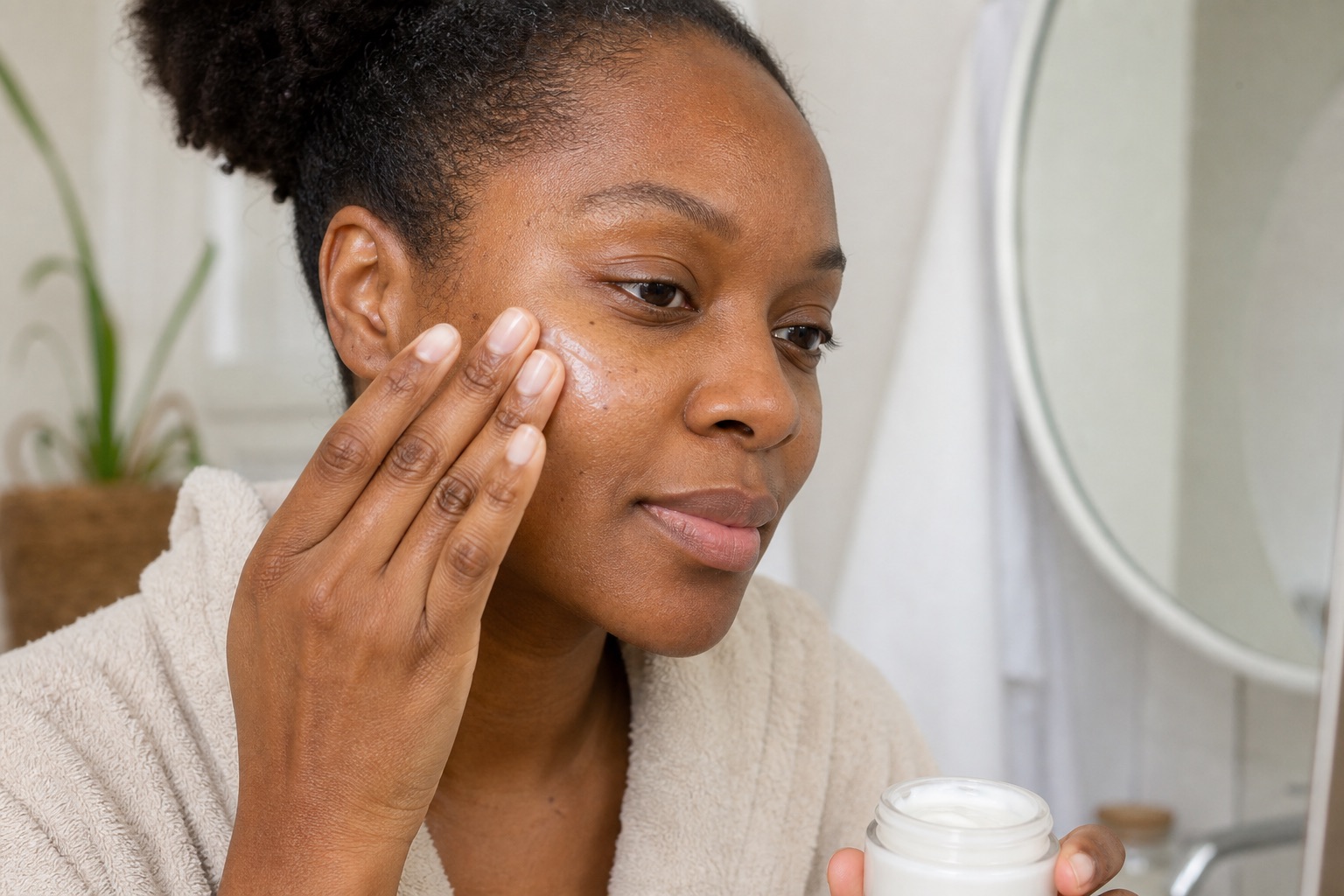
Apply moisturiser while skin is lightly damp, not dripping. This aids distribution and reduces the interval for evaporation; repeated face misting is unnecessary. If isolated areas remain rough, add a very small amount of balm or petrolatum over moisturiser when tolerated. Do not cover infected skin, unexplained lesions or an active reaction in order to continue an irritating product.
Choosing moisturiser: function before front-label claims
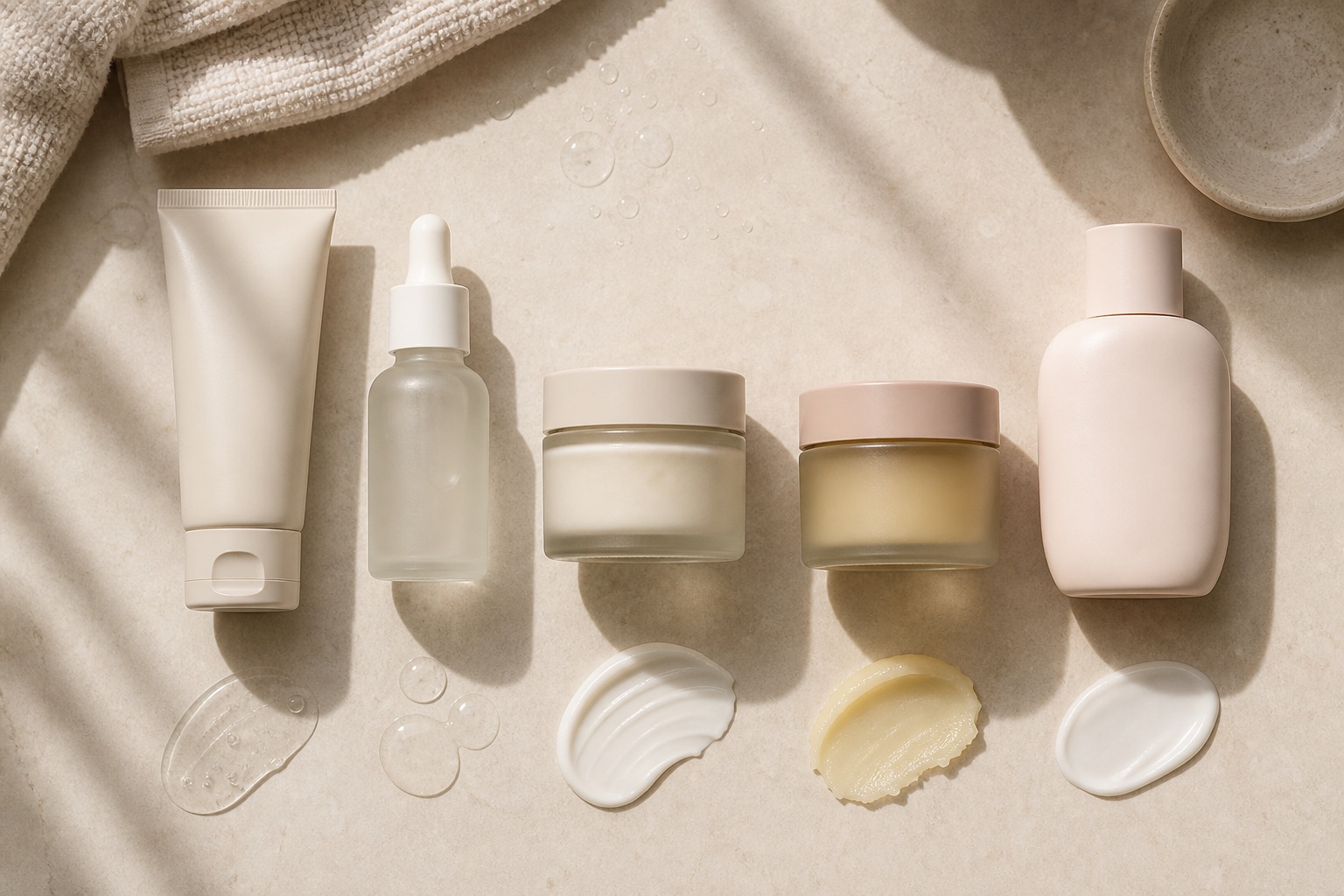
Humectants attract and bind water; emollients fill surface irregularities and improve flexibility; occlusives reduce water loss through a film. Lipids such as ceramides, cholesterol and fatty acids can support barrier organisation in suitable formulas. Categories overlap, and one moisturiser can combine several roles. Its front label cannot reveal concentration, emulsifying system or real performance.
Glycerin is a versatile humectant. Hyaluronic acid is a family of molecules in different forms and sizes, not a universal cream replacement. Petrolatum and dimethicone can provide occlusion and slip; oils and butters are mainly emollient and do not ‘feed’ skin like food. Select the complete product rather than ranking isolated ingredients.
Lotion, gel-cream, cream and ointment loosely indicate increasing richness, but two products in one category may behave differently. Start with the simplest option that maintains comfort until the next routine. Dry skin may use cream by day and balm locally at night; oily dehydrated skin may prefer an emulsion all over with a second amount only on the cheeks.
Fragrance-free is preferable when skin is dry, sensitive or irritated. ‘Unscented’ may mean odour has been masked and does not guarantee absence of fragrance materials. Natural, clean, hypoallergenic and dermatologist-tested are not personal tolerance tests. Read the INCI, instructions, PAO and warnings, introduce on a limited area and stop for a significant reaction.
Dry, dehydrated, sensitive or barrier-impaired?
Dryness mainly describes low surface lipids and roughness; dehydration describes low or poorly retained surface water; sensitivity describes burning, stinging or reactivity with many possible causes; barrier impairment is functional language for irritation and loss of comfort after overload or damage. They can overlap but are not synonyms.
Do not call every worsening a purge. Widespread burning, swelling, plaques, blisters or increasing itch are not compulsory steps towards improvement. Stop the suspected product, keep its package and ingredient list and seek medical advice for an important reaction. Breathing difficulty or swelling of the lips, tongue or throat is an emergency.
Climate, seasons and indoor air
Cold wind and heated rooms commonly increase discomfort, while air conditioning and low humidity can do the same in summer. Adjust one variable: a creamier cleanser, richer moisturiser or local balm. Keep sunscreen. A clean humidifier may help in very dry rooms, but stagnant water and dirty equipment can grow microbes; follow cleaning instructions.
Travel, altitude and long flights change humidity, exposure and routine consistency. Carry one reliable moisturiser rather than a bag of new masks and mists. Apply after washing and before prolonged exposure to dry air. Do not use a cabin environment as the first test for a strong acid or retinoid.
Common mistakes
Diagnosing dehydration from a pinch test, smiling lines or one filtered photograph.
Exfoliating visible flakes daily instead of first reducing irritation and restoring a simple base.
Using only a watery serum when the routine also needs emollient or occlusive support.
Adding essential oils or fragrance because ‘natural’ is assumed to mean soothing.
Changing cleanser, moisturiser and active on the same day, losing the cause-and-effect signal.
Reducing sunscreen amount because the combined layers feel rich instead of changing textures.
Treating stinging as proof that a product is penetrating or repairing the barrier.
Review the routine over four weeks
During the first three days, assess burning, post-wash tightness, application, pilling and sunscreen compatibility. In week one, track duration of comfort and flaking by area. Between weeks two and four, compare frequency of difficult days, required amount and active tolerance. Do not wait four weeks through swelling, fissures, pain or rapid deterioration.
Use consistent photographs and a simple zero-to-three scale, adding notes on weather and products. Change one variable: less cleanser, a more emollient cream, an exfoliant pause or local occlusion. Keep a helpful change; reverse one that worsens comfort. Do not credit one ingredient if the entire routine changed together.
When to see a dermatologist
Seek assessment when dryness persists despite gentle care, starts suddenly, affects eyelids or large areas, disrupts sleep or comes with marked itch, rash, pain, fissures, discharge, crusting or bleeding. Suspected eczema, psoriasis, contact dermatitis or a medicine-related reaction also needs medical evaluation. A cosmetic professional can organise observations and application, not determine the diagnosis.
Bring photographs, a dated product list, medicines and suspected packages. Do not apply someone else’s corticosteroid or begin new acids ‘to see what happens’. Examination and sometimes testing are needed to distinguish xerosis and dermatitis; skincare should support, not delay, care.
Frequently asked questions
What is the main difference between dry and dehydrated skin?
Dry skin is a relatively stable profile with fewer surface lipids, roughness and lower comfort. Dehydration is low or poorly retained surface water and may be temporary. They can coexist. Home observation helps adjust a routine but cannot precisely measure sebum, corneometry or transepidermal water loss.
Can oily skin be dehydrated?
Yes. Oil and water are different variables, so a shiny forehead can coexist with post-wash tightness and rough cheeks. Do not respond with more cleansing. Use a gentle base, a light emulsion and zone-based amounts; see the oily and combination-skin routine for shine management.
Does drinking more water fix dehydrated skin?
Correcting inadequate intake matters for health, but evidence in healthy adults does not establish extra water as a universal dry-skin treatment. Systemic hydration, stratum-corneum water, sebum and barrier function are different measures. Also review cleansing, environment and moisturiser.
Do I always need a hyaluronic-acid serum?
No. Hyaluronic acid can contribute humectancy, but one good cream may already combine water-binding, emollient and occlusive functions. If the serum pills, stings or adds no comfort, it is optional. Judge the finished formula, not ingredient popularity.
Is cream or face oil better?
A cream combines water and lipid phases and is usually a more complete starting point. Oil is mainly emollient and does not provide every moisturising role by itself. A few drops may be used over or within a routine when tolerated, but oil does not replace sunscreen.
Should moisturiser go on wet skin?
Apply to lightly damp, patted skin rather than a dripping face. Prompt application improves spread and reduces the interval for evaporation. Follow specific directions if a prescribed or cosmetic product requires dry skin. Repeated misting without a later film does not guarantee comfort.
Can dry, flaky skin be exfoliated?
Not automatically. Scrubs and acids may remove visible scales while increasing irritation. Stabilise cleansing and moisturising first. If exfoliation remains appropriate, begin at low frequency on intact skin and stop for burning, redness or increased scaling.
When does dry skin require medical assessment?
When it persists despite gentle care, begins suddenly, causes intense itch or sleep disturbance, or includes rash, fissures, bleeding, crusts, pain or discharge. Eyelid involvement, large areas and suspected reactions to medicines also require assessment.
Scientific and professional sources
American Academy of Dermatology: dermatologist-reviewed dry-skin relief guidance. Read the AAD guidance
American Academy of Dermatology: moisturiser formats and selection. Read the AAD guide
Augustin et al.: diagnosis and treatment of xerosis cutis, a position paper. Read the PubMed record
Sethi et al.: skin barrier disruption and moisturisation mechanisms. Read the PubMed record
Akdeniz et al.: systematic review of dietary water and skin hydration. Read the PubMed record
Browse the English skincare guide hub for separate guidance on cleansing, hydration, barrier and actives, or explore online skincare courses for structured professional learning.
For a tolerable base, treatment support and clear referral criteria, read the acne-prone skincare guide without treating oily skin, irritation and acne as the same condition.
To separate a recurring sensitivity pattern from temporary reactivity and build a controlled baseline, read the sensitive versus sensitised skin guide for tolerance testing, a minimal routine and clear referral criteria.
To distinguish an acne lesion from a normal follicular structure and visible texture, read the blackheads, sebaceous filaments and visible pores guide for realistic skincare, strip and extraction limits.
For a cautious distinction between cosmetic discolouration and a mark that needs assessment first, read the facial dark spots and skincare guide for photoprotection, cosmetic options, measurement and dermatology referral criteria.
For a simple base when comfort, hydration and tolerance change over time, read the mature-skin skincare guide for essential care, photoprotection and the gradual introduction of one active at a time.
For a careful comparison of dryness, puffiness, structural bags and different dark-circle components, read the eye-area skincare guide for a simple routine, periocular safety and realistic cosmetic limits.
To turn cosmetic observations and existing products into a plan a client can understand and follow, use the professional skincare-consultation protocol for intake, product audit, written handover, follow-up and referral boundaries.