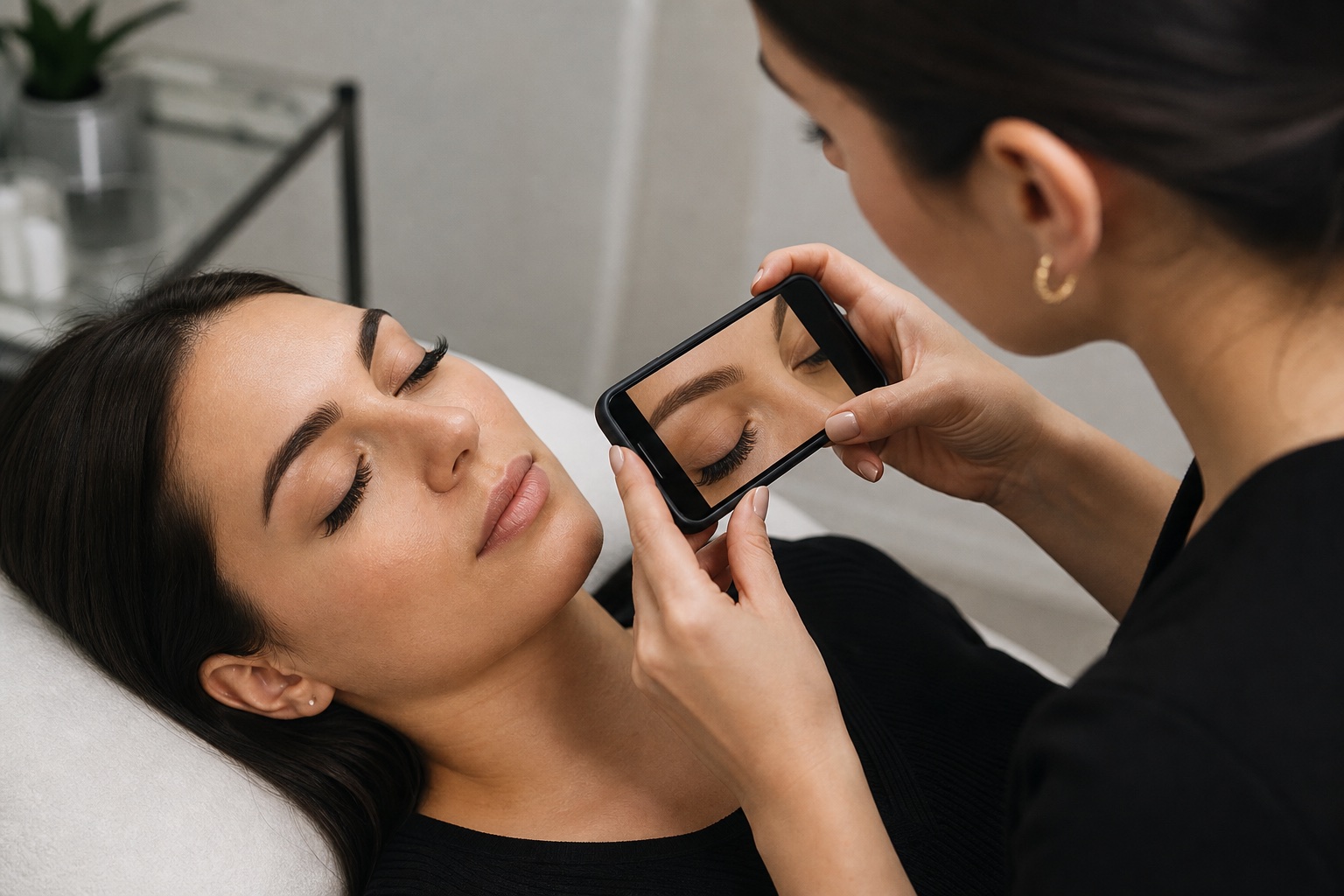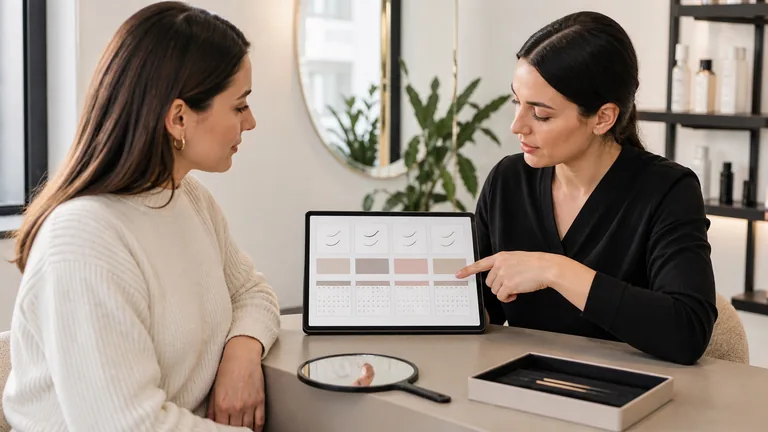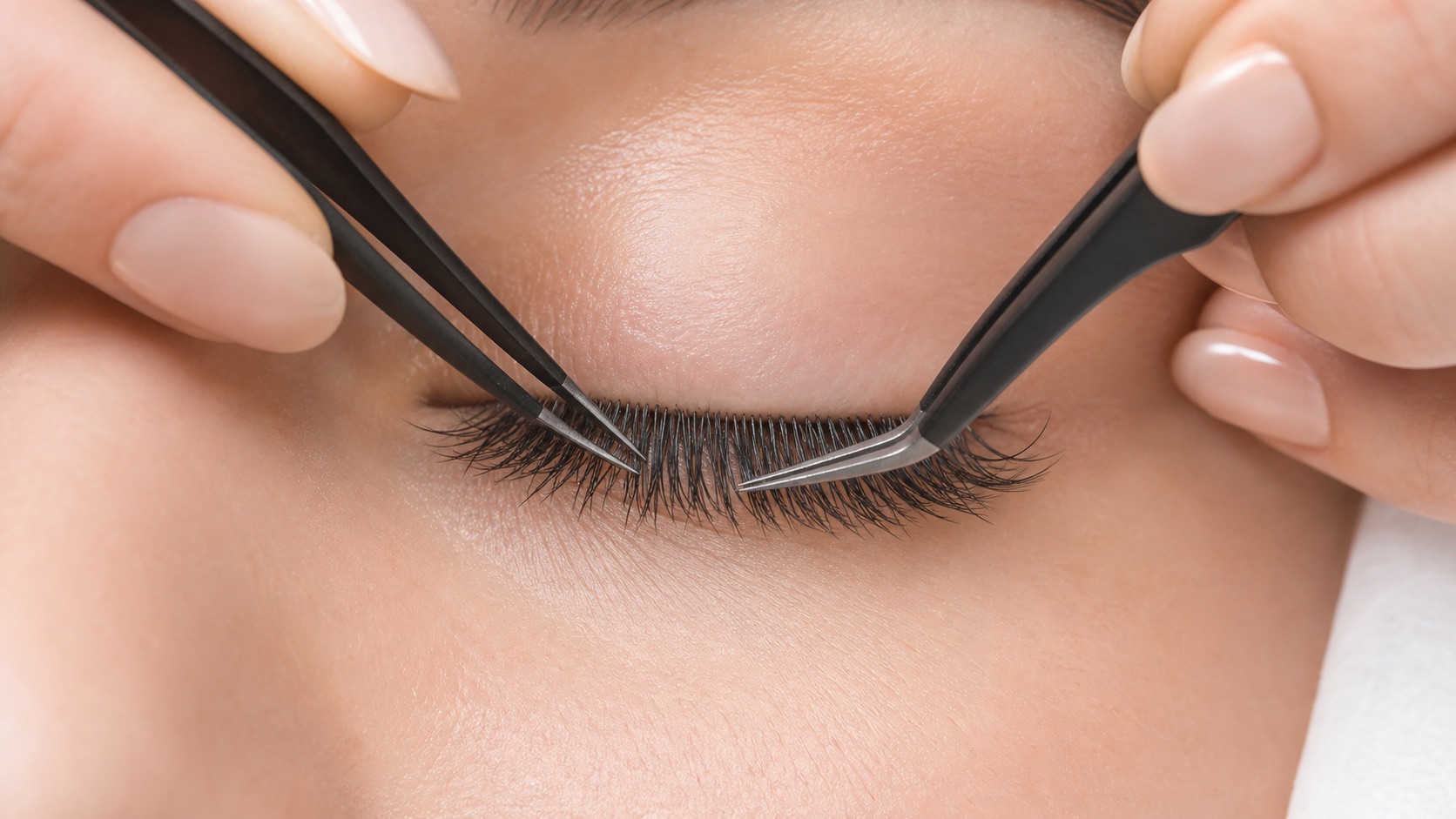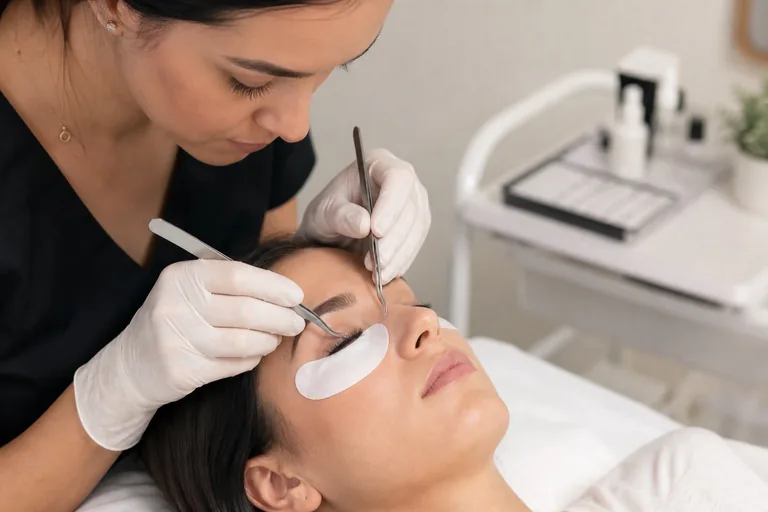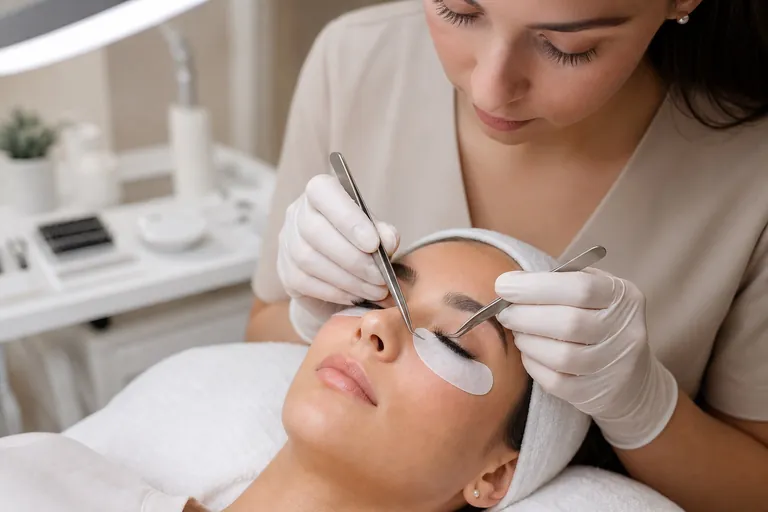
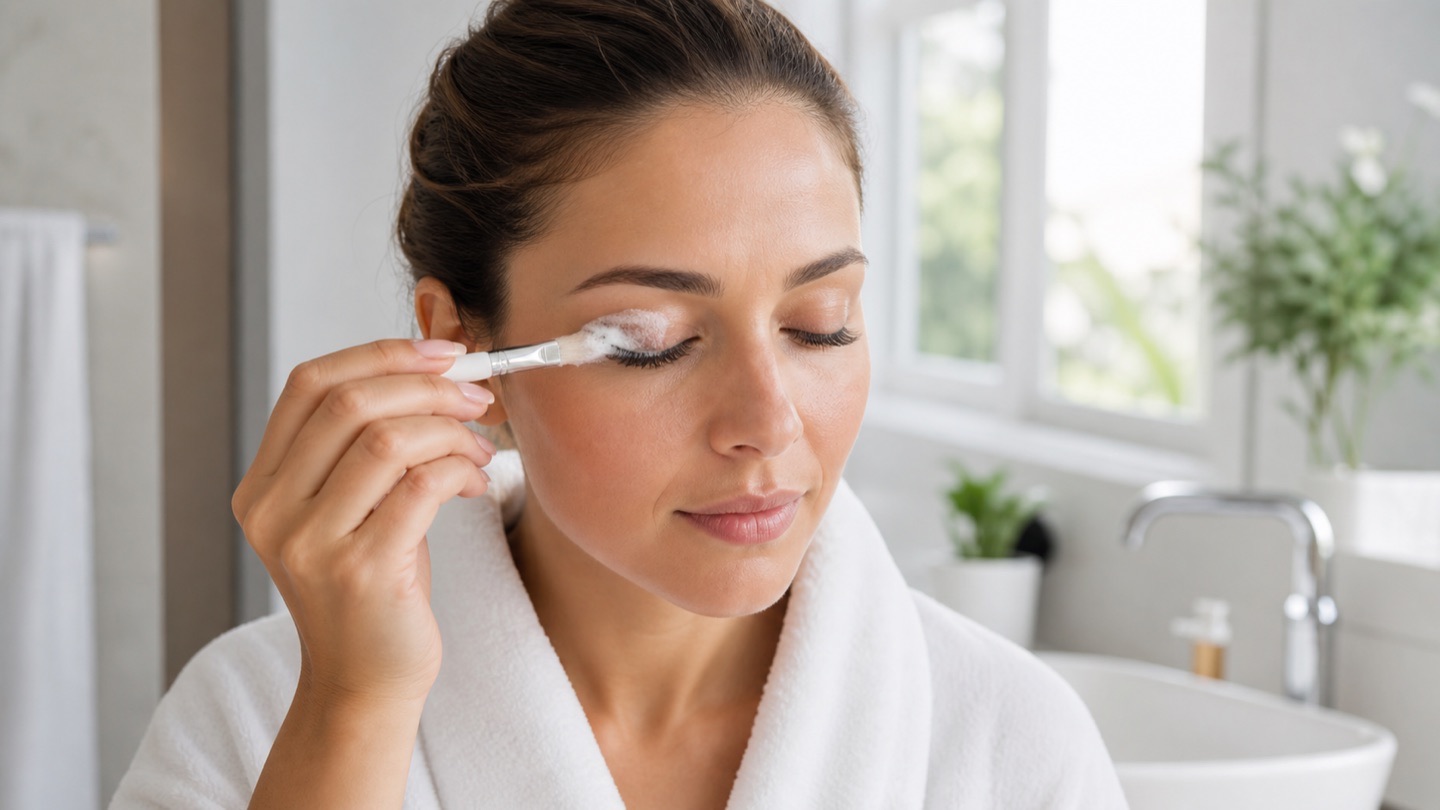
Maintaining eyelash extensions does not mean avoiding water or leaving the eye area untouched. It means cleaning eyelids, the external lash margin and fibres regularly with a method suitable for the eye area and compatible with the system used, while limiting friction, pulling, residue and contamination. A clean set is easier to inspect and brings growth, direction and comfort into view at the next appointment.
This is the single BeautyLearn guide for how to clean and maintain eyelash extensions. It includes cleanser selection, washing, rinsing, drying, make-up, skincare, sleep, showers, exercise, swimming, travel, written aftercare and stop signs. Separate pages for sleeping with extensions, wearing mascara or when lashes can get wet would split one home routine into conflicting instructions and create search cannibalisation.
The guide to retention and infills owns early loss, troubleshooting and the choice between maintenance and a new set. The adhesive guide owns polymerisation, room conditions, storage and reactions. This page owns the at-home routine and the professional handover that makes it understandable.
Quick answer: wash your hands; remove make-up without pulling; use a cleanser intended for the external eye area and compatible with the instructions you received; work a small amount through closed lashes using light movements; rinse completely; blot water around the eye without compressing the fibres; allow them to dry; and use a clean personal spoolie only once the set is dry. Avoid rubbing, picking, hot tools and strong water or air jets. Pain, marked swelling, discharge, light sensitivity, altered vision or persistent irritation needs prompt professional or medical assessment.
There is no universal rule for every adhesive, cleanser and client. The lash artist provides instructions that match the products, declared polymerisation information, technique and observed needs. Claims such as oil free, lash safe, natural or sensitive do not replace the label, intended use, complete formula, rinsing directions and individual tolerance.
Why eyelash extensions need regular cleansing
A clean set stays visible, comfortable and assessable
Regular light cleaning prevents residue from demanding heavy friction later
Collects
Sebum, cells, make-up and dust
Clean
Suitable product and light movement
Rinse
Remove cleanser and suspended residue
Review
Growth, direction and comfort
Eyelids and lashes collect sebum, superficial skin cells, dust, skincare, sunscreen, make-up pigment, sweat and environmental particles. Extensions add surface area and intersections where material can remain. Avoiding cleansing because a fibre might fall makes the margin harder to inspect and allows small deposits to become layers that later require more manipulation.
The purpose is not to strip skin or preserve adhesive at any cost. It is to keep the area clean through a repeatable, comfortable routine. Strong detergent, a rigid brush or side-to-side scrubbing can irritate and stress attachments; a hesitant wash may leave make-up and film. Effective cleansing balances product, amount, water, movement and complete rinsing.
A few fibres releasing during washing does not prove that water dissolved the adhesive. An extension may leave with a naturally shedding lash or separate for reasons involving preparation, contact, product, environment, load and mechanical wear. The pattern belongs in the retention audit; it is not a reason to stop hygiene or ask the client to diagnose the set.
Itching or a dirty sensation is not an instruction to scrub harder. Residue, skin irritation, product contact, direction, adhesive exposure and ocular conditions can overlap. Clean gently only when the area is suitable. Persistent itching, redness, pain, swelling, crusting or discharge requires the routine cosmetic service to stop and appropriate assessment.
The first hours: follow the system, not a universal 24- or 48-hour rule
Eyelash extension adhesives do not share one period in which water is forbidden. Formula, amount, room conditions, attachment, polymerisation and any finishing procedure can change the supported instruction. Repeating a 24- or 48-hour rule from social media may conflict with the product actually used and does not replace manufacturer documentation.
The artist records adhesive, batch and conditions and gives the client written directions for the first cleanse. If a system specifies a wait, explain when it starts and what kind of exposure it concerns. If early cleansing is supported, demonstrate it. Rain, tears or an accidental splash should trigger the product-specific plan, not panic or improvised heat.
Water and steam are not identical exposures. A controlled, comfortable rinse differs from prolonged hot humidity, a shower jet aimed at the eye or towel friction. Useful aftercare separates temperature, pressure, duration and movement instead of using the word wet as if every situation were the same.
Burning, pain, marked watering, swelling or altered vision in the first hours takes priority over retention. Contact the artist to identify and document products, and obtain healthcare help according to severity. Do not wait for a supposed curing window to end, add random drops or layer cleanser and home remedies in an attempt to save the set.
How to choose an eyelash extension cleanser
Choose from intended use and complete routine—not one claim
Foam, oil free and sensitive do not predict the finished result
Intended use
External eye area
Method
Amount, movement and rinse
Claims
Never enough on their own
Burning
Stop—not deeper cleaning
Choose a cleanser labelled for use on the external eye area, with readable instructions and a clear rinsing method. Compatibility with extensions does not come from one word on the front of a bottle. The complete formula, amount, contact time, movement and removal determine what remains on skin, fibres and attachments. A body or face product does not become eye-area suitable when diluted at home.
Foam can make dosing and coverage visible, but bubbles do not certify mildness. A liquid can be well controlled by its dispenser; a mousse may still contain an ingredient a user does not tolerate. Avoid scrubs, particles, strong fragrance, household solvents and improvised mixtures. Burning is not evidence that cleansing is working more deeply.
Oil free is not a complete formulation assessment. Oils, esters, surfactants, polymers, pigments and film formers behave differently, and one ingredient name does not predict the finished product on a specific attachment. Use a cleanser assessed for the routine, observe rinsing and comfort, and do not promise that every oil-free product is automatically lash safe.
Baby shampoo, hand wash, body cleanser and micellar water are not interchangeable defaults. Research on eyelid hygiene compares particular products in clinical populations, not every extension wearer. It supports the principle that formulas produce different outcomes—not a prescription to use one household product on extensions. Follow product labelling and professional instructions.
Keep the bottle closed and clean, never top it up, and avoid sharing an applicator. Replace product when its use period expires or smell, colour, separation or packaging changes. Adding water inside the original container can disrupt preservation; dilution during rinsing happens on the lashes only as the labelled method describes.
Tools for cleaning, drying and arranging the set
A simple setup uses clean hands, the selected cleanser, comfortable clean water, a small soft brush when supported, clean low-lint material for blotting around the eye and a personal clean spoolie. More tools do not equal better hygiene. Each item needs one purpose, routine cleaning and complete protected drying between uses.
The cleansing brush should be soft, intact and small enough to follow the external lash line without pressing the eye. Replace split, rigid or contaminated bristles. Do not use the same brush for foundation, eye shadow and lash cleanser. Clean and rinse it according to its material, then dry it away from splash and dust.
Cotton buds and pads can shed fibres that catch in fans or wispy texture. This does not make every cotton item universally prohibited, but it should not be dragged through attachments. Terry towels and rough cloth can hook tips, so absorb water from the cheek and surrounding area rather than pinching extensions between fabric.
A spoolie is personal, clean and stored dry. It is not shared, dipped into mascara or used on an eye with discharge. Brush only dry lengths with a few light passes that do not strike the bases. Resistance, twisting or a painful crossed section belongs with the lash artist, not home separation using fingers or tweezers.
How to clean eyelash extensions in eight steps
Observe, clean, rinse, dry and arrange
Every stage reduces residue without turning hygiene into pulling
Observe
Check comfort and stop signs
Clean
Hands, zones and light brush
Rinse
Clear product completely
Dry
Blot nearby; brush dry lengths
1. Check the area before touching it. Look for marked redness, swelling, discharge, pain, injury or a fibre visibly pressing into tissue. Routine cleansing should not cover a problem. If stop signs are present, do not introduce a new product or try to release the area with tweezers.
2. Wash and dry your hands and prepare everything within reach. Move hair away from the face. Contact-lens handling follows the directions of the prescribing professional and the products in use. Do not switch between phone, tap, cleanser and eye without washing contaminated hands again.
3. Remove make-up farther from the attachments first. Dissolve base make-up and shadow by zones without dragging pigment into the lash line. A resistant formula needs a compatible remover and patience, not more pressure. Clean the extension bases with the dedicated product after surrounding pigment is controlled.
4. Close one eye and wet it gently according to instructions. Avoid a high-pressure spray and do not aim the shower head directly at the lash margin. Keep the eye closed until product and rinse are complete. Use a water temperature that is comfortable rather than deliberately hot.
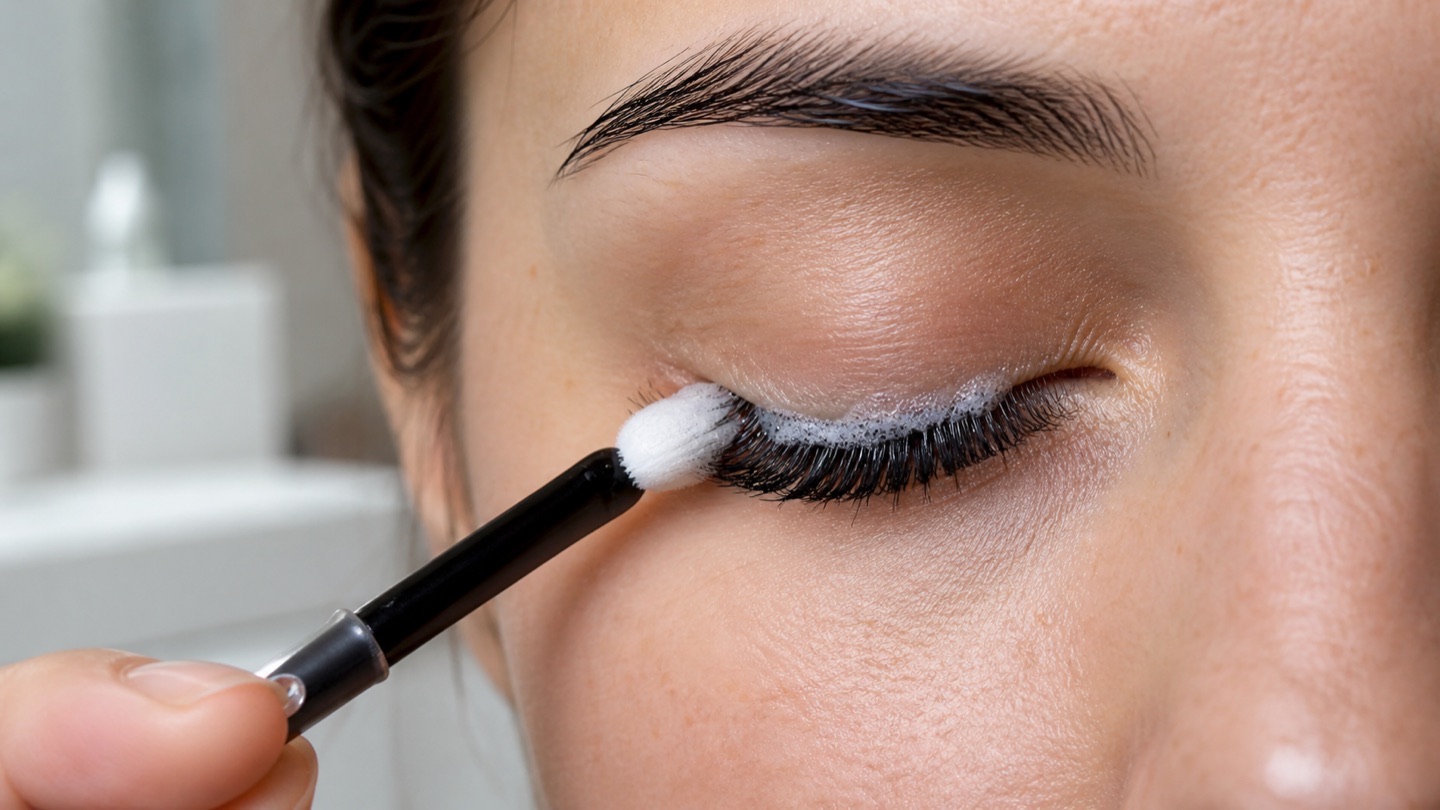
5. Apply a controlled amount of cleanser. Place foam or liquid where its intended use permits. With the soft brush, use light base-to-tip and small controlled movements across the external lash line. Do not saw sideways, crush fans, scrub the eyelid or pull the outer corner.
6. Rinse completely with clean water. Clear cleanser, suspended material and pigment from inner and outer corners without opening the eye through foam. Adding another dose over incompletely rinsed product increases film and does not automatically improve cleanliness.
7. Blot rather than rub. Let excess water run away, then absorb moisture on the cheek and surrounding skin with clean low-lint material. Do not squeeze lashes between fabric, twist a towel against the eye or rub forwards and backwards through the extensions.
8. Allow the set to dry using the method supported by the system. Avoid hot air and strong jets. Once fully dry, use a clean spoolie lightly through the lengths. If a base remains crossed, rotated, stuck or painful, stop brushing, take a clear photograph and contact the lash artist.
Drying and spoolie use without friction or distortion
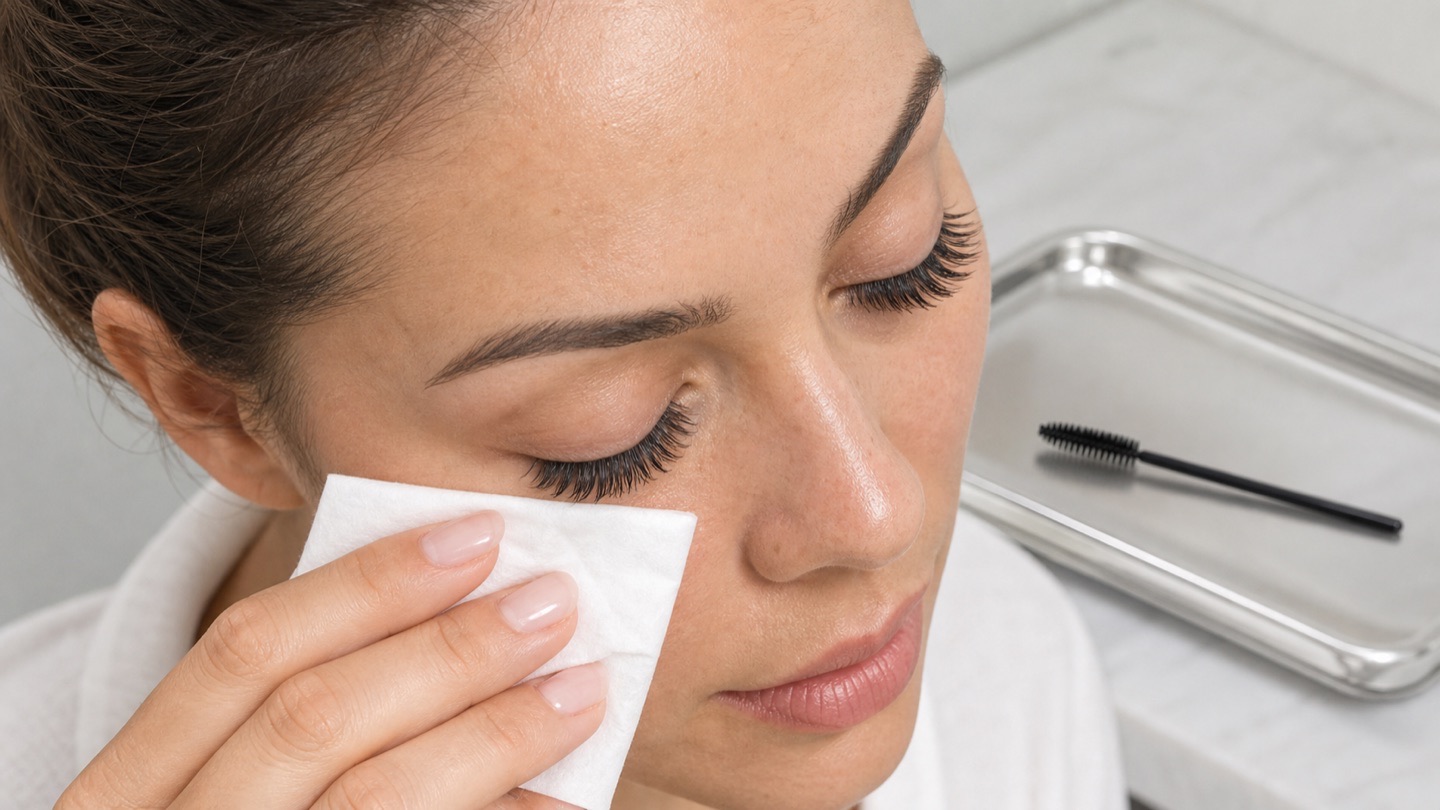
Wet extensions can look darker, narrower or grouped. That does not mean a fan is permanently closed. Remove surrounding water without pressure, wait for drying and reassess before brushing. Repeated combing through fibres loaded with water and cleanser can spread residue and increase leverage on grown-out attachments.
Do not direct a hot hairdryer at the eye. Heat, speed and distance are difficult to control and may irritate or move fibres. If the artist has demonstrated a compatible cool airflow, keep it gentle, distant and indirect. Air is not needed to set the adhesive and does not replace rinsing or blotting.
Use a spoolie on lengths with only a few passes. Direction may differ with curl and design, but the brush should not scrape the margin or force its way between bases. Fans that remain closed after every wash may have residue, damaged fibres or a product issue and should be examined at the next review.
Photographs taken once the set is dry are more useful for follow-up than wet close-ups. Use even front and side light, include both eyes and avoid filters. The lash mapping guide explains why intentional texture should not be confused with residue, crossed fibres or uncontrolled gaps.
How often to clean eyelash extensions
A regular routine—often daily—is more controllable than occasional intensive cleaning, but frequency is individual. Sebum, make-up, exercise, dust, airborne allergens and sweat can require more timely washing. Sensitive skin calls for reassessment of product and movement, not simply more passes or the abandonment of hygiene.
After exercise or heavy sweating, leaving salts and cosmetics to dry on the lash line does not protect retention. Follow the supported rinse and cleanse as soon as practical without rubbing with a gym towel. A clean band can manage sweat at the forehead, but should not be dragged over the extensions.
Clients who do not wear make-up still produce sebum and shed surface material. Invisible pigment does not make the lash line self-cleaning. Clients who use liner and shadow should reduce deposits near the bases and remove products by zones rather than compensate with aggressive washing.
If a regular cleanse repeatedly burns, flakes or leaves the eye red, stop and review the product, dose, rinsing and movement. Do not keep using it to avoid wasting a bottle or replace it with an unlabelled mixture. Persistent or significant symptoms need appropriate healthcare assessment.
Make-up and skincare with eyelash extensions
Plan make-up by how it will be removed
Keep pigment and heavy film away from attachment bases
Base make-up
Remove away from the lash line
Liner
Choose a manageable formula
Mascara
Only when the system supports it
SPF and cream
Keep—manage migration
Make-up compatibility starts with removal. A product that needs rubbing, repeated solvent or heavy pads across the bases increases aftercare complexity. Powder fall-out, creamy liner and waterproof formulas can collect between fibres or close fans. Keep pigment away from attachments when possible and choose products that can be removed through the demonstrated routine.
Mascara is used only when the fibre system and artist support it. It can close volume fans, add weight, conceal growth and complicate infill cleaning, particularly when waterproof. Applying it to bases does not prolong a sparse set. If make-up is central to the client’s routine, discuss that before choosing classic, hybrid or volume styling.
Foundation, concealer, eye shadow and liner are removed away from attachments before the lash line is cleansed. Cotton pads should not sweep through fan tips. If one product repeatedly leaves pigment, replace it with a more manageable formula rather than using a stronger mechanical gesture.
Face cream and sunscreen should not be abandoned. Apply them without massaging directly through the extension bases, allow them to settle and account for migration with sweat. Clean the eye area at the supported time. Choose texture and routine together; protecting skin and maintaining lashes are not competing goals.
Sleep, showers, exercise, swimming and travel
Reduce pressure, heat, residue and friction
Lifestyle advice should describe the exposure—not issue one blanket ban
Sleep
Avoid sustained eye pressure
Shower
No hot direct jet
Exercise
Clean sweat without rubbing
Swim and travel
Rinse and carry a clean kit
Reduce prolonged pressure and friction against the eye while sleeping. There is no requirement that every client sleep on their back, but burying an eye into the pillow can bend, rotate or release fibres. A shaped sleep mask helps only when its cup truly clears the lashes. Keep pillowcase and mask clean and replace or wash them regularly.
In the shower, avoid very hot direct jets at the eyes. Complete hair washing first when conditioner or styling product may run over the face, then clean the lash line through its own routine. Do not rub with a towel because the set looks clumped while wet; rinse, blot around it and wait for drying.
Exercise, sauna, sea and pool exposure depend on the product’s first-hours guidance and individual comfort. Afterwards, manage sweat, salt, chlorine and sunscreen promptly through the supported rinse or cleanse. Goggles are useful only if their seal and frame do not press the extensions; shared equipment also needs hygienic handling.
For travel, carry cleanser in a clean labelled container permitted by its instructions, a protected personal brush and spoolie, and simple written steps. Cabin air, heat, humidity and unfamiliar water can alter comfort but do not justify random product changes. Do not use hotel soap or a shared towel on the lash line simply because the normal setup is unavailable.
When home care should stop and the set needs review
Match the concern to the right next step
Maintenance issues and ocular symptoms do not follow the same route
Residue
Review cleanser and method
Twist or catch
Contact the lash artist
Unexpected gaps
Document for retention audit
Ocular symptom
Stop and seek care
Contact the lash artist for a rotated or crossed extension, a base that catches, unexpected gaps, repeated closed fans, difficulty cleaning or a change soon after the appointment. Do not pull, cut, heat, separate or dissolve the fibre at home. The professional removal guide explains why resistant attachments and remover belong in a controlled service.
Pain, marked swelling, discharge, light sensitivity, vision changes, injury, breathing difficulty or persistent inflammation does not belong to ordinary aftercare. Stop non-essential cosmetics and seek appropriate medical advice. The artist can provide product and batch information and document observations, but should not diagnose allergy, infection or another eye condition.
Do not schedule an infill over deposits or symptoms to hide the problem. At review, cleanse and assess the set, identify stickies and growth and decide whether infill, selective removal, a fresh set or stopping is appropriate. Hygiene is part of suitability, not an optional extra added after new fibres.
How lash artists should teach aftercare
Demonstrate the routine before the client leaves: amount, eye closure, brush movement, rinsing, blotting, drying and spoolie use. Ask the client to explain it back or practise the hand movement away from the eye. A bag containing cleanser is not education if the client does not know how or when to use it.
Give a short written version for the exact adhesive and cleanser used, plus contact and stop instructions. Separate required steps from optional lifestyle suggestions. Avoid threats that any lost fibre cancels a guarantee and avoid promising a fixed duration if the client follows every rule. Retention remains multifactorial.
Adapt format for language, vision, dexterity and routine. Large text, a few clear photographs and a short video can support learning, but video does not replace supervised demonstration. Record which instructions were provided and update them when the product system changes.
Aftercare, consultation, application, infill and removal are one service pathway. Training should teach those relationships and product-specific reasoning. Compare programmes in the online lash course guide and explore current BeautyLearn lash courses.
Frequently asked questions
How should eyelash extensions be cleaned?
Wash your hands, close one eye, use a small amount of cleanser labelled for the external eye area and compatible with the lash system, and move a soft dedicated brush lightly from base towards tips. Rinse completely, blot water around the eye without compressing fibres, let the set dry and use a clean personal spoolie only on dry lengths. Stop if significant symptoms are present.
How often should eyelash extensions be washed?
Use a regular routine, often daily, adjusted to the artist’s product-specific directions and to sebum, make-up, sweat and environment. Exercise, visible deposits or heavy make-up may require timely cleansing rather than waiting. Sensitive skin calls for review of cleanser, dose and movement—not leaving residue for days or scrubbing aggressively before an infill.
When can eyelash extensions get wet after application?
Follow the written instruction for the exact adhesive and finishing procedure used. There is no universal 24- or 48-hour ban. A controlled rinse, steam, direct shower pressure and prolonged hot humidity are different exposures. If no guidance was supplied, ask the artist rather than copying a rule from another formula. Symptoms always take priority over protecting retention.
Does water make eyelash extensions fall out?
A gentle rinse performed according to the product system is not the same as dissolving cured adhesive. Natural shedding, preparation, attachment, drop condition, fibre load, friction and aftercare all influence loss. Hot pressure, rubbing and incomplete drying are separate variables from water itself. Do not stop hygiene because one naturally shedding lash released during washing.
What cleanser is suitable for eyelash extensions?
Choose a clean, traceable product intended for the external eye area, with readable use and rinsing instructions, and confirmed by the lash professional as compatible with the extension system. Foam, oil free, sensitive and lash safe are not complete assessments. Formula, amount, removal and tolerance matter. Do not dilute a face or body cleanser at home to create an eye product.
Can baby shampoo be used on eyelash extensions?
Do not treat baby shampoo as a universal extension cleanser. Products differ in surfactants, fragrance, preservation, pH, eye-area labelling and residue. Studies of eyelid hygiene in clinical populations do not validate every baby shampoo for lash extensions. Prefer a product selected for the external eye area and the instructions provided for the actual adhesive and service.
Are micellar water and bi-phase remover compatible with extensions?
Compatibility depends on the finished formula, eye-area intended use, film left behind, amount and removal method. The words micellar or bi-phase do not guarantee an outcome. Avoid dragging pads through the bases, remove surrounding make-up by zones and complete the lash cleansing sequence. Replace a product that repeatedly requires rubbing or leaves pigment around attachments.
Do oils dissolve eyelash extension adhesive?
Not universally or predictably. Oils and oil-containing formulas differ, and any effect depends on composition, contact, rinsing and mechanical action. Some products leave film that complicates cleaning, but the word oil cannot explain every retention issue. Never use oil as a DIY remover: slippery fibres may encourage pulling while cured attachment remains on the natural lash.
Can mascara be worn on eyelash extensions?
Only when the fibre system, design, mascara and lash artist support it. Mascara can close volume fans, add film and weight, hide growth and require more manipulation to remove, especially when waterproof. Keep it away from the bases and do not use it to disguise an overgrown or sparse set. Discuss regular mascara use before selecting a technique.
How can eyeliner be removed without damaging the set?
Dissolve liner by zones with a compatible external eye-area product and direct movement away from extension bases. Then clean the lash line with the dedicated cleanser and soft brush, rinse and dry. Do not saw a cotton bud between attachments or compensate for waterproof pigment with pressure. Choose an easier-to-remove liner if the same problem recurs.
How should extensions be dried after washing?
Allow excess water to run away and blot the cheek and surrounding area with clean low-lint material. Do not pinch lashes inside a towel. Let them air dry or follow the supported cool-air method without heat or a strong jet. Once fibres are completely dry, arrange the lengths with a few gentle passes of a clean personal spoolie.
Can a hairdryer be used on eyelash extensions?
Do not aim hot or forceful air at the eye. Heat, distance and airflow can be uncomfortable and may move fibres. If the professional system allows a gentle cool airflow, keep it indirect and controlled. It does not cure or fix adhesive and cannot replace complete rinsing, blotting or natural drying. Stop if the eye feels dry or irritated.
How can I sleep without crushing eyelash extensions?
Choose a position that avoids sustained pressure and rubbing at the eye; every client does not need to sleep on their back. Keep the pillowcase clean. A contoured mask helps only if it clears the fibre tips and does not shift during sleep. Actual contact matters more than silk, satin or another marketing material named on its own.
Can I exercise, use a sauna or swim with eyelash extensions?
Follow the first-hours directions for the adhesive system and consider comfort and pressure from equipment. After sweat, salt, chlorine or sunscreen exposure, rinse or cleanse as supported without rubbing. Saunas and steam do not have one universal safe interval. Goggles must not press the fibres, and pain, marked redness or visual symptoms require stopping.
Do face cream and sunscreen damage eyelash extensions?
Not automatically, and sun protection should not be abandoned. Apply skincare without massaging it through the attachment bases, allow products to settle and account for migration with sweat. Clean the external eye area at the supported time. If a formula repeatedly leaves film or requires rubbing, choose a more manageable texture with professional guidance.
Why do extension fans close after washing?
Wet fibres can temporarily group and look darker. Rinse completely, blot surrounding water and allow full drying before using a spoolie. If fans stay closed every day, residue, mascara, fibre damage or an attachment issue may be involved. Do not force them open with tweezers or fingers; take clear dry photographs and request a professional review.
Is it normal to lose extensions while cleaning them?
Some fibres can leave with naturally shedding lashes during an ordinary wash. Many artificial fibres without natural lashes, an early cluster or concentrated gaps deserves a retention audit. Do not stop cleansing to run an experiment and do not scrub harder to test the set. Note timing and zone, keep useful photographs and contact the lash artist.
What should I do if an extension twists or pricks?
Do not pull, cut, heat or separate it with tweezers. If the area is otherwise comfortable and suitable, complete only the gentle supported cleanse, photograph the dry set and contact the artist for inspection and selective professional removal. Pain, marked redness, swelling, discharge, light sensitivity or visual change requires appropriate healthcare advice.
When should an infill appointment be brought forward?
Request an earlier review when growth, rotation, gaps, stickies, catching or difficulty cleaning makes the set unstable or uncomfortable—not merely because a fixed number of days has passed. The artist examines remaining bases and decides among selective removal, infill, full removal or a new set. Symptoms can require stopping rather than performing maintenance.
Which symptoms are not part of normal eyelash extension aftercare?
Pain, light sensitivity, altered vision, marked swelling, unusual discharge, trauma, breathing difficulty or persistent inflammation is not a routine cleansing problem. Stop non-essential cosmetics and obtain appropriate healthcare assessment. Do not cover symptoms with make-up, random eye drops, stronger cleanser, home remover or a new set. Keep product and batch information for the clinician.
Official and scientific references
The US Food and Drug Administration’s Eye Cosmetic Safety guidance considers extensions and their adhesives eye cosmetics, recommends clean hands and instruments, discourages sharing and advises stopping a cosmetic when irritation occurs. These principles support hygiene and escalation but do not define one cleanser or wash frequency for every set.
A prospective study on the effects of eyelash extensions on the ocular surface reported transient ocular-surface findings after application in 32 participants. The TFOS review on the impact of cosmetics on the ocular surface reviews periocular cosmetics and evidence gaps. Neither supports absolute aftercare promises; both reinforce treating the eye area as sensitive tissue rather than an inert surface.
A randomised trial comparing eyelid-cleansing treatments studied people with blepharitis and did not test extension retention. It illustrates that formulas are not automatically interchangeable, but it is not a prescription for lash wearers. Product labelling, tolerance and healthcare advice remain decisive.
Continue with all BeautyLearn lash guides or compare current online lash courses. This guide does not replace product instructions, hands-on training or healthcare assessment.
For natural-lash protection, load, stickies, tension, breakage and warning signs, use the complete eyelash extension safety guide. It owns “do extensions damage natural lashes?” intent without creating a competing fear-based page.
For customer-facing costs, inclusions, maintenance budgets and quote comparison, use the eyelash extension and lash lift cost guide. It avoids misleading international averages and remains separate from professional rate-card calculation.
Before taking paying clients, use the lash artist certificate and licensing guide to verify practitioner, premises, business and insurance requirements in the exact jurisdiction. It keeps legal-entry intent separate from technique and career development.
For a currency-neutral model of paid appointments, full service time, occupancy, costs and operating profit, use the lash artist earnings guide. It keeps professional earnings separate from client price comparison and future rate-card construction.
To build a traceable unit price from complete time, real product use, overhead, labour, fees and margin, use the professional lash service pricing guide. It keeps the rate card distinct from client quote comparison and monthly earnings analysis.
For a repeatable capture workflow covering permission, lighting, focus, honest before-and-after comparison, colour and editing limits, use the professional lash photography guide. It documents completed work without replacing live technical or safety checks.
To turn real work into a coherent path through evidence, authentic reviews, enquiry, booking, follow-up and appropriate return, use the lash portfolio and client acquisition guide. It measures qualified appointments without promising demand or income.
To adjust the complete lash workstation and plan static-load interruption, reach, light, tools and recovery without prescribing treatment, use the lash artist ergonomics guide. It complements technical and hygiene controls without replacing individual assessment.
For a cautious framework on apparent lash breakage or thinning, serum limits, treatment pauses and clinical referral, read the fragile or thinning eyelashes guide. It supports a stop-or-proceed decision without diagnosing the cause or promising regrowth.