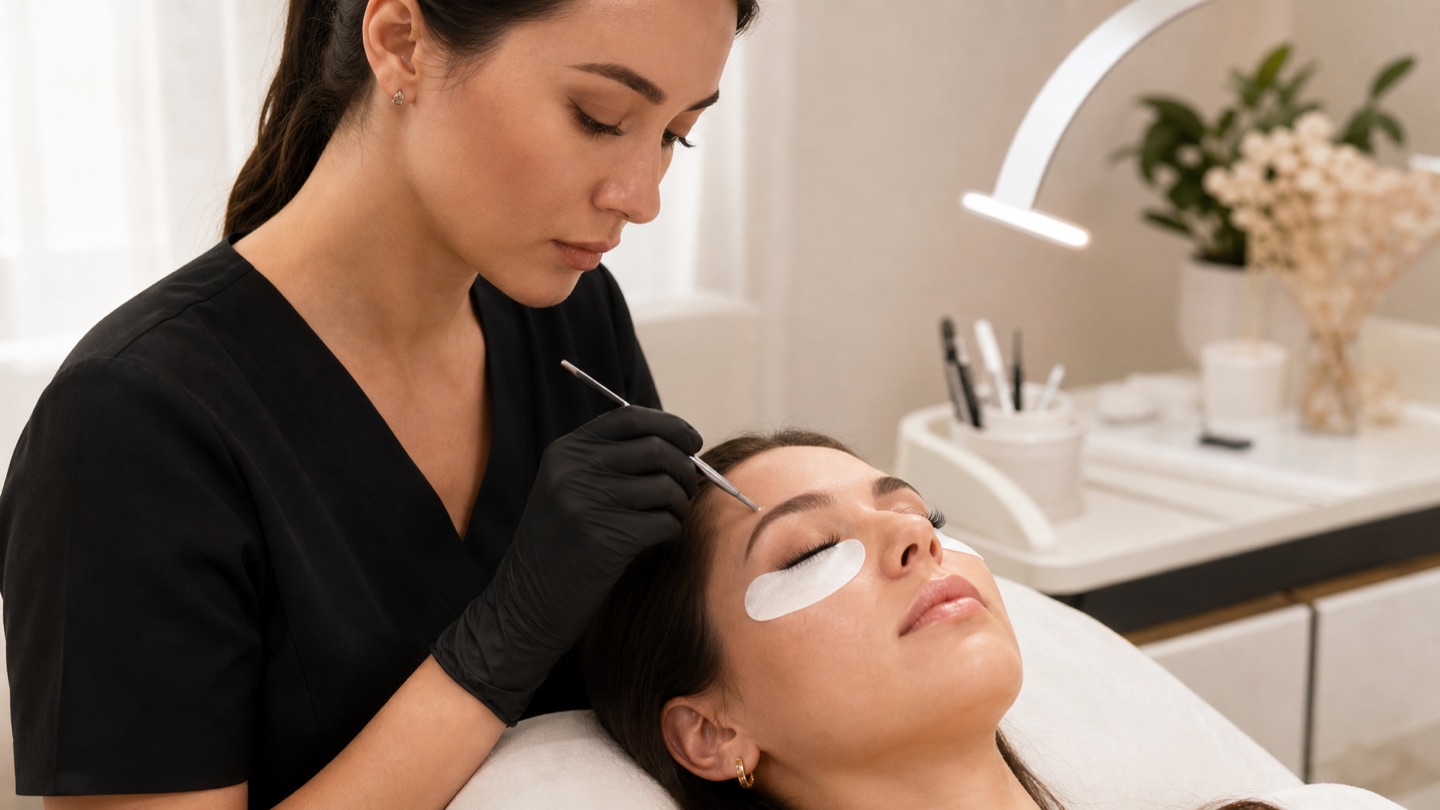
Professional eyelash extension removal means releasing the artificial fibre from the natural lash without pulling the hair and without allowing remover to migrate towards the eyelid, lash margin or eye. It is not application performed in reverse. The product acts on polymerised adhesive and must be contained, monitored, removed and cleaned exactly as the documented system requires.
This is the single BeautyLearn guide for the complete eyelash extension removal intent. It includes remover choice, full and partial removal, residues, work applied by another artist, why home removal is unsafe, incident response and criteria for stopping. Separate pages for cream remover, how to take extensions off or DIY removal would fragment one safety-critical procedure and compete for the same search intent.
The guide to lash retention and infills owns the decision between maintenance and a fresh set; the eyelash extension adhesive guide owns adhesive chemistry, room control, storage and reactions. This page owns the controlled release of work already present and the inspection that confirms fibres, remover and adhesive residue are no longer in the treatment area.
Quick answer: update the consultation; check symptoms and product identity; prepare protection, traceability and an emergency response; keep the client’s eyes fully closed; place the designated remover only on adhesive bonds; follow the product amount and contact time; test for effortless release without pulling; repeat locally rather than forcing; collect fibres and product; clean as instructed; inspect the lashes and margin; and document the result. Burning, pain, eye opening, migration, substantial watering or inflamed tissue means stop immediately.
No contact time, amount, applicator, consistency or rinsing method is universal. Cream, gel and liquid describe physical behaviour, not complete composition or safety. Product identity, intended use, intact labelling, batch, current instructions, safety data where applicable and hands-on training for that exact remover take priority over online timings or marketing claims.
What professional eyelash extension remover does
A remover is formulated to alter or disrupt the cured adhesive attachment so that the artificial fibre can release with minimal movement. It is not a generic solvent to replace with acetone, alcohol, make-up remover, food oil, steam or a home mixture. A substance that dissolves residue on a work surface may be unsuitable or harmful near the eye.
Products may be sold as cream, gel or another consistency. Viscosity changes placement and migration behaviour, but a cream is not automatically harmless and a mobile gel is not automatically more effective. Verify that the formula is intended for professional eyelash-extension removal and that the documentation covers application, contact time, removal, cleaning, storage and first aid.
Keep the original container intact and labelled. The artist must be able to identify ingredients or composition information, warnings, supplier, batch, expiry and period after opening. Record when a jar or tube is opened and store it as directed. Decanted, anonymous, separated, contaminated or altered product cannot support traceability and should not be used near the eye.
Do not assume that any remover works with every adhesive because both belong to lash services. A range may specify a product, technique or different sequence for classic and volume bases. Do not blend removers, add diluent or increase quantity to compensate for an old product or resistant attachment. Resistance calls for reassessment, not improvised chemistry.
Cream, gel and consistency: choose for control, not a claim
Consistency is a control variable—not a safety category
Cream and gel describe behaviour, not a universal result
Cream
Localisation still needs monitoring
Gel
Mobility must be controlled
Any formula
Label, batch and instructions
Changed product
Quarantine—do not test
A cream may remain where placed when amount, temperature, storage and support are appropriate. That can improve localisation during a full removal, but an excessive layer can still contact skin or transfer when lashes move. Apparent thickness never removes the need for lower-lash protection, closed eyes and continuous observation.
A gel may spread across a section more readily, but mobility depends on the whole formula. Do not infer contact time from how fluid it looks and do not cover a wider area to make removal faster. Product that runs, separates, changes colour, smell or texture, or behaves unpredictably is quarantined rather than tested on the client.
Words such as fast, sensitive, professional and fume free are not operating parameters or clinical guarantees. Choose a product with clear intended use, instructions, controllable dosing, compatible applicators, traceability and behaviour observed during competent training. Speed has no value if it reduces containment or leaves uncertain residue.
Partial removal demands even greater localisation because remover must not spread to bases intended to remain. Use selective methods only when the product documentation and training support them. If neighbouring applications cannot be protected or visibility is poor, revise the plan instead of building improvised barriers around reactive material.
Before removal: consultation and suitability
Assessment comes before another eye-area product
Reason, symptoms, set condition and client control determine the route
Ask why and what changed
Inspect lids, margin and set
Confirm closed-eye control
Proceed, postpone or refer
Ask why the client wants removal, who applied the set, when it was completed, what products are known, whether it has been maintained and whether pain, burning, itching, swelling, discharge, light sensitivity, visual change or current medical treatment is reported. Answers determine whether a routine cosmetic service is appropriate; they do not authorise the lash artist to diagnose the cause.
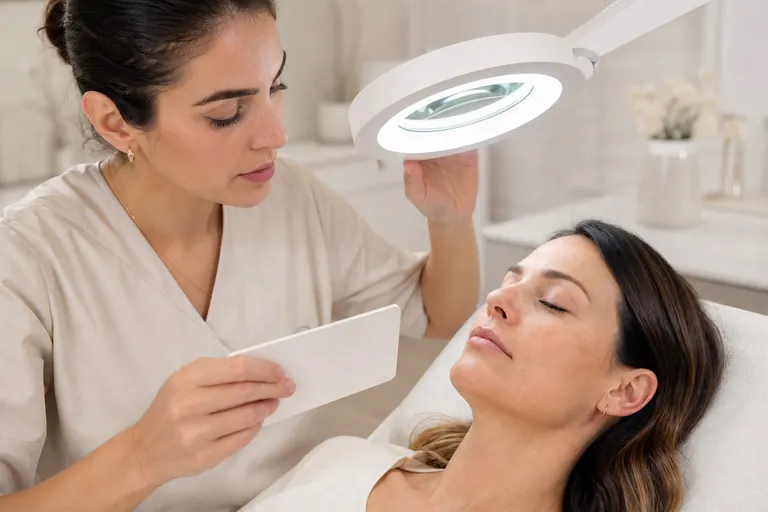
Inspect eyes, lids, lash margin and the set under suitable light. Check cleanliness, stickies, residue, growth, direction, attachment to skin and visible changes. An inflamed area, suspected infection, injury, significant pain or ocular symptoms activates the consultation stop criteria and appropriate healthcare referral. Applying another cosmetic product to an already symptomatic area may add exposure.
A set from another studio is neither automatically accepted nor automatically removed. Confirm whether adhesive contacts skin, whether the eyes and lids move normally, whether unfamiliar fibres or decorative materials are present and whether the artist has enough visibility and product information to work safely. Missing information increases caution, documentation and the likelihood of postponing.
For a planned procedure, contact lenses are removed and stored appropriately before the client lies down. Eyes must remain fully closed and relaxed throughout remover contact and cleaning. If the client cannot keep them closed, has significant involuntary movement or cannot maintain the required position, postpone instead of attempting to finish around intermittent eye opening.
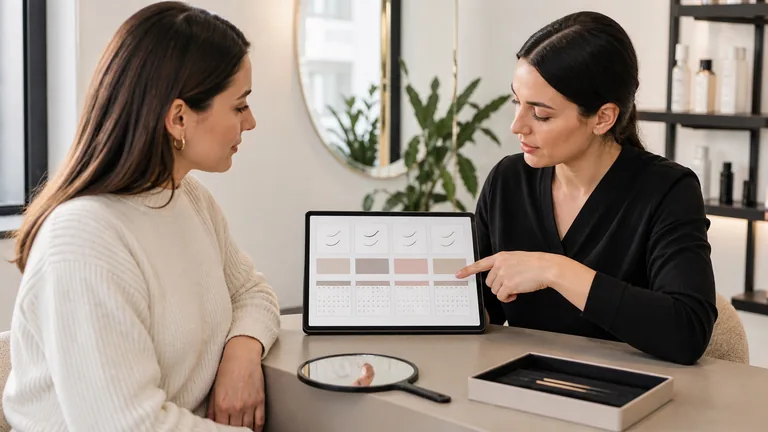
Consent explains the purpose, product, sequence, sensations that must be reported, possibility of stopping, photography and follow-up. It also sets expectations for the appearance of natural lashes after removing artificial length and curl. Consent records an informed decision; it does not waive professional duties or guarantee that the lash line will look identical to an old photograph.
Prepare the station and an incident response before opening the product
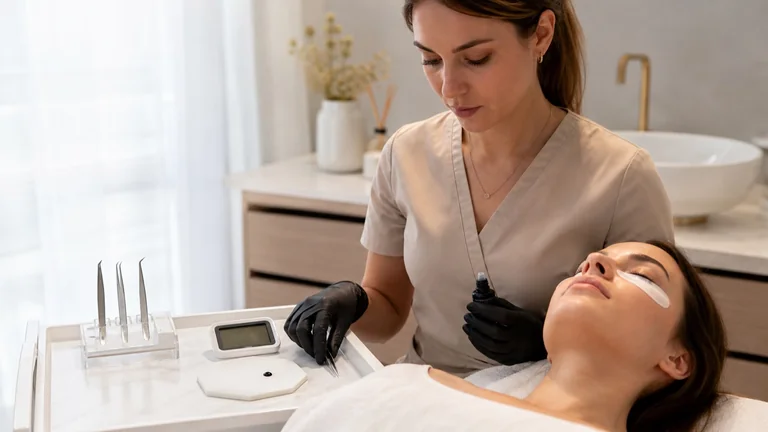
Create a clean flow for hands, surfaces, tweezers, single-use applicators, eye-area protection, used materials and lighting. Keep the remover closed until dispensing and never re-enter the container with a used applicator. The lash workstation hygiene guide explains how to separate clean, in-service and used zones.
Read the instructions and current safety data before the appointment. Make the specified emergency irrigation provision accessible, know local emergency and poison-information routes, and keep the label available. An unopened bottle of water hidden in storage is not a response plan if staff cannot reach and use it immediately without spreading contamination.
Use only applicators intended or confirmed compatible with the formula. Loose cotton fibres and improvised household swabs can hold product, leave residue or behave unpredictably around adhesive. Prepare enough clean applicators to separate placement, fibre collection and final cleaning rather than turning one loaded tool into every step.
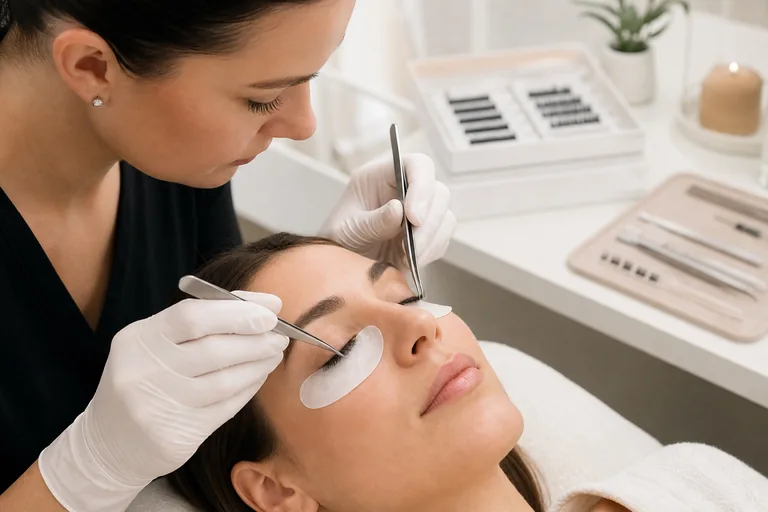
Lower-lash pads isolate lashes and collect material, but they do not seal the eye. Keep them away from the waterline and conjunctiva and confirm they do not press, pinch or lift the eyelid. If protection moves or permits migration, stop, control the remover and reposition only after the area is safe.
Ventilation and minimal effective quantity help reduce exposure but do not replace containment. Never spray remover or direct a fan into the client’s face. Gloves and other protective equipment follow the safety data and professional risk assessment; a contaminated glove must not touch clean tools, containers or the client’s skin.
Professional eyelash extension removal in nine controlled steps
Contain, release, clear and verify
The sequence protects the eye before speed or completeness
Prepare
Record, protect and dispense
Release
Bond-only placement and timing
Clear
Collect fibre, product and residue
Verify
Inspect, document and advise
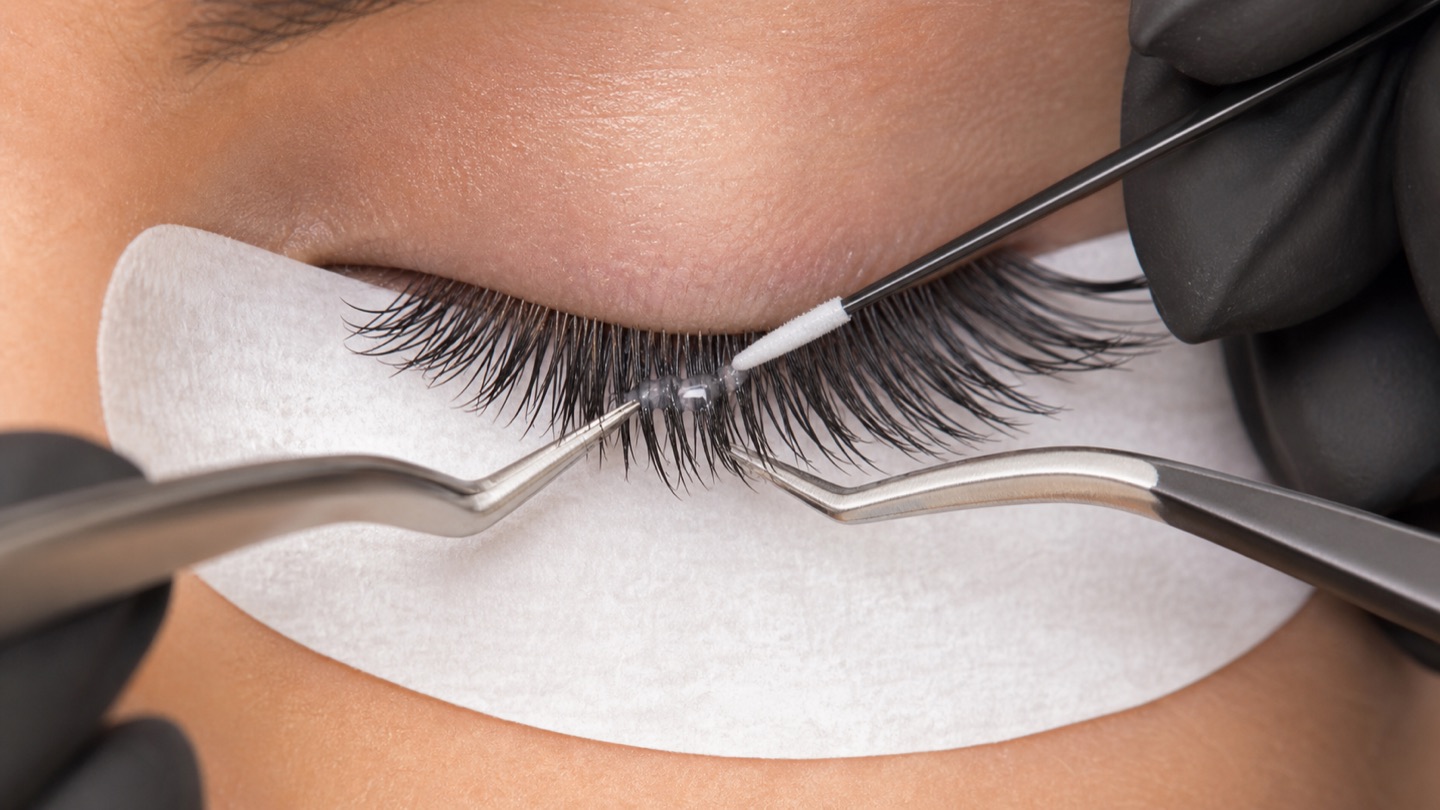
1. Update the record and take baseline photographs. Document the reason, symptoms present or absent, set origin, visible condition and intended outcome. Show both eyes and specific problem zones without filters. Record the exact remover, batch, expiry and opening status before product contact.
2. Prepare and protect. Complete any cleansing required by the system, dry, isolate lower lashes and confirm comfort. The client’s eyes are fully closed before the remover is opened or placed. Explain how to report burning or discomfort immediately without suddenly opening the eye.
3. Dispense a controlled amount away from the face. Do not work directly from the container above the client and do not re-dip. Product portioned for the appointment does not return to the original package. Keep lids and clean storage away from the used-material zone.
4. Apply only to cured adhesive bonds. Maintain the off-skin distance and section size taught for the product. Do not coat fibre tips, massage the eyelid or push remover towards the roots. In layered or volume work, confirm access to the intended bases without flooding adjacent areas.
5. Follow the documented contact time. Start timing as instructed once the intended bonds are covered. Do not shorten the process with heat, pressure, excess remover or another chemical. Observe pad position, eye closure, movement, tearing and product location continuously rather than leaving the client unattended.
6. Test release on a small section using a light, controlled movement. A ready attachment allows the artificial fibre to move without bending the natural lash or shifting skin. If it resists, stop. Remove, replace or add a minimal local amount only if the instructions permit, then observe the stated process again.
7. Collect released fibres away from the eye and place them on the designated used material. Work in sections so loose fibres do not fall back onto the face or become confused with residue. Tweezers guide released material; they do not scrape the lash shaft, skin or margin.
8. Remove remover and residue exactly as instructed. Use clean passes with separate applicators instead of redistributing loaded material. Complete the specified cleaning or rinsing while the eyes remain closed. The client opens them only after product, tools and loose fibres have been cleared and the artist has inspected from several angles.
9. Inspect, photograph and document. Check natural lashes, margin, comfort, remaining residue and symmetry under adequate light. Record treated sections, approximate product amount, actual contact time, resistant bases, deviations, stop decisions and aftercare. If continuing would be unsafe, state what remains and arrange an appropriate next step rather than forcing completion.
The release test: when an attachment is actually ready
A released attachment permits the artificial fibre to slide with minimal movement. The natural lash should not bend sharply and the eyelid should not move with the tool. If skin, margin or natural hair is pulled, the force is excessive, the position is wrong or the remover has not worked sufficiently. Time pressure never changes that stop signal.
Thick bases, closed fans, stickies and layered adhesive can require local reassessment. Do not extend the contact time across the entire set beyond instructions because one zone resists. Clear product when required, isolate the problem and repeat only where the documented procedure permits. Some bases may be left for a later controlled appointment.
Mechanical selective removal used during an infill follows a different trained method for suitable grown-out applications. It must not become two tweezers squeezing, snapping or peeling close to skin without full control. Chemical remover should likewise not be introduced into a routine infill merely because it seems faster.
Residue control before the client opens their eyes
Identify residue before trying to remove it
Loose fibre, cured adhesive, remover film and lint require different action
Fibre
Collect away from the eye
Remover film
Clean as instructed
Cured adhesive
Local reassessment only
Uncertain material
Do not scrape
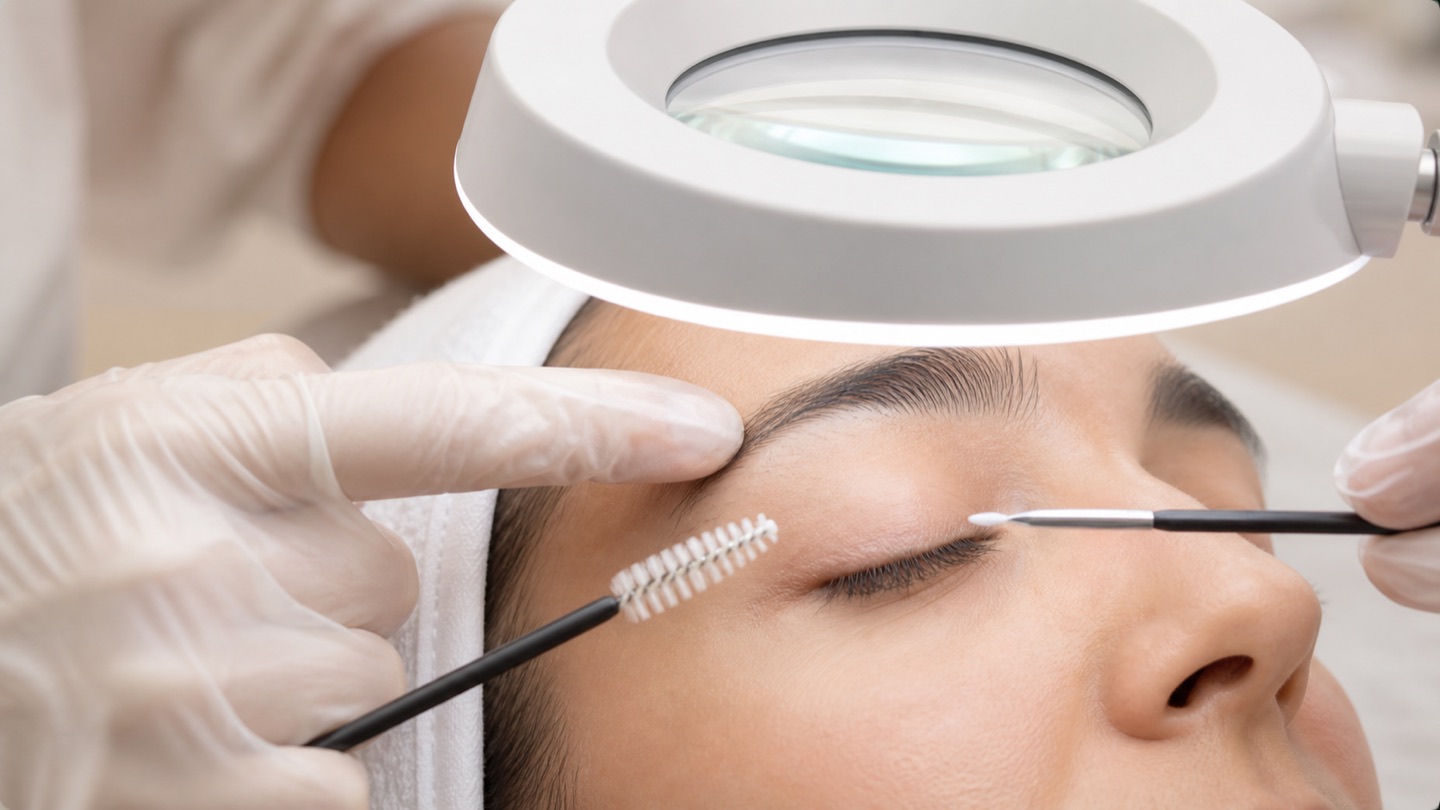
Residue can be an artificial fibre, cured adhesive, a remover film, make-up or lint from an applicator. Each needs identification before action. Do not scrape an uncertain mark from the lash margin. Improve lighting, adjust viewing angle and separate lashes gently while keeping the client’s eyes closed.
A shiny lash is not proof of clean removal. Product film can sit between fibres or at the underside of an attachment. Use sequential clean applicators and the specified cleanser or rinse, never the same loaded tool for repeated passes. Count and remove loose artificial fibres so none migrate when the client sits up.
Persistent cured adhesive should not be picked, cut or rubbed off a natural lash. Reapply remover locally only when the product sequence permits and the area remains suitable. When further exposure or manipulation creates more risk than benefit, stop, document and explain the follow-up plan.
Inspect both eyes before opening, then ask about comfort once the client is upright. Take post-removal photographs with consent. A new extension set is a separate decision requiring clean, suitable lashes, no concerning symptoms and a sustainable design; it is not automatically added to hide a sparse-looking lash line.
Stop criteria and accidental eye exposure
Stop first; manage exposure from the product record
Do not improvise neutralisation or force bonded eyelids
Stop
End cosmetic work immediately
Control
Clear tools and prevent more exposure
Respond
Follow SDS and local procedure
Refer
Healthcare handles ocular injury
Stop immediately for burning, pain, marked tearing, unexpected eye opening, product migration, displaced protection, breathing symptoms, sudden swelling or any loss of control. Remove tools and manage the exposure according to the product safety data and local emergency procedure. Do not finish one side, take photographs for marketing or test another product first.
For eye contact, follow the remover’s safety data and obtain appropriate medical help. NIOSH first-aid definitions describe immediate or prompt irrigation with large amounts of water for chemical eye contact depending on the substance. Do not attempt to neutralise remover with adhesive, oil, cleanser or another chemical. Preserve the container, label and batch for responders.
Do not force eyelids apart when adhesive has bonded them. Emergency literature describes separation techniques performed by clinicians using ocular assessment, anaesthetic and dedicated instruments. Those reports are evidence that the event belongs in healthcare, not a tutorial for salon use. Protect the eye, avoid tools and activate urgent assistance.
A suspected reaction does not automatically mean the safest action is immediate remover application. Introducing another product to inflamed tissue can add exposure. Assess urgency within the artist’s competence, stop cosmetic work and seek healthcare direction. Do not diagnose allergy, prescribe medication or promise that removing extensions will reverse symptoms.
Why home eyelash extension removal is unsafe
Access to remover is not control of the procedure
DIY methods combine poor visibility, open eyes and pulling risk
Professional
Closed eyes and direct visibility
Home
Cannot see and contain both eyes
Oil or steam
Unpredictable bond release
Cut or pull
Base remains; lashes can break
Self-removal combines poor visibility, an open or intermittently open eye and the temptation to pull. Online access to professional-labelled remover does not create professional control. Keeping the product precisely on bonds while both eyes remain closed requires another trained person, suitable positioning, protection and an emergency plan.
Oil, steam and make-up remover do not predictably release every cured attachment. They may make fibres slippery while leaving the bond intact, encouraging repeated rubbing or pulling. Acetone, nail remover, alcohol and household solvents are not substitutes for an eye-area product and can cause serious exposure.
Cutting extensions short does not remove the base. It leaves rigid fibre and adhesive on the natural lash, reduces visibility and creates sharp ends near the eye. Picking with tweezers can pull out or break natural lashes. If access to the original artist is impossible, book another qualified professional for assessment rather than escalating a home attempt.
Documentation and follow-up after removal
Update the lash client record with the reason, origin and age of the set, symptoms, photographs, remover name and batch, opening status, quantity, contact time, sections treated, resistant residue, deviations, incident response and advice. If the set came from elsewhere, distinguish client-reported facts from what the artist directly observed.
Provide simple written aftercare: avoid rubbing or pulling, use only appropriate eye-area products, report persistent or worsening symptoms and seek healthcare help for pain, swelling, discharge or visual change. Do not sell a serum as treatment for unexplained thinning or guarantee a recovery timeline. Natural appearance immediately after removal is affected by contrast and previous condition.
Schedule a cosmetic follow-up only when useful. A fresh set follows a new assessment, not a compulsory waiting interval copied from another product. If the reason for removal involved symptoms, damage or uncertainty, healthcare advice and visible stability take priority over the client’s preferred rebooking date.
Training standards for professional removal
A complete course should teach label and safety-data reading, product containment, lower-lash protection, dosing, classic and volume bases, selective and full removal, thick attachments, residue inspection, another artist’s set, emergency irrigation, incident documentation and stop decisions. A flawless demonstration set that releases in minutes is not sufficient training.
Practice begins on a suitable training support and progresses under competent supervision. Learners must recognise effortless release versus traction, work section by section and accept that a resistant base may need to remain temporarily. Accuracy, containment and incident response are assessed before speed.
Use the guide to choosing an online lash course to evaluate tutor evidence, demonstrations, feedback and practical work. The professional lash kit guide explains why remover without compatible applicators, traceability, protection and an incident plan is not a complete removal setup.
Explore all BeautyLearn lash courses and the guide to becoming a lash artist. A certificate records learning; consistent safety comes from competent practice, current product instructions, compliant products, documented systems and professional boundaries.
Frequently asked questions
How are eyelash extensions removed professionally?
After consultation and eye-area assessment, the artist protects the lower lashes, keeps the client’s eyes fully closed and applies a traceable professional remover only to cured adhesive bonds. The product remains for its documented time, and fibres are tested for effortless release rather than pulled. Remover, loose fibres and residue are cleared before the eyes open, then the result and product details are recorded.
Which remover should be used for eyelash extensions?
Use a product specifically intended for professional eyelash-extension removal, with an intact label, identifiable supplier and batch, current instructions and safety information. It must suit the taught procedure and allow controlled placement. Do not choose from the words fast or sensitive alone, and never replace it with acetone, alcohol, nail remover, household solvent or an anonymous decanted product.
Is cream or gel eyelash extension remover better?
Neither consistency is universally better. Cream may stay more localised under some conditions; gel may distribute differently. Formula, amount, storage, applicator, intended section, instructions and the artist’s training determine control. Thickness does not guarantee safety, while mobility does not prove effectiveness. Exclude any product that has separated or changed rather than testing it near the eye.
How long should lash remover stay on?
Only for the time stated for the exact product, amount and method. There is no universal number to copy from another brand or tutorial. Start and monitor timing as instructed, then test a small section for effortless release. Do not extend exposure across the whole set to compensate for a resistant base, old product, excessive adhesive or an application error.
Should extensions slide off during removal?
The artificial fibre should separate with a minimal, controlled movement that does not bend the natural lash or shift the eyelid. Slide does not mean uncontrolled product migration or vigorous wiping. If the attachment resists, stop and reassess product position and instructions. Pressure, squeezing or pulling is not an acceptable substitute for adequate release.
Can only a few eyelash extensions be removed?
Selective removal is possible when the product or mechanical method, training and visibility permit precise control without contaminating neighbouring bases. It is common during infills for suitable overgrown attachments. If remover cannot be localised, lashes are stuck together or the remaining set is not verifiable, a different maintenance or full-removal plan may be safer.
Can I remove eyelash extensions at home?
Home removal is not a controlled procedure. It is difficult to keep both eyes closed, see the bonds, contain a remover and distinguish artificial fibres from natural lashes without another trained person. Pulling, picking, cutting, steam, oils and online remover can injure lashes or expose the eye. Arrange professional assessment; seek healthcare help for ocular symptoms.
Do oil or steam dissolve eyelash extension glue?
They do not provide predictable, complete and eye-safe release of every cured attachment. Oil may make fibres slippery while leaving adhesive intact, and steam adds heat and moisture without controlled chemistry. Both can encourage rubbing or pulling. Use the professional remover and sequence supported for the adhesive system rather than treating a household method as a slower equivalent.
Can extensions be cut off?
No. Cutting shortens artificial fibres but leaves adhesive and a rigid base on the natural lash, reduces the artist’s visibility and can create sharp ends near the eye. It does not release the attachment. The base must be assessed and removed through a controlled professional method without cutting or pulling the natural lash.
Does professional removal damage natural lashes?
A controlled procedure is designed to avoid traction, breakage and scraping, but it cannot guarantee that the lash line will look identical to before extensions. Natural shedding, the condition and weight of the previous set, earlier manipulation and the starting lash population affect the result. Document the baseline and stop when an attachment will not release safely.
Why do natural lashes look shorter after extension removal?
The contrast between artificial length and the natural lash can alter perception immediately. The artist should still check for breakage, residue, patchy loss and the actual density of clean lashes. Do not diagnose a growth disorder or promise recovery from appearance alone. Unusual thinning, pain, crusting or persistent changes require appropriate healthcare assessment.
What if adhesive residue remains on the lashes?
Do not scrape, cut or pull it. Improve visibility and identify whether the material is cured adhesive, remover film, make-up or lint. The professional may repeat a local product step only when instructions permit and the eye area remains suitable. If further exposure or manipulation increases risk, stop, document what remains and arrange a controlled follow-up.
Can a fresh extension set be applied immediately after removal?
Only after all remover, loose fibres and residue are cleared; the natural lashes and margin appear suitable; no concerning symptoms are present; and the reason for removal does not require referral or a pause. There is no universal mandatory wait or automatic same-day permission. Conduct a new assessment and design a sustainable set from the lashes available now.
How is another lash artist’s set removed?
Update the consultation, photograph the set and assess cleanliness, stickies, skin contact, base thickness, unfamiliar materials and symptoms. Record what the client reports separately from what is observed. Missing adhesive information requires caution but never justifies stronger mixtures or force. The professional may postpone or refer when safe access and control are not possible.
What happens if extension remover enters the eye?
Stop immediately, remove tools, follow the exact safety data and begin the specified irrigation without delaying to finish removal. Obtain appropriate medical assistance and retain the container, label and batch information. Do not try to neutralise the chemical with oil, cleanser, adhesive or another product, and do not resume the cosmetic service after managing the exposure.
Should eyelids bonded by adhesive be forced open?
No. Pulling with fingers or inserting salon tools can injure the lid and ocular surface. Published separation techniques use anaesthetic, ocular examination and dedicated instruments in emergency care; they are not salon protocols. Avoid further manipulation, preserve product information and activate urgent medical assistance according to the local emergency route.
Should extensions be removed during a suspected reaction?
Not automatically. Applying remover to inflamed tissue may introduce another exposure, while delaying urgent care to complete a cosmetic procedure may worsen the situation. Stop, assess urgency within professional limits and seek healthcare direction. The lash artist does not diagnose allergy, prescribe treatment or guarantee that removal will resolve swelling, itching or other symptoms.
Does sensitive remover prevent burning or allergy?
No. Sensitive is a product claim or formulation descriptor, not a clinical guarantee. Any remover may irritate if it migrates, remains too long or contacts unsuitable tissue, and a client may react to a component. Verify full product information, maintain closed eyes and containment, and stop at symptoms instead of relying on the claim as a safety control.
Which residues must be checked before the eyes open?
Check for loose artificial fibres, cured adhesive, remover film, make-up and applicator lint across the lashes, pads and surrounding area. Use adequate light and several viewing angles while the eyes remain closed. Do not scrape uncertain material from the lash margin. Complete the product’s cleaning or rinsing sequence and clear tools before opening.
What should the extension removal record contain?
Record the reason, set origin and age, symptoms present or absent, baseline and final photographs, remover identity and batch, expiry and opening status, amount, contact time, treated sections, resistant bases, residues, deviations, stop decisions, incidents, advice and follow-up. These details support traceability and future decisions without turning the salon record into a medical diagnosis.
When should a professional stop a planned removal?
Stop for burning, pain, marked watering, migration, eye opening, displaced protection, swelling, respiratory symptoms, inflamed or injured tissue, loss of visibility or any situation in which the product cannot be contained. Also stop when a resistant base would require pulling or exceeding instructions. Manage exposure, document and arrange medical or cosmetic follow-up as appropriate.
Can remover be left longer on thick adhesive bases?
Do not extend whole-set exposure beyond the product instructions. A resistant base may need product cleared, local reassessment and a repeated section only where the documented method permits. Thick adhesive, closed fans or stickies are not permission to increase time, amount or force. If a safe release cannot be achieved, leave the base and plan an appropriate follow-up.
Official and scientific references
The US Food and Drug Administration’s Eye Cosmetic Safety guidance treats false lashes, extensions and their adhesives as eye cosmetics, highlights hygiene and the delicacy of eyelids, and advises stopping use when irritation occurs. It supports conservative eye-area practice without supplying a salon remover protocol.
The NIOSH page on first-aid procedures for chemical hazards defines immediate or prompt irrigation with large amounts of water for eye contact according to the chemical. The specific remover safety data remains the operational source at the station.
A retrospective clinical report on ocular disorders associated with eyelash extensions included injuries linked to adhesives or removing agents and pressure during removal. A separate report on adhesive injuries to eyelids describes a technique performed in emergency care. These sources support containment, no pressure and medical escalation; they are not instructions for a salon to treat an ocular injury.
Continue with all BeautyLearn lash guides and compare current online lash courses. This guide does not replace hands-on training, manufacturer instructions, safety data, local requirements or healthcare assessment.
For cleanser choice, a complete wash-and-dry method, make-up, sleep, exercise, swimming and stop signs, use the complete eyelash extension aftercare guide. It also owns “when can lashes get wet” and sleeping-with-extensions intent, avoiding thin competing pages.
For natural-lash protection, load, stickies, tension, breakage and warning signs, use the complete eyelash extension safety guide. It owns “do extensions damage natural lashes?” intent without creating a competing fear-based page.
For customer-facing costs, inclusions, maintenance budgets and quote comparison, use the eyelash extension and lash lift cost guide. It avoids misleading international averages and remains separate from professional rate-card calculation.
Before taking paying clients, use the lash artist certificate and licensing guide to verify practitioner, premises, business and insurance requirements in the exact jurisdiction. It keeps legal-entry intent separate from technique and career development.
For a currency-neutral model of paid appointments, full service time, occupancy, costs and operating profit, use the lash artist earnings guide. It keeps professional earnings separate from client price comparison and future rate-card construction.
To build a traceable unit price from complete time, real product use, overhead, labour, fees and margin, use the professional lash service pricing guide. It keeps the rate card distinct from client quote comparison and monthly earnings analysis.
For a repeatable capture workflow covering permission, lighting, focus, honest before-and-after comparison, colour and editing limits, use the professional lash photography guide. It documents completed work without replacing live technical or safety checks.
To turn real work into a coherent path through evidence, authentic reviews, enquiry, booking, follow-up and appropriate return, use the lash portfolio and client acquisition guide. It measures qualified appointments without promising demand or income.
To adjust the complete lash workstation and plan static-load interruption, reach, light, tools and recovery without prescribing treatment, use the lash artist ergonomics guide. It complements technical and hygiene controls without replacing individual assessment.
For a cautious framework on apparent lash breakage or thinning, serum limits, treatment pauses and clinical referral, read the fragile or thinning eyelashes guide. It supports a stop-or-proceed decision without diagnosing the cause or promising regrowth.