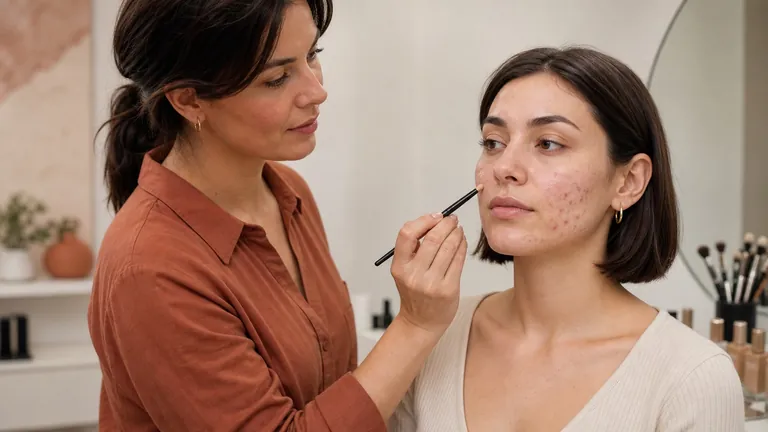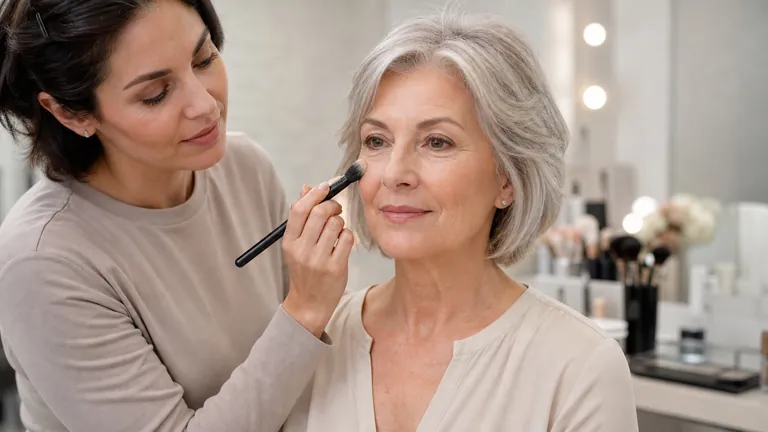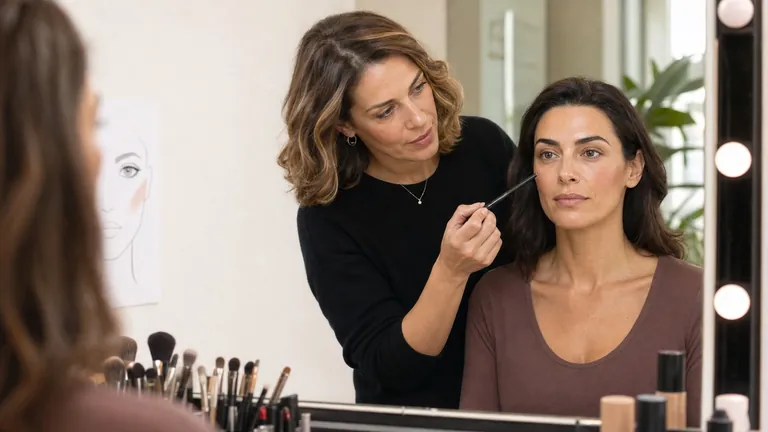
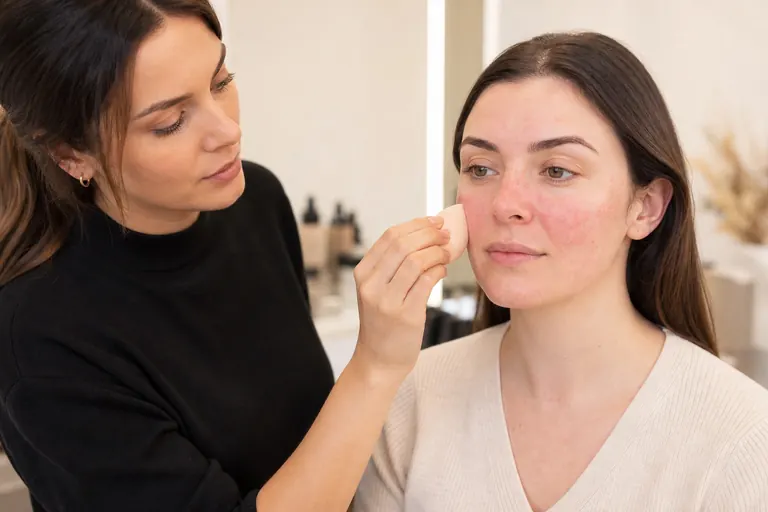
You can wear makeup with rosacea when your skin feels up to it. To soften redness, you do not have to cover your whole face: a light base and a touch of corrector in a few spots may be enough. The best choice is makeup you can put on and take off without aggravating your skin.
If you are doing someone else’s makeup, ask how their skin feels before you start and as you work. Redness alone will not tell you whether a product feels comfortable. This is a makeup guide; diagnosis and treatment belong with a healthcare professional.
Before you start: how does the skin feel today?
Before opening the kit
Ask about skin and eyes
Proceed
Intact skin, no discomfort
Simplify
Reactive skin that feels fine today
Stop
Burning, swelling or broken skin
Seek help
Eye pain or a change in vision
Rosacea is different from sensitive or temporarily reactive skin. A red face can have several causes, and you cannot tell them apart by sight alone. Redness may also be less obvious on darker skin, so ask about warmth, burning or stinging.
Ask a few useful questions. Does the skin burn or feel tight today? Are the eyes uncomfortable? Which products have been used without trouble? Is there advice from a dermatologist to follow? If a cosmetic caused a significant reaction before, do not try a new one without medical advice.
What is happening | What to do |
|---|---|
Skin is intact and feels comfortable | Use familiar products, add a little at a time and keep checking how the skin feels. |
Skin is often reactive but feels fine today | Keep the routine simple and agree on the coverage. Stick to products used without trouble before. |
Burning, swelling, a rash or broken skin is already present | Do not cover the problem with makeup. Postpone application on that area and seek medical advice. |
Discomfort starts during application | Stop and do not add more. Gently remove the product you have just applied if you can. |
If you think a cosmetic may be causing the problem, read what to do after a reaction to makeup. Do not reapply the product to see whether it happens again.
If the eyes are red, burning or gritty, skip eye makeup and seek prompt medical advice. Eye pain, blurred vision or sensitivity to light need urgent medical attention. If breathing becomes difficult or the tongue or throat suddenly swells, call your local emergency number.
Prepare the skin without overcomplicating the routine
If the face is already clean, there is no need to wash it again for the sake of a makeup appointment. When cleansing is needed, use a familiar cleanser, lukewarm water and your fingertips, with no scrubs or brushes. Pat dry. Follow any instructions for prescribed treatment and apply a moisturiser the skin already tolerates once it is dry. Let products settle as directed; there is no single waiting time that works for everyone.
Use a tolerated broad-spectrum sunscreen with SPF 30 or higher every day, in the amount and at the reapplication intervals on its instructions. Foundation with SPF may not provide enough protection on its own. For help with sunscreen and makeup layering, consider the whole routine. If foundation pills or slips, try a different product combination ahead of time. Do not fix it by rubbing or using less sunscreen.
Choose a base that goes on and comes off easily
A ‘sensitive skin’ label cannot tell you how your own skin will respond. Think about what you have used comfortably before and how much blending the formula needs. A sheer foundation that takes a lot of rubbing may be harder on the skin than a higher-coverage product used sparingly.
Product | When it may help | What to look for |
|---|---|---|
Liquid foundation | Evening out the complexion in a thin layer | Does it spread without repeated blending? Can you remove it easily? |
Cream corrector | Covering one area the base has not evened out | Start with very little. If it builds up, do not spread it across the face. |
Fine powder | Setting an area where makeup moves | If it brings out dry patches or texture, use less or leave it out. |
Our guide to foundation texture, coverage and finish compares the look and feel of different formulas. No one category suits everybody.
Where possible, choose fragrance-free products. ‘Fragrance-free’ and ‘unscented’ are not the same; words such as ‘natural’ or ‘hypoallergenic’ do not promise a reaction-free product. Knowing how to read a cosmetic label helps you check ingredients and warnings, but the list alone cannot predict how your skin will respond.
Try one new product at a time, well before you need it. The American Academy of Dermatology recommends using it on a small area, such as the inner arm, twice a day for 7–10 days, following the product instructions. Stop if a reaction appears. An arm test may flag a problem, but it cannot promise that the face will react the same way. If you need to find the cause of a possible allergy, a dermatologist can carry out diagnostic patch testing.
Green corrector and foundation: a light touch in the right place
Wash your hands and set out a clean palette. If you work on clients, dispense products without contaminating their containers and use properly cleaned tools between people. Our guide to brush and sponge hygiene explains the practical steps. Choose a brush or sponge according to which lets you apply the product with fewer passes.
Look at the face in neutral light and decide how much redness you want to soften. It is fine to leave some natural colour variation visible.
Put a small amount of product on the palette and take the excess off your tool. Adding a little more later is easier than removing a thick layer.
Try a light layer of foundation first. If one area still looks redder than you want, place a little muted green corrector just there. Choosing the right corrector also depends on the depth and undertone of the skin: a pale green can leave a visible cast.
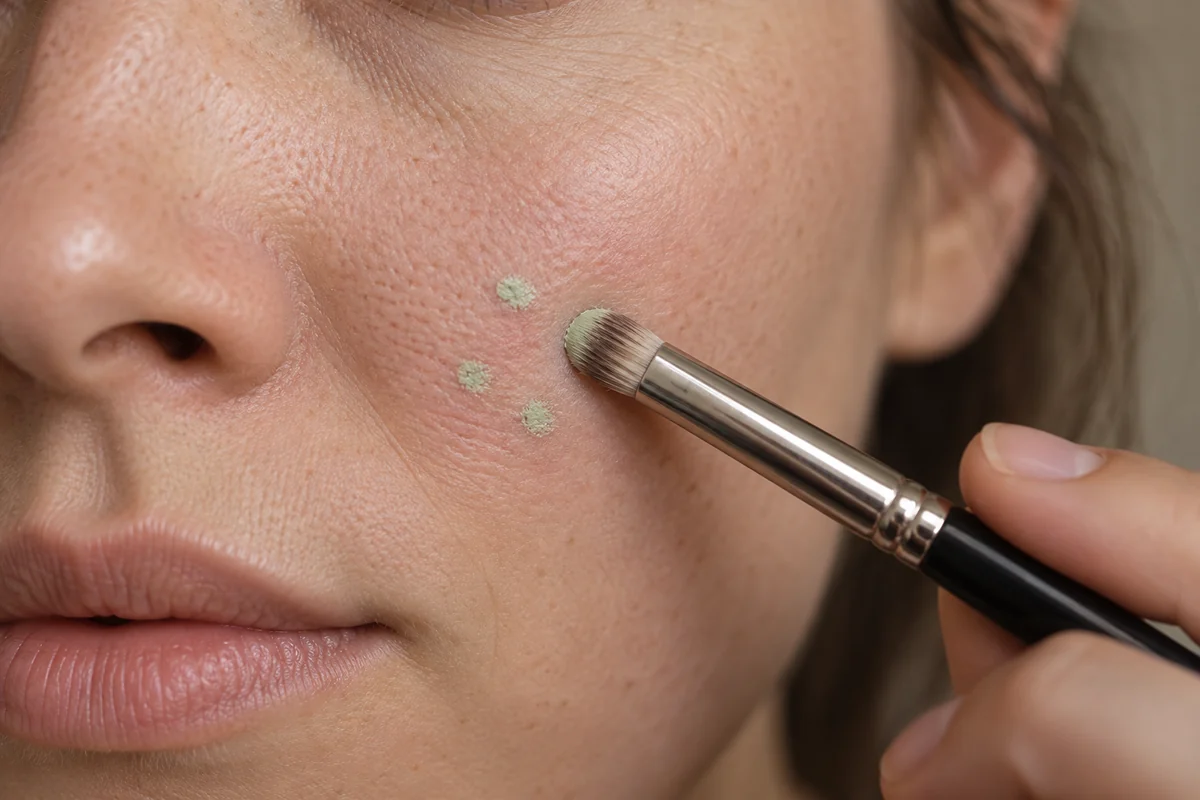
Use green corrector only on the redness you want to soften, not across the whole face. Press lightly and soften only the edge. Avoid brushing back and forth over the skin. Stop if you feel burning or stinging.
If you used green corrector, cover it with a light layer of foundation matched to the skin and blend the edge. If foundation is already on, work only on that spot.
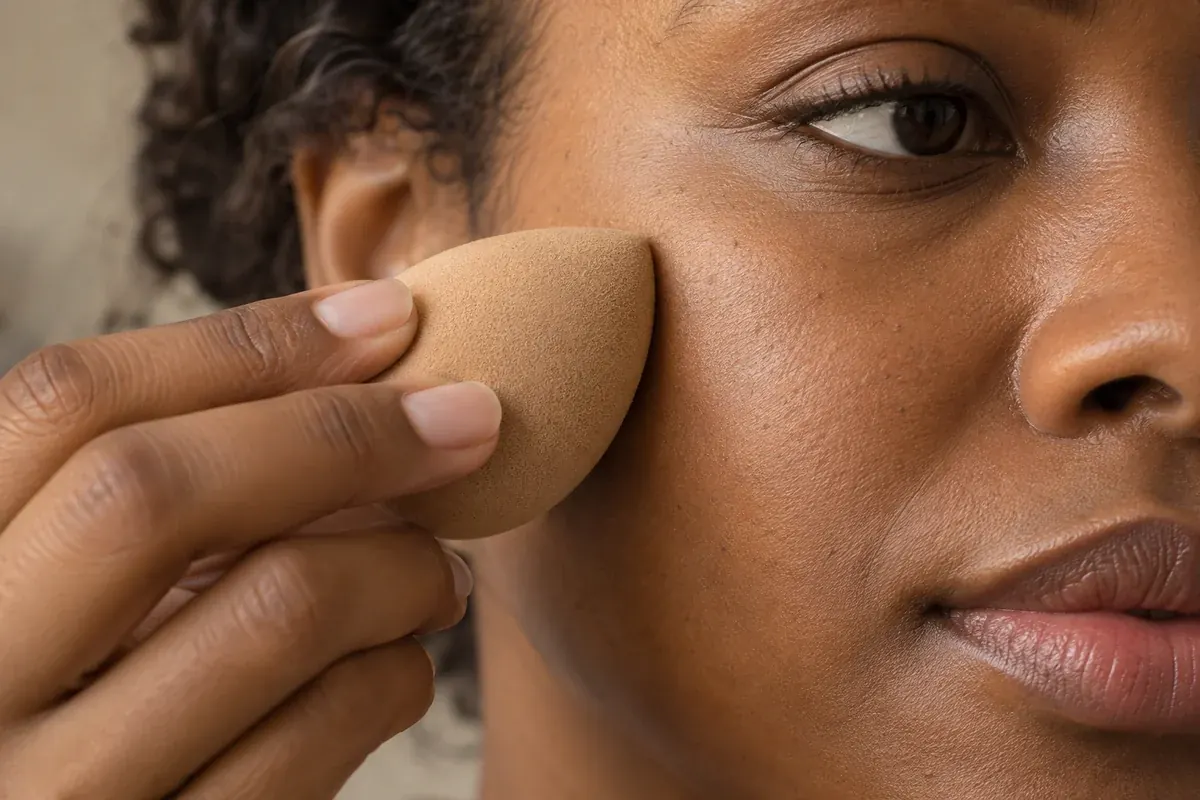
Press lightly so the corrector stays in place and the skin is not rubbed. Check the result from a normal viewing distance, not just in a magnifying mirror. If the skin feels fine and the base looks even, you can stop. Add a little powder only where it helps and only if it is already tolerated.
A red cheek: when a little makeup is enough
If the cheek looks red but does not burn, try a light layer of foundation and check it in natural light. If you want to soften one area further, tap on a little green corrector and cover it with foundation. If the base alone looks right, skip the corrector. There is no set number of steps you have to complete.

When green corrector shows through
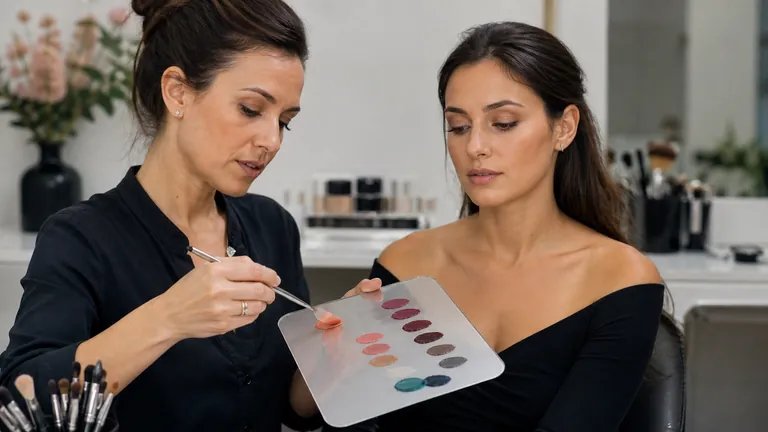
On the practice surface, a thick layer of pale green still shows beneath foundation. Before adding more base, try less corrector and a shade that works better with the complexion. On the face, lift away excess gently only if the skin can tolerate it; stop if it feels uncomfortable. The practice surface shows colour, not skin tolerance.

Event makeup: trials, heat and touch-ups
For a long event, try the whole look on an ordinary day and practise removing it too. Notice where the base moves or gathers, then plan a small touch-up for those areas. Do not pile on extra layers and setting spray to extend the wear of makeup that already feels uncomfortable.
If you are working with a client, choose a space that does not overheat their face and ask which situations tend to bring on flushing; triggers differ from person to person. During a makeup trial before an event, plan to check their skin again on the day. A successful trial is no automatic go-ahead.
Skin burns on the event day: what now?
The trial went well, but the skin burns on the day of the event. Do not apply foundation just because the look was agreed earlier: postpone it and suggest medical advice. If the skin feels fine, use the products from the trial and check in before touch-ups. Stop if discomfort begins during application.

Remove makeup without rubbing
Think about removal while choosing your foundation. Use a familiar cleanser or remover suited to the formula, follow its directions and give it time to work where instructed. Do not press harder to make the job quicker. If you use a pad, choose a soft one and saturate it well. Read more about removing face, eye and lip makeup gently.
If the skin is clean after one pass, there is no need for a second cleanser by default. Our guide to single and double cleansing helps you decide based on what remains and what the skin already tolerates. Pat dry. If removing your makeup regularly takes a lot of rubbing, try a different formula next time.
Five mistakes that make coverage heavier
Putting green corrector across the whole face when foundation alone would do.
Hiding a grey or green cast under more foundation instead of changing the amount or shade.
Buffing for too long to make a difficult formula spread.
Adding primer, powder and setting spray simply because they are part of a routine.
Opening a new product on the event day without testing how it applies or comes off.
Before you finish, ask: does the skin still feel comfortable? Does the colour look even in normal light? Can you see any green or built-up product? Do you know how you will remove the makeup? A good result in the mirror does not tell you everything about how the skin feels.
To practise controlling product amounts and building coverage gradually, explore the Beginner Makeup Course. It focuses on cosmetic technique.
Frequently asked questions about makeup for rosacea
Can I wear foundation every day?
If your skin feels well and you have used the product comfortably before, it may fit into your daily routine. Choose something you can also remove easily, and keep following your dermatologist’s advice. Stop applying it if burning starts, even if it is your usual foundation.
Do I always need green corrector?
No. Start with foundation. If you like the result, you can leave out the green. It may help on a patch of redness you want to soften, but it does not treat rosacea. Use very little: a visible green layer will need more makeup to cover it.
How do I avoid an ashy finish on darker skin?
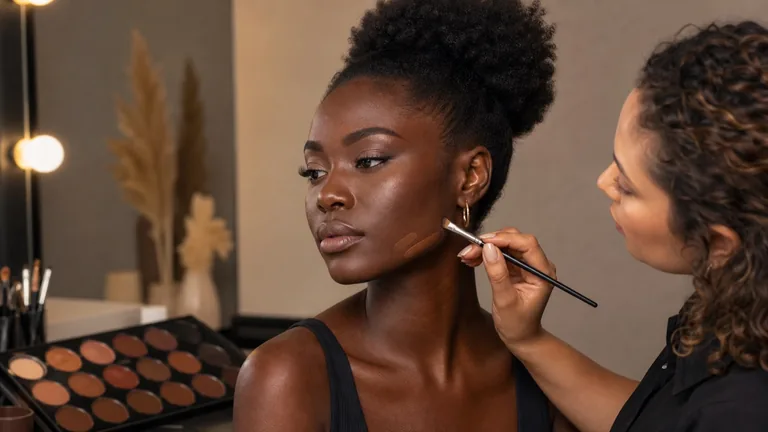
Check the shades of your foundation, corrector and powder first. If they are too pale, they can dull the complexion. Try green only where there is redness you want to soften and check it in neutral light. If it leaves a cast, use less or try a better shade; do not cover the whole face with more foundation to hide it.
Do I need waterproof makeup and setting spray?
Not necessarily. They may help for a long day, but only if your skin tolerates them and you can remove them without scrubbing. Test the makeup and its remover together before the event. If the look already wears well, extra setting products are unnecessary.
Dermatology and public health sources
American Academy of Dermatology — 7 rosacea skin care tips dermatologists recommend: gentle care, cosmetics and sun protection.
American Academy of Dermatology — How to test skin care products: trying a new cosmetic and the difference from medical patch testing.
American Academy of Dermatology — Rosacea: signs and symptoms: skin and eye symptoms across skin tones.
NIAMS — Rosacea: diagnosis, treatment, and steps to take: diagnosis and eye health.
NHS — Rosacea: eye symptoms that call for urgent care.
Last substantive update: 25 September 2026. Sources checked on the same date.