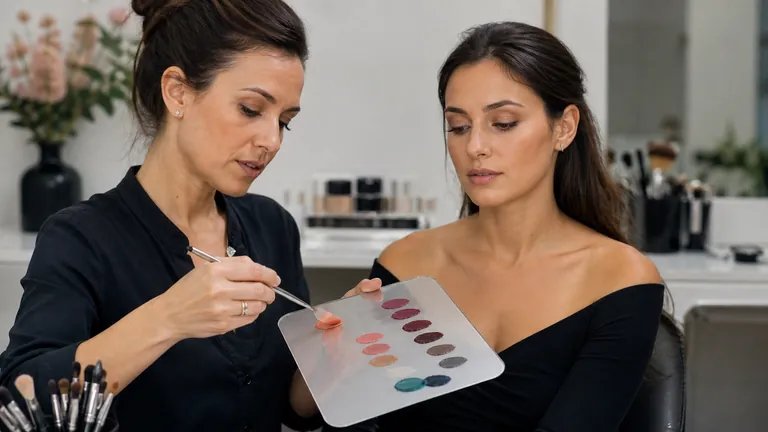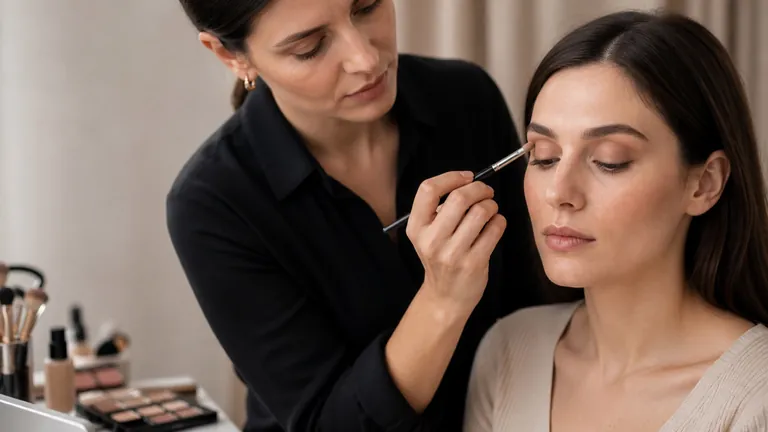
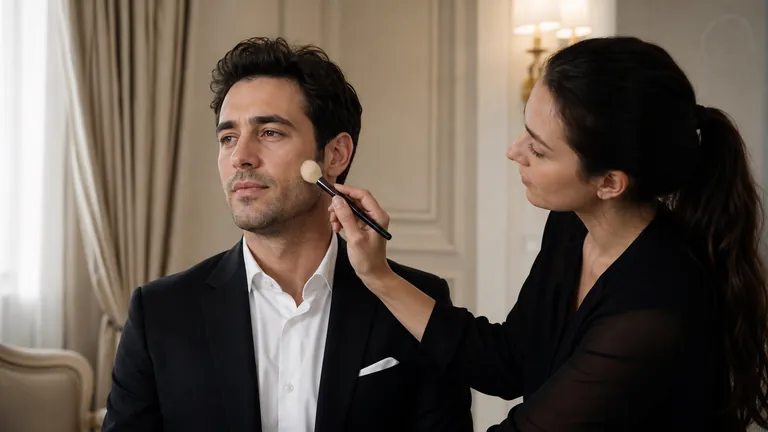
Men’s makeup and groom makeup are not reduced versions of somebody else’s routine, and there is no single correct finish. The service may lightly even the complexion and manage shine, or it may create defined brows, visible colour and an editorial result. The design comes from the person, occasion, clothing, light and the degree to which they want the makeup to be visible in the mirror and on camera.
Short answer: for a natural result, prepare with a few settled layers, correct only the areas agreed, integrate complexion product around beard and hairline, set by zone and check in real light and on camera. For a groom, add a trial, collar and jacket checks, coordination with hair and dressing, and a simple touch-up kit. Natural does not mean invisible at every distance; it means coherent with the wearer’s skin, identity and brief.
This guide is written by Irene Tomasi, a makeup artist with 10 years of professional experience. It owns consultation, shaving and beard transitions, complexion, correction, wear and photography for men and grooms. The photographic makeup guide owns general camera technique, while the professional bridal makeup guide owns the wider wedding-service workflow. This page connects those skills without assigning taste, skin type or cosmetic habits by gender.
Begin with the result the person wants
The brief decides how visible makeup should be
Natural is a shared decision, not a gender rule
Grooming
Near-invisible local correction
Event
Natural complexion and definition
Editorial
Deliberate colour and shape
A better opening question than ‘Do you want it to look as if you are not wearing makeup?’ is ‘How do you want to see yourself, and how do you want to appear in photographs?’ One client may want only redness and shine reduced. Another may want even skin, stronger brows, more eye definition or a visible creative look. Show several references and use concrete terms such as sheer, natural, polished, luminous, defined and editorial. Makeup should not be presented as something the wearer must hide or justify.
Record relevant habits and comfort: products already tolerated, shaving timing, beard or moustache, glasses or contact lenses, known reactions, disclosed topical treatment, event length and access to touch-ups. A structured makeup client record separates service consent, image permission and proportionate information handling. A makeup artist asks only what is needed and does not diagnose.
Agreed result | Technical priority | Final check |
|---|---|---|
Near-invisible grooming | Local correction, real texture, minimal product | Conversational distance and natural light |
Natural event look | Thin complexion, controlled dimension and brows | Ambient light, flash, movement and wear |
Defined or editorial look | Deliberate colour, contrast and shape | Coherence with clothing, styling and image use |
Men’s makeup, groom makeup and camera grooming are different services
A professional headshot touch-up may be short and prioritise immediate control in front of a known camera. Event makeup must tolerate movement, warmth, hugs, changing light and contact with clothing. Groom makeup adds wedding timing, a trial and coordination with hair and dressing. Fashion, performance or social content may welcome more obvious texture, colour or definition. Gender does not decide intensity; the brief, context and consent do.
Treat a groom’s trial as a decision-making session rather than a rushed copy of the wedding day. Photograph the result without filters, record products and quantities, test the chosen shaving timing, agree the schedule relative to hair and dressing, and decide who will keep touch-up products. A trial cannot make weather or skin identical, but it removes avoidable decisions from the day.
Assess skin, beard and shaving before preparation
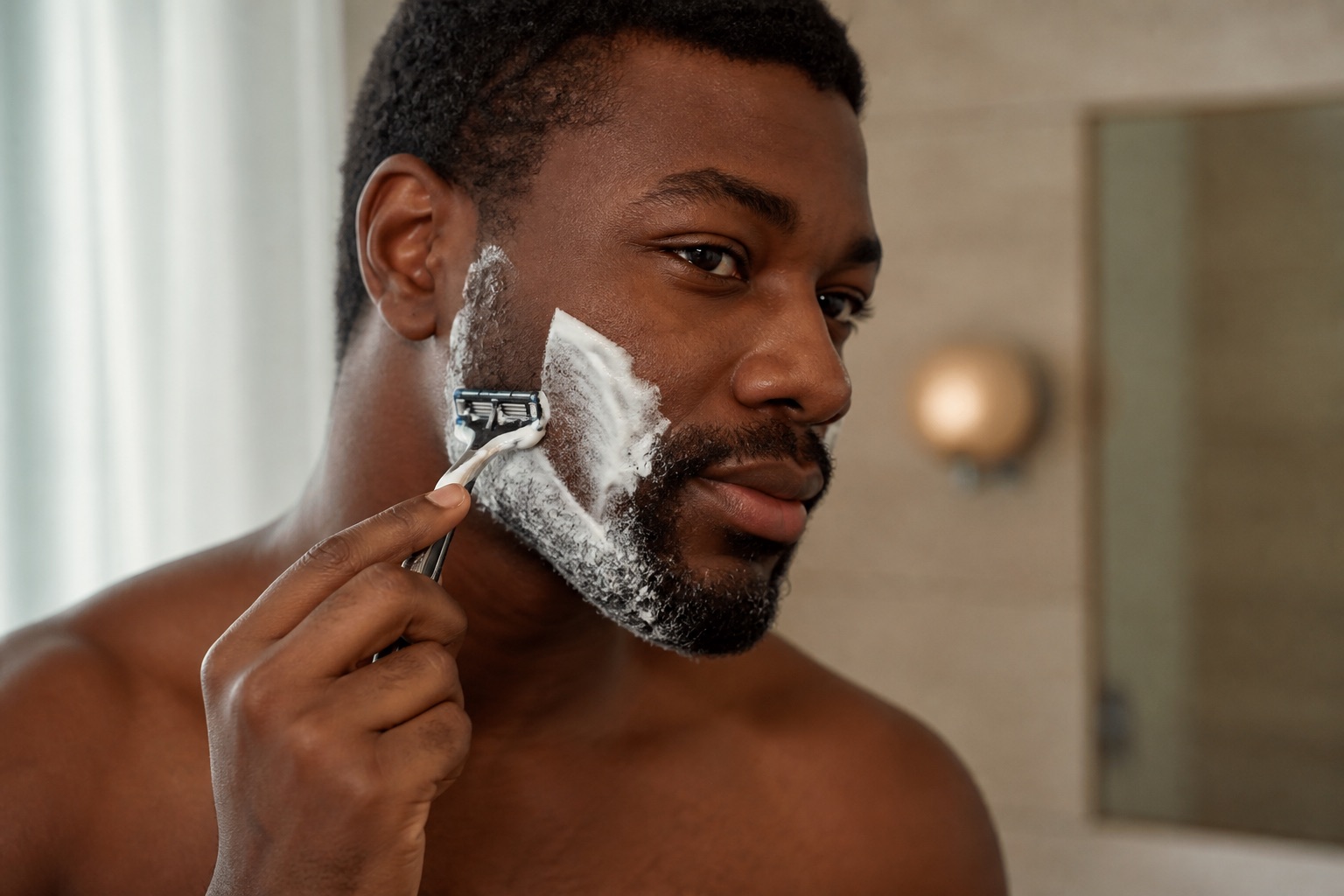
Do not assume that every man has thicker, oilier or more resistant skin. Observe what is present: dehydrated areas, shine, visible follicles, sensitivity, redness, texture, recent shaving and ingrown hairs. Ask when and how the person shaved. A very close shave immediately before makeup can leave nicks, burning and abrasion; a long beard instead requires clean transitions without coating the hair in foundation.
Do not apply cosmetics over open cuts, active bleeding, weeping or marked irritation. Exclude the affected area or postpone the service and suggest appropriate healthcare when needed. For inflamed acne and cosmetic boundaries, follow the separate makeup for acne-prone skin guide. A sign that needs assessment should not be concealed merely because photographs are scheduled.
Prepare the skin without building an unstable stack
Preparation should improve comfort and product distribution, not load the face with steps. Cleanse gently if required, apply already tolerated skincare and allow it to settle. Add hydration where skin feels tight and reduce rich formulas where movement or shine is expected. The guide to preparing skin before makeup explains order, amount and timing.
Primer is optional and local. It may alter slip, adhesion or visible pore texture but cannot rescue incompatible layers. Wait between steps and test with both light pressing and movement. If the film pills, separates or slides, reduce the amount and revise the combination instead of burying the problem under powder.
A natural complexion begins with local correction
Start where evenness is actually wanted: central face, redness around the nose, discolouration, post-blemish marks and beard shadow when the client wishes to reduce it. Apply thin layers and fade their edges into untreated skin. Only then decide whether a wider foundation veil is needed. This order avoids covering the whole face to solve a few local differences.
Match shade and depth on the face in relation to the visible neck and chest, not on the hand. Review after settling and under more than one light. The foundation texture, coverage and finish guide separates formula from application; the guide to makeup for deep skin tones addresses depth, saturation, correction and ashiness.
Do not lighten the entire under-eye and centre of the face to create a supposedly cleaner result. An overly pale correction may be conspicuous on camera and alter facial dimension. Neutralise only the colour component agreed, add a small amount of skin-coloured concealer and recheck with the face relaxed. Creases and movement belong to believable skin.
Integrate product around beard, moustache and hairline
Four boundaries that make complexion believable
Refine skin without coating facial hair
Beard
Thin base on visible skin
Moustache
No deposit along the edge
Sideburns
Transparent hairline transition
Jaw
No foundation stripe
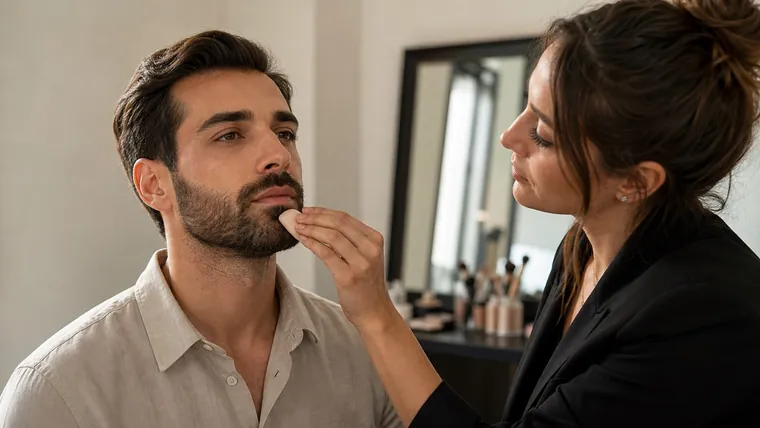
Beard areas need less product and more controlled direction. Work onto visible skin between hairs with a small sponge or precise brush, then comb through beard and moustache to remove residue. Do not drag a full layer from the cheek into the hair. Fade the boundary through minimal overlaps: a foundation stripe around the beard is usually more artificial than the colour difference being corrected.
Beard shadow does not always need neutralising. Ask whether the client wants it softened, preserved or used as part of facial structure. If it is corrected, choose a proportionate neutralising tone and cover it with little product. An oversaturated orange correction can show in daylight or transfer onto the collar. Check moustache, sideburns, hairline, brows and light hairs that catch powder.
Correct redness, under-eyes and blemishes without a mask
For diffuse redness, apply a thin skin-coloured base first and reassess what remains. Work locally on capillaries or stronger points. Visible green corrector requires more foundation to cover and can create a heavier result. Under the eyes, distinguish colour, anatomical shadow and depth: cosmetics can change colour but cannot remove a hollow. On an intact blemish, use a clean tool, press rather than rub and leave the edge almost transparent.
The corrective makeup and visagism guide develops proportion, discolouration and dimension. Professional correction still has to work with real skin, movement, viewing distance and the person’s request. Maximum coverage is not the same as maximum quality.
Manage shine without flattening the face
A completely matte complexion can look heavy in person and flat in photographs. Distinguish moving oil or perspiration from intentional skin luminosity. Use little powder on the central forehead, sides of the nose, upper lip and contact-prone areas; leave cheeks and facial perimeter flexible when the chosen finish allows. Press powder and remove excess. Rubbing can lift the correction underneath.
More product does not make pores or raised texture disappear. Heavy foundation, abundant powder and metallic highlight can emphasise relief. Use short controlled movements, inspect from the side and accept that real skin retains detail. Judge the result at the distance and in the light where it will be worn, not solely through a magnifying mirror.
Define brows, eyes and lips only when the brief calls for it
Comb brows and fill discontinuities only to the agreed degree. Do not darken them automatically. The eyebrow mapping guide distinguishes structure, shade and intensity. Eyes may be evened, tightlined, shaded or coloured; check comfort, symmetry and interaction with glasses. No eye technique is required simply because a service is labelled men’s grooming.
On the lips, avoid traumatic exfoliation, condition in advance and choose balm, tint, pencil or lipstick according to the brief. A very glossy lip can catch flash; a fully matte film can expose dryness. Neither is inherently masculine or feminine. The correct finish is the one selected with the wearer and tested in context.
Collar, jacket, hairline and ears reveal the finish
Before completion, inspect hairline, sideburns, ears, jaw and neck. Do not extend foundation onto a shirt collar to force uniformity. Fade the face cleanly and correct only visible skin with minimal product. Ideally the client dresses after complexion and setting spray have settled, with clean protection around the neck. If already dressed, use a clean cape and work away from fabric.
No powder or spray can promise zero transfer. Reduce it through thin layers, local setting, settling time and a careful test where appropriate. Never spray clothing without checking the product instructions and stain risk. Hands and tools must be clean before adjusting a tie, bow tie, lapel or collar.
Check camera finish, flash and viewing distance
A camera may compress contrast, reveal a colour mismatch or render a powder as a bright patch. Test without filters and with consistent exposure in at least two conditions: soft frontal light and, when relevant, direct light or flash. Review the whole face as well as details, but do not try to erase every pore seen at 100 per cent magnification.
Use the photographic makeup guide for light sources, powders, colour and flashback, and how to photograph makeup with true colour for documentation. For a groom, include a frame beside other people so the complexion remains coherent without copying a partner’s or guest’s finish.
Value and texture dominate in black-and-white photography; undertone and saturation remain critical in colour. Do not design a face for one still image alone. The client will wear it in motion, at several distances and in several lights. Camera review is a check, not the sole judge.
Plan the groom trial, wedding timing and touch-up kit
At the trial, agree shaving or beard length, skincare, coverage, finish and treatment of any redness. Take unfiltered photographs and record products, tools, amounts and working time. If clothing is available, consider collar colour, shirt opening and venue light. Repeat the chosen shaving timing before the event rather than discovering a new skin response on the day.
Schedule makeup after skincare and coordinate it with hair and dressing, leaving space for photographs and delays.
Finish early enough for products to settle, but not so early that the look remains unchecked for hours before the ceremony.
Prepare blotting papers, a small amount of compatible powder, a clean applicator, minimal concealer and the chosen lip product.
Show how to blot perspiration or tears without rubbing and identify who can perform the touch-up.
Recheck face, neck, ears and collar before the main photographs.
Service format | Typical scope | Suitable context |
|---|---|---|
Rapid camera touch-up | Local shine, redness and under-eye correction | Short portrait session with prepared skin |
Complete grooming | Preparation, modular complexion, beard, brows and setting | Ceremony, event, video or extended photo session |
Defined makeup look | Complexion, dimension, eyes or lips and deliberate colour | Fashion, performance or a visible personal request |
Describe time and price according to the real service. A ten-minute grooming promise is not credible when the brief includes a trial, beard integration, correction and camera testing. State travel, trial, touch-ups, attendance and inclusions clearly.
Professional workflow from brief to final check
From the wearer’s request to the camera check
Each decision prevents an automatic extra layer
Brief and comfort
Skin, beard and preparation
Correction and boundaries
Wear, clothing and camera
Agree visibility, context, clothing, image use, comfort and consent.
Assess skin integrity, beard and shaving and exclude unsuitable areas.
Prepare with a few already tolerated products and allow settling time.
Correct local redness, under-eyes and intact blemishes before extending the base.
Integrate beard, moustache, sideburn, hairline and jaw edges without residue.
Define brows, eyes, lips or dimension only according to the brief.
Set by zone, let the film settle and check clothing contact.
Review in person, on camera and after several minutes of movement.
Common mistakes in men’s and groom makeup
Assuming every man wants an invisible, matte and colourless result.
Applying high-coverage foundation everywhere before deciding which areas need correction.
Leaving residue on beard, moustache, sideburns, brows or hairline.
Over-lightening the under-eyes and facial centre until they separate on camera.
Using powder to remove every reflection and exposing dryness and texture.
Forgetting ears, jaw, neck, collar and clothing transfer.
Skipping trial and camera test because the requested look sounds simple.
Covering shaving cuts, bleeding or marked irritation instead of stopping.
Hygiene, comfort and service boundaries
Wash hands, prepare a clean station, decant creams and fluids, use suitable single-use applicators and never double dip with a tool that has touched skin. Brushes and sponges must be washed, fully dry and protected from recontamination. The complete makeup hygiene guide develops the workflow without replacing manufacturer instructions.
Stop if burning, swelling, persistent watering, breathing difficulty or another significant unexpected reaction develops. Severe symptoms require urgent medical assistance appropriate to the situation. Do not reuse a contaminated applicator on another person or share eye and lip products directly. The wearer’s comfort has priority over the photograph.
Checklist before handing over the look
The finish must work on person, clothing and image
Never judge the complexion from one close-up alone
In person
Real texture and comfort
Clothing
Clean collar and settled base
Camera
Shade, flash and shine
Does the result match the agreed visibility and does the client recognise themselves?
Are shade and finish coherent across face, neck, ears and visible skin?
Are beard, moustache, brows and hairline free of residue?
Are shine and texture controlled without a flat or powdery mask?
Are collar and jacket clean and has the complexion film settled?
Has the face been checked in real light, flash or the intended recording setup?
Does the client know how to blot, touch up and report discomfort?
Develop this adaptable method through the online makeup courses, the beginner makeup course, the professional makeup products course and the complete makeup artist course. Practice on different people and rigorous documentation create flexibility; no course replaces healthcare assessment.
Frequently asked questions about men’s and groom makeup
Does men’s makeup have to be invisible?
No. It may be near-invisible, natural, defined or editorial. Visibility is agreed with the wearer according to identity, context and photography, not imposed by gender.
What is different about groom makeup?
A groom service adds a trial, long wear, coordination with clothing and dressing, changing light, photographs and a touch-up plan. The base technique may overlap with grooming, but the service is broader.
When should a groom shave before makeup?
It depends on skin, method and individual response. Test the same timing in advance and avoid a last-minute shave that leaves open cuts, burning or marked irritation.
Can makeup be applied around a long beard?
Yes. Work mainly on visible skin and boundaries, use little product, comb the hair and remove residue. Do not saturate beard and moustache with foundation.
How is beard shadow softened?
First confirm that the wearer wants it softened. Use proportionate chromatic correction beneath a thin base and check in daylight. An oversaturated corrector can be more visible than the shadow.
Is foundation needed over the entire face?
Not always. Local correction may be enough. Extend the base only when the agreed result needs more evenness and keep the boundaries transparent.
How can the face avoid looking too matte in photographs?
Set only moving or oily zones, preserve controlled luminosity elsewhere and test on camera. Excess powder can flatten facial dimension and expose dry texture.
Does powder prevent all transfer onto a collar?
No. It may reduce transfer alongside thin layers and settling, but heat, pressure and friction remain. Keep the complexion boundary clean and protect clothing during application.
Is a groom makeup trial necessary?
It is strongly advisable when the day includes a ceremony, professional photography, sensitive skin, beard work or specific expectations. It tests visibility, shaving timing, wear and touch-ups.
Can brows, eyes and lips be defined?
Yes, when they belong to the brief. No cosmetic element is prohibited by gender. Choose shape, colour and intensity with the wearer and verify them in context.
How should camera finish be tested?
Photograph without filters in soft light and, if relevant, direct light or flash. Check shade, face-to-neck transitions, powder, texture and shine without retouching every magnified detail.
What belongs in a groom touch-up kit?
Blotting papers, a small amount of compatible powder, a clean applicator, minimal concealer and any lip product used. Keep the kit simple and provide clear instructions.
Can makeup cover shaving cuts?
Do not apply it over open or bleeding cuts. Avoid the area and postpone or limit the service when skin integrity is compromised. Seek appropriate medical guidance when needed.
How long does men’s or groom makeup take?
It depends on the brief. A camera touch-up may be short; complete grooming with beard work, trial and photography checks takes longer. Confirm duration and inclusions before the appointment.
Cosmetic safety sources and limits
U.S. Food and Drug Administration — Using Cosmetics Safely: read labels, wash hands, do not share makeup and stop after an unexpected reaction.
European Commission — cosmetics legislation: Regulation (EC) No 1223/2009 is the main EU framework for cosmetic-product safety and responsible persons.
NHS — cuts and grazes: basic wound care and signs requiring medical assistance.
Substantive review: 5 September 2026. This cosmetic educational guide by Irene Tomasi does not diagnose skin conditions or replace medical or dermatological care. Continue through the English makeup guide hub or develop technique through the online makeup courses while respecting client choice and professional boundaries.
Define natural lashes only when the brief calls for it
Choose formula, wand and visibility through the professional mascara guide.