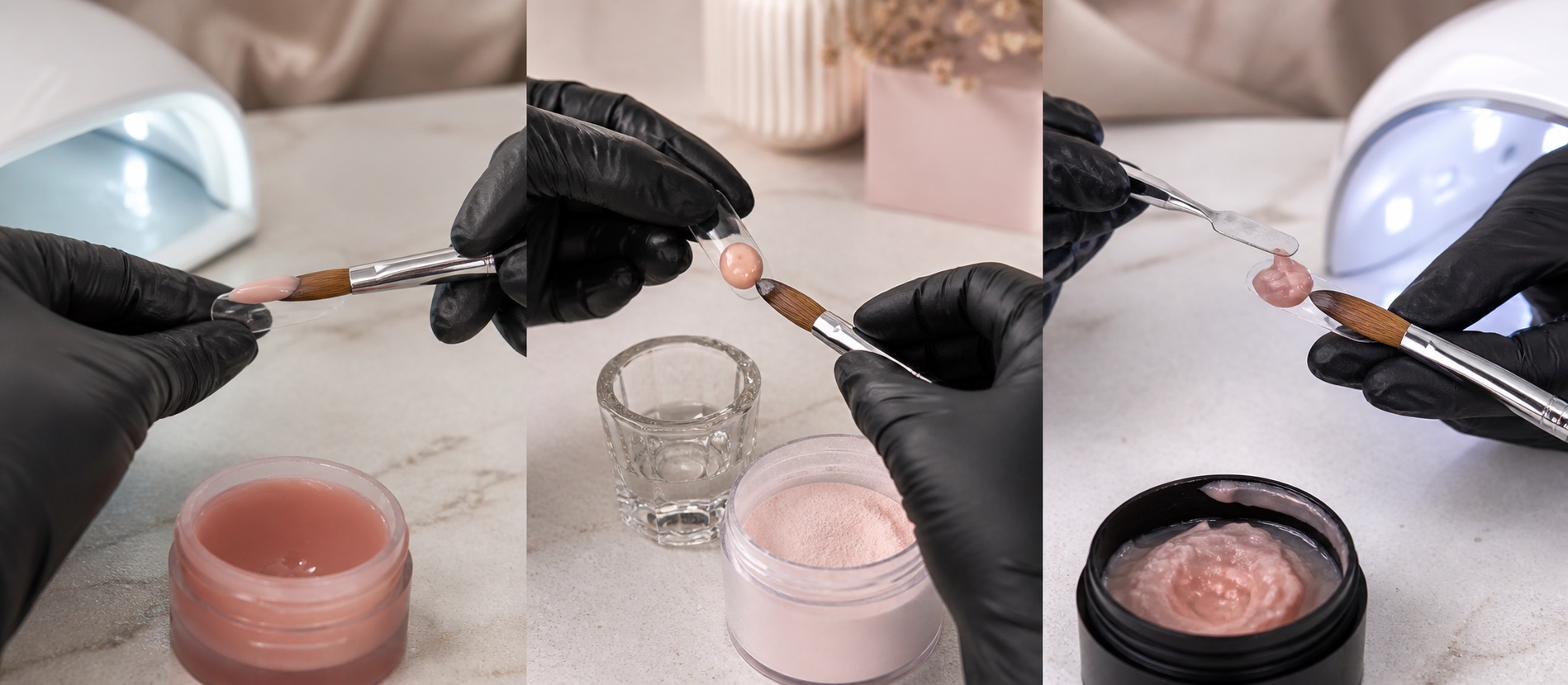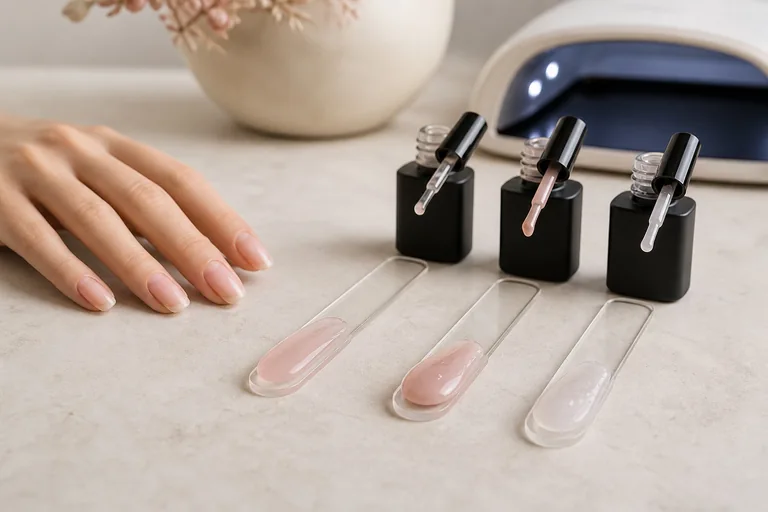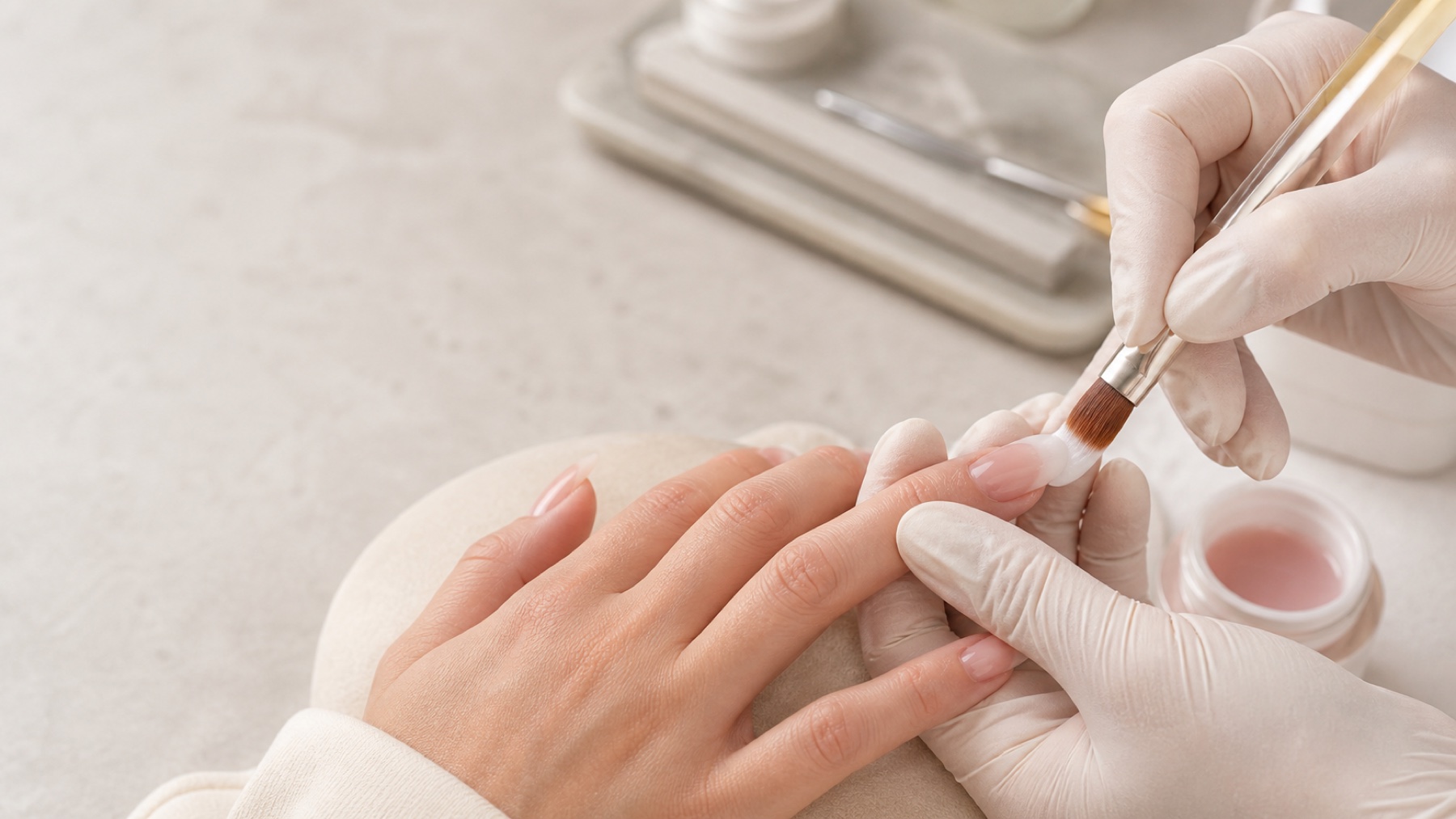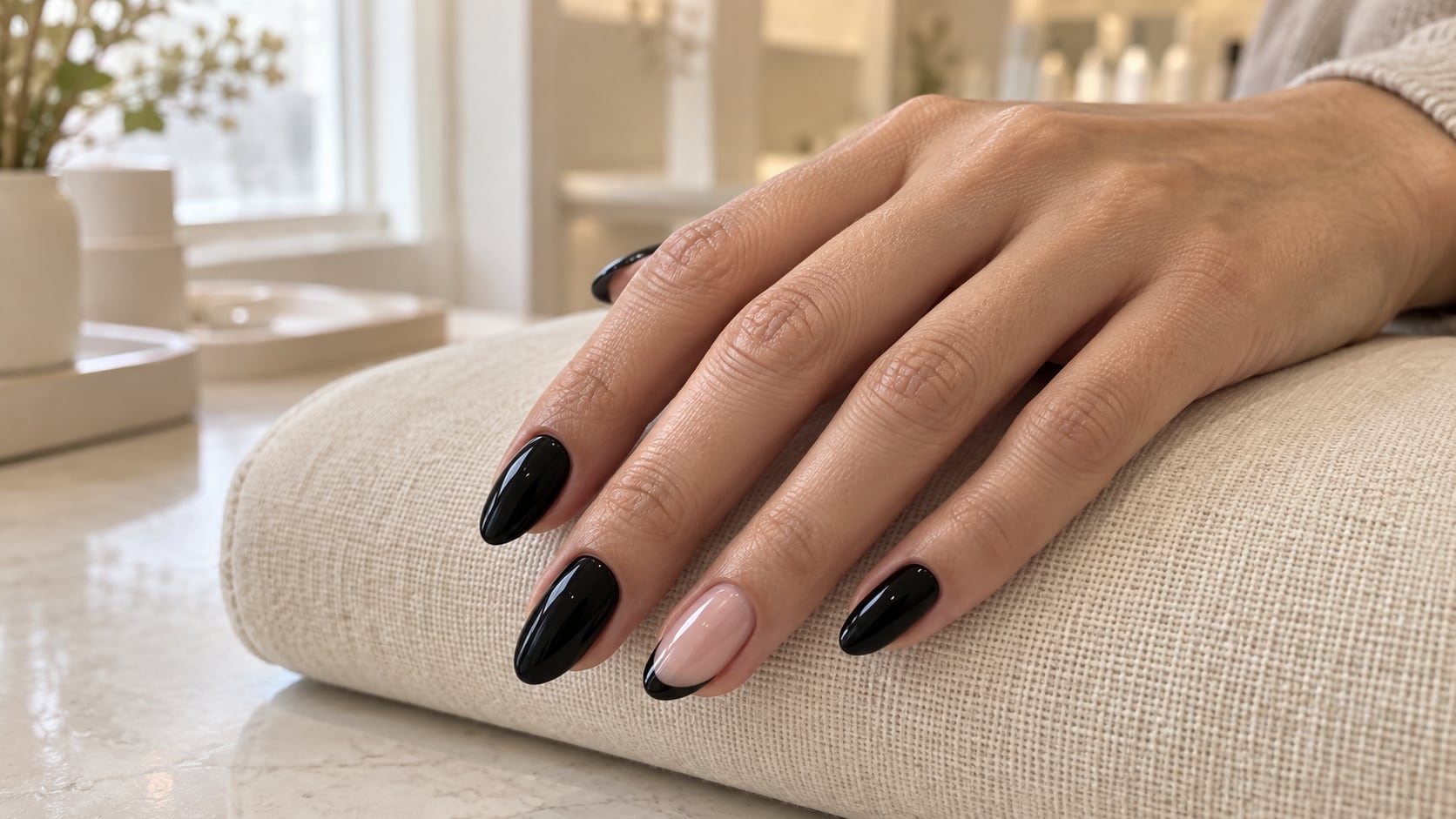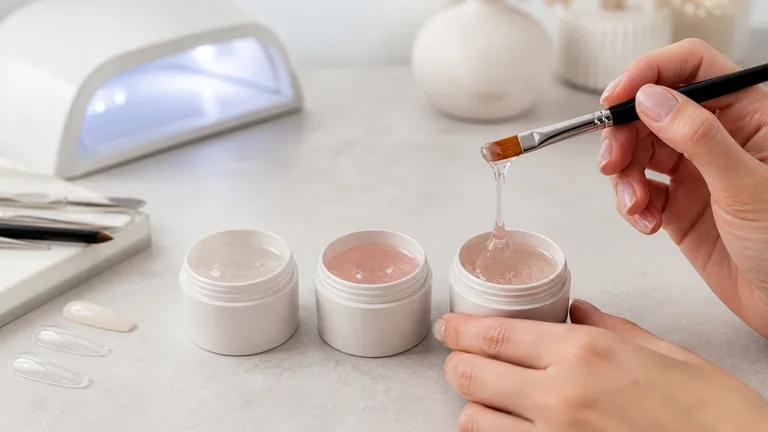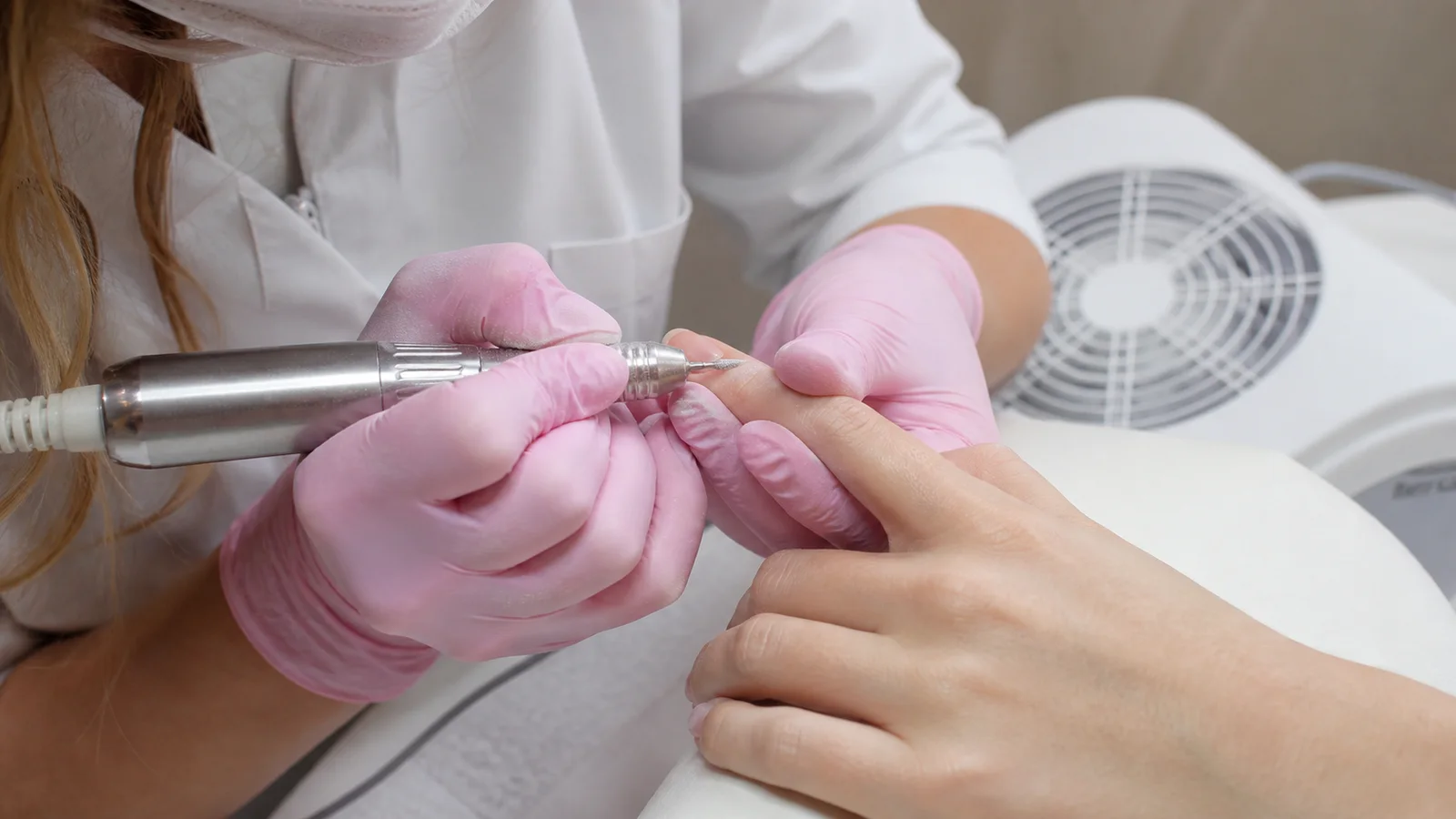
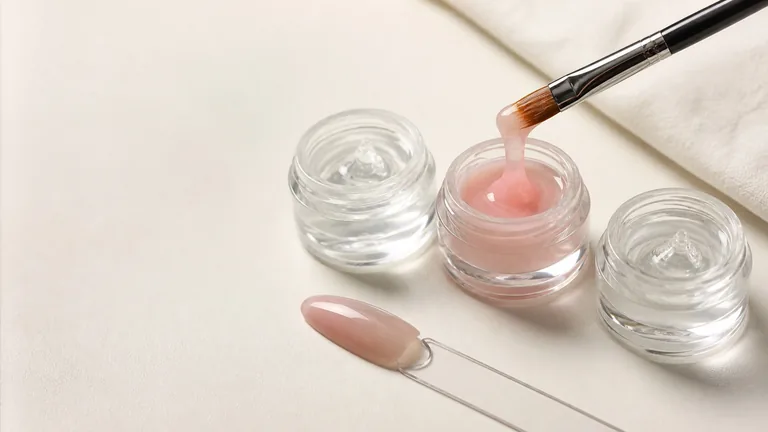
One-phase, two-phase and three-phase gel describe how a nail system distributes three jobs: bonding to the prepared plate, building the structure and finishing the surface. A one-phase gel may perform all three jobs; a two-phase system usually combines two and keeps one separate; a three-phase system assigns base, builder and finish to distinct products. The labels organise a protocol. They do not rank quality, retention, rigidity or skill level.
Choose from the exact product instructions, compatible lamp, service goal and suitable natural nail—not from the number of jars. ‘All in one’ does not mean one thick coat, no architecture or fewer cure checks. A product with a familiar name is not automatically interchangeable with another brand or line.
Commercial terminology is not fully standardised. Some brands call a base-and-builder product two-phase because a separate top is required; others use terms such as one-step, 3-in-1, builder base or all-in-one for different protocols. In this guide the phase names describe their common functional meaning, while the current label and instructions for the exact market always prevail. The gel nail extension guide owns the complete extension workflow; this page owns system organisation.
The three functions inside a nail gel system
Three functions do not always mean three jars
Adhesion, structure and finish remain separate decisions
Bond to the prepared natural nail
Build architecture and load support
Close and protect the surface
Count functions before counting containers. The adhesion stage creates a controlled interface with the correctly prepared plate. The building stage creates thickness, contour, apex and mechanical support. The finishing stage closes and protects the surface, determines the intended shine or matte effect and can influence scratch and stain resistance. A formula can be assigned to more than one role only when its instructions say so.
Function | What it must achieve | Common mistake |
|---|---|---|
Adhesion | A compatible, even connection between nail and builder | Adding every primer or base as insurance |
Building | Support length, shape, apex and service loads | Treating jar thickness as cured strength |
Finishing | Produce the documented surface and protect colour or structure | Assuming every all-in-one gel gives a durable high shine |
Preparation, dehydrator or primer when required, colour, art and inhibition-layer handling are separate decisions. They do not disappear because a builder has several functions. Use the guide to acid and acid-free primer, dehydrator and bonder to place adhesion aids in the correct part of the protocol rather than layering them automatically.
One-phase gel: one formula for several functions
In the common meaning, a one-phase or monophase gel can be applied in a thin bonding layer, used in greater quantity to build the structure and used again as the finish when that role is stated. The practical strengths are a smaller inventory, fewer product changes and a consistent formula throughout the service. It can work well when its viscosity, adhesion, cured behaviour and finish suit the nail and service.
One-phase never means one uncontrolled thick coat. The bonding film, structural placement and final layer are still distinct operational moments and may require separate cure cycles. Thick mass can move into the folds, generate a stronger heat spike or remain inadequately cured if it exceeds the validated layer or lamp conditions. Follow maximum thickness, cure mode and hand position for each stage.
Some all-in-one gels finish with adequate gloss; others are intended mainly as base and builder or benefit from a dedicated top. Some require a primer on selected clients, while others specify direct application to a prepared plate. Neither ‘3-in-1’ nor ‘one-step’ answers these questions. Record the product’s declared roles instead of translating its marketing name into an assumed recipe.
Useful when one known system covers the planned length, plate and finish with documented lamp compatibility.
Less adaptable when adhesion, structure and surface each need very different behaviours.
Not automatically cheaper if extra colour, top, primer or corrective filing is still required.
Two-phase gel: two functions together and one separate
A common two-phase arrangement combines base and builder, then closes the service with a separate top. The same gel may be worked first as a thin contact layer and then as the structural bead. After the documented cure, refinement and any inhibition-layer step, a compatible finish provides the surface performance. This keeps the body of the service compact while allowing finish selection.
The term is not universal. Before placing a builder directly on the natural nail, confirm that its current instructions authorise that use or identify the base it needs. Also check whether it is rigid or flexible, soak-off or file-off, and which lengths and service types it supports. A two-phase gel can be low, medium or high viscosity; phase count does not say how quickly it self-levels.
Two-phase organisation can be convenient for overlays, infills and extensions when the builder is familiar and the finish remains separate. The benefit is not simply ‘two jars instead of three’. It is a verified combination that reduces unnecessary decisions while preserving the required surface. Switching to a different top for shine, art or stock convenience still requires documented compatibility.
Three-phase gel: separate base, builder and finish
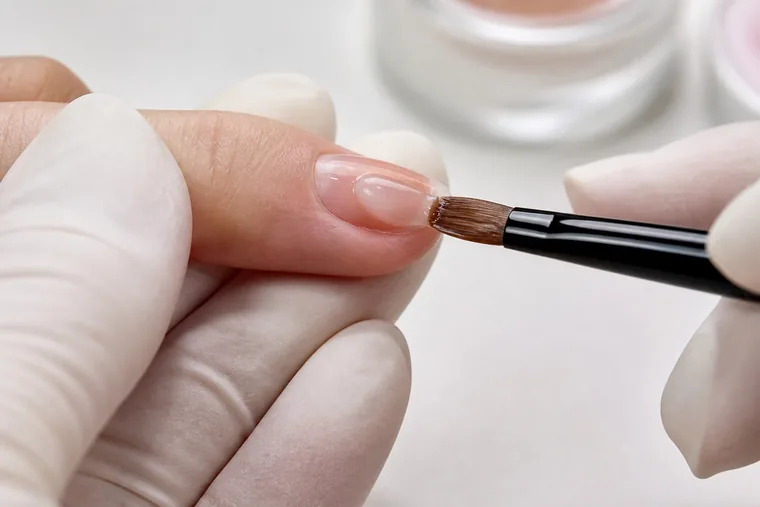
A three-phase system assigns adhesion to a base, structure to a builder and closure to a finish. Separation lets each formula specialise: a bonding or flexible base for the interface, a builder selected for architecture and length, and a top chosen for shine, stain resistance or another documented surface requirement. The approach can offer more control when each role is understood.
More products do not make the service automatically better. They increase the number of interfaces, inventory decisions and opportunities to mix untested lines. A three-phase protocol works when base, builder, finish and lamp are an identified system and the technician knows the amount and cure requirements for every layer. It becomes needless complexity when products are chosen from habit, popularity or availability alone.
A dedicated base may be useful where the builder is not designed for direct contact, and a separate builder can be selected for longer or more demanding structures. A dedicated finish can protect colour or design. These are service reasons, not proof of superiority. Even within one range there may be several bases, builders and tops, so ‘same brand’ is helpful context but not the complete protocol.
One-phase vs two-phase vs three-phase at a glance
One, two and three-phase systems compared
Organisation changes; quality is not ranked
One-phase
One formula, several declared roles
Two-phase
Two roles combined, one separate
Three-phase
Dedicated base, builder and top
All systems
Need compatible cure and removal
System | Common organisation | Potential advantage | Verify |
|---|---|---|---|
One-phase | One gel for bonding, building and possible finish | Simple inventory and familiar working feel | Exact roles, gloss, layer and cure limits |
Two-phase | Often base-builder plus separate top | Compact build sequence with finish choice | Direct plate use and compatible top |
Three-phase | Separate base, builder and top | Specialised behaviour at each interface | Whole-system compatibility and inventory control |
No row guarantees retention. Wear depends on assessment, preparation, product compatibility, cure, architecture, length, client activity and maintenance. The gel, acrylic and acrygel wear guide owns duration expectations, while this comparison stops at phase organisation.
Phase count, viscosity and cured rigidity are different variables
Read four properties independently
The phase label does not describe the complete material
Functions
Which system roles it covers
Viscosity
How the uncured gel moves
Rigidity
How the cured structure responds
Removal
Soak-off, file-off or combined
A frequent mistake is using one-phase as a synonym for thick or three-phase as a synonym for hard. These are different axes. Viscosity describes flow before cure. Thixotropy describes a material whose flow changes under movement or force. Rigidity and flexibility describe cured mechanical behaviour. Solubility identifies the intended removal route. None is determined by the number of product phases.
Low viscosity can self-level rapidly but needs perimeter control and small amounts.
Medium viscosity may balance levelling and shape control for overlays or moderate lengths.
High viscosity or thixotropic behaviour may hold shape, but layer and cure limits still apply.
Rigid or flexible cured behaviour must suit the plate, extension length and expected load.
Soak-off or file-off determines maintenance and removal, not whether the system is one-phase or three-phase.
Room and product temperature can change perceived flow. Do not add an unrelated liquid to thin a warm gel or shorten cure because a cool gel feels dense. Control the workspace, use smaller beads and use flash stabilisation only when the system authorises it, followed by the complete cure. The future dedicated builder-gel guide will compare self-levelling, thixotropic, fibre, hard and soak-off families in depth without duplicating this phase article.
How to choose a phase system for the service
Begin with the nail and target service, not the largest number. A short overlay may suit a compact verified system. A longer extension, a highly flexible plate or a demanding wear pattern may need a specialised base and builder. Pain, natural-plate separation, unexplained colour, inflamed skin or another contraindication does not call for a stronger gel; it calls for stopping the service.
Question | Evidence to check |
|---|---|
Which service? | Overlay, extension, infill, correction or repair |
Which support? | Plate integrity and flexibility, length, shape and load |
Which working behaviour? | Viscosity, levelling, thixotropy and placement time |
Which lamp? | Named compatible model, mode, time and hand position |
Which removal? | Soak-off or file-off route, residual layer and maintenance plan |
A beginner benefits more from one complete, documented system and repeatable feedback than from a shelf of unrelated products. Compare the Gel Nails Level 1 course for controlled foundations, the Gel Nails Level 2 course for further structure and correction, or browse all online nail courses. English course records remain separate from the Italian catalogue.
Compatibility between base, builder, top and lamp
Keep the complete system traceable
Every interface and cure condition must remain documented
Base
Natural-nail interface and amount
Builder
Thickness, structure and cure
Top
Surface function and inhibition layer
Lamp
Named model, mode, time and position
Every layer needs to adhere to the previous layer and receive the light exposure validated for its formulation, pigment and thickness. ‘UV/LED’ on two bottles does not prove that a generic lamp cures both or that products from separate systems form a tested interface. A hard surface is not proof that the material is adequately cured throughout.
Maintain a system matrix with exact product name, market version, batch, role, compatible lamp, mode, time, permitted layer and compatible surrounding products. The UV/LED nail lamp guide explains why wattage alone is insufficient. The gel curing guide owns layer, pigment, hand-position and cure checks.
If the manufacturer does not document cross-brand use, test only within a controlled training process and do not make safety or durability claims from one successful client. Keeping a product family stable makes faults easier to trace. The future compatibility guide will own the deeper question of mixing base, builder, colour and top across brands.
Build a product matrix before the system reaches the table
Create one row for every product rather than one row for the brand. Record its exact name, market and current version; whether it contacts the natural plate; every declared function; permitted layer or bead; inhibition-layer handling; named lamp, mode and time; compatible colours and finishes; and removal route. Add the date the information was checked and keep the relevant instructions accessible. A product renamed, reformulated or moved to a different market should be verified again rather than treated as the same formula.
Then connect the matrix to the service record. Note which preparation was performed, which layer sequence and lamp were used, whether a flash stage occurred, and what was retained at infill. The professional nail preparation guide defines the natural-nail boundary; the nail architecture guide defines how product is distributed once the correct system is selected. Phase count cannot solve an unsuitable plate, an unbalanced extension or living-skin contact.
This record also improves stock control. Remove expired, contaminated, unidentifiable or superseded products from active use; keep lids and bottles matched; and avoid decanting into anonymous containers. When a finish, builder or lamp is replaced, mark the change so later retention can be compared honestly. Review the matrix whenever instructions change, not only after a client reports a failure or a technician changes working habits. Browse the professional nail guide library for the individual skills that sit around the product matrix without turning one phase-system article into a complete nail course.
A sequence that respects the chosen protocol
Assess the natural nail, surrounding skin, length and service load; stop for contraindications.
Prepare only as instructed, keeping living skin and the plate free from unnecessary abrasion.
Apply the declared bonding layer or dedicated base in its stated amount and cure conditions.
Build the architecture with a compatible product, controlling perimeter, apex and maximum thickness.
Cure every stage in the named lamp, mode, time and hand position; a flash does not replace a full cycle.
Refine only after cure assessment and keep dust out of the folds and clean product containers.
Apply the declared finish, then record products and plan compatible infill or removal.
Do not add a base to a one-phase gel, omit one from a three-phase system or swap a top simply because that version feels more convenient. Product names describe intentions; only the actual instructions define the safe sequence.
Common faults and what they can tell you
Proximal lifting can involve preparation, skin contact, perimeter thickness, base amount or cure; free-edge loss can involve structure, length, capping, impact or material mismatch. Cracks may point to architecture, product behaviour or service load. Dullness may concern finish amount, inhibition-layer handling, contamination or lamp exposure. None of these symptoms proves that one-phase or three-phase is the problem.
Record where and when failure began, what layers were used and whether the same pattern repeats. Change one controlled variable at a time during practice. Use the nail lifting diagnostic guide and the guide to bubbles, cracks, breaks and cuticle flooding after identifying the failure branch.
Infills, changing systems and removal
At an infill, identify the existing material and inspect adhesion, cracks, colour and natural-nail condition. Remove all unstable zones and keep only stable compatible product. Do not place a new base into an old lifted pocket or assume that a new builder will bond to every unknown residual layer. If the system cannot be identified or compatibility is undocumented, complete removal may be more controllable.
Removal route depends on the actual product, not phase count. One-phase can be soak-off or file-off, and the same is true of builder products in multi-phase ranges. Use the nail infill and rebalance guide to decide what can remain, and the product-removal guide to distinguish solvent and mechanical routes. Never peel a system because its layers have started to separate.
Frequently asked questions about gel phase systems
What is the difference between one-phase, two-phase and three-phase gel?
They distribute adhesion, building and finishing differently. One-phase may perform all three roles; two-phase usually combines two; three-phase uses separate base, builder and top. Current product instructions override the generic label.
Is one-phase gel applied in one coat?
No. One product may cover several functions, but bonding, structure and finish remain distinct operational stages with controlled amounts and the cure cycles stated by the system. One thick coat can move, overheat or cure inadequately.
Does three-phase gel last longer than one-phase gel?
Not automatically. Retention depends on assessment, preparation, compatibility, cure, architecture, length, activity and maintenance. Specialised layers help only when the whole system and technique are coherent.
Does two-phase gel need a separate base?
Often it is described as a base-builder, but that is not universal. Confirm whether the exact builder is approved for direct natural-nail contact or requires a named base. Do not decide from the jar name alone.
Can I use a base from one brand and a builder from another?
Only when compatibility is documented for the intended use. Similar viscosity or UV/LED wording does not prove adhesion, flexibility and cure performance across the interface. Begin with tested combinations.
Can one-phase gel be used as a top coat?
Only when its instructions assign that role and the surface suits the service. Some all-in-one gels finish adequately; others need a dedicated top for gloss, colour protection or wear.
Does one-phase mean low-viscosity gel?
No. Phase organisation and viscosity are separate. One-phase gels can be fluid or dense, while three-phase builders can self-level or be thixotropic. Check cured rigidity and removal separately too.
Which gel system is easiest for a beginner?
A complete, well-documented system with feedback is more important than its phase count. A smaller inventory may reduce confusion, but the learner still needs amount, perimeter, apex, cure and removal control.
Which phase system should I use for an infill?
Use material compatible with stable existing product, natural-nail flexibility and the structure you need to rebalance. Any phase arrangement can work when identified and documented; remove lifting before adding product.
If gel feels hot in the lamp, should I change phase system?
Not from phase count alone. Heat can relate to product mass, formulation, lamp mode and a thinned plate. Stop for pain, review amount and instructions, and never shorten the complete cure arbitrarily.
How do I know whether a gel is hard gel or soak-off?
Read the technical information and removal method. It cannot be inferred from phase count, colour or jar viscosity. A file-off hard gel and a soak-off builder require different maintenance endpoints.
Regulatory and technical references
US Food and Drug Administration — Nail Care Products: labelled directions, warnings and cosmetic-product safety context.
European Commission — Cosmetic product safety and legislation: EU cosmetic-product framework and responsible-person obligations.
UK Office for Product Safety and Standards — cosmetic products guidance: product information, labelling and market-specific compliance in Great Britain.
Substantively reviewed on 5 September 2026. Product names and protocols are not standardised across brands or countries and can change. Verify the current label, instructions, safety information, declared compatible products and lamp for the exact market before each service. This guide provides professional education, not a substitute for manufacturer validation or local legal advice.