Men’s skincare does not require blue packaging, a woody fragrance or a separate routine by definition. It requires observation of skin, habits, facial hair and shaving. Shine, tightness, burning, lesions, shaving frequency, hair curl and previously tolerated products are more informative than a gender label. The essential routine remains short: cleanse in proportion to residue, moisturise when comfort requires it and protect exposed skin from the sun.
Quick answer: in the morning, use a mild cleanser only when needed, moisturiser suited to the skin and broad-spectrum SPF 30 or higher; in the evening, remove sunscreen and residue without stripping and moisturise. Shaving is an additional source of friction. Soften hair, use lubrication, follow growth direction, minimise pressure and repeated passes, then moisturise clean, slightly damp skin.
This guide owns the men’s routine, shaving and beard-care intent. The morning and evening skincare guide owns universal order; the acne-prone skin guide owns cosmetic support and medical limits for acne; the blackheads and pores guide owns comedones, sebaceous filaments and visible pores. Groom makeup is a separate intent and is not duplicated here.
This educational guide by Clara Salis requires independent dermatological review and has not been medically reviewed. It does not diagnose acne, folliculitis, pseudofolliculitis barbae, dermatitis, infection or skin cancer and does not replace treatment. Pus, spreading heat, marked pain, scarring, a non-healing wound or a new or changing lesion needs assessment rather than a grooming experiment.
Gender is not a skin type
Two men of the same age can need opposite textures and frequencies. One may have oily skin and comedones, another dryness and burning; one shaves daily, another wears a long beard. Hormone treatment, age, climate, sport, outdoor work, medicines and individual history may also influence skin. None turns gender into a cosmetic diagnosis.
Use the skin types and current conditions guide to separate oil production, water loss and sensitivity. Then add four grooming variables: shave frequency, hair direction and curl, how much the beard hides the skin, and compatibility among shaving products, actives and sunscreen.
Average differences in skin thickness or sebum do not predict individual tolerance. A shiny beard area may still feel stripped after alkaline soap, several razor passes and a fragranced alcohol splash. A lightweight, fragrance-free moisturiser can improve comfort without making every oily area oilier.
Map the routine with four questions before buying products
How does skin feel after cleansing?
Record immediate comfort and the next two hours: flexible, tight, itchy, burning or increasingly shiny. Note water temperature, cleanser amount and duration. A squeaky finish is not an objective measure of cleanliness and often makes the rest of the routine harder to interpret.
Where do shine and dryness appear?
Map forehead, nose, cheeks, beard edge, neck and skin beneath facial hair separately. Shine and dehydration may coexist. Do not prescribe one heavy or stripping texture to the whole face solely because the centre looks oily.
What happens during the 24 hours after shaving?
Record cuts, burning, red or skin-coloured bumps, pustules and hairs that curve back into skin. Add tool, number of passes, direction, whether skin was stretched and how close the result was. The timing can reveal a relationship without diagnosing the lesion.
What changes beneath the beard?
Part the hair in good light and observe scale, redness, crust, tenderness, hair loss and product buildup without scratching. A phone photograph can document location; it cannot distinguish acne, folliculitis, dermatitis or another disorder.
An essential morning routine
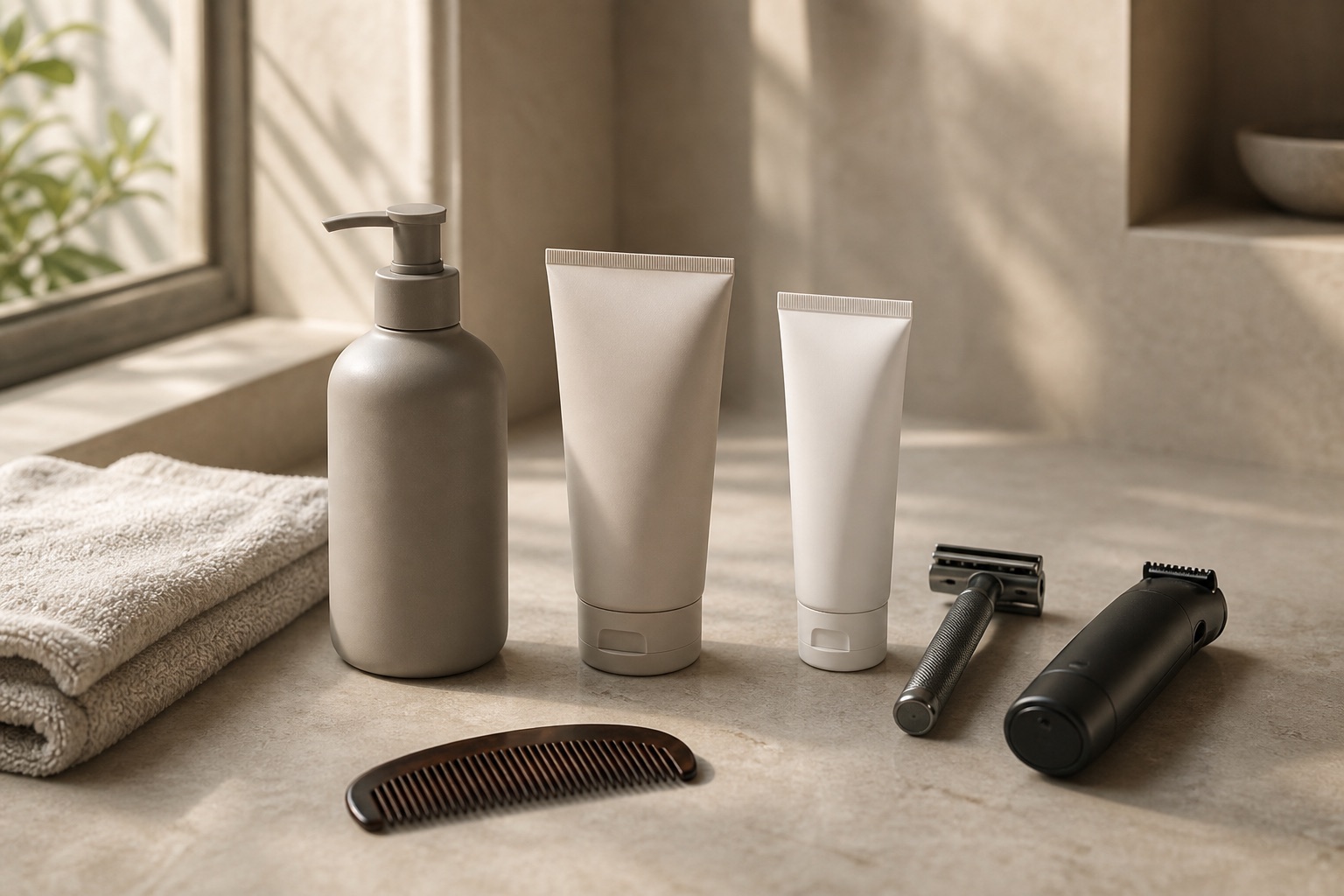
Cleanse according to residue and comfort
Lukewarm water may be enough when skin is comfortable and free from significant residue. Use a gentle facial cleanser after heavy sweating or when oil and night products need removal. Avoid very hot water, harsh bar soap, brushes and rough towels. The double-cleansing guide explains why a second cleanser belongs to resistant film, not to gender.
Moisturise by zone
Apply a suitable moisturiser where tightness or dryness develops. Humectants, emollients and ceramides also exist in light gels and lotions; ‘moisturiser’ does not mean a heavy cream. The skin hydration guide compares formula functions without assigning them to men or women.
Protect every exposed zone
Finish with broad-spectrum SPF 30 or higher and water resistance when exposure requires it. Include forehead, temples, ears, nose, neck, beard edges, sparse areas and exposed scalp. Hat, shade and clothing contribute. The daily face-sunscreen guide owns amount, texture and reapplication.
An essential evening routine
Remove sunscreen, sebum, environmental residue and styling product with a compatible cleanser. A first oil-based step may help with a resistant film, but two cleansers are not a moral standard. Rinse the jawline, hairline and nose folds carefully. Tight, squeaky skin is not proof of a better wash.
Apply a tolerated moisturiser. If a treatment is needed, choose one product for one defined objective and initially place it on non-shaving evenings when that improves tolerance. The skincare actives guide owns introduction and combination decisions. Niacinamide, a retinoid, acid and scrub are not a compulsory men’s routine.
Review the stable base over two to four weeks. Better comfort, less flaking, more consistent sunscreen use and fewer razor cuts are valuable outcomes. Do not use product count as a measure of discipline or judge prescribed treatment on a cosmetic timetable. The prescriber's instructions take priority.
Prepare skin and facial hair before shaving
Soften hair without overheating skin
Shave near the end of a shower or wet the area with warm, not hot, water. Apply shaving cream or gel and allow the labelled contact time. The product needs to provide slip and soften hair, not create theatrical foam. If it burns before the blade touches skin, remove it rather than treating tingling as efficacy.
Map the direction of growth
On short hair, feel several directions; the path of least resistance generally follows growth. Cheeks, jaw, neck and the area below the chin may point differently. Draw a simple map and update it with length. Downward is not universal and shaving against growth is not required for a groomed result.
Check integrity before using a blade
Do not shave over an open cut, painful pustule, marked rash, crust or a new lesion that bleeds. Shaving off a spot is not treatment. Pause on damaged zones and seek assessment when needed. Facial hair itself is not unhygienic; cleanliness does not require removing it.
Shaving technique: direction, pressure, passes and blade
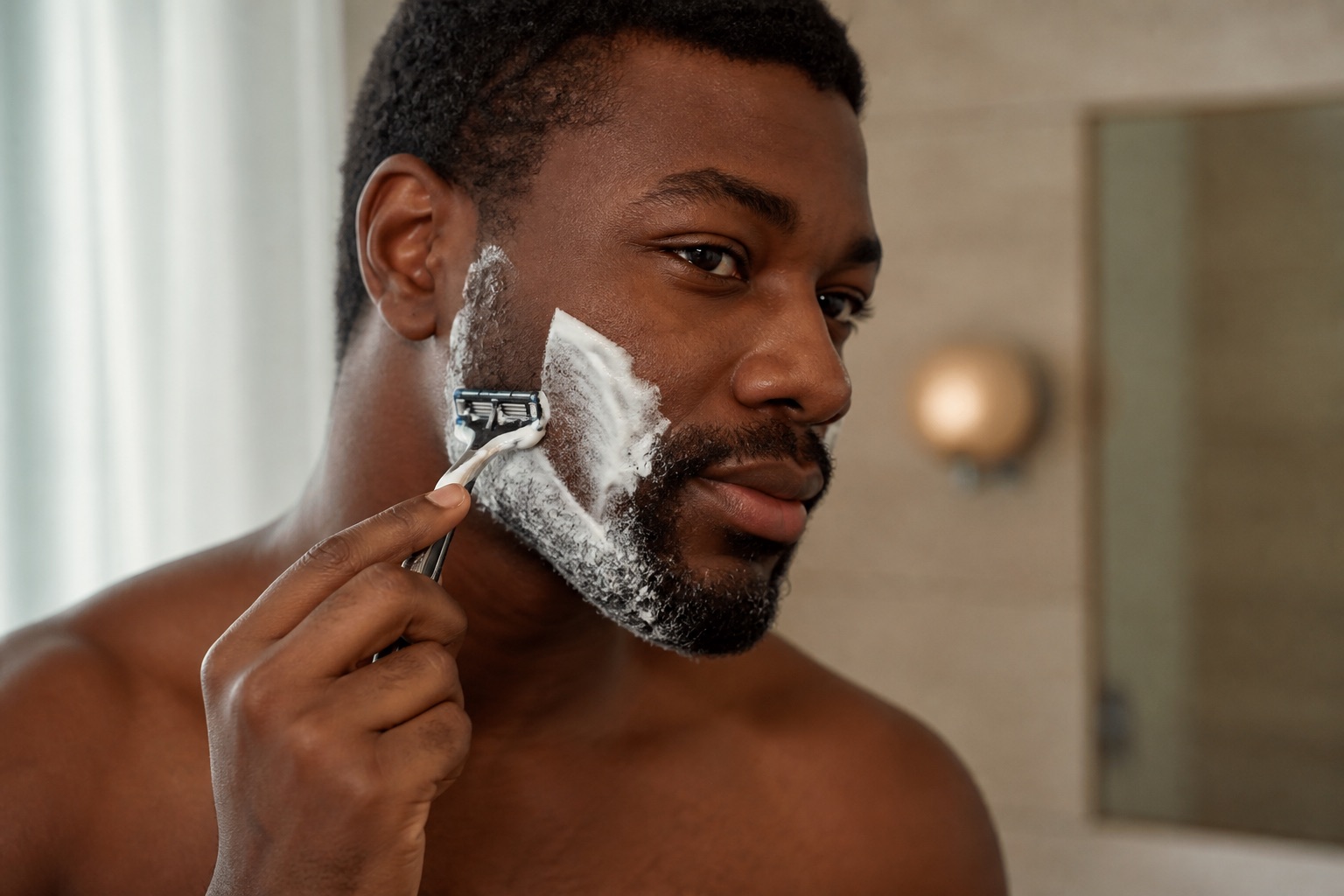
Use short strokes and minimal pressure
Move with growth, keep the skin relaxed and rinse the head frequently. Do not repeatedly cross the same dry area; restore lubrication if another pass is genuinely needed. Glass-like smoothness is not the endpoint when it produces burning, bumps or cuts.
One blade is an option, not a universal cure
Some people do better with fewer blades when a multiblade cartridge cuts hair very close. Comparative evidence does not prove that one blade prevents every ingrown hair. Keep preparation, direction and pressure stable when comparing tools and judge by comfort, lesion count and the closeness actually required.
An electric shaver or guarded trimmer may leave useful length
A guarded trimmer or electric shaver can leave short stubble and may be better tolerated by some people prone to razor bumps. Do not press harder to erase the shadow. Follow the manual for cleaning, lubrication, part replacement and safe wet or dry use.
After shaving: calm the skin without product overload
Rinse away residue, pat with a clean towel and apply a simple moisturiser to slightly damp skin. A strongly fragranced or high-alcohol aftershave is not necessary to ‘close pores’. Pores do not open and close like doors; sting, coolness and fragrance are sensations, not proof of disinfection or repair.
Avoid adding acids, a retinoid, scrub and low-pH vitamin C to freshly burning skin. Use the damaged barrier guide when cosmetic load needs simplifying. Marked or persistent burning, swelling or widespread rash needs stopping and assessment, not a tower of soothing serums.
After a morning shave, let moisturiser settle and apply sunscreen gently. If one sunscreen repeatedly stings micro-abrasions, improve shaving technique and test a more compatible formula while using shade and a hat. Do not cover open cuts with fragranced cosmetics.
Razor bumps, irritation, folliculitis and acne are not synonyms
Pseudofolliculitis barbae is an inflammatory hair response
Pseudofolliculitis barbae occurs when cut hair re-enters or penetrates skin, producing inflammation. It can affect anyone who removes hair, but is more common with tightly curled coarse hair and can leave more visible post-inflammatory pigment or scars in deeper skin tones. It is not a sign of poor hygiene.
Similar-looking bumps can require different care
Folliculitis, acne and pseudofolliculitis can all appear as papules or pustules but do not automatically share a cause or treatment. Do not squeeze, dig with tweezers or release a hair using a needle. Pus, pain, heat, spread, lasting pigment, scarring or failure to improve requires a dermatologist.
Reducing close shaving can help some active cases, but work rules, cultural context and personal preference deserve a non-judgemental discussion. Medicines, chemical depilatories and laser treatment mentioned in clinical literature are not a DIY list. A beauty professional observes and refers rather than prescribing.
Short or long beard: care for the skin beneath the hair
Clean beard and skin with a mild product, massage with fingertips and rinse completely. Frequency depends on oil, activity and styling residue. Daily scrub and harsh hair shampoo can worsen dryness and itch. Pat dry, and detangle a long beard from the ends with a clean tool.
Bring moisturiser to the skin rather than coating only the hair surface. Part the beard and apply small amounts to cheeks, chin and neck. Conditioner may soften the fibre; oil can add slip and shine, but neither automatically hydrates skin or treats rash. If comedones increase, review amount, fragrance and occlusivity rather than washing more aggressively.
Persistent beard dandruff, patches, itch, sudden hair loss, crust or a lesion beneath the hair is not solved by a more expensive oil. Part facial hair periodically in good light. A growth that changes, does not heal or bleeds needs dermatological assessment even when a beard hides it.
Beard oil, balm and fragrance: what they can and cannot do
Oil and balm are conditioning and styling formats. They can reduce friction between fibres, improve combing and alter shine, but do not create follicles or treat infection, dermatitis or razor bumps. ‘Natural’ does not mean non-irritating: fragrance and essential oils can cause irritation or allergy.
Start with a small amount on damp hair and avoid buildup around the mouth or acne-prone zones. Fragrance-free is often easier to assess on reactive skin; ‘unscented’ may still use masking fragrance. Check the full ingredient list and actual response instead of assuming a masculine scent is part of efficacy.
Topical minoxidil on the face, steroids, antibiotics, chemical depilatories and lasers are not ordinary beard grooming. Off-label use and disease treatment require healthcare advice. Sparse facial hair is a common variation and does not prove deficiency or disease; sudden patches or associated symptoms deserve assessment.
Sunscreen with a beard, moustache or thinning scalp hair
A beard is not measured, uniform sun protection. Density, length, colour and movement leave gaps, while upper cheeks, nose, ears, lips, neck and sparse areas remain exposed. Work sunscreen into reachable skin and along beard borders, then add a hat and shade. On a thinning scalp, choose a workable formulation or physical coverage.
When white residue catches on hair, trial a clearer gel, fluid or stick suited to the area and spread in sections. Do not solve the problem by using a token quantity on the rest of the face. Reapplication depends on exposure, sweating and water. Wash resistant films from hair and skin in the evening.
Skincare actives and shaving days
Shaving already adds mechanical stress. Retinoids and hydroxy acids can add irritation, so do not launch both with a new razor and closer technique. Place an active on non-shaving evenings at first when appropriate, keep frequency low and use no treatment on open cuts or burning skin.
The dedicated retinoid guide and AHA, BHA and PHA guide own those ingredient decisions. Burning is not proof of renewal. Prescription instructions, pregnancy considerations and medical advice take precedence.
Adapt the base for oily, dry, sensitive or acne-prone skin
For oily or combination skin, use light layers and zone application rather than skipping hydration; the oily and combination skin routine owns sebum and shine. For dry skin, shorten cleansing and increase emollient or occlusive support; the dry-versus-dehydrated routine explains that distinction. For sensitive or temporarily reactive skin, reduce fragrance and variables rather than buying a gendered sensitive range.
The sensitive-versus-sensitised guide explains tolerance and stop rules. Acne-prone skin still needs gentle cleansing and sun protection. Do not shave over inflamed lesions or combine several acne actives without a plan.
Hygiene for razors, trimmers, combs and towels
Rinse a blade during use and clean the tool after shaving according to its manufacturer. Let it dry in a ventilated place rather than on a wet shower edge. AAD guidance gives roughly five to seven shaves as a reference for disposable blades, but actual replacement depends on blade condition, beard density and directions. Replace anything that pulls, skips, rusts or is damaged.
Remove hair from a trimmer, use only compatible cleaning methods and lubricate moving parts when specified. Do not immerse a device not rated for water. Wash and dry combs and brushes; use a clean personal face towel. Never share a blade, because it can contact blood and contamination.
Common mistakes and grooming myths
Buying a complete ‘for men’ line without defining skin, objective and tolerance.
Cleansing until skin feels tight, then avoiding moisturiser because shine returns.
Stretching skin and making repeated dry passes against growth for absolute smoothness.
Treating aftershave sting as disinfection or proof that pores have closed.
Digging out ingrown hairs or shaving across inflamed acne, pustules and cuts.
Coating beard hair with oil while ignoring the skin and residue beneath it.
Assuming a beard or deeper skin tone makes sunscreen unnecessary.
Changing razor, acid, scrub and retinoid in the same week.
Sharing blades or storing a wet razor in a persistently damp container.
When to stop and see a dermatologist
Request assessment for persistent papules or pustules, intense itch, pus, pain, heat, spreading redness, crust, scars, hairless patches or pigment that continues to develop. Seek quicker help for fever with spreading redness, marked swelling, an allergic reaction, uncontrolled bleeding or suspected infection.
Check skin beneath facial and scalp hair. A new lesion, one unlike the others, or a spot that grows, changes, itches, fails to heal or bleeds needs examination. Sunscreen lowers exposure but does not replace skin checks. A beauty professional may record, simplify and refer; they cannot diagnose pseudofolliculitis, prescribe antibiotics or remove a lesion.
A practical protocol for beauty professionals
Record objective, products, reported medicines, shave frequency and method without diagnosing.
Observe comfort, integrity, oil and dryness distribution, facial hair and sun-exposed zones.
Identify stop signs: wound, pain, pus, marked rash, lesion or suspicious change.
Stabilise cleanser, moisturiser and sunscreen before proposing one active.
Map hair direction and record tool, passes, pressure and post-shave response.
Change one variable and agree an observation window without provocative testing.
Write directions and refer when the goal leaves cosmetic scope.
Explore online skincare courses for structured education in observation, hygiene, formulation and professional boundaries.
Frequently asked questions about men’s skincare
Does men’s skin require different products?
Not by definition. Choose cleanser, moisturiser, sunscreen and any treatment according to skin, objective, facial hair, shaving and tolerance. A texture or format may be more practical, but colour, scent and a ‘men’ label do not prove a different function.
What is the minimum routine for a beginner?
Morning: cleanse only as needed, moisturise where useful and apply broad-spectrum SPF 30 or higher. Evening: remove sunscreen and residue gently and moisturise. Keep this base stable before introducing one treatment.
Must the face be washed twice a day?
No universal frequency fits everyone. Evening cleansing removes sunscreen and residue; morning cleanser depends on oil, sweat, night products and comfort. After sport, cleanse proportionately. Tightness and burning are cues to review formula, water and frequency.
Is an electric or manual razor better?
It depends on hair, desired closeness and individual response. Electric tools can leave more length; a blade offers control but needs lubrication and technique. Compare tools while keeping other variables stable and choose the one that preserves comfort and integrity.
Does one blade always prevent ingrown hairs?
No. It can help when a multiblade cuts too close, but preparation, direction, pressure, curl and shave frequency work together. Persistent bumps, pigment or scarring needs a dermatologist rather than another razor purchase.
Can I shave against the grain?
It may cut closer but increase irritation and ingrown hairs for some people. Begin with growth direction, relaxed skin and few passes. Absolute smoothness should not take priority over integrity.
Should aftershave burn to work?
No. Burning signals stimulation or irritation, not effective disinfection. A simple moisturiser may be sufficient. Alcohol and fragrance are optional, and neither closes pores.
How can I tell ingrown hairs from folliculitis or acne?
You may not be able to at home. Location and shaving relationship help but do not replace examination. Do not squeeze or dig. Pus, heat, pain, spread, scarring or persistence needs medical assessment because treatment can differ.
How do I moisturise beneath a long beard?
Part clean, slightly damp facial hair and take small amounts of moisturiser to the skin with fingertips. Conditioner or oil can improve the hair fibre, but does not automatically care for the skin underneath.
Does beard oil grow more hair?
No. It may soften and add shine but cannot create follicles. Do not use medicines on the face without a clinician. Sudden patches or hair loss with symptoms needs assessment.
Does a beard replace sunscreen?
No. Coverage varies and has no uniform verified SPF. Protect reachable skin, borders, cheeks, nose, ears, neck and exposed scalp, and add a hat and shade.
What if sunscreen leaves white residue in my beard?
Try a clearer texture, work in small sections and allow lower layers to settle. Do not reduce the amount across the rest of the face. Changing formula is better than abandoning protection.
Can I use retinol or acids on shaving day?
The combination may increase burning and scale. Do not introduce an active with a new razor or apply it to cuts. Follow the product and prescriber; reduce cosmetic load if tolerance worsens.
Should oily skin skip moisturiser?
No. Sebum and water are different. A light moisturiser can support comfort after shaving without feeling heavy. Stronger cleansing may increase tightness without changing the cause of oil production.
How should I clean a razor?
Rinse during use, clean after shaving according to the manual and dry in a ventilated place. Replace a blade that pulls, skips or is damaged. Do not share blades or store them continuously wet.
Does a beard cause acne by trapping dirt?
A beard is not dirty by definition. Oil, cells and styling residue can build up, while harsh shampoo and scrubs can irritate. Clean skin and hair, rinse well and review occlusive products; persistent inflammatory acne needs a dermatologist.
How long should I test the routine?
Comfort can change within days; comedones, pigment and treatment outcomes need longer. Keep base, amount and technique stable. Do not wait for a cosmetic deadline when pain, rapid worsening, scars or a significant reaction appears.
Can hormones or medicines change skincare needs?
They can change oil, dryness, sensitivity or hair, with individual variation. Do not alter treatment or assign every change to one cause. Share products and symptoms with the prescriber and introduce cosmetic changes slowly.
When should I stop shaving?
Pause on open cuts, marked rash, suspected infection, pain or a bleeding lesion. Reducing close shaving may help recurring bumps, but work requirements and medical options deserve an individual discussion.
When should a lesion beneath a beard be checked?
When it is new, unlike the others, growing, changing colour or shape, itchy, painful, non-healing or bleeding. Part facial hair in good light periodically; a beard can hide change but does not make it less important.
Scientific and professional sources
American Academy of Dermatology: skin type, cleansing, moisturising, shaving and sunscreen. Read the AAD men’s skincare guidance
American Academy of Dermatology: practical razor-bump prevention and shaving technique. Read the AAD guidance
American Academy of Dermatology: skin beneath a beard, ingrown hairs and common beard concerns. Read the AAD beard guidance
American Academy of Dermatology: healthy beard care and trimming. Read the AAD healthy-beard guidance
DermNet: clinical overview of pseudofolliculitis barbae, complications and management. Read the DermNet review
Nussbaum and Friedman: review of management options for pseudofolliculitis barbae. Read the PubMed record
Gray and McMichael: review of pseudofolliculitis, grooming and comparative evidence limits. Read the PubMed record
Dalia et al.: review of pseudofolliculitis treatment and disparities in skin of colour. Read the PubMed record
Browse the English skincare guide hub for separate guidance on cleansing, hydration, actives, acne and sunscreen. Effective men’s skincare is not proved by the number of bottles: it makes shaving, beard care and protection compatible with the actual skin and recognises when the concern is no longer cosmetic.
To turn cosmetic observations and existing products into a plan a client can understand and follow, use the professional skincare-consultation protocol for intake, product audit, written handover, follow-up and referral boundaries.
For a proportionate record of products, reported reactions, separate permissions, photographs, retention and professional stop decisions, read the skincare client-record guide without turning cosmetic documentation into an improvised medical chart.